



The Financial Action Task Force (FATF), a UN agency committed to combating money laundering and terrorist financing, has again urged member nations to enact its “Travel Rule” to mitigate risks posed by cryptocurrencies.
Despite its introduction in 2019 and update in 2022, the rule has seen weak adoption among members, exposing potential regulatory gaps.
According to FATF, more than half of the members surveyed have not taken steps towards implementing the rule, intended to curb the anonymity of illegal crypto transactions.
These statistics indicate a significant gap in regulatory compliance, with the FATF highlighting that current non-compliance allows criminals to exploit “significant loopholes”.
In a bid to encourage wider adoption, FATF stressed the urgent need for countries to institute Anti-Money Laundering and Counter-Terrorism Financing measures in the cryptocurrency sector.
As of March 2022, only 29 of 98 jurisdictions passed the requirements of the travel rules, with only a small fraction of these jurisdictions commencing enforcement.
In the recent FATF meetings held in Paris, the members agreed to further updates to the rules.
As part of its continuous efforts to enhance compliance, FATF will publish a report on June 27, providing recommendations for member countries to close these regulatory loopholes.
The report will address North Korea’s illicit virtual asset activities, where it’s alleged that stolen funds are funneled into its Weapons of Mass Destruction program.
Other “emerging risks,” including stablecoins, decentralized finance, nonfungible tokens and peer-to-peer transactions, will also be covered.
Overall, FATF’s recent call reflects its commitment to ensuring a safer cryptocurrency environment and underscores the need for countries to take swift action to enforce regulation and prevent financial crimes.
Other Stories:
$PEPE Cryptocurrency Skyrockets Nearly 70% as Crypto Whales Drive Unprecedented Surge
ASX’s Failed Blockchain Upgrade Sparks Blame Game Between Digital Asset and Exchange
Istanbul, Turkey, June 26th, 2023, Chainwire
Metatime, the blockchain project building a complete Web3 ecosystem that promises users full control over their finances, identity and assets, has announced its native ecosystem token Metatime Coin ($MTC) will be listed for sale on the leading cryptocurrency exchange, Bybit. Alongside the listing, Metatime is pleased to announce that its smart contract infrastructure code has been fully audited by the independent auditing firm Hacken, completing the process with full marks.
The $MTC token, which currently has exactly 415,439 registered users, will go live on Bybit on Monday, June 26 at 10.00 UTC, at which time it will be available for anyone to buy, sell or trade. Investors who bought early during the presale will now be able to sell their $MTC, while those who missed out on early access will now be able to participate in Metatime’s growing Web3 ecosystem.
Earlier this year, Metatime witnessed enormous demand for its token, raising a total of $38 million via two pre-sales of the $MTC token on the world’s biggest crypto launchpad platforms, helping to fund its goal of onboarding millions of new users to Web3. All told, Metatime sold 100 million $MTC at 5 cents, 100 million $MTC at 6 cents, 100 million $MTC at 7 cents and then 200 million $MTC at 10 cents.
The $MTC token is currently deployed on BNB Chain but will migrate to Metatime’s own blockchain with the launch of the MetaChain mainnet on Nov. 11, 2023. For all $MTC investors, relevant information and technical assistance is available through Metatime’s support team.
The official listing of $MTC on Bybit follows the completion of a full audit of Metatime’s smart contract code by the respected independent auditor and testing firm Hacken. The report by Hacken highlighted the “exceptional performance of Metatime’s documentation, code quality, test coverage and security measures”. Metatime achieved a perfect score of 10/10 in the documentation quality category, providing comprehensive functional requirements and detailed technical descriptions. It also achieved a perfect code quality score and, furthermore, demonstrated exceptional test coverage during thorough testing of deployment, basic user interaction and system features.
Metatime’s Web3 ecosystem of products include a comprehensive blockchain network and cryptocurrency exchange, plus NFT marketplace, crypto launchpad, blockchain explorer, wallet and stablecoin. The MetaChain is powered by the Proof-of-Meta consensus mechanism which enables all users to participate in network verification and $MTC mining. Metatime’s upcoming MetaExchange will set a precedent in the industry by not assessing commissions for all trades that close at a loss, while its copytrade features will enable novices to emulate expert traders.
About Metatime
Metatime has emerged as a visionary ecosystem that builds the world of the future, designed from the start to be beneficial to everyone. By completely self-funding its technology development stages, Metatime aims to establish the world’s most comprehensive and transparent ecosystem. Through the development of blockchain-based digital products, Metatime is actively shaping the future today. Metatime continues to innovate and develop a wide range of products such as MetaChain, MetaWallet, Metatime Coin, MetaExchange, and MetaNFT, placing user needs at the forefront and designing from the ground up. By envisioning a future where blockchain becomes accessible to everyone, Metatime leads the way in spearheading the Web 3.0 transformation.
Website | Twitter | Instagram | Linkedin | Discord
Contact
Co-Founder & CEO
Yusuf Sevim
[email protected]

Estonia, Tallinn, June 26th, 2023, Chainwire
Soil, the innovative blockchain-based lending protocol, announces that it has received confirmation from the local financial markets regulator that the planned operations on the Soil Platform are compliant with the jurisdiction’s regulations. This confirmation is a significant milestone for Soil, as it confirms the validity of its business model assumptions.
Soil is building a self-balancing DeFi protocol that will bridge the gap between borrowers (traditional businesses / private debt founds) and lenders (stablecoin holders). Soil will facilitate a debt marketplace where established companies in various industries can raise funds by applying for loans from stablecoin holders.
“We hired several teams of lawyers from different countries and waited for long weeks to receive official confirmation from the local regulator that the activities planned on our Soil Platform are legal”, said Jakub Bojan, CEO of Soil. “Despite this great success, we continue to work and do our best to ensure that our project is at the forefront of the cryptocurrency market and is transparent and safe for our partners and investors around the world.”
Prioritising the need for security on the platform, Soil is not only adapting to current regulations but also to the upcoming revolutionary changes for the cryptocurrency world, namely the EU MICA regulation.
With an innovative business model and solid legal support, Soil is well-positioned to launch an innovative lending system. Soil’s actions will undoubtedly inspire confidence among the investment community and potential partners in the DeFi ecosystem.
About Soil
Soil is a blockchain-based lending protocol that bridges the gap between traditional finance and the crypto world, reshaping corporate debt and fixed-income investments. It is a debt marketplace where established companies can obtain financing, and crypto investors can lend their stablecoins to earn yield derived from Real World Assets that exist off-chain. Soil revenue model profits from fees earned by connecting lenders and borrowers and arbitrage on the cost of capital.
Contact
Jakub
[email protected]
Dubai, Dubai, June 26th, 2023, Chainwire
DWF Labs, the global multi-stage Web3 investment firm, has announced a partnership with Algorand Foundation to support the health and growth of the ecosystem built on the Algorand blockchain.
The first component of the partnership involves a $50 million ALGO token purchase agreement to, in part, provide liquidity into the Algorand ecosystem.
An additional MOU has been signed with the aim of allocating funds to support projects that are building on the Algorand blockchain in the spaces of DeFi, Art and Music, Gaming, Oracles and Bridges, and Infrastructure. Projects interested in submitting their pitch can get in contact with DWF Ventures by visiting: http://www.dwf-labs.com/algorand.
Andrei Grachev, Managing Partner of DWF Labs, shared his enthusiasm for this partnership and its potential for revolutionising blockchain innovation, as well as DWF Labs’ commitment to actively participate in the building of the Algorand ecosystem.
“We selected Algorand because of its unparalleled level of technology and security among permissionless DLTs, as well as its leadership in environmental sustainability and social impact. Algorand’s blockchain infrastructure provides the speed and instant finality required for creators, financial institutions and governments to smoothly transition to the new digital economy at scale, in an environmentally responsible manner. This partnership with the Algorand Foundation is another important step in the maturation and growth of innovation in this space,” said Grachev.
About the Algorand Foundation
The Algorand Foundation empowers a dynamic, inclusive, and borderless global ecosystem – at scale – based on the Algorand blockchain technology. Designed by MIT professor and Turing Award winning cryptographer Silvio Micali, Algorand is uniquely capable of delivering on the promise of a borderless global economy. It achieves transaction throughputs at the speed of traditional finance, but with immediate finality, near zero transaction costs, and on a 24/7 basis. Its carbon-neutral platform and unique pure proof-of-stake consensus mechanism achieves both security and scalability on a decentralized protocol, and without a second of downtime since it went live in 2019.
About DWF Labs
DWF Labs is a global digital asset market maker and multi-stage web3 investment firm, providing support from token listing to market making to OTC trading solutions. DWF Labs seeks to invest and support bold founders who want to build the future of Web3.
Contact
Managing Partner DWF Labs
Andrei Grachev
[email protected]

Mooky.io, the adorable and trendsetting meme token of 2023, is making waves in the crypto world with its unique focus on environmental sustainability and community governance. With a commitment to global tree-planting initiatives and inspiring positive change, Mooky.io is revolutionizing the way cryptocurrencies contribute to our planet.
Time is Running Out! Don’t Miss Your Last Chance to Join Mooky Presale – Over $800k Raised!
Mooky.io is excited to announce the final opportunity for investors to participate in its highly anticipated presale. The presale round has already raised over $800k, showcasing the immense interest and confidence in the Mooky.io project.
Investors who don’t want to miss out on this exciting opportunity should act quickly to secure their spot in the presale before it concludes.
Addressing the Big Eyes Rug Pull Incident: A Commitment to Transparency and Investor Protection
It is vital to address the recent rug pull incident involving the project Big Eyes. Big Eyes raised over $40M in funds and added $150k to its liquidity. Unfortunately, they experienced a significant drop of 97%, leading to concerns about a rug pull. The project has reportedly scammed around 30k investors, causing distress within the crypto community.
Mooky.io acknowledges the impact of such incidents on investor trust and emphasizes its unwavering dedication to transparency, investor protection, and fair practices. Unlike the rug pull incident, Mooky.io is committed to building a trusted and secure platform for its investors. The team behind Mooky.io has taken extensive measures to ensure the highest level of security and transparency. All funds raised during the presale will be used to develop the platform and support the mission of global tree-planting initiatives.
Mooky.io: A Helping Hand for Investors Affected by Scams
Mooky.io understands the unfortunate circumstances faced by investors who have fallen victim to scams. With a genuine desire to assist those who have lost funds, Mooky.io is actively reaching out to affected individuals and providing support. The team is dedicated to helping outside investors recover from their losses and regain trust.
Join the Mooky.io Community and Be Part of the change!
Investors and crypto enthusiasts are invited to join the vibrant Mooky.io community and participate in shaping the future of this groundbreaking project. By prioritizing environmental impact, community governance, and investor protection, Mooky.io aims to restore faith in the crypto space and create a platform that stands out from the rest.
To learn more about Mooky.io and to participate in the presale, visit their official website at www.mooky.io. Engage with the Mooky.io community on social media channels to stay up to date with the latest news and developments.
About Mooky.io
Mooky.io is the cutest and coolest meme token of 2023, pioneering a new wave of environmentally conscious and community-governed cryptocurrencies. With a focus on global tree-planting initiatives and decentralized decision-making, Mooky.io aims to inspire change and create a positive impact in the crypto space.
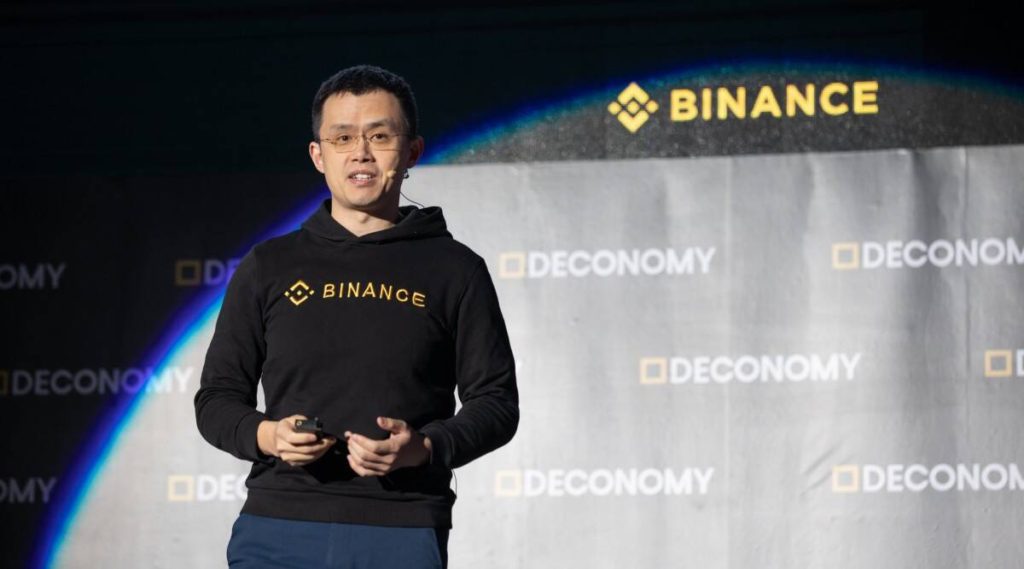
Belgian financial authorities have issued a directive to Binance, a leading cryptocurrency exchange, demanding the immediate cessation of all virtual currency services in the country.
The Belgian Financial Services and Markets Authority (FSMA) took this action after Binance failed to provide satisfactory information regarding its non-European Economic Area (EEA) companies.
The FSMA’s notice, released on June 23, highlighted that Binance’s offering of crypto-related services from non-EEA countries violated Belgian laws concerning Anti-Money Laundering and Combating the Financing of Terrorism.
Consequently, the financial regulator instructed Binance to halt all associated services in Belgium with immediate effect.
According to the FSMA, Binance had control over an estimated 19 companies located outside the EEA that were involved in its operations or technical support.
However, these companies were not disclosed in the terms and conditions agreed to by Belgian users when signing up for Binance’s services.
Despite multiple requests for information, the regulator found Binance’s responses inadequate in identifying the nature of services provided by these companies.
The FSMA stated, “Despite the opportunities offered to Binance on several occasions, the latter has failed to demonstrate, with due documentation and proof, that the exchange services between virtual currencies and legal currencies and the custody wallet services that it offers and provides within Belgium.
The exchange services which are carried out by means of a legal entity governed by the law of another member state of the European Economic Area that is duly authorized by its home member state to carry out these activities, including within Belgium.”
As part of the order, Binance is required to notify and return all cryptocurrencies and private keys held for its clients based in Belgium.
In response to the FSMA’s decision, a spokesperson for Binance expressed disappointment and confirmed that the company would review the regulator’s notice.
This move by the FSMA is part of a broader trend, with multiple national regulators taking action against Binance.
Notably, the United States Securities and Exchange Commission (SEC) is currently pursuing a lawsuit against the exchange and its U.S. entity for alleged violations of securities laws.
Additionally, in January 2022, a Belgian parliament member, Christophe De Beukelaer, made headlines by announcing his intention to receive his government salary in Bitcoin for a year.
Other Stories:
Etherscan Launches AI-Powered Code Reader, Polygon Proposes zkEVM Upgrade
Coinbase Takes Unconventional Legal Approach Ahead of SEC’s Crypto Crackdown
ECB Executive Slams Cryptocurrencies as Platforms for Gambling, Calls for Regulatory Safeguards
Circle and Sequoia Capital were among the top depositors at Silicon Valley Bank (SVB) before its collapse, according to a recent report by Bloomberg.
Other significant depositors included SVB itself, SVB Financial Group, Altos Labs, a biotechnology research company, and Kanzhun, a China-based firm.
Documents provided by the Federal Deposit Insurance Corporation (FDIC) indicated that Circle, Sequoia, and other depositors had billions of dollars covered.
This was an exception to the usual FDIC insurance limit of $250,000 per depositor. In response to the collapse of SVB, the Federal Reserve announced its collaboration with the FDIC to compensate insured and uninsured depositors.
Circle, a stablecoin issuer, held approximately $3.3 billion in deposits, while Sequoia Capital had around $1 billion.
The failure of SVB and subsequent collapses of Signature Bank and First Republic Bank have drawn attention to how deposit insurance is handled by regulators in the United States.
The Fed, FDIC, and Treasury Department deemed the coverage of SVB and Signature deposits over $250,000 as a “systemic risk exception” but are said to be considering an increase in the insurance limit.
Following SVB’s collapse in March and Circle’s confirmation of approximately $3.3 billion exposure to the bank, the value of its stablecoin, USD Coin, briefly deviated from the U.S. dollar.
However, Circle has since announced its plans to launch a native version of USDC on the Arbitrum network in June. This move aims to strengthen the stability and accessibility of its stablecoin.
The events surrounding SVB’s collapse have highlighted the importance of regulatory oversight and insurance in the cryptocurrency and banking sectors.
As the industry continues to evolve, discussions about risk management and investor protection are likely to shape future regulatory frameworks.
Other Stories:
Melanion Capital Launches Bitcoin Equities ETF on Euronext Amsterdam Stock Exchange
SHIB Coin Prediction: Will Shiba Inu Coin Reach $1?
Accenture Announces $3 Billion AI Investment After Wave of Layoffs
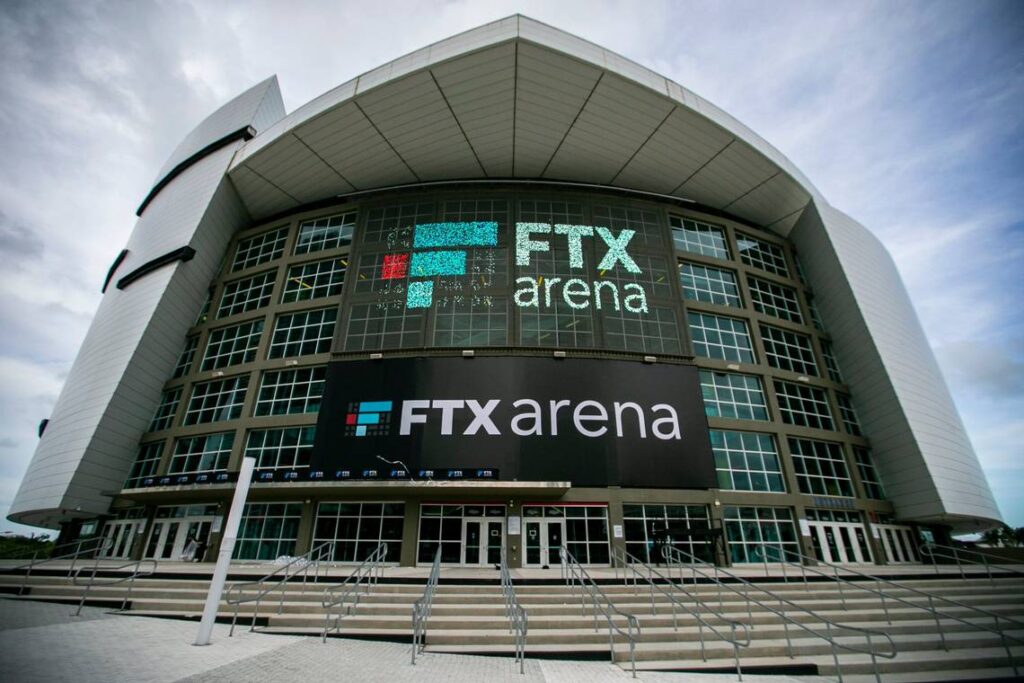
FTX, the collapsed cryptocurrency firm, has taken legal action against investment firms and individuals connected to its previous operations in an attempt to reclaim over $700 million.
The lawsuit was filed on June 22 in the United States Bankruptcy Court for the District of Delaware and includes 16 counts against the defendants.
Among the defendants named in the lawsuit are K5 Global, an incubator and investment company, as well as Mount Olympus Capital and SGN Albany Capital, along with their affiliated entities.
Michael Kives and Bryan Baum, co-owners of K5 Global, are also listed as defendants. Kives, a former talent agent and aide to Hilary Clinton, hosted a dinner party attended by FTX’s then-CEO, Sam Bankman-Fried (SBF), in 2022.
The lawsuit described the event as a gathering of prominent individuals, including celebrities, billionaires, and a former presidential candidate.
According to the lawsuit, FTX-affiliated crypto trading firm Alameda Research transferred $700 million to Kives, Baum, and K5 Global.
However, the transfers were disguised as transactions between shell companies SGN Albany and Mount Olympus Capital.
The lawsuit aims to recover the funds that were transferred from Alameda Research to SGN Albany Capital and subsequently from Kives, Baum, and SGN Albany Capital to Mount Olympus Capital.
The lawsuit alleges that these transfers were avoidable and lacked equivalent value. In bankruptcy law, an avoidable transaction can be reversed under relevant regulations.
The lawsuit also highlighted the close personal ties between Kives, Baum, and SBF, with Baum even having his own bedroom in FTX’s Bahamas residence.
After FTX’s collapse, the suit claims that Kives and Baum collaborated with Bankman-Fried on a strategy to secure a bailout for FTX Group and protect their own interests.
In response to the lawsuit, K5 Global issued a statement to Cointelegraph, dismissing the claims as meritless.
They emphasized that K5 is a venture capital firm with over $1 billion in assets under management and unrelated to any funds from Bankman-Fried and his affiliates.
The spokesperson stated that K5 believed they were engaging in a legitimate and mutually beneficial business relationship with Bankman-Fried and considered the lawsuit to be baseless.
The lawsuit includes nine counts related to fund transfers, with Kives and Baum individually charged with aiding and abetting breach of fiduciary duty and dishonest assistance. SGN Albany Capital is charged with unjust enrichment.
The legal proceedings will determine the validity of these claims and the potential recovery of the funds sought by FTX.
Other Stories:
Bitcoin Policy Institute Lambasts BTC Research Paper
Federal Reserve Pushing For Robust Oversight of Stablecoins as Form of Money
Car-Maker Announces Launch of its NFT Platform With Near Protocol
The International Monetary Fund (IMF) has emphasized the need for regulations on cryptocurrencies in certain countries while cautioning against an outright ban as an ineffective approach.
In a report published on June 22, the IMF examined the regulation and utilization of digital currencies in Latin America and the Caribbean region.
The report highlighted the diverse strategies employed by local governments to address the adoption of cryptocurrencies and central bank digital currencies (CBDCs).
El Salvador, for instance, made history by accepting Bitcoin as legal tender in September 2021, while the Bahamas became the pioneer in launching its own CBDC, known as the Sand Dollar, in October 2020.
The IMF identified Brazil, Argentina, Colombia, and Ecuador as countries where crypto regulation is currently in progress.
These nations ranked among the highest globally in terms of digital asset adoption, with the aim of assisting the unbanked population, facilitating faster and more affordable payment transfers, and more.
Furthermore, the report stated that most central banks in the region have either implemented or are considering the adoption of digital currencies.
The IMF stated, “If well designed, CBDCs can strengthen the usability, resilience, and efficiency of payment systems and increase financial inclusion in Latin America and the Caribbean.”
The organization suggested that a complete ban on crypto assets, although implemented by a few countries due to perceived risks, may not yield desired long-term results.
Instead, the region should concentrate on addressing the underlying factors driving demand for cryptocurrencies, such as the unmet digital payment needs of citizens.
Furthermore, improving transparency by recording crypto asset transactions in national statistics was highlighted as an important step.
It is worth noting that the IMF has frequently expressed its opposition to countries adopting cryptocurrencies as legal tender.
In a controversial move, Tobias Adrian, the director of the monetary and capital markets department at the IMF, proposed on June 19 the implementation of a payment system that utilizes a single ledger to record CBDC transactions.
This idea was met with strong criticism from many individuals within the crypto space.
The IMF has called for crypto regulation while cautioning against an outright ban in certain countries.
The organization believes that well-designed CBDCs can enhance payment systems, improve financial inclusion, and address citizens’ unmet digital payment needs.
Rather than banning cryptocurrencies, the IMF suggests focusing on the drivers of crypto demand and enhancing transparency by recording crypto asset transactions in national statistics.
Other Stories:
Federal Reserve Pushing For Robust Oversight of Stablecoins as Form of Money
Millions of Mexicans To Be Able To Pay Internet Bills Via Bitcoin Lightning Network
Car-Maker Announces Launch of its NFT Platform With Near Protocol
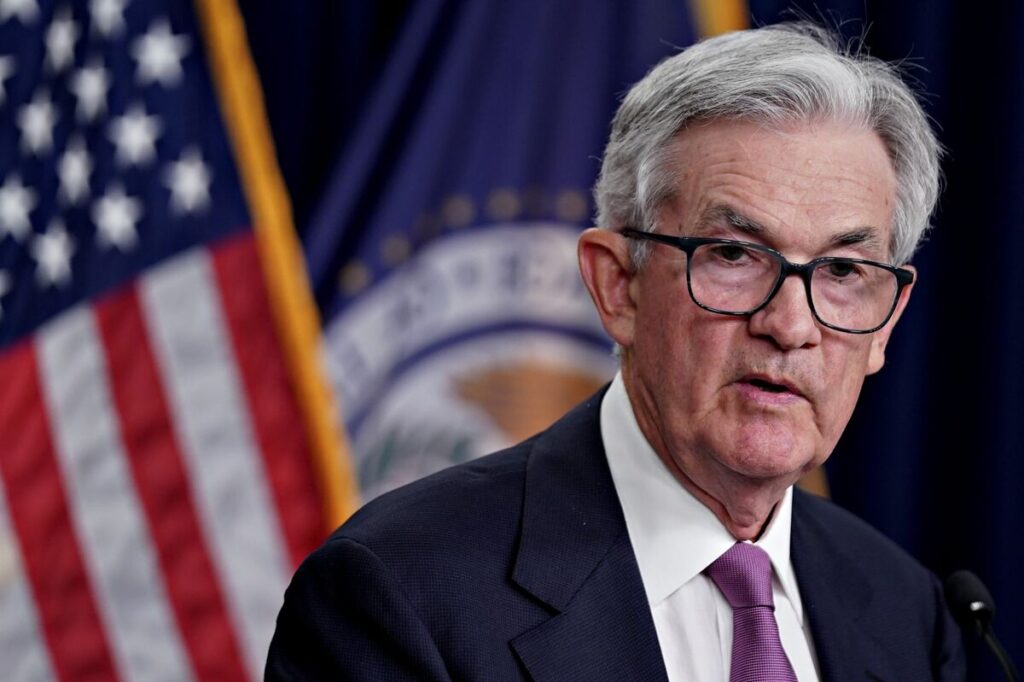
During the House Financial Services Committee’s semi-annual hearing on Federal Reserve policy, Chair Jerome Powell expressed the Federal Reserve’s perspective on stablecoins, stating that they are considered a form of money.
Powell’s remarks were made in response to Maxine Waters, the committee ranking member, who sought his opinion on the proposed stablecoin bill, a Republican-led initiative that would mark the first cryptocurrency legislation in the United States if enacted.
Waters raised concerns about the bill, pointing out that it would establish 58 different licenses with federal regulatory approval only granted to two of them.
The remaining licenses would be issued by states, territories, and other jurisdictions, a move that Waters criticized for taking state preemption to an unprecedented level. Powell, in response, asserted, “We do see payment stablecoins as a form of money, […] and we believe that it would be appropriate to have quite a robust federal role in what happens in stablecoin going forward.”
He further added that permitting significant private money creation at the state level would be an error.
Notably, Powell’s stance contrasts with that of Securities and Exchange Commission (SEC) Chair Gary Gensler, who previously emphasized the potential requirement for registration and regulation of stablecoins, excluding Bitcoin, which he considers a security.
Powell’s position also diverges from Commodity Futures Trading Commission (CFTC) Chair Rostin Behnam’s view that stablecoins should be categorized as commodities.
While the Federal Reserve lacks a readily accessible definition of money, it is generally regarded as a medium of exchange.
In contrast, commodities are defined under U.S. law as “goods and articles […] and all services, rights, and interests […] in which contracts for future delivery are presently or in the future dealt in.” The definition of a security is more complex.
Former CFTC Chair Chris Giancarlo also weighed in on the stablecoin bill, noting in an editorial in The Hill that all licensing authorities would possess the discretion to pressure stablecoin protocols into denying services to lawful but politically disfavored businesses.
Giancarlo referred to this as a “glaring omission” that could potentially enable a government policy resembling the Obama administration’s Operation Choke Point.
He proposed a simple solution to the problem: restricting government licensing authorities from selectively choosing among otherwise lawful activities and conditioning licensure on the stablecoin’s rejection of legal transactions.
Giancarlo cautioned that without this safeguard, stablecoin transactions would be at the mercy of the shifting political landscape in Washington.
Powell’s statements and the ongoing discussions surrounding the stablecoin bill reflect the growing recognition and significance of stablecoins in the realm of finance, prompting regulators to address their oversight and regulation to ensure stability and safeguard against potential risks.
Other Stories:
Moody’s Issues Warning About Lack of Bipartisan Support for Crypto Regulation in the US
Binance Takes Steps Towards Enhanced Bitcoin Transactions with Lightning Network Integration
Polygon Co-founder Suggests Proposal to Improve Security of PoS network