


Unusual activity has recently caught the attention of observers, involving a wallet associated with the bankrupt North American cryptocurrency broker, Voyager.
Surprisingly, a staggering 25 billion Shiba Inu (SHIB) tokens, currently valued at approximately $183,275, were transferred from the wallet.
What makes this transfer intriguing is the destination of these tokens—they were not sent to any exchange address or the broker’s fund wallet.
Instead, they were transferred to an address linked to the SHIB token itself.
Despite its bankruptcy status, the Voyager wallet still holds a significant amount of 2.84 trillion Shiba Inu tokens, equivalent to an astonishing $20.8 million.
It is worth noting that just a few months ago, the wallet held as many as 6.6 trillion SHIB tokens, indicating substantial fluctuations in the assets controlled by the broker.
This movement of tokens from the bankrupt broker’s wallet is not limited to SHIB alone.
Reports suggest that other cryptocurrencies have also been subject to transfers, all stemming from the ongoing resumption of withdrawals.
In an effort to meet their obligations, the broker has allowed lenders to withdraw approximately 35% of their cryptocurrencies, with a withdrawal window open between June 20 and July 5.
One of the platforms facilitating these withdrawals is the Gemini crypto exchange.
The future of Voyager’s holdings and the implications for the wider crypto landscape remain uncertain, making this an unfolding story that demands our attention.
The movements of these tokens and the transfers from the broker’s wallet raise questions about the broker’s intentions and the potential impact on the market.
It is crucial to monitor the developments surrounding Voyager closely.
The destination of the transferred tokens, particularly to an address linked to the SHIB token itself, adds an intriguing element to the situation.
The broker’s significant fluctuations in token holdings also suggest a dynamic and ever-changing landscape within the crypto industry.
As the broker allows lenders to withdraw their cryptocurrencies, platforms like Gemini are playing a crucial role in facilitating these transactions.
These actions may provide some relief to lenders, but the overall implications and long-term consequences for Voyager and the broader crypto community remain uncertain.
The unfolding story of Voyager’s activities serves as a reminder of the inherent risks and volatility associated with the cryptocurrency market.
It highlights the importance of due diligence and cautious decision-making when engaging with cryptocurrency brokers and platforms.
Other Stories:
Cboe Resubmits Bitcoin ETF Application With Fidelity, Collaborates with Coinbase
U.S. Federal Reserve Certifies 57 Companies to Utilize ‘FedNow’ Instant Payments System

Frankfurt, Germany, July 3rd, 2023, Chainwire
The team behind Alex The Doge (ALEX), the memecoin powering the GameFi ecosystem of the same name, are hoping the token can emulate BCH upon launch. Currently in its presale phase, hopes are high that ALEX will hit the market with a bang, making the sort of headline-grabbing moves that Bitcoin Cash (BCH) has recorded lately.
The recent surge in price of Bitcoin Cash (BCH) has caught the attention of the cryptocurrency community. The Proof of Work cryptocurrency is up 160% over the past month. At the same time, interest in another digital asset that has yet to debut, Alex The Doge (ALEX), has been ramping up.
Alex The Doge (ALEX) is a unique project that combines the appeal of memecoins with the utility of decentralized finance (DeFi) and play-to-earn gaming. Its presale phase, during which early supporters can acquire ALEX tokens ahead of the token’s DEX launch, has generated strong interest that augurs well for the project’s prospects.
Alex The Doge aims to revolutionize the gaming industry by creating a digital gaming world called the Miracle Verse. This ecosystem will enable users to engage in play-to-earn gaming, social trading, and DeFi activities.
Built on the Polygon blockchain for scalability and security, Alex The Doge (ALEX) has positioned itself as a promising GameFi player in the crypto space. Its comprehensive roadmap, whitepaper, and strong community support have contributed to its growing popularity.
Once the token launches, the Alex The Doge roadmap will advance to its next phase, introducing key milestones including the Miracle Verse, complete with the opportunities this holds for gaming, social interaction, and DeFi, all powered by ALEX.
About ALEX
ALEX is the newest Doge on the block, Welcome to the future of Play-To-Earn Gaming and Social-Fi! Alex The Doge is a community project with a focal point on the end user experience, ALEX will revolutionize P2E gaming and expand our ecosystem to alternative gaming communities using cross chain compatibility and creating a fluid transition between gaming credits and digital assets.
For more information about Alex The Doge (ALEX) presale: Website | Telegram | Twitter
Contact
Community lead
Zack Anderson
Alex The Doge
[email protected]
Paysafe Payment Solutions, the European banking partner of Binance, announced on Thursday that it will no longer offer its embedded wallet solution to the U.S. cryptocurrency exchange across the European Economic Area (EEA) starting from September 25.
In an email to Reuters, Paysafe stated that they are working with Binance to implement a fair and orderly process to terminate this service over the next few months.
Binance confirmed the news and stated that it would be changing its banking provider for euro deposits and withdrawals through the Single Euro Payments Area (SEPA), but no specific details about the new partner were disclosed.
A spokesperson from Binance mentioned that more information will be provided at a later time.
Typically, Binance accesses SEPA through payment intermediaries.
However, the spokesperson assured that during this transition, all methods of depositing and withdrawing other fiat currencies, as well as buying and selling cryptocurrencies on Binance.com, will remain unaffected.
Paysafe’s decision to end its wallet solution comes at a time when Binance is under scrutiny from regulators who are aiming to crack down on money laundering.
In recent developments, Binance and its U.S. affiliate reached an agreement with the Securities and Exchange Commission (SEC) to ensure that customer assets in the United States remain within the country until the resolution of a comprehensive lawsuit filed by the regulatory agency.
Last year, Binance partnered with Paysafe to enable its users to deposit sterling via Faster Payments, a network responsible for overseeing payments and bank account transfers in Britain.
In summary, Paysafe Payment Solutions will no longer offer its embedded wallet solution to Binance across the European Economic Area.
Binance will seek a new banking provider for euro transactions through SEPA.
However, the change will not impact other deposit and withdrawal methods or the trading of cryptocurrencies on Binance.com.
Paysafe’s decision coincides with increased regulatory scrutiny faced by Binance, and the company has also recently resolved an agreement with the SEC regarding customer assets in the United States.
Other Stories:
Crypto Investor Reports Huge Bitcoin (BTC) Gains With Questionable Strategy
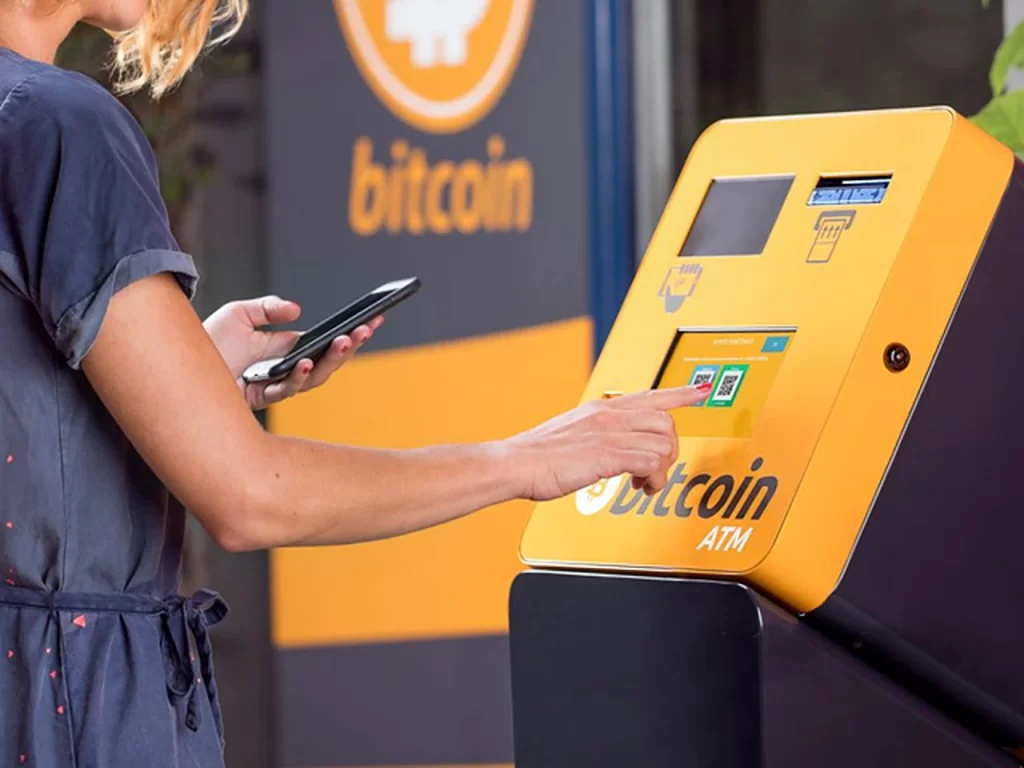
Bitcoin Depot, a leading cryptocurrency ATM company in the United States, has revealed its plans to go public after successfully closing a merger deal.
The merger, facilitated by fintech firm GSR II Meteora Acquisition Corporation, was approved by stockholders on June 30.
The deal, which was reported in August 2022, carried a price tag of $885 million and is expected to enable investors to access Bitcoin Depot on the Nasdaq exchange starting from July 3.
Brandon Mintz, the founder and CEO of Bitcoin Depot, stated that the merger was aimed at supporting various growth opportunities and fostering the widespread adoption of Bitcoin (BTC) in North America.
Investors will have the opportunity to trade Bitcoin Depot shares on the Nasdaq under the ticker symbols BTM and BTMWW for common stock and public warrants, respectively.
This announcement comes at a time when regulatory scrutiny of cryptocurrency firms in the United States is intensifying.
The Securities and Exchange Commission has recently filed lawsuits against major exchanges, such as Binance and Coinbase, accusing them of conducting unregistered securities offerings.
Despite this, investment vehicles that offer exposure to cryptocurrencies are gaining popularity. BlackRock, for instance, filed an application in June to list a Bitcoin exchange-traded fund, indicating growing interest in crypto-related investments.
Bitcoin Depot, established in 2016, has emerged as one of the largest crypto ATM companies in North America, boasting more than 9,130 locations, as stated on its website.
However, the crypto industry is not without its challenges. In May, Bitcoin of America, another ATM provider, announced the closure of its operations in Connecticut due to the state’s Department of Banking asserting that the company lacked the necessary licensing.
With its merger and subsequent public listing, Bitcoin Depot aims to capitalize on its strong market position and expand its operations further.
The company’s commitment to driving Bitcoin adoption aligns with the growing interest in cryptocurrencies and the increasing demand for accessible and user-friendly avenues to buy and sell digital assets.
As Bitcoin Depot makes its debut on the Nasdaq, it will be interesting to observe how this development shapes the landscape of the cryptocurrency industry in the United States.
Other Stories:
Maple Finance Launches Direct Lending Program, Filling Void Left by Bankrupt Lenders
ASX Considers Listing Tokenized Real-World Assets
UK To Pass Law To Bring Cryptocurrencies Under Traditional Asset Regulations
The United States Bankruptcy Court for the Southern District of New York has granted approval for Celsius Network, a bankrupt cryptocurrency lender, to convert its altcoins into Bitcoin.
The decision was made by Judge Martin Glenn, and the liquidation process will pave the way for the distribution of funds to creditors in the near future.
The approval of this proposal came after extensive discussions between Celsius and the U.S. Securities and Exchange Commission (SEC).
According to the ruling of the bankruptcy judge, the struggling lender is now authorized to sell or convert any cryptocurrency assets, with the exception of tokens associated with Withhold or Custody accounts, into Bitcoin (BTC) or Ether (ETH) starting from July 1, 2023.
Celsius Network faced bankruptcy in 2022 following the collapse of the Terra ecosystem, which affected its Terra (LUNA) and TerraUSD (UST) tokens.
Creditors have been awaiting a resolution since the bankruptcy filing several months ago, and this recent approval opens up new possibilities and extends the ongoing proceedings.
In light of the recent regulatory crackdown by the SEC on altcoins, which the regulator has categorized as securities, many cryptocurrency companies are opting to convert their altcoins into BTC and ETH.
Notable altcoins that have been labeled as securities by the SEC include Cardano.
Despite the ongoing bankruptcy proceedings, Celsius Network was acquired by the crypto consortium Fahrenheit in May 2023.
Under the stewardship of its new owners, the network continues to operate.
The new owners have announced their intention to develop a revised bankruptcy plan, although specific details of these plans have not yet been disclosed.
However, it is now clear that the assets will be exclusively distributed in Bitcoin and Ether.
Following Celsius Network’s bankruptcy, other companies in the cryptocurrency industry, such as Voyager Digital and FTX, have also faced financial challenges.
As a result, they have been exploring unique strategies to address the demands of their creditors for reimbursement.
In summary, the United States Bankruptcy Court’s approval for Celsius Network to convert its altcoins into Bitcoin marks a significant step towards resolving the lender’s bankruptcy proceedings.
With the involvement of the SEC and the acquisition by Fahrenheit, the network is now moving forward under new ownership and is expected to distribute its assets in BTC and ETH.
This development reflects a broader trend in the industry as crypto companies grapple with regulatory concerns and seek solutions to address creditor demands.
Other Stories:
Maple Finance Launches Direct Lending Program, Filling Void Left by Bankrupt Lenders
UK To Pass Law To Bring Cryptocurrencies Under Traditional Asset Regulations
Three committee chairs in the United States House of Representatives have expressed their dissatisfaction with the response received from U.S. Securities and Exchange Commission (SEC) Chair Gary Gensler regarding their inquiry into recordkeeping requirements.
Judiciary Committee Chair Jim Jordan, Oversight Committee Chair James Comer, and Financial Services Committee Chair Patrick McHenry issued a letter demanding a more satisfactory response, stating that Gensler’s reply did not address their direct requests.
The congresspeople, joined by Rep. Tom Emmer, were prompted to take action following a Wall Street Journal report that criticized the SEC and other agencies for inadequate recordkeeping.
The report highlighted the use of chats by government officials for official business, which were not being searched to fulfill Freedom of Information Act requests.
The recent letter reiterates the original requests and includes a demand for an explanation if Gensler does not intend to comply.
The letter, dated June 28, also points out inconsistencies in Gensler’s publicly accessible meeting schedules in 2021 and makes mention of cryptocurrency.
Gensler faced additional criticism related to cryptocurrencies when the Blockchain Association released a paper suggesting that he should recuse himself from digital asset enforcement decisions.
The paper claimed that the SEC had neglected its role as a rulemaking body in the digital asset space.
It specifically raised concerns about the SEC’s stance on whether digital assets other than Bitcoin qualify as securities and whether digital asset trading platforms are considered unregistered securities exchanges.
The paper argued that Gensler had shown bias in his statements, asserting that he had already formed opinions on these matters.
The paper reminded recipients of Wells notices, who are individuals or entities facing potential SEC enforcement actions, that they could seek Gensler’s recusal either through the SEC or in federal court.
In summary, three committee chairs have expressed their dissatisfaction with the SEC Chair’s response to their inquiry into recordkeeping requirements, citing unaddressed requests.
This comes in the wake of criticism regarding the SEC’s recordkeeping practices and Gensler’s handling of digital asset enforcement decisions, prompting calls for his recusal in certain cases.
Other Stories:
SEC Commissioner Pushing For ‘Reserved’ Approach to Cryptocurrency Regulation
Bankrupt Crypto Exchange FTX Takes Steps Towards Relaunching as a New Entity
EDX Cryptocurrency Exchange Prepares to Switch Custody Providers
The United Kingdom is on the verge of passing a bill that will subject cryptocurrencies to the same regulations as traditional assets, signaling a significant milestone for the local crypto community.
This legislation, known as the Financial Services and Markets Bill, has received approval from the upper chamber of the U.K. parliament on June 19 and is now awaiting King Charles’ royal assent, the final step required for a parliamentary bill to become law.
Discussions surrounding the bill began in the British Parliament back in July 2022, and its enactment is expected to bring about legal clarity and support the wider adoption of cryptocurrencies in the country.
Under the new law, the Treasury, Financial Conduct Authority (FCA), Bank of England, and Payments Systems Regulator will be granted the authority to establish and enforce regulations for crypto businesses.
The introduction of this legislation reflects the U.K.’s ambition to leverage the advantages of blockchain technology for the private sector and the overall economy.
Andrew Griffith, the economic secretary to the U.K. Treasury, expressed the country’s desire to enable firms to fully utilize the opportunities presented by crypto assets through appropriate regulatory measures.
The long-term vision is to create an environment that allows businesses to maximize the potential benefits derived from cryptocurrencies.
Furthermore, this regulatory framework could serve as a catalyst for attracting more crypto firms to the U.K., particularly in light of the increasingly stringent regulatory environments observed worldwide.
A recent example is venture capital firm Andreessen Horowitz (A16z), which announced the establishment of its first office outside of the United States in London.
This decision followed productive discussions with the U.K. prime minister, policymakers, and the FCA, with the firm’s crypto founder and managing partner, Chris Dixon, highlighting the appeal of a predictable business environment as a key factor behind the expansion.
The impending passage of the Financial Services and Markets Bill in the U.K. signifies a pivotal moment for the crypto community within the country.
By bringing cryptocurrencies under the same regulatory framework as traditional assets, the new law aims to provide legal clarity and foster the growth of the crypto industry.
This move positions the U.K. as an attractive destination for crypto firms seeking a supportive regulatory environment, potentially paving the way for further advancements in the adoption and utilization of cryptocurrencies in the nation.
Other Stories:
SEC Commissioner Pushing For ‘Reserved’ Approach to Cryptocurrency Regulation
Bankrupt Crypto Exchange FTX Takes Steps Towards Relaunching as a New Entity
EDX Cryptocurrency Exchange Prepares to Switch Custody Providers
The Chicago Mercantile Exchange (CME) Group revealed its intention to launch Ether/Bitcoin Ratio futures on June 29.
The introduction of these futures contracts is scheduled for July 31, pending regulatory approval.
The settlement of Ether/Bitcoin Ratio futures will be in cash, determined by the final settlement price of CME Group’s Ether (ETH) futures divided by the final settlement price of CME Group’s Bitcoin (BTC) futures.
Additionally, this new contract will follow the same listing cycle as CME Group’s Bitcoin and Ether futures contracts.
Giovanni Vicioso, CME Group’s global head of cryptocurrency products, highlighted the potential for relative value trading opportunities between Ether and Bitcoin.
While these assets have traditionally exhibited a strong correlation, their market dynamics may now differ, enabling investors to capitalize on their performance variances. Vicioso stated:
“By introducing Ether/Bitcoin Ratio futures, investors can gain exposure to both ether and bitcoin in a single trade without taking a directional view.
This new contract will facilitate opportunities for a wide range of clients seeking to hedge positions or execute various trading strategies, all in an efficient and cost-effective manner.”
CME Group initially entered the cryptocurrency market in December 2017 by launching the first Bitcoin futures contract.
In February 2021, they expanded their offerings by introducing an Ether futures contract. Recognizing the growing demand for cryptocurrency investment opportunities, CME Group further broadened its product range in 2022 with the introduction of micro BTC and ETH futures contracts, providing traders with additional options to engage in these digital assets.
On April 17, CME Group unveiled plans to enhance its cryptocurrency options by introducing new options for standard and micro-sized Bitcoin and Ether contracts.
These contracts were expected to be available from May 22, pending regulatory review.
This expansion included daily expiries from Monday to Friday, allowing traders to better manage short-term price risks associated with Bitcoin and Ether.
The aim was to provide market participants with increased precision and flexibility in managing the short-term price volatility of these digital assets.
Explore The Latest Crypto News Today

Maple Finance, a Web3 lending platform, has unveiled the launch of its direct lending program, aimed at replacing the services previously offered by now-defunct lenders such as Celsius and BlockFi.
The platform’s development team shared a fact sheet on June 28, highlighting their intention to roll out the first lending pool in July.
Maple Finance serves as a blockchain institutional capital marketplace, facilitating loans for Web3 businesses seeking funds for product launches and expansions.
Previously, the platform relied on credit professionals known as “pool delegates” to provide capital for these loans.
Notably, Celsius utilized Maple to establish a Wrapped Ether (WETH) lending pool in February 2022.
However, during the bear market of 2022, several prominent Web3 lenders faced bankruptcy. Celsius ceased operations in July, followed by BlockFi in November, and Genesis in January.
In response, Maple Finance’s team announced on June 28 that they would step into the role of a lender on the platform in certain cases.
Leveraging their credit underwriting expertise, they will source capital from institutional allocators to support creditworthy borrowers.
This means that individuals who are unable to secure loans from other providers may have the opportunity to obtain them through Maple’s new program, Maple Direct.
According to the team, this program is necessary due to the exit of major Web3 lenders from the space, with traditional lenders lacking the required focus and expertise to underwrite for innovative Web3 technology firms.
The first direct lending pool will focus on infrastructure, asset management, and liquidity providers. Capital allocators, including Crypto Funds, DAOs, VCs, HNWI, Yield Aggregators, and Family Offices, have been invited to participate in the program and earn yield on their investments.
The announcement emphasized that Maple will continue expanding its existing services, indicating that Maple Direct will not replace the current platform, which features competing lenders.
In the past, Maple Finance faced challenges due to the bankruptcies of FTX and Alameda Research in November.
One borrower, Aurus Global, experienced payment issues as a result, and Maple severed ties with Orthogonal Trading over perceived misrepresentations.
However, the platform quickly rebounded, releasing version 2.0 of its software in December.
With its direct lending program, Maple Finance aims to fill the void left by the collapse of major Web3 lenders and provide creditworthy borrowers with the necessary capital for their projects.
Other Stories:
Drop Wireless, NextEPC To Reshape The Future Of Cellular Connectivity And Bridge The Digital Divide
Sale of FTX’s $500 Million Stake In AI Startup Paused, Hindering Efforts To Fill $2 Billion Gap
Bitcoin (BTC) Miners Experience Record Surge in Revenue Sent to Exchanges

Manchester, UK, June 30th, 2023, Chainwire
Manchester City and OKX, one of the leading crypto exchanges by trading volume and a leading Web3 technology company, today announced OKX as the Club’s Official Sleeve Partner in a new multi-year agreement.
As part of the expanded deal, the OKX brand will feature on the left sleeve of both the men’s and women’s first team playing kits and will retain its position on the left sleeve of the first team training kits, in addition to appearing across further digital and physical club assets.
OKX’s partnership with Manchester City began in March 2022, first expanding in July 2022 to become the Club’s Official Training Kit Partner for the 2022/23 season. To date, the partnership has helped introduce the brand to millions of football fans around the world through innovative Web3 experiences like the OKX Collective, through which fans can get up-close-and-personal with Manchester City players and OKX Ambassadors such as Jack Grealish and Alex Greenwood.
The partnership expansion was unveiled at an exclusive reveal at the Etihad Stadium featuring City Football Group Chief Executive Officer Ferran Soriano and OKX Global Chief Marketing Officer Haider Rafique. As part of the event, the sleeve was unveiled in a ‘virtual reveal’ with a hero video featuring player avatars. Manchester City legend Gaël Clichy was also in attendance for a media Q&A.
In a session moderated by Manchester City presenter Natalie Pike, Rafique and Soriano spoke about OKX’s vision of reaching City fans around the world through the partnership. They also discussed the role Web3 technology can play in fan engagement, especially when it comes to designing engaging, immersive experiences for fans.
Ferran Soriano, Chief Executive Officer at City Football Group, said: “We are very proud to have OKX represented on the sleeve of the Manchester City shirt. Both OKX and Manchester City are leading companies driven by a passion for innovation. We have already seen great Web3 experiences designed by OKX for Manchester City’s global fan base and there will be many more to come. This is a very exciting partnership.”
Haider Rafique, CMO at OKX, said: “The journey with the Man City team has been incredible. Manchester City was our first official global brand partnership and in just a year and a half we have come a long way. We always intended to integrate with the sport and help the Club lead on leaning into Web3. Fast forward fifteen months, we now have a metaverse, an NFT initiative and a number of other new projects that we are excited about.
The sleeve partnership brings us closer to City fans across the globe, and we look forward to collaborating to create unique, exciting and innovative engagements through Web3 technology. As the Club’s Official Cryptocurrency Exchange Partner, fans can expect amazing things every time they interact with OKX.”
About OKX
OKX is a world-leading technology company building the future of trading and Web3. Its leading self-custody solutions include the Web3-compatible OKX Wallet, which allows users greater control of their assets while expanding access to DEXs, NFT marketplaces, DeFi, GameFi and thousands of dApps.
OKX partners with a number of the world’s top brands and athletes, including: English Premier League champions Manchester City F.C., McLaren Formula 1, The Tribeca Festival, Olympian Scotty James, and F1 driver Daniel Ricciardo.
OKX is committed to transparency and security and publishes its Proof of Reserves on a monthly basis.
To learn more about OKX, download our app or visit: okx.com
About Manchester City Football Club
Manchester City FC is an English Premier League club initially founded in 1880 as St Mark’s West Gorton. It officially became Manchester City FC in 1894 and has since then gone onto win the UEFA Champions League, European Cup Winners’ Cup, nine League Championship titles, seven FA Cups and eight League Cups. Manchester City FC is one of 13 clubs comprising the City Football Group.
Under manager Pep Guardiola, one of the most highly-decorated managers in world football, the Club plays its domestic and UEFA Champions League home fixtures at the Etihad Stadium, a spectacular 53,500 seat arena that City has called home since 2003. Today, the stadium sits on the wider Etihad Campus, which also encompasses the City Football Academy, a state-of-the-art performance training and youth development facility located in the heart of East Manchester. Featuring a 7,000-capacity Academy Stadium, the City Football Academy is also where Manchester City Women’s Football Club and the Elite Development Squad train on a daily basis and play their competitive home games.
Disclaimer
OKX IS NOT REGULATED BY THE FCA, THUS, PROTECTIONS SUCH AS THE FINANCIAL OMBUDSMAN SERVICE OR FINANCIAL SERVICES COMPENSATION SCHEME WILL NOT BE AVAILABLE. YOU SHOULD CONSIDER WHETHER YOU UNDERSTAND HOW CRYPTO WORKS AS THE VALUE OF YOUR ASSETS, INCLUDING STABLECOINS, CAN INCREASE OR DECREASE AND PROFITS MAY BE SUBJECT TO CAPITAL GAINS TAX. PAST PERFORMANCE DOES NOT INDICATE FUTURE RESULTS.
Contact
Media
[email protected]
0788118718