



Paris, France, March 5th, 2024, Chainwire
Uniting Web3 Visionaries and Global Leaders
Following the success of its 2023 edition, the Proof of Talk summit, heralded as the Davos of Web3, is back for its second year and brings together thought leaders, investors, CEOs, founders, exchanges, digital asset managers, and regulatory authorities for networking and thought-provoking sessions. Held on 10 and 11 June at the historic Museum of Decorative Arts in the Louvre Palace at the heart of Paris, this summit has its sights on delivering a unique event with a highly-curated audience dedicated to shaping the future of blockchain and global policy.
Last year, Proof of Talk welcomed over 1500 ecosystem participants, including key figures from Binance, VanEck, Ripple, and the World Economic Forum, alongside CEOs and founders of leading blockchain companies and government representatives. After the event distinguished investor, venture partner, and Proof of Talk attendee Leeor Groen, Managing Director, Spartan Group, aptly noted that it was “where Web3 meets the spirit of Davos.” The summit facilitated crucial discussions on rebuilding trust within Web3, reflecting the industry’s need for a platform that encourages genuine engagement, meaningful connections, and strategic collaboration.
With the SEC’s recent spot Bitcoin ETF approvals and the Markets in Crypto-Assets Regulation bringing more clarity to the space in Europe, the stage is truly set for widespread blockchain adoption and development of digital assets beyond cryptocurrency. This year’s conference harnesses and reflects this revitalization and will assemble blockchain and Web3 professionals from around the world to engage with C-level executives, explore partnerships, and generate investment opportunities that will reshape industries and create new paradigms.
The highly-curated 2024 forum seeks to welcome over 2500 participants. Combined with a speaker lineup featuring CEOs, founders, and leaders of the Web3 and digital assets industry, the summit features impact-focused networking and a refined agenda. A few of the speakers include:
· Joseph Lubin CEO and Founder at Consensys
· Jenny Johnson, CEO, Franklin Templeton
· Tim Draper, Founder, DFJ
· Ophelia Snyder, Cofounder President, Ark 21 Shares
· Mihailo Bjelic, Co-Founder, Polygon
· Raoul Pal, Crypto Macro Economist
· Yat Siu, Chairman, Animoca
· John Wu, President, Ava Labs
· Justin Sun, Founder, Tron
· Marieke Flament, former CEO, Near Foundation
· Dominic Williams, Founder, DFINITY
· Björn Wagner, CEO, Parity technologies and Polkadot
· Jon Fink Isaksen, Head of Policy, Uniswap
· Matthew Siegel, Head of Digital Assets, Van Eck
· Christopher Donovan, COO, NEAR Foundation
· Lex Sokolin, Managing Partner, Generative Ventures
· Digital asset leads from over 30 major TradFi banks
· Partners from 100+ attending VCs
The summit’s agenda also actively reflects Web3’s growing importance, with over 20 panels, 10+ workshops, and over five keynotes and firesides on key topics shaping Web3’s future. These include real world asset tokenization, AI-blockchain integration, gaming evolution, and smart contract security.
Zohair Dehnadi, Co-Founder, Proof of Talk and Partner, X-Ventures: “We are overwhelmed by the positive feedback we received from our 2023 summit, with some attendees even sharing it reminded them of the World Economic Forum’s early days. We’re also delighted at all the interest from both speakers and potential sponsors for this year’s edition. Right now, the industry is on the brink of a new era, and we’ve harnessed this enthusiasm to curate an event with the most influential people from Web3, digital assets, and traditional finance to shape the agenda of the future. It’s important to provide an inspirational forum for these players, from founders and funds to legal experts and regulatory authorities, to engage in high-impact networking, share best practices, and have those necessary but tough discussions that will safely move the space forward. I’m proud to offer the industry such an exclusive experience at one of Paris’ most iconic locations, and am looking forward to seeing everyone in June!”
About Proof of Talk
Proof of Talk is setting a new standard in the Web3 conference landscape, positioning itself not just as another web3 conference but as a pivotal forum where the promise of decentralization comes to life. The summit uniquely combines the essence of traditional economic forums with the dynamic, decentralized Web3 community, fostering an innovative ecosystem of dialogue and action. It stands as a platform for change, where every voice, from the seasoned economist to the radical Web3 founder, contributes to a collective vision of a decentralized economic future. By facilitating engaging discussions and unparalleled networking, participants shape this new landscape. Learn more at www.proofoftalk.io
About X Ventures
X Ventures is a Germany-based digital assets investment fund dedicated to supporting and empowering entrepreneurs in the Web3 industry. Alongside its investment activities, X Ventures founded www.xschool.io, aiming to provide accessible education to future leaders worldwide.
Contact
Shanna Molina
Cognito
[email protected]
+31 6 18 72 87 55

Bitcoin’s movement away from exchanges is accelerating at a notable pace, with the cryptocurrency’s price striving to reach unprecedented highs.
James Van Straten, a research and data analyst at CryptoSlate, highlighted significant Bitcoin withdrawals from exchanges in a recent post, marking a trend reminiscent of 2021.
Despite the lack of mainstream investor return to cryptocurrency, Bitcoin reserves on exchanges are diminishing.
Van Straten, utilizing data from Glassnode, pointed out that on March 1, approximately $2 billion in Bitcoin was withdrawn from exchanges.
This activity, he remarked, was unprecedented.
“I don’t think I’ve quite seen anything like this before,” he said, noting that the day saw one of the largest Bitcoin withdrawals in more than five years, totaling over $2.3 billion.
Glassnode’s data suggests that the daily Bitcoin outflows around this period were comparable to those observed on June 28–29, 2021, a time of record withdrawals.
The influence of United States spot Bitcoin exchange-traded funds (ETFs) was notable, excluding around $200 million transferred to Coinbase Pro for custody.
READ MORE: US Energy Officials Reach Agreement with Texas Blockchain Council and Riot Platforms
Binance experienced approximately $400 million in outflows, with Coinbase handling the remainder. Van Straten found Binance’s outflows particularly intriguing, as they were not related to ETF activities.
According to Glassnode, the total Bitcoin assets held on major trading platforms dropped to 2,286,347 BTC ($142.5 billion) by March 2, reaching its lowest since March 2018 when the price of Bitcoin was around $8,000.
Further analysis by Crypto Dan from CrryptoQuant in a Quicktake market update revealed shifts in Bitcoin’s market composition.
The analysis highlighted an increase in activity from “younger” coins, while “older” ones, dormant for six months or more, began to circulate again.
This trend signals the arrival of new investors and suggests an impending influx of individual investors.
“New investors are flowing in, and in the near future we can expect the influx of many new ‘individual’ investors,” he summarized, indicating a sharp decline in the ratio that could herald the onset of a true bull market.

In a recent decision by United States District Court Judge Analisa Torres, a motion by the U.S. Securities and Exchange Commission (SEC) to delay the deadline for a critical submission in its ongoing litigation against Ripple Labs has been approved.
The legal documents, filed on March 1, have allowed the SEC additional time to submit discovery materials related to remedies against Ripple.
This extension sets new deadlines, giving the SEC until March 22 to file its opening brief, Ripple until April 22 to submit its opposition brief, and the SEC a final deadline of May 6, 2024, for a reply.
The case between the SEC and Ripple Labs has been a focal point of regulatory discussion since December 2020.
It was then that the SEC charged Ripple and its leading executives, CEO Brad Garlinghouse and co-founder Chris Larsen, with orchestrating a $1.3 billion unregistered securities offering via the sale of the XRP token.
The SEC argues that XRP qualifies as a security, necessitating adherence to stringent regulatory guidelines, a classification Ripple disputes by maintaining that XRP is not a security and criticizing the SEC for not providing adequate notice of its status.
This lawsuit has traversed various legal avenues and arguments, particularly focusing on the Howey test, a criterion to assess if a transaction constitutes an “investment contract” and thus, a security under U.S. law.
READ MORE: Elon Musk Takes Legal Action Against OpenAI Over Alleged Nonprofit Agreement Breach
The SEC posits that XRP satisfies the Howey test conditions, a stance contested by Ripple.
A pivotal moment in the litigation came in July 2023 when Judge Torres delivered a mixed verdict.
She ruled that XRP did not qualify as a security in its sales on digital asset exchanges through programmatic sales, marking a partial victory for Ripple Labs.
However, she also determined that sales of XRP to institutional investors did classify the token as a security, highlighting the nuanced and complex nature of the legal and regulatory challenges facing cryptocurrency and digital assets.
This ongoing case continues to be a significant point of interest for the cryptocurrency industry, regulatory bodies, and legal observers, as it may set important precedents for the classification and regulation of digital assets.

An integrated crypto market strategy is a comprehensive approach to trading and investing in cryptocurrencies, leveraging a blend of technical analysis, fundamental analysis, risk management, and diversification to optimize returns while mitigating risks.
This strategy acknowledges the volatile and unpredictable nature of the crypto market, incorporating various tools and methodologies to navigate its complexities effectively. Below, we explore the key components of an integrated crypto market strategy, highlighting how each contributes to a holistic trading and investment approach.
Understanding the Market Dynamics
The foundation of any successful crypto market strategy lies in a thorough understanding of the market dynamics. Cryptocurrencies are influenced by a wide array of factors, including technological developments, regulatory changes, market sentiment, and macroeconomic trends. An integrated strategy begins with keeping abreast of these factors through continuous research and analysis.
Fundamental analysis involves evaluating the underlying technology, use case, and team behind each cryptocurrency to assess its long-term viability. Meanwhile, technical analysis focuses on price movements and trading volumes to identify potential buying or selling opportunities.
Diversification
Diversification is a critical component of minimizing risk in the volatile crypto market. By spreading investments across different cryptocurrencies, sectors, and even asset classes, investors can reduce the impact of a poor performance in any single investment. An integrated strategy might include a mix of established cryptocurrencies like Bitcoin and Ethereum, along with smaller altcoins and tokens from emerging sectors such as decentralized finance (DeFi) and non-fungible tokens (NFTs). Diversification extends beyond cryptocurrencies, incorporating other assets like stocks, bonds, and commodities to further hedge against crypto market volatility.
Risk Management
Effective risk management is paramount in the crypto market. An integrated strategy employs various techniques to manage exposure and protect capital. Setting stop-loss orders, for example, can limit potential losses on individual trades. Position sizing is another crucial aspect, ensuring that no single trade can significantly impact the overall portfolio. Additionally, an integrated approach might use dollar-cost averaging to mitigate the effects of volatility, investing a fixed amount at regular intervals regardless of the asset’s price.
Staying Informed and Adaptable
The fast-paced nature of the crypto market requires investors to stay informed and adaptable. An integrated strategy emphasizes the importance of continuous learning and the willingness to adjust tactics in response to new information or market developments. This might involve reallocating assets as market conditions change, taking profits in response to short-term price spikes, or revising the investment thesis based on emerging trends.
Leveraging Technology
Technology plays a vital role in executing an integrated crypto market strategy. Automated trading bots, for example, can execute trades based on predefined criteria, enabling investors to take advantage of opportunities around the clock without constant market monitoring. Portfolio management tools help track performance across multiple exchanges and wallets, providing a comprehensive view of investments. Additionally, blockchain analytics platforms offer insights into on-chain data, helping investors make informed decisions based on actual network activity.
Press Releases
Submitting press releases in top-tier crypto sites, like Cointelegraph and Coindesk, is a key way to raise awareness and help a crypto project achieve its marketing objectives.
PRs can often lead to a wave of media coverage and heightened interest.

FTX, the cryptocurrency exchange embroiled in bankruptcy proceedings, has initiated a claim window for affected crypto asset holders, offering payouts at rates considerably lower than the prevailing market values.
According to Wu Blockchain, the valuations set by FTX for major cryptocurrencies like Bitcoin (BTC), Ether (ETH), Solana (SOL), and Binance Coin (BNB) are markedly below their current market rates.
Specifically, BTC is priced at $16,871, ETH at $1,258, SOL at $16.24, and BNB at $286, in stark contrast to their market prices of $62,144, $3,424.62, $129.96, and $411.32, respectively.
This significant disparity in pricing has sparked outrage and concern among cryptocurrency investors, leading many to question FTX’s transparency and fairness.
The discontent has been palpable on social media platforms, where users are vocally demanding accountability from the exchange.
In response to the mounting criticism, PricewaterhouseCoopers (PwC) released a statement explaining the ongoing Chapter 11 bankruptcy proceedings involving FTX Digital Markets and its associated debtors.
The objective is to consolidate assets for a more streamlined settlement process.
PwC has announced a deadline of May 15, 2024, for creditors to file their claims through a dedicated portal, with the first interim distribution anticipated for late 2024 or early 2025. All claims are to be calculated in U.S. dollars.
Adding to the complexities, FTX has issued warnings about unauthorized third parties making bids on behalf of certain FTX debtors.
READ MORE: Bitcoin Trader Recovers $13,000 Mistaken NFT Purchase Thanks to Seller’s Generosity
This has led to a clarification regarding the sale of digital assets, which, as per a bankruptcy court order, is to be managed exclusively by Galaxy Asset Management.
FTX emphasizes that only Galaxy is authorized to oversee any transactions related to the bankruptcy proceedings, urging institutional buyers and regulatory-compliant entities to adhere strictly to this directive.
Moreover, FTX has received court approval to liquidate its over $1 billion investment in Anthropic, an artificial intelligence company, highlighting the extensive measures being taken to address the financial turmoil and fulfill creditor claims.
This development underscores the ongoing efforts to navigate the fallout from FTX’s bankruptcy and the intricate process of asset liquidation and creditor compensation.
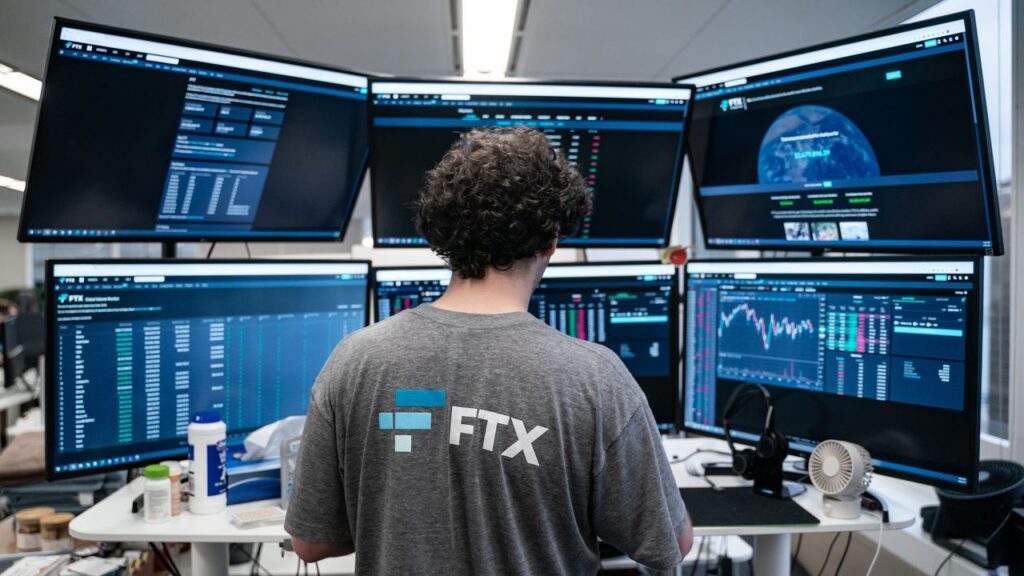
FTX, the bankrupt exchange striving to settle its obligations to creditors following its 2022 collapse, has issued a cautionary note regarding its authorized investment manager as it proceeds with asset sales.
In a post dated March 1, FTX clarified that the sale of digital assets mandated by the bankruptcy court is exclusively overseen by Galaxy Asset Management, the authorized investment manager.
The exchange warned of unauthorized third parties attempting to solicit bids on behalf of FTX Debtors.
Moreover, FTX emphasized that any sale of locked digital assets would adhere to the existing terms and conditions governing the unlocking schedule.
The exchange has been actively engaged in restructuring efforts and repaying creditors, having recovered assets amounting to $7 billion for this purpose.
READ MORE: Chainalysis Report Reveals Surge in Darknet Market Revenue Amidst Crypto Crime Landscape
Approval was granted by the United States Bankruptcy Court for the District of Delaware during a hearing on Feb. 22 for the sale of FTX’s stake in Anthropic, an artificial intelligence (AI) firm, valued at over $1 billion.
This decision followed a motion filed by FTX seeking authorization to sell its 7.84% stake in Anthropic, an investment made in April 2022 prior to its bankruptcy filing in November of the same year.
In December 2023, FTX proposed reimbursing claimants based on crypto asset prices at the time of bankruptcy.
While creditors advocated for “in kind” repayments for crypto holdings, Judge John Dorsey ruled in favor of the debtors in a Jan. 31 verdict, citing clarity in the law.
Former FTX CEO Sam Bankman-Fried was convicted on seven charges including wire fraud, securities fraud, and money laundering conspiracy in a criminal trial on Nov. 3, 2023.
His sentencing, scheduled for March 28, carries a maximum penalty of 110 years in prison.

Decentralised finance (DeFi) lending platform and stablecoin issuer Seneca Protocol has fallen victim to exploitation, as stated in a Feb. 28 announcement on the protocol’s official X account.
According to a report disclosed to Cointelegraph, blockchain analytics firm CertiK has estimated the losses at $6.4 million thus far.
The Seneca team has urged users to revoke approvals for the affected contracts and has asserted that its personnel are “presently collaborating with security specialists to investigate the bug”.
Seneca Protocol is a DeFi lending application enabling users to deposit various cryptocurrencies as collateral, which can then be utilised to mint and borrow the protocol’s native stablecoin, SenecaUSD.
Blockchain data reveals that an account ending in 42DC managed to transfer approximately 1,385.23 Pendleton Kelp restaked Ether (PT Kelp rsETH) from a Seneca collateral pool by invoking the “performOperations” function.
Subsequently, this account exchanged these tokens for approximately $4 million worth of Ether (ETH) through three transactions.
Following these swaps, the account proceeded to transfer an additional 717.04 ETH derivative tokens from various collateral pools and exchanged them for ETH.
According to CertiK’s report, these transfers were maliciously executed due to a flaw in the protocol’s “performOperations” function.
The bug permits any account to invoke the function while specifying OPERATION_CALL as the action to be executed.
Consequently, the attacker gains the ability to “perform external calls to any address as the callee and callData are fully controlled by the attacker”.
READ MORE: Overdare Partners with Circle to Integrate Web3 Wallets and USDC Payouts for Gaming Creators
Hence, CertiK contends, the attacker managed to drain funds from the collateral pool not under its ownership.
Blockchain investigator Spreek also alerted users about the exploit on X, describing it as a “critical vulnerability”.
Spreek recommended that users should revoke approvals for the addresses used in the exploit.
According to security researcher ddimitrov22, Seneca suffers from an additional vulnerability preventing developers from pausing the Seneca contracts, as the pause and unpause functions within them are labelled as “internal”, rendering them inaccessible.
In their acknowledgment of the attack, the development team stated that they are currently conducting an investigation and will provide an update “shortly”.
Hacks and exploits continue to pose threats to Web3 users in 2024.
On Feb. 23, Axie Infinity co-founder Jeff “Jihoz” Zirlin lost $9.7 million due to a hack of his personal wallets. Concurrently, on the same day, DeFi protocol Blueberry was exploited for 457 ETH.

Bitcoin is potentially poised for a meteoric rise, with projections suggesting it could reach $180,000, spurred by a bullish signal reminiscent of historical gains.
Caleb Franzen, founder of Cubic Analytics, disclosed on March 1 that BTC price returns may surge by 260% from current levels during this cycle, in a post on X.
Franzen highlighted the significance of an ultra-rare Williams%R Oscillator signal, which has appeared only four times in history.
This indicator, analyzed on three-year timeframes, recently surpassed the overbought level, signifying a bullish trend for Bitcoin.
“The 36-month Williams%R Oscillator just closed above the overbought level for the 4th time in history,” Franzen remarked, emphasizing the bullish sentiment.
This oscillator, instrumental in predicting Bitcoin’s recovery from the 2022 bear market lows, is now indicating a potential surge into “overbought” territory above -20, a phenomenon observed only thrice before in 2013, 2016, and 2020.
Franzen cautioned against dismissing overbought signals, emphasizing their bullish momentum implications.
READ MORE: Bitcoin Surges to Highest Point in Over Two Years on Institutional Endorsement and ETF Optimism
Despite diminishing returns in each cycle, with 2020 yielding 260%, matching this performance would propel Bitcoin to $180,000.
However, Franzen stressed the unpredictability of market behavior despite historical trends, urging caution in interpreting these signals as guarantees of future performance.
Another bullish indicator, the Relative Strength Index (RSI), has also surged into overbought territory on daily timeframes, reaching levels above 80/100 on Feb. 28.
This follows a reset in late December, preceding Bitcoin’s upward momentum fueled by the launch of spot Bitcoin exchange-traded funds (ETFs) in the United States.
Monthly RSI trends further reinforce the optimism, with the indicator just entering the overbought zone, suggesting potential further upside for Bitcoin.
While indicators point to a bullish trajectory for Bitcoin, Franzen’s cautionary stance underscores the need for prudent interpretation and consideration of market dynamics beyond historical patterns.

The token representing the layer-1 blockchain Shido plummeted by as much as 94% in a mere 30 minutes subsequent to falling victim to an exploit on its Ethereum-based staking contract.
Blockchain security firm PeckShield alerted its audience to the plunge in a post dated Feb. 29 X.
In a subsequent post, it elucidated that an exploiter had succeeded in transferring the blockchain’s Ethereum staking contract to another address, following which the new owner upgraded the contract with a concealed function to withdraw staked tokens.
According to CoinGecko data, PeckShield disclosed that the attacker had withdrawn over 4.3 billion Shido tokens, equating to nearly half of the circulating token supply, which was approximately 9 billion tokens.
Before the price downturn, the value of these tokens stood at approximately $35 million.
In another post, the pseudonymous on-chain researcher ZachXBT revealed that they had identified the exploiter’s address, which had been funded through cryptocurrency initially bridged from the cross-chain protocol Layerswap and subsequently from the Arbitrum blockchain.
ZachXBT claimed to have uncovered the true identity of the wallet owner who funded the exploiter but suggested that they too had fallen victim to hacking, as “their assets were suddenly transferred before funding the exploiter.”
Several hours after the incident commenced, the Shido team issued an official statement asserting that they had neutralised any further threats against Shido.
READ MORE: ENS Resolves Dispute Over eth.link Domain with $300,000 Settlement
The protocol also stated that they had initiated an investigation and urged the hacker to engage in negotiation regarding a bounty.
Shido also assured users who staked their tokens that their assets would be returned.
Shido, a layer-1 proof-of-stake blockchain that is yet to launch its mainnet, announced its impending mainnet launch in a post dated Feb. 24 X.
SHIDO, an Ethereum-based ERC-20 token, allowed staking on the project’s connected decentralized exchange (DEX) to earn an 8% annual yield, according to its website.
Shido did not provide an immediate response to a request for comment regarding the contract exploit.
According to PeckShield, last year witnessed over 600 crypto-related hacks resulting in $2.1 billion in losses, marking a nearly 30% decrease from 2022.
Up until January of this year, there had been 30 attacks resulting in $182.5 million lost.
February also seemed to conclude as a significant month for exploiters, with $290 million stolen from PlayDapp, alongside several million dollars’ worth of crypto stolen in various wallet breaches and phishing scams.
The Bitcoin bull market commenced on March 1, according to the pseudonymous quantitative analyst PlanB, renowned for devising the controversial stock-to-flow (S2F) model for Bitcoin’s price.
As per a recent post by PlanB referencing the S2F chart, the Bitcoin accumulation phase has concluded, marking the cessation of straightforward Bitcoin buying opportunities.
“Bull market has started.
If history is any guide, we will see ~10 months of face-melting [fear of missing out] FOMO: extreme price pumps combined with multiple -30% drops.”
This assertion from the pseudonymous analyst followed Bitcoin’s surge past $60,000, the first time in over two years.
Bitcoin’s value experienced a minor decline of 0.75% in the 24-hour period ending at 3:00 pm Central European Time, settling at $62,472.
While the S2F model garnered attention during the 2021 bull run, it’s not an infallible predictor of Bitcoin’s price.
Notably, according to the chart, Bitcoin was projected to surpass $100,000 in early August 2021, when its actual value was around $44,000.
Ethereum co-founder Vitalik Buterin has also criticized the S2F model for fostering a “false sense of certainty.”
READ MORE: OpenAI Accuses The New York Times of Hacking AI Systems in Copyright Lawsuit
PlanB’s predictions align with those of other analysts.
c, a senior analyst at K33 Research, highlighted that Bitcoin typically consolidates post-halving but experiences rallies in subsequent months.
“Each halving has proven to be a solid point to enter the market. 150–400 days after the halving tends to be the sweet spot where the compounding effects of subdued miner selling pressure impact BTC positively directionally,” Lunde explained to Cointelegraph.
Moreover, the recent approval of spot Bitcoin exchange-traded funds (ETFs) has intensified investor interest in Bitcoin, contributing to its price appreciation.
Despite a 3% correction following Grayscale’s Grayscale Bitcoin Trust ETF’s sale of $598.9 million worth of BTC on Feb. 29, Bitcoin’s price surged over 22% in the past week, according to CoinMarketCap.
Excluding Grayscale’s ETF, the nine new spot Bitcoin ETFs witnessed over $2 billion in combined daily volume for the second consecutive day on Feb. 28.
These ETFs accounted for 75% of new Bitcoin investments since their launch on Jan. 11, according to a report by CryptoQuant.
Bitfinex Analysts predict that the ETFs will propel Bitcoin to new all-time highs before 2024-end, with a conservative price objective of $100,000-$120,000 by Q4 2024 and a cycle peak expected in 2025 concerning total crypto market capitalization.