


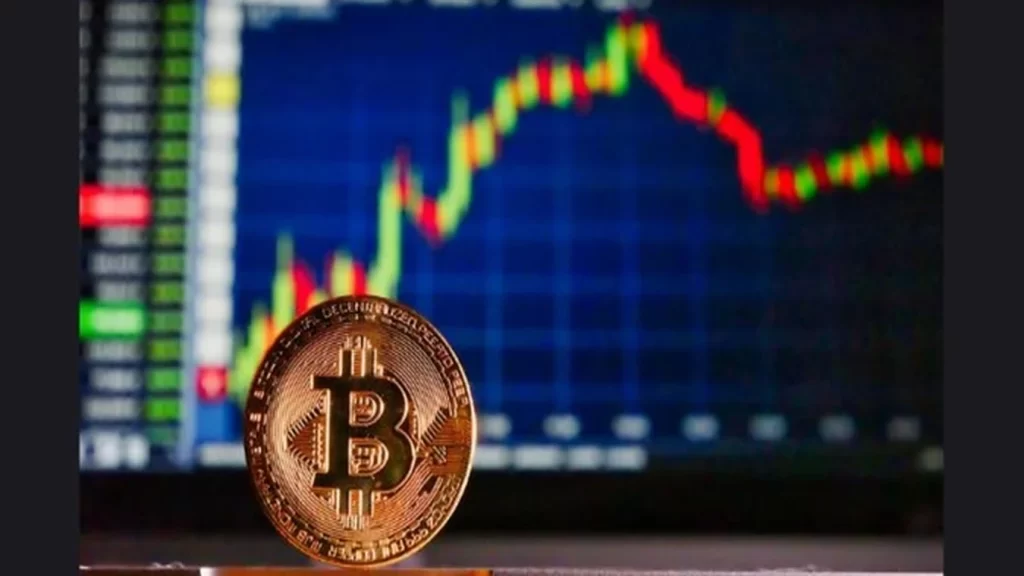
On February 5th, Bitcoin experienced a surge, surpassing the $43,500 mark, coinciding with the opening of Wall Street, as U.S. markets reacted to tumultuous events in the Chinese stock market.
Bitstamp reported local highs of $43,515 for Bitcoin, marking a new record for the cryptocurrency’s price in February.
This price rally was ignited by the abrupt drop of 8% in China’s CSI 1000 index, prompting Chinese authorities to enforce stricter controls on short selling.
Concerns about a potential recession in China began to circulate, with observations of a “disconnect” between large and small-cap stocks, causing China’s market to lose an astounding $7 trillion in value over the past three years.
Bitcoin’s volatility was further fueled by a significant increase in open interest, reaching $775 million, as reported by J. A. Maartunn, a contributor to the on-chain analytics platform CryptoQuant.
Despite the volatile market conditions, outflows from the Grayscale Bitcoin Trust (GBTC) remained relatively low, with approximately 2,600 BTC leaving the trust, continuing a downward trend seen in previous days.
Keith Alan, co-founder of the trading tool Material Indicators, analyzed the order book composition and issued a cautionary note regarding Bitcoin’s price.
He highlighted that there was limited liquidity immediately below the current spot price, making a drop to $42,000 appear quite plausible.
Furthermore, Alan noted that liquidity was more abundant around the $25,000 range, indicating growing sentiment for a potential price dip.
READ MORE: Artists Ryder Ripps and Jeremy Cahen Ordered to Pay $9 Million in BAYC NFT Lawsuit
He emphasized the relationship between liquidity and sentiment, explaining that increased liquidity often reflects prevailing market sentiment.
Alan also pointed out that the ladder of ask liquidity above the current spot price was gradually decreasing, suggesting that a rapid ascent to $45,000 or higher in the short term was unlikely.
In summary, Bitcoin’s price surged to over $43,500 as a response to the turmoil in the Chinese stock market.
This spike was accompanied by increased open interest and relatively low outflows from the Grayscale Bitcoin Trust.
However, caution was advised due to limited liquidity below the current price, with the potential for a dip to $42,000.
Overall, market sentiment remained uncertain, with the possibility of further price fluctuations in the near future.
Gibraltar, Gibraltar, February 6th, 2024, Chainwire
FuturePlay crypto casino has rapidly ascended in the gaming scene since December, forming key partnerships with leading providers like Relax, Spribe, Quickspin, and many others. With over 4,000 titles, FuturePlay offers new users a chance to earn up to 4 BTC + 400 free spins in bonuses.
About FuturePlay
A revolutionary blend of sports, iGaming, and entertainment, FuturePlay casino pioneers a transformative community where crypto bets meet thrilling sports categories and exciting game titles. Accepting Bitcoin, Ethereum, Litecoin, Bitcoin Cash, Dogecoin, Tether, Ripple, and many others. This ensures provably fair games, transparency, and swift payouts.
FuturePlay: Nomination Best Crypto 2024
FuturePlay.com is thrilled to announce its nomination for the prestigious 𝗕𝗘𝗦𝗧 𝗖𝗥𝗬𝗣𝗧𝗢 𝗖𝗔𝗦𝗜𝗡𝗢 𝟮𝟬𝟮𝟰 Award at the upcoming Sigma Eurasia event. As one of the top contenders among the nominees, FuturePlay.com stands out for its innovative approach to crypto gaming. The recognition reflects the platform’s commitment to providing an exceptional and secure gaming experience. Being nominated alongside other leading names in the industry is an honor, and FuturePlay.com eagerly anticipates the event, where winners will be unveiled. This nomination underscores FuturePlay.com’s dedication to excellence and innovation in the ever-evolving world of crypto gaming.
FuturePlay Crypto Casino New Gaming Providers
FuturePlay’s fusion of blockchain and diverse gaming experiences, featuring providers like Relax, Spribe, Quickspin, and more, signals a gaming revolution. Notably, Spribe’s innovative gaming experiences and Relax Gaming’s versatility strengthen FuturePlay’s position.
Players in territories such as the Americas and Oceania will see the biggest improvement in casino games offered.
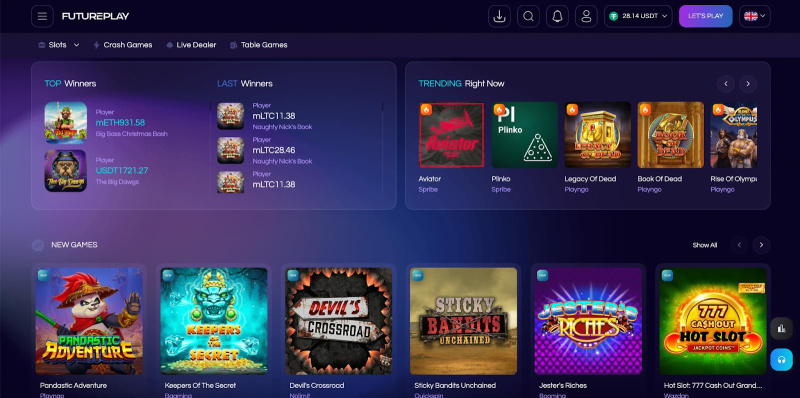
Spribe ‘Aviator’
Established in 2019, Spribe Gaming has swiftly risen as a prominent provider of online casino games and iGaming products. Recognized for their commitment to innovation, Spribe delivers distinctive gaming experiences that distinguish them in the industry. With a focus on quality, Spribe’s games exemplify excellence, capturing players with their high standards. The strategic and innovative moves by Spribe position them as a provider worth monitoring. The partnership between FuturePlay Casino and Spribe Gaming is a natural synergy, uniting two entities dedicated to pushing the boundaries of online gaming, offering players an unparalleled and forward-thinking gaming experience.
Top Spribe Titles at FuturePlay
Relax Gaming
Founded in 2010 in Malta, Relax Gaming Group embarked on revolutionizing B2B content delivery in the iGaming landscape. A major European supplier, the company’s diverse portfolio spans various verticals, aligning seamlessly with the FuturePlay partnership. Thriving on innovative and engaging games, the collaboration between Relax Gaming and FuturePlay Casino promises to shape the future of online gaming.
Top Relax Gaming Titles at FuturePlay
BetSoft
A gaming powerhouse since 2005, BetSoft crafts state-of-the-art experiences captivating players with cinematic graphics. As a top slot provider, BetSoft’s commitment to creating immersive gaming experiences solidifies it as an industry leader. The FuturePlay and BetSoft partnership, marked by dedication to innovation and excellence, promises to shape the future of gaming, providing cutting-edge entertainment and pushing the boundaries of what’s possible in the online gaming realm.
Top BetSoft Titles at FuturePlay
Feature Releases
FuturePlay introduces flexibility by allowing users to play in their native crypto token or exchange to USD, broadening game provider options. With an impressive start, FuturePlay eyes continuous growth and innovation.
Deposits at FuturePlay
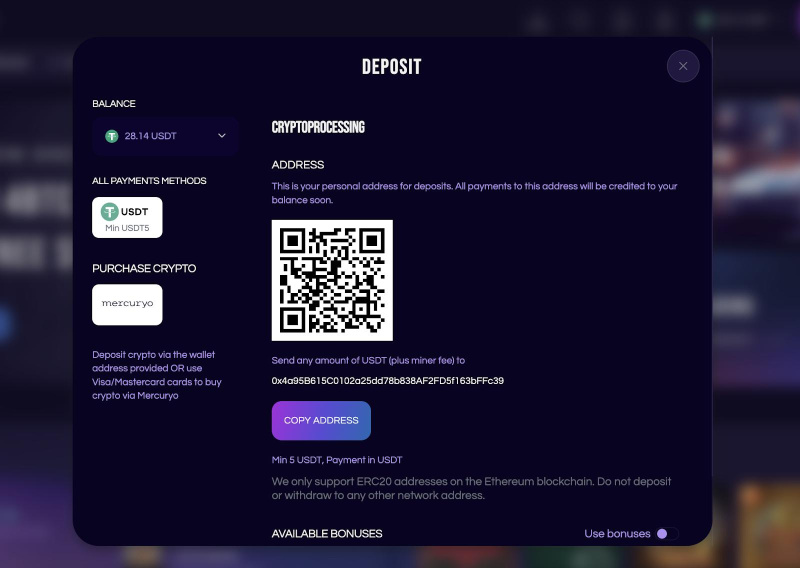
For users looking to transact with Mercuryo on FuturePlay, the process is straightforward and involves the following steps:
- Registration: Users begin by registering an account at www.futureplay.com.
- Deposit Initiation: Post-registration, users click the ‘Deposit’ option, situated in the upper right-hand corner of the FuturePlay interface.
- Mercuryo Selection: Within the deposit area, users select the ‘Mercuryo’ option on the left side.
- Amount Submission: Finally, users click ‘Submit’ and enter the specific amount of cryptocurrency they want to purchase.
Conclusion: A New Era Unveiled at FuturePlay
FuturePlay stands at the forefront of the crypto iGaming revolution, boasting 4,000+ top-tier games and upcoming sportsbook launch. A dynamic gaming landscape awaits, promising an unparalleled and exhilarating crypto gambling experience.
About FuturePlay
Established in 2023, FuturePlay, at the forefront of merging sports, gaming, and digital innovation. With a distinctive approach to iGaming, the company is dedicated to crafting a dynamic platform for the next generation of gamers and sports enthusiasts. www.futureplay.com
Social Media:
Twitter | Facebook Instagram | Telegram | Website (https://futureplay.rocks/jb0fecf8c)
Contact
FuturePlay Team
FuturePlay
[email protected]
Hong Kong, Hong Kong, February 6th, 2024, Chainwire
After a period of tranquility, the Ethereum ecosystem is gradually regaining momentum with the rise of the Restaking. As seasoned DeFi participants, DeSyn has consistently focused on developing the Ethereum network. Previously, DeSyn initiated the launch of the 3x ETH Leveraged ETF based on sharp market insights, aiming to promote diversity in Ethereum network products and assist users in maximizing their returns within the Ethereum ecosystem.
Today, DeSyn announces the launching of the DeSyn ETH Restaking Fund I( 3x Points), dedicated to participating in this industry revolution alongside ecosystems such as Eigenlayer and Renzo, collectively shaping the future of DeFi.
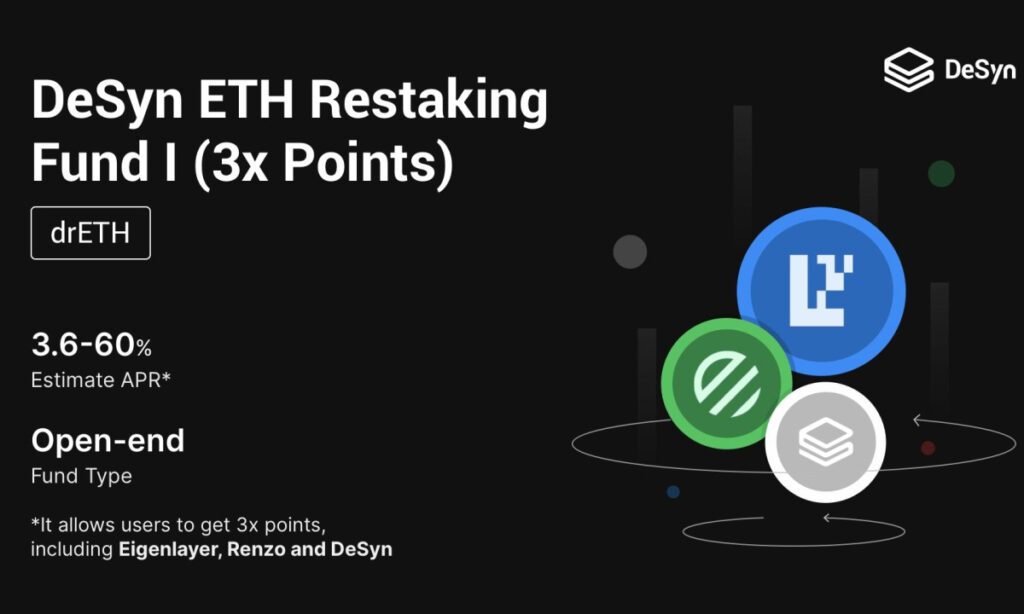
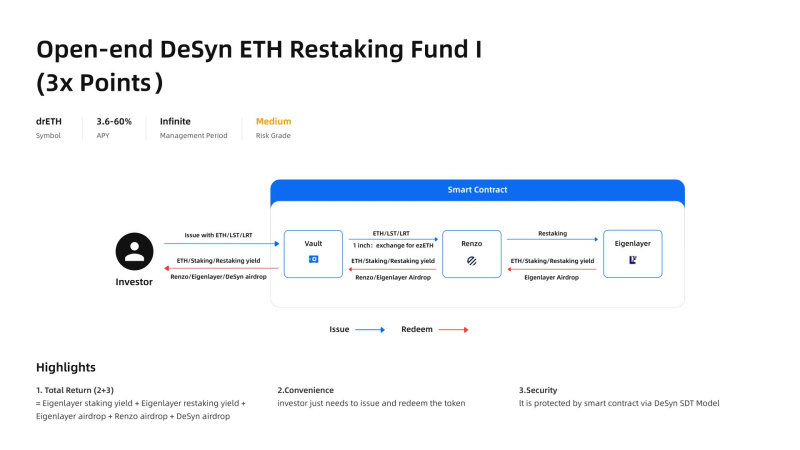
The DeSyn ETH Restaking Fund I( 3x Points), drETH in short, is an open-end fund product introduced by Little Frog, a professional decentralized asset management DAO organization based on the infrastructure of the DeSyn platform. This product integrates DeSyn and other two highly acclaimed restaking platforms, Eigenlayer and Renzo. Users can stake ETH, stETH, wETH, and ezETH through the DeSyn platform. The fund supports on-demand withdrawals and offers the existing APY from LST and LRT and the triple yield expectations from Eigenlayer, Renzo, and DeSyn. Currently, this fund’s APY ranges from 3.6% to 60%. In terms of security, DeSyn solemnly declares that all contract codes have undergone security audits to ensure the safety of user assets.
https://little-frog.gitbook.io/little-frog/products/open-end-desyn-eth-restaking-fund-i-3x-points
How to restake?
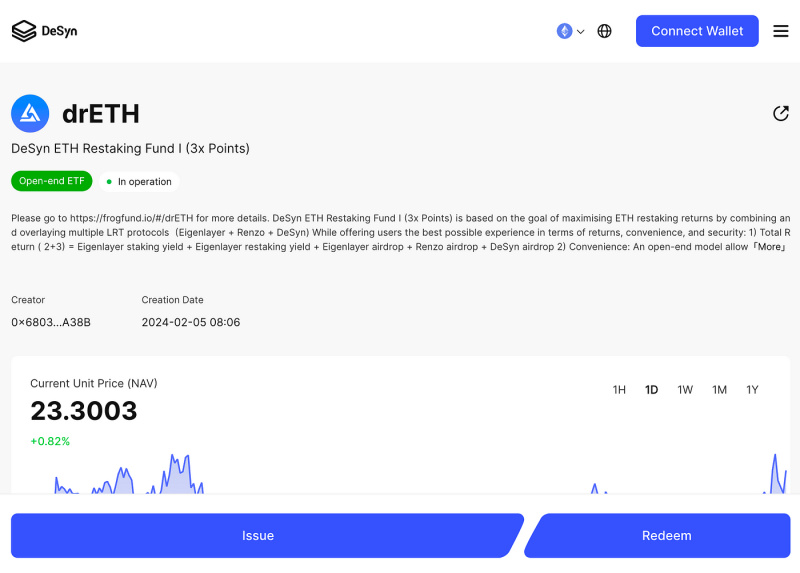
Users can navigate to Desyn’s website and select the “restaking” option to access the DeSyn ETH Restaking Fund I (3x Points) issue. Upon selection, users have the opportunity to acquire drETH, associated with the potential of triple returns.
https://www.desyn.io/#/pool/0x8F92265FE1F875d1985cD9D4275dd4Cfec9eb1E7
Enhanced Incentives through Triple-Point Staking with DeSyn
As mentioned earlier, opting for the fund not only grants potentially basic LST and LRT returns but also yields triple points from Eigenlayer, Renzo, and DeSyn.
DeSyn is committed to maximizing incentives for staking users. Starting from February 6, 2024, any user participating in this Fund can earn corresponding points, dependent on the staking amount and duration.
- DeSyn Points Formula: DeSyn points = (Amount of LST) * Number of staked days * 10,000
- Eigenlayer Points Guide can be found here.
- Renzo Points Guide can be found here.
EigenLayer: Elevating Ethereum Security through Restaking
EigenLayer is a protocol built on Ethereum that introduces restaking, a new primitive in crypto-economic security. This primitive enables the reuse of ETH on the consensus layer. Users that stake ETH natively or with a liquid staking token (LST) can opt-in to EigenLayer smart contracts to restake their ETH or LST and extend crypto-economic security to additional applications on the network to earn additional rewards.
Users can learn more by visiting EigenLayer’s official website.
Renzo: Pioneering Restaking on the EigenLayer Mainnet
Renzo is the first native restaking protocol to launch on the EigenLayer mainnet. Although EigenLayer will not begin securing Actively Validated Services (AVSs) I.e. EigenDA until mid-2024, they have been accepting deposits. Deposits for Liquid Staking Tokens (LSTs) are capped; however, native ETH deposits remain uncapped but very difficult for most users to access. They require a user to have 32 ETH and run an Ethereum node that is integrated with EigenLayer to run EigenPods.
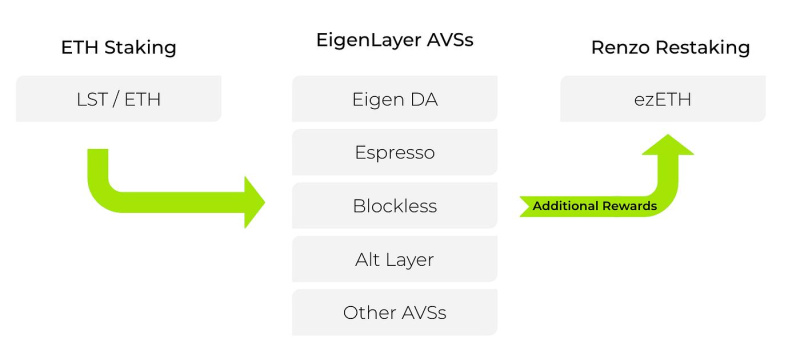
Users can learn more by visiting Renzo’s official website.
About DeSyn
DeSyn Protocol is an innovative decentralized asset management infrastructure on Web 3, empowering users to securely and transparently create and manage customized pool-based portfolios with various on-chain assets (tokens, NFTs, derivatives, etc.) via smart contract.
For more information users can visit DeSyn’s: Official Website | Twitter | Telegram | Discord | YouTube
Contact
DeSyn Team
DeSyn Protocol
[email protected]
Genesis Global Capital, a crypto lending firm facing bankruptcy, has sought approval from the United States Bankruptcy Court to liquidate approximately $1.6 billion worth of shares in the Grayscale Bitcoin Trust (GBTC), Grayscale Ethereum Trust (ETHE), and Grayscale Ethereum Classic Trust (ETCG).
In a recent court filing, Genesis emphasized the urgency of this request, highlighting the need to obtain approval to sell these trust assets to preempt any potential fluctuations in the prices of the underlying assets, including Bitcoin (BTC), Ether (ETH), and Ethereum Classic.
Their primary objective is to maximize the available funds for distribution to creditors.
Genesis’s portfolio is predominantly composed of GBTC shares, accounting for approximately 87% of their total holdings, valued at $1.38 billion.
Meanwhile, ETHE makes up around 10% of their holdings, approximately $169 million, and ETHCG represents about 3%, totaling $38 million.
The filing reveals that as of September 2023, GBTC held about 3.2% of all circulating Bitcoin, while in December 2022, ETHE had roughly 2.5% of all circulating Ethereum, and ETCG held approximately 8.5% of all circulating Ethereum Classic.
READ MORE: FTX Seeks Approval to Sell $175 Million Claim Against Genesis Global Capital in Bankruptcy Case
Genesis noted that the recent conversion of GBTC into a spot Bitcoin exchange-traded fund (ETF) allowed for the redemption of shares in cash through its redemption program, following approval from the United States Securities and Exchange Commission on January 10.
However, the Ethereum trusts (ETHE and ETCG) do not have a redemption program, requiring written consent from the sponsor to sell or dispose of the shares. Genesis has requested the waiver of this written approval.
Recent reports have shown a significant sell-off of GBTC shares since its conversion.
On January 22, FTX, a bankrupt cryptocurrency exchange, sold 22 million GBTC shares valued at nearly $1 billion, fully liquidating its holdings.
In contrast, Genesis has expressed its intention to maximize the proceeds from the sale of these crypto assets.
The filing also emphasizes the commitment of both Genesis and Gemini (the sponsor) to make reasonable efforts to maximize the market price of any Trust Assets or Initial GBTC Shares and the proceeds received from their sale or redemption.
Singapore, Singapore, February 6th, 2024, Chainwire
Lista DAO, a key player in Decentralized Finance (DeFi) with a specialization in Collateralized Debt Position (CDP) and Liquid Staking, is set to captivate the cryptocurrency community through the unveiling of its Cosmic Adventure Challenge (CAC) and the introduction of lisBNB.
The CAC promises an immersive and rewarding experience, providing participants with the opportunity to earn stardust and secure a share of the highly anticipated LISTA airdrop. Simultaneously, lisBNB, a tokenized version of staked BNB, is positioned to revolutionize DeFi strategies within the Lista DAO ecosystem.
Cosmic Adventure Challenge (CAC) Overview
The CAC, Lista’s flagship point system campaign, commences on February 5th, 2024, participating in the recent trend of gamified DeFi engagement. Challengers, participants in this campaign, can embark on quests across the BNB Smart Chain, completing tasks such as providing Total Value Locked (TVL) on Lista, borrowing lisUSD on Lista, and participating in liquidity provision and trading volume generation. Season 1 runs from February 5th, 00:00 UTC+0, to February 29th, 23:59 UTC+0, with Lista confirming a 2% airdrop allocation of the LISTA token for CAC participants.
Engaging in both Season 1 and Season 2 offers participants loyalty rewards in the form of bonus stardust. Stardust, earned through completing quests, contributes to rankings and percentiles, determining the LISTA airdrop allocation for each challenger.
Dashboards on Lista’s Dapp provide daily stardust tracking, ensuring transparency and competitiveness. Loyalty incentives encourage early participation, enabling users to carry over stardust from Season 1 to Season 2. The much-anticipated Lista airdrop allocation, following a USD 10 Million Binance Labs investment in August 2023, is poised for high success.
Strategic Decisions
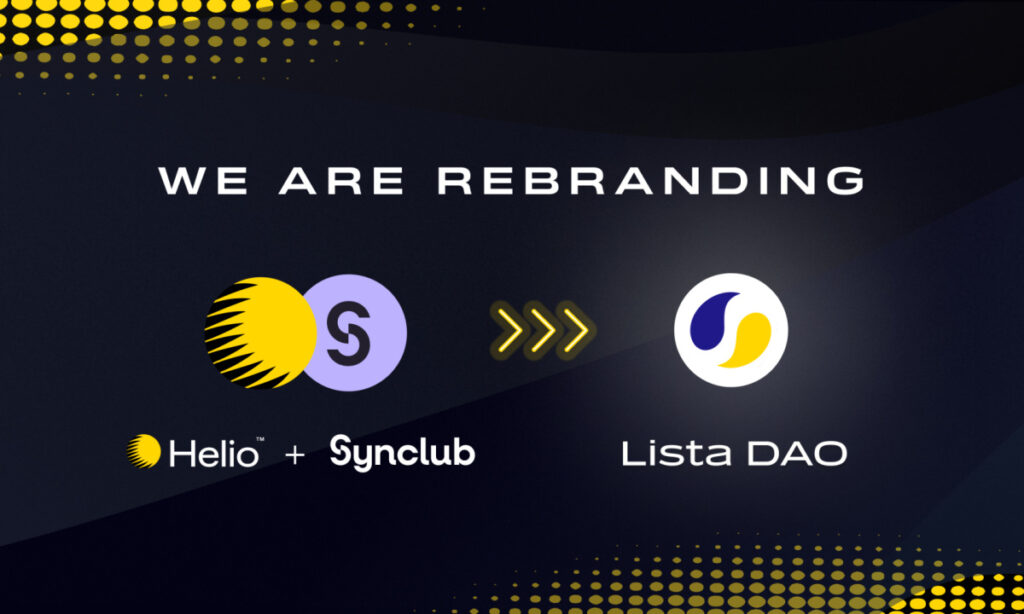
Concurrently with the CAC launch, Lista DAO announces the postponement of its Ethereum Mainnet launch. This strategic decision prioritizes the successful CAC campaign rollout and meticulous rebranding slated for February 5th. The pause in transitioning to Liquity’s codebase underscores Lista DAO’s commitment to building a robust foundation for the eventual expansion to the Ethereum Mainnet.
More details of this announcement can be found here.
Introduction of lisBNB
Lista DAO introduces lisBNB, a stablecoin loosely pegged to BNB, offering stability within the ecosystem. While not yield-bearing, lisBNB enhances the capital efficiency of ListaDAO’s DeFi strategies. The launch date for lisBNB will be communicated through social media channels.
Quotes
Lista DAO’s marketing team emphasized, “The Cosmic Adventure Challenge marks a pivotal moment for Lista DAO, aligning with our commitment to innovation and user-centric DeFi solutions. We invite the crypto community to join us on this exciting journey.”
Users can follow Lista DAO on Twitter and Telegram for real-time updates and announcements.
About Lista DAO
Lista DAO is a leading CDP stablecoin and LSDfi provider, dedicated to simplifying and revolutionizing the DeFi space. With a focus on accessibility, innovation, and user-centric solutions, Lista DAO aims to make DeFi easier for everyone.
For more information, visit the Lista DAO Website.
Note: Lista DAO reserves the right to modify terms and conditions of the CAC without prior notice.
Contact
Marketing Lead
Adelia Su
Lista
[email protected]

Artists Ryder Ripps and Jeremy Cahen find themselves in a legal quagmire as their counterclaims against Bored Ape Yacht Club (BAYC) creator Yuga Labs have been dismissed by the court.
The unfavorable order handed down requires the pair to pay a hefty sum of $9 million in disgorgement and other statutory damages.
The legal battle stems from their actions in May 2022 when Ripps and Cahen unveiled the Ryder Ripps BAYC (RR/BAYC) collection, which bore striking resemblance to the renowned BAYC brand.
In April 2023, a judge ruled in favor of Yuga Labs, asserting that Ripps and Cahen had violated copyright laws by creating unauthorized versions of BAYC nonfungible tokens (NFTs).
This initial ruling compelled the duo to pay $1.57 million in damages to Yuga Labs, in addition to covering the legal fees, seemingly concluding the lawsuit.
However, the latest court filing on February 2nd brought a new twist to the legal saga.
Ripps and Cahen’s counterclaims against the charges were dismissed, and they were now slapped with a staggering $9 million penalty, encompassing lawyer fees, expert witness fees, and disgorgement.
The court further mandated them to dispose of any RR/BAYC NFTs they possessed, either by destroying (“burning”) them or providing them to Yuga Labs for disposal.
In response to the unfavorable ruling, Cahen, known as Pauly to his 174,100 followers on X, announced their intention to appeal the decision in the Ninth Circuit Court of California.
READ MORE: Bitcoin Stumbles as Strong U.S. Job Data Sparks Rate Hike Fears
Ripps and Cahen had initially filed counterclaims against Yuga Labs, accusing them of intentional infliction of emotional distress, negligent infliction of emotional distress, and seeking a declaratory judgment of no defamation.
However, the judge ruled against Yuga Labs’ first and third causes of action, which alleged false designation of origin and cybersquatting (the practice of buying domain names to profit from a trademark), while imposing the substantial multimillion-dollar penalty.
Additionally, the court ordered Ripps and Cahen to surrender all social media accounts associated with RR/BAYC NFTs and the smart contract used in their creation.
The filing emphasized the need for them to destroy any infringing materials, including NFTs, articles, documents, software, promotional items, or advertisements linked to the BAYC Mark, under their possession or control.
As the legal battle continues, the artists find themselves facing not only a significant financial burden but also the prospect of relinquishing their creations in the NFT world.
London, United Kingdom, February 5th, 2024, Chainwire
Reunit Wallet, an omnichain wallet built on technology developed by LayerZero & Stargate Finance, is launching a volume-based reward program.
In an effort to stimulate trading activity on its integrated platform and attract new users, Reunit Wallet is implementing a reward system for traders.
Starting now, for every $100 in generated volume, users will receive 1 REUNI. Additionally, if a referral code is used, a 25% bonus will be applied.
 Users who share their referral code will also enjoy a 25% bonus on the rewards generated by the traders they’ve referred.
Furthermore, Reunit Wallet has plans to soon introduce a staking feature for REUNI tokens. Participants in the staking program will receive 50% of the fees generated from transactions made through Reunit Wallet.
Useful links
- Website : https://everywhere.finance
- Twitter / X : https://twitter.com/EverywhereFi
About Reunit Wallet :
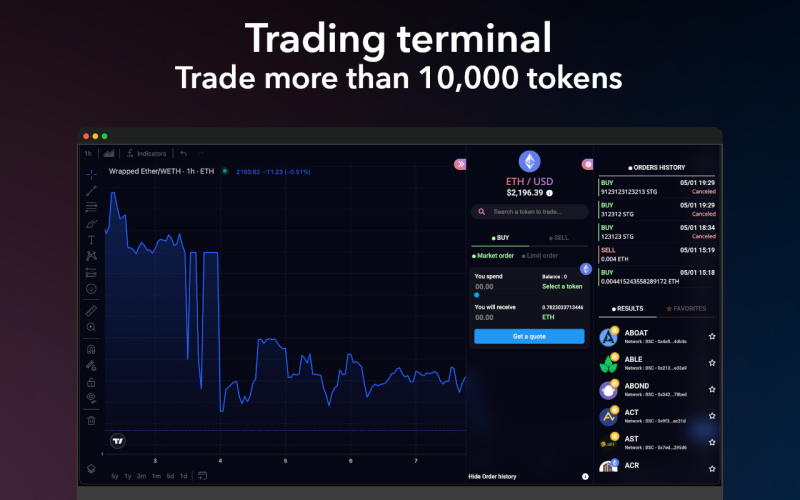
Created by a former core-team member of Sushiswap (2020-2022), Reunit Wallet is the first natively omnichain wallet that enables seamless batch transfers across multiple blockchains with a single click. It also offers an integrated trading terminal supporting limit and market orders, providing a comprehensive and seamless trading experience.
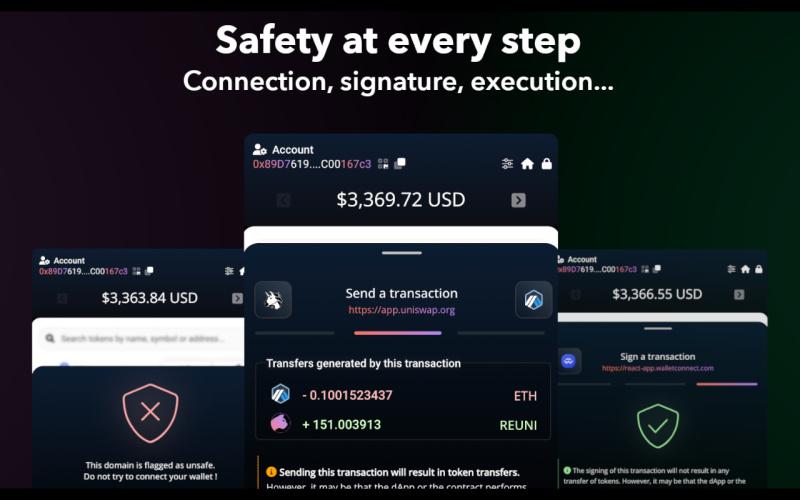
Security is a paramount priority for Reunit Wallet, which is why the wallet conducts a comprehensive simulation of each transaction and signature, allowing the user to anticipate the outcomes of their transaction, including token transfer confirmations or the granting of necessary permissions.
Contact
CEO
B.Naïm
[email protected]
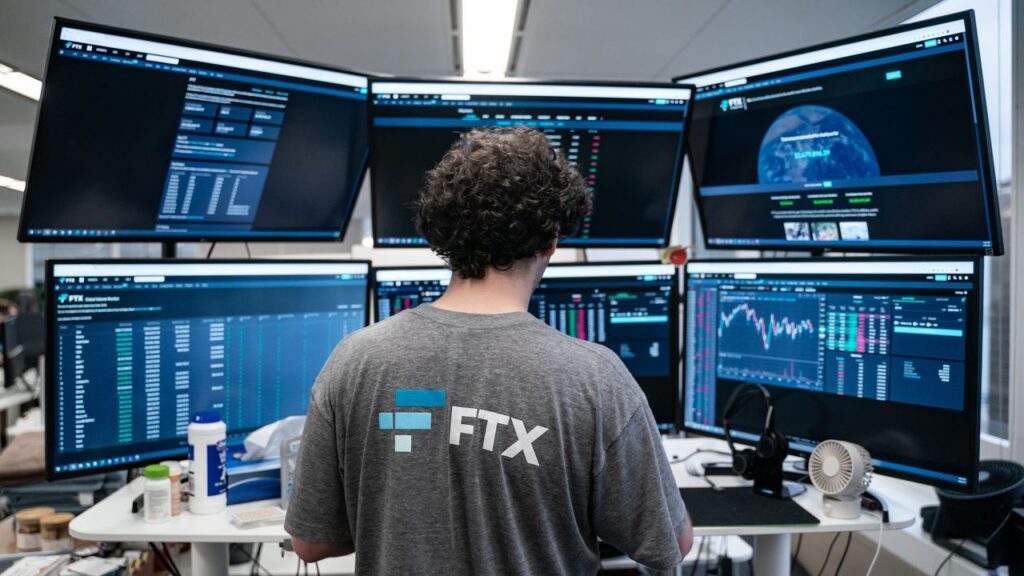
Former United States Securities and Exchange Commission (SEC) official, John Reed Stark, has raised concerns about the FTX restructuring plan, suggesting that it may serve as an opportunity for the exchange’s legal team to profit from the bankruptcy process.
Stark took to a social media platform to express his skepticism, humorously suggesting that all FTX customers should receive a sarcastic “Thank You” note from the exchange’s defunct legal team for the substantial profits they have reportedly made during the bankruptcy proceedings.
He even quipped that each member of the legal team might soon be able to afford a new beach house in 2024.
During a January 31st hearing held in the U.S. Bankruptcy Court for the District of Delaware, FTX’s lawyer, Andy Dietderich of Sullivan & Cromwell, clarified that despite extensive efforts, there were no intentions to relaunch FTX under the Chapter 11 bankruptcy framework, known as FTX 2.0.
Stark had previously expressed doubts about the success of the Chapter 11 FTX reorganization plan, comparing the challenge of restructuring FTX to trying to reorganize a combination of notorious entities such as “Murder Incorporated, The Cali Drug Cartel, and Madoff Investment Advisory Services.”
Legal fees and expenses incurred during the bankruptcy proceedings have drawn attention. Lawyers and the restructuring team managing FTX billed over $200 million between November 2022 and June 2023.
These fees were reviewed and deemed reasonable by the court-appointed fee examiner, Katherine Stadler, who described them as “not wholly unreasonable at the moment” in a report filed on June 20, 2023.
READ MORE: European Union Achieves Landmark Approval of AI Regulation with EU’s AI Act
However, during the quarter ending October 31, 2023, FTX incurred substantial costs, spending approximately $53,000 per hour on legal and advisory fees, according to recent compensation filings.
Documents from December 5 to December 16, 2023, revealed that the bankruptcy legal team billed at least $118.1 million from August 1 to October 31, 2023, averaging $1.3 million per day or $53,300 per hour over the 92-day period.
In a further development, on February 1, FTX submitted a request in a Delaware court to sell its $175 million claim against the bankrupt Genesis Global Capital, with Alameda Research owning the claim.
If approved, FTX would have the flexibility to sell the claim in its entirety or in parts, allowing for optimal timing based on market conditions.
FTX’s troubles began in November 2022 when irregularities were uncovered in its accounts, ultimately leading to its collapse.
Genesis Global Capital had $175 million tied up in FTX accounts at the time, but it asserted that these funds did not impact its market-making activities.
Grand Cayman, Cayman Islands, February 5th, 2024, Chainwire
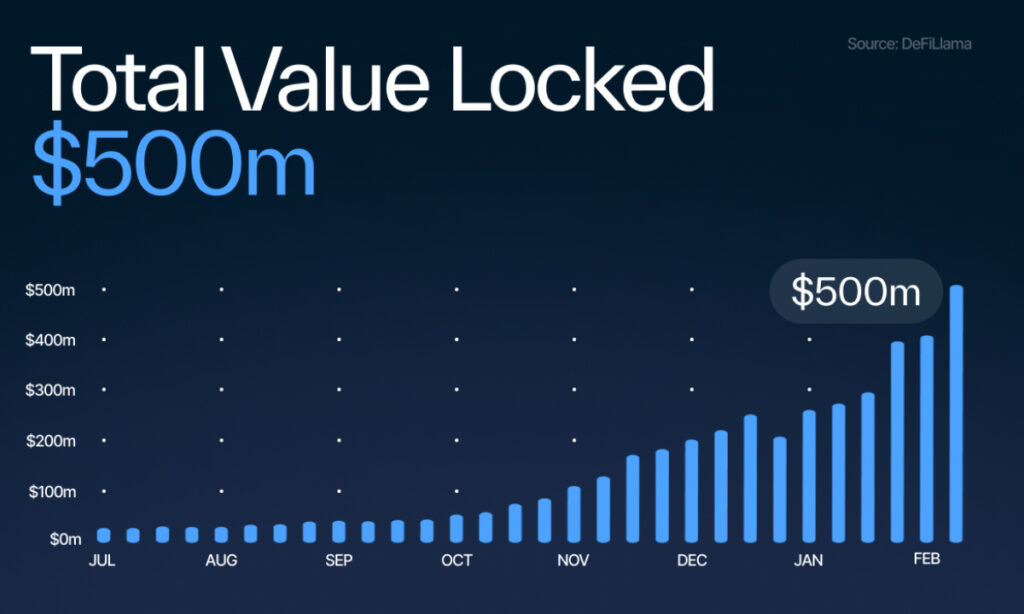
After Sui’s TVL surged more than 1500% over the last five months of 2023, its TVL has more than doubled since the start of 2024
Sui, one of the fastest-growing Layer 1 blockchains, continued its impressive DeFi growth, surpassing $500M in Total Value Locked (TVL) and solidifying itself in the top 10 of DeFi ecosystems.
Alongside this torrid ascent of TVL, on-chain activity has exploded as well. Weekly DeFi volume is up 63 percent over the previous period, standing at $745M and placing it in the top 5 most active ecosystems in the past week. Sui’s continued climb demonstrates how its underlying technology is vital in empowering developers to create products that solve real-world challenges and the drive behind top projects expanding into its ecosystem.
Over the past couple of weeks, Sui has announced several partnerships and expansions with industry-leading builders. Most recently, Sui announced that Ondo Finance—the third-largest organization in the real-world asset DeFi sector—is bringing its treasury-backed tokens, tokenized securities, and real-world assets into its ecosystem, as the Sui ecosystem is set to get its first native stablecoin.
Sui also recently announced that Banxa, a leading payments infrastructure provider for the crypto-compatible economy, will add the SUI token to its platform. Also recently announced, a partnership with Oracle Stork provides builders with faster pricing data, offering real-time pricing data across Sui’s ecosystem of developers, DEXs, and lending protocols building on Sui’s blockchain.
“The fact that Sui now stands amongst the top ecosystems in crypto is a testament to Sui’s technology being able to attract top-tier developers and leading projects,” said Greg Siourounis, Managing Director of the Sui Foundation. “The recent partnership and expansion announcements, along with the surging metrics, point to Sui having true staying power. Sui is paving the way for widespread adoption and offers endless possibilities for innovation.”
Sui’s object-centric model, horizontal scalability, and Move Language position it to host the most scalable solutions that have emerged from the blockchain industry to date. Its rapidly rising TVL results from multiple Sui-based protocols and applications leveraging Sui’s strengths.
Sui also saw two ecosystem protocols break $100M TVL for the first time in the network’s history. Navi Protocol now stands at over $114M TVL (up 184% over the last 30 days), while Scallop Lend has surged to over $116M TVL (up 258% over the last 30 days). Cetus ($72M), Aftermath Finance ($58M), and FlowX Finance ($49M) round out the top five projects as measured by TVL.
Contact
Sui Foundation
[email protected]
According to a recent analysis by DecenTrader, Bitcoin is expected to reach new all-time highs in 2024, but not without some challenges along the way.
The analysis, released on February 2nd, suggests that Bitcoin’s price behavior will follow a typical pattern during a “halving year.”
DecenTrader predicts that Bitcoin will experience about a month of sideways price movement before the market reacts to the upcoming block subsidy halving.
CEO and co-founder Filbfilb explains that investors should anticipate a surge in buying activity approximately two months before the halving, which is currently estimated to occur on April 18.
However, following this buying surge, there may be another “sell the news event,” similar to what happened when spot Bitcoin exchange-traded funds (ETFs) were launched in January.
Filbfilb points out that there are roughly 75 days remaining until the Bitcoin halving, suggesting that buying interest is likely to start no later than six weeks before the event, or around the second week of March.
This anticipation among speculators could drive Bitcoin’s price to its current two-year high of $49,000 before a sell-off resembling the ETF launch occurs.
Nevertheless, the path ahead appears promising, as price discovery is expected to happen before the end of 2024, similar to the outcome of Bitcoin’s last halving year in 2020.
READ MORE: European Union Achieves Landmark Approval of AI Regulation with EU’s AI Act
Filbfilb advises investors to be aware that Bitcoin tends to front-run the “sell-the-news” phenomenon associated with halving events.
Despite the optimism surrounding Bitcoin’s potential for a new all-time high, the first quarter of 2024 may be challenging for traders.
In addition to Bitcoin-specific factors, macroeconomic and geopolitical uncertainties could contribute to wider risk-asset turbulence.
Concerns include the weakness of the United States banking system, which former BitMEX CEO Arthur Hayes expects to come to a head in March.
Some analysts even believe that Bitcoin may not reach a new all-time high until the end of 2025.
Filbfilb remains cautious and warns against excessive optimism, emphasizing that previous market cycles in Bitcoin have followed a consistent pattern driven by investor emotions.
As Bitcoin traded just under $43,000 into the February 4th weekly close, the cryptocurrency market’s trajectory remains uncertain, with various factors influencing its future performance.