



The National Fraud Intelligence Bureau (NFIB), a police unit in the United Kingdom focused on scrutinising and collecting intelligence on fraud and finance-related cybercrime, has thwarted 43 web domains associated with fraudulent activities.
As per an update from Pete O’Doherty, the acting commissioner of the City of London Police, the NFIB stumbled upon a spoof email address masquerading as the crypto site blockchain.com.
Authorities unearthed an additional 42 web domains, such as “actionfraud.info” and “department-fraud.com,” promptly blocking these addresses upon discovery.
The NFIB implored individuals falling prey to cybercrimes to report through official channels and the hotline.
By December 2023, nearly 300,000 malevolent websites had been removed due to such reports. Some phishing attempts involved deceiving email recipients into believing they had won a Tupperware set.
Phishing remains a persistent problem within the crypto community.
On Jan. 20, hardware wallet producer Trezor flagged a security breach compromising the data of 66,000 users.
Following the incident, at least 41 users reported receiving phishing emails soliciting sensitive information to access their crypto wallets.
Concurrently, a widespread phishing campaign inundated the email inboxes of numerous crypto investors.
READ MORE: Crypto News Today: Spot Bitcoin ETFs Surpass $1 Billion in Daily Trading Volume
On Jan. 23, the crypto community identified a phishing assault by fraudsters masquerading as representatives from major Web3 companies.
These hackers initiated an email campaign promoting bogus token airdrops, purportedly from entities like Cointelegraph, WalletConnect, and Token Terminal.
Subsequently, it was confirmed that the phishing attack stemmed from a breach at the email marketing firm MailerLite.
On Jan. 24, the company disclosed that hackers exploited a social engineering attack to seize control over Web3 accounts.
A MailerLite team member, responding to a customer inquiry, inadvertently clicked on a link redirecting to a fraudulent Google sign-in page.
Unaware, the employee signed in, granting the attackers access to MailerLite’s admin panel. According to blockchain analytics firm Nansen, the main wallet of the attackers amassed at least $3.3 million in total inflows since the attack.

Private equity firms Deus X Capital and Bridgetower Capital are preparing to unveil a fresh $250 million crypto infrastructure platform, introducing crypto staking, investment, and other digital asset services tailored for institutional investors in the Middle East.
Dubbed Bridgetower Middle East, the new venture will be headquartered in the Abu Dhabi Global Market, a designated free economic zone within the capital of the United Arab Emirates (UAE).
It will be overseen by the CEOs of Deus X and Bridgetower, Tim Grant and Cory Pugh, respectively, as outlined in a joint statement released on February 8.
Grant elaborated on the initiative’s objectives in an interview with Cointelegraph, highlighting its mission to establish a robust infrastructure capable of meeting the region’s demand for turnkey staking and artificial intelligence (AI) graphical processing units (GPUs) computing. He stated:
“[Bridgetower ME] will serve as a launchpad to support a wide range of institutional clients who are looking to leverage new technologies in a scalable, compliant, and cost-effective manner.”
The new entity will deploy nodes locally for institutional staking and offer advanced data center capabilities, including AI GPUs, Web3 commerce, and private equity incubation services.
Pugh emphasised in the statement the intention to inject additional “substantial assets” into the newly formed entity, augmenting the self-funded $250 million worth of assets under management.
“We believe [regional regulators] have created a strong roadmap for companies willing to operate their businesses in the highest ethical and legal manner, which in turn has instilled confidence in others looking to operate in the region,” noted Pugh in conversation with Cointelegraph.
READ MORE: Ethereum Foundation Explores Strategies to Optimize Blockchain for Rollup-Centric Roadmap
Both parties affirmed their commitment to investing in the UAE’s digital asset ecosystem and exploring potential public listing options on the Abu Dhabi Stock Exchange (ADX).
Deus X, a specialist investment and operating firm established in October 2023 with initial assets of $1 billion, recently spearheaded a $5.5 million funding round for Web3 gaming firm Saltwater Games.
Meanwhile, Bridgetower, a digital asset infrastructure provider and private investment equity firm, collaborated with the Solana Foundation in 2021 to establish a $20 million fund aimed at developing the blockchain network across the European Union, the United Kingdom, and Switzerland.
The UAE, encompassing Abu Dhabi and Dubai, has positioned itself as a global digital asset hub, attracting investments and international players to establish a local presence.
Noteworthy developments include Paxos, a United States-based crypto firm, securing in-principle approval in Abu Dhabi on November 29, 2023, to issue stablecoins and offer digital asset services.
Concurrently, on the same day, Iota, an open-source blockchain developer, announced the launch of a $100 million-backed distributed ledger technology foundation in the UAE capital.
Moreover, on October 30, 2023, Saudi Arabia’s NEOM mega-city project joined forces with Web3 games developer and investment firm Animoca Brands to develop Web3 enterprise service capabilities.
The National Basketball Association (NBA) finds itself embroiled in a potential class-action lawsuit concerning its marketing agreements with now-defunct cryptocurrency lender Voyager Digital. Users of the platform allege losses exceeding £4.2 billion.
According to a lawsuit filed on February 6th in a Miami district court, the NBA’s approval of Voyager’s promotional deal with the Dallas Mavericks was deemed “grossly negligent.”
The extensive 100-page filing asserts that the NBA was meant to act as a “gatekeeper” in such matters.
“The sole aim of this lawsuit is to hold the NBA accountable,” asserts the class group. They argue that the NBA’s widespread promotion of Voyager’s unregistered securities makes it liable for any ensuing damages.
Furthermore, plaintiffs claim that the NBA willingly embraced the risks associated with collaborating with cryptocurrency exchanges like Voyager, Coinbase, and FTX.
This decision allegedly stemmed from financial pressures caused by COVID-19, including reduced arena attendance and television revenue losses.
The lawsuit also implicates Voyager’s law firm, McCarter & English, alleging that it provided a misleading “Legal Opinion” to assuage concerns about the legality of Voyager’s tokens.
READ MORE: Grayscale CEO Urges Regulators to Approve Exchange-Listed Options for Bitcoin ETFs
This legal action follows a prior lawsuit against former Dallas Mavericks owner Mark Cuban, accused of promoting Voyager and misrepresenting its safety.
The expanded litigation now targets the NBA and McCarter & English due to revelations uncovered during the discovery process of the earlier lawsuit.
Voyager ceased withdrawals in July 2022 and declared bankruptcy the same month due to its involvement with the now-defunct crypto hedge fund Three Arrows Capital (3AC).
Numerous lawsuits have emerged against celebrities, athletes, and sporting entities involved with cryptocurrency firms since the collapse of FTX in late 2022.
Entities such as the Mercedes F1 Team, Major League Baseball, and prominent figures like Tom Brady and Steph Curry face legal action for their partnerships with FTX.
At the time of reporting, neither the NBA nor McCarter & English had responded to requests for comment.
London, United Kingdom, February 9th, 2024, Chainwire
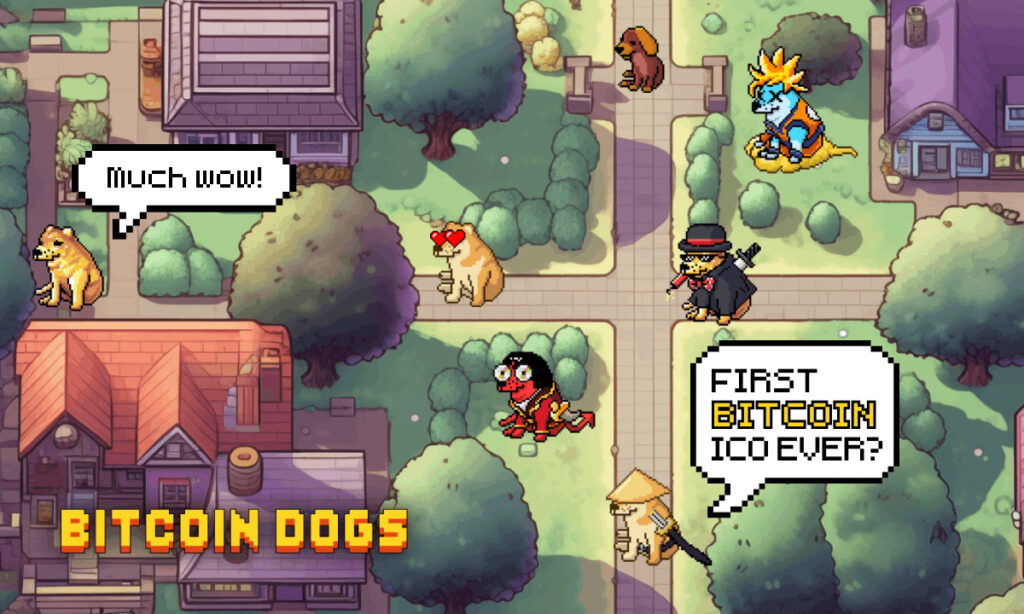
Bitcoin Dogs is set to be part of cryptocurrency history with the first ever ICO on the Bitcoin blockchain, launching on February 14th, 2024.
The presale for its native token, $0DOG, will last only 30 days, with an end date of the 15th March 2024, when it will become available for trading.
Accompanying the $0DOG coin will be an immersive metaverse GameFi experience and NFT collection, both available exclusively to token holders.
The sale will start with stage 1, priced at $0.015 per token, after which, the price will then automatically increase every 72 hours. The final stage of the presale will see each $0DOG token being sold at $0.0404, a 169.33% price difference to early-stage buyers.
The project is set to challenge Bitcoin Cats, which also launched on the Bitcoin Blockchain under 7-weeks ago, and is currently sitting at $24m in market cap, with over $7m daily trading volume.
Using the paradigm-shifting Ordinals protocol, players will store their NFTs on the Bitcoin BRC-20 blockchain, offering a new level of security and reliability when stacked up against competitors Solana and Ethereum.
Press the paws button: Inside the Bitcoin Dogs game
Bitcoin Dogs allows users to raise, trade, and race their pets in a play-to-earn (P2E) environment, drawing heavily on experiences like Tamagotchi or Axie Infinity.
The game invites players to look after their dogs in order to level them up. In-game token BARK powers this process; these can be earned by sharing activity on social media – a mechanism designed to bring new players into the fold.
As dogs reach maturity, they begin to earn $0DOG – the BRC-20 presale token and one that players can ultimately hold, sell, or bet with. Dog owners can battle it out in races to compete for each other’s $0DOG stash, creating a financial incentive for players to climb the leaderboards.
$0DOG tokens can also be staked to maximize rewards: presale stakers will unlock a 75% APR when they lock up their tokens.
Retro gaming graphics bring the Bitcoin Dogs world to life, with dogs stored on the blockchain as 10,000 individual NFTs with varying rarity levels. This ecosystem is given an extra layer of interactivity with NFT owners having the option to buy, sell, and even breed their dogs, creating a vibrant marketplace for dog lovers to interact with one another.
Since these NFTs are minted on the Bitcoin blockchain using the cutting-edge Ordinals protocol, there’s something for multiple cohorts of investors. Bitcoin maximalists get to enjoy NFTs without leaving the BTC ecosystem, and seasoned collectors can become early investors in the NFT market’s newest niche.
The Road Ahead for Bitcoin Dogs
The Bitcoin Dogs ICO is the simplest way to purchase $0DOG tokens. 90% of the 900,000,000 total supply will be available during the presale, with any unsold tokens (stray dogs) being “burned’ to create deflationary pressure.
After the presale, $0DOG will be available in the secondary market for trading Then, in Q2, comes the Bitcoin Dogs NFT collection, as well as the beta version of the Bitcoin Dogs game.
The game will continue to develop, with the addition of new P2E partnerships, and will officially launch to the public in Q3. Competitions and events will bolster the project’s marketing efforts, and the cross-chain bridge will go live too, bringing Bitcoin Dogs to its biggest audience yet.
The timing for $0DOG couldn’t be better
Now is the opportune moment for Bitcoin Dogs to strike since many experts are predicting the NFT craze will return. This is compounded by a range of bull market indicators. Additionally, given the success of first-generation projects like Bitcoin Cats last year, the team hopes that Bitcoin Dogs will excel and have a vibrant community.
Bitcoin itself is enjoying a bright start to 2024 that looks set to continue: Bitcoin ETFs were approved in January, and the next halving in April is coming up. Bitcoin Dogs is looking to ride this wave as the roadmap unravels throughout the year.
As the first ICO on the Bitcoin blockchain, making the ground-breaking union of NFTs, BRC-20 tokens, and cross-chain interoperability, the project and its $0DOG token are a rare leap forward in the crypto space.
About Bitcoin Dogs
Bitcoin Dogs is breaking new ground in the Bitcoin ecosystem. For the first time ever, NFTs, gaming, and new token types come together, to offer the first ICO on the original Bitcoin blockchain. The truly permissionless immutability of Bitcoin is being harnessed to create the $0DOG token, while a play-to-earn (P2E) gaming experience and NFT collection is being developed exclusively for $0DOG holders.
$0DOG tokens will be available to purchase on the BitcoinDogs.club website on February 14th, 2024, at 11:00AM GMT.
Website | Whitepaper | Socials
Bitcoin Dogs is the source of this content. This Press Release is for informational purposes only. The information does not constitute investment advice or an offer to invest. Investing in cryptocurrencies can be volatile and dangerous.
Contact
Bitcoin Dogs
[email protected]

A United States judge has approved a settlement resolving disputes between crypto lender BlockFi and defunct crypto hedge fund Three Arrows Capital (3AC), with the details ordered to remain sealed.
New Jersey Bankruptcy Court Judge Michael Kaplan greenlit the agreement during a Feb. 6 hearing, aiming to halt further legal battles.
BlockFi asserted that 3AC owed it $129 million, whereas the hedge fund contended BlockFi owed it $280 million.
Judge Kaplan opted to keep the settlement agreement sealed, countering objections from the U.S. Trustee who argued for disclosure, citing the debtors’ failure to justify sealing.
BlockFi’s motion to seal specific information emphasized the sensitivity of the terms and their potential impact on litigation involving bankrupt crypto exchange FTX.
The court upheld the motion, emphasizing the need to safeguard settlement strategies and honor comity with 3AC’s foreign bankruptcy proceedings.
READ MORE: South Korean Prosecutors Arrest Haru Invest Executives in $830 Million Crypto Theft Scandal
Approval of the settlement enables BlockFi to proceed with distributions from the lending estate to creditors, a critical step sought for rapid approval.
Kaplan had previously greenlit BlockFi’s amended Chapter 11 and customer repayment plan in September 2023, following the firm’s clearance for liquidation.
Estimates indicated BlockFi’s debts amounted to $10 billion among over 100,000 creditors, with its three largest creditors owed $1 billion and 3AC owed $220 million.
Three Arrows Capital’s collapse in June 2022 led to BlockFi’s bankruptcy filing in late November 2022, following the downfall of FTX.
Additionally, in February, OPNX, a crypto bankruptcy claims platform launched by 3AC co-founders Su Zhu and Kyle Davies, announced its official closure, ceasing operations by Feb. 14.
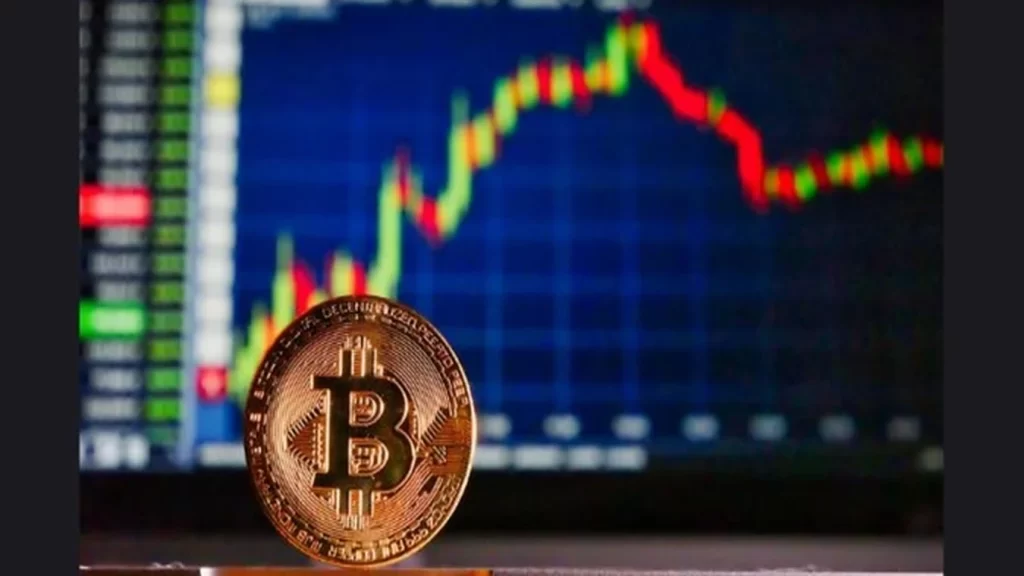
On February 7, the total daily trading volume for spot Bitcoin exchange-traded funds (ETFs) surpassed a billion dollars, with BlackRock taking the lead.
Bloomberg Intelligence analyst James Seyffart noted a significant surge in trading activity for BlackRock’s iShares Bitcoin Trust (IBIT), which amassed a daily trading volume of $341.2 million, outstripping the Grayscale Bitcoin Trust’s $296.5 million, according to Seyffart’s analysis.
Fidelity’s FBTC fund secured the third position with a trading volume of $200 million, while the remaining seven funds collectively contributed $188 million, culminating in a daily trading volume exceeding a billion dollars.
Despite this milestone, Seyffart downplayed its significance, stating that surpassing the billion-dollar mark “isn’t that big of a deal” for Bitcoin ETFs.
He clarified that while it represented an increase from recent days, it still fell short of the initial trading weeks.
READ MORE: Crypto Wallets Tied to FTX and Alameda Transfer $38.8 Million to Exchanges Since January 2024
In a notable trend, inflows into spot Bitcoin ETFs have consistently outpaced outflows from GBTC for the ninth consecutive day.
On February 7, preliminary data from Farside revealed $81 million in outflows from GBTC, contrasted with $226 million in inflows across the other nine spot Bitcoin ETFs, resulting in net flows of $145 million.
BlackRock witnessed an inflow of $56 million, Fidelity’s fund saw an increase of $130 million, and Bitwise experienced inflows of $21 million.
On February 8, investor and author Fred Krueger highlighted a significant observation: the combined BTC holdings of the newly launched nine ETFs were poised to exceed those of MicroStrategy, the largest corporate holder of the asset.
The ETF funds collectively held approximately 187,000 BTC as of February 7, slightly below MicroStrategy’s holdings of 190,000 coins valued at over $8 billion.
In a related development, it was reported that Fidelity had begun allocating spot Bitcoin to their All-in-One Conservative ETF. ETF analyst Eric Balchunas regarded this move as a positive sign, particularly in the conservative investment domain.
As the blockchain environment changes, new, innovative platforms always arise. The Ideal Cooperation Blockchain (ICB) Network has emerged into the spotlight with SertiK support due to its dedication to trustworthiness and transaction integrity. As a low-cost utility network, the ICB Network uses the Proof of Stake (PoS) consensus method to change how validation works and how blocks are made. This huge change will make things safer and give users a unique and smooth experience, setting a new standard for blockchain networks.
Within the ecosystem of the network, stakeholders are very important. They actively validate transactions and create blocks by “staking” tokens, protecting the network’s integrity by ensuring that people who have a stake in it are participating in running it. Further, adding biometric and Know-your-customer (KYC) information to Proof of Stake (PoS) technology strengthens security. This lowers the risk of attacks and builds trust between master nodes and users. Notably, this coming together of cutting-edge technologies makes blockchain networks more efficient and safe and shows how the crypto community works together to move the industry forward as a whole.
Most importantly, ICB Network has formed strategic relationships with top players like Binance Smart Chain, Ethereum, Polygon, and Avalanche. This is a big step towards making the blockchain ecosystem more robust and connected. Using the Ethereum Virtual Machine (EVM) standard, these partnerships allow different blockchain networks to work together without problems.
The Impact of EVM Standards and ICB Network on Blockchain Infrastructure
The adoption of EVM standards catalyzes developers, enabling them to conceive and deploy applications on the ICB blockchain infrastructure rapidly. Using Ethereum’s powerful development tools and EVM-compatible networks, this way not only makes the best use of resources but also lowers transaction costs and speeds up the network.
Utilizing these strengths aids the ecosystem’s growth, encouraging new ideas and creating more chances for developers and users. Also, ICB Network liquidity pools, which include important cryptocurrencies like ICB Coin and stablecoins, make the ecosystem even better by giving users more options, rewarding those who stake, and making it easier to exchange cryptocurrencies.
Moving further, the ICB Network connects different networks and makes it easier for people to trade. This network’s unique method effectively bridges networks for diverse exchange, allowing transactions to go smoothly between ecosystems. Users can get to more assets and markets by connecting these networks, which makes it easier for them to take advantage of chances more quickly and effectively.
The seamless experience of navigating between various networks is simplified by improving liquidity and broadening access across the cryptocurrency landscape. The ICB Network’s facilitation of effortless transitions between networks is pivotal in breaking down barriers and cultivating a more interconnected and efficient ecosystem. With this flexibility, traders can refine their strategies and capitalize on emerging opportunities.
Rise to Prominence
In its second-quarter milestone, the ICB Network emerges as a significant force in decentralized exchange (DEX) transactions, reshaping the narrative by enhancing trade security and reducing susceptibility to market manipulation.
The network’s innovative approach integrates staking methods and native derivatives, revolutionizing NFT trading for greater openness and efficiency. Notably, this alignment with the NFT Talent promotes transparent NFT transactions. Furthermore, the ICB Network catalyzes significant advancements in blockchain gaming through its support for GameFi, providing players with immersive entertainment experiences and lucrative earning opportunities.
The ICB Network is also leading the Native Metaverse effort with strategic partnerships with universities to work on cutting-edge projects exploring ways to earn cryptocurrency in the metaverse. Remarkably, the Metaverse is expected to reach a huge $400 billion valuation for virtual reality (VR) by 2025, and its reach goes beyond standard gaming areas, including social networks and virtual economies.
The ICB Network is positioning itself as a frontrunner in globalizing blockchain using advanced technologies and strategic partnerships. Undoubtedly, the platform’s expansion heralds a transformative era in blockchain technology, unlocking fresh opportunities and fostering widespread adoption across the globe.

The South Korean government has introduced an updated version of the Virtual Asset Users Protection Act, aiming to safeguard cryptocurrency investors from market misconduct.
The Financial Services Commission (FSC), South Korea’s principal financial regulatory body, unveiled the new legislation on February 7, intending to uphold investor rights and enhance market transparency.
This new crypto-focused law in South Korea explicitly prohibits the exploitation of undisclosed vital information, market manipulation, and illicit trading activities.
To enforce compliance, the legislation imposes severe penalties, including fixed-term imprisonment exceeding one year or fines ranging from three to five times the illegal profits.
Scheduled for implementation on July 19, 2024, the Virtual Asset User Protection Act was officially passed on July 18, 2023.
Under this act, individuals involved in illegal crypto trading schemes and generating over 5 billion won (approximately $3.8 million) could face life imprisonment.
READ MORE: ‘Very Few Speak of the Crypto Winter, Bitcoin is Rising in 2024’ – Serhii Tron on Crypto Investments
Furthermore, the FSC underscores its authority to supervise virtual asset business operators, investigate unfair trading practices, and ensure adherence to the Virtual Asset User Protection Act.
This includes conducting inspections and taking regulatory actions as necessary.
The genesis of this legislative update can be traced back to a significant industry crisis involving Terraform Labs and its South Korean founder, Do Kwon.
The collapse of Terraform Labs in May 2022 resulted in a market downturn, wiping out over $450 billion.
Consequently, Kwon faces extradition to the United States, where he is implicated in various charges, including commodities and securities fraud, wire fraud, and market manipulation.
In a related development in Asia, Thailand’s Ministry of Finance has announced a VAT exemption on digital asset trading.
This move aims to position Thailand as a digital asset hub, with the suspension of the 7% VAT requirement on crypto income effective since January 1, 2024, and with no specified expiration date.

The originator of the robocall that circulated in New Hampshire, bearing what appeared to be the voice of United States President Joe Biden urging citizens not to vote in the Jan. 23 primary, has been identified as Life Corporation and an individual named Walter Monk, as revealed by the New Hampshire Department of Justice.
Attorney General John Formella disclosed that the source of the calls was traced to a Texas-based firm, Life Corporation, and Walter Monk.
Utilizing an artificial intelligence (AI) deepfake tool, these automated messages aimed to interfere with the 2024 presidential election.
The state attorney general’s office swiftly labeled these robocalls as misinformation and advised voters in New Hampshire to disregard the message.
AI deepfake tools utilize advanced algorithms to fabricate convincing digital content, such as videos, audio recordings, or images, with the intention to deceive.
The Election Law Unit, in collaboration with state and federal partners like the Anti-Robocall Multistate Litigation Task Force and the Federal Communications Commission Enforcement Bureau, launched an investigation upon identifying voter suppression calls in mid-January.
READ MORE: South Korean Financial Regulator FSS Seeks Insights on Spot Bitcoin ETFs from US SEC
Following the investigation, the Election Law Unit issued a cease-and-desist order to Life Corporation for violating New Hampshire’s statutes on bribery, intimidation, and suppression.
Immediate compliance was demanded, with the unit reserving the option for further enforcement actions based on prior conduct.
Investigators from the Election Law Unit traced the calls to a Texas-based telecoms provider, Lingo Telecom.
Simultaneously, the Federal Communications Commission issued a cease-and-desist letter to Lingo Telecom for its alleged involvement in supporting illegal robocall traffic.
In response to these events, FCC Chairwoman Jessica Rosenworcel proposed considering calls featuring AI-generated voices as illegal, subject to regulations and penalties outlined in the Telephone Consumer Protection Act.
The proliferation of deepfakes has heightened concerns regarding AI-generated content, with institutions like the World Economic Forum and Canada’s primary national intelligence agency, the Canadian Security Intelligence Service, highlighting the risks associated with such technology and its potential for disinformation campaigns across the internet.

A novel online service named OnlyFake, boasting the use of artificial intelligence (AI) “neural networks” and “generators,” has reportedly managed to successfully pass Know Your Customer (KYC) checks on multiple cryptocurrency exchanges.
The astonishing part? It costs a mere $15 per document.
Operating under the alias “John Wick,” the owner of OnlyFake claims that the service can help users bypass KYC checks on major exchanges like Binance, Kraken, Bybit, Huobi, Coinbase, and OKX, along with the crypto-friendly neobank Revolut.
This revelation has raised significant concerns about potential exploitation by crypto scammers and hackers, who could utilize these counterfeit documents to open exchange accounts and bank accounts while concealing their true identities, thereby making them harder to trace.
OnlyFake offers fake driver’s licenses and passports from 26 countries, including the United States, Canada, Britain, Australia, and several European Union nations.
Payments are accepted in various cryptocurrencies through Coinbase’s commercial payments service.
Recent reports indicate that OnlyFake’s users have successfully used these counterfeit IDs to evade verification at crypto exchanges like Kraken, Bybit, Bitget, Huobi, and even financial service providers such as PayPal.
READ MORE: Artists Ryder Ripps and Jeremy Cahen Ordered to Pay $9 Million in BAYC NFT Lawsuit
An alarming Telegram channel also showcases individuals sharing their apparent success stories with these IDs.
The OnlyFake website, however, asserts that it does not “manufacture forged documents as it is illegal.” Instead, it claims that its “templates are only for use in movies, TV shows, and web illustrations.” Nevertheless, generating a fake document on the platform reportedly takes less than a minute.
Users can upload their own photos or select one randomly from a “personal library of drops,” which are not generated using a neural network.
Furthermore, OnlyFake provides an image metadata spoofing feature, allowing users to manipulate GPS location, date, time, and device information, which some identity verification services rely on to authenticate documents.
This raises additional concerns about the potential for widespread abuse of this service.
Crypto industry executives have been voicing concerns about the growing sophistication of deep fake technology and its implications for identity verification.
In 2023, Binance’s Chief Security Officer, Jimmy Su, warned of an increasing number of scammers attempting to deceive exchange KYC checks using deep fakes, predicting that these videos would soon be convincing enough to fool human operators.
While some exchanges like OKX have responded promptly to these allegations by denying any condoning of fraudulent conduct and initiating investigations, the emergence of services like OnlyFake underscores the ongoing challenges faced by the cryptocurrency industry in combating fraud and ensuring robust security measures.
Coinbase, Binance, Kraken, Bybit, Bitget, Revolut, Huobi, and PayPal have yet to provide official comments regarding these developments.