



Blowfish, a Web3 security firm, has uncovered two fresh Solana drainers capable of executing bit-flip attacks, as disclosed in an analysis shared on the social media platform X on February 9.
The drainers, Aqua and Vanish, were identified altering a condition within on-chain data even after a user’s private key had authenticated a transaction.
Blowfish revealed that these drainers’ scripts are purchasable for a fee within marketplaces that peddle scam-as-a-service tools.
The Blowfish team elucidated the modus operandi employed by the drainers to manipulate data and pilfer funds:
“On Solana, a dApp can be granted authority to submit a transaction.
If the dApp’s on-chain program incorporates a condition permitting it to transfer the user SOL or drain their account, a drainer could manipulate that condition at any given moment,” the analysis expounded.
Initially, users remain oblivious to the presence of these drainers. The victim signs what seems to be a legitimate transaction.
However, subsequent to obtaining the signature, the drainer temporarily retains the transaction.
“Subsequently, via a separate transaction, they alter the dApp’s condition; it transitions from ostensibly sending SOL to seizing it instead.”
READ MORE: European Commission Proposes Mandate for Tech Platforms to Detect AI-Generated Content
A bit-flip attack represents a form of exploitation where the perpetrator alters the value of certain bits within encrypted data to manipulate a system.
This tactic enables the attacker to modify the encrypted message sans knowledge of the encryption key.
By flipping specific bits, an attacker can sometimes alter a message in a foreseeable manner post decryption.
The Solana ecosystem has witnessed an escalating onslaught from crypto drainers.
According to Chainalysis, a leading online community centred around a single Solana wallet drainer kit boasted over 6,000 members as of January.
Brian Carter, senior intelligence analyst at Chainalysis, previously conveyed to Cointelegraph that the most effective draining kits possess the ability to target numerous assets through diverse means.
Allegedly, the Blowfish team has implemented defensive measures to automatically thwart the newly identified drainers and is actively monitoring on-chain activities.

Willemstad, Curaçao, February 13th, 2024, Chainwire
EarnBet.io, an online crypto gambling platform today proudly announces that it has processed over $1 billion in bets and transferred millions of dollars in rewards and cashback to its users and token holders, showcasing its dedication to player satisfaction and innovation
Since 2017, EarnBet has distinguished itself as a pioneering online betting platform, utilizing blockchain technology to offer unparalleled fairness, transparency, and player rewards.
The introduction of several exclusive in-house games and an avant-garde wallet system has streamlined the deposit and withdrawal process for top cryptocurrencies, enhancing the overall user experience.
Year of Transformation: Rebranding and Platform Enhancement
Over the past year, EarnBet.io has embarked on an ambitious journey of transformation, focusing on a complete platform overhaul and rebranding. This initiative aimed to elevate the user experience through new game introductions, enhanced reward programs, and a revamped user interface, signaling a new chapter of growth and development for the platform.
A significant update to the platform is the EarnBet Rakeback feature, offering up to 62.5% Rakeback, allowing users to immediately claim cash rewards on every bet, win or lose, further distinguishing EarnBet.io’s commitment to providing value to its users.
Diverse Gaming Portfolio and User-Centric Innovations
EarnBet.io’s commitment to delivering an unparalleled gaming experience is evident in its extensive game offerings. The platform has introduced a variety of in-house games, along with popular titles from renowned developers like NetEnt, NoLimit, Pragmatic Play, and BGaming. This expansion ensures a rich and diverse gaming portfolio, further enriched by a user-friendly interface designed to boost performance and foster community engagement through social features. In the coming months, EarnBet plans to expand its library even further by adding more betting games from multiple award-winning platforms, showcasing its commitment to providing players with a broad and engaging selection of games.
EarnBet.io has also reinforced its dedication to fairness with a provably fair gaming system, allowing players to independently verify the fairness of game outcomes. This commitment to transparency is further highlighted by the platform’s updated leaderboard, showcasing top players and their achievements, fostering a competitive yet fair gaming environment.
EarnBet.io’s platform overhaul has introduced an array of innovative features designed to revitalize the online betting experience. Among these are enhanced gameplay mechanics for classic casino games like blackjack and baccarat, which have been redesigned for an interactive and engaging user experience. Additionally, the platform has embraced the popularity of dice games, optimizing gameplay to fair outcomes.
Community-Focused Features and Rewarding Opportunities
At the heart of EarnBet.io’s ethos is a focus on community and player rewards. The introduction of a VIP Members Club and innovative features like the Rain Bot and a new tipping system enhance the platform’s social aspects, allowing players to engage with each other and share their successes. These initiatives not only foster a vibrant community but also provide players with opportunities to earn rewards, reinforcing EarnBet.io’s position as a player-centric platform.
Lastly, EarnBet’s EBET native token, allows users to speed up their cashback rewards if the token is staked. The EarnBet team points out that they intends to buy back EBET tokens like previously.
As EarnBet.io continues to advance, it remains focused on continuous innovation and enhancing player engagement. The platform’s commitment to introducing new games, improving user features, and incorporating cutting-edge technology is unwavering. This dedication ensures that EarnBet.io will continue to offer a superior online betting experience, characterized by enjoyment, fairness, and a strong community focus.
About EarnBet
From its inception, EarnBet.io has set a new standard in the crypto online betting industry, combining blockchain technology with a commitment to fairness, transparency, and user satisfaction. The recent platform enhancements and rebranding initiative mark a significant milestone in EarnBet.io’s journey, underscoring its dedication to innovation and superior gaming experiences. With these updates, EarnBet.io reaffirms its commitment to redefining online gaming, offering an unmatched experience that prioritizes player rewards, engagement, and a transparent gaming environment.
Contact
EarnBet Team
[email protected]
Disclaimer
EarnBet is the source of this content. This release is for informational purposes only and does not constitute investment advice or an offer to invest. Information provided about EarnBet and its services, including online gambling and cryptocurrency betting, involves significant risks and may not be suitable for all individuals. Users should exercise caution and are encouraged to conduct their own research before participating in any gambling activities. Participation is at the user’s own risk and should be approached with financial prudence.
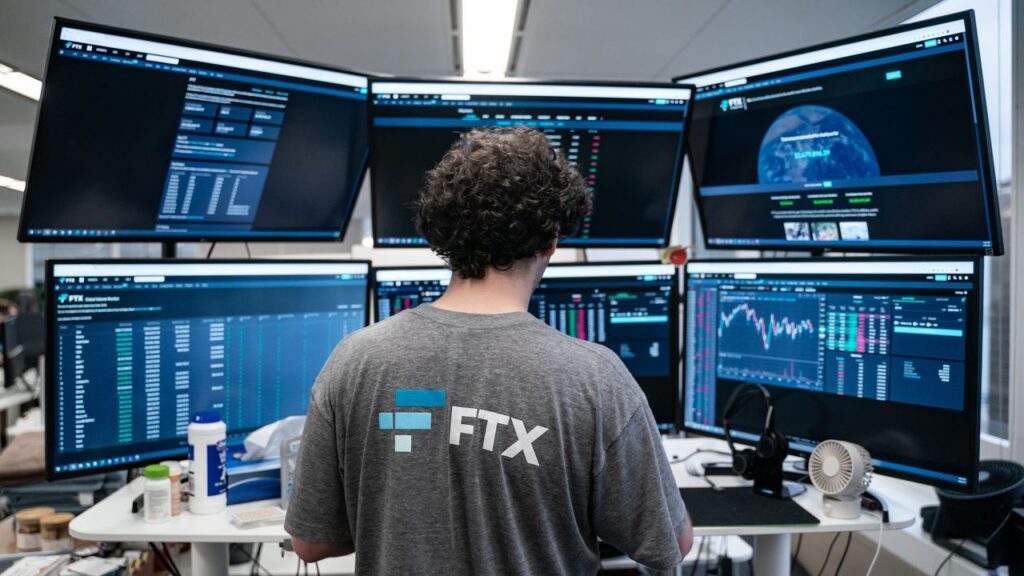
The FTX debtors’ estate, under the leadership of CEO John Ray III, has submitted an application to sell Digital Custody to CoinList at a substantial reduction of $500,000, with funding provided by Digital Custody’s original CEO and seller, Terence Culver. FTX had originally acquired Digital Custody for $10 million.
As per FTX’s legal submission, the acquisition of Digital Custody was intended to provide custodial services for FTX US and LedgerX.
However, the integration of Digital Custody into the FTX ecosystem was incomplete when former CEO Sam Bankman-Fried filed for bankruptcy in November 2022, just three months after acquiring Digital Custody.
FTX had procured the company through two transactions of $5 million each in December 2021 and August 2022.
FTX has filed a motion to sell Digital Custody for $500,000, a significant markdown from the $10 million it was purchased for, to Terrence Culver, the individual who sold Digital Custody to FTX for $10 million.
A&M (UCC/Ad hoc agrees) says this reflects a fair price for the valuable license from South Dakota that allows it to provide custody.
FTX’s legal team also clarified that since FTX US hasn’t been restarted, Digital Custody holds little value for the estate.
It states, “DCI is no longer useful to the Debtors’ business, given the Debtors’ sale of LedgerX and that it is unlikely for the Debtors to sell or restart FTX U.S..”
Nonetheless, Digital Custody retains a custodial license from the South Dakota Division of Banking.
After assessing three offers, including one from Culver, the debtors opted for the superior offer, considering its ability to swiftly complete the sale and the favourable relationship with Culver, which is anticipated to expedite regulatory approval.
FTX’s legal team indicated that both the committee and the ad hoc committee of non-U.S. customers of FTX.com endorsed the transaction.
READ MORE: European Commission Proposes Mandate for Tech Platforms to Detect AI-Generated Content
However, as part of the agreement, FTX reserves the right to seek a better offer for Digital Custody until three days before the closure.
Failure by the buyer to finalise the deal will incur a reverse termination fee of $50,000.
The now-defunct cryptocurrency exchange FTX has clarified that its restructuring plans do not involve a relaunch of the company but are focused on fully reimbursing customers.
During a court hearing on January 31, FTX lawyer Andy Dietderich stressed that despite exhaustive efforts, there are no plans to revive FTX.
Prior to this, numerous FTX users petitioned a U.S. bankruptcy judge to prevent the collapsed crypto exchange from valuing their cryptocurrency deposits using 2022 prices, claiming that this approach deprived them of the recent surge in crypto prices.
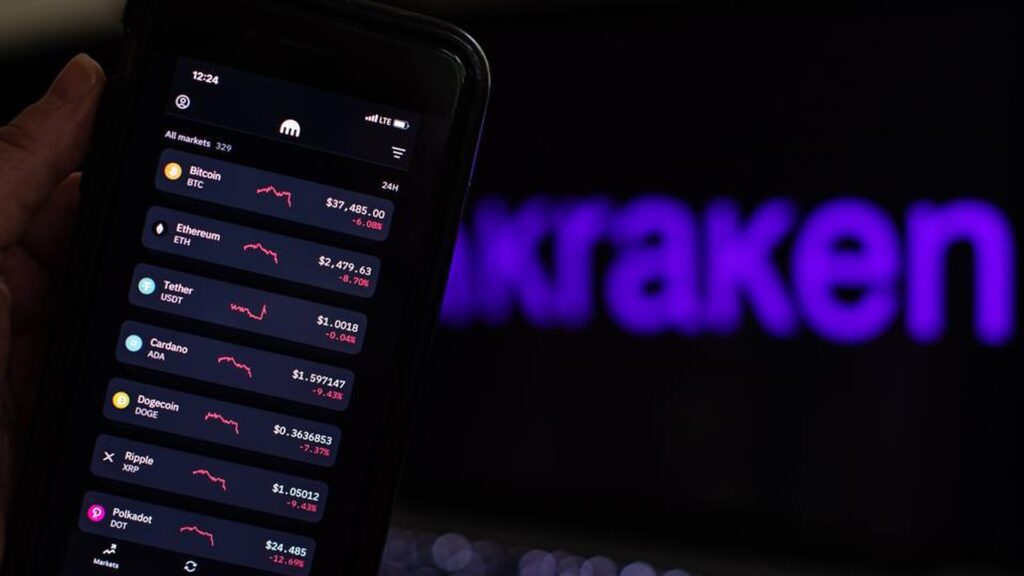
Sunday, February 11th, marks the annual Super Bowl LVIII in the United States, and there’s intrigue within the crypto community regarding rumours of no crypto ads appearing this year, akin to 2023.
However, an executive of crypto exchange Kraken suggests that the event’s American-centric focus clashes with its global plans.
The now-defunct crypto exchange FTX stood out as a major advertiser during the 2022 Super Bowl, featuring comedian Larry David, just nine months before its collapse.
On February 1st, Cointelegraph reported that David regretted taking part in the FTX promotion, in which he encouraged viewers “not to miss out on the next big thing.”
“So, like an idiot, I did it,” David declared.
In a recent Fox Business report, Kraken’s chief marketing officer, Mayur Gupta, emphasised a transition in crypto advertising, moving away from generating hype toward educating the public about the potential of crypto for the future.
“If the last wave of crypto marketing was all about hype and FOMO [fear of missing out], this current wave has to be rooted in education and awareness for the substance and true value proposition of crypto as a movement that will bring financial freedom and inclusion.”
Furthermore, Gupta pointed out that the Super Bowl mainly caters to an American audience.
He anticipates that the next major wave of crypto users will come from locations worldwide, suggesting the exchange’s preference for events with a more global appeal.
“The Super Bowl is a very US-centric event, and the next wave of crypto users will come from all around the world, not just the United States,” he stated.
Meanwhile, Reuters recently reported that the US federal government is working to increase the global viewership of the Super Bowl this year.
READ MORE: Boosting Your Cryptocurrency’s Brand Before the 2024 Halving
The game will reportedly be broadcast in 190 countries, and the US State Department will help organise watch parties in 30 locations abroad.
According to data from Nielsen, the Super Bowl has reached over 100 million viewers every year since 2010.
There was speculation that with the United States Securities and Exchange Commission (SEC) approving 11 spot Bitcoin exchange-traded funds (ETFs) on January 10th, some asset management firms would consider advertising to the Super Bowl audience.
However, the world’s largest asset manager, BlackRock, reportedly has not secured any advertisement slots for its spot Bitcoin ETF product.
Another recently approved applicant, asset management firm VanEck, recently shared on X that seeing no crypto ads in this year’s Super Bowl will be a positive.
Cointelegraph recently reported that during Super Bowl LVII in 2023, the first game following bankruptcy filings from several crypto firms and a market downturn, crypto advertisements were absent.
According to Paul Hardart, a clinical professor of marketing for New York University’s Stern School of Business, “fun, humour and entertainment” will likely be the theme of ads for Super Bowl LVIII, in a “notable shift away” from artificial intelligence and crypto firms.
The United Nations (UN) is reportedly probing hacking groups linked to the Democratic People’s Republic of Korea (DPRK) for orchestrating cyberattacks on cryptocurrency firms over six years, amassing profits of approximately $3 billion.
As per a recent Reuters report citing unpublished UN documents, an independent sanction committee is overseeing the investigation into the DPRK-linked hacking groups.
The groups purportedly targeted 58 crypto-related firms to aid their weapon of mass destruction (WMD) development work between 2017 and 2023.
“The panel is investigating 58 suspected DPRK cyberattacks on cryptocurrency-related companies between 2017 and 2023, valued at approximately $3 billion, which reportedly help fund DPRK’s WMD development.”
The UN is reportedly expected to release a published report of its findings within the next two months.
In 2023, Chainalysis estimated that the hacking groups pilfered approximately £1 billion worth of crypto from 20 hacks.
READ MORE: FCC Outlaws AI-Generated Robocalls in US Following Surge of Fraudulent Voice Messages
However, there was a notable decrease compared with 2022, when crypto losses from North Korea-linked exploits totalled £1.7 billion across 15 hacking incidents.
Blockchain intelligence firm TRM Labs foresees that this year will witness even more significant damage from hacking groups, as their attack methods are anticipated to advance beyond those of previous years.
“Despite notable advancements in cybersecurity among exchanges and increased international collaboration in tracking and recovering stolen funds, 2024 is likely to see further disruption from the world’s most prolific cyber-thief.”
Meanwhile, Cointelegraph recently reported that the United Nations Office on Drugs and Crime has cautioned that crypto is being misused in illicit economies developing in East and Southeast Asia.
It highlighted poorly regulated or illicit casinos and “pig-butchering” romance scams that have witnessed major growth in the Mekong region.

The European Commission is set to mandate tech platforms such as TikTok, X, and Facebook to detect artificial intelligence (AI)-generated content, aiming to safeguard the upcoming European elections from misinformation.
In a move towards enhancing election security, the commission has launched a public consultation on proposed guidelines for very large online platforms (VLOPs) and very large online search engines (VLOSEs).
The recommendations seek to mitigate the democratic threats posed by generative AI and deepfakes.
Outlined in the draft guidelines are various measures to counter election-related risks, including specific strategies pertaining to generative AI content, pre- and post-election risk mitigation planning, and providing clear directives for European Parliament elections.
Generative AI has the potential to mislead voters and manipulate electoral processes by fabricating and circulating synthetic content that is inauthentic and misleading, including depictions of political figures, events, polls, and narratives.
The draft election security guidelines are presently open for public consultation in the European Union until March 7.
They advocate for alerting users on relevant platforms about potential inaccuracies in content generated by generative AI.
READ MORE: Dencun Upgrade Clears Final Testing Hurdle, Sets Stage for Ethereum Mainnet Deployment
According to the draft, the guidelines also propose directing users to authoritative information sources and advocate for tech giants to implement safeguards against the creation of misleading content that could significantly influence user behaviour.
Regarding AI-generated text, the current recommendation for VLOPs/VLOSEs is to “indicate, where possible, in the outputs generated the concrete sources of the information used as input data to enable users to verify the reliability and further contextualize the information.”
The proposed “best practices” for risk mitigation outlined in the draft guidance draw inspiration from the EU’s recently approved legislative proposal, the AI Act, and its non-binding counterpart, the AI Pact.
Concerns surrounding advanced AI systems, such as large language models, have escalated since the widespread adoption of generative AI in 2023, bringing tools like OpenAI’s ChatGPT into the spotlight.
While the commission has not specified the timeline for companies to label manipulated content under the EU’s content moderation law, the Digital Services Act, Meta announced plans in a company blog post to introduce fresh guidelines concerning AI-generated content on Facebook, Instagram, and Threads in the coming months.
Any content identified as AI-generated, whether through metadata or intentional watermarking, will be visibly labelled.

To say Bitcoin has dominated the crypto headlines of late would be an understatement. Even setting aside the SEC’s landmark approval of multiple spot bitcoin exchange-traded funds (ETFs) in January, BTC enthusiasts have had plenty to celebrate with the asset’s value growing by almost 15% in the last fortnight.
With the fourth quadrennial Halving coming up, Bitcoin’s Layer-2 ecosystem is also enjoying a moment in the sun, smashing several significant milestones that underscore the appeal of solutions built on Satoshi’s network. At long last, supporters of the blockchain have more than the “digital gold” narrative to trumpet: Bitcoin-based DeFi solutions are proving a smash hit.
Bitcoin L2 Comes of Age
As with Ethereum, Layer-2s on Bitcoin run atop the main chain with the goal of increasing its capacity to process transactions. These auxiliary networks, and the dApps they support, essentially build out the architecture of Bitcoin and broaden the appeal of its ecosystem.
When DeFi took off in 2020, Ethereum activity exploded and a number of Layer-2s (Arbitrum, Optimism etc) subsequently appeared offering superior throughput, lower costs, chain specialization, and dApp utility. The idea that Bitcoin L2s could follow a similar trajectory is undeniably appealing to BTC maxis.
Although Bitcoin L2s are at a much earlier stage than the preponderance we see on Ethereum, they are growing at a rapid rate. Payments on the Lightning Network, one of the best-known L2 solutions designed to lighten the load on the main chain, have grown by over 1200% in two years. Recent hype around BTC has also seen other significant developments.
Stacks, a Layer-2 network enabling smart contracts and dApps to use Bitcoin as a secure base layer, has been one of the big winners. The Total Value Locked (TVL) on Stacks surpassed all-time highs in January, peaking at $63 million on the day the ETFs were green-lit. Another L2 project, Rootstock, also hit its highest TVL in two years.
The feel-good factor extends to solutions anchored to L2s, like StackingDAO, a liquid staking protocol operating on Stacks. In just a month, the project became the second-largest DeFi protocol on Stacks by TVL, with over 10 million $STX tokens locked.
BitFlow, a native Bitcoin DEX, has also announced $2m TVL in its $stSTX LSD pool. Liquid staking derivatives – which let users access the liquidity of staked tokens that would otherwise be locked in a smart contract – was a major trend last year, with Lido becoming the single biggest defi dApp on Ethereum.
Given how many bitcoiners simply hodl their satoshis, LSDs – which let them stake for yield and put their capital to use in DeFi – could end up at the center of a veritable BTC L2 boom.
The recent uptick in Layer2 activity on the Bitcoin network is a sight to behold. The emergence of projects that advance the network’s utility through sophisticated L2 solutions seems destined to unlock new BTC use cases and accelerate demand for digital gold. If Bitcoin-based L2s can replicate those that spawned from Ethereum, the next 18 months will prove very interesting.

A cohort of five Republican lawmakers from the United States Senate have lambasted the Securities and Exchange Commission (SEC) for its handling of a lawsuit against Digital Licensing, trading as Debt Box.
In a missive dated February 7 addressed to SEC Chair Gary Gensler, six Republican senators articulated their “significant concerns” regarding the commission’s conduct in the Debt Box affair, contending that the regulator behaved in an “unethical and unprofessional manner.”
The SEC, in filings with the U.S. District Court for the District of Utah, Northern Division, acknowledged in December that it had failed to be “accurate and candid” in asserting that Debt Box shuttered bank accounts and intended to relocate to the United Arab Emirates.
“Whether Commission staff deliberately misrepresented evidence or unwittingly presented false information, this case raises questions about the integrity of other enforcement actions initiated by the Commission,” asserted the senators.
“It is challenging to sustain confidence that other cases are not based on questionable evidence, obfuscations, or outright misrepresentations.”
The six senators—JD Vance, Thom Tillis, Bill Hagerty, Cynthia Lummis, and Katie Boyd Britt—seemingly refrained from prescribing a specific course of action for the SEC going forward, merely voicing their apprehensions.
READ MORE: US Judge Approves Sealed Settlement Between BlockFi and 3AC in Crypto Dispute
They remarked that the SEC’s proposed remedy of mandatory staff training and personnel reshuffling may prove inadequate.
The SEC instigated legal proceedings against Debt Box in July 2023, alleging the company orchestrated an illicit $50 million cryptocurrency scheme.
The court, on the basis of the SEC’s assertions, sanctioned a temporary restraining order to immobilize Debt Box’s assets.
However, subsequent revelations disclosed numerous inaccuracies in the SEC’s claims, prompting the court to threaten sanctions and the commission to seek dismissal of the case.
It remains unclear whether the Republican senators aimed to cast doubt on other enforcement actions targeting cryptocurrency firms by the SEC.
The commission currently has active lawsuits against Binance, Kraken, Ripple, and Coinbase. Cointelegraph reached out to the SEC for comment but received no response at the time of going to press.

Sam Altman, the CEO of the artificial intelligence (AI) developer OpenAI, is reportedly engaging with investors globally to secure trillions of pounds for the development of semiconductor chips.
As per a report by The Wall Street Journal on 8th February, Altman’s endeavour would necessitate fundraising in the range of £5–7 trillion.
Sources close to OpenAI indicate that these funds would alleviate the company’s scaling limitations and address the scarcity and expense of chips crucial for advancing high-level AI systems.
Altman has purportedly been advocating for collaborations between OpenAI and “various investors,” chip manufacturers, and energy suppliers, expressing OpenAI’s willingness to become a “significant customer” of new factories.
An OpenAI spokesperson remarked:
“OpenAI has had productive discussions about increasing global infrastructure and supply chains for chips, energy, and data centres — which are crucial for AI and other industries that rely on them.”
Altman recently conferred with the United States Commerce Secretary Gina Raimondo to deliberate on the initiative, recognising the necessity for involvement from patrons, industry partners, and governments worldwide.
READ MORE: SEC’s New Crypto Regulations Spark Controversy and Legal Challenges
An OpenAI spokesperson affirmed their commitment to keeping the U.S. government informed due to the topic’s significance to the country’s “national priorities.”
The CEO of OpenAI also held discussions with the United Arab Emirates National Security Advisor, Sheikh Tahnoun bin Zayed al Nahyan.
According to insiders, the UAE could play a pivotal role with U.S. government approval.
Masayoshi Son, the CEO of SoftBank, and representatives from chip fabrication firms such as Taiwan Semiconductor Manufacturing, have reportedly engaged in discussions with Altman regarding his project.
An individual familiar with the matter disclosed that Microsoft — a majority stakeholder in OpenAI — is cognisant of the company’s fundraising endeavours and extends support.
In December 2023, reports surfaced indicating OpenAI’s discussions with investors contemplating investments exceeding £100 billion in the company.
Nvidia continues to dominate the market for chips used in AI computation.
Amidst a surge in AI model development over the past year, the company has reported record-breaking revenue and a valuation surpassing £1 trillion.
Meta, a prominent tech conglomerate owning social media platforms Facebook and Instagram, has recently unveiled its entry into the AI chip market.
It introduced its latest chip, “Artemis,” intending to deploy it in its data centres to enhance AI capabilities and lessen reliance on Nvidia.

An Australian federal court has seemingly drawn a nuanced line regarding crypto-yield products, ruling that while products promising a managed yield will require a financial services license, “pass-through” decentralized-finance (DeFi) products may not.
In an order dated February 9, federal court judge Ian Jackson ruled that Block Earner would face penalties over its “Earner” product offering in 2022, which provided yield for loans denominated in USD Coin, Bitcoin (BTC), Ether, and PAX Gold (PAXG), stating that it needed to obtain an Australian Financial Services License (AFSL).
However, Jackson refrained from categorising Block Earner’s DeFi “Access” product similarly, explaining that it did not operate under a managed investment scheme and, therefore, no AFSL was required.
“The Court’s decision carries nuanced implications for Block Earner and the broader crypto industry in Australia,” Block Earner stated on February 9.
“The decision provides guidance to the industry as to the applicability of Australian financial services laws to crypto-related products and services.”
The case was initiated by the Australian Securities and Investment Commission (ASIC), which alleged that both Block Earner’s Access and Earner products violated corporation laws.
In an interview with Cointelegraph, Piper Alderman digital asset lawyer Michael Bacina clarified that Access was simply a pass-through to decentralized finance (DeFi).
“The Earner product involved a representation that users’ crypto would be used to generate a return (but users would only receive a fixed interest amount),” said Bacina.
Meanwhile, the Access product does not depend on Block Earner generating a return at all and is “completely dependent on Aave or Compound,” he added.
The crucial aspect to examine lies in how these products are marketed, Bacina emphasised.
“The takeaway for Australian crypto businesses is how important it is that marketing and representations clearly align and that the features of products are very carefully considered.”
READ MORE: Crypto News Today: Spot Bitcoin ETFs Surpass $1 Billion in Daily Trading Volume
The Earner product operated from March 17, 2022, to November 16 of the same year.
Block Earner confirmed to Cointelegraph that it terminated the Earner product before proceedings commenced and that the findings do not affect any of Block Earner’s current products.
In a statement, Block Earner said the dismissal of ASIC’s case against Access “is an important development in showing how DeFi can coexist with Australia’s regulatory frameworks, paving the way for further development and adoption of DeFi solutions.”
Aaron Lane, a senior research fellow at the Royal Melbourne Institute of Technology’s Blockchain Innovation Hub, believes the Australian Treasury’s proposed legislation for the crypto sector is likely to impose licensing conditions on Block Earner, should it be passed.
ASIC will now seek orders from the court imposing monetary penalties. The proceedings have been listed for a case management hearing at 9.30 am on March 1, 2024.
ASIC said the decision was a step forward in protecting consumers from digital asset products.
“ASIC remains concerned that consumers do not fully appreciate the risks associated with products involving crypto-assets and today’s decision is an important step forward to ensuring there are appropriate protections for consumers.”
The securities regulator called on firms offering cryptocurrency products to “carefully consider” whether their offerings constitute financial products under the existing regime.
If products do fall under the definition of a managed investment scheme, firms should seek licensing before offering them, ASIC stressed.