



More than a year has passed since the notable Terra, FTX, and Celsius collapses in 2022, and the cryptocurrency industry has faced numerous challenges since then.
Industry leaders are now discussing the crucial role of crypto rating agencies in managing risks within the crypto sphere.
In 2022, Ben Goertzel, the CEO of SingularityNET, a decentralized artificial intelligence (AI) firm, argued that rating agencies could play a more significant role in rebuilding trust in crypto than regulators.
As we enter 2024, Goertzel remains skeptical of regulatory efforts aimed at bolstering confidence in the crypto space.
He expressed his lack of faith in regulatory agencies, stating, “Nothing that the world’s regulatory agencies have done since 2022 has increased my faith that they are going to be able in practice to do more good than harm for customers or service providers in the crypto space.”
However, Goertzel believes that transparent, crowdsourced, and intelligently aggregated rating mechanisms could significantly benefit the crypto landscape.
He highlighted the advancements in AI technology, which now make it easier to generate customized summaries of the reputations of various entities in crypto using raw data and reports from diverse sources.
Goertzel also pointed out the United States regulator’s handling of the FTX case as evidence that special laws for crypto fraud may not be necessary.
He argued that existing laws against fraud can effectively be applied to arrest “crypto fraudsters,” similar to individuals involved in other fraudulent activities.
While he doesn’t believe that rating agencies could have prevented the FTX collapse, he suggests that they could have “alerted customers to the numerous red flags observable in advance.”
READ MORE: Ether Surges Over 20% Against Bitcoin in 72 Hours, Traders Bullish on Further Upside
Anastasia Ulianova, co-founder of the crypto ratings platform Aria, acknowledges the limitations of rating agencies in preventing collapses like FTX.
Ulianova emphasized that rating agencies can “raise red flags” when the risk associated with a particular crypto exceeds its performance, but they cannot predict collapses.
She stated, “A rating can only tell you how much risk you are taking. It is not a certain prediction of an upcoming collapse.”
Despite these limitations, Ulianova believes that rating agencies can still play a crucial role in helping investors assess the risk-to-reward ratio of tokens.
This information can aid investors in determining whether the expected returns justify the associated risks.
She also emphasized that Aria’s goal as a rating agency is to “legitimize the place of crypto assets in a traditional investment portfolio.”
In summary, crypto rating agencies are being viewed as a valuable tool in the cryptocurrency industry to assess risks and provide investors with information needed to make informed decisions.
While they may not prevent collapses, they can help individuals navigate the complex crypto landscape and make more educated investment choices.

The South Korean government is contemplating the imposition of sanctions on the use of cryptocurrency mixing services, following in the footsteps of the United States.
As reported by a local publication, South Korea’s financial regulator, the Financial Intelligence Unit (FIU), is in the early stages of crafting legislation to regulate digital asset mixing services.
This move comes as the use of mixers for illegal money laundering operations has been on the rise.
Cryptocurrency mixing services are designed to mix potentially identifiable or “tainted” cryptocurrency funds with others, making it difficult to trace the original source of the funds.
While initially intended to enhance privacy and allow senders to conceal their transaction details, these services have become a preferred method for scammers and hackers to launder stolen funds.
The discussions within the FIU began after the United States imposed sanctions against cryptocurrency mixers.
The South Korean regulator is now considering similar measures to curb money laundering and illicit financial activities in the crypto space.
READ MORE: Vanguard’s Exclusion of Spot Bitcoin ETFs Spurs Investor Exodus to Alternative Platforms
However, it is important to note that these discussions are in their early stages, and it may take some time before any new regulations are implemented.
Mixers and online gambling platforms are particularly notorious for facilitating money laundering, processing a significant portion of illicit funds.
In response, the U.S. government has already taken action by imposing sanctions on prominent crypto-mixing service providers.
The first set of sanctions was imposed in August 2022 when the U.S. Treasury Department targeted Tornado Cash, a well-known crypto mixing service.
Subsequently, in November 2023, the U.S. government expanded its sanctions by alleging North Korean ties to another crypto mixer, Sinbad.
South Korea’s consideration of similar measures reflects the global concern over the misuse of cryptocurrency mixing services for illegal activities.
While the regulatory framework is still under development, it is evident that authorities are taking steps to address these issues and ensure the integrity of the cryptocurrency ecosystem.
On January 14, an eye-catching report surfaced regarding a substantial $15 billion XRP transaction from an undisclosed wallet to Bitfinex.
However, it soon became apparent that this transaction had never actually transpired. Bitfinex’s Chief Technology Officer, Paolo Ardoino, shed light on the situation, revealing that it was, in fact, an unsuccessful attempt at a “partial payments exploit.”
The initial revelation of the supposed transfer came from Whale Alert, a prominent blockchain tracking account that formerly operated on Twitter.
Whale Alert claimed to have spotted a transaction involving a staggering 25.6 billion XRP – nearly half of the total XRP supply – moving from an unidentified wallet to Bitfinex.
However, Whale Alert later deleted the post and attributed the error to “an issue with properly reading the Ripple node response, resulting in a few wrong posts.”
Paolo Ardoino, in a subsequent explanation on the platform X, clarified that the incident was an attempted attack on Bitfinex through a “Partial Payments Exploit.”
READ MORE: US Financial Services Committee Establishes Bipartisan AI Working Group
The attacker seemed to have believed that Bitfinex had improperly configured its software to process partial payments.
The mechanics of a partial payments exploit involve assuming that a company’s system only reads the amount field of an XRP transaction, which is intentionally set to a high value.
The exploiter then sends a significantly smaller amount, specified in another transaction field, in an attempt to receive credit for the difference.
However, Ardoino affirmed that Bitfinex thwarted this attack because it correctly manages the ‘delivered_amount’ data field.
Notably, the attacker didn’t limit their efforts to Bitfinex alone. Blockchain data revealed that they also targeted Binance with a 58.9 billion XRP transfer, mirroring the unsuccessful outcome of the attack on Bitfinex.
In conclusion, what initially appeared as a colossal XRP transaction turned out to be a failed exploit attempt.
Bitfinex’s robust security measures successfully prevented any unauthorized manipulation of their systems, and the attacker’s ambitions to exploit vulnerabilities were thwarted.

The United States Government Accountability Office (GAO) recently offered crucial recommendations to the Securities and Exchange Commission (SEC) in anticipation of its approval of a spot Bitcoin exchange-traded fund (ETF) on January 10.
These recommendations primarily revolved around workforce management for the digital asset market and the regulatory approach towards the burgeoning industry in the upcoming years.
The GAO presented these recommendations to the SEC on December 15, and they were made public on January 16.
The GAO’s report advised the SEC to develop a new workforce plan, establish clear policies and procedures for its Strategic Hub for Innovation and Financial Technology (FinHub) internal controls, and formulate performance objectives for the hub.
The GAO, known for its independent and nonpartisan role within the U.S. federal government’s legislative branch, provides auditing, evaluation, and investigative services for the U.S. Congress.
Upon assessing the SEC’s readiness to handle the growing crypto market, the GAO identified that the agency currently employs 116 individuals primarily focused on crypto asset matters.
However, the SEC has yet to create an updated workforce planning strategy, despite the need to align with its fiscal years 2019–2022 strategy.
The GAO suggested that such a strategy would better equip the SEC to address future workforce requirements and effectively fulfill its responsibilities in overseeing and formulating policies related to crypto assets.
READ MORE: Rosario Witnesses Historic First as Tenant Pays Monthly Rent in Bitcoin
Additionally, the GAO observed that while the SEC’s FinHub coordinates oversight of emerging technology, it lacks documented policies, procedures, and performance goals, even though it has established operational processes like meetings with market participants.
In response to their assessment, the GAO issued three recommendations:
- The SEC’s chief should ensure that the chief human capital officer devises a new workforce planning strategy in line with the agency’s 2022–2026 strategic and performance plans.
- The SEC’s chief should ensure that the FinHub director documents policies and procedures that underpin its internal controls.
- The chair of the SEC should ensure that the FinHub director establishes performance goals and metrics that are clear, quantifiable, and targeted.
For each of these recommendations, the GAO included a live status section to monitor whether the SEC takes appropriate actions on them.
In a landmark decision, the SEC granted approval for 11 spot Bitcoin ETF applications on January 10. The internal document shared by the SEC revealed that the proposal received three votes in favor and two against. SEC chief Gary Gensler’s decisive vote marked the approval of the first spot BTC ETFs in the U.S., ending nearly a decade of rejections.
Notably, gold enthusiast and prominent Bitcoin critic Peter Schiff suggested that Gensler was pressured into approving the spot Bitcoin ETFs.
However, Schiff cautioned that Gensler might introduce stringent crypto regulations in the near future, potentially increasing the cost of Bitcoin transactions and undermining its utility, which could lead to a significant price drop.
All the approved spot BTC ETFs commenced public trading the following day, quickly amassing over $2 billion in trading volume on their debut.
Los Angeles, California, January 17th, 2024, Chainwire
Key Takeaways
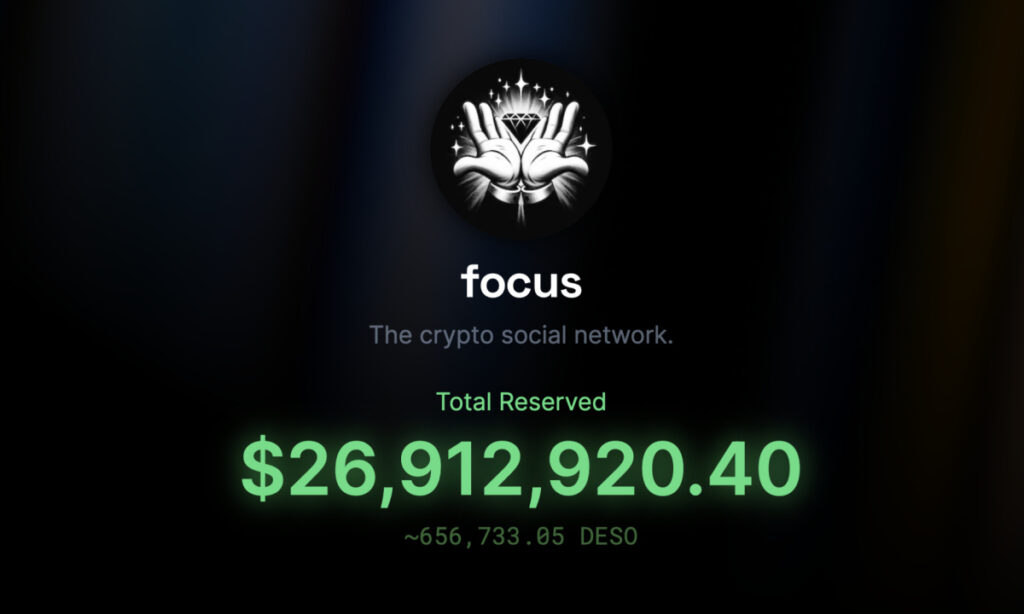
- Focus, the revolutionary new decentralized SocialFi app, raised $20 million in less than 24 hours
- Focus rivals subscription platforms like OnlyFans and Patreon, a multi-billion-dollar industry
- The Social Airdrop offers users the chance to earn upwards of $100,000 in $FOCUS tokens
Focus is a brand new SocialFi app from DeSo, the team that raised $200M from Coinbase, Sequoia, a16z, Social Capital, and other top funds. It aims to disrupt the trillion-dollar social media market and creator economy by introducing groundbreaking features rivaling X, Onlyfans, and Patreon.
The TAM for this market is significant, with OnlyFans processing roughly $8 Billion in 2023 and charging 20% per transaction. These high fees significantly reduce creator profits, highlighting the need for a more equitable solution.
Focus combines the best of Onlyfans, Patreon, X, and other billion-dollar social platforms into one app. It’s built on the DeSo blockchain and powered by permissionless crypto-native monetization features that are not possible in web2.
Under the leadership of crypto-veteran Nader Al-Naji, Focus is fully decentralized, with no corporate entity behind it. Just coins and code:
“Decentralized social media is facing the same skepticism Bitcoin did at its inception. Critics believe it can’t challenge major players, won’t scale, and faces a ban if it does. Ask yourself: do you want to be on the side that’s short-sighted and left behind or embrace optimism and innovation? This is your chance to be part of a monumental technological shift.” – Nader Al-Naji, Founder of DeSo
Focus allows new ways for users to make money with anonymous crypto-enabled monetization mechanics that include paid reposts (decentralized ads), paid messages, unlockable content, subscriptions, and Creator Coins, allowing users to invest directly in other creators’ revenue streams.
Thanks to the DeSo blockchain and its Revolution Proof of Stake system, Focus users can transact in a variety of cryptocurrencies, including USDC, Bitcoin, Ethereum, Solana, DeSo, and Focus tokens, all for under 1/10,000th of a cent per transaction, including for cross-chain assets.
DeSo also supports the storage of content directly on-chain for 1/10,000th of a cent per post, which is much less than Solana at ~$1 per post or Ethereum at ~$100+ per post.
This means that Focus can pioneer innovative monetization and content mechanics that are not possible with older high-fee blockchains or slower and heavily censored fiat payment rails.
DeSo Founder Nader Al-Naji continues: “From the beginning, our strategy was clear: lay down a scalable, decentralized groundwork, then roll out applications that truly showcase the unparalleled advantages and power of DeSo.”
Focus allows users to reserve tokens akin to staking, with the flexibility to choose any supported currency via HeroSwap, including BTC, ETH, SOL, USDC, and DESO. Early adopters who reserve tokens during the first week (January 11th to January 18th) will receive a 100% bonus in $FOCUS tokens.
Unlike traditional social networks, Focus democratizes distribution by distributing 100% of all fees directly to the holders of $FOCUS tokens. This contradicts the business model users see with social platforms today, where a small group of venture capitalists and shareholders capture all the value.
To further incentivize user participation, Focus is introducing a viral airdrop model, The Social Airdrop, which rewards users based on their influence on external social networks, distributing $FOCUS tokens commensurate with their reach.
This new airdrop model means someone with a thousand views per post would get a joining bonus of about $100 in $FOCUS tokens. In contrast, someone with millions of views per post, like Elon Musk, would get a bonus of upwards of $100,000 in $FOCUS tokens.
The Social Airdrop also includes a referral program allowing users to refer others to the platform and in return receive 10% of the referee’s joining bonus and 5% of all revenues the referee generates on the platform.
FOCUS plans to support X, Instagram, YouTube, TikTok, Twitch, select email domains, DeSo, and OnlyFans at launch.
To reserve tokens and earn a 100% bonus in $FOCUS, prospective users should visit Focus.xyz and reserve their funds before 11:11 am EST on January 18th. The bonus will drop every week until the app goes live.
About Deso
DeSo is the first and only censorship-resistant Layer-1 blockchain purpose-built to power storage-heavy apps and scale decentralized social networks for mass adoption. Their mission is to decentralize social media like Bitcoin and Ethereum are decentralizing finance. DeSo has gained significant adoption and boasts 2.6M users (wallets) and 93M transactions. With Focus, DeSo aims to usher in a new age in crypto led by cutting-edge consumer apps that scale to billions of users.
Contact
Ed Moss
[email protected]

Wise Lending, a Web3 lending app and yield aggregator, experienced a significant breach on January 12, resulting in the theft of 170 Ether (ETH), currently valued at $440,000.
This incident has been confirmed by multiple security experts, who suspect that the attacker may have exploited an oracle price using a flash loan.
The attack was recorded on the blockchain at 7:29 pm UTC, with the perpetrator utilizing an unverified contract featuring an address ending in “d82c” to siphon off the funds.
The attacker also moved various tokens into this contract, including $9,000 in USD Coin (USDC), $2,000 in Tether (USDT), $5,000 in Dai (DAI), 18.51 Wrapped Ether (WETH), valued at $47,694, and various tokens linked to Pendle Finance.
As part of the exploit, the attacker borrowed 1,110 Lido Staked Ether (stETH) tokens, which amounted to $2.9 million, from the Aave lending protocol.
Flash loans, commonly employed by exploiters, are used to manipulate oracle prices, enabling such attacks.
A pseudonymous blockchain security researcher known as Spreek first alerted the crypto community to the Wise Lending attack, posting on X (formerly Twitter), stating, “Looks like Wise Lending exploited for ~170 ETH.”
READ MORE: DeRec Alliance Unveils Ambitious Plan for Decentralized Digital Asset Recovery System
Spreek also speculated in a follow-up post that the vulnerability might be connected to a new Pendle Finance derivative token.
Another security researcher, Officer’s Notes, commented on the situation, remarking, “Another day, another exploit.”
Officer’s Notes suggested that the vulnerability may have been triggered by a 7% price swing between stETH and ETH within a particular pool, possibly due to an AAVE v2 stETH flash loan.
Although 2024 has just begun, the decentralized finance (DeFi) sector has already suffered losses of at least $5 million due to various exploits.
On January 3, Radiant Capital incurred losses exceeding $4.5 million, followed by liquidity manager Gamma Protocol losing over $400,000 to an exploit the next day.
In the previous year, 2023, the crypto industry witnessed losses totaling over $1.8 billion as a result of hacks, scams, and exploits, as reported by blockchain security platform Certik.
These incidents underscore the ongoing challenges and security concerns within the crypto space.

BlackRock CEO Larry Fink expressed skepticism regarding the practicality of using Bitcoin for everyday transactions, emphasizing that it should be recognized primarily as an asset class rather than a currency.
During an interview with CNBC on January 11, Fink reiterated his belief in Bitcoin as an alternative form of wealth storage, downplaying its potential to replace national currencies.
Fink stated, “I don’t believe it’s ever going to be a currency. I believe it’s an asset class.” He firmly believes that Bitcoin’s primary role is as a store of value.
However, Fink is more optimistic about the emergence of central bank digital currencies (CBDCs) in the near future.
He foresees the development of digital currencies that leverage blockchain technology, saying, “I think we’re going to create digital currencies, we’re going to use technology for it. We’re going to use a blockchain.”
Recent data from Cointelegraph reveals that over 100 countries are exploring the development of CBDCs, with 39 countries already piloting, testing, or launching CBDC initiatives.
READ MORE: Turkey Gears Up for Cryptocurrency Regulation Overhaul
When asked about ARK Invest CEO Cathie Wood’s Bitcoin valuation predictions, ranging from $600,000 to $1 million, Fink indicated that price speculation wasn’t his primary focus at the moment.
He emphasized his current priority, which is the launch of BlackRock’s newly approved spot Bitcoin exchange-traded fund (ETF), aimed at providing an instrument for storing wealth.
Fink added, “I think if it gets even close to that high, gold will represent even a bigger value. And let’s be clear, if you think it’s digital gold, there’s going to be a reference point between gold and Bitcoin.”
In a separate interview with Fox Business on the same day, Fink highlighted that the approval of the Bitcoin ETF by the United States Securities and Exchange Commission (SEC) signifies the legitimization of the cryptocurrency industry and will enhance safety for investors.
BlackRock’s ETF approval came alongside approvals for 10 other similar products.
Since receiving approval for its Bitcoin ETF, BlackRock has garnered an impressive record of 576 ETF approvals with only one rejection, underscoring its growing influence and prominence in the world of exchange-traded funds.

Terraform Labs co-founder, Do Kwon, has formally petitioned the United States District Court for the Southern District of New York to delay his impending trial until March.
The grounds for this request are based on the complexities surrounding his extradition proceedings in Montenegro, which have not progressed as swiftly as initially anticipated.
In a letter submitted on January 11 and addressed to Judge Jed Rakoff, Kwon’s legal representatives stressed his strong desire to be present at the trial, which is currently slated for January 29.
Unfortunately, they had previously expected Kwon to have returned to the United States by this time, stating, “Mr. Kwon wishes to attend his trial.
Counsel had hoped the extradition proceedings in Montenegro would proceed more quickly than they have.”
The Securities and Exchange Commission (SEC) had filed charges against Kwon in February 2023, accusing him of involvement in a massive cryptocurrency securities fraud scheme worth billions of dollars.
These allegations were closely linked to the collapse of Terraform Labs’ stablecoin, TerraUSD (USTC), and its associated Terra (LUNA) token.
Kwon’s legal team acknowledged the urgency of the trial but indicated that the January trial date would be unfeasible for him to attend.
READ MORE: U.S. SEC Approval of Bitcoin ETF Sparks Global Crypto Market Frenzy
They proposed, “We understand the Court cannot put the trial on hold indefinitely, but an adjournment until mid-March would provide a realistic possibility for Mr. Kwon to attend,” in their letter.
Notably, in December 2023, the Appellate Court of Montenegro took a significant step by annulling the decision of the High Court of Podgorica, which had initially approved Kwon’s extradition to either the United States or South Korea.
Only a week earlier, reports had emerged that both U.S. and South Korean authorities were requesting Kwon’s continued detention for an additional two months after the completion of his current sentence.
There is growing speculation regarding the possibility of Kwon facing multiple sentences in both countries.
Kwon’s legal troubles began in March 2023 when he was apprehended in Montenegro while attempting to leave the country using falsified travel documents.
His legal team’s request for a trial delay until March is underpinned by the intricate and evolving extradition challenges he faces, further underscoring the complexity of his legal predicament.
Cryptocurrency firm Genesis Global Trading has reached an agreement with the New York Department of Financial Services (NYDFS), resulting in the cessation of its operations within the state.
This development, disclosed on January 12, involves Genesis agreeing to pay an $8-million penalty to the NYDFS and the surrender of its BitLicense, a license the company had held since 2018.
The settlement stems from an investigation conducted by New York authorities, which unveiled significant deficiencies in Genesis’ Anti-Money Laundering (AML) and cybersecurity programs.
NYDFS Superintendent Adrienne Harris expressed concern over Genesis Global Trading’s lack of a functional compliance program, asserting that it demonstrated a disregard for regulatory requirements and potentially exposed both the company and its customers to security threats.
It’s important to note that this settlement exclusively pertains to Genesis Global Trading, and it is not associated with Genesis Global Capital.
In a separate legal matter, New York’s attorney general had filed a lawsuit against Genesis Global Capital, Gemini, and Digital Currency Group in October.
READ MORE: Bitcoin Surges as U.S. Inflation Data Sparks Crypto Market Anticipation
This lawsuit alleged that the companies had engaged in fraudulent activities through the Gemini Earn program, targeting investors.
Genesis Global Trading, however, did not follow its parent company’s path of filing for Chapter 11 bankruptcy protection in January 2023.
A spokesperson for the firm confirmed that Genesis Global Trading had ceased its operations in September 2023 and had taken substantial corrective measures to address the concerns raised by the NYDFS.
This settlement is part of a broader context in which concerns have been raised regarding the oversight of BitLicense applicants by the NYDFS. Since 2015, cryptocurrency firms operating within New York have been required to obtain a BitLicense from the regulatory authority.
The Genesis Global Trading case underscores the NYDFS’s commitment to enforcing regulatory compliance and maintaining the integrity of the cryptocurrency market in the state of New York.
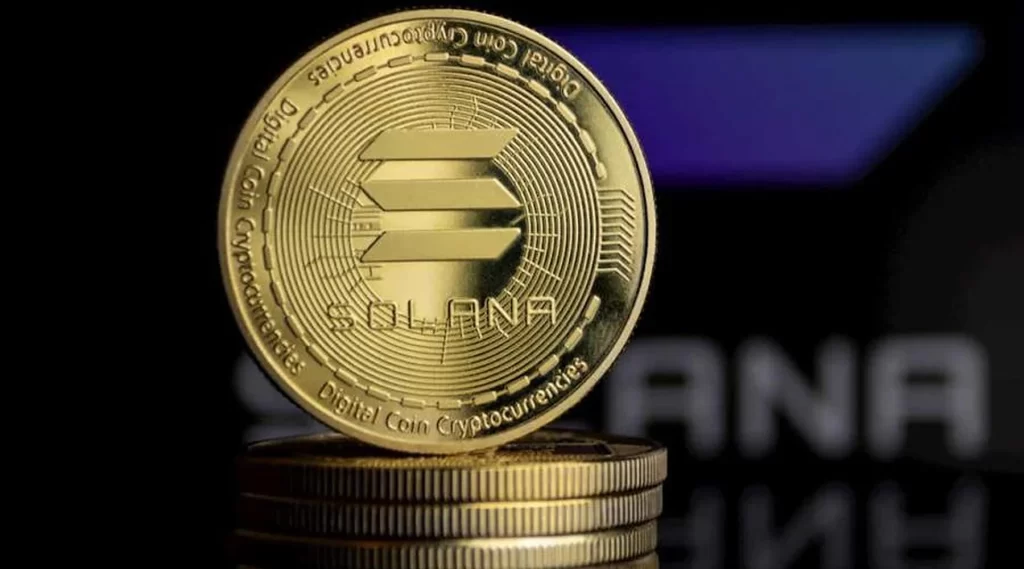
In a jaw-dropping turn of events within the Solana ecosystem, a maximum extractable value (MEV) bot, under the management of an entity known as 2fast, astoundingly amassed a staggering $1.7 million in profits from a single, eyebrow-raising trade involving the memecoin Dogwifhat (WIF).
This peculiar transaction unfolded when a trader decided to acquire $9 million worth of WIF in the “most inefficient way possible.”
The MEV bot’s ingenious maneuver commenced by exchanging 703 Solana (SOL) tokens for a substantial 490,000 WIF tokens.
In a twist of fate, it further transformed this identical amount of WIF into a remarkable 19,035 SOL tokens within the same transaction bundle. As per Solscan data, this strategic move culminated in a jaw-dropping profit of $1.73 million.
MEV bots, automated algorithms programmed to scour blockchain networks for lucrative trading opportunities, executed this awe-inspiring feat. They identify promising opportunities and execute orders automatically to maximize gains.
The MEV bot harnessed a cutting-edge tool developed by Jito Labs, the developmental wing of Solana’s liquid staking protocol, Jito.
Functioning much like flashbots on Ethereum, this tool empowers bots to seek out maximum extractable value and submit bids for inclusion in transaction bundles.
READ MORE: CFTC Issues Recommendations to Mitigate DeFi Risks in U.S. Financial Markets
This remarkable arbitrage opportunity unfolded after a monumental $8.9 million purchase of WIF by a lone trader known as zeroxtrading.sol.
The colossal bid was placed in a low-liquidity pool, resulting in the order being fulfilled at an astonishing rate of approximately $3 per WIF token – a whopping 1,400% higher than its prevailing market value at the time.
Regrettably, the immediate aftermath of this transaction witnessed the trader’s funds plummeting by a staggering 92%.
On January 11, a pseudonymous developer going by the name Pland disclosed on X (formerly Twitter) that the MEV bot implemented a relatively straightforward backrunning strategy.
This tactic enabled the bot to capitalize on the trader’s inefficient execution of the WIF order without disrupting the initial trade.
It’s important to note that backrunning is generally perceived as less harmful to blockchain networks compared to the more malicious “sandwich” attacks, which manipulate order pricing to the detriment of users.
In the wake of this extraordinary transaction, the price of WIF briefly soared to as high as $4. While the trader experienced substantial losses due to the misguided order, this eye-catching event prompted enthusiastic traders to once again invest in WIF.
Consequently, the memecoin surged by an impressive 50% from the point immediately following the dramatic drop.