



OpenAI, the artificial intelligence (AI) developer, is currently in negotiations with prominent corporate giants such as CNN, Fox Corp., and Time, as reported by Bloomberg.
The aim of these discussions is to secure licensing agreements for their news content, with the ultimate goal of enhancing the accuracy and timeliness of OpenAI’s AI chatbots.
OpenAI is actively exploring partnerships with these media powerhouses to leverage their extensive repertoire of news, video, and digital media content.
For instance, OpenAI is in talks with CNN to obtain licenses for articles that will be used to train ChatGPT and potentially feature CNN’s content in OpenAI products. Both CNN and Fox are exploring licensing options for text, video, and imagery.
In a significant move, Fox Corp. announced on January 9th the launch of a blockchain platform based on Polygon.
This platform is designed to validate the usage of its content by AI companies, reinforcing the protection of its intellectual property.
Jessica Sibley, Time’s CEO, expressed optimism about reaching an agreement with OpenAI, emphasizing the importance of a fair valuation for their content.
As of now, OpenAI’s ChatGPT-3.5, which is freely accessible to the public, relies on training data only up until January 2022.
However, in September 2023, OpenAI introduced a pivotal development, allowing its premium and enterprise models running ChatGPT-4 to access the internet and operate without the constraints of a specific training timeline.
READ MORE: Bitcoin Acceptance Surges: Number of Merchants Tripled Globally in 2023
This forward-looking initiative aims to preemptively address potential copyright infringement issues for OpenAI.
These efforts come amidst a backdrop of mounting legal challenges against OpenAI, with allegations of copyright violations stemming from the use of content in AI training.
The New York Times filed a significant lawsuit on December 27th, asserting that OpenAI’s utilization of their content did not constitute “fair use” and posed a threat to their journalistic endeavors.
Subsequently, on January 9th, OpenAI responded officially to The New York Times’ lawsuit, dismissing it as “without merit.”
OpenAI further affirmed its ongoing discussions with media organizations regarding collaborations and content licensing, emphasizing its commitment to forging partnerships that integrate AI seamlessly into the media landscape.
Additionally, another lawsuit was filed by authors Nicholas Basbanes and Nicholas Gage, advocating for compensation to copyright owners for their work used in AI training.
OpenAI’s strategic pursuit of licensing agreements with media entities is poised to mitigate future copyright-related challenges, fostering a collaborative ecosystem in the AI and media industries.

Asset management firm Vanguard may not be directly offering Bitcoin exchange-traded funds (ETFs) on its platform, but it has a notable connection to the cryptocurrency space through its ownership of a substantial stake in MicroStrategy (MSTR).
As of September 2023, Vanguard Group was found to hold a significant 8.24% ownership stake in MicroStrategy, making it the second-largest institutional shareholder in the company, with a whopping 1,126 million MSTR shares in its portfolio, according to data from Yahoo Finance.
Moreover, MicroStrategy’s stock also features in the holdings of several of Vanguard’s mutual funds, including the Vanguard Total Stock Market Index Fund, Vanguard Small-Cap Index Fund, Vanguard Extended Market Index Fund, and Vanguard Small-Cap Growth Index Fund.
MicroStrategy itself has established a robust connection with Bitcoin, with its balance sheet carrying a substantial exposure to the cryptocurrency.
Over the past years, MicroStrategy and its subsidiaries have accumulated a total of 189,150 BTC, with a collective purchase price of approximately $5.9 billion.
READ MORE: U.S. SEC Approval of Bitcoin ETF Sparks Global Crypto Market Frenzy
This has led some analysts to characterize MicroStrategy as essentially functioning as a leveraged Bitcoin ETF, given the significant impact of Bitcoin on its stock price in 2023.
In contrast, Vanguard has maintained a somewhat distant stance from the cryptocurrency market.
Despite the debut of spot Bitcoin ETFs by several asset managers on major Wall Street exchanges on January 11, Vanguard chose to block the purchase of such products.
They cited a misalignment with their vision and emphasized their focus on traditional asset classes like equities, bonds, and cash, which they consider the foundational components of a well-balanced, long-term investment portfolio.
Nonetheless, Vanguard’s indirect yet substantial exposure to Bitcoin through its MicroStrategy holdings implies that fluctuations in Bitcoin’s price can affect the performance of its mutual funds and the value of its MSTR shares.
For Vanguard clients, this represents an indirect means of gaining exposure to the cryptocurrency through the firm’s investment platform.
In the rapidly evolving crypto landscape, various firms anticipate a surge in Bitcoin-related products in the coming months, including leveraged and short Bitcoin ETFs, as well as crypto loans collateralized by Bitcoin.

London, United Kingdom, January 17th, 2024, Chainwire
Kabuni’s Steamboat Willie-inspired non-fungible tokens (NFTs) go beyond digital assets, they are integral to Kabuni’s mission of unlocking human potential through technology and driving positive change.
Holders of these NFTs gain an exclusive path to the chance of earning Kabuni COIN (KBC), embodying the spirit of innovation, these NFTs also grant holders voting rights to influence Kabuni’s future direction, symbolizing the team commitment to integrating community participation and technological advancement. The Kabuni ChangeMaker NFT transcends traditional digital asset boundaries, seamlessly merging value from the digital realm to the physical and back again, as we grow and Stake a Future across the globe.
What is “Stake a Future”?
Kabuni is redefining crowdfunding in the Web3 era with an innovative approach that concentrates on projects with significant impacts in key sectors. The Kabuni model uniquely intertwines contribution with reward, supporting promising ventures while offering tangible benefits to those who invest in these impactful projects.
A tribute to innovation: The Steamboat Willie-Inspired ChangeMaker NFT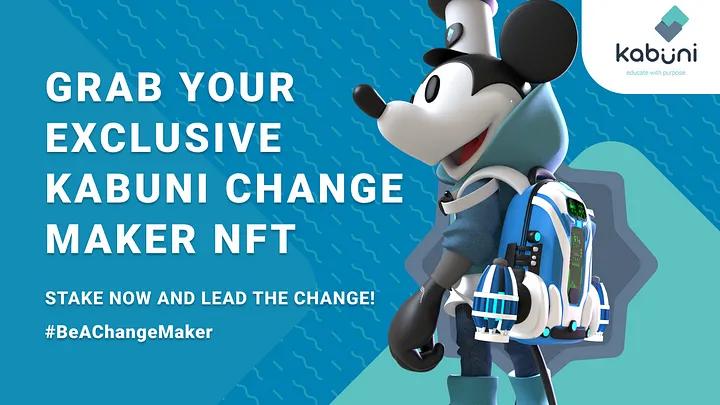
“Our journey began six years ago with a vision to unlock the design potential in every human being and elevate life. The ChangeMaker NFT program draws inspiration from Steamboat Willie, from humble roots to global icon changing the world,” states Nimesh Patel, CEO of Kabuni.
The launch today signifies a pivotal evolution in digital asset innovation and marks Kabuni’s expansion beyond revolutionising K-12 education sector into venture building, cryptocurrency exchange, and finance applications. These new ventures are in alignment with Kabuni’s mission, demonstrating the company’s commitment to broadening its impact across various sectors.
Exclusive benefits for ChangeMaker NFT holders
- Monthly Draws: Chance to win $1000 in KBC every month for a year.
- Governance Participation: As Kabuni grows, NFT holders can vote on the company’s direction, playing a pivotal role in its development.
- Exclusive Access and Opportunities: Owning an NFT opens doors to unique experiences and advantages within the Kabuni ecosystem.
- Stake A Future: Holders will be part of Kabuni’s “Stake A Future” initiatives from the outset, experiencing these ventures before others.
- A Journey of Growth: The holder’s progression from Affiliate to Ambassador within Kabuni reflects the transformative journey akin to that of Steamboat Willie, symbolizing growth and evolution.
Joining the ChangeMaker NFT Movement: The Process of Minting Event Tickets
- Stake and Save: Interested parties should visit Coinstore and stake KBC and participate in the inaugural “Stake A Future” program by staking KBC tokens.
- Mint NFT Ticket: After completing the required quests, users need to add their Coinstore UID to the Kabuni Airlyft campaign. This will allow them to mint their unique Backpack NFT ticket.
- Engage with the Community: Users can connect with Kabuni on Discord, Twitter, and other platforms for the latest updates and community interaction.
“Transforming asset exchange and redefining finance, we’re creating a transparent, ethical, and accessible ecosystem. We are pleased to be part of reshaping the future of digital finance with Kabuni.” says Shawn Koh, Regional Manager of Coinstore.
Users can join Kabuni on this exhilarating journey as it strides towards a future where technology and humanity unite for the greater good.
In anticipation of Kabuni’s ChangeMaker NFT launch on February 14th, users today have the opportunity to mint one of the 10,000 available tickets. These tickets not only secure a place for users at the launch but also determine the price they will pay for the ChangeMaker NFT – the smaller the ticket number, the less the user pays.
About Kabuni
At Kabuni, our focus is on cultivating four key pillars: education, venture building, cryptocurrency exchange, and finance applications. Each of these sectors plays a crucial role in delivering our ‘why’ — to unlock the design potential in every human being and elevate life. Our approach is to create a scalable framework that balances conscientious profit with the elevation of people and the betterment of our planet. This vision is driven by a unique blend of emerging technology and a commitment to safety by design, ensuring that as we grow, we do so responsibly and with a positive impact on the world.
Contact
CEO
Nimesh Patel
Kabuni
[email protected]

In Rosario, the third-largest city in Argentina, a unique rental agreement has been struck between a local landlord and a tenant.
This groundbreaking contract marks the first instance in Argentina where monthly rent will be paid in Bitcoin.
This innovative arrangement was made possible by recent legislative changes implemented by the country’s new presidential administration.
Under the terms of this historic contract, the tenant will be responsible for making monthly payments equivalent to $100 in Bitcoin.
These transactions will be facilitated through Fiwind, a local cryptocurrency platform.
Notably, both parties involved in this contract are experienced cryptocurrency users, signaling a growing acceptance of digital currencies in the region.
The shift towards embracing cryptocurrencies in Argentina can be attributed to the reforms introduced by President Javier Milei, who assumed office after winning the general election in November 2023.
READ MORE: How Playable Ads Are Set to Reinvigorate the Streaming and Digital Content Industry
The nation was grappling with soaring inflation rates, prompting the need for significant changes in vario
us aspects of the legal system, including rental laws.
In December 2023, Diana Mondino, the Minister of Foreign Affairs, International Trade, and Worship, announced a pivotal decree aimed at promoting economic reform and deregulation.
This decree opened the door for the utilization of Bitcoin and other cryptocurrencies within the country, albeit with certain conditions.
One of the notable changes in the regulatory landscape was the government’s efforts to facilitate the legalization of cryptocurrency holdings, even for individuals who were behind on their tax declarations.
A regularization scheme was introduced, allowing taxpayers to declare their cryptocurrency assets with a flat tax rate of 5% if done by the end of March 2024.
This rate would then increase to 10% from April and further to 15% from July until the end of September.
These recent developments signify Argentina’s growing recognition of the potential of cryptocurrencies as a viable means of conducting financial transactions and fostering economic growth.
With this groundbreaking rental agreement in Rosario, the country takes another step towards embracing the digital currency revolution, potentially setting a precedent for similar arrangements in the future.
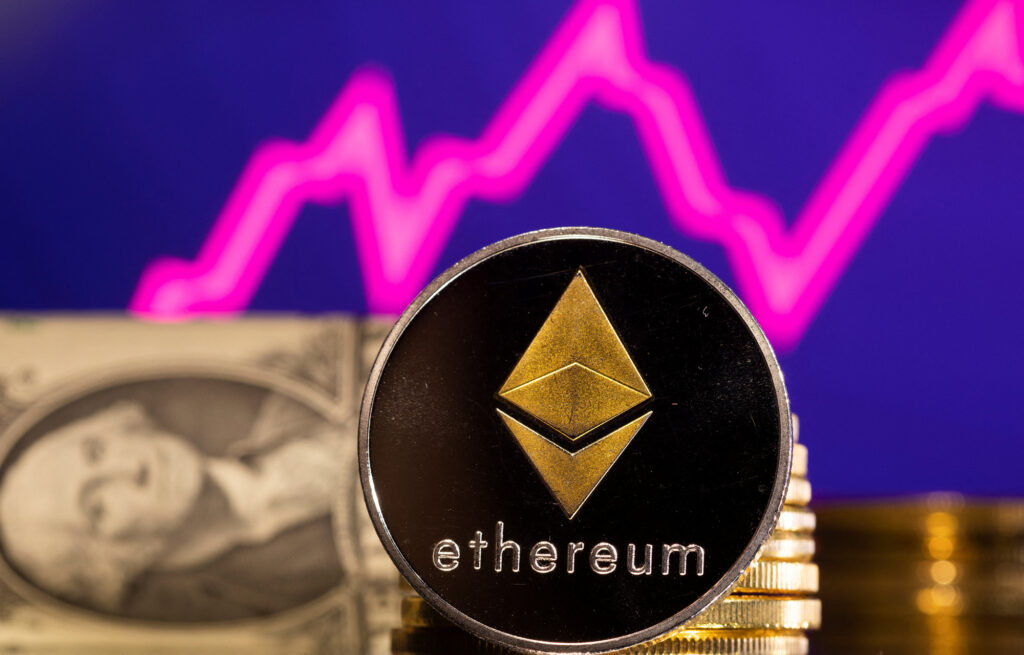
Ether has surged over 20% against Bitcoin within just 72 hours, and traders are anticipating further upward movement.
Data from Cointelegraph Markets Pro and TradingView reveals that ETH/BTC, which hit yearly lows of 0.0478 on January 9th, has now climbed to 0.0587.
ETH/USD is also experiencing a breakout, reaching levels not seen on the chart since mid-2022.
A bullish divergence on the moving average convergence divergence (MACD) indicator on weekly timeframes against Bitcoin has caught the attention of popular traders.
This week, Ethereum, the largest altcoin, has outperformed Bitcoin in terms of returns, even as Bitcoin celebrates the launch of spot exchange-traded funds (ETFs) in the United States.
Despite BTC/USD reaching its highest levels since the post-ETF announcement in December 2021, Ether’s resurgence seems to overshadow it.
The anticipation of Ethereum’s U.S. ETF debut later in the year has added to the bullish sentiment.
BlackRock’s CEO, Larry Fink, who recently released a Bitcoin ETF, expressed interest in a similar move for Ether, which further fueled optimism around Ethereum.
READ MORE: Turkey Gears Up for Cryptocurrency Regulation Overhaul
“Larry Fink is already beating the Ethereum drum. One day after the Bitcoin launch,” responded trader and analyst Scott Melker, also known as “The Wolf Of All Streets,” on X (formerly Twitter). “The rotation is real.”
Looking ahead, Michaël van de Poppe, founder and CEO of trading firm MNTrading, believes that Ether will continue to gain ground against Bitcoin as part of the overall cryptocurrency market cap.
He suggested that Bitcoin’s dominance appears to have peaked, especially in anticipation of the Bitcoin halving.
“Expecting to see a continuation as Ethereum is taking more momentum.
This might be the cycle’s high on the Dominance as the altcoin bull market has started,” said Van de Poppe.
He also pointed out that attention may shift away from BTC/USD until after the block subsidy halving in April, which is considered a price catalyst, albeit not an immediate one.
Meanwhile, the ETF narrative suggests a potential Bitcoin supply squeeze as institutions seek long-term exposure to BTC.
This factor could further impact the dynamics between Ethereum and Bitcoin in the coming months.
The United States House of Representatives Financial Services Committee (FSC) has taken a significant step in addressing the growing impact of artificial intelligence (AI) on the financial services and housing industries.
On January 11, 2024, FSC Chairman, Representative Patrick McHenry, and Representative Maxine Waters jointly announced the establishment of a bipartisan Working Group on Artificial Intelligence.
The primary objective of this working group is to delve into the multifaceted implications of AI in the financial services sector.
This includes an examination of how AI is reshaping the financial services workforce by driving the development of new products, fortifying defenses against fraud, streamlining compliance processes, and bolstering regulatory tools.
Another critical aspect of the group’s mission is to scrutinize the existing regulatory framework governing AI usage and ascertain that any new regulations are well-balanced, taking into account both the potential benefits and inherent risks associated with AI deployment.
This endeavor builds upon the groundwork laid by the Task Force on Artificial Intelligence in the 116th and 117th Congresses.
It is worth noting that this newly formed working group differs from the one established by the New Democratic Coalition in August 2023.
While both groups share a common objective of crafting bipartisan policies to address the evolving AI landscape, the FSC’s AI working group boasts a truly bipartisan composition, comprising members from both the Democratic and Republican parties.
READ MORE: DeRec Alliance Unveils Ambitious Plan for Decentralized Digital Asset Recovery System
Heading the bipartisan group are Representative French Hill, Chairman of the Digital Assets, Financial Technology, and Inclusion Subcommittee, and Representative Stephen Lynch.
This dedicated team brings together a diverse set of perspectives and expertise to tackle the complex issues surrounding AI.
Among the group’s Republican members are McHenry, Hill, Young Kim, Mike Flood, Zach Nunn, and Erin Houchin.
On the Democratic side, Waters, Lynch, Sylvia Garcia, Ayanna Pressley, Sean Casten, and Brittany Pettersen round out the lineup.
This development aligns with President Joe Biden’s Executive Order from October 30, 2023, which places a significant emphasis on the responsible development and use of AI.
The newly formed FSC working group will play a pivotal role in assessing and implementing the directives outlined in the Executive Order within the committee’s purview.
As AI continues to reshape the financial landscape, this bipartisan initiative signifies a commitment to ensuring that AI benefits are harnessed responsibly while mitigating potential risks.

Following the recent approval by the United States Securities and Exchange Commission (SEC) of spot Bitcoin exchange-traded funds (ETFs), SEC Commissioner Mark Uyeda has expressed significant reservations regarding several aspects of the approval process.
While Uyeda voted in favor of the groundbreaking decision to approve these Bitcoin ETF applications, he voiced concerns about the underlying analytical approach adopted by the commission.
One of Uyeda’s primary concerns revolves around the potential long-term repercussions of the SEC’s reasoning in the approval order.
He worries that the flawed rationale and legal analysis employed in this case may serve as a precedent for future decisions, impacting the crypto industry for years to come.
Uyeda’s foremost objection centers on the SEC’s differentiation between Bitcoin and other commodities.
He believes that Bitcoin should be treated on par with other commodities and criticizes the commission’s use of the “significant size” test as a unique benchmark for spot Bitcoin ETP (exchange-traded product) applications.
According to Uyeda, spot Bitcoin ETPs should have been approved much earlier under this standard, and he questions why they continue to be treated differently than Bitcoin futures ETPs under the “significant market” test.
Although none of the Bitcoin ETF applicants met the SEC’s significant market test, the approval cited “other means” that satisfied the requirements.
Uyeda contends that the SEC’s decision to introduce a new standard after applicants spent years pursuing the significant market requirement was unjust.
He argues that the commission should have communicated its expectations more clearly to applicants, rather than forcing them to make multiple attempts with uncertain criteria.
Furthermore, Uyeda suspects that the SEC’s motivation for expediting the approval of spot Bitcoin ETFs was to gain a competitive advantage.
He points out a lack of analysis concerning how the cash-only creation and redemption feature might prevent fraudulent activities.
He emphasizes the importance of transparency in the analysis and reasoning behind approval orders.
In a somewhat contradictory stance, Uyeda ultimately supports the issuance of the approval order, despite his objections to the legal analysis presented in it.
He cites independent reasons for concluding that the applications met the approval standards outlined in the Exchange Act.
Nonetheless, his critique underscores the need for greater clarity, consistency, and fairness in the SEC’s approach to regulating cryptocurrency-related financial products.
Ethereum’s community is currently embroiled in a debate sparked by Vitalik Buterin’s recent proposal to increase the gas limit on the network.
Buterin’s suggestion, made on January 11th, called for a “modest” 33% boost in the gas limit, aiming to enhance network throughput.
The proposed gas limit increase from the current 30 million to 40 million would potentially allow more transactions per block, thereby increasing the network’s overall throughput and capacity.
However, Ethereum developer Marius van der Wijden raised some concerns about this move in a blog post titled “Why increasing the gas limit is difficult.”
One of the primary concerns is the expansion of the blockchain state, which encompasses account balances and smart contract data.
Currently, the state requires approximately 267 gigabytes (GB) of storage space, and increasing the gas limit would only exacerbate this issue.
While storage costs may be relatively low, accessing and modifying this expanding data would become progressively slower, with no clear solutions for managing state growth.
Furthermore, increasing the gas limit would also lead to longer synchronization times and complicate the development of diverse Ethereum clients, according to Wijden.
READ MORE: Congress Calls for Investigation into SEC Following Twitter Account Compromise
Gnosis co-founder Martin Köppelmann echoed these concerns, highlighting the potential bandwidth increase associated with raising the gas limit.
Péter Szilágyi, Ethereum’s team lead, also acknowledged the downsides of increasing the gas limit, emphasizing the faster growth of the state, the quicker slowdown of synchronization, and the heightened potential for denial-of-service (DoS) attacks.
The gas limit represents the maximum amount of work and gas expended when executing Ethereum transactions or smart contracts in each block.
It serves to maintain block sizes within reasonable limits to preserve network performance and synchronization.
Potential solutions to these challenges include proposed upgrades such as EIP-4444, addressing chain history expiration, and EIP-4844, which introduces “blobs” to improve rollup data availability and mitigate long-term growth trends.
Software developer Micah Zoltu contributed to the discussion, emphasizing the importance of enabling real-world users to run Ethereum nodes on everyday machines.
However, achieving this goal becomes more challenging as the state and full blockchain size continue to expand, emphasizing the need for a holistic approach to Ethereum’s scalability and accessibility.
The recent decision by the United States Securities and Exchange Commission (SEC) to approve the country’s first spot Bitcoin exchange-traded funds (ETF) has sent ripples of excitement through both the traditional finance (TradFi) and decentralized finance (DeFi) spaces.
This historic decision has sparked curiosity about its potential impact on the markets and, of course, on the price of Bitcoin itself.
Across the Atlantic in Europe, however, the excitement surrounding a Bitcoin ETF has already somewhat subsided. Europe witnessed the introduction of its first spot Bitcoin ETF on August 15, 2023.
The Jacobi FT Wilshire Bitcoin ETF made its debut on the Euronext Amsterdam stock exchange, more than a year after its originally planned launch.
This pioneering ETF was issued by Jacobi Asset Management, a London-based firm.
What set the Jacobi Bitcoin ETF apart was that it was the first physical-backed Bitcoin fund, offering investors exposure to a financial product backed by actual Bitcoin.
Moreover, it was classified as an “environmental investing” or Article 8 fund, promoting environmental and/or social characteristics.
Grzegorz Drozdz, a market analyst at the European Union-based financial services platform Conotoxia, discussed the market implications of U.S. spot Bitcoin ETFs, particularly from a European perspective.
READ MORE: SEC Renews Warning on FOMO Crypto Investing Ahead of Expected Bitcoin ETF Approvals
He noted that the introduction of Bitcoin ETFs has significantly democratized access to the crypto market, moving beyond traditional cryptocurrency exchanges and wallets.
However, Drozdz pointed out that while Bitcoin ETFs are making waves, their size is still relatively small compared to the overall financial and crypto market.
The total capitalization of the cryptocurrency market stands at $1.78 trillion, and existing investment funds in this sector represent only 2.9% of this total value.
In the European Economic Area, there seems to be a greater openness to institutional investment in cryptocurrencies with the launch of Bitcoin ETFs.
However, Drozdz observed that these funds have not yet generated substantial inflows from institutions in Europe. Market expectations are currently more focused on the potential approval of such instruments in the U.S., which could have a more significant impact on the long-term development of the crypto world.
Despite the uncertainties, Drozdz emphasized the rapid increase in the inflow of new funds into the Bitcoin ETF space, which could potentially signal the start of a new bull market.
Given that Bitcoin still commands a substantial 53.7% share of the market’s capitalization, its success could have a significant ripple effect on the rest of the digital currency market.
This sentiment aligns with the speculations of other analysts and social media communities as they await the SEC’s decision on Bitcoin ETFs.

Bitcoin surged towards its recent high as Wall Street opened its doors on January 11th, as new U.S. macroeconomic data put inflation back on the radar. In the pre-market trading hours, Bitcoin’s price exhibited volatility, primarily hovering around $47,000.
The December Consumer Price Index (CPI) report defied expectations, revealing that inflation was accelerating faster than anticipated.
The month-on-month CPI showed a 0.3% increase, surpassing the expected 0.2%.
Furthermore, on a year-on-year basis, the index rose by 3.4%, exceeding the anticipated 3.2%, according to data from the U.S. Bureau of Labor Statistics.
This data confirmed a larger increase in the all-items index for the 12 months ending in December compared to November.
Although such reports usually trigger fluctuations in risk assets, this time they added to the already existing tension in the cryptocurrency markets.
On January 10th, the first U.S. spot Bitcoin exchange-traded fund (ETF) received approval, and its inaugural trading day was set for January 11th. Pre-market data indicated strong investor interest ahead of the ETF’s debut.
On that day, BTC/USD on Bitstamp briefly surpassed $47,700 but remained within its established range, with $48,000 acting as a resistance level.
READ MORE: SEC Renews Warning on FOMO Crypto Investing Ahead of Expected Bitcoin ETF Approvals
Prominent trader Jelle emphasized that shorting Bitcoin at this point was unwise, predicting an eventual upward acceleration.
Meanwhile, Ethereum outshone Bitcoin, with its 24-hour gains exceeding 10%.
This surge was attributed to traders shifting their focus to Ethereum after the ETF approval, as they didn’t witness the expected pump in Bitcoin’s price.
Crypto Tony, another trader, noted this shift in investor sentiment, driving ETH/USD to reach $2,666 on Bitstamp, its highest level since May 2022.
Other cryptocurrencies, such as Solana’s SOL and XRP, also posted double-digit gains.
In conclusion, Bitcoin’s price rallied as U.S. inflation data surprised investors, while the approval of the first U.S. Bitcoin ETF added to the cryptocurrency market’s anticipation.
Despite the volatility, Bitcoin remained within its established range, and Ethereum stole the spotlight with significant gains.
These developments illustrated the continued interest and resilience of the cryptocurrency market in the face of economic data and regulatory advancements.