



Hong Kong, Hong Kong, October 24th, 2023, Chainwire
Fulcrom Finance, the largest perpetual trading protocol on the Cronos blockchain, incubated by Cronos Labs, announced a major multi-chain upgrade, expanding its platform to the zkSync Era layer-2 protocol. In less than a week following the launch, Fulcrom Finance grew to become one of the top decentralized applications on zkSync Era in terms of total value locked.
Fulcrom Finance has emerged as the leading perpetual exchange on Cronos for pro traders since its initial launch in Feb. 2023, with its focus on low slippage, minimal fees and 75x leverage. It has been hugely successful, accruing a total trading volume of more than $500 million.
To accelerate its growth and support its existing community of stakers, Fulcrom announced its expansion to zkSync Era on Oct. 5. Rather than launch a separate protocol, Fulcrom bridged 2.4 billion $FUL tokens from Cronos to zkSync Era to support its presence there – a move that will benefit users on both chains. zkSync Era is a layer-2 protocol that scales Ethereum with cutting-edge zero-knowledge technology to preserve its foundational values of freedom, self-sovereignty, and decentralization. It aims to achieve hyper-scalability, security, UX, and community ownership, and has been backed by more than 200 projects.
Fulcrom’s decision to collaborate with zkSync Era is the vision of a multi-chain future which is shared by Cronos and Fulcrom. The move will help to reshape the derivatives trading landscape by creating unprecedented opportunities for traders. By launching on zkSync Era, Fulcrom will accelerate value accrual for $FUL token holders. As it grows its user base beyond Cronos, $FUL stakers on both blockchains will benefit from the influx of trading activity.
The integration with zkSync Era has hit the ground running, as Fulcrom rose rapidly to become one of the top dApps on the platform in TVL (with more than $750K assets under management) within just five days of its launch. The launch has increased Fulcrom’s trading volume on both platforms to over $500 million, while there has been a 36% increase in the number of unique active wallets interacting with the protocol in the last 30 days. One of the key reasons for Fulcrom’s flying start is its partnership with Syncswap, the top DEX on zkSync Era, enabling it to access the liquidity of that platform.
To celebrate its launch on zkSync Era, Fulcrom has announced the creation of a $100k rewards pool that will be distributed to traders between now and Jan. 5 2024, based on their trading volume.
“Fulcrom Finance shares the same foundational values of freedom, self-sovereignty and decentralization with zkSync Era, and is committed to leveraging ZK-proofs to increase user privacy and enhance speed and scalability. By bridging a significant portion of $FUL tokens, Fulcrom will grow its trading volume and significantly increase the rewards generated by token holders on both Cronos and zkSync Era,” said Martin Alastair, Product Lead at Fulcrom Finance.
In recent weeks, Fulcrom’s platform has matured to attain parity with the industry’s leading DeFi protocols. Today’s announcement comes hot on the heels of last month’s launch of TradeSquare, a new social trading feature that allows users to discover the top traders on its platform and follow their trades.
About Fulcrom Finance
Fulcrom Finance is a decentralized perpetual exchange on Cronos and zkSync Era that allows users to trade leveraged positions with up to 75x leverage, low fees, and zero price impact, whilst having the peace of mind that all trades and collateral are stored transparently on-chain.
Fulcrom Finance is incubated by Cronos Labs – the Web3 startup accelerator that helps builders to create user-friendly applications on the Cronos blockchain and to drive mainstream adoption of Web3.
About Cronos
Cronos (cronos.org) is the leading Ethereum-compatible layer 1 blockchain network built on the Cosmos SDK, supported by Crypto.com and more than 500 app developers and partners. Today, the #CROfam ecosystem represents an addressable user base of more than 80 million people worldwide. Our mission is to make it easy and safe for the next billion crypto users to adopt Web3, with a focus on decentralized applications in the DeFi, NFTs and GameFi verticals.
Shortly after launch in 2021, Cronos achieved a top 10 position amongst all chains by TVL. It is home to more than 1 million users and 500+ dApps.
Transaction fees are paid in Cronos ($CRO), a blue chip cryptocurrency.
The Cronos ecosystem is supported by Cronos Labs, the start-up accelerator of Cronos chain.
Contact
Avishay Litani
MarketAcross
[email protected]
Birkirkara, Malta, October 24th, 2023, Chainwire
UTIX, the blockchain-based e-ticketing platform that provides event organizers across the globe with the ability to sell online tickets, has announced its native $UTIX cryptocurrency reward token will be available to buy and sell on the BitMart exchange from October 31.
The UTIX platform is a software-as-a-service offering that provides comprehensive and highly customizable e-ticketing solutions to event organizers. It’s built atop of the Ethereum blockchain network, which enables it to utilize smart contracts to monitor and control the sale of tickets via its e-ticketing ecosystem. UTIX generates revenue by charging small fees on each ticket sold, meaning its platform is completely free for event organizers to use.
The main purpose of the $UTX ERC-20 loyalty token is to reward consumers for their continuous use of the UTIX platform and encourage them to come back again and again. By earning $UTX every time they purchase e-tickets via UTIX, users can obtain discounts on future events listed on the platform. In this way, $UTX loyalty rewards give event organizers a compelling incentive that entices users to purchase tickets for their events. UTIX has also registered its Whitepaper with the MFSA (Malta Financial Services Authority) and became one of only 3 digital assets in the world with this level of regulation.
With the UTIX platform, event organizers have a seamless way to implement smart contracts that control numerous variables pertaining to each ticket sold. In addition to its ease of use, the UTIX platform allows sellers to control the secondary market price for e-ticket sales, preventing touts from buying up multiple tickets and passing them on at a huge markup. And because it leverages blockchain’s immutability, UTIX helps to combat fraud by minimizing the possibility of counterfeit tickets being sold.
Most importantly, the capabilities of UTIX are wrapped around a simple user interface, meaning that neither the event organizers nor end users will be aware they’re interacting with a blockchain platform. In this way, it provides all of the benefits of a blockchain-based ticketing platform, without any of the complexity.
The listing of $UTX on BitMart is a big milestone that increases the token’s utility, enabling users to cash in on their loyalty rewards, in addition to using them for discounted tickets. The event is also expected to garner more publicity for the UTIX platform.
“We’re thrilled to announce the first listing of our $UTX token, which holds the distinction of being the world’s first MFSA-regulated digital asset. As we scale UTIX to become the dominant platform in the broken e-ticketing market, the listing will increase exposure to the project and $UTIX’s novel utility. BitMart’s massive user base will bring more liquidity to the market and greater value to our community,” said Max Mayhew, Managing Director of UTIX.
BitMart is a leading global digital asset trading platform that counts more than 2 million users worldwide. Ranked as one of the world’s top cryptocurrency exchanges in both user count and trading volume, it will add support for $UTX/$USDT and $UTX/$BTC trading pairs on Oct. 31, providing greater exposure to the UTIX ecosystem.
“BitMart is proud to become the first major global cryptocurrency exchange to list the $UTX loyalty rewards token. UTIX’s mission to bring new efficiencies to the online ticketing industry is a transformative one that showcases yet another promising use case for blockchain. With $UTIX now available to trade on our platform, it’s a project that’s rapidly approaching maturity,” said a BitMart representative in a statement.
About UTIX
UTIX is a blockchain-based online e-ticketing platform that enables event organizers across the world to sell online tickets with minimal hassle and greater control. Powered by Ethereum, UTIX aims to eliminate the efficiencies associated with legacy e-ticketing platforms through the use of smart contracts.
Users and event organizers will be unaware they are using the blockchain, yet by harnessing its unique capabilities, UTIX allows full control of event-specific variables that would otherwise be impossible. In addition to eliminating the threat of counterfeits, UTIX provides a way to set the secondary market price for e-tickets, permanently solving the problem of ticket touts who routinely try to sell tickets at a massive markup.
Contact
Avishay Litani
[email protected]
FTX users have fallen victim to a withdrawal scam that has raised concerns within the community.
Sunil, a prominent advocate for FTX creditors, sounded the alarm on Twitter, cautioning FTX account holders to be wary of a phishing scam and advising them against clicking on suspicious links.
This incident sheds light on the ever-evolving tactics employed by online scammers to exploit unsuspecting victims.
Reports from FTX users have revealed that they received deceptive emails supposedly originating from FTX Trading, West Realm Shires Services, and FTX EU.
These fraudulent emails falsely promise FTX creditors an exclusive opportunity for immediate asset withdrawals, circumventing waiting periods and legal proceedings. One such email read:
“We are excited to offer the valued priority clients of FTX Trading Ltd., West Realm Shires Services Inc., and FTX EU Ltd., a special opportunity starting today, Oct. 20, 2023.
As a priority client, you can now undergo the withdrawal process for your assets on the FTX platform and deposit them directly into your wallet, eliminating any waiting period and court outcomes.”
These deceptive emails specifically target users who are eager to withdraw their assets amidst the ongoing legal disputes involving Sam Bankman-Fried, the former CEO of the exchange.
]This timing plays into the hands of scammers looking to capitalize on the uncertainty and impatience of FTX users involved in these disputes.
Notably, this scam emerged shortly after FTX creditors achieved a significant milestone by announcing the resolution of customer property disputes.
Pending approval from a bankruptcy court, the revised plan holds the promise of substantial relief for FTX’s global customer base.
According to the proposed plan, customers would be entitled to receive over 90% of the distributable value, potentially offering a much-needed reprieve for those affected by the exchange’s troubles.
In conclusion, FTX users are currently facing a withdrawal scam that preys on their eagerness to access their assets amidst ongoing legal complications.
It is essential for FTX account holders to exercise caution, avoid clicking on suspicious links, and verify the authenticity of any communication they receive from the exchange to protect themselves from falling victim to these malicious schemes.
Other Stories:
Binance Expands Euro Services with New Fiat Partners Post-PaySafe Departure
Prosecutors Seek to Disqualify ‘Effective Altruism’ as Defense in Sam Bankman-Fried’s Fraud Trial
Ripple Fuels Speculation of Potential IPO Amidst Legal Battles
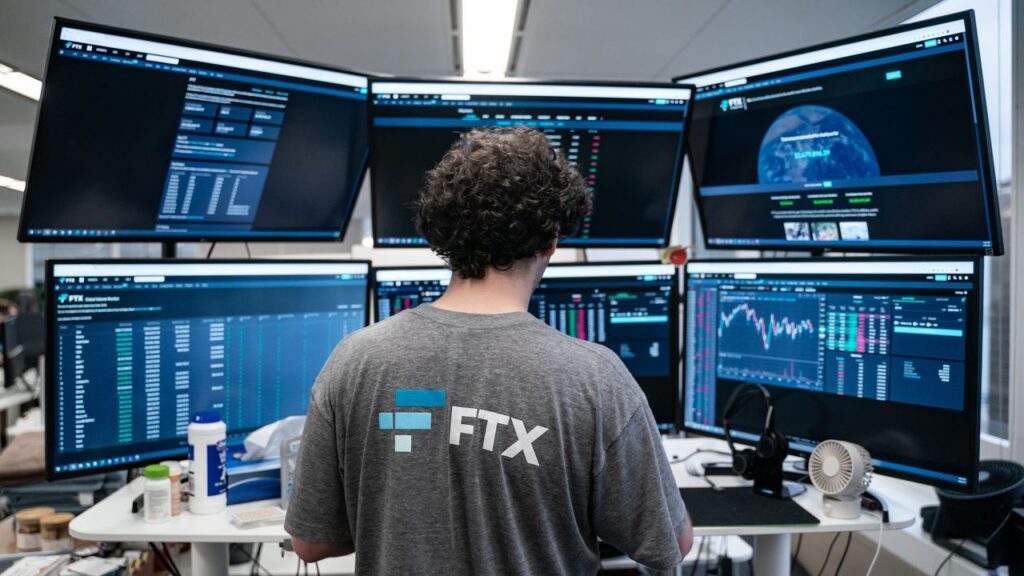
In a recent court testimony on October 19, former FTX CEO Sam Bankman-Fried was alleged to have instructed his former general counsel, Can Sun, to find a legal explanation for the glaring $8 billion discrepancy in Alameda Research’s financial records.
Sun, who had flown from Japan as part of a non-prosecution agreement with the United States Department of Justice, disclosed this startling information during the ongoing trial.
Sun revealed that he became aware of the substantial financial hole between the two companies on November 7, when he received a spreadsheet detailing the debt.
He expressed his astonishment to the jurors, saying, “I was shocked.” The spreadsheet was initially intended for asset manager Apollo Capital, as FTX was seeking new funding during the tumultuous financial period of early November.
When Apollo Capital inquired about the $8 billion discrepancy, Bankman-Fried reportedly urged Sun to “come up with a legal justification.”
During his testimony, Sun admitted that he had explored various legal options, such as dormancy fees and collateral liquidations during the market downturn.
However, the missing funds were too substantial to be easily explained away. Moreover, FTX’s terms of service explicitly stated that users’ funds were not the property of FTX Trading.
This further complicated efforts to justify the discrepancy.
READ MORE: Ripple Fuels Speculation of Potential IPO Amidst Legal Battles
Sun claimed that Bankman-Fried appeared unfazed by the situation, while former engineering director Nishad Singh seemed deeply troubled by it.
On the same day, Sun learned from Singh about Alameda’s $65 billion line of credit with FTX. Following this revelation, Sun resigned from his position at the exchange, more than a year after joining.
During his tenure at FTX, Sun had relied on Bankman-Fried’s assurances that user funds were segregated, and he had produced legal documents for FTX while responding to inquiries from regulators.
Sun emphasized that he would never have approved such discrepancies.
The trial of Sam Bankman-Fried has been marked by a series of testimonies from witnesses, including Can Sun. Prosecutors are expected to conclude their case on October 26 after hearing from two more witnesses. It remains uncertain whether Bankman-Fried’s defense will present its case.
Bankman-Fried is facing seven counts of fraud and conspiracy to commit fraud in connection with FTX customers and investors.
If found guilty, he could potentially face a maximum sentence of 115 years in prison. The trial continues to unfold, and the legal community is closely following the developments.
Other Stories:
Coinbase’s Chief Legal Officer Urges Cryptosphere to Oppose Proposed U.S. Tax Regulations
Binance.US Shifts Withdrawal Options, Encourages Users to Convert USD to Crypto
Explosive Growth in Ethereum Liquid Staking Derivatives Finance (LSDFi) Ecosystem
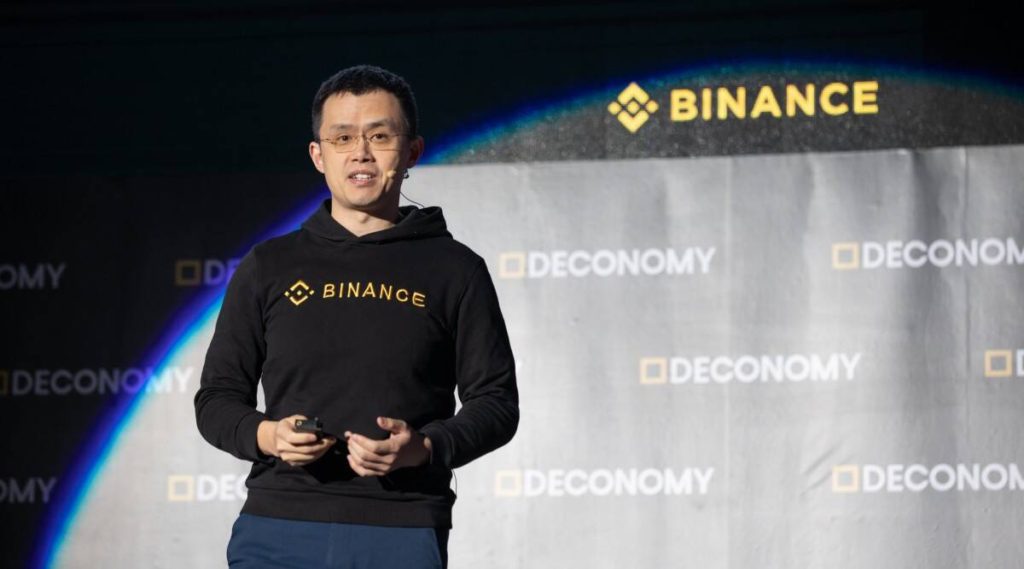
Binance, the prominent cryptocurrency exchange, has recently revealed its new partners to facilitate euro-related transactions, marking a significant development in the aftermath of losing its previous fiat collaborator, PaySafe, in September.
In an announcement on October 19th, Binance disclosed that it had inked agreements with fresh fiat partners to manage euro-based payments, deposits, and withdrawals.
This strategic maneuver comes in the wake of challenging regulatory and financial hurdles within the European Union, prompting Binance to seek alternative banking partnerships after parting ways with PaySafe the previous month.
While the exchange did not divulge the identities of these new partners, it indicated that users have already started transitioning to the services offered by these regulated and authorized fiat collaborators.
These newly secured fiat partners will offer an array of services, including euro deposits and withdrawals facilitated through Open Banking and SEPA/SEPA Instant.
Additionally, users will have the ability to purchase and trade cryptocurrencies through the Single Euro Payments Area (SEPA), bank cards, and fiat balances, as well as engage in trading euro spot pairs.
In late September, Binance had urged its European user base to convert their euros into Tether (USDT) by the end of October.
However, this recent announcement may signal a shift in this strategy.
READ MORE: AI + Blockchain: Crafting the Blueprint for the Future
Despite the positive news, some users continue to experience difficulties depositing euros, while inquiries about fiat partners for the British pound in the United Kingdom persist.
It should be noted that PaySafe had ceased support for transactions involving British pounds in May due to concerns raised by U.K. financial regulators.
Furthermore, on October 16th, Binance took the decision to suspend access to its exchange for new users residing in the United Kingdom.
This move followed the termination of a third-party partnership responsible for authorizing communications on the platform, a response to new local regulations imposed by the Financial Conduct Authority (FCA).
As of now, Binance has not yet established fiat partnerships for its U.K. exchange, leaving British users unable to deposit pounds.
In an attempt to gather more information, Cointelegraph reached out to Binance, but a detailed response was not immediately forthcoming.
These recent developments underscore the cryptocurrency industry’s ongoing challenges in navigating regulatory landscapes and establishing secure financial partnerships.
Other Stories:
Coinbase’s Chief Legal Officer Urges Cryptosphere to Oppose Proposed U.S. Tax Regulations
Binance.US Shifts Withdrawal Options, Encourages Users to Convert USD to Crypto
Explosive Growth in Ethereum Liquid Staking Derivatives Finance (LSDFi) Ecosystem
In her opening address at the International Monetary Fund’s seminar on financial inclusion in Marrakesh, Morocco, Kristalina Georgieva, the Managing Director of the IMF, underscored the pivotal role of digitalization in advancing financial inclusion.
She emphasized that digitalization represents “the most important way” to expand access to financial services, asserting that it facilitates the flow of aid to individuals, spurs investment, and propels economic growth.
To illustrate this point, Georgieva referenced the successful implementation of digital cash transfers in Togo during the height of the COVID-19 pandemic.
While advocating for comprehensive national strategies to promote financial inclusion, Georgieva also cautioned against overlooking the potential risks associated with digitalization.
She highlighted the link between digitalization and financial stability risks, urging a balanced approach in harnessing the benefits of technology while safeguarding against potential pitfalls.
In recent times, the IMF has actively engaged in the examination of necessary regulations for cryptocurrencies.
READ MORE:Regulated Crypto Casinos May Accelerate Web3 Adoption
On September 29th, the IMF introduced a crypto-risk assessment matrix (C-RAM) designed to assist countries in identifying indicators and triggers of potential risks within the cryptocurrency sector.
Notably, the IMF collaborated with the Bank for International Settlements (BIS) to develop a Synthesis paper, which garnered unanimous approval in the “G20 Finance Ministers and Central Bank Governors Communique” in October.
The paper advocates for a comprehensive regulatory framework for cryptocurrencies rather than an outright ban.
Its high-level recommendations emphasize the importance of international cooperation and information sharing among regulatory bodies, the need for robust governance and risk management frameworks for cryptocurrency companies, and ensuring that relevant data is made available to regulatory authorities by these companies.
In conclusion, Kristalina Georgieva’s address at the IMF’s seminar in Marrakesh highlighted the critical role of digitalization in expanding financial inclusion.
While emphasizing the potential benefits, she also stressed the importance of addressing associated risks.
The IMF’s proactive stance on cryptocurrency regulation, as evidenced by the C-RAM and the Synthesis paper, underscores the organization’s commitment to fostering a balanced and secure environment for emerging financial technologies.
Other Stories:
Ethereum Co-Founder Vitalik Buterin Clarifies $15 Million USDC Transaction
Proposed Settlement Offers Hope of Over 90% Asset Recovery for FTX and FTX.US Customers
Australian Government Proposes New Regulations for Cryptocurrency Exchanges
Dubai, UAE, October 18th, 2023, Chainwire
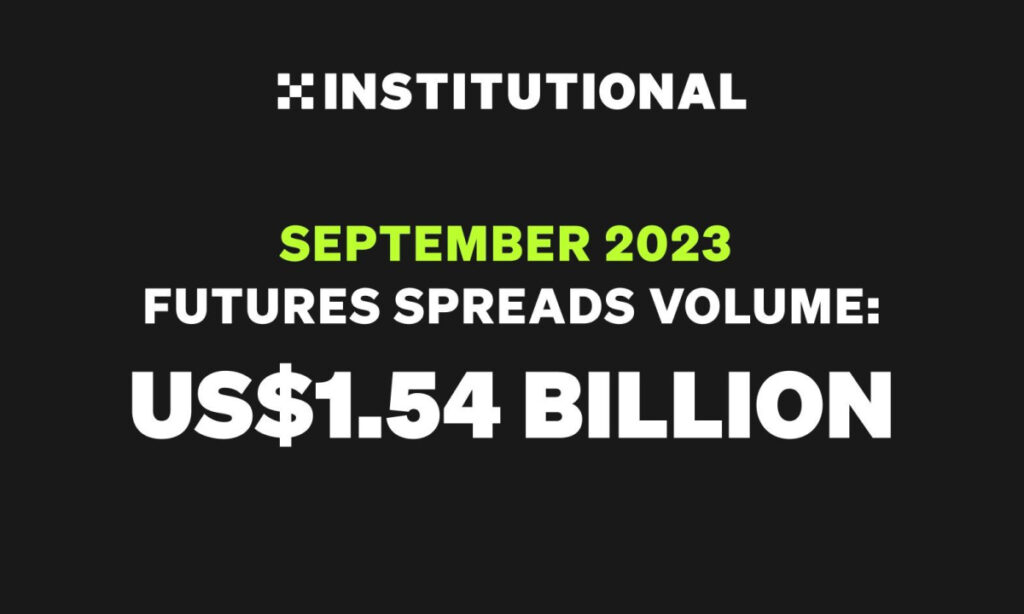
OKX, a leading crypto exchange and Web3 technology company, today announced that futures spreads trading volumes on its Liquid Marketplace, a spot OTC, futures spreads and options liquidity network, reached a record monthly high of US$1.54 billion in September 2023. This achievement represents 62%* of the institutional market share for futures spreads for the month.
Since the July 2023 launch of Nitro Spreads, a venue under OKX’s Liquid Marketplace for institutional traders to execute basis, futures spreads and funding rate arbitrage strategies, OKX’s cumulative futures spreads volumes led the market from August 28 to October 11 in 2023.
OKX’s volumes on futures spreads also excelled during ‘high-water mark’ volume days, with OKX futures spreads notional volumes exceeding the 100 million USDT mark on four occasions within the date range (on September 12, September 19, September 28 and October 10 in 2023).
These trading volume milestones solidify OKX’s Liquid Marketplace as the go-to venue for institutional traders looking to take advantage of superior liquidity for a range of trades, including futures spreads, spot OTC basis and options.
OKX Chief Commercial Officer Lennix Lai said: “The latest futures spread volume figures confirm that OKX Liquid Marketplace is a diverse ecosystem of counterparties pursuing a range of trading strategies and indicates that it is a trading venue of choice for institutional traders. We have worked hard to develop the products, liquidity and intuitive trading features traders demand in an intensely competitive market environment. We will continue to listen to our traders and adapt the platform to their needs going forward to further grow our customer base.”
Since its launch in July 2023, OKX announced on October 6 that Nitro Spreads has surpassed a cumulative trading volume of over 2 billion USDT.
Nitro Spreads is a venue for institutional traders to execute advanced strategies and facilitate delta rolls efficiently on OKX’s Liquid Marketplace. With the ability to execute both legs of a trade via a central orderbook, Nitro Spreads minimizes leg risk between markets and provides institutional traders with enhanced capital efficiency. Before execution, traders can also select a guaranteed spread for a trade, mitigating unexpected price slippage. Trades are then matched and settled immediately.
*Source: Laevitas
About OKX
OKX is a leading global crypto exchange and innovative Web3 company. Trusted by more than 50 million global users, OKX is known for being the fastest and most reliable crypto trading app for traders everywhere.
As a top partner of English Premier League champions Manchester City FC, McLaren Formula 1, Olympian Scotty James, and F1 driver Daniel Ricciardo, OKX aims to supercharge the fan experience with new engagement opportunities. OKX is also the top partner of the Tribeca Festival as part of an initiative to bring more creators into web3.
The OKX Wallet is the platform’s latest offering for people looking to explore the world of NFTs and the metaverse while trading GameFi and DeFi tokens.
OKX is committed to transparency and security and publishes its Proof of Reserves on a monthly basis.
To learn more about OKX, download our app or visit: okx.com
Disclaimer
This announcement is provided for informational purposes only. It is not intended to provide any investment, tax, or legal advice, nor should it be considered an offer to purchase, sell, hold or offer any services relating to digital assets. Digital assets, including stablecoins, involve a high degree of risk, can fluctuate greatly, and can even become worthless. Leveraged trading in digital assets magnifies both potential gains and potential losses and could result in the loss of your entire investment. Past performance is not indicative of future results. You should carefully consider whether trading or holding digital assets is suitable for you in light of your financial condition, particularly if considering the use of leverage.You are solely responsible for your trading strategies and decisions, and OKX is not responsible for any potential losses. Not all products and promotions are available in all regions including the U.S.A., U.K., Crimea, Cuba, Donetsk, Iran, Luhansk, North Korea, Syria Malta, Australia, Bangladesh, Bolivia, The Bahamas, Canada, Malaysia, Hong Kong, France, and Singapore. For more details, please refer to the OKX Terms of Use and Risk & Compliance Disclosure.
Contact
Media
[email protected]
FTX and FTX.US, both embroiled in bankruptcy, have taken a significant step toward resolving their customer asset disputes.
A proposed settlement has been reached between FTX creditors and debtors, potentially returning over 90% of assets to customers by the second quarter of 2024.
On October 17, FTX debtors announced a “major milestone” in their Chapter 11 case following extensive discussions with various parties, including the unsecured creditors’ committee, non-U.S. customers, and class action plaintiffs, all related to customer property disputes.
While an information-only notice of the proposed settlement was filed with a Delaware-based U.S. bankruptcy court on October 16, the official filing for court approval is expected by December 16.
Central to the amended plan is the “shortfall claim,” which estimates that customers of FTX.com and FTX.US will collectively receive approximately 90% of the available assets.
This claim is valued at around $8.9 billion for FTX.com and $166 million for FTX.US.
Pending approval, these funds are anticipated to be distributed by the end of the second quarter of 2024.
FTX CEO and Chief Restructuring Officer John J. Ray III expressed satisfaction with the settlement terms, stating that it has transformed what could have been a near-total loss for customers, especially given the challenging financial circumstances.
READ MORE:California Governor Approves Stricter Cryptocurrency Regulations for 2025
The plan divides assets into three pools, specifically designated for FTX.com customers, U.S. customers, and a general pool of other assets.
However, only the first two groups are included in the shortfall claim, suggesting that customers of both exchanges will not receive full payments, with FTX.com customers likely to bear a higher percentage of losses.
A noteworthy aspect of the proposed plan addresses customers who withdrew over $250,000 from the exchange within nine days of bankruptcy.
These customers may face a 15% reduction in their claims. However, claims under $250,000 will remain unaffected.
FTX debtors clarified that eligible customers with preference settlement amounts below $250,000 during the nine-day period would receive the settlement without any claim reduction.
Additionally, as part of the amended plan, FTX may exclude insiders, affiliates, and customers with knowledge of the misuse of customer deposits and corporate funds from the settlement.
Notably, former FTX CEO Sam Bankman-Fried is currently facing a fraud trial linked to FTX’s bankruptcy last November.
The outcome of this trial could also impact the ongoing bankruptcy proceedings.
Other Stories:
Grayscale Bitcoin Trust (GBTC) Discount Narrows to Two-Year Low Amid Spot Bitcoin ETF Optimism
FTX Estate’s Bold Solana Staking Signals Strong Crypto Commitment
Latin America’s Strong Preference for Centralized Exchanges in Crypto Trading
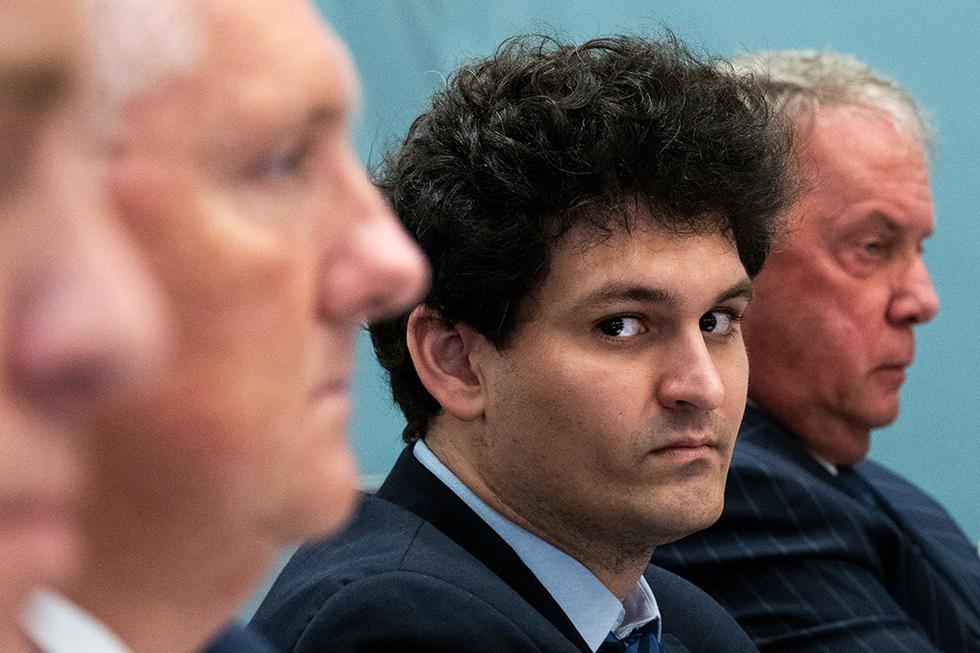
FTX co-founder, Sam Bankman-Fried, has reached out to a United States judge in a plea for long-release Adderall, citing difficulties in maintaining concentration during his ongoing criminal trial.
Bankman-Fried’s legal team submitted a letter to New York District Judge Lewis Kaplan on October 15th, requesting permission for him to take a “12-hour extended-release 20mg dose of Adderall” before he’s transported to the trial on October 16th.
In their letter, the lawyers emphasized that the absence of the prescribed stimulant during trial hours has severely impacted Bankman-Fried’s ability to focus at his usual level.
As the crucial moments of his defense strategy and the decision of whether he will testify loom closer, there are growing concerns that the FTX founder won’t be able to actively participate in presenting his defense without his medication.
The letter revealed that despite the absence of medication, Bankman-Fried has been making diligent efforts to remain focused during the trial.
However, even if he is granted the requested medication, there remains uncertainty about whether the extended-release dose will be effective.
To address this situation, Bankman-Fried’s legal team proposed two potential solutions to Judge Kaplan.
Firstly, they requested that the trial be paused for one day on Tuesday, October 17th, if Bankman-Fried cannot receive the long-release dose or if it proves ineffective.
READ MORE:MetaMask Temporarily Removed from Apple’s App Store
This would allow time to find an alternative solution for the remainder of the trial. Alternatively, they asked for permission to provide Bankman-Fried with his prescription of Adderall at the District Court during the trial.
The lawyers noted that they had attempted to resolve this issue with the Bureau of Prisons but had received no response to their five attempts to contact them between October 5th and October 12th.
Judge Kaplan had previously approved a motion to allow Bankman-Fried access to Adderall and anti-depressant medication while in prison on August 14th.
This decision was based on his history of major depressive disorder and attention deficit hyperactivity disorder (ADHD) and his psychiatric care since early 2019.
However, in an August 22nd hearing, Bankman-Fried’s legal team had complained about his lack of access to Adderall, stating that he had not received the medication for 11 days.
As Bankman-Fried’s criminal trial enters its third week, various witnesses, including former associates and his ex-girlfriend, have provided testimonies. Bankman-Fried has pleaded not guilty, maintaining his innocence throughout the trial.
Other Stories:
Secret Audio Exposes Alameda Research’s Misuse of FTX User Funds, Unveiling Shocking Details
SEC Opts Not to Appeal Ruling Favoring Grayscale’s Bitcoin ETF Application
Bitcoin Holds Steady at $26,800 as SEC’s Grayscale Decision Looms
Latin America, according to a recent report by blockchain analytics firm Chainalysis, exhibits a strong preference for centralized exchanges (CEXs) over decentralized exchanges (DEXs) when it comes to cryptocurrency trading.
Despite having the seventh-largest crypto economy globally, Latin America lags behind regions like the Middle East and North America (MENA), Eastern Asia, and Eastern Europe.
The report, published on October 11, reveals that the crypto community in Latin America has a distinct leaning towards CEXs.
Chainalysis notes, “Latin America shows the highest preference for centralized exchanges of any region we study, and tilts slightly away from institutional activity compared to other regions.”
In some countries within the region, this preference for CEXs is even more pronounced when compared to the global average.
Worldwide, 48.1% of crypto users prefer CEXs, 44% opt for DEXs, and 5.9% engage in other decentralized finance (DeFi) activities.
However, in Venezuela, an astonishing 92.5% of users prefer CEXs, while only 5.6% favor DEXs.
The report attributes Venezuela’s strong adoption of crypto to its unique circumstances, particularly a “complex humanitarian emergency.”
READ MORE:Why BFG Might Be a Hidden Gem of the Next Bull Run?
During the COVID-19 pandemic in 2020, cryptocurrency played a crucial role in providing direct assistance to healthcare professionals in the country.
Traditional payment methods were impractical due to the government’s reluctance to accept international aid for political reasons.
Colombia also exhibits a significant preference for CEXs, with 74% of users favoring them over DEXs, which account for just 21.1% of preferences.
Meanwhile, Argentina leads in terms of cryptocurrency transaction volume in Latin America, with an estimated $85.4 billion received in a 12-month period ending on July 1.
However, the country has faced regulatory challenges, with its central bank banning payment providers from offering crypto transactions to reduce exposure to digital assets.
This move aimed to subject fintech companies to the same regulations as traditional financial institutions.
Despite these challenges, three Latin American countries secured positions in the top 20 ranks on Chainalysis’ Global Crypto Adoption Index.
Brazil holds the ninth position, followed by Argentina at 15th and Mexico at 16th.
The top position globally was claimed by India, with Nigeria and Vietnam ranking second and third, respectively.
Other Stories:
Secret Audio Exposes Alameda Research’s Misuse of FTX User Funds, Unveiling Shocking Details
SEC Opts Not to Appeal Ruling Favoring Grayscale’s Bitcoin ETF Application
Bitcoin Holds Steady at $26,800 as SEC’s Grayscale Decision Looms