


Madrit, Spain, October 16th, 2023, Chainwire
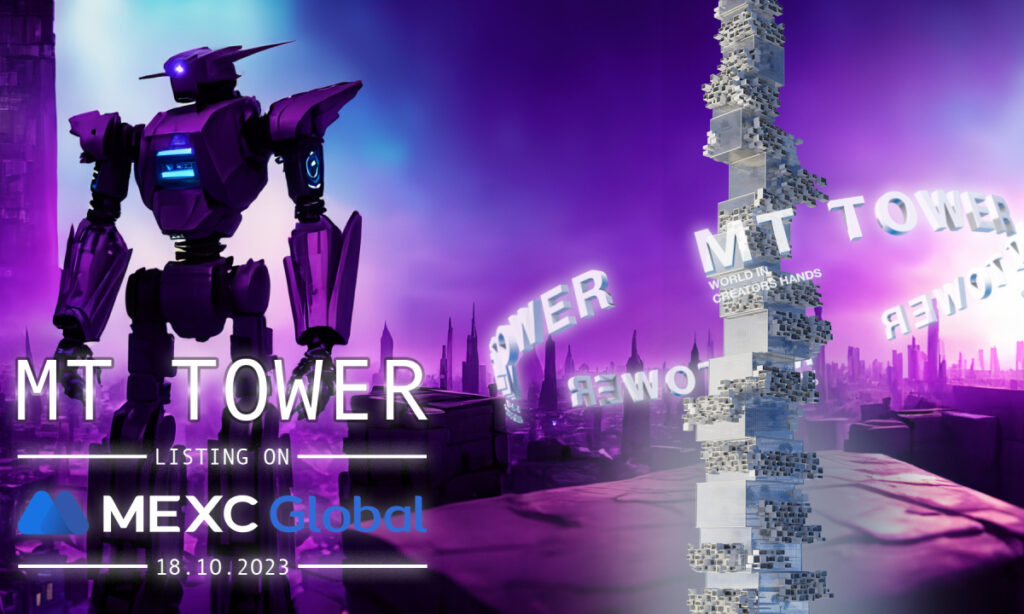
MT Tower is poised to transform the influencer and social media landscape into a vibrant and immersive wonderland. With a commitment to cutting-edge innovation, MT Tower aims to deliver an unparalleled experience that captivates and delights.
A New Era of Engagement
MT Tower, or Meta Tower, isn’t just any run-of-the-mill metaverse platform; it’s a lifestyle and gaming sensation. At its core, it’s all about redefining how influencers connect with their audiences and how social media comes to life in this immersive digital universe.
Authenticity Unleashed
MT Tower’s unique feature that sets it apart from the rest is its unwavering dedication to authenticity. Unlike other metaverse platforms that rely solely on avatars and artificial environments, MT Tower introduces the groundbreaking concept of “Real-World Bridges.” It’s like teleporting to real-world locations that have been scanned, and for influencers, this opens doors to a world of exciting possibilities. Influencers can now take their followers on a journey that feels more genuine and relatable than ever before.
Creating Unique Experiences
In MT Tower, influencers become the ultimate creators. Influencers are given a blank canvas to craft experiences that go beyond traditional social media boundaries. The platform’s immersive nature lets Influencers host events, interact with fans, and create unique virtual spaces for their audiences. For example, a concert on the peak of a digital mountain or a Q&A session in a meticulously replicated historic landmark. MT Tower empowers influencers to bring their creative visions to life like never before.
Empowering Creators and Influencers
In the ever-evolving metaverse, Gen Z and creators are all about self-expression. Traditional social media platforms often limit avatar customization options, stifling creators’ authenticity online. MT Tower addresses this issue by offering a dedicated space for creators to design, showcase, and trade virtual assets. This not only empowers influencers to create avatars that truly reflect their identities but also provides a unique avenue for content creation that resonates deeply with their audiences.
Privacy and Security
As influencers and users venture through the metaverse, concerns about privacy and security take center stage. MT Tower has taken a proactive approach to address these concerns, ensuring influencers can confidently engage with their followers. With the perfect blend of immersive experiences and robust privacy measures, MT Tower is setting the gold standard for secure interactions in the metaverse.
Governance and Inclusivity
Navigating the intricate metaverse landscape requires effective governance, given its decentralized structures and diverse participants. MT Tower is committed to establishing fair and transparent rules, providing a stable environment for influencers to thrive. Furthermore, the platform prioritizes inclusivity, ensuring that everyone can participate, regardless of their background or resources. This commitment broadens the reach of influencers and fosters diverse and engaged audiences.
The MT Token
MT Tower isn’t just about influencers and creators; The MT token, the heartbeat of this metaverse, is gearing up to make a splash as it gets listed on prestigious cryptocurrency exchanges, including Kanga.Exchange and MEXC. MT token will be listed on the MEXC exchange on October 18th. This exciting development opens up new avenues for influencers and users to explore the metaverse’s economic potential, further expanding their presence and opportunities.
Xsolla – metaverse contractor
Another exciting news is that Xsolla is all set to be the contractor for the entire MT Tower metaverse. The contract has been signed, and the parties have marked the first beta release for April 2024. What’s even more thrilling is that Xsolla and MT Tower are inviting 50 lucky beta testers as they eagerly seek feedback from their community. It’s all about inclusivity and innovation, and MT Tower looks forward with anticipation to the future.
In addition, an audit of the MT token has been conducted by Solidproof, and the team is currently in the process of undergoing a Know Your Customer (KYC) procedure.
About MT Tower media
MetaTower was founded in 2021 in response to the growing interest and demand in the metaverse, the upcoming changes in the influencer space as well as the growing need for new sales channels for e-commerce. The company is co-founded by individuals with many years of experience in the blockchain space, who have worked on numerous crypto projects, are associated with cryptocurrency media and have extensive experience in financial markets. The company MetaTower is registered in Estonia.
Website: https://metatower.com
Social Media: https://linktr.ee/metatower
Contact
COO
Bartek Juraszek
MetaTower
[email protected]
On October 14, 2023, Ethereum wallet MetaMask experienced a temporary removal from Apple’s App Store, sparking concerns within the cryptocurrency community about the possibility of a permanent expulsion from the marketplace.
MetaMask, a popular wallet known for its integration with various Web3 decentralized applications (DApps), boasts a user base of over 30 million individuals worldwide.
Reports emerged on that day, indicating that the MetaMask app had vanished from the App Store, leaving Apple users unable to download it directly from the MetaMask website.
However, MetaMask promptly reassured its users that the situation did not stem from any security breaches or malicious activity.
A MetaMask spokesperson stated, “We’re aware that MetaMask isn’t currently available for download on the App Store.
This issue is unrelated to any malicious activity. Our dedicated team is working diligently to resolve it as quickly as possible.
Importantly, this is not a security concern, and there is no compromise or action required on users’ part.
Additionally, it’s not related to the app’s functionality.”
READ MORE: Secret Audio Exposes Alameda Research’s Misuse of FTX User Funds, Unveiling Shocking Details
The likely cause behind MetaMask’s removal was Apple’s stringent service policies, which prohibit apps from running “unrelated background processes,” including cryptocurrency mining.
MetaMask expressed confidence that this removal was temporary and expected the app to return to the App Store shortly.
They also urged users to report any fake MetaMask apps that might have appeared during the removal.
This incident marked the second time that MetaMask faced challenges from major tech marketplaces.
In December 2019, the company encountered suspension from Google Play’s app store, with allegations of violating the platform’s financial services guidelines. Google cited its policy against cryptocurrency mining on mobile devices and rejected MetaMask’s appeal to reverse the ban.
Apple’s guidelines, which necessitate app developers to share 30% of transaction revenues with the platform, pose another obstacle for crypto firms.
This requirement has been a point of contention for companies, particularly those that wish to provide iOS users with the capability to purchase nonfungible tokens (NFTs) and engage in cryptocurrency-related activities.
In conclusion, while MetaMask’s temporary removal from the App Store raised concerns, the company remains committed to resolving the issue and returning to the platform.
The incident highlights the ongoing challenges faced by cryptocurrency-related apps in complying with the policies of major tech giants.
Other Stories:
SEC Opts Not to Appeal Ruling Favoring Grayscale’s Bitcoin ETF Application
Bitcoin Holds Steady at $26,800 as SEC’s Grayscale Decision Looms
The United States Securities and Exchange Commission (SEC) has reportedly opted not to appeal a recent court ruling in favor of Grayscale Investments.
The decision stems from the U.S. Court of Appeals for the District of Columbia Circuit, which directed the SEC to review Grayscale’s application for a spot Bitcoin exchange-traded fund (ETF).
This development was disclosed in an October 13 report by Reuters, citing an insider source. Bloomberg analysts, too, anticipate that the SEC will refrain from taking the matter to the Supreme Court, although this doesn’t guarantee automatic approval for Grayscale’s ETF application.
If these reports hold true, the SEC is obligated to comply with the court’s August order, requiring a thorough evaluation of Grayscale’s request to transform its Grayscale Bitcoin Trust into a spot Bitcoin ETF. Reuters anticipates that the appeals court will soon provide a detailed mandate outlining how the SEC should execute this ruling.
In response to these unfolding events, Bloomberg ETF analyst James Seyffart expressed his perspective via X (formerly Twitter), suggesting that the SEC is unlikely to appeal further.
READ MORE: Former Engineer Exposes Multi-Million Dollar Scams at Alameda Research Amidst FTX Fraud Trial
Seyffart anticipates that discussions between Grayscale and the SEC will commence in the coming week, with the hope of shedding more light on the next steps.
Looking ahead, Seyffart posits that we may learn in the next week or two about the deadline for the SEC to either approve or deny Grayscale’s spot Bitcoin ETF application.
Should the SEC reject the application, Grayscale would retain the option to appeal, potentially prolonging the process.
Approximately seven spot Bitcoin ETF applications currently await the SEC’s decision, indicating substantial interest in this investment vehicle.
In a separate X post on October 13, Seyffart reiterated his belief in a 90% probability of a spot Bitcoin ETF application receiving approval in January 2024, with specific reference to Cathie Wood’s ARK Invest.
Seyffart and Eric Balchunas, Bloomberg’s senior ETF analyst, previously estimated a 75% likelihood of an ETF application gaining approval in 2023, underscoring the growing momentum and expectations surrounding this evolving financial instrument.
Other Stories:
FTX Collapse Tied to Bankman-Fried’s Financial Maneuvers, Reveals Ex-Alameda CEO
Cardano Founder Equates FTX’s Bankman-Fried to Bernie Madoff Amid Controversial Trial
Zug, Switzerland, October 13th, 2023, Chainwire
The Open Network (TON) Foundation has today announced the support of Elliptic, a leading blockchain analysis firm, to provide the network with data intelligence and additional ecosystem security, supporting TON Foundation with its goal of putting crypto in every pocket by building a web3 ecosystem in Telegram.
Elliptic will screen all TON wallet addresses and flag those associated with bad actors, helping to prevent the exposure of TON users and projects to these accounts. Elliptic will also promote Toncoin to have it listed on reputable exchanges. This will provide greater visibility and security to the ecosystem as TON Foundation expands the range of on-ramps available for new users to enter TON’s ecosystem and experience true asset ownership.
This latest step follows the announcement of TON Foundation’s collaboration with Telegram providing the infrastructure for the messenger’s growing Web3 app ecosystem. TON’s community has grown rapidly over the past year, with the number of registered accounts on TON having grown by 165%. The collaboration will ensure that users across TON’s ecosystem are protected from accounts associated with illicit or malicious activities.
“Elliptic’s support will ensure that TON’s ecosystem remains secure as it continues to scale at pace, with users protected from malicious or criminal activity,” said Justin Hyun, Director of Growth at TON Foundation.
About TON Foundation
The Open Network Foundation (TON Foundation) is a non-profit organization founded in Switzerland in 2023. TON Foundation is 100% funded by the community, acting in the community’s interests, and supports initiatives aligned with The Open Network’s mission. Learn more at https://ton.foundation.
About The Open Network (TON)
The Open Network (TON) is putting crypto in every pocket. By building a Web3 ecosystem in Telegram Messenger, TON is giving billions of people the opportunity to own their digital identity, data, and assets. See more at https://ton.org.
About Elliptic
Elliptic is the global leader in cryptoasset risk management for crypto businesses, governments and financial institutions worldwide.
Recognized as a WEF Technology Pioneer and backed by investors including J.P. Morgan, Wells Fargo Strategic Capital, SBI Group, and Santander Innoventures, Elliptic has assessed risk on transactions worth several trillion dollars, uncovering activities related to money laundering, terrorist fundraising, fraud and other financial crimes.
Elliptic is headquartered in London with offices in New York, Singapore, and Tokyo. To learn more, visit www.elliptic.co.
Contact
TON Foundation
[email protected]

Alameda Research, the hedge fund sibling of FTX, allegedly lost around $190 million to avoidable scams, as revealed by former engineer Aditya Baradwaj.
On October 12, in a post titled “The Hacks”, Baradwaj, turned whistleblower, stated that Alameda’s rapid operational pace resulted in significant security breaches almost every few months.
One incident described by Baradwaj involves an Alameda trader who mistakenly clicked a malicious link on Google Search, leading to a loss of over $100 million.
The trader was finalizing a decentralized finance transaction at the time. In another instance, Alameda ventured into yield farming on a dubious blockchain, incurring over $40 million in losses.
Baradwaj points out that FTX founder, Sam Bankman-Fried, prioritized speed for Alameda and FTX, often sidelining standard engineering and accounting measures.
Consequently, coding was rarely tested, balance accounting was frequently left unfinished, and security checks for trading were only implemented when deemed necessary.
Disturbingly, sensitive data such as blockchain private keys and exchange API keys were stored in unencrypted files, accessible by multiple employees.
This lax security resulted in a major breach where an old plaintext file containing Alameda’s keys was exposed.
READ MORE: Bitcoin Forecast to Reach $750K-$1M by 2026
This breach alone led to a loss of over $50 million as attackers managed to drain funds from some exchanges.
Baradwaj mentioned that incidents like these weren’t isolated; many more had occurred before his tenure.
The engineer’s revelations come in the backdrop of Alameda and FTX’s downfall in November the previous year.
Baradwaj criticized Bankman-Fried’s justification of dubious actions, labeling them as being driven by the “Effective Altruism” philosophy.
The ongoing fraud trial against Bankman-Fried has seen ex-CEO of Alameda, Caroline Ellison, testify.
Previous days witnessed former associates, Adam Yedidia and Gary Wang, presenting substantial evidence against him. Wang confessed to creating code that granted Alameda virtually unlimited credit from FTX.
Ellison detailed FTX’s alleged fund mingling with Alameda. Despite these claims, Bankman-Fried has pleaded not guilty and asserts his innocence.
Other Stories:
Bitstamp to Temporarily Halt Services in Canada Amid Global Expansion Strategies
NASAA Supports SEC’s Stance on Digital Assets, Challenges Coinbase’s Views on Securities Laws

Weeks before the FTX crypto exchange’s collapse, its former CEO, Sam Bankman-Fried, was navigating tumultuous waters.
His actions were revealed in personal notes from ex-Alameda Research CEO, Caroline Ellison, presented in a New York trial.
Testifying, Ellison recounted that a significant crash in the Terra ecosystem in May 2022 spurred Bankman-Fried to contemplate closing Alameda and soliciting $1 billion in capital from a Saudi Prince recognized for his blockchain gaming investments via Saudi Arabia’s sovereign wealth fund.
Additionally, to boost FTX’s market presence, Bankman-Fried strategized on urging regulators to target rival crypto exchange Binance.
The specifics of this strategy remain undisclosed.
In terms of financing, Bankman-Fried pursued additional funds from BlockFi, having previously borrowed over $660 million.
Other focal points for him encompassed trading Japanese government bonds and purchasing Snap Inc stocks.
A curious note mentioned “Willie being happy”, potentially referring to William MacAskill, believed to be Bankman-Fried’s mentor.
Ellison shared that Bankman-Fried attributed Alameda’s challenges and flawed hedging to her.
She acknowledged that improved hedging could’ve benefited Alameda amidst the cryptocurrency downturn.
However, Alameda’s financial difficulties weren’t solely hedging-related; the company had substantial open-term loans and had drained billions from its FTX credit line.
Open-term loans are unique, allowing borrowers a prepayment choice while granting lenders a call option. By June, lenders began exercising their call options, compelling Alameda to repay vast amounts.
Ellison, following Bankman-Fried’s instructions, settled some of Alameda’s obligations using FTX client funds. By September 2022, Alameda’s debts to FTX had escalated to $13.7 billion, with open-term loans at $1.3 billion.
Compounding the financial maze, Ellison, upon Bankman-Fried’s directive, produced “alternative” financial statements for Alameda’s lenders.
These concealed the company’s fiscal obligations to FTX, presenting a rosier financial picture to stave off full repayment demands.
Ellison candidly communicated her fears during the trial, emphasizing her daily apprehensions about simultaneous loan calls and the potential mass exodus of FTX clients due to Alameda’s financial strain.
Bankman-Fried’s defense is slated to cross-examine Ellison on Oct. 12.
Other Stories:
Bitcoin Forecast to Reach $750K-$1M by 2026
NASAA Supports SEC’s Stance on Digital Assets, Challenges Coinbase’s Views on Securities Laws
Bitstamp to Temporarily Halt Services in Canada Amid Global Expansion Strategies
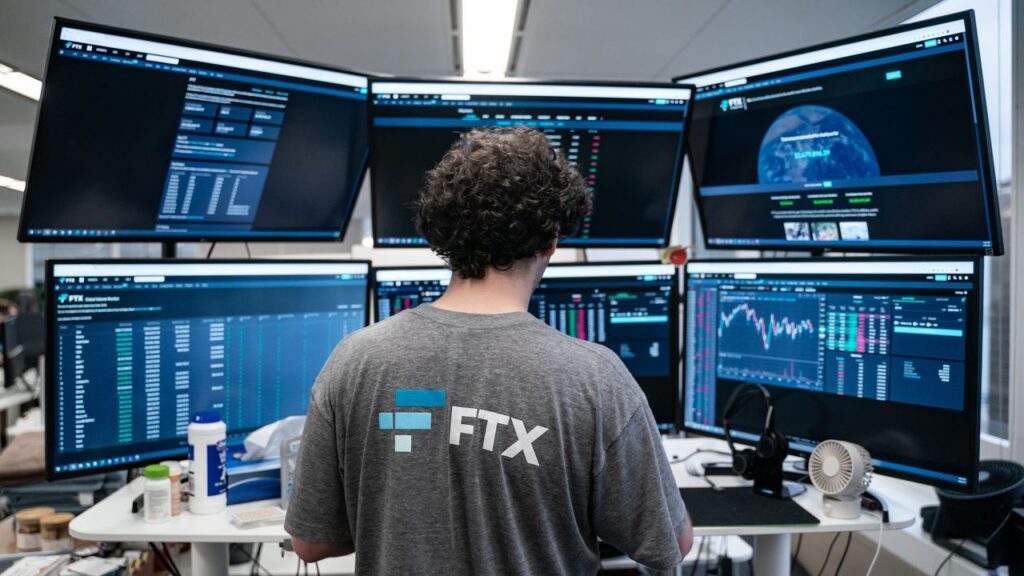
Charles Hoskinson, founder of Cardano, has equated Sam “SBF” Bankman-Fried, ex-CEO of FTX, to the notorious fraudster Bernie Madoff.
He criticized the media for allegedly turning a blind eye to Bankman-Fried’s alleged wrongdoings.
Bernard Lawrence Madoff orchestrated the most significant recorded Ponzi scheme, valuing $64.8 billion.
Hoskinson’s reference to Madoff draws a parallel to what he perceives as the media’s oversight regarding SBF and FTX’s reported misappropriation of user funds.
On Oct. 9, Hoskinson took to X (formerly Twitter) to voice his concerns about the media’s portrayal of SBF, especially after FTX’s downfall.
He specifically mentioned Michael Lewis’s recent book on SBF, describing it as an “apology tour.” Hoskinson expressed frustration, stating it seems like some individuals are trying to publicly vindicate SBF.
FTX, once the third-largest crypto exchange, crashed in November 2022 after a notable fundraising round earlier that year.
While SBF attributed the failure to external factors and liquidity issues, U.S. enforcement agencies painted a different picture.
These investigations led to Bankman-Fried facing seven charges of conspiracy and fraud related to FTX’s collapse, which he denies.
The trial began on Oct. 3, revealing that Alameda Research, founded by SBF, might have had a covert route into FTX to channel users’ money since 2019.
Details from the trial also exposed SBF’s significant PR expenditure, including million-dollar engagements with celebrities like Tom Brady and Kevin O’Leary.
Other alleged spending involved private planes, Super Bowl commercials, and potentially a proposition to Donald Trump with a $5 billion offer to deter him from running for office.
The trial’s initial week mainly revolved around the mysterious disappearance of $8 billion from FTX’s user funds.
In unrelated news, an NFT from the CrypToadz collection sold for a staggering 1,055 Wrapped Ethereum ($1.6 million) on OpenSea on Oct. 9.
This purchase raised eyebrows, especially since the NFT was bought for approximately $1,600 just two weeks prior.
Funding for this transaction originated from a wallet with transactions anonymized by Tornado Cash, an Ethereum coin mixing service.
Speculations abound on whether this was a genuine error or a possible instance of wash trading.
Other Stories:
Bitcoin Forecast to Reach $750K-$1M by 2026
NASAA Supports SEC’s Stance on Digital Assets, Challenges Coinbase’s Views on Securities Laws
Bitstamp to Temporarily Halt Services in Canada Amid Global Expansion Strategies

Prominent cryptocurrency advocate, Arthur Hayes, recently voiced his predictions on the future of Bitcoin, global economies, and market behaviors on Impact Theory with Tom Bilyeu.
According to Hayes, by 2026, Bitcoin’s price could soar between $750,000 to $1 million.
Hayes paints a picture of a looming financial crisis, which he believes could be more severe than the Great Depression.
He predicts an unprecedented bull market, impacting stocks, real estate, cryptocurrencies, art, and more.
This surge, he claims, is a result of the U.S. government’s habitual response to economic crises: bailing out, leading to structural issues in the economy.
By continuously resorting to central bank printing, inflation surges and natural market growth-correction cycles are stifled.
“Government interventions, in attempts to save the system, erode parts of the free market every time a financial crisis emerges over the last 80 years,” Hayes argues.
READ MORE:Prosecutors Challenge Defense Over FTX Funds in Bankman-Fried’s High-Profile Trial
Hayes identifies key factors supporting his Bitcoin forecast:
- Mounting Debt and Inflation: Hayes states that escalating government debt, roll-over needs, and waning productivity are only met with money printing. Though this results in bull markets, the fallout is typically rampant inflation. Hayes warns of a ‘massive top’ in 2026, followed by a depression-like scenario.
- U.S. Banking System’s Insolvency: He points to the $7.75 trillion U.S. debt due for roll-over by 2026 and altered dynamics in U.S. bond yield curves. Historically, nations like China and Japan were primary U.S. debt buyers. This has changed, which Hayes believes will intensify U.S. troubles. The U.S. banking system, in Hayes’ view, is effectively bankrupt due to past regulatory actions. Hayes emphasizes the banking system’s inability to buy more debt, given its structural insolvency.
- Attractiveness of Bitcoin as an Investment: As traditional financial systems become more unstable, investors may pivot towards alternative assets like Bitcoin. Hayes says, “In an economy with negative real rates, individuals will seek other assets, including cryptocurrencies.”
Hayes forecasts Bitcoin trading between $25,000 and $30,000 in the near future.
By 2024, he anticipates a potential financial crisis to drive rates near 0% or escalating government expenditure causing investors to hunt for superior returns.
He suggests that the U.S., Europe, and possibly Hong Kong’s approval of a Bitcoin exchange-traded fund, combined with Bitcoin’s halving event, could propel its price to $70,000 by mid-2024.
From this point, he foresees Bitcoin skyrocketing to between $750,000 and $1 million.
However, Hayes also acknowledges a potential 70% to 90% drop in Bitcoin’s price post this bull run, mirroring past trends.
Other Stories:
Hacker Exploits Media Coverage of Bankman-Fried’s Trial to Conceal $400M FTX Heist
EU Mulls Tighter Regulations on Major AI Systems, Mirroring Digital Services Act Approach
Why Developers Should Seriously Consider Building on EOS EVM with v0.6.0 Release

With the introduction of the new Markets in Crypto-Assets Regulation (MiCA) regulations, the UK is now playing catch up with its domestic regulations and handling of cross-border transactions and issuance of cryptos. Initially, lawmakers were pondering the course of online gambling regulations.
Essentially, they wanted to regulate issuers of cryptos and service providers in the sector, much like The UK Gambling Commission manages online casinos, sports betting operators, and service providers in that sector. That proposal was shot down during the summer. Other proposals, drawing largely from financial regulations, other proposals have also been criticised for treating crypto too softly.
Regardless of how the UK move forward, they need to speed up, at least if they want to establish the UK, as expressed by previous finance minister Rishi Sunak, as a major crypto hub. More jurisdictions are gunning for that, though. The United States also works towards stronger regulations to create opportunities and safeguard residents.
Inherently Complex Nature of the Blockchain
Regulating crypto has proved to be an arduous task. The EU may have made headway with the MiCA regulations, but they are only scratching the surface of crypto in their new framework. Those regulations cover issuers of stablecoins but need to do more to regulate the use of such stablecoins. Areas like DeFi are hardly mentioned outside of statements that decentralised finance won’t be touched upon by the first iteration of MiCA.
So, essentially, outside of stablecoins, crypto will remain a digital Wild West, a legal grey zone. The technologically complex nature of crypto simply makes it challenging to regulate. To implement a comprehensive regulatory framework for financial asset classes and services, policymakers and regulators must know it inside out. What nations worldwide have in common is the lack of technical know-how and experience to understand the crypto industry.
The Case For Mirroring Online Gambling Regulations
The blockchain is a modern technology that’s been around for a short time. As with any modern technology, the speed at which it moves is difficult to gauge. As such, crypto is not just a complex asset class; it’s rapidly evolving. Regulations can take months or even years to establish, and chances are that by the time regulations come into effect, crypto will have changed on a fundamental level, rendering them obsolete.
However, over the past ten years, one overarching theme of crypto is the elements of get-rich-quick, which fosters addictive behaviour with participants in the crypto markets. This is what makes crypto similar to online gambling. This view is what proponents of mirroring online gambling regulations are pushing.
It’s definitely not an outlandish idea. Many states across the United States have successfully implemented laws and regulations specifically relating to online casinos and real money wagering on sports. It’s a familiar area with a foundation in years of studies on opportunities and challenges and decades of research into the social impact of activities that can give rise to addictive behaviours.
Unfortunately, such get-rich schemes have long plagued the crypto industry, and no one can deny that a large part of the trading activity in and outside of crypto exchanges involves assets that have no intrinsic value or contribute to society in a meaningful way. The same statement can be made about online gambling, which, in many cases, does a disservice to society, given its potential negative impact.
Practically, as mentioned earlier, regulators could target issuers and service providers in the sector to help investors and consumers determine what sites are legitimate, along with said sites being forced to provide tools to users to help them manage and limit the time they spend and the money they invest.
Advertising can be treated similarly to online casinos, where only licensed advertisers and legal operators can advertise online and on TV. States like New Jersey and West Michigan that regulate online gambling also use self-exclusion systems where all operators are integrated, and if a player decides to stop themselves from playing and betting, they can self-exclude from all operators in the state.
The Approach is Not Without Criticism
Clearly, there are many similarities between cryptocurrencies and online gambling, but the approach is not devoid of criticism. While a large part of all cryptocurrencies relate to rubbish crypto, most of the trades across exchanges and networks are in legitimate tokens like Bitcoin, Ethereum, Solana, and Cardano. These cryptos are all considered legitimate and have a positive social impact.
These cryptos clearly share similarities with commodities and securities, which follow an entirely different regulatory pathway. While crypto is more volatile than legacy financial asset classes, many argue it would make more sense to reference the financial sector instead of the online gambling sector. At the same time, critics have said that regulating crypto similarly to traditional finance is giving crypto too much credit and making it appear safer than it really is.
Regardless of views and opinions, the EU’s approach to regulating crypto might not be so bad. They have started with something less complex, stablecoins, and they can iterate on the regulatory framework until it covers more parts of the cryptocurrency sector, including the complexity of DeFi. Similarly, the UK and the United States could take a similar approach, possibly striking a balance between online gambling and the financial sector to cover both the positive and negative sides of cryptos.
London, UK, October 11th, 2023, Chainwire
XDB CHAIN TO POWER SANDBOX-BRANDED CRYPTOCURRENCY AND TO ENHANCE THE EDUCATION SECTOR’S TRANSITION TOWARDS WEB3
Sandbox Group, the London-based group operating a network of learning businesses, announced a partnership with XDB CHAIN, the easy-to-use open-source blockchain used to power digital assets. The collaboration will see the development of an exclusive branded-cryptocurrency that will be made available as a payment choice to users of Sandbox’s wide portfolio of digital products and services worldwide.
The soon-to-be-released cryptocurrency will serve as a medium of exchange, enabling transactions, exclusive rewards, and incentives. Its secure, decentralised, and transparent nature will ensure the integrity of the ecosystem, aiming to address some of the most pressing challenges in the education sector’s digital transformation and growth.
The launch of the new branded cryptocurrency represents a key development in the world of blockchain as it will be exclusively integrated into Sandbox Group’s portfolio of brands and services that include Kidomi, the all-in-one super app, and Code Kingdoms, online coding courses for kids.
XDB CHAIN has lately introduced Branded Coins (BCOs) that allow multiple brands to collaborate across the same technology stack. This innovative concept will allow Sandbox Group to provide progressive benefits to its users with an enhanced user experience in web3, the decentralised internet, as well as offer special discounts, resulting in even better value for its subscribers.
Shan Eisenberg, Chief Commercial Official of Sandbox Group says: “We’re thrilled to announce the launch of the new cryptocurrency which will enhance our existing Sandbox Group products and will offer unique incentives to our users. Our decision to mint the cryptocurrency exclusively on the XDB CHAIN stems from XDB CHAIN’ innovative approach to blockchain technology, specifically engineered to onboard brands and leverage loyalty ecosystems.”
Daniele Mensi, CEO of XDB FOUNDATION, says: “We’re excited about partnering with Sandbox Group as we see this relationship as the perfect way to address the challenges faced by the cryptocurrency industry: mass adoption and user-experience. By integrating this new cryptocurrency into Sandbox Group’s product ecosystem that reaches millions of users worldwide, we aim to encourage widespread legitimate acceptance of cryptocurrencies towards a set of enhanced real-world use cases.”
The official whitepaper will be released later this month, including the name of the coin and all details. The launch of this new cryptocurrency is expected in early 2024.
For more information please contact:
Sara Sciusco: Marketing Manager [email protected]
Agnes Lesti: Communications and Partnerships Manager [email protected]
About Sandbox Group
Sandbox Group is a London-based group operating a network of learning businesses. At Sandbox we seek to build, nurture and support the scaling of a diverse family of brands and services. We know the whole is greater than the sum of its parts, so we believe in the power of collaboration with like-minded partners to create fun, engaged learning. Our businesses are at the intersection of the digital, learning and media industries and include brands like Code Kingdoms, online coding courses for kids, Hopster, preschool learning platform, and Leiturinha, Brazil’s No1. kids book subscription service. Sandbox is committed to providing an unparalleled ecosystem of edutainment products, and currently reaches over 65 million children, their parents, and teachers.
About XDB CHAIN
As XDB CHAIN, the entire project and its community stand poised to propel the blockchain industry into a new era to embrace novel use cases, nurture collaborative communities, and boldly push the boundaries of what technology can achieve. This is just an invitation to join XDB CHAIN on this journey into the future of Blockchain for Brands empowering The Consumers of Tomorrow.
Contact
Marketing Manager
Sara Sciusco
XDB Foundation
[email protected]