

ENCINITAS, CALIFORNIA, July 20th, 2026, Chainwire
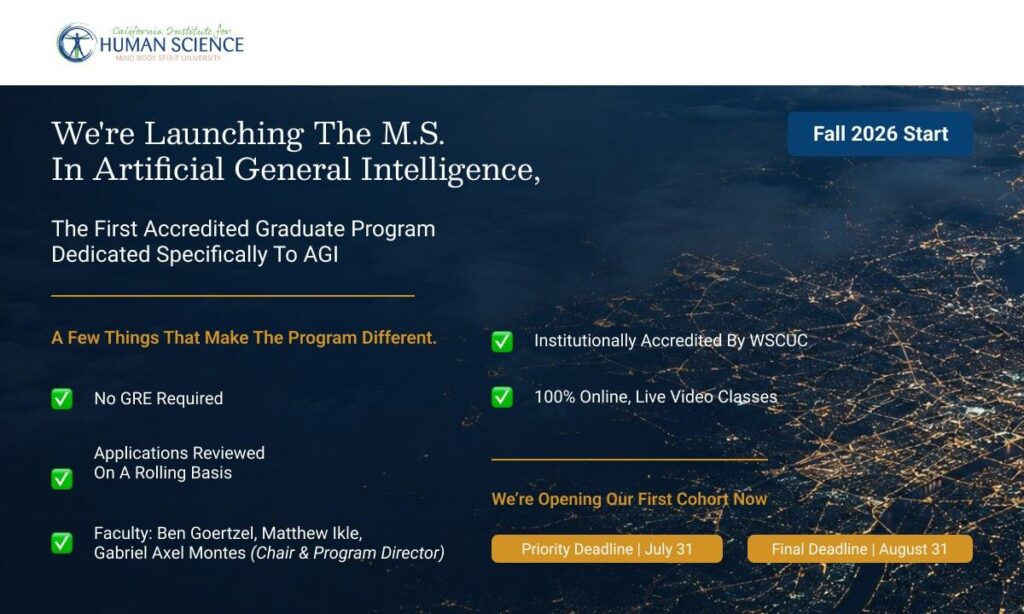
The California Institute for Human Science (CIHS) today announced the launch of its Master of Science in Artificial General Intelligence, the first accredited graduate program dedicated specifically to AGI. The program is taught live, online, by researchers who helped found the field, including Dr. Ben Goertzel, who introduced the term “artificial general intelligence” and founded SingularityNET, the ASI Alliance and the Hyperon AGI project.
Where most AI graduate programs train students on today’s tools and applications, the M.S. in AGI is built around the scientific, engineering, ethical, and civilizational questions of general intelligence itself, the discipline’s founders teaching the discipline they founded.
“CIHS was built for frontier questions — the kind that require scientific rigor, philosophical depth, and a serious commitment to human flourishing,” said Timothy Laporte, Interim President of California Institute for Human Science. “Artificial general intelligence may be one of the most consequential developments of our time. As AGI moves from theory toward reality, the questions at the heart of CIHS — what intelligence is, how consciousness relates to mind and technology, and how transformative knowledge can serve humanity — have never been more urgent. This program brings the field’s founding researchers together with the students who will help shape what comes next,” says Dr. Timothy Laporte, Interim President of the California Institute for Human Science.
Institutionally accredited by the WSCUC Senior College and University Commission, the same accreditor as Stanford and Caltech.
Dr. Ben Goerzel shared, “During these unprecedented times in which AGI is rapidly transitioning from theory into practical and deployment, the need has never been greater for a new breed of AGI professional – conversant in a variety of technical AI paradigms and their underlying scientific foundations, and also in the intersections of AGI with broader issues of consciousness, ethics and society. It has been an absolute pleasure to collaborate with Gabriel Axel and the folks at CIHS on creating the world’s first AGI degree programme, oriented toward fostering the careers of this new generation of AGI scientists. We need to work toward a beneficial future together with our diverse AGI creations.”
Most graduate AI programs train students to apply today’s models and tools. The M.S. in AGI treats artificial general intelligence as a field of study in its own right, with open technical questions and a long-running research history, rather than as a specialization inside a broader computer science degree.
That distinction matters because prospective students weighing graduate study in an AI-saturated moment are increasingly looking past today’s specific tools toward the questions that will outlast them. CIHS’s answer is that the durable thing to study is intelligence itself: the fundamental questions and intellectual and practical methodologies that don’t change as any one tool generation comes and goes, taught by researchers who have spent their careers on those questions directly.
The program is also a departure in format: live, faculty-led video classes rather than a self-paced, pre-recorded course library, with a small inaugural cohort that works directly with Goertzel, Iklé, and Montes rather than watching them.
Program details
- Format: 100% online, live video classes (Pacific Time), quarter system
- Faculty: Ben Goertzel (launched the term and concept of “AGI”; founder, SingularityNET, the ASI Alliance, and OpenCog), Matthew Iklé, and Gabriel Axel Montes (Chair and Program Director), with additional guest lectures from the SingularityNET AI research team. More faculty to be announced.
- Admissions: No GRE required. Applications include transcripts, two letters of recommendation, an essay, and a writing sample, reviewed on a rolling basis as they arrive.
- First cohort: Application priority deadline July 31, 2026; final deadline August 31, 2026. Course registration September 7–18, 2026; Quarter begins September 28, 2026.
- Eligibility: Open to students in 31 approved U.S. states and worldwide internationally; the program is not available in all U.S. states. Prospective students can contact CIHS to confirm eligibility in their state.
- Tuition: https://cihs.edu/tuition-fees/
A small inaugural cohort will work directly, live, with the researchers who have spent their careers defining AGI’s foundational questions.
Two info sessions will be held with Ben Goertzel and Gabriel Axel Montes on Friday, July 24, at 10:30am PT and on Thursday, August 13, at 5pm PT. Prospective students can learn more and register for a live virtual info session at https://cihs.edu/degrees-and-programs/artificial-general-intelligence/info-sessions/.
About CIHS
California Institute for Human Science (CIHS) is an accredited nonprofit graduate university and research center in Encinitas, California, dedicated to serious inquiry at the frontiers of science, consciousness, health, technology, psychology, and human transformation. Founded in 1992, CIHS has long focused on fundamental questions about human potential, consciousness, and the nature of reality. Its new M.S. in Artificial General Intelligence extends that mission into one of the defining fields of the 21st century, bringing together technical AI study with questions of intelligence, consciousness, ethics, safety, and the future of civilization. CIHS is accredited by the WASC Senior College and University Commission (WSCUC). Learn more at CIHS.edu.
Contact
Stacy Gomes
[email protected]
San Francisco, CA, July 17th, 2026, Chainwire
Crowdsourced Hedge Fund Completes Third Open-Market Purchase as Contributor Network and Assets Continue to Grow
Numerai, the decentralized hedge fund powered by crowdsourced machine learning, today announced the completion of a third strategic purchase of Numeraire (NMR), acquiring an additional $1.2 million of the token from the open market. The purchase brings Numerai’s total NMR buybacks to $3.2 million within one year.
The buyback reflects Numerai’s continued investment in the staking system that aligns thousands of independent data scientists toward improving the firm’s Stake-Weighted Meta Model, the machine learning model that powers Numerai’s hedge fund. Contributors stake NMR on their models, earning additional NMR when their predictions perform well on future market data and losing it when they do not. The resulting Stake-Weighted Meta Model continues to outperform Numerai’s internal benchmark models, demonstrating the value of aligning incentives with predictive performance.
Since announcing its first strategic buyback in July 2025, Numerai’s network has expanded significantly. Active accounts have more than doubled over the past year, submissions continue to increase, and the platform has introduced new infrastructure including Numerai Skills, Numerai Model Context Protocol (MCP), and Atomic Blockchain Staking, enabling increasingly autonomous participation by AI systems.
The underlying hedge fund has also continued to grow. According to the company, Numerai now manages approximately $700 million in assets, up from approximately $560 million at the end of 2025.
Numeraire is a fixed-supply Ethereum token capped at 11 million NMR. Because tournament rewards and staking incentives are distributed from Numerai’s treasury, the company is replenishing its holdings through open-market purchases. Before this buyback, approximately 3.1 million NMR remained in Numerai’s treasury.
Unlike the previous two announcements, this buyback had already been completed before today’s announcement. As with prior purchases, the transaction was executed on the open market through Coinbase Institutional at or near the bid price over several weeks to minimize market impact.
Past performance is not indicative of future results. This content does not represent an offer to purchase or sell any security or the interests of any account managed by Numerai GP, LLC or its affiliates. Such an offer may only be made to persons who qualify to invest and in jurisdictions in which such an offer is legal.
About Numerai
Numerai is a San Francisco-based hedge fund and data science platform founded in 2015. Through a global competition and open API, thousands of data scientists submit stock market signals that are aggregated into a single Meta Model used to trade global equities. Numeraire (NMR) is used to stake and reward models that improve the fund. Numerai’s mission is to build the world’s last hedge fund through open, competitive machine intelligence.
Contact
Contact Numerai
[email protected]
London, United Kingdom, July 17th, 2026, Chainwire
ether.fi, the leading onchain neobank for digital asset management, has selected Nexus Mutual to provide crypto’s largest-ever ETH Slashing Cover. The cover protects ether.fi‘s validators against up to 15,000 ETH worth of slashing penalties.
As ether.fi continues to see rapid adoption from both retail and institutional audiences, securing industry-leading protection against slashing risk for ether.fi users is critical. Over the last year, ether.fi has been systematically strengthening their stack across infrastructure, risk management, operational security and real-time defense systems.
Since ether.fi operates one of the largest validator sets on Ethereum, slashing is a real tail risk for them. By working with Nexus Mutual, ether.fi has mitigated this with protection that kicks in to secure against validator losses. This cover was calculated to protect ether.fi in even the most extreme scenarios and represents more than all historical losses from ETH slashing combined.
“We’ve always believed the safest protocols will ultimately win. That’s why we’ve invested heavily in audits, operational security, staking architecture, and now the largest insurance program in the industry. We are excited to partner with Nexus Mutual to make this a reality,” said Mike Silagadze, Founder & CEO of ether.fi.
“We’ve known the ether.fi team since before it was ether.fi, and they’ve been focused on risk from day one. Covering their users for up to 15,000 ETH in slashing penalties is a historic step, and we’re proud they chose Nexus Mutual to take it with them,” said Hugh Karp, Founder of Nexus Mutual.
About ether.fi
ether.fi is the leading onchain neobank for digital asset management. With $6B+ in AUM across Cash (crypto card), Stake (restaking), and Liquid (liquid restaking derivatives), ether.fi has established category dominance in crypto neobanking. It’s the rare institutional-grade product built for consumer adoption.
About Nexus Mutual
Nexus Mutual is the first crypto insurance alternative. Since 2019, they have covered more than $7 billion against smart contract hacks, slashing, and other digital asset risks. As the industry leader, they have become a trusted partner for everyone from individuals to institutions to help manage onchain risk.
Contact
Head of Marketing
Phil Johnston
Nexus Mutual
[email protected]
Kingstown, St. Vincent and the Grenadines, July 16th, 2026, Chainwire
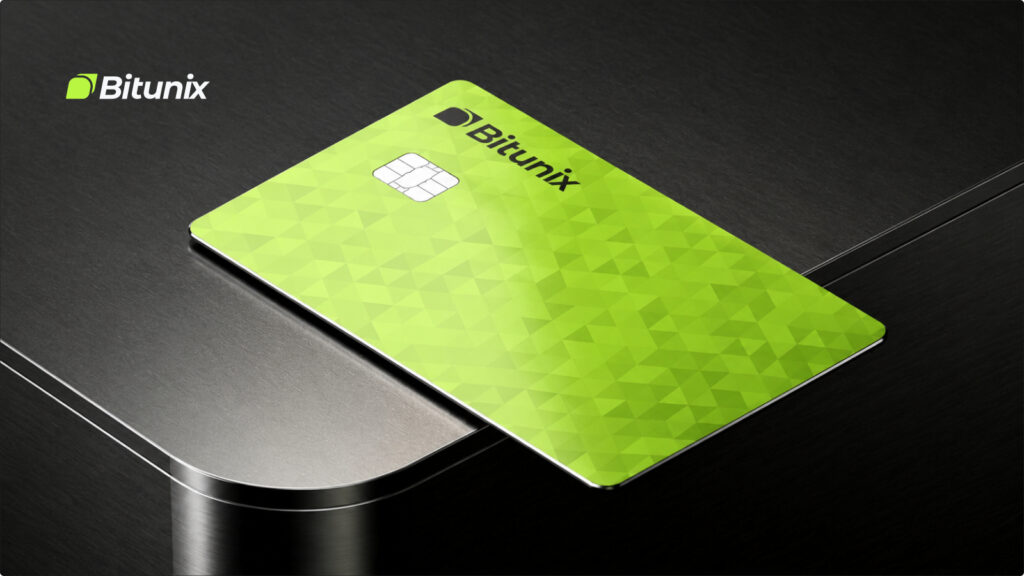
Cryptocurrency exchange Bitunix has launched the Bitunix Card, a Visa-powered payment solution that allows users to spend their funds on everyday purchases, and earn yield on idle balances.
The launch reflects a growing demand for practical crypto products that connect digital assets with everyday spending. Instead of moving funds between multiple platforms, Bitunix users can now manage payments, and earnings from one place.
The Bitunix Card can be used at more than 130 million merchants worldwide that accept Visa payments. Users can pay for everyday services and subscriptions such as Uber, ChatGPT, Amazon, Spotify, and Netflix, while also using the card when traveling internationally. Payments are completed instantly, allowing users to spend their crypto as easily as they would with any traditional payment card. The card offers up to 8% cashback on eligible spending, with rewards capped at 1,000 USDT monthly.
To support everyday payments across different regions, the Bitunix Card is compatible with major digital wallets such as Apple Pay, Google Pay and Paypal, as well as selected regional payment platforms and local payment networks.
Available through the Bitunix web platform as well as its iOS and Android applications, the card is designed to give users more utility for their USDT beyond trading. Through a unified dashboard, users can manage card balances, transfer funds between accounts, track transactions, monitor cashback rewards, and control card settings in one place.
The card applies standard regional network processing fees, while eligible users may offset these costs through cashback rewards, depending on their VIP tier.
In addition, eligible balances held on the card can automatically earn yield, reaching up to 11.6% annually, depending on the asset and applicable conditions.
“The Bitunix Card goes far beyond payments. It unlocks a seamless, high-yield financial ecosystem built for everyday global commerce,” said Bitunix’s Chief Strategy Officer, Steven Gu.
The card comes with no issuance fee and no monthly maintenance fee. To activate the card, users are required to transfer a minimum balance of 100 USDT to their card account. The funds remain fully available for spending and do not represent an activation fee.
Users can apply for the Bitunix Card directly through the Bitunix platform. The card is offered to eligible Bitunix users who have completed the platform’s identity verification process and reside in supported regions.
The launch is part of Bitunix’s broader effort to make cryptocurrency more practical for everyday use. By combining spending and earning features in a single product, Bitunix gives users more ways to put their digital assets to use in everyday life.
For more information about the Bitunix Card and application details, users can visit the official Bitunix Card page.
About Bitunix
Bitunix is a global cryptocurrency derivatives exchange trusted by over 5 million users across more than 150 countries. Guided by its core principle of better liquidity, better trading, the platform is built for traders who expect more, committed to providing Ultra Trust, Ultra Products, and Ultra Experience. Bitunix offers a fast registration process and a user-friendly verification system to ensure safety and compliance. With global standards of protection through Proof of Reserves (POR) and the Bitunix Care Fund, the exchange prioritizes user trust and fund security. Industry-first innovations like Fixed Risk, TradingView-powered chart suite, along with indicator alerts, cloud-synced templates, provide both beginners and advanced traders with a seamless experience. Making Bitunix one of the most dynamic platforms on the market.
Bitunix Global Accounts
X | Telegram Announcements | Telegram Global | CoinMarketCap | Instagram | Facebook | LinkedIn | Reddit | Medium
Contact
COO
Kx Wu
Bitunix
[email protected]
London, United Kingdom, July 15th, 2026, Chainwire
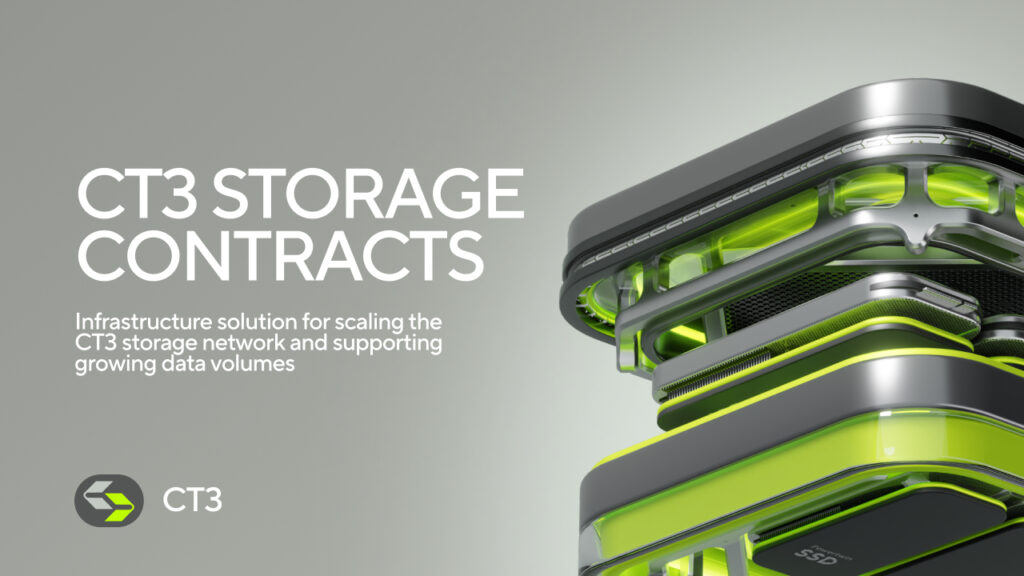
CT3 today announced the transition of its decentralized storage infrastructure to a dedicated Storage Contracts model designed to support continued platform growth, improve infrastructure scalability, and expand storage capacity as demand increases.
The transition follows rapid growth across the CT3 ecosystem, with more than 180,000 unique users having used the platform and more than 500,000 uploads completed. Each upload is linked to an NFT access key, allowing platform activity and network usage to be independently verified on-chain.
Continued growth in demand for ct-3.cloud services has increased pressure on the existing infrastructure. Processing all new uploads through a single main collection and one smart contract may reduce scaling flexibility and make storage capacity more difficult to manage as network activity expands.
Under the new architecture, new uploads will be distributed across dedicated Storage Contracts rather than a single main contract. Each Storage Contract is linked to a fixed amount of storage capacity and operates as an independent infrastructure segment with its own capacity, utilization level, and on-chain statistics.
The new model is intended to distribute workloads across multiple smart contracts, improve the transparency and measurement of resource utilization, and support the deployment of additional storage capacity as demand grows. Participants may finance the deployment of new Storage Contracts and the addition of storage capacity. The allocated capacity is used to store files uploaded through ct-3.cloud, while the resulting profit is shared between CT3 and the participant who financed the infrastructure expansion.
Infrastructure Segmentation
Previously, CT3 keys were issued primarily through the main collection and a single contract flow. As the platform expanded, this model became less flexible for handling different categories of data.
Storage Contracts divide the infrastructure into separate segments. Each segment:
- operates through its own smart contract;
- is linked to a specific amount of storage capacity;
- can serve a particular category of files;
- allows capacity utilization and workload to be measured independently;
- reduces pressure on the main NFT key issuance process.
This separation makes the infrastructure more resilient and allows individual areas of the platform to scale without rebuilding the entire system.
How the Allocated Storage Capacity is Used
Each Storage Contract is linked to a defined amount of capacity within the CT3 network. Once activated, the corresponding storage space is supplied by network nodes and used to store data uploaded through ct-3.cloud.
The allocated capacity may be used for:
- standard user files;
- corporate archives;
- automatic backups;
- long-term datasets;
- future CT3 products and applications.
Larger contracts can accommodate heavier files and more substantial flows of corporate or backup data. This allows the network to direct workloads to infrastructure segments with sufficient available capacity.
Storage Contract Economics
The commercial model behind Storage Contracts is based on the real use of CT3 infrastructure. The platform acquires storage capacity from node operators and provides it to ct-3.cloud customers at the market price of the storage service.
A participant finances the deployment of a new Storage Contract and the expansion of the network’s available capacity. Once launched, this capacity is used to store personal and corporate data, while the generated profit is distributed between the investor and CT3.
The financial performance of each contract depends on two main factors:
- the actual utilization of the allocated capacity;
- the margin between the cost of acquiring storage capacity and the price charged to end users.
Storage Contracts therefore allow participants to take part in the growth of CT3 infrastructure and potentially earn income linked to real demand for storage services. The more actively the allocated capacity is used, the greater the contract’s potential result.
On-chain transparency
The operation of each Storage Contract can be verified through the blockchain. Files stored within the allocated capacity are represented by NFT keys containing storage-related metadata.
The combined size of the files associated with these keys can be compared with the utilization figure displayed for the contract. Through the smart contract address, an investor can verify issued NFTs, collection activity, and the actual use of the capacity they helped finance.
This model makes it possible to independently verify:
- the number of keys created;
- the volume of stored data;
- utilization of the allocated capacity;
- activity within a specific Storage Contract;
- the relationship between infrastructure usage and profit generation.
For ct-3.cloud users, the experience remains unchanged: both existing and new NFT keys continue to be supported, and the transition to the new architecture requires no additional action.
About CT3
CT3 is developing a decentralized data storage infrastructure that combines independent nodes, the ct-3.cloud interface, NFT access keys, and blockchain verification.
Users upload files through ct-3.cloud, after which the data is distributed across network nodes. An NFT key is created for every stored object, confirming access rights and containing the relevant storage metadata.
Within this model, nodes provide physical storage capacity, CT3 manages data distribution and access, while individual and corporate users generate demand for storage services.
As the number of users and uploads increases, the network must continuously expand its available capacity. At certain times, demand growth may outpace the addition of new capacity from node operators. Storage Contracts allow CT3 to add new resources in a structured way and allocate them to specific areas of use.
Contact
CMO
Rodrigo Pereira
CT3
[email protected]

VICTORIA, Seychelles, July 13th, 2026, Chainwire
Global crypto trading platform BYDFi participated in Peru Blockchain Conference 2026, held July 10-11 at JW Marriott Larcomar in Miraflores, Lima. Now in its 5th edition, the event was positioned as one of Peru’s largest blockchain, crypto, and trading gatherings, bringing together industry participants across digital assets, Web3, trading, fintech, AI, regulation, and financial education.
Peru Blockchain Conference 2026: A Key Gathering for Web3 and Trading in LATAM
Peru Blockchain Conference 2026 convened a broad mix of industry participants from across Latin America and the global digital asset ecosystem.Organizers highlighted official event scale figures of more than 4,000 attendees, 100+ speakers, and 50+ sponsors, with the event designed around conference programming, exhibition activity, networking, and direct engagement between companies, builders, traders, investors, and communities.
The program covered a wide range of themes, including Crypto & Digital Assets, Blockchain & Web3, Trading and Financial Markets, Artificial Intelligence, Fintechs and Startups, Regulatory Framework Peru & LATAM, Asset Management, and Financial Education. For BYDFi, the agenda offered a clear view of the conversations shaping user expectations around access, usability, trust, and long-term participation in digital finance.
BYDFi Connects with Attendees in Lima
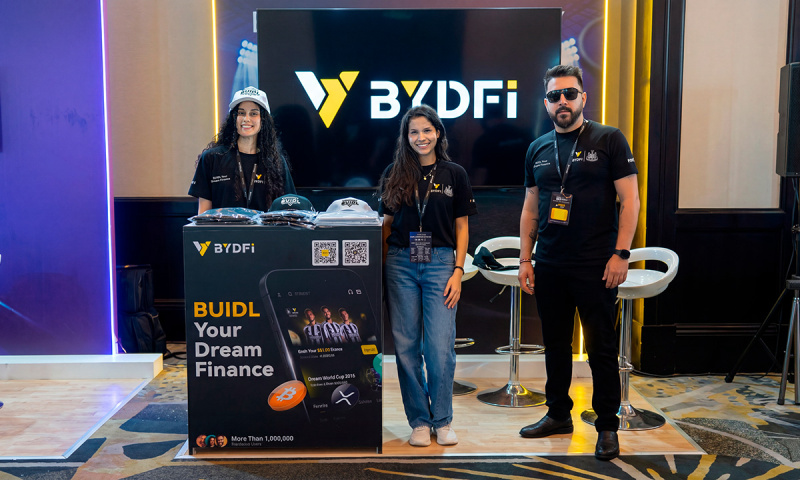
At the venue, BYDFi’s booth drew steady foot traffic from attendees throughout Peru Blockchain Conference 2026. Visitors gathered around the booth to meet the BYDFi team, learn more about BYDFi’s trading experience, and take part in on-site interactions. BYDFi also distributed football-themed T-shirts and caps inspired by BYDFi’s Newcastle United partnership, which drew visible interest from visitors and added to the booth’s on-site activity.
The booth served as a practical meeting point for traders, builders, partners, and users to discuss market access, trading tools, user experience, and the growing connection between crypto and broader financial markets. BYDFi also shared perspectives across digital asset trading and TradFi trading access, reflecting user interest in more flexible ways to participate across market environments.
Advancing Trust Through Education and Participation
Peru Blockchain Conference 2026 brought financial education, regulation, trading, digital assets, and Web3 adoption into one setting. For BYDFi, that context reinforces how important it is for trading platforms to support users with practical access, steady execution, and standards they can rely on over time. This aligns with BYDFi’s annual theme, Built for Reliability: building trading experiences that remain useful, stable, and trusted as digital finance reaches more communities.
Michael Hung, Co-Founder & CEO of BYDFi, said: “Peru Blockchain Conference brought together important discussions around education, access, regulation, and real user participation. For BYDFi, the priority is to listen closely, build responsibly, and keep improving a trading experience users can trust over time.”
About BYDFi
Founded in 2020, BYDFi now serves over 1,000,000 users across 190+ countries and regions. BYDFi is Newcastle United’s Exclusive Official Crypto Exchange Partner and is listed by Forbes Advisor Canada among the best crypto exchanges in Canada for 2026.
BYDFi is dedicated to delivering a world-class crypto trading experience for every user.
BUIDL Your Dream Finance.
- Website: https://www.bydfi.com
- Support email: [email protected]
- Business partnerships: [email protected]
- Media inquiries: [email protected]
X (Twitter) | Instagram | Telegram | YouTube | TikTok | How to Buy on BYDFi
Contact
BYDFi Fintech LTD
[email protected]
Tortola, British Virgin Islands, July 1st, 2026, Chainwire
VCT combines blockchain transparency, agribusiness intelligence, export-finance infrastructure and real-world asset tokenization on BNB Smart Chain.
Valle Capital Token (“VCT”) today announced the development and expansion of its blockchain-powered ecosystem designed to connect global digital capital with Brazilian agribusiness operations and international commodity exports.
Built on BNB Smart Chain, Valle Capital Token combines utility-token functionality with a real-world asset-focused model intended to support greater transparency, operational visibility and digital infrastructure across agricultural production, commodity financing, logistics and export activity.
The project is structured around a British Virgin Islands tokenization entity and aims to create a bridge between traditional agribusiness, international trade and the global Web3 economy. Through EVM smart contracts, digital dashboards, monitoring tools and on-chain records, Valle Capital intends to support a more transparent and connected ecosystem for producers, commercial partners, exporters, international buyers and eligible global participants.
Connecting Global Capital to the Real Economy
Brazilian agribusiness and commodity exports represent one of the country’s most important economic engines. The sector depends on continuous access to capital, operational intelligence, logistics coordination, documentation control and reliable reporting across every phase of the production and export chain.
From advance commodity purchases and crop financing to storage, shipment preparation and international settlement, agricultural and export operations often involve multiple parties, including producers, buyers, warehouses, logistics providers, exporters, financial partners, insurers and international counterparties.
Valle Capital Token is designed to help address this operational complexity by creating a technological layer that organizes information, improves visibility and supports digital integration across the agro-export chain.
The project’s market opportunity is driven by the increasing demand for:
- More transparent agribusiness and export operations
- Better access to structured working capital
- Reliable contract and document monitoring
- Digital traceability from field to shipment
- Operational intelligence through data and artificial intelligence
- Blockchain-based auditability for selected commercial milestones
- New technology infrastructure connecting real assets and global digital capital
VCT is positioned at the intersection of agribusiness, commodity trading, export finance and real-world asset tokenization.
A Technology Layer for the Entire Agribusiness Chain
Valle Capital Token is not designed solely as a digital asset. It is being developed as a broader ecosystem of digital tools and operational infrastructure for the agribusiness and export sector.
The platform is expected to include:
- Satellite Monitoring and Field Intelligenc: The ecosystem plans to use imagery and field data to monitor agricultural areas and track the evolution of production cycles. These tools are intended to support improved operational visibility across the agricultural chain.
- Climate Mapping: Territorial and climate indicators are planned to support decision-making throughout crop cycles, helping participants monitor environmental and operational conditions relevant to agricultural activity.
- Logistics Tracking: Valle Capital Token plans to provide visibility into commodity movement, storage, commercial preparation and shipment-related milestones, helping reduce fragmented information among partners in the supply chain.
- Irrigation and Field Mapping: The platform is expected to include tools for mapping and visualizing irrigated areas, soil information and field infrastructure, supporting operational analysis and agricultural planning.
- Operational Artificial Intelligence: VCT plans to integrate AI-based tools for operational analysis, sector intelligence and data interpretation, strengthening the ability of participants to understand trends, monitor activity and make more informed decisions.
- Digital Traceability: Digital traceability tools are intended to support the monitoring of production-chain information, operational milestones and product-origin data. This can create a clearer historical record for selected activities within the agro-export ecosystem.
- Information Panels and Operational Alerts: The project plans to provide dashboards for users and partners, combining field data, operational progress, real-time alerts and relevant ecosystem information in a single digital environment.
- Smart Contracts and On-Chain Transparency: A central component of Valle Capital Token is its use of EVM-compatible smart contracts to support auditable records of selected capital flows, commercial structures and operational milestones.
The project intends to register hashes and references associated with real-world operations, which may include:
- Agricultural agreements
- Commodity purchase contracts
- Export and international trade agreements
- Invoices
- Packing lists
- Bills of Lading
- Certificates
- Logistics milestones
- Delivery confirmations
- Settlement status
This structure is designed to improve auditability and transparency without replacing the legal, financial, and commercial processes required for real-world operations.
According to the project’s model, financing flows are expected to be formalized through legal structures and recorded on-chain to create a more transparent operational record.
Agribusiness and Export Finance Strategy
Valle Capital Token’s ecosystem is designed around two primary operational areas.
Valle Capital: Agribusiness Operations
 The project plans to support infrastructure connected to:
- Agricultural financing for producers
- Advance commodity purchases
- Working-capital support
- Crop financing
- Future-contract structuring
- Agricultural supply-chain operations
Grupo CGM: Export Operations
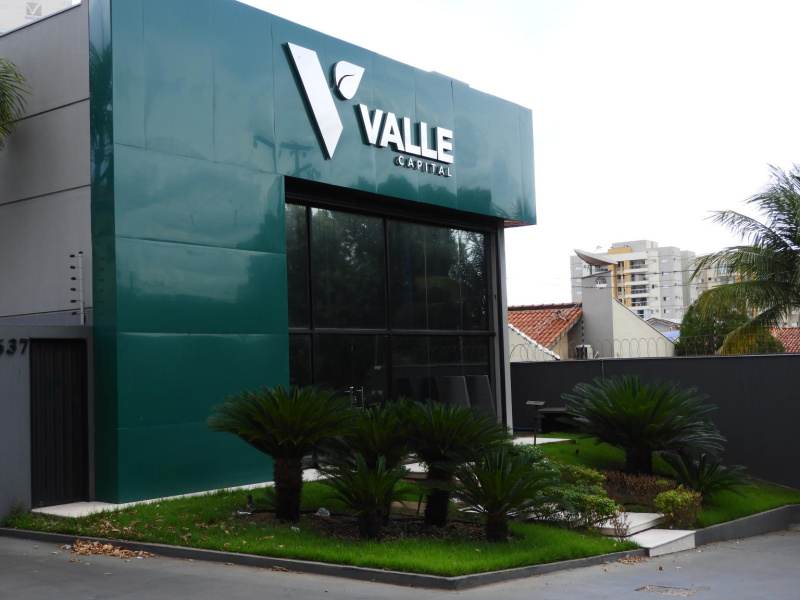 The export-finance structure may support:
- Pre-shipment financing
- Logistics and shipping costs
- Operational cost coverage
- Commodity-export preparation
- International trade activities
- Export-volume expansion
The project states that international capital may be transferred to Brazilian operating entities through formalized legal mechanisms, including capital contributions and structured private-loan agreements, subject to applicable law, regulatory requirements and project compliance procedures.
VCT Token and Ecosystem Utility
VCT is positioned as an RWA-focused utility token intended to connect eligible global participants to a growing ecosystem of digital tools, services, programs, benefits and future platform modules.
The current website identifies a total supply of 650,000,000 VCT on BNB Smart Chain. The token allocation is structured across presale, operations and treasury, liquidity and listings, marketing and ecosystem development, team and advisors, and strategic reserve and legal allocation.
Current token allocation includes:
- 35% — Presale: 227.5 million VCT
- 25% — Operations and Treasury: 162.5 million VCT
- 15% — Liquidity and Listings: 97.5 million VCT
- 10% — Marketing and Ecosystem: 65 million VCT
- 10% — Team and Advisors: 65 million VCT
- 5% — Strategic Reserve and Legal: 32.5 million VCT
The presale is structured across 15 rounds of 10 days each. The website states that presale allocations include 10% at token-generation event, with the remaining 90% released over 12 months.
Roadmap Toward Global RWA Expansion
Valle Capital Token has outlined a phased roadmap focused on moving from token infrastructure and presale activity to real operational deployment and broader ecosystem expansion.
Phase 1 — Foundation and Presale includes the BVI tokenization entity, smart-contract development, audit preparation, BNB Smart Chain deployment and the 15-round presale structure.
Phase 2 — Capital Deployment focuses on agribusiness financing through Valle Capital, export-finance activity through Grupo CGM, formalized capital flows and investor dashboards.
Phase 3 — Smart Operations includes satellite and climate monitoring, logistics-tracking modules, AI operational analysis, digital traceability and staking-related ecosystem tools.
Phase 4 — RWA Scale targets on-chain commodity tokenization, card-gateway and fiat on-ramp integration, international partnerships, exchange-listing preparation and the development of a global RWA marketplace.
Why Valle Capital Token Stands Out
Valle Capital Token is designed around a differentiated proposition: combining blockchain technology with real agribusiness and commodity-export operations rather than focusing exclusively on speculative digital-asset use cases.
The project’s main advantages include:
- Focus on Brazilian agribusiness and global commodity exports
- BVI tokenization structure and BNB Smart Chain deployment
- Utility token with an RWA-focused ecosystem model
- Smart contract-based transparency and auditability
- Satellite, climate and logistics intelligence tools
- Digital traceability for the agro-export chain
- AI-driven operational analysis
- Investor and partner dashboards
- Structured capital deployment for agro and export operations
- Long-term roadmap toward global RWA marketplace infrastructure
“Valle Capital Token is being developed to connect technology, capital and real operational activity. Our goal is to create a more transparent digital ecosystem where agribusiness, exports, blockchain infrastructure and global participants can operate together,” said Luan Coimbra Correia Responsible Representative, Valle Token.
Important Notice
VCT is a utility token and does not represent equity, ownership participation, a security, guaranteed returns, guaranteed yield or guaranteed token appreciation. Participation in digital assets involves risks, including market volatility, liquidity risk, technology risk, operational risk, regulatory changes and potential loss of capital.
The project states that participation is subject to applicable laws, jurisdictional restrictions, KYC/AML verification and legal review. The VCT presale is not marketed to persons located in, or citizens or residents of, the United States, Brazil or OFAC-sanctioned jurisdictions.
About Valle Capital Token
Valle Capital Token is a blockchain-powered agribusiness, export-finance and real-world asset ecosystem. The project aims to connect global digital capital with Brazilian agricultural operations and international commodity exports through EVM smart contracts, blockchain transparency, digital traceability, operational intelligence and scalable Web3 infrastructure.
Official Links
Website: https://valletoken.com
Whitepaper: https://whitepaper.valletoken.com
Telegram: https://t.me/vallecapitaltoken
X / Twitter: https://x.com/valletoken_
Instagram: https://www.instagram.com/vallecapitaltoken
Contact
CFO
Luan Coimbra Correia
VALLE CAPITAL TOKEN
[email protected]
Dubai, UAE, July 1st, 2026, Chainwire
Utorg, a crypto wallet and card platform built on institutional-grade infrastructure, today announced it has received full authorization under the EU’s Markets in Crypto-Assets (MiCA) regulation, effective July 1, 2026 – the date on which the industry’s transitional period ends and unauthorized providers can no longer legally serve European users.
The company, which also provides regulated crypto rails, wallets and stablecoin infrastructure to businesses across 130+ countries, is among a small number of platforms to have completed the full authorization process and is now cleared to operate across all 29 EEA member states, a combined market of over 450 million people.
What MiCA means for users
MiCA is the EU’s first unified regulatory framework for crypto-assets, establishing binding standards on consumer protection, transparency, and financial integrity across all member states.
For users, MiCA authorization means concrete protective measures that previously did not exist in crypto: funds must be held separately from company assets, fees must be disclosed upfront, and users have a legal right to file complaints with a national regulator. If a MiCA-authorized platform fails, user assets are protected under EU law (not subject to the discretion of an offshore jurisdiction).
For Utorg, the authorization is the result of a full regulatory review of its products, operations, and compliance infrastructure. It also means ongoing oversight: Utorg is now subject to regular reporting obligations and supervisory review under EU financial law.
Industry background
July 1, 2026 marks the end of MiCA’s transitional period – the point at which crypto-asset service providers without full authorization can no longer legally serve users in the EEA.
In the months leading up to the deadline, a significant portion of the market has withdrawn from or restricted European operations. Utorg is among the few platforms to have completed the full authorization process and is operational from day one of the new regulatory regime.
Eugene Petrakov, Co-founder of Utorg, said: “Most of the industry spent the last two years hoping MiCA would get delayed or softened. We spent it building toward it. For European users, July 1 means fewer options, stricter standards, and a much shorter list of platforms they can actually trust. We intend to be at the top of that list, not just because we’re authorized, but because we built a product that is safe by design. The license confirms what was already true.”
Utorg’s products available to EEA residents
From July 1, EEA users can continue to access Utorg’s full product suite through the Utorg App, including:
- A crypto wallet supporting buy, send, receive, store, and swap across 170+ cryptocurrencies and 14 blockchains, including BTC, ETH, and SOL. Thanks to its non-custodial nature, Utorg has no access to users’ funds at any point.
- A crypto card accepted at 80 million+ merchants worldwide, with Google Pay and Apple Pay support and allowing users to spend their crypto as they wish. It’s worth mentioning that there are no fees for issuance, maintenance, or top-ups.
This crypto card operates under strict AML (Anti-Money Laundering) and KYC (Know Your Customer) compliance requirements, as mandated by MiCA, ensuring users benefit from the full protections afforded by EU law.
For card payments specifically, Utorg holds a PCI DSS Level 2 certificate under the Payment Card Industry Data Security Standard. This is the same security framework used across the traditional payments industry, and it governs how card numbers, transaction records, and personal details are stored, processed, and transmitted. Compliance is verified through regular audits by an independent assessor.
About Utorg
Founded in 2019, Utorg is a crypto infrastructure and consumer application fintech company operating across 130+ countries. It provides regulated on/off-ramp rails, wallet infrastructure, and stablecoin solutions to fintechs, exchanges, digital asset platforms and other businesses globally. Its consumer app, trusted by more than 2 million users, offers a self-custodial multi-chain wallet and a free Visa crypto card, available on iOS (in July) and Android. Utorg is MiCA-authorized and holds PCI DSS Level 2 certification.
Contact
CMO
Andrey
Utorg
[email protected]
Palo Alto, United States, June 26th, 2026, Chainwire
Toss users can now contribute real-world data to train AI and get paid for it, in a first-of-its-kind model launching in Korea ahead of global expansion.
Poseidon, the data infrastructure built to source and license real-world data for AI, today announced a partnership with Toss, the mobile financial platform operated by Viva Republica, to let everyday users contribute to AI training and be paid for what they provide. It is Toss’s first move into AI data, and it opens that market to its roughly 30 million users.
Frontier AI has run out of internet to scrape. The next generation of models depends on real-world data, the kind that captures how people actually speak, move, and react, which does not exist on the open web and has never had a clean way to be sourced, licensed, or paid for. Poseidon is building the infrastructure to change that, and Toss brings the reach to do it at scale.
Through the partnership, Poseidon’s contributor app, Numo, launches inside the Toss app. Toss users can help build Korean-language training data across voice, image, and video, and receive payment tied directly to what they contribute. Poseidon provides the infrastructure that tracks each contribution and its value, while Toss provides the user base and the financial experience that turns participation into payment. Together they offer a working answer to a question the AI industry has struggled with, which is how to compensate the people whose data makes models better.
Every contribution made through Numo is registered on DATA, the AI data network that Poseidon refines data for. DATA gives each record a verifiable provenance trail through Trace, its public audit layer, so a buyer can see where a piece of training data came from and a contributor can see that their work was counted and paid. DATA Foundation, which launched this week from the rebrand of Story, is building this layer alongside integration partners including the human data marketplace Kled, and Poseidon is one of the largest sources of refined data flowing into it.
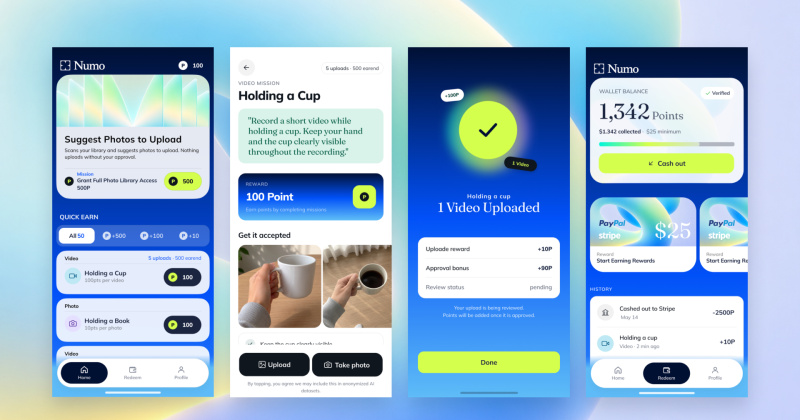
What Numo collects is first-person data, recorded by real people in real environments, which is among the hardest and most valuable categories to obtain. It is the raw material for physical intelligence, the AI that has to operate in the physical world across robotics, autonomous vehicles, and other applications. Demand from global AI labs for this kind of data is climbing, and Korea is positioned to supply it, with its dense real-life data and Toss’s user base. Poseidon and Toss intend to prove the model in Korea, then expand to global markets.
Changhoon Seo, Executive Director of New Business at Toss, said: “As the AI industry grows, demand for high-quality data is rising just as fast. Toss plans to build an environment where users can take part in the data economy more easily and naturally, and to expand a structure in which the value they contribute is rewarded transparently.”
SY Lee, Chief Strategy Officer and Chairman of Poseidon, said: “Korea is one of the few markets where the strategic importance of AI data, a mature financial system, and world-class mobile experience all exist at once. Toss is the right partner to turn user-contributed AI data from an early idea into a standard the rest of the world can adopt.” Lee previously founded the web-novel platform Radish and sold it to Kakao Entertainment, co-founded Story, the IP infrastructure that recently rebranded as DATA Foundation, and was named a Young Global Leader by the World Economic Forum this year.
About Poseidon
Poseidon is the data infrastructure for AI, built to source, refine, and license the real-world data that frontier models need and the open internet cannot supply. Incubated by the team behind The DATA Network, Poseidon bridges the gap between data supply and AI demand by enabling access to high-quality, IP-safe, and composable training datasets. Poseidon raised a $15 million seed round led by Andreessen Horowitz (a16z). Poseidon’s contributor app, Numo, has recorded more than 711,000 data registrations worldwide and is available and is now available on the Toss app.
Contact
Zug, Switzerland, June 25th, 2026, Chainwire
Anyone can now execute mass payouts across EVM chains and Tron from a single platform and can choose between multiple wallet screening providers.
Just three weeks after releasing major upgrades for crypto payment collection, the Request Network Foundation today announced another expansion of its stablecoin payment platform. The release introduces one-click mass payouts on both EVM and Tron, alongside built-in bridging and token swapping across EVM chains. The update also expands compliance capabilities through the integration of Merkle Science as an additional wallet screening provider.
Together, these capabilities reinforce Request Network’s vision of providing businesses with a simpler, more scalable, and more resilient way to operate stablecoin payments globally.
Users Can Now Disburse at Scale in One Click From a Single Wallet Without Bridging or Swapping
Stablecoins are already widely used to disburse salaries, commissions, affiliate rewards, bug bounties, supplier payments, and customer refunds or withdrawals across the world. While settlements are now faster and cheaper in stablecoins compared to fiat, the operational processes needed to send funds remain complex as recipients usually require payments on multiple chains and in multiple currencies. This has forced finance teams to initiate multiple transactions in separate currencies and from multiple wallets.
Request Network now abstracts away this fragmentation, allowing anyone to initiate mass payouts from a single wallet in a single currency to pay recipients across the top 6 EVM chains (Ethereum, Base, Arbitrum, Optimism, Polygon, and BNB Chain) in USDC and USDT.
Through a single signature, a mass payout can now be initiated even if the individual transactions need to be bridged and swapped to reach their recipient. Request Network protocol automatically retrieves and batches bridge and swap quotes in order to funnel every payment of a batch to its correct destination in just one approval.
To simplify the process further, Request Network also allows any recipient to set and update their payment preferences so payments are always routed to where they should go.
This represents one of the biggest breakthroughs in cross-chain and swapping abstraction, bringing payers and recipients closer than ever before, regardless of the blockchain or currency they trust.
Mass Payouts Now Available on Tron
Alongside EVM mass payouts, Request Network also announced the support of mass payouts on Tron, becoming the first protocol to combine both capabilities.
Thanks to this release, anyone can now send USDT to multiple recipients on Tron in a single transaction, unlocking large-scale payouts on one of the most used chains in Asia, Africa, Eastern Europe, and Latin America.
With this release, anyone can now manage all stablecoin payouts globally from the Request Network protocol.
More Choice for Wallet Screening
Alongside mass payouts, Request Network also announced a partnership with Merkle Science to offer additional wallet screening providers on the protocol.
As a reminder, Request Network offers built-in wallet screening to protect its users from high-risk wallet interactions. When enabled, this feature allows payments to be executed only if the payer or recipient satisfies the preset screening policies, helping businesses to avoid exposure to high-risk wallets which may lead to asset freezing or difficulties off-ramping to fiat.
By expanding its integration of Merkle Science, Request Network just became one of the safest ways to receive crypto onchain, while accommodating for recipients’ preferences.
Tristan Wallaert, CEO of the Request Network Foundation, said: “Stablecoins allowed money to move globally without the usual fiat constraints, but executing payments at scale remains a bottleneck and is forcing users to rely on payment service providers. Anyone should be able to pay by himself hundreds of payments across chains in just a single operation.High risk wallets exposure has tarnished the crypto reputation recently, if we want to provide the best protection to blockchain users they need to be able to use the best screening providers. Sending and receiving payments must become intuitive and safe if we want stablecoins to be a real alternative to fiat.”
Mriganka Pattnaik, CEO of Merkle Science, said: “As stablecoin payments become more global and cross-chain, compliance needs to become just as seamless as the payment experience itself. Our integration with Request Network helps businesses screen wallets with greater confidence, reduce exposure to high-risk activity, and scale onchain payments without compromising trust or operational efficiency”.
About Request Network
Since 2017, Request Network has developed, educated about, and promoted the use of open-source, decentralized and permissionless protocols that provide infrastructure for on-chain payments and related financial flows.
Request Network allows anyone to send and receive crypto at scale, across chains, without custodial intermediaries. The protocol is developed by a community-funded foundation whose mission is to make crypto payments accessible while protecting its participants.
To date, more than $2 billion has moved thanks to Request Network technology.
About Merkle Science
Merkle Science provides blockchain analytics and crypto compliance solutions that help businesses detect, investigate, and prevent financial crime across digital assets. Its platform supports wallet screening, transaction monitoring, risk intelligence, and investigations, enabling crypto platforms, financial institutions, and payment providers to manage onchain risk and meet compliance requirements at scale.
Contacts
CEO
Tristan Wallaert
Request Network Foundation
[email protected]
Director of Business Operations
Álvaro García
[email protected]