


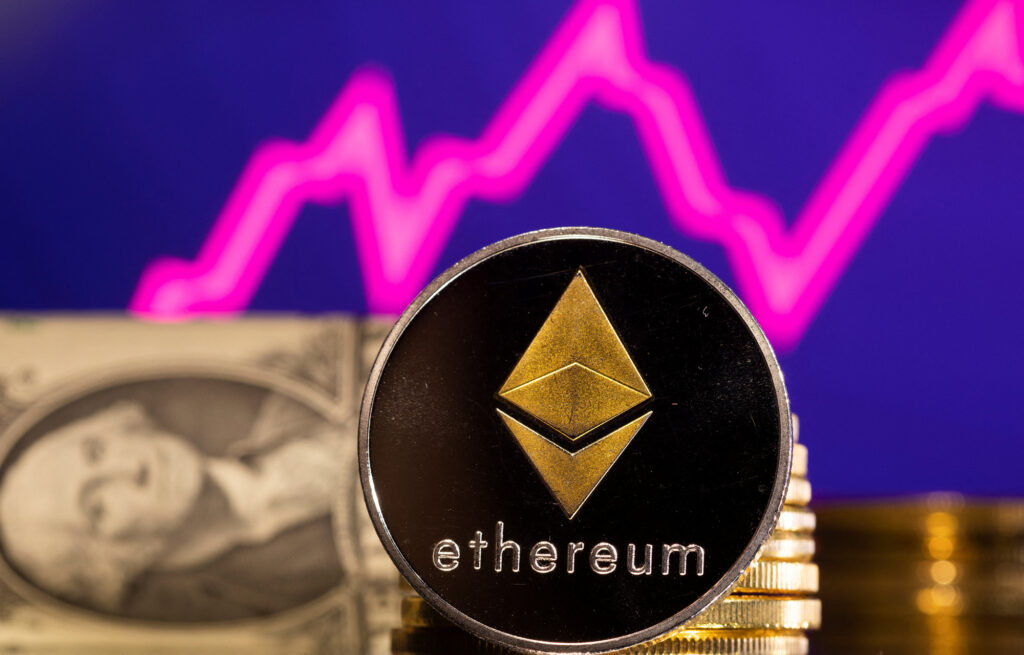
Ethereum’s social media sentiment has fallen to levels similar to those seen before its 2025 price surge, according to a crypto sentiment analyst.
The pattern has drawn comparisons to a period that preceded Ethereum’s return to its 2021 all-time highs.
“Ethereum is actually way down, this would argue against us falling too much further,” Santiment analyst Brian Quinlivan said in a YouTube video published Saturday.
“This is kind of reminiscent of what we saw before Ethereum went on its major run last year,” he added.
Echoes Of The 2025 Ethereum Rally
Quinlivan pointed to Ethereum’s sharp rebound during 2025 as a reference point.
On August 23, Ether surged back to its 2021 peak of $4,878.
That move represented a near 70% gain over four months.
The rally followed a steep decline earlier in the year, when Ether fell to a low of $1,472 in April.
According to Quinlivan, the breakout occurred as market confidence in Ethereum was fading.
“Ether’s price took off just as people were really starting to write-off Ethereum,” he said.
Ethereum Holds Firm As Market Number Two
Since hitting its all-time high, Ether has fallen roughly 36%.
It was trading near $3,089 at the time of publication.
The decline followed a $19 billion crypto market liquidation event in October that dragged down the broader market.
Despite the pullback, Quinlivan does not believe Ethereum faces the same skepticism seen earlier in 2025.
“I wouldn’t say that is happening now,” he said.
“Ethereum is kind of back to being an expected number two market cap for a lot of people.”
Coinbase Asset Management president Anthony Bassili has expressed a similar view.
“There’s a very, very clear view in the investor community,” Bassili said previously.
“The right first portfolio is Bitcoin. The next is Bitcoin, Ethereum,” he added.
Network Growth And Staking Interest
Quinlivan remains optimistic about Ethereum’s underlying fundamentals.
He described the network’s growth as “absolutely going bonkers.”
He linked the expansion to rising interest in staking.
Staking discussions have become increasingly prominent across social media platforms.
That trend suggests users are engaging with Ethereum beyond short-term price speculation.
Broader Crypto Market Remains Cautious
The wider cryptocurrency market continues to show signs of caution.
Sentiment has hovered between “Fear” and “Extreme Fear” since early November.
On Sunday, the Crypto Fear and Greed Index posted a score of 29.
Market participants remain largely risk-off outside of Bitcoin.
The Altcoin Season Index currently signals a “Bitcoin Season” environment.
The index score of 34 out of 100 reflects weaker relative performance among altcoins.
This backdrop highlights Ethereum’s challenge in gaining momentum despite improving fundamentals.

Bitcoin may remain largely flat in the first quarter of 2026 despite historical trends suggesting stronger gains, CryptoQuant CEO Ki Young Ju said Wednesday.
“Capital inflows into Bitcoin have dried up,” Ju explained, noting that investors are returning to “stocks and shiny rocks” as gold and silver prices soar.
Ju added that Bitcoin is unlikely to crash from its current peak and expects “just boring sideways for the next few months.”
At the time of publication, Bitcoin was trading around $90,890, down over 2% in the past 24 hours and off a high of $94,400 earlier this week.
First Quarter Trends
A sideways start would break with historical performance, as January has averaged 3.81% gains since 2013, with February and March showing stronger historic growth of 13.12% and 12.21%, according to CoinGlass.
Ju’s remarks follow warnings from veteran trader Peter Brandt and Fidelity’s Jurrien Timmer that Bitcoin could fall to $65,000 or even $60,000 this year.
Market sentiment remains muted, with the Crypto Fear & Greed Index hovering between “fear” and “extreme fear” since early November.
On Thursday, the index posted a “fear” score of 28, reflecting cautious investor behavior.
Spot Bitcoin ETFs Show Early Momentum
Spot Bitcoin ETFs have seen net inflows of $925.3 million in the first three trading days of 2026, according to Farside Investors data.
While Ju maintains a conservative outlook, other participants are bullish.
Venture capitalist Tim Draper predicted “2026 will be big,” noting that Bitcoin is going mainstream and referencing his $250,000 prediction from 2018.
Bitwise head of research Ryan Rasmussen expects Bitcoin to break the traditional four-year cycle and reach new all-time highs in 2026, contrary to historical patterns of three up years followed by a down year.
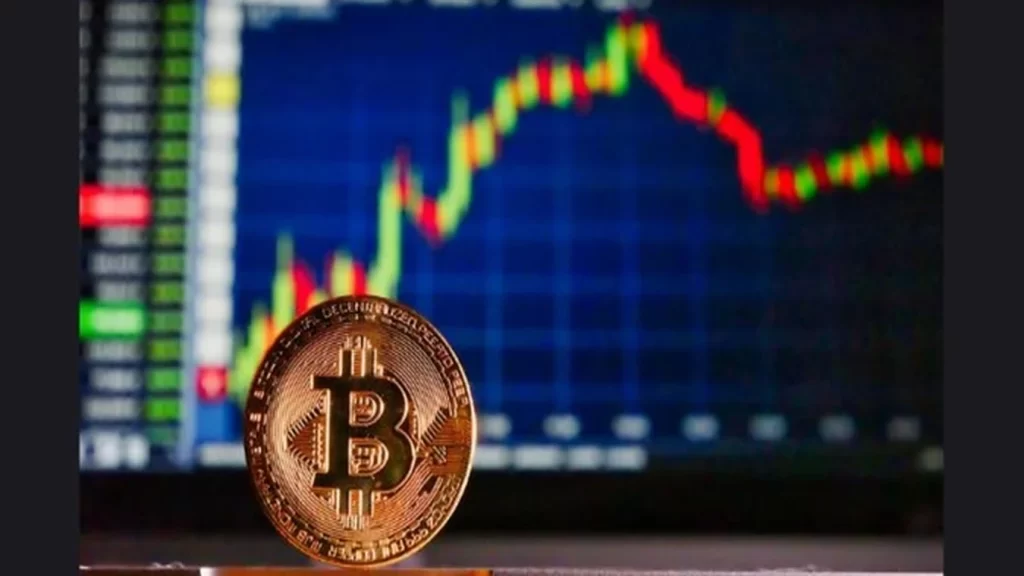
US-based cryptocurrency exchange-traded funds attracted more than $31.77 billion in net inflows during 2025.
The strong demand came despite digital asset markets losing momentum toward the end of the year.
Spot Bitcoin ETFs accounted for the majority of capital entering the sector.
Collectively, they recorded $21.4 billion in net inflows over the year, according to industry data.
That figure, however, represented a decline from the $35.2 billion seen in 2024.
Ether-focused ETFs told a different story.
Spot Ether funds pulled in $9.6 billion during 2025, a fourfold increase compared to the previous year.
The jump reflected the fact that Ether ETFs only launched midway through 2024.
As a result, 2025 marked their first full year of trading.
New products also expanded the market beyond Bitcoin and Ether.
Spot Solana ETFs entered the US market in late October and have already accumulated $765 million in inflows.
Regulatory changes played a role in the expansion.
A more crypto-friendly US administration and new leadership at the Securities and Exchange Commission helped speed up approvals.
That environment encouraged institutional investors to explore regulated crypto exposure.
BlackRock strengthens its dominance
BlackRock emerged as the clear leader in the crypto ETF space.
Its iShares Bitcoin Trust ETF recorded $24.7 billion in inflows by year-end.
The total is roughly five times larger than that of its closest rival, Fidelity’s Bitcoin fund.
The scale of demand placed IBIT among the top six ETFs of any kind by net inflows.
Bloomberg analyst Eric Balchunas highlighted the achievement despite Bitcoin’s price softness during the year.
“If you can do $25b in [a] bad year imagine the flow potential in [a] good year,” he said.
Excluding IBIT, the remaining spot Bitcoin ETFs experienced net outflows of $3.1 billion.
Several funds saw only modest gains, while one major trust shed roughly $3.9 billion.
Ethereum ETFs lose short-term momentum
BlackRock also leads the Ethereum ETF market through its iShares Ethereum Trust.
The fund holds nearly $12.6 billion in inflows overall.
However, it has failed to attract new capital over the past dozen trading sessions.
Rival Ethereum ETFs trail at a significant distance.
Recent on-chain data suggests subdued demand for both Bitcoin and Ether ETFs heading into 2026.
That slowdown may result in a cautious start to the new year.
Wave of new products expected
Litecoin, Solana, and XRP ETFs launched in the second half of 2025.
They expanded investor access to major altcoins through traditional investment vehicles.
Analysts expect far more products to follow.
Revised SEC listing standards could allow more than 100 crypto ETFs to launch in 2026.
Bloomberg analyst James Seyffart warned that many may struggle to survive.
“We’re going to see a lot of liquidations in crypto ETP products,” he said.
“Might happen at [the] tail end of 2026 but likely by the end of 2027.”

XRP managed to stay above a critical support range that has been stabilizing its price through most of 2025.
Market participants are watching closely to see if holding this level, combined with falling exchange balances, could spark a broader recovery in 2026.
Exchange Holdings at Multi-Year Low
Data from Glassnode reveals that the amount of XRP stored on exchanges has fallen dramatically over the past two months.
From October 8 to this week, the total supply on exchanges declined from 3.76 billion tokens to roughly 1.6 billion.
These levels have not been observed since August 2018, highlighting a significant shift in holder behavior.
Traders often view reduced exchange balances as an indication that holders are moving assets into private storage or long-term holdings.
LeviRietveld, a trader and analyst, noted on X:
“$XRP supply tightens with about 1.5 Billion left on exchanges. Bullish, grab yours now!”
The drop coincided with unprecedented net outflows, as 1.4 billion XRP moved off exchanges on October 19 alone.
Institutional Accumulation and Reduced Selling Pressure
Large holders are typically behind such outflows, moving their tokens to cold storage or investment products.
This kind of activity lowers immediate selling pressure and can create conditions for price growth.
A trader known as Skipper observed:
“ETFs are draining $XRP from exchanges, tightening liquidity. XRP is now entering a more structural phase.”
He added that shrinking liquidity is changing how XRP’s price is determined, suggesting stronger potential for a recovery.
Strong Support Around $1.78
XRP’s price recently found support in the $1.60 to $1.84 range, a zone that has consistently held buyers throughout 2025.
According to Glassnode, $1.78 represents a particularly important level where over 1.8 billion tokens were previously acquired.
Should this zone hold, XRP could see renewed momentum and possibly a breakout on the weekly charts targeting higher levels around $3.79.
Analyst VipRoseTr stated:
“A breakout from the downtrend channel signals a possible bullish reversal.”
However, a failure to hold $1.78 could limit upside potential, leaving XRP range-bound until fresh bullish drivers emerge.

Uniswap has carried out one of the largest token burns ever seen in decentralized finance, permanently removing 100 million UNI tokens from its treasury.
The burn, valued at roughly $596 million at the time of execution, followed a governance decision approved earlier in the week.
Onchain data shows the transaction was completed at approximately 4:30 am UTC on Dec. 28, confirming the first large-scale implementation of the proposal, according to analyst EmberCN.
The move immediately reduced UNI’s total circulating supply, marking a significant milestone for the Uniswap ecosystem and its long-term token economics.
Governance Approval Signals Strong Community Consensus
The burn was enabled by the passage of the highly anticipated Uniswap protocol fee switch, known as “UNIfication.”
The proposal passed on Thursday with an overwhelming 99.9% of votes cast in favor.
More than 125 million UNI tokens supported the measure, while just 742 tokens were recorded as votes against, highlighting near-universal agreement among participants.
Several influential figures in the crypto industry backed the proposal using their voting power.
Supporters included Jesse Waldren, founder and managing partner at crypto-focused venture capital firm Variant, Kain Warwick, founder of Infinex and Synthetix, and Ian Lapham, a former engineer at Uniswap Labs.
The scale of backing reflected broad confidence that the changes would strengthen Uniswap’s sustainability and long-term value proposition.
Uniswap Labs Confirms Onchain Execution
Uniswap Labs publicly confirmed that the burn had been successfully executed.
In a post on X, the company stated that “UNIfication has officially been executed onchain.”
As part of the rollout, interface fees charged directly by Uniswap Labs were reduced to zero.
At the same time, protocol fees were activated on Uniswap v2 and selected v3 pools on Ethereum mainnet.
Fees generated on Unichain are also set to contribute to future UNI burns after covering Optimism and Layer-1 data costs.
This structure aims to align protocol usage more closely with value accrual for the UNI token.
Market Reaction and Supply Impact
The market responded positively following confirmation of the burn.
UNI rose more than 5% over the past 24 hours, accompanied by increases in both trading volume and market capitalization.
Following the transaction, UNI’s circulating supply now stands at approximately 730 million tokens out of a fixed maximum supply of 1 billion.
Analysts noted that the reduction in supply, combined with a clearer fee framework, could support stronger long-term token fundamentals.
The burn has also reignited discussion around UNI’s role as a governance and value-capture asset within decentralized finance.
Foundation Commits to Continued Ecosystem Growth
Alongside the burn, the Uniswap Foundation reiterated its commitment to supporting developers and builders.
When introducing the proposal, the foundation stated it would continue funding grants and would not scale back programs that support protocol development.
Developer support was described as a core priority for maintaining innovation across the Uniswap ecosystem.
To reinforce this commitment, the foundation plans to establish a dedicated Growth Budget.
This budget will allocate 20 million UNI tokens to fund expansion, tooling, and development initiatives across the network.
The combination of aggressive supply reduction and sustained investment signals a dual strategy focused on efficiency and growth.

Trust Wallet users lost approximately $7 million in a coordinated exploit that unfolded on Christmas Day, capping off a year marked by growing concerns over wallet security.
The attack targeted desktop users running Trust Wallet’s browser extension version 2.68.
The company confirmed the breach in a public statement and urged users to immediately upgrade to version 2.89.
Attack Planned Weeks in Advance
Blockchain security firms revealed that the exploit had been in preparation since early December.
Yu Xian, co-founder of cybersecurity firm SlowMist, said attackers began laying the groundwork as early as Dec. 8.
“The attacker started preparations at least on [Dec. 8], successfully implanted the backdoor on [Dec. 22], began transferring funds on [Christmas Day], and thus was discovered.”
The malicious code included a backdoor that harvested users’ personal information and transmitted it directly to servers controlled by the attacker.
Binance Founder Pledges User Compensation
Changpeng Zhao, co-founder of Binance, which owns Trust Wallet, addressed the incident publicly.
Zhao said the stolen funds would be fully covered, reassuring affected users amid growing scrutiny.
Trust Wallet claims to serve around 220 million users globally, making the incident one of the more visible wallet security failures of the year.
Wallet Exploits on the Rise
The Trust Wallet incident fits into a broader pattern of increasing personal wallet compromises.
Blockchain analytics firm Chainalysis reported that personal wallet hacks accounted for 37% of the total value stolen in 2025, excluding a major exchange breach earlier in the year.
While $7 million is relatively small compared to some historic exploits, it still underscores persistent vulnerabilities in wallet software.
In February 2024, Axie Infinity co-founder Jeff Zirlin lost $9.7 million worth of Ether in a suspected wallet exploit.
Insider Activity Raises Alarm
Several industry observers raised concerns that the Trust Wallet exploit may have involved insider access.
Onchain investigator ZachXBT estimated that “hundreds” of users were affected by the attack.
Some analysts pointed to the attacker’s ability to submit a malicious version of the browser extension as a red flag.
“This kind of ‘hack’ is not natural. The chances of insider is high,” intergovernmental blockchain adviser Anndy Lian wrote.
Zhao later agreed that the exploit was “most likely” the result of insider involvement.
Familiarity With Source Code Questioned
SlowMist’s Xian noted that the attacker demonstrated deep familiarity with Trust Wallet’s source code.
That knowledge enabled the precise insertion of backdoor functionality without triggering immediate detection.
The incident has intensified calls for stricter internal controls, code audits and extension distribution safeguards across the crypto wallet industry.
Market Context
This incident comes amid the crypto market experiencing a drawdown and retail interest plummeting to bear market lows.
Bitcoin is currently trying to hold the $87,000 support level, but many crypto traders are cautious about the future outlook for the coming months.
Ether has failed to maintain prices above $3,400 for more than 40 days, prompting concerns that bearish pressure may persist.
The extended weakness has left traders increasingly cautious about the near-term outlook.
ETH has faced repeated rejections at higher resistance levels, reinforcing the perception that sellers remain in control.
Options Expiry Adds Pressure to Market
Approximately $6 billion in Ether options are set to expire on Friday.
Call options currently outnumber put options by a factor of 2.2.
Despite this imbalance, bears maintain the advantage unless ETH breaks above $3,100.
Many bullish traders had expected Ether to trade at $4,000 or higher by year-end.
Those expectations were undermined by a sharp 28% price drop in November.
Ether’s price at 8:00 am UTC on Friday will be a critical reference point for determining which side benefits most from the expiry.
Bullish Bets Clustered at Higher Levels
Most of the $4.1 billion in call options are likely to expire worthless.
A large portion of bullish bets were concentrated between $3,500 and $5,000.
Less than 15% of call options were positioned at $3,000 or lower.
Even when excluding extremely optimistic strikes above $5,000, fewer than 25% of call options were placed below $3,200.
Some traders routinely sell covered calls at much higher strike prices with little expectation of those levels being reached.
Bears Still Hold Tactical Edge
Bearish positioning has also been aggressive, with many bets clustered between $2,200 and $2,900.
If Ether trades above $2,950 on Friday, more than 60% of put options would expire worthless.
However, bearish strategies remain better positioned as long as ETH stays below $3,200.
This keeps downward pressure firmly in place unless bulls can force a late move higher.
Macro Concerns Weigh on Sentiment
Investor sentiment was further shaken by reports surrounding weaknesses in the US semiconductor sector.
News that Intel struggled to advance its domestic chip manufacturing efforts contributed to broader risk aversion.
According to reports, Nvidia halted production tests tied to Intel’s manufacturing processes.
These developments reduced optimism around the economic impact of artificial intelligence in the US.
$3,100 Seen as Pivotal Level
Options data points to $3,100 as a crucial threshold for Ether bulls.
Below $2,900, options outcomes strongly favor put holders.
Between $3,101 and $3,200, results become more balanced.
Prices above $3,200 would begin to tilt the outcome in favor of call options.
A push toward $3,100 could help stabilize sentiment and distance Ether from its December lows near $2,775.

Bitcoin’s network hashrate dropped by 4% in the month leading up to December 15, a trend that some analysts view as a potential bullish indicator for the cryptocurrency’s price.
VanEck analysts Matt Sigel and Patrick Bush described the move as a “historically bullish contrarian signal” in a report on Monday.
They noted that when hash rate compression continues over extended periods, positive forward returns for Bitcoin tend to occur more frequently and with higher gains.
Since 2014, Bitcoin has posted positive 90-day forward returns 65% of the time when its 30-day hashrate declined, compared with 54% when the hashrate increased.
Looking further ahead, negative 90-day hashrate growth has been followed by positive 180-day returns 77% of the time, with an average gain of 72%, outperforming periods of hashrate growth, which produced 61% positive returns.
This trend is encouraging for miners, as a potential rise in Bitcoin’s price could increase profitability or allow previously unprofitable miners to resume operations.
Bitcoin is currently trading around $88,400, down nearly 30% from its October 6 all-time high of $126,080.
The breakeven electricity price for mining on a Bitmain S19 XP rig has fallen nearly 36%, from $0.12 per kilowatt-hour in December 2024 to $0.077/kWh by mid-December.
The drop in hashrate, the steepest since April 2024, is believed to be driven by the shutdown of approximately 1.3 gigawatts of mining capacity in China.
Analysts suggest that a portion of this energy could be redirected to meet rising demand in artificial intelligence, potentially reducing Bitcoin’s network power by around 10%.
Despite the decline in some regions, nations continue to support Bitcoin mining.
Up to 13 countries, including Russia, France, Bhutan, Iran, El Salvador, the UAE, Oman, Ethiopia, Argentina, Kenya, and recently Japan, are backing mining operations.
The recent hashrate drop highlights the cyclical nature of the industry, where shifts in capacity and energy usage can create opportunities for investors and miners alike.
As Bitcoin miners navigate changing conditions, industry observers are watching network trends closely for early signals of market movements.

Bitcoin demand growth has slowed sharply since October 2025, raising concerns that the market has entered another bearish phase.
According to analysts at CryptoQuant, the slowdown reflects a broader shift in investor behavior following multiple demand surges earlier in the cycle.
CryptoQuant analysts said Bitcoin demand unfolded in three distinct waves during the current market cycle.
The first wave emerged in January 2024 following the launch of US-listed Bitcoin exchange-traded funds.
The second wave followed the outcome of the 2024 US presidential election.
The third wave was driven by what analysts described as a Bitcoin treasury company bubble.
Demand Growth Falls Below Trend
CryptoQuant warned that demand growth has now dropped below its long-term trend.
“Demand growth has fallen below trend since early October 2025. This indicates that the bulk of this cycle’s incremental demand has already been realized, removing a key pillar of price support.”
The decline has been particularly visible in the final quarter of 2025.
Apparent Bitcoin demand fell during the period, signaling weaker accumulation across the market.
Institutional participation has also shown signs of contraction.
CryptoQuant noted that Bitcoin held in ETFs declined by approximately 24,000 BTC in the fourth quarter of 2025.
This behavior marked a sharp contrast to the aggressive accumulation seen during the same period in 2024.
Derivatives and Technical Signals Turn Bearish
Additional indicators from derivatives markets are reinforcing the bearish narrative.
Funding rates for perpetual futures have dropped to their lowest levels since December 2023.
Lower funding rates suggest reduced appetite for leveraged long positions among traders.
Technical analysis has also deteriorated.
Bitcoin has broken below its 365-day moving average, a level widely viewed as a critical long-term support.
The cryptocurrency continues to trade well under that threshold, which currently sits near $98,172.
CryptoQuant analysts said this breakdown further supports the view that Bitcoin has entered a bear market phase.
Hope for 2026 Amid Persistent Market Fear
Despite the bearish indicators, not all analysts share a pessimistic long-term outlook.
Some continue to forecast stronger Bitcoin prices in 2026, citing potential interest rate cuts and renewed demand.
Lower interest rates are typically seen as favorable for risk assets, including cryptocurrencies.
However, broader sentiment remains subdued.
According to the Crypto Fear and Greed Index, overall market sentiment is firmly in fear territory.
Expectations for near-term monetary easing also remain limited.
Only 22.1% of investors expect the Federal Open Market Committee to cut rates at its January meeting.
Political pressure has added another layer of uncertainty.
US President Donald Trump attempted to pressure Federal Reserve Chair Jerome Powell to lower interest rates during 2025.
Powell’s term is set to expire in May 2026, and potential successors are reportedly being reviewed.
Market participants are watching closely for signs that policy shifts could alter Bitcoin’s trajectory in the years ahead.

Crypto asset manager Bitwise has taken the first step toward launching a new exchange-traded fund tracking the Sui token.
The firm submitted a Form S-1 filing with the US Securities and Exchange Commission on Thursday to offer the “Bitwise Sui ETF.”
The proposed fund is designed to track the spot price of Sui, the native token of the layer 1 blockchain, Sui Network.
Coinbase Custody has been named as the custodian for the potential ETF, although Bitwise has not yet disclosed what the ETF’s ticker will be.
Bitwise recently included Sui in its crypto index fund, signaling growing confidence in the asset.
Despite a surge of crypto ETF filings in 2025, a spot SUI ETF has not yet debuted in the US market.
Canary Capital and 21Shares submitted applications in March and April, with 21Shares’ SEC review deadline coming next month.
Earlier this month, the SEC approved a 2x leveraged SUI ETF from 21Shares and passed general listing standards that make it easier for crypto ETFs to launch.
Launched in mid-2023, SUI currently ranks as the 31st largest cryptocurrency by market capitalization, valued at $4.98 billion.
A publicly traded ETF for SUI would likely boost demand, giving the SUI community increased exposure to institutional investors.
Bitwise Expands Crypto ETF Offerings
Bitwise recently added SUI to its 10 Crypto Index ETF on the New York Stock Exchange.
The firm emphasized that the Sui blockchain is “designed to make digital asset ownership fast, private, secure, and accessible.”
In addition to the potential SUI spot ETF, Bitwise launched a spot XRP ETF this year, supplementing its existing Bitcoin and Ether ETFs.
Bitwise researcher Ryan Rasmussen told the Bankless podcast that the crypto ETF market is poised for rapid growth in 2026.
“From here we are going to accelerate forward at ridiculous speed,” Rasmussen said.
Industry observers anticipate more than 100 new crypto ETF products could hit the market next year.
Bitwise’s move underscores the firm’s ongoing strategy to increase exposure to emerging crypto assets.