



Binance co-founder Changpeng Zhao has firmly ruled out any return to the crypto exchange, even after receiving a presidential pardon that removed the legal barriers preventing him from doing so.
Zhao said the pardon issued by US President Donald Trump lifted all previous restrictions that had stopped him from holding a position at the company.
Despite that, he made it clear that returning to Binance was never part of his future plans.
“I haven’t really needed to go back. I didn’t really want to. I thought it was a pretty good way for me to step down, away from Binance after seven years,” he said.
Zhao explained that while the separation from the company was painful at the time, it eventually became something he accepted.
“At the time, it was very painful. I didn’t like it. But after, you get used to it. I don’t think it’s good for me to go back. I think we should leave room for other strong leaders to grow,” Zhao added.
His comments reflected a broader view that leadership transitions should be respected rather than reversed.
Zhao pleaded guilty in November 2023 to failing to maintain an effective Anti–Money Laundering program at Binance.
He was later sentenced to four months in prison and barred from working at the exchange.
Trump’s decision to pardon Zhao in October sparked controversy among US lawmakers.
Some questioned Binance’s alleged connections to Trump-linked crypto ventures.
Trump denied knowing who Zhao was when asked about the decision.
Zhao has consistently maintained that Binance has flourished since his departure.
He described the company as stable and progressing under its new leadership.
“Two capable CEOs” are now guiding the exchange forward, according to Zhao.
He said Binance had experienced growth across several important metrics.
These included increases in users, trading volume, and overall market share.
In a December open letter, Binance executives revealed the platform had surpassed 300 million users.
The company also reported total annual trading volume of $34 trillion.
Zhao described himself as a passive shareholder rather than an active executive.
“I just thought, look; they don’t need a backseat driver today. I’m still a shareholder,” Zhao said.
He added that his involvement was limited to offering advice through social media.
“I’m just a pretty passive shareholder, and today when I want to give them advice, I just write it on Twitter,” he said.
Zhao’s withdrawal from daily operations has allowed him to focus on broader crypto industry trends.
One of his most notable predictions involves Bitcoin’s future market behavior.
He believes the traditional four-year Bitcoin cycle could be nearing its end.
Bitcoin has historically followed a pattern of sharp rises followed by steep corrections.
This pattern has repeated roughly every four years since its creation.
Zhao suggested that a new market environment may disrupt that structure.
“Normally, Bitcoin follows four-year cycles, if you look at historic data every four years there’s an all-time high, and then there’s a drop,” Zhao explained.
“But I think this year, given the US being so pro crypto and every other country is kind of following, I do think we will see this; we will probably break the four-year cycle,” he added.
He believes Bitcoin could be entering what economists describe as a super cycle.
A super cycle represents a prolonged period of exceptional growth driven by strong fundamentals.
Such cycles often mark structural changes in markets rather than temporary rallies.
Zhao sees growing institutional adoption as a key driver of this potential shift.
He also pointed to regulatory clarity in the United States as a major catalyst.
The approval of Bitcoin ETFs has accelerated mainstream acceptance of digital assets.
Institutional capital is now flowing into crypto at unprecedented levels.
This has changed Bitcoin’s role from speculative asset to financial infrastructure.
Zhao said government support could transform crypto from a niche market into a global standard.
He suggested that international governments are closely watching US policy direction.
Many countries are now adjusting their regulatory frameworks accordingly.
Despite recent market weakness, Zhao remains optimistic about Bitcoin’s long-term outlook.
Crypto prices and sentiment have dipped at the start of the year.
Zhao described the downturn as temporary rather than structural.
He believes the foundations of the industry are stronger than ever.
Bitcoin’s supply structure and growing demand form a powerful economic equation.
The limited supply of Bitcoin makes it uniquely positioned in an inflationary environment.
Zhao said these conditions could support sustained upward price movement.
If a super cycle does emerge, it would mark a historic turning point for crypto markets.
It would reshape how investors interpret Bitcoin price behavior.
The traditional boom-and-bust model may no longer apply.
Zhao’s views reflect growing confidence among crypto industry leaders.
While he has stepped away from Binance leadership, his influence remains significant.
His commentary continues to shape market sentiment and long-term strategy discussions.
Zhao’s departure from Binance now appears final and deliberate.
He has positioned himself as a strategic observer rather than an executive decision-maker.
The industry, he believes, is stronger when leadership evolves naturally.
His focus has shifted from building exchanges to shaping ideas.
Bitcoin’s future, in Zhao’s view, is only just beginning.

Blockchain technology is finally stepping out of the realm of speculation and into tangible, real-world applications.
Once primarily associated with cryptocurrencies, this distributed ledger technology is proving its versatility across multiple industries, from finance and logistics to healthcare and entertainment.
As businesses and governments explore blockchain’s potential, the emphasis has shifted from abstract promise to measurable impact.
Finance and Transparent Payments
One of blockchain’s most established real-world uses is in financial services.
Banks and payment providers are leveraging blockchain to facilitate faster and more secure transactions.
Cross-border payments, which traditionally take days and incur high fees, can now be completed in near real-time thanks to blockchain-based networks.
Smart contracts—self-executing agreements with code enforcing the terms—are increasingly deployed in lending, insurance, and trade finance.
These contracts reduce the need for intermediaries and minimize human error, offering businesses more efficient ways to conduct transactions.
Institutions are also experimenting with tokenized assets, converting equities, bonds, and other financial instruments into blockchain-based tokens.
This approach enhances liquidity, simplifies settlement, and opens access to new investor bases that were previously difficult to reach.
Supply Chain Transparency
Blockchain is proving invaluable in supply chain management.
By recording every step of a product’s journey on an immutable ledger, companies can verify authenticity, track inventory, and detect fraud.
For example, food suppliers can monitor produce from farm to supermarket, ensuring freshness and safety.
Luxury brands are also employing blockchain to authenticate high-end goods, combating counterfeiting and preserving brand value.
The transparency offered by blockchain not only benefits companies but also reassures consumers, who can now trace the origin of their products in real time.
Healthcare Innovations
The healthcare sector is exploring blockchain for secure patient data management.
Patient records stored on a blockchain can be shared across hospitals and clinics with proper permissions, enhancing care coordination while safeguarding privacy.
Drug supply chains are also being monitored on blockchains to prevent counterfeit medications from entering the market.
In clinical trials, blockchain helps verify the integrity of collected data, ensuring results are reliable and tamper-proof.
These applications illustrate how blockchain is contributing to patient safety and operational efficiency.
Provably Fair Gambling
Even the gambling industry has found a unique niche for blockchain. Provably fair gambling platforms use blockchain to verify that game outcomes are random and unmanipulated.
Players can audit results themselves, offering transparency that traditional online casinos cannot guarantee.
While this is a smaller segment of blockchain adoption, it exemplifies how trustless systems can replace intermediaries and enhance credibility in sectors where fairness is paramount.
Today, Provably Fair algorithms are not available in all online pokies. Therefore, resources such as Auspokies do a massive amount of work to check gambling operators for fairness across a whole list of parameters. And while the technology is developing, such reviewers are a reliable support for active players.
Digital Identity and Security
Digital identity solutions are another emerging application of blockchain.
Users can maintain control over their personal data without relying on centralized authorities.
By using blockchain, individuals can prove their identity, access services, and sign documents securely.
This reduces the risk of identity theft and data breaches, which are increasingly common in traditional centralized systems.
Governments are exploring blockchain-based identity programs, while corporations are adopting similar solutions to verify customers and employees efficiently.
Real Estate and Asset Tokenization
Blockchain is transforming the real estate industry through tokenization.
Instead of dealing with bulky paperwork and slow transactions, property ownership can be represented as blockchain tokens.
This allows fractional ownership, making it easier for smaller investors to enter real estate markets.
Transactions become faster, cheaper, and more transparent, reducing reliance on traditional intermediaries like notaries and brokers.
Similar approaches are being used to tokenize other tangible assets, including art, collectibles, and vehicles, creating new liquidity opportunities for markets that were previously illiquid.
The Future
Blockchain’s shift from experimental technology to practical solution is gaining momentum.
While cryptocurrencies still dominate headlines, enterprise and consumer applications are increasingly proving the technology’s worth in tangible ways.
Supply chain transparency, secure payments, digital identity, tokenized assets, and even provably fair gambling show that blockchain is far more than hype—it is a tool shaping real-world processes.
As more industries adopt blockchain, the benefits of efficiency, security, and trust are likely to become standard expectations rather than futuristic promises.
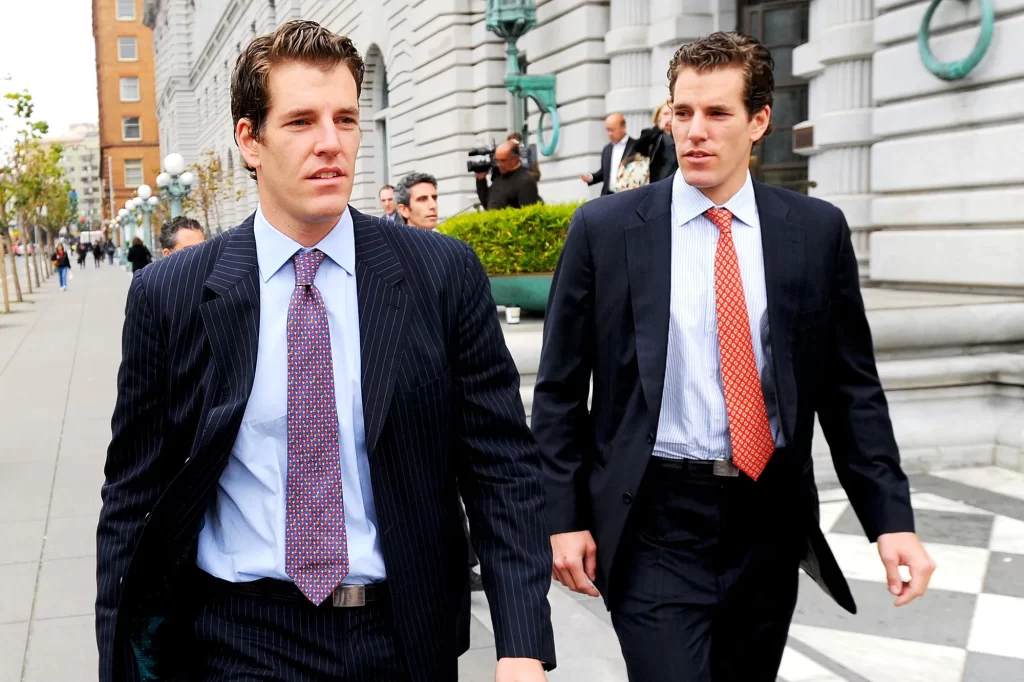
The US Securities and Exchange Commission’s civil lawsuit against Gemini Trust Company and Genesis Global Capital has been dismissed with prejudice, effectively ending the long-running legal dispute.
Court filings show the parties jointly agreed to dismiss the case in the Southern District of New York.
The dismissal still requires approval from a federal judge to become final.
Once approved, the SEC will be permanently barred from bringing the same claims again.
The lawsuit centered on Gemini’s Earn program, which allowed customers to lend crypto assets through Genesis.
The SEC had alleged the program involved the sale of unregistered securities.
The case was originally filed in January 2023 during a period of aggressive regulatory enforcement against crypto firms.
The dismissal marks a significant legal victory for Gemini and the broader crypto industry.
It also signals a shift in regulatory priorities under the current administration.
Background of the Earn Program
Gemini Earn allowed customers to earn interest by lending digital assets to Genesis.
Genesis then used those assets for institutional lending and trading activities.
The program collapsed following Genesis’s bankruptcy in 2022 after major market disruptions.
Many investors feared they would never recover their funds.
However, the bankruptcy process ultimately resulted in a 100% in-kind return of assets.
The SEC cited this recovery as one reason it agreed to dismiss the case.
Gemini also committed up to $40 million to support the full repayment of customers.
The regulator acknowledged that customer harm had been effectively resolved.
Genesis had already settled with the SEC earlier by paying a $21 million fine.
That settlement removed Genesis from further litigation risk related to the case.
Regulatory Shift Under New Leadership
The SEC paused the Gemini lawsuit in April 2024 while Mark Uyeda was serving as acting chairman.
The pause suggested the agency was reassessing its broader crypto enforcement strategy.
Since the Trump administration took office in January 2025, several crypto cases have been dropped.
The administration has publicly promised to reduce regulatory pressure on the digital asset sector.
Gemini’s case adds to a growing list of abandoned lawsuits.
Other firms benefiting from dismissals include Binance, Kraken, Uniswap, Immutable, and Robinhood.
The trend signals a dramatic departure from the aggressive enforcement seen under the prior administration.
Regulators now appear more focused on collaboration and clarity rather than punishment.
This shift has been welcomed by much of the crypto industry.
It has also improved investor confidence across digital asset markets.
Impact on the Crypto Industry
The dismissal provides reassurance that crypto lending programs may be revisited under clearer legal frameworks.
Many companies paused innovation after facing legal uncertainty.
With the SEC retreating from several major cases, development may accelerate again.
Firms may feel more comfortable launching new financial products.
The outcome also highlights the importance of bankruptcy resolution in regulatory negotiations.
Returning customer funds played a decisive role in shaping the SEC’s decision.
That sets a precedent for how similar cases might be handled in the future.
It shows regulators are willing to compromise when investor losses are fully addressed.
The case also reinforces the importance of compliance transparency.
Crypto firms are expected to work more closely with regulators going forward.
Broader Legal Developments
The SEC is not the only agency pulling back from crypto litigation.
The Department of Justice recently dismissed its NFT insider trading case against Nathaniel Chastain.
That decision followed a federal appeals court reversal of his earlier convictions.
The outcome further weakens the government’s recent track record in crypto prosecutions.
Together, these dismissals indicate a cooling of legal hostilities toward digital assets.
They suggest a more balanced regulatory environment may be emerging.
For crypto companies, this represents a chance to rebuild trust and credibility.
For investors, it offers greater confidence that the market is stabilizing legally.
The Gemini dismissal may become a landmark moment in crypto regulation history.
It could mark the beginning of a more cooperative era between regulators and innovators.
Crypto investment products continued to gain momentum last week, recording the largest weekly inflows of 2026 so far and marking growth not seen since October.
European crypto asset manager CoinShares reported that crypto exchange-traded products (ETPs) attracted $2.17 billion in investor inflows over the past week. Much of the inflows occurred early in the week, reflecting strong positive sentiment among crypto investors.
However, Friday saw a shift as $378 million exited the market amid geopolitical tensions in Greenland and renewed tariff concerns. James Butterfill, CoinShares’ head of research, explained that market sentiment was also influenced by developments in US monetary policy.
“Investor sentiment was also affected by suggestions that Kevin Hassett, a leading candidate for the next US Federal Reserve Chair and known for his dovish policy approach, is likely to remain in his current position,” Butterfill added.
Bitcoin Dominates Investor Interest
The majority of last week’s crypto inflows were concentrated in Bitcoin, which received $1.55 billion, representing over 71% of total weekly gains. Ether funds followed, drawing $496 million, while XRP and Solana captured roughly $70 million and $46 million, respectively.
Smaller altcoins such as Sui and Hedera attracted $5.7 million and $2.6 million, highlighting that while investor attention is concentrated on major tokens, smaller digital assets still see steady participation.
Interestingly, Ether and Solana maintained strong inflows despite regulatory concerns, including the US Senate Banking Committee’s CLARITY Act proposals, which could limit certain stablecoin yield offerings. Meanwhile, multi-asset and short Bitcoin products were the only categories to report monthly outflows, totaling $32 million and $8.6 million, respectively.
Leading Issuers See Significant Gains
Among issuers, BlackRock’s iShares ETFs led the pack with $1.3 billion in inflows. Grayscale Investments and Fidelity Investments followed with $257 million and $229 million, respectively.
Geographically, the US accounted for $2 billion of last week’s inflows, while smaller outflows occurred in Sweden and Brazil, at $4.3 million and $1 million, respectively.
The total assets under management in crypto funds surpassed $193 billion for the first time since early November, underscoring growing institutional and retail investor interest.
As crypto investment products continue attracting significant capital, they are increasingly becoming part of broader financial activity alongside other online investment options.
Just as online casinos attract attention for entertainment and potential earnings, crypto funds now serve as a key tool for investors looking to diversify portfolios and capture returns in the rapidly evolving digital asset landscape.
With major gains concentrated in Bitcoin and Ether, the market continues to show that crypto remains a central focus for both seasoned and new investors, even amid regulatory and geopolitical uncertainties.

Bitcoin is trading around $95,000, representing a gain of roughly 9.5% compared with its Jan. 1 opening price near $87,500.
Market participants broadly agree that the short-term trend remains constructive as the asset consolidates just below a major resistance zone.
Analysts describe the current phase as an inflection point, where a decisive move could define Bitcoin’s next major trend.
The level drawing the most attention is near $98,000, which aligns with the short-term holder cost basis.
This area has not seen a strong retest recently, making it a key hurdle for bullish continuation.
Glassnode analyst Chris Beamish said Bitcoin is approaching a “key inflexion point” as it challenges this level.
“Reclaiming the STH cost basis would signal that recent buyers are back in profit, typically a prerequisite for momentum to re-accelerate,” he said.
Trend Structure Still Favors The Bulls
Several market observers argue that Bitcoin’s broader structure remains intact despite recent consolidation.
MN Capital founder Michael van de Poppe said the trend remains upward as long as Bitcoin holds above its 21-day moving average near $91,200.
He added that a move above $100,000 would be a matter of time if this support continues to hold.
On a higher timeframe, analyst Mags pointed to Bitcoin bouncing from a multi-year trendline that has remained intact since March 2023.
“Bitcoin is bouncing from the long-term trendline support it has been holding since March 2023,” Mags said.
“Each time the price has bounced from this support, we have witnessed a strong run-up.”
The last bounce from this trendline in October 2023 preceded a rally of more than 170% to a record high near $73,800.
Technical Patterns Signal Potential Upside
From a charting perspective, Bitcoin is currently trading within an ascending triangle formation on the daily timeframe, as noted by newbettingsites.uk.
The pattern suggests growing buying pressure as higher lows compress against horizontal resistance.
A resistance zone between roughly $96,000 and $99,500, defined by the 100-day and 200-day exponential moving averages, remains the key barrier.
A clean break above this region could open the path toward the pattern’s measured target near $113,200.
Analyst Matthew Hyland described the setup as an ascending triangle with confirmed hidden bullish divergence on the weekly timeframe.
“Price goes up,” Hyland said, summarizing the outlook.
Momentum Indicators Support Further Gains
Momentum indicators also lean bullish, though they suggest room remains before conditions become overheated.
The relative strength index has climbed to 64, recovering sharply from oversold territory seen in mid-November.
Daan Crypto Trades said this indicates Bitcoin is trading strongly without being overbought in the short term.
“There’s definitely a good amount of room to move higher for now,” he said.
Traders note that maintaining bullish market structure on lower timeframes remains essential for follow-through.
If those conditions hold, many expect Bitcoin to challenge six-figure territory in the weeks ahead.
Cumulative BTC ETF Inflows
Total Bitcoin ETF inflows have become a key metric for tracking institutional demand for Bitcoin, offering insight into how traditional investors are allocating capital to digital assets.
Since the approval of spot Bitcoin ETFs, cumulative inflows have grown steadily, reflecting sustained interest from asset managers, hedge funds, and long-term investors seeking regulated exposure to BTC.
Periods of strong inflows often coincide with broader market optimism, rising Bitcoin prices, or expectations of looser monetary policy. Large daily and weekly inflow figures suggest that ETFs are increasingly being used as a primary entry point for institutional capital, replacing more complex custody and direct ownership models.
At the same time, temporary outflows tend to appear during price corrections or heightened macroeconomic uncertainty, highlighting the sensitivity of ETF demand to market sentiment.
Over time, total inflows have reached substantial levels, reinforcing the view that Bitcoin ETFs are no longer a short-term trend but a structural part of the crypto market.
The dominance of a handful of major funds has also concentrated liquidity, improving price discovery and reducing volatility compared to earlier market cycles.
As adoption deepens, total BTC ETF inflows are widely seen as a long-term indicator of Bitcoin’s integration into traditional financial markets rather than a purely speculative asset.

Ether is trading near $3,310, up roughly 11% since the start of the year. The move comes as renewed institutional interest and accelerating onchain activity strengthen the bullish case.
Market participants increasingly believe Ether could rally toward $4,500 if key support levels remain intact.
A major driver of optimism has been the return of strong inflows into spot Ethereum exchange-traded funds. Over a four-day period, US-based spot Ethereum ETFs attracted a combined $474.6 million in new capital.
The $175.1 million recorded on a single midweek session marked the largest daily inflow of the year so far, as noted by newbettingoffers.co.uk.
ETF Buying Outpaces New Supply
Data tracking institutional activity shows that ETF inflows have recently exceeded Ethereum’s new token issuance.
According to Capriole Investments, daily institutional buying, including ETFs and other digital asset products, reached nearly 7,000 ETH per day.
This sustained accumulation suggests growing confidence among larger investors despite broader market volatility.
While some Ethereum treasury firms have reduced activity on a monthly basis, select participants continue to add exposure.
Analysts note that consistent institutional demand will be essential to support a prolonged price recovery.
Short bursts of inflows can spark rallies, but sustained buying typically underpins longer-term trends.
Ethereum Network Activity Reaches Multi-Year Highs
Beyond price action, Ethereum’s underlying network metrics are showing notable strength.
Active addresses have surged by more than 50% over the past month, reaching a 28-month high near one million.
This marks the highest sustained activity level since late 2023.
Daily transaction counts have also climbed to a record high near 2.9 million.
Observers point out that rising usage alongside low transaction fees reflects improved network efficiency.
“Daily Ethereum transactions are exploding,” said CryptoRover, reacting to the milestone.
“This is what real scaling looks like,” analyst FenoXBT added, noting that fees remain near historic lows.
Price Structure Remains Constructive
From a technical standpoint, Ether continues to trade within a favorable structure on higher timeframes. Holding above the $3,050 to $3,170 demand zone is viewed as critical for maintaining bullish momentum.
This region also contains the 50-week exponential moving average, a widely watched trend indicator. Trader Coinvo Trading said a weekly close above this level preserves the bullish structure.
“The weekly structure stays intact, ETH is going higher,” he said.
Targets Point Toward $4,500 And Beyond
Several analysts believe Ether is setting up for a larger breakout following recent consolidation. CryptoRover said Ether is showing strength after breaking out of a symmetrical triangle on the daily chart.
The measured target from this pattern points toward $4,500 in the near term.
More optimistic projections suggest a potential extension toward $5,500 based on Fibonacci analysis. While short-term pullbacks remain possible, traders broadly agree that Ethereum’s trend favors higher prices as long as key supports hold.
Ethereum Network’s Growth
Ethereum’s network growth continues to be driven by a combination of technological upgrades, expanding real-world use cases, and a rapidly maturing developer ecosystem.
Following the shift to proof-of-stake, Ethereum has seen steady increases in network efficiency and sustainability, making it more attractive to institutions and long-term builders. Lower energy usage and improved economic incentives have helped strengthen validator participation, contributing to overall network security and resilience.
Layer-2 solutions have played a major role in Ethereum’s expansion. Networks built on top of Ethereum now handle a growing share of transactions, reducing congestion and lowering fees while still benefiting from Ethereum’s security. This scaling approach has enabled faster adoption of decentralised finance, gaming, and NFT platforms without compromising decentralisation.
Developer activity on Ethereum remains among the highest in the blockchain industry. Thousands of applications are actively maintained, ranging from decentralised exchanges and lending platforms to identity, payments, and tokenisation tools. This depth of innovation continues to reinforce Ethereum’s position as the primary settlement layer for decentralised applications.
As enterprise interest, regulatory clarity, and infrastructure improvements continue to evolve, Ethereum’s network growth is increasingly defined by utility rather than speculation. The focus on scalability, security, and real-world integration suggests the network is entering a more mature and sustainable phase of expansion.

Businesses across the globe are increasingly embracing digital transformation to stay competitive in a rapidly evolving market.
From retail and logistics to healthcare and entertainment, companies are leveraging technology to streamline operations, improve customer experience, and uncover new revenue streams.
The trend has accelerated in recent years as remote work, e-commerce, and cloud computing have reshaped how consumers interact with brands.
Retail Reinvents Itself Online
Retail has been one of the most visible sectors to undergo digital transformation.
Traditional brick-and-mortar stores are increasingly investing in e-commerce platforms, mobile apps, and personalized online experiences.
Artificial intelligence (AI) tools now help retailers predict consumer preferences, optimize pricing, and manage inventory more efficiently.
Major retailers report that integrating AI-driven recommendation engines has boosted conversion rates by up to 30%, illustrating the tangible benefits of technology adoption.
Digital marketing has also evolved, with social media and influencer campaigns becoming essential in reaching younger audiences.
Even loyalty programs are moving into the digital realm, with apps tracking user behavior and delivering personalized rewards.
Logistics and Supply Chain Efficiency
The logistics sector is leveraging digital tools to improve supply chain visibility and reduce costs.
Blockchain, for example, is increasingly used to track shipments and verify the authenticity of goods.
Companies can now monitor every stage of a product’s journey, reducing delays and preventing fraud.
Automation and AI-powered analytics are helping warehouses optimize inventory placement, predict demand surges, and reduce waste.
Major logistics providers report that investments in these technologies have shortened delivery times while lowering operational costs, an advantage that has become critical in meeting consumer expectations for faster fulfillment.
Healthcare Embraces Technology
Healthcare is also benefiting from digital transformation.
Electronic health records, telemedicine platforms, and AI-driven diagnostics are reshaping patient care.
Hospitals can now analyze vast amounts of data to identify patterns, predict patient needs, and prevent errors.
Telehealth adoption has surged, offering patients easier access to care while reducing strain on medical facilities.
Pharmaceutical companies are leveraging technology to track drug development, optimize clinical trials, and monitor supply chains for counterfeit products.
These innovations not only improve operational efficiency but also enhance patient outcomes and trust.
Entertainment and Digital Engagement
The entertainment industry has seen a shift toward digital platforms, with streaming services, gaming, and interactive content becoming dominant.
Companies are exploring new revenue streams through subscription models, in-game purchases, and virtual events.
Even traditional sports organizations are embracing digital engagement tools to reach fans directly.
Some businesses have found creative ways to blend entertainment and technology with promotions. For instance, consumers looking for casual online gaming experiences can access offers like the DraftKings Casino Promo Code, which provides an incentive for players while helping companies increase engagement and customer loyalty.
While these promotions are part of a niche market, they highlight the broader trend of businesses using digital tools to interact with audiences in innovative ways.
Financial Services and Digital Innovation
The financial sector is undergoing a major digital overhaul as well. Banks and fintech companies are implementing mobile banking, AI-powered risk analysis, and blockchain solutions to make transactions faster and more secure.
Digital wallets and peer-to-peer payment platforms are reshaping how consumers manage money, while AI-driven analytics help institutions detect fraud and provide personalized financial advice.
Tokenization of assets is also creating new opportunities, allowing investors to access previously illiquid markets in art, real estate, and collectibles.
The rise of neobanks and digital-only financial institutions illustrates that consumer expectations are changing, with convenience, transparency, and accessibility now taking precedence.
Preparing for the Future
As technology continues to transform industries, companies that fail to adapt risk falling behind.
Digital transformation is no longer just a competitive advantage—it is a necessity.
Organizations that invest in AI, blockchain, cloud computing, and data analytics are better positioned to respond to market shifts and consumer demands.
Even sectors that are traditionally offline, such as construction, manufacturing, and professional services, are exploring digital solutions to enhance productivity and efficiency.
Consumer expectations for convenience, transparency, and personalization are unlikely to slow down, and businesses must continually evolve to meet them.
From retail and logistics to healthcare and finance, the digital era is reshaping how companies operate and engage with customers.
Companies that embrace these changes proactively will be the ones driving growth, improving efficiency, and building lasting customer loyalty in the years ahead.

Trading used to be about gut feelings and reading charts manually. Traders spent hours staring at price movements trying to spot patterns that might predict what happens next. That’s changed now with artificial intelligence doing analysis that would take humans weeks, maybe longer.
How AI Changed Pattern Recognition
Markets generate insane amounts of data every second. Price changes, volume shifts, news events, social media sentiment. All of it creates information affecting trading decisions, and human traders just can’t process that much data fast enough. Which is the whole point of using AI for this stuff.
AI platforms like Edge Hound leverage finance AGI capabilities to process market data in ways that go beyond simple pattern recognition. These platforms don’t just identify correlations – they understand market dynamics across multiple dimensions simultaneously… AI doesn’t care if a pattern makes conceptual sense, it identifies correlations that repeat across different market conditions. Sometimes the patterns are genuinely weird, like correlations between unrelated markets that shouldn’t affect each other but do anyway for reasons nobody really understands.
Risk Management Gets Complicated
Traditional risk management used stop-loss orders and position sizing rules that traders learned through experience or books. AI approaches risk differently, calculating probabilities across multiple scenarios in real time instead of following simple rules. Systems adjust risk exposure dynamically based on current volatility and how different assets correlate with each other, which changes constantly.
The problem is AI risk management makes decisions that seem wrong sometimes. A system might increase position size during what looks like dangerous volatility because its models detected some pattern that historically led to profits despite the risk. Human traders hate this because it goes against instincts about when to be cautious, and overriding your instincts feels terrible even when the data says you should.
Backtesting Reveals Problems Nobody Wants
AI makes backtesting way more comprehensive. Traditional backtesting meant running a strategy through historical data to see how it would’ve performed, but computing power and time limited the process. AI backtests thousands of strategy variations across decades of data in hours.
Here’s the tricky part. Overfitting happens when AI finds patterns in historical data that don’t actually exist in future markets, the algorithm basically memorizes training data instead of learning real patterns. This creates strategies that look incredible in backtesting but fail completely in live trading because they were optimized for past data that won’t repeat exactly the same way. Happens more often than anyone wants to admit.
Emotional Trading Gets Removed
Human traders make mistakes driven by fear and greed, everyone knows this. Actually controlling emotions during trading is incredibly difficult though. Seeing profits and wanting more, watching losses and hoping they’ll reverse instead of cutting them. These emotional responses destroy accounts regularly but traders keep doing it anyway.
AI doesn’t experience fear or greed. Seems like an advantage right? Removing emotions completely creates different problems though because markets are driven partly by human psychology and crowd behavior. Pure algorithmic trading that ignores psychological factors misses important signals about sentiment shifts that human traders recognize instinctively even if they can’t explain why.
Conclusion
Retail traders have access to AI tools that only institutional investors had ten years ago. Technology democratized advanced analysis but also made markets more competitive because everyone’s using similar tools now. Finding unique strategies gets harder when thousands of algorithms scan for the same patterns constantly.
The future probably involves more sophisticated AI platforms like Edge Hound, adapting to changing markets automatically without human intervention. Current systems still need humans to update models and adjust parameters regularly. Next generation AI might handle that independently, learning from new data continuously. Whether that’s actually an improvement or creates new risks that blow up the whole system, nobody knows yet. Most people just hope it works out.

These days, the gift economy is doing more than just fueling holiday shopping sprees. It’s quietly shaking up financial markets, and perfume is right in the middle of it all. What used to be a small luxury is now riding the waves of e-commerce, changing how people shop and building a whole new world of gray-market bargains that investors have to pay attention to.
When most people think about markets driven by gifts, they picture December sales or maybe a quick Valentine’s Day sugar rush. But there’s something more interesting happening just beneath those seasonal booms. Fragrance has turned into a global gift staple, and it’s now tied directly to how we shop online and how investors feel about people spending on non-essentials.
That’s actually a big deal for anyone watching the market. Perfume hits a lot of sweet spots: It’s emotional, people buy it again and again and it doesn’t cost as much as, say, a designer bag. Mix in the rise of online shopping, and suddenly perfume sales become a way to track consumer confidence almost instantly.
Why perfume matters for the markets
Perfume sales are a classic window into how people feel. When folks are in a good mood, they’ll splurge on scents for themselves and for their friends. When times are tough, people don’t stop buying, they just pick up more affordable bottles.
Big-name luxury companies always highlight fragrance as one of their steadiest categories. Unlike watches or handbags, you don’t need to drop thousands just to give someone a nice bottle of perfume. It’s an easy gift; birthdays, holidays and random “thinking of you” moments.
For luxury brands, perfume helps smooth out the rough patches. When expensive stuff isn’t flying off the shelves, fragrance keeps the cash flowing. So, investors keep a close eye on perfume numbers during earnings reports, it tends to give a clearer picture than flashy fashion lines.
Affordable luxury hits the spotlight
Here’s where things get even more interesting. There’s a whole crop of online retailers sitting between luxury and the mass market. They’re selling “inspired by” fragrances; scents that smell a lot like the designer originals but cost way less.
Take one online fragrance platform, for example. They offer a huge range of perfumes and related goodies, all pitched as “luxury experiences without the luxury price.” It’s a vibe that clicks with younger shoppers and anyone who wants to give a nice gift without emptying their wallet.
Browse their site and you’ll see sections like “Shop,” “New Arrivals,” “Best Sellers” and “Collections”, it all feels high-end, but it’s way more accessible. They’re upfront about selling high-quality knock off perfumes and frame it as making luxury open to everyone, not just a select few. For investors, that’s a gold mine. This market captures a huge group of shoppers that fancy brands usually ignore.
Gifting goes digital
In the last ten years, buying gifts has moved online, and perfume is coming along for the ride. A lot of people used to think you had to smell a fragrance in person before buying it. Not anymore. Better product descriptions, real customer reviews and no-fuss return policies have made online perfume shopping feel almost risk-free.
Now, anyone can shop for scents 24/7, no matter where they live. Online platforms catch those late-night impulses and those social media-driven “I have to have it” moments. For companies, this means bigger profit margins and less money sunk into physical stores.
The data backs it up: Perfume sales spike during big promos like Black Friday and Mother’s Day, but there’s also a steady hum of demand all year long. That kind of consistency helps analysts make better predictions and keeps surprises out of quarterly reports.
What this means for public markets
A lot of these new alternative fragrance brands are still private, but their influence is bigger than it looks. They’re shaking up how established perfume houses price their products, how people see their brands and what it costs to win over new customers.
When shoppers find cheaper options online, luxury brands have to step up their marketing game. They pour more into ads, make their products feel more exclusive and roll out limited editions. Sure, that costs more, but it can actually make their brand feel even more special. Investors pay close attention to this tug-of-war.
And it’s not just perfume brands that feel the impact. Logistics companies, payment platforms and digital ad firms all get a boost from the spike in online gift buying. The perfume itself gets the spotlight, but the real financial winners often include the folks behind the scenes, the tech and infrastructure companies powering those sales.
Seasonal gifting and stock volatility
Gifts drive big swings in the market and perfume takes that up a notch. The holiday season, especially the last quarter, can make or break the year for retailers and luxury brands. A strong finish lifts portfolios across the board.
But there’s a risk, too. If companies misjudge demand or don’t connect with online shoppers, profits can take a hit fast. Perfume doesn’t spoil quickly, so unsold stock just sits there, tying up money, something investors watch closely.
Alternative fragrance brands usually handle this better. They churn out smaller batches and adjust quickly to what people want online. That flexibility is exactly what Wall Street likes to see.

Ether (ETH) is showing signs of a structural shift after years of sell-side dominance in derivatives markets.
Since January 6, ETH net taker volume has registered a $390 million positive imbalance, the largest buy-side dominance seen since January 2023.
This metric tracks traders’ aggressive buying or selling, with positive readings indicating conviction and long-term positioning.
Positive Imbalance Signals Potential Upside
Historically, surges in net taker volume have coincided with bottoming ranges and early-stage uptrends rather than peaks.
The current shift indicates renewed interest from futures traders and suggests a potential continuation of ETH’s broader trend.
Cumulative volume delta (CVD) remains slightly negative at -3,676 ETH, showing short-term selling, but larger participants are gradually repositioning.
ETH continues to hold above the $3,000 support level, reflecting absorption by institutional or larger traders.
Technical Landscape and Liquidity
From a technical perspective, ETH has reverted to its five-month point of control between $3,050 and $3,140.
The broader uptrend remains intact as long as daily closes stay above $3,000, with a break below signaling potential bearish pressure.
Hyblock data shows approximately $540 million in net long positions near $3,100 and $500 million liquidity cluster just below $3,000.
This suggests the price may continue oscillating within the range as liquidity gradually rebalances.
The emerging trend in derivatives highlights the growing influence of strategic futures traders, providing insight into ETH’s likely market direction over the coming weeks.