

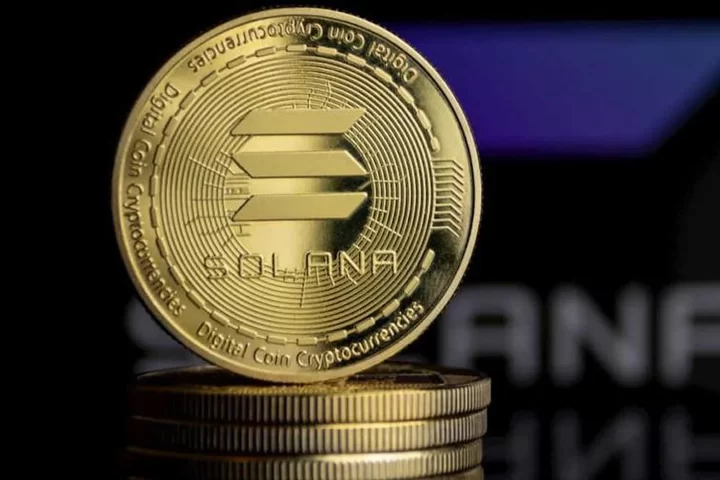


Wintermute, a leading crypto market maker, has withdrawn $38 million worth of Solana (SOL) from Binance, sparking speculation about its strategy ahead of a major $2 billion Solana token unlock. The move has caught the attention of market analysts, with some suggesting that it could be a sign of anticipated price volatility.
Massive Token Unlock Raises Questions
Solana’s upcoming token unlock event is one of the largest in recent memory, with over $2 billion worth of SOL set to be released into the market. Token unlocks can significantly impact asset prices, often leading to increased supply and downward pressure on value.
Given the scale of this event, Wintermute’s decision to withdraw a large quantity of SOL from Binance has raised questions about whether it anticipates a price surge or is positioning itself to manage liquidity as volatility increases.
Potential Market Impact of the Unlock Event
Large token unlocks can have varied effects on the market. In some cases, they lead to a sell-off as early investors or project teams liquidate their holdings. However, if market demand is strong, the additional supply can be absorbed without significantly affecting prices.
Solana has been one of the best-performing cryptocurrencies in recent months, rebounding from its 2022 lows and reclaiming a strong position in the market. Investors are now closely watching whether the upcoming unlock will be met with buying interest or lead to a short-term correction.
Wintermute’s Role in Market Liquidity
As a market maker, Wintermute plays a crucial role in maintaining liquidity and facilitating trading across exchanges. Its decision to move SOL off Binance could indicate preparations for increased trading activity or plans to deploy liquidity in decentralized finance (DeFi) applications.
Historically, market makers have used large-scale token unlocks as opportunities to profit from price movements, whether through short-term trading strategies or arbitrage across different platforms.
Broader Implications for Solana’s Ecosystem
The Solana ecosystem has been growing rapidly, with a surge in decentralized applications (dApps), non-fungible tokens (NFTs), and DeFi platforms utilizing its blockchain. While the token unlock represents a potential challenge in terms of market dynamics, strong adoption and institutional interest in Solana could help mitigate any negative effects.
Some analysts believe that if Solana can maintain its momentum despite the unlock, it could reinforce confidence in its long-term growth. Others caution that if selling pressure intensifies, the asset could face short-term volatility before finding a new price equilibrium.
Conclusion
Wintermute’s withdrawal of $38 million in SOL ahead of the $2 billion unlock has added an extra layer of uncertainty to an already significant event for Solana. While token unlocks often lead to increased supply and volatility, Solana’s strong fundamentals and market positioning could help counteract potential selling pressure.
Investors will be closely monitoring how the market reacts to the unlock event and whether demand remains strong enough to absorb the new supply. As one of the most-watched cryptocurrencies in the market, Solana’s price action in the coming days could provide valuable insights into broader market sentiment.

Cardano (ADA) has faced a downturn in price, leaving investors questioning what’s causing the latest dip. The cryptocurrency, which has seen both bullish and bearish swings throughout 2024, is experiencing selling pressure amid broader market trends.
Several key factors, including macroeconomic conditions, technical market movements, and investor sentiment, are contributing to ADA’s recent decline.
Market Trends Impacting Cardano’s Price
One of the primary reasons for Cardano’s price decline is the general weakness in the crypto market. Bitcoin and Ethereum have both seen retracements after recent highs, dragging down altcoins like ADA. When Bitcoin experiences a correction, it often leads to a ripple effect across the broader cryptocurrency sector.
Additionally, declining trading volume and reduced market enthusiasm for altcoins have put pressure on ADA. Some traders are rotating their investments into assets perceived as more stable during uncertain periods, leading to a short-term drop in demand for Cardano.
Cardano Faces Technical Resistance and Profit-Taking
From a technical perspective, ADA recently hit a resistance level that triggered selling pressure. After reaching a high of $0.75 earlier this year, the price has struggled to break above $0.80, resulting in multiple rejections at this level. Traders who bought in at lower prices may be taking profits, further contributing to the downward pressure.
“We are seeing resistance around the $0.80 level, and if ADA fails to break through, we could see further corrections,” said a crypto market analyst.
If selling pressure continues, ADA could test lower support levels, with key zones around $0.60 and $0.55 being watched closely by traders.
Macroeconomic Factors Affecting Crypto Markets
Broader economic conditions are also influencing the crypto market, including Cardano’s price. Rising interest rates, regulatory uncertainty, and global financial market volatility have made investors more cautious about high-risk assets.
With the U.S. Federal Reserve maintaining a hawkish stance on interest rates, riskier assets like cryptocurrencies tend to face downward pressure. Institutional investors are often the first to adjust their positions, leading to significant outflows from crypto markets.
Cardano’s Development Progress and Adoption Trends
Despite the current price dip, Cardano continues to make progress in its development and adoption. The network’s expansion into decentralized finance (DeFi), smart contracts, and non-fungible tokens (NFTs) remains strong.
Cardano founder Charles Hoskinson recently reaffirmed the project’s long-term vision, emphasizing that network upgrades and ecosystem growth are ongoing. However, short-term market sentiment does not always reflect the fundamental progress being made.
What’s Next for ADA?
Investors are watching key support levels to determine whether ADA can stabilize or if further declines are likely. If Bitcoin and the broader crypto market regain strength, ADA could follow suit and attempt another breakout toward higher resistance levels.
For long-term holders, the current pullback may represent a buying opportunity, particularly if Cardano continues to expand its utility and adoption. However, traders should remain cautious of short-term volatility.
Crypto exchange-traded products (ETPs) have experienced another week of significant outflows, with $508 million exiting the market. This marks the second straight week of substantial withdrawals, raising concerns about investor sentiment and the future of institutional involvement in digital assets.
Why Are Investors Withdrawing from Crypto ETPs?
The recent trend of outflows comes amid increased market uncertainty, regulatory developments, and macroeconomic factors that have influenced investor sentiment.
One major driver behind these outflows is the cooling enthusiasm for Bitcoin and Ethereum after their recent rallies. As prices consolidate or decline, some investors are moving capital to less volatile assets, reducing exposure to crypto-backed financial products.
Additionally, regulatory concerns continue to weigh on the market. The U.S. Securities and Exchange Commission (SEC) has maintained a strict stance on crypto regulation, causing hesitation among institutional investors who rely on clarity before making long-term commitments.
Bitcoin ETPs Lead the Outflows
A large portion of the $508 million outflows came from Bitcoin-focused ETPs. Investors who had previously entered the market during Bitcoin’s rally to new all-time highs may now be cashing out as the asset experiences corrections.
“We’ve seen increased selling pressure in Bitcoin ETPs, which suggests that some investors are locking in profits after the recent bull run,” noted an institutional market analyst.
Ethereum-based ETPs also saw declines, although at a smaller scale. Altcoin-focused products, including those tied to Solana and other Layer 1 networks, experienced relatively minor movements in comparison.
Broader Implications for Institutional Investment
While outflows from ETPs indicate short-term caution, the long-term outlook for institutional crypto investment remains mixed. Some analysts believe that these movements are temporary and could reverse once market conditions stabilize.
Crypto ETPs have been a gateway for traditional investors to gain exposure to digital assets without directly holding cryptocurrencies. A continued trend of outflows could signal broader hesitation among institutions, while a reversal in sentiment could bring fresh capital into the market.
What’s Next for Crypto ETPs?
Investors will be watching for signs of renewed inflows, particularly if Bitcoin and Ethereum regain bullish momentum. If macroeconomic conditions improve and regulatory clarity emerges, institutional interest in crypto ETPs may rebound.
For now, the trend of withdrawals suggests that market participants are reassessing their positions, potentially waiting for a stronger confirmation of crypto’s long-term price direction before re-entering.

Bitcoin exchange-traded funds (ETFs) have recorded significant outflows totaling $1.14 billion over the past two weeks. The sell-off comes as global financial markets face increasing uncertainty, with geopolitical tensions between the U.S. and China adding to investor caution.
Investor Sentiment Shifts as Bitcoin Pulls Back
After experiencing strong inflows earlier in the year, Bitcoin ETFs are now seeing a reversal as traders and institutions take profits. The outflows coincide with Bitcoin’s price correction, which has seen the asset struggle to maintain momentum after reaching record highs.
Some analysts suggest that investors are reallocating capital into traditional assets, particularly amid rising concerns over global economic instability.
“Bitcoin ETFs have been a popular investment vehicle, but with geopolitical risks increasing, some investors are choosing to reduce exposure to volatile assets,” one analyst explained.
Impact of US-China Trade Tensions on Crypto Markets
The ongoing trade disputes between the U.S. and China have created economic uncertainty, affecting various financial markets, including cryptocurrencies. Bitcoin, often seen as a hedge against inflation and geopolitical risks, has faced mixed reactions in this environment.
While some investors view Bitcoin as a safe-haven asset, others are moving away from riskier investments amid economic instability. The result has been a shift in Bitcoin ETF flows, reflecting broader sentiment changes in global finance.
ETF Market Trends and Institutional Behavior
The $1.14 billion in outflows suggests that some institutional investors are adjusting their portfolios in response to market conditions. However, it remains unclear whether this trend will persist or if inflows will return once uncertainty eases.
Bitcoin ETFs have played a crucial role in bringing institutional capital into the crypto space, and any prolonged decline in demand could influence Bitcoin’s price trajectory. However, previous trends have shown that ETF interest can fluctuate based on market cycles and macroeconomic developments.
Conclusion
The recent outflows from Bitcoin ETFs highlight the impact of broader financial market trends on crypto investments. As U.S.-China trade tensions continue to evolve, investors will closely monitor how Bitcoin and ETF markets react.
For now, Bitcoin remains a key asset in the global financial landscape, but its price and institutional adoption will likely be influenced by ongoing geopolitical and economic developments.

MicroStrategy, the business intelligence firm led by Michael Saylor, has successfully completed a $2 billion convertible note offering, with the proceeds expected to be used for further Bitcoin acquisitions. The move reinforces the company’s ongoing commitment to accumulating Bitcoin as a core component of its corporate strategy.
MicroStrategy’s Bitcoin Investment Strategy
Since 2020, MicroStrategy has positioned itself as one of the largest institutional holders of Bitcoin. Under Michael Saylor’s leadership, the company has aggressively acquired BTC, viewing it as a superior store of value compared to traditional assets.
With this latest $2 billion fundraising, the company intends to expand its Bitcoin holdings even further. Given the recent price movements of Bitcoin, the purchase could have a significant impact on market sentiment.
Details of the Convertible Note Offering
The convertible notes issued by MicroStrategy have a maturity date set for 2030, with an annual interest rate of 2.25%. Investors purchasing these notes will have the option to convert them into shares of MicroStrategy stock at a predetermined price.
According to a company statement, the offering was oversubscribed, reflecting strong investor interest in MicroStrategy’s Bitcoin strategy.
“The demand for our convertible notes demonstrates the confidence investors have in our long-term Bitcoin vision,” Saylor stated.
Potential Impact on Bitcoin’s Price
MicroStrategy’s Bitcoin acquisitions have historically influenced the crypto market, often triggering short-term price increases. Given that this $2 billion investment will likely be deployed in purchasing Bitcoin over the coming weeks, analysts speculate that it could provide additional bullish momentum for BTC.
However, some skeptics warn that such aggressive Bitcoin buying strategies come with risks, particularly if Bitcoin experiences significant price volatility. If the market enters a prolonged correction, MicroStrategy’s highly leveraged position could face challenges.
Institutional Interest in Bitcoin Remains Strong
Despite concerns about Bitcoin’s recent volatility, institutional interest in the asset remains strong. Several major firms have either increased their Bitcoin holdings or introduced new investment vehicles that provide exposure to BTC.
The completion of MicroStrategy’s convertible note offering signals continued institutional confidence in Bitcoin’s long-term potential. Other companies may follow suit, seeking alternative ways to gain exposure to digital assets.
Conclusion
MicroStrategy’s successful $2 billion convertible note offering underscores its unwavering commitment to Bitcoin. While the move is seen as a bullish sign for the cryptocurrency market, it also highlights the risks associated with heavily leveraging corporate finances for Bitcoin acquisitions.
As the company moves forward with its latest BTC purchase, all eyes will be on how the market reacts and whether MicroStrategy’s continued accumulation will further fuel Bitcoin’s price trajectory.
Bybit has managed to restore nearly half of its Ether reserves after suffering a massive $1.4 billion hack on Feb. 21, marking the largest cryptocurrency theft in history. The attack targeted liquid-staked Ether (stETH), Mantle Staked ETH (mETH), and various ERC-20 tokens, causing an industry-wide shock.
According to CryptoQuant data, Bybit’s Ether reserves rebounded significantly within two days of the breach. The exchange now holds over 201,600 Ether, about 45% of the 439,000 ETH it possessed before the attack. Following the exploit, reserves had plunged to just 61,000 ETH.
Support and Spot Buying Fuel Recovery
A significant factor in Bybit’s resurgence has been aggressive spot buying. The exchange reportedly purchased 106,498 ETH worth $295 million through over-the-counter (OTC) trades, as per Lookonchain data.
In addition, major crypto platforms and industry leaders rallied to support Bybit. Binance transferred 50,000 ETH, Bitget contributed 40,000 ETH, and HTX Group co-founder Du Jun provided 10,000 ETH, among other donations.
Industry Confidence Remains Strong
Despite the turmoil, Bybit maintained operational stability, processing over 350,000 withdrawal requests within 10 hours post-exploit, according to CEO Ben Zhou. This responsiveness helped retain user confidence, reinforcing the exchange’s credibility.
Emergency Funding and Asset Impact
Bybit secured approximately $390 million in emergency liquidity, with major contributions including $127 million from Binance-affiliated investors and $53 million from a single whale wallet. However, DefiLlama data indicates that Bybit’s total assets dropped by more than $5.3 billion in the wake of the attack.
An independent proof-of-reserve audit by Hacken, however, confirmed that Bybit’s reserves still exceed its liabilities. “Despite the significant loss, Bybit’s reserves remain strong and fully back user funds,” Hacken stated.
The Hack’s Origins and Investigation
Investigators, including Arkham Intelligence and ZachXBT, have traced the attack to the North Korean Lazarus Group. Similarities between this hack and previous incidents, such as the $230 million WazirX breach and the $58 million Radiant Capital exploit, suggest a recurring method of deception.
Security expert Meir Dolev explained that Bybit’s Ethereum multisig cold wallet was compromised through a misleading transaction, tricking signers into approving a malicious smart contract logic change. “This allowed the attacker to gain control of the wallet and move all ETH to an unknown address,” Dolev told Cointelegraph.
The North Korean-affiliated Lazarus Group, identified as the prime suspect behind the $1.4 billion Bybit hack, may also be linked to recent Solana memecoin scams, according to onchain investigator ZachXBT.
Bybit suffered the largest hack in crypto history on Feb. 21, losing over $1.4 billion in digital assets. Security firms, including Arkham Intelligence, have traced the breach to Lazarus Group.
Links to Solana-Based Memecoin Fraud
ZachXBT’s investigation revealed that the hacker received $1.08 million from the Bybit exploit, which was bridged to Solana via a suspicious address. “The attacker transferred USDC to Solana, consolidating funds across multiple wallets previously linked to memecoin scams,” ZachXBT noted.
Additionally, onchain analysis showed that some of the same wallets involved in the Bybit breach were also implicated in the $29 million Phemex hack in January.
Solana’s Increasing Fraud Cases
Solana has been plagued by memecoin scams, including rug pulls on the Pump.fun platform. Investor confidence was further shaken by the collapse of the Libra (LIBRA) token, allegedly orchestrated by insiders who siphoned $107 million, leading to a 94% price crash and wiping out $4 billion in market value.
According to Glassnode data, Solana’s monthly capital inflow has turned negative, declining by 5.9%. Additionally, the number of active addresses on the network has dropped nearly 40% from November 2024 levels, signaling a slowdown in activity.
Solana’s Future Amidst Rising Scams
Despite recent challenges, blockchain researcher Aylo believes Solana’s resilience will drive long-term growth. “While bad actors have exploited Solana, these issues may ultimately contribute to the blockchain’s evolution,” Aylo shared in a Feb. 18 X post.
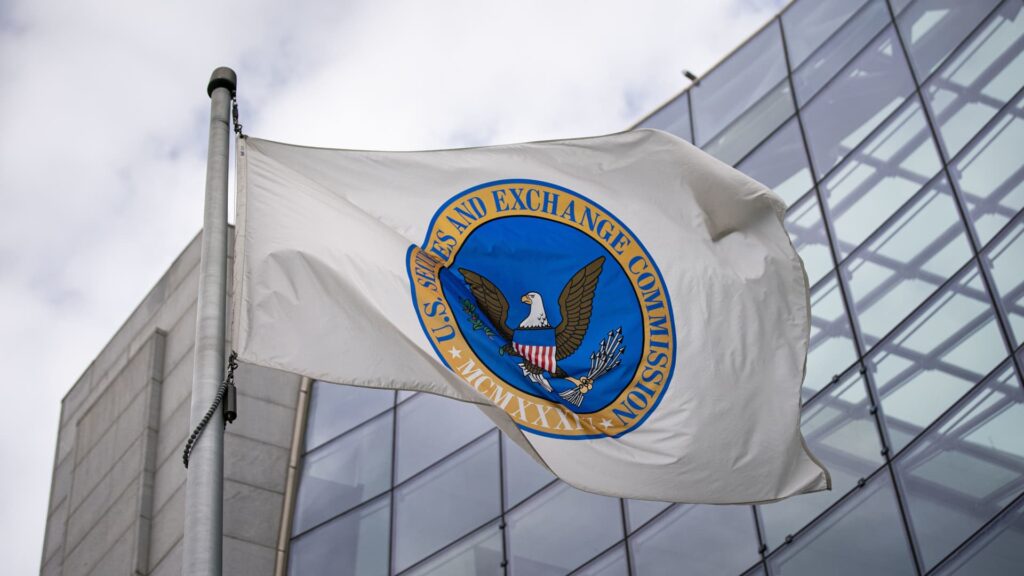
The United States Securities and Exchange Commission (SEC) has officially ended its probe into NFT marketplace OpenSea, marking a significant win for the digital collectibles industry.
“The SEC is closing its investigation into OpenSea. This is a win for everyone who is creating and building in our space,” OpenSea founder Devin Finzer announced on Feb. 21.
Impact on the NFT Market
The decision comes shortly after the SEC dropped its lawsuit against Coinbase. The investigation, which began in August 2024, alleged OpenSea operated as an unregistered securities marketplace.
Industry leaders have welcomed the news, with Magic Eden’s Chris Akhavan calling it a win for the broader NFT sector. Pseudonymous crypto commentator Beanie suggested it could serve as a catalyst for the next NFT bull market.
Meanwhile, OpenSea is preparing to launch its SEA token, with details yet to be finalized. However, the marketplace recently faced criticism over its airdrop reward system, prompting a temporary pause amid user concerns.

Two newly launched cryptocurrency exchange-traded funds (ETFs) holding a combination of Bitcoin and Ether have seen modest inflows since their recent debuts, according to data from Cointelegraph.
Franklin Templeton’s Franklin Crypto Index ETF (EZPZ) has attracted around $2.5 million in net assets since launching on Feb. 20, while Hashdex’s Nasdaq Crypto Index US ETF (NCIQ) has gathered just over $1 million since its Feb. 14 debut.
By comparison, Franklin Templeton’s spot Bitcoin ETF (EZBC) saw significantly higher interest, pulling in approximately $50 million on its first day in January 2024, with Bitwise Bitcoin ETF (BITB) reaching nearly $240 million on its debut.
Diversification Limits and Regulatory Barriers
The two ETFs aim to provide investors with exposure to a diverse crypto index. However, due to regulatory restrictions, they currently hold only Bitcoin and Ether, which dominate their portfolios. The hope is to expand to other cryptocurrencies pending regulatory approval.
A broader ETF, the Grayscale Digital Large Cap Fund, already includes assets like Solana and XRP but has yet to be exchange-traded. The SEC continues to evaluate various applications, with analysts expecting more ETF approvals in 2025.
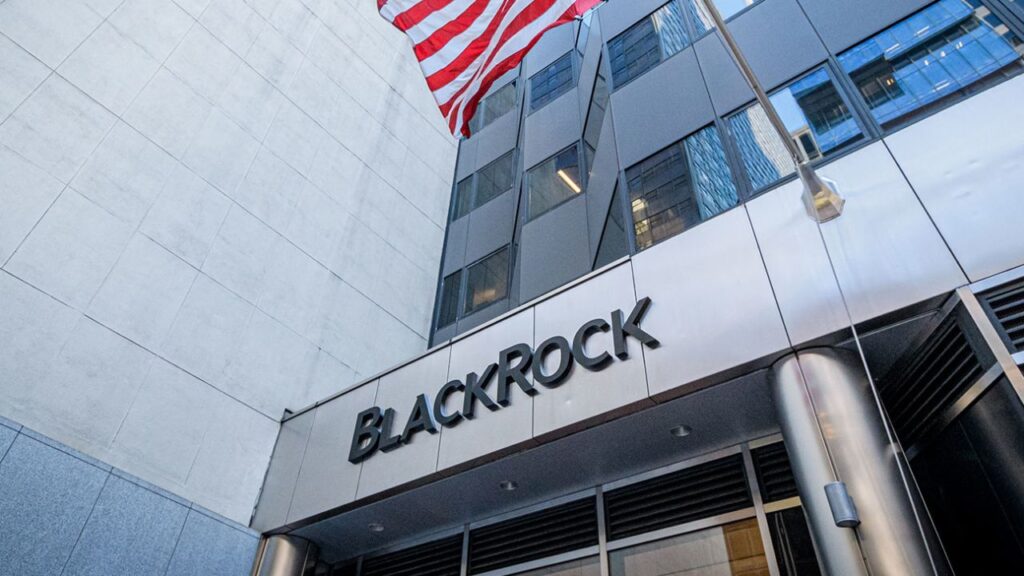
BlackRock’s Bitcoin exchange-traded fund (ETF) now commands a significant 50.4% share of the total U.S. Bitcoin ETF market. The asset management giant currently holds over $56.8 billion worth of Bitcoin, contributing to a combined total of $112 billion managed by all U.S. Bitcoin ETF issuers, according to Dune data.
Bitcoin ETFs Face Sell-Off
Despite BlackRock’s dominance, the overall Bitcoin ETF market has experienced a three-day selling streak. On February 20, Bitcoin ETFs saw cumulative net outflows of $364 million, with BlackRock’s iShares Bitcoin Trust ETF (IBIT) accounting for $112 million, as per Farside Investors data.
Bitcoin’s Price Remains Resilient
Despite ETF outflows, Bitcoin’s price has remained relatively stable, climbing back above $99,300 on February 21.
Marcin Kazmierczak, co-founder of RedStone, believes that ETFs are not the primary force driving Bitcoin’s price movements.
“This indicates that other forces — such as broader market liquidity, institutional accumulation, or macroeconomic trends — are also at play,” he told Cointelegraph.
Price Action Raises Concerns
While Bitcoin has shown resilience, some experts worry about prolonged range-bound trading. Samson Mow, CEO of Jan3, suggested the price movement may be manipulated.
“It seems like it’s some sort of price suppression,” Mow stated at Consensus Hong Kong 2025, adding that Bitcoin’s price has been peaking and then moving sideways in an unnatural manner.