


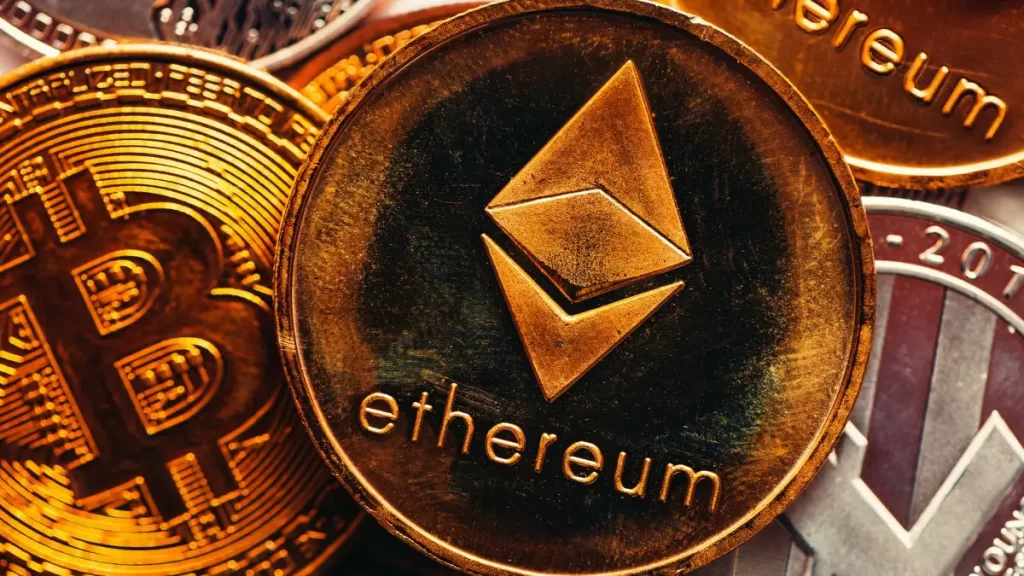
Ethereum (ETH), the second-largest cryptocurrency by market capitalization, is at a critical price level, with analysts warning that a drop below $2,700 could lead to a further decline toward $2,300. As the broader crypto market experiences volatility, traders are closely monitoring ETH’s movements to assess potential risks and opportunities.
Ethereum, originally launched in 2015 by Vitalik Buterin and a team of developers, is a decentralized blockchain network that enables smart contracts and decentralized applications (dApps). Unlike Bitcoin, which primarily serves as a store of value and a medium of exchange, Ethereum’s blockchain is designed for programmability, making it the backbone of decentralized finance (DeFi) and non-fungible tokens (NFTs). Over the years, Ethereum has undergone several major upgrades, including the transition to a proof-of-stake (PoS) consensus mechanism through the Merge in 2022, significantly reducing its energy consumption and improving scalability.
Currently, Ethereum is struggling to maintain its position above the $2,700 support level. Analysts have pointed out that if this level is breached, ETH could face a deeper correction, potentially dropping to $2,300. One analyst stated, “If Ethereum fails to hold the $2,700 level, we could see a swift decline toward $2,300. However, if bulls can defend this zone, ETH may consolidate before attempting another upward move.”
Market sentiment around Ethereum remains mixed, as macroeconomic factors and investor sentiment influence its price movements. The cryptocurrency market has been reacting to regulatory developments, economic data, and movements in traditional financial markets. Some traders remain optimistic that Ethereum will recover, especially as institutional adoption continues to grow.
One factor contributing to Ethereum’s price fluctuations is its correlation with Bitcoin, which often sets the direction for the overall crypto market. When Bitcoin experiences volatility, Ethereum tends to follow suit. Additionally, the network’s usage and transaction fees, known as gas fees, play a crucial role in its price dynamics. High gas fees can sometimes deter users, impacting demand and overall network activity.
Another significant aspect of Ethereum’s future is the ongoing development of its Layer 2 scaling solutions, such as Optimistic Rollups and zk-Rollups, which aim to improve transaction speeds and reduce fees. These innovations could enhance Ethereum’s usability and drive further adoption, potentially supporting its price in the long run.
Despite the short-term uncertainty, long-term investors remain confident in Ethereum’s potential, given its strong fundamentals and continuous development. Some analysts believe that if ETH can sustain its support level and regain momentum, it could target higher price levels in the coming months. However, they caution that a break below $2,700 could lead to further downside before a recovery takes place.
As Ethereum navigates this critical phase, traders and investors will be watching key support and resistance levels closely. The coming days will be crucial in determining whether ETH can hold above $2,700 or if a deeper correction is on the horizon.
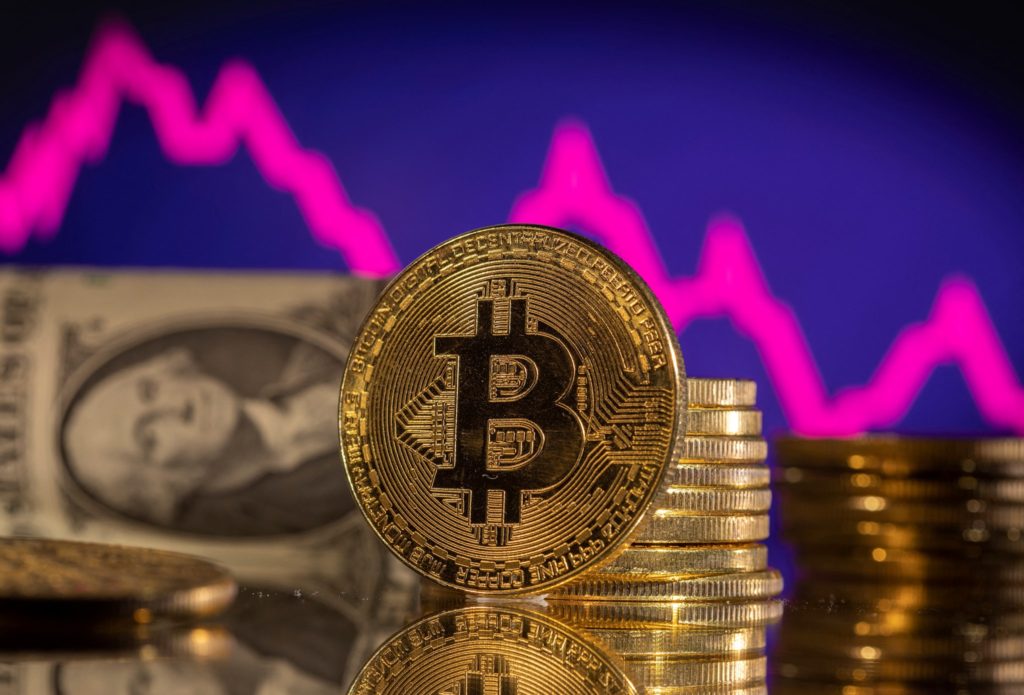
The cryptocurrency market witnessed a dramatic $10 billion liquidation event, with Bybit alone accounting for $1 billion in liquidated positions. The sudden market downturn led to a widespread sell-off, impacting traders who had leveraged positions across multiple exchanges.
Leverage trading in cryptocurrency allows investors to borrow funds to increase their position size, amplifying both potential gains and losses. However, it also carries significant risks, especially in highly volatile markets. When prices move sharply in the wrong direction, traders who use leverage may see their positions forcibly closed, or “liquidated,” as exchanges move to protect borrowed funds.
Bybit, one of the major cryptocurrency derivatives exchanges, saw over $1 billion in liquidations, reflecting the severity of the market crash. The broader crypto market experienced a total of $10 billion in liquidations, with Bitcoin and Ethereum leading the losses. The sharp declines came as unexpected price swings wiped out traders who were overleveraged.
“The scale of the liquidations shows just how fragile the market can be when leverage is involved,” noted a market analyst. High leverage levels can create a cascading effect, where initial sell-offs trigger further liquidations, leading to even greater price drops.
The incident highlights the risks associated with crypto leverage trading, which has become increasingly popular among retail and institutional investors. Many exchanges offer leverage of up to 100x, meaning traders can open positions far larger than their initial investment. While this can result in significant profits when the market moves in their favor, it also exposes traders to extreme losses if prices move against them.
A spokesperson for Bybit commented on the situation, stating that the platform had handled the high volatility efficiently. “Despite the unprecedented liquidations, our systems functioned smoothly, ensuring that risk management mechanisms were in place to protect traders and the broader market,” they said.
The impact of the liquidations was felt across the crypto industry, with Bitcoin dropping sharply before partially recovering. Ethereum and other major altcoins also saw significant price swings, as traders scrambled to manage their positions amid the turmoil.
Experts believe that the event underscores the need for caution when using leverage in crypto trading. “This kind of volatility is inherent in the crypto market, and leveraged traders need to be prepared for rapid price movements,” said a senior analyst at a trading firm.
Despite the massive liquidations, some market participants see potential buying opportunities. Historically, large liquidation events have been followed by price rebounds as the market stabilizes. However, uncertainty remains, especially with ongoing regulatory discussions and macroeconomic factors influencing investor sentiment.
The liquidation event serves as a reminder of the risks and rewards of leverage trading in crypto. While it can enhance profits, it can also lead to severe losses, particularly in a market known for its unpredictability. Traders are advised to use risk management strategies, such as stop-loss orders and lower leverage levels, to protect their investments from unexpected market swings.
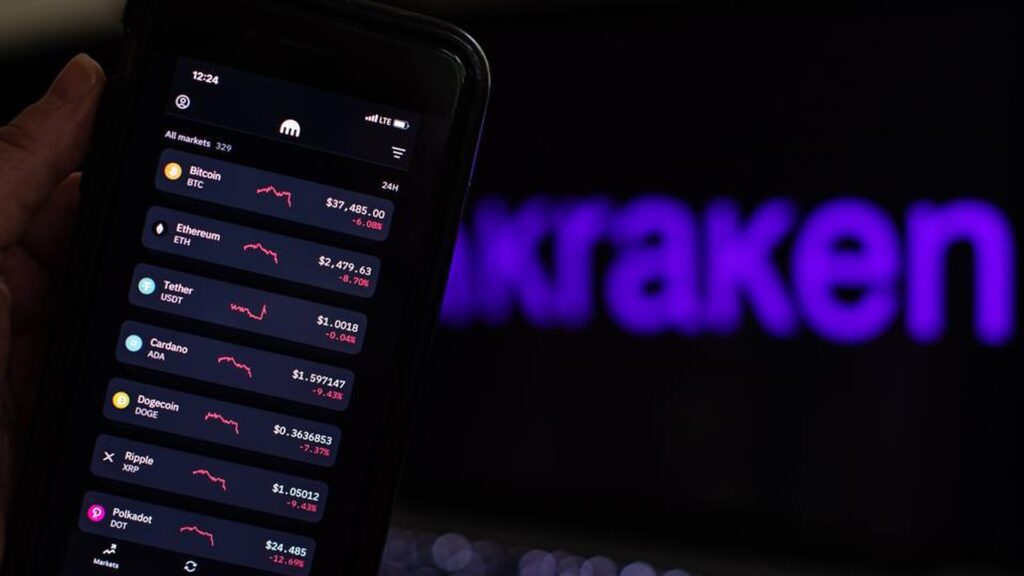
Kraken, one of the world’s leading cryptocurrency exchanges, has obtained a MiFID (Markets in Financial Instruments Directive) license, allowing it to expand its crypto derivatives offerings across Europe. This regulatory approval marks a significant step for the exchange as it aims to strengthen its position in the European market.
Kraken has been a major player in the cryptocurrency industry since its founding in 2011. Known for its focus on security, transparency, and regulatory compliance, the exchange offers spot trading, futures, and staking services to millions of users worldwide. With headquarters in the U.S., Kraken has been actively working to expand its presence in Europe, a key market for crypto adoption and regulation.
The new MiFID license, issued by the Spanish financial regulator, enables Kraken to offer regulated investment services, including crypto derivatives trading. Crypto derivatives are financial contracts that derive their value from underlying digital assets like Bitcoin and Ethereum. These instruments, such as futures and options, allow traders to hedge risk, speculate on price movements, and increase exposure through leverage.
“This is a significant milestone that strengthens our commitment to regulatory compliance while enhancing our ability to serve European clients,” said a Kraken spokesperson. “The MiFID authorization ensures that we can offer our derivatives products in a fully regulated environment, providing greater transparency and investor protection.”
The European crypto market has been evolving rapidly, with regulators implementing new frameworks to oversee digital assets. The Markets in Crypto-Assets (MiCA) regulation, set to take full effect in 2024, is expected to bring further clarity to the industry. Kraken’s move to secure a MiFID license aligns with its strategy of adapting to Europe’s changing regulatory landscape while expanding its derivatives offerings.
By securing this license, Kraken is positioning itself alongside other major exchanges that have been pushing for greater regulatory approval in Europe. The demand for crypto derivatives has been growing, particularly among institutional investors seeking sophisticated trading tools and risk management strategies.
Kraken’s derivatives platform has already gained traction among traders looking for advanced trading options. With this regulatory approval, the exchange can now offer these services with greater legitimacy and investor confidence. “This license allows us to bridge the gap between traditional finance and crypto markets by offering innovative trading products in a regulated manner,” Kraken’s statement added.
Despite regulatory uncertainty in other parts of the world, Europe has emerged as a key region for crypto firms looking to establish themselves under a clear legal framework. Kraken’s approval under MiFID further cements its reputation as a compliant and reliable exchange, distinguishing it from unregulated platforms.
With the crypto industry facing increasing scrutiny from financial watchdogs, Kraken’s latest regulatory achievement is expected to reinforce trust among users and institutional clients. The exchange remains committed to expanding its services while adhering to the highest standards of security and compliance.
As the European crypto landscape continues to develop, Kraken’s move to secure a MiFID license signals a broader trend of exchanges aligning with regulatory requirements to ensure long-term growth and stability in the market.
Bitcoin has bounced back after a recent price dip, showing signs of recovery as a rare Relative Strength Index (RSI) pattern appears on the charts. The world’s largest cryptocurrency fell to multi-week lows before rebounding, with analysts closely watching the market for signs of a potential trend shift.
Bitcoin, often referred to as digital gold, is the first and most widely adopted cryptocurrency. Launched in 2009 by the pseudonymous Satoshi Nakamoto, Bitcoin was designed as a decentralized form of money that operates without the need for a central authority. Over the years, it has become a store of value and a hedge against traditional financial risks, often reacting to macroeconomic trends and investor sentiment.
The recent price movement saw Bitcoin drop to its lowest level in several weeks, triggering concerns among traders. However, a rare RSI signal suggests that a possible reversal could be on the horizon. The RSI is a momentum indicator that measures whether an asset is overbought or oversold. When it falls to extreme lows, it can indicate that selling pressure may be exhausted and that a rebound is likely.
Market analysts have taken note of the unusual RSI reading, with some suggesting that Bitcoin could be gearing up for a recovery. “We are seeing a rare RSI structure, which historically has been a precursor to significant price reversals,” noted a trader. This has led to renewed optimism among investors who see the current dip as a buying opportunity.
Despite the recent decline, Bitcoin has a history of bouncing back from downturns, often fueled by institutional adoption and growing interest from retail investors. Over the past decade, Bitcoin has experienced multiple boom-and-bust cycles, with each dip eventually leading to new highs.
Traders are now watching key support and resistance levels to determine Bitcoin’s next move. “If Bitcoin manages to hold above its current support zone, we could see a strong recovery in the coming weeks,” said a crypto analyst. However, others remain cautious, citing ongoing market volatility and macroeconomic uncertainties.
Bitcoin’s price fluctuations are often influenced by broader economic factors, including inflation rates, interest rate policies, and investor sentiment in traditional markets. With central banks worldwide adjusting monetary policies, the crypto market remains highly sensitive to external financial events.
At the same time, Bitcoin’s long-term fundamentals remain strong. The upcoming Bitcoin halving event, expected in 2024, is another factor that could drive demand. The halving, which occurs approximately every four years, reduces the number of new Bitcoins entering circulation, historically leading to price increases due to reduced supply.
As the market digests the latest RSI signal and Bitcoin’s recent rebound, investors are closely monitoring price movements for confirmation of a sustained recovery. While short-term volatility remains a challenge, many believe that Bitcoin’s long-term outlook continues to be bullish, driven by increasing adoption and growing institutional interest.
A cryptocurrency trader has realized a profit of nearly $16 million by capitalizing on Ether’s (ETH) recent price decline. The trader established a 50x leveraged short position when ETH was valued at $3,388, with a liquidation threshold set at $4,645, according to data from Hypurrscan.
In addition to the unrealized profit, the trader accrued approximately $2.3 million in funding fees from the leveraged position. While leveraged trading can amplify potential gains, it also significantly increases the risk of substantial losses. A case in point is a pseudonymous trader who, in January 2024, lost over $161,000 in a single trade due to liquidation on a leveraged position, underscoring the inherent risks associated with such strategies.
As of February 2, Ether’s price had declined by more than 4% over a 24-hour period, trading at $3,107. The cryptocurrency reached a daily low of $3,068 but managed to stay above the critical $3,000 psychological threshold, as reported by Cointelegraph Markets Pro.
To reverse its six-week downward trend, Ethereum may need to bolster fundamental blockchain activity. Aurelie Barthere, principal research analyst at Nansen, noted, “Other layer-1s are catching up with Ethereum regarding apps, use cases, fees and amount staked.” Barthere suggested that increased collaboration with both private and public sector entities, especially in the United States amid recent regulatory developments favoring blockchain and cryptocurrency, could be beneficial for Ethereum.
For a potential reversal toward the $4,000 mark, Ether would need to reclaim the $3,400 level, according to crypto trader Cas Abbé. However, significant resistance is anticipated at $3,240. Surpassing this level could trigger over $1 billion in cumulative leveraged short liquidations, as indicated by data from CoinGlass.
These developments highlight the volatile nature of cryptocurrency markets and the substantial risks and rewards associated with leveraged trading strategies.
In a recent development, India’s Finance Minister, Nirmala Sitharaman, announced that cryptocurrencies will now be included under Section 158B of the Income Tax Act, which addresses undisclosed income. This move subjects unreported crypto gains to block assessments, aligning them with the tax treatment of traditional assets such as money, jewelry, and bullion.
The amendment defines crypto assets under the existing category of Virtual Digital Assets (VDAs). As per the new guidelines, a reporting entity, as prescribed under section 285BAA of the Act, is required to furnish information on crypto assets.
Notably, the new crypto tax provisions will be retrospectively applicable from February 1, 2025.
This announcement follows a report from December 2024, where India’s Minister of State for Finance, Pankaj Chaudhary, revealed that the government had identified unpaid goods and services taxes (GST) totaling 824 crore Indian rupees (approximately $97 million) from several crypto exchanges.
In a related context, Indian authorities may impose a tax penalty of up to 70% on previously undisclosed crypto profits. This penalty applies to crypto gains that remained undisclosed for up to 48 months after the relevant tax assessment year. The document specifies a penalty of “70% of the aggregate of tax and interest payable on additional income disclosed in the updated income tax return [ITR].”
These developments come shortly after the Bybit exchange suspended its services in India on January 10, citing regulatory pressures as it seeks a full operational license from India’s Financial Intelligence Unit.
Globally, crypto tax regulations are gaining prominence. In June 2024, the U.S. Internal Revenue Service (IRS) issued new regulations subjecting crypto transactions to third-party tax reporting requirements for the first time. Starting in 2025, centralized crypto exchanges and other brokers in the U.S. will begin reporting sales and exchanges of digital assets, including cryptocurrencies.
These measures reflect a growing international trend toward stricter regulation and taxation of cryptocurrency transactions.
RUNE, the native token of the ThorChain ecosystem, is witnessing a huge sell-off as whales dump their positions amid concerns that the project is insolvent and will be officially declared bankrupt on Monday.
An insider told Crypto Intelligence News on Saturday that ThorChain will declare insolvency on Monday, causing the value of RUNE to crash to $0.00, in a meltdown similar to the Terra-Luna crash.
“Validators have voted to leave the network and insiders and whales are already selling all of their RUNE,” the insider said.
“ThorChain will publicly declare insolvency on Monday, after insiders have finished selling off their positions.”
RUNE is currently trading at around $1.53 per token on Binance, and it is predicted to fall below $0.80 before the end of Saturday.
The token has already plunged by over 20% so far today, as investors dump their positions to avoid losing all of their investment before RUNE becomes worthless.
Why is Rune About to Collapse?
In January, THORChain, a decentralized cross-chain liquidity protocol, faced a significant crisis due to its controversial lending program. The platform had accumulated approximately $200 million in liabilities, primarily in Bitcoin (BTC) and Ethereum (ETH), through its lending and savers programs. This substantial debt raised concerns about the protocol’s solvency, as it lacked sufficient assets to cover these obligations.
To address the mounting insolvency risks, THORChain’s node operators decided to suspend withdrawals from the lending and savers products for 90 days. This pause aimed to stabilize the ecosystem and provide time to develop a restructuring plan.
Despite these measures, the platform’s native token, RUNE, experienced a significant decline, dropping approximately 44% in value within a week. This decline exacerbated concerns about the platform’s financial health and drew parallels to the Terra/Luna collapse of 2022.
The crisis highlighted vulnerabilities in THORChain’s economic model, particularly its reliance on RUNE for its lending mechanism. When loans are repaid, RUNE is minted, which can lead to inflationary pressures, especially if RUNE underperforms against BTC and ETH.
Bitcoin (BTC) has achieved a historic milestone by closing January 31 at $102,400 on Binance, marking its first monthly close above the $100,000 threshold.
This significant close occurred despite a late-month price dip influenced by macroeconomic factors. On January 31, U.S. President Donald Trump announced impending tariffs on Canada, Mexico, and China, effective February 1. This announcement led to a downturn in U.S. stock markets and affected investor sentiment, as indicated by data from the Fear & Greed Index.
Analysts remain optimistic despite these developments. Aksel Kibar, a well-known market analyst, remarked, “At every 1% correction, panic and crash forecasts is not characteristics of a market top. IMO.” He emphasized that true market tops are typically accompanied by widespread euphoria and a disbelief in even short-term corrections.
Michaël van de Poppe, a crypto trader and analyst, shared a similar sentiment, stating, “I shouldn’t worry about this news, ultimately it will lead to higher crypto prices anyways.”
The pseudonymous analyst PlanB highlighted the current phase of Bitcoin’s price cycle by updating the Stock-to-Flow model, indicating that the most intense phase is underway.
Historically, February has been a strong month for Bitcoin, with average gains of 14.4%. If this pattern continues, Bitcoin could see its next monthly close around $117,000. Fedor Matviiv, founder and CEO of CryptoRank, noted, “This time, it’s a post-halving February as well, and every previous one saw major upside. If history is any indication, $BTC might be gearing up for a big move.”
Analyst Rekt Capital added that “8 out of the past 12 February’s dating back to 2013 have produced double-digit upside,” suggesting a favorable outlook for Bitcoin in the coming month.
In summary, Bitcoin’s unprecedented monthly close above $100,000, coupled with historical performance trends, indicates potential for continued growth in the near term.
Ethereum (ETH) has been on a downward trajectory for nearly six weeks, dipping below the $4,000 mark on December 16, 2024. Since then, it has declined over 20%, currently trading at approximately $3,260.
To reverse this trend and approach its previous highs, Ethereum needs to bolster fundamental blockchain activity. Aurelie Barthere, principal research analyst at Nansen, noted, “Other layer-1s are catching up with Ethereum regarding apps, use cases, fees and amount staked.” She emphasized the importance of increased collaboration with both private and public sector entities, especially in the U.S., given recent regulatory momentum favoring blockchain and crypto.
Barthere also highlighted the potential impact of the Elon Musk-led Department of Government Efficiency (DOGE), which has reportedly explored blockchain-based solutions for expense tracking and financial management. Additionally, Joseph Lubin, co-founder of Ethereum and founder of Consensys, suggested that the Trump family might be considering building an Ethereum-based cryptocurrency business, which could further drive adoption.
In the options market, Ether trading volume has surged to its highest levels in over a month, indicating a potential recovery from the recent sell-off. Analysts have observed a growing number of bullish Ether options contracts, suggesting traders are betting on a price rebound. However, for ETH to continue its uptrend, it needs a daily close above $3,400, which would pave the way for a rally towards $4,000. Overcoming the significant resistance at $3,400 could trigger over $1.09 billion worth of cumulative leveraged short liquidations.
Some industry observers anticipate an Ether resurgence in February, driven by continued institutional buying from Trump’s World Liberty Financial protocol.
In summary, for Ethereum to reclaim its previous all-time high, it must enhance blockchain activity, foster new use cases, and strengthen collaborations across various sectors to regain investor confidence.

The onset of the blockchain technologies and cryptocurrencies that came along with it was a breakthrough in the world of IT, tech, and finance, but hardly anyone could have guessed by how much. A decade ago, there were some predictions and forecasts, but nobody was certain nor was the general premise that of optimism until recently. Nowadays, cryptocurrencies and online gambling go hand in hand and their hybrid industry is paving the way for an even wider adoption of digital tokens. It does seem like a logical step in the right direction, and yet many still doubt the increased interest in cryptos at the end of 2024.
Gambling on the internet has been widespread well before virtual currencies became a thing and it is only better for it. But how exactly is this connection made, why is it so beneficial, and how much can it grow? Should you opt for a Bitcoin casino with your daily gambling sessions, and if so, why? If you are a fan of modern technology as well as an online casino enthusiast, stick with us. By the end of this article, you will have learned all there is about the connection between these two industries and why cryptocurrencies are bigger than ever.
The New Rise of Crypto in 2024
The main reason why cryptocurrencies are the talk of the town again, and why there is seemingly a sudden increase in interest, is the rise in value. In November and December of 2024, Bitcoin as the leader among them and the most prominent and valuable digital currencies shattered the previous records in value and crossed the $100,000 mark. It reached as high as $104,000 and brought about a new widespread craze and attention to other digital currencies. As a result, many alternative coins (altcoins) are also more valuable and people are investing more than they were before the winter period. Trading is up and the demand is high.
On top of all of this, there has been an increased engagement in crypto casinos. These platforms work in a similar way as the usual online gambling services, with one important difference. Apart from regular money and traditional payment methods like credit cards and bank transfers, they also offer blockchain transactions for depositing and withdrawing money. Financing your favorite pastime activity with cryptos of your choice and getting to collect your winnings the same way is not completely new, but thanks to more platforms recognizing its value it is now becoming mainstream. Therein lies the potential for these two industries to merge, something that has nothing but benefits for all sides.
Benefits of Cryptocurrencies for Other Industries
So why is a cryptocurrency of any kind so good and appealing for other industries to engage with and integrate? Well, it is not so much about the cryptos themselves but the technology they operate on. That would the blockchain technology, something synonymous with digital currencies and a term that has been mentioned numerous times in the same sentence. The way it works is important but also the benefits that brings. It is a ledger where every transaction is clearly visible, where nothing can be hidden, and where all the users and their data remain anonymous. What is more, it is also a network and a new way to make apps and websites. Platforms that utilize blockchain are more secure and stable, making them less prone to attacks, scams, and frauds.
When an industry, a system, or a platform has crypto and blockchain features, it means that it is more modern and capable. When a casino has it, it allows more useful features to the clients and players. First and foremost, the transactions they make are faster and more secure. Only they and the platform are involved without any intermediary to take a cat just to complete the transaction. This is possible because blockchain is inherently decentralized so no higher power or organization like a government or a bank interferes. Such transactions are transparent, almost instant, and secure since nobody can swoop in and steal it once it is in motion. Best of all, it is anonymous since you only need your electronic wallet’s address to complete it. No personal data, no financial details.
When a service makes a move to utilize the benefits of crypto, it attracts a brand-new, modern, and tech-savvy clientele. Younger people know their technology, they are familiar with what it brings, as well as what the old solutions were lacking. Therefore, when a popular online casino goes the way of cryptocurrency and blockchain, they instantly know what it means. If you care about safeguarding your data, which is the most valuable asset in the modern day and age, gambling on a service like this makes perfect sense.
Conclusion and Takeaways: The World of Crypto is Waiting
Eventually, many tech, online, finance, and IT sectors will start integrating cryptocurrencies into their systems and it is only a matter of time before governments make new laws and regulations about it. Right now, entertainment as a whole is leading the way through gaming and gambling, and online casinos are a clear example of how great this integration can be. If you are a fan of poker, blackjack, or roulette and enjoy playing them over the web, and have some money invested in digital currencies, try out a Bitcoin casino and see why it makes so much sense.