



Kraken, the crypto exchange, has unveiled a new arm dedicated to serving institutions, as it vies for a portion of the spot Bitcoin exchange-traded fund (ETF) market.
The announcement, made on February 27th, merges Kraken’s existing institutional services of spot and over-the-counter trading, alongside crypto staking (for clients outside the United States).
It is primarily geared towards asset managers, hedge funds, and high-net-worth individuals.
Tim Ogilvie, co-founder of Staked and now heading Kraken Institutional following the acquisition of his firm in December 2021, stated, “Institutional adoption of crypto is growing rapidly,” attributing this growth to the recent ETF approval.
“The recent ETF approval has spurred broader institutional demand,” Ogilvie added.
Since their launch in January, the nine new Bitcoin ETFs have collectively attracted $6 billion in inflows, averaging a daily inflow of $196 million, and have recently achieved a new daily volume record of $2.4 billion.
READ MORE: Overdare Partners with Circle to Integrate Web3 Wallets and USDC Payouts for Gaming Creators
Grayscale’s ETF has witnessed significant outflows, but other funds have balanced this with their inflows, with BlackRock’s and Fidelity’s ETFs taking the lead.
Coinbase serves as the custodian for eight out of the ten newly introduced Bitcoin ETFs, prompting some analysts to foresee substantial earnings for the company in the coming year. Kraken appears poised to compete for a share of this lucrative market.
In a blog post on February 27th, Ogilvie outlined that Kraken Institutional will introduce a “qualified custody” service supported by Kraken Financial, a Wyoming-chartered Special Purpose Depository Institution.
Kraken Institutional is set to rival Coinbase Institutional and Coinbase Prime, both established in 2021 to cater to institutional investors.
It will also contend with Binance Institutional, launched in mid-2022, which offers tailored solutions for institutional users, including asset managers, brokers, hedge funds, family offices, liquidity providers, and proprietary trading firms.
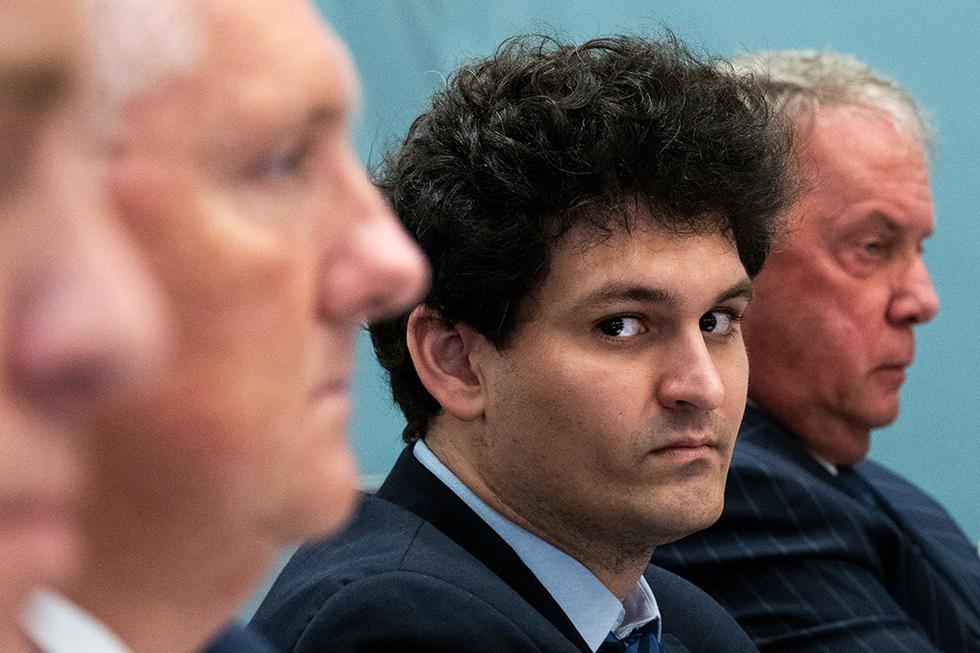
The legal representative for former FTX CEO Sam “SBF” Bankman-Fried has submitted a memorandum to the United States District Court for the Southern District of New York, urging the judge to impose a prison term ranging between five and a quarter and six and a half years.
SBF faces a potential maximum sentence of 110 years subsequent to a jury convicting him of multiple instances of fraud and money laundering in November 2023.
SBF stands accused of two counts of wire fraud, two counts of wire fraud conspiracy, one count of securities fraud, one count of commodities fraud conspiracy, and one count of money laundering conspiracy. Judge Lewis Kaplan, presiding over the SBF trial, is slated to declare the sentence on March 28.
While federal prosecutors are anticipated to present their recommendations for sentencing by March 15, the Pre-sentence Investigation Report (PSR) has advised a 100-year term for the erstwhile FTX CEO.
FTX legal representatives contend that the proposed 100-year sentence in the PSR is excessively harsh.
They argue that SBF, a first-time offender devoid of prior criminal records, engaged in the conduct alongside “at least four other culpable individuals,” in a situation where victims are expected to recover the entirety of their losses.
READ MORE: British Bitcoin ETFs Break Daily Trading Record Amidst BTC Surge
The filing deliberated on the absence of harm to customers, lenders, and investors, as the FTX bankruptcy estate is projected to reimburse customers entirely.
Additionally, the legal counsel highlighted numerous letters from friends and family advocating for a merciful sentence.
SBF has been incarcerated at the Metropolitan Detention Center in Brooklyn, New York, since the summer of 2023. Various accounts of his time in jail have emerged, from bartering mackerel for a haircut to facing extortion for protection.
Now, another anecdote from his imprisonment has surfaced, with The New York Times reporting that SBF is dispensing trading and investment guidance, and encouraging prison guards to invest in Solana’s crypto token, with which he has a lengthy association.
FTX was once among the foremost cryptocurrency exchanges, boasting a valuation of $32 billion in January 2022, before its collapse in November of the same year.
SBF was found guilty of mishandling $8 billion in customer funds and multiple other instances of fraud.

Bitcoin scaling tokens and BRC-20 coins experienced a notable surge on Monday, surpassing the broader crypto markets and even outshining Bitcoin itself, despite achieving its own 25-month high.
Tokens operating on the Bitcoin layer-2 network, such as Stacks and RSK Infrastructure Framework (RIF), witnessed significant double-digit gains amidst a broader crypto market rally.
Stacks, a platform focusing on smart contracts for Bitcoin, surged by 30% from an intraday low of $2.44 to a peak of $3.21 in early trading on February 27, doubling its value over the past month, as reported by CoinGecko.
This substantial leap propelled the STX token to within a 9% reach of its all-time high of $3.39 recorded in December 2021.
According to social intelligence company LunarCrush, Stacks has observed some of the most substantial spikes in social engagement over the past year, with social interactions soaring by nearly 16,000%, driven by mounting enthusiasm surrounding Bitcoin layer 2 solutions.
Similarly, the native token of the RSK Infrastructure Framework, RIF, also saw a surge, climbing 25% from an intraday low of $0.193 to $0.242 before experiencing a slight pullback.
READ MORE: Carlson Group Adds Top Bitcoin ETFs to RIA Offerings, Prioritising Low Fees and Growth
The Rootstock Infrastructure Framework serves as a layer of service built upon the Rootstock blockchain, facilitating smart contract functionalities for Bitcoin while enabling the deployment of decentralized applications (DApps) without compromising Bitcoin’s foundational principles.
According to DefiLlama, Rootstock accounts for slightly over half of the total value locked across all Bitcoin sidechains, amounting to approximately $161 million, while Stacks boasts a TVL (Total Value Locked) of $138 million, roughly constituting 43%.
Other Bitcoin-related scaling and smart contract tokens also demonstrated noteworthy performances, with MAP, the native token of the Bitcoin L2 peer-to-peer omni-chain MAP Protocol, witnessing a 16% surge to reach $0.035 during early trading on February 27, according to CoinGecko.
Additionally, BRC-20 tokens showcased signs of substantial momentum, with tokens like Multibit (MUBI), OriginTrail (TRAC), INSC, Pepe, and MEME all experiencing surges of at least 20% on the day.
Meanwhile, Bitcoin reached its highest price since December 2021, peaking at $56,700 during early trading on February 27, before slightly retracting to trade at $55,684 at the time of composing this article.

Liquidity has challenged decentralized finance since its very earliest days. Today, liquidity is fragmented across multiple protocols, platforms, and liquidity pools.
For traders, fragmentation increases the risk of price slippage. For liquidity providers, fragmentation means lower capital efficiency and lower returns. For everyone, a lack of interoperability increases the complexity of DeFi, raising barriers to participation.
Fragmentation means that absolutely everyone gets a raw deal. Solving the issue is the Holy Grail of decentralized finance – the ultimate prize.
CrossCurve unifies liquidity
Enter CrossCurve, the game changer that ends fragmented liquidity. CrossCurve enables low-slippage cross-chain swaps of any asset type, from stablecoins to liquidity provider tokens, and liquid staking tokens, supported by Curve’s deep liquidity in the billions of dollars.
CrossCurve, a cross-chain trading and yield protocol, is the product of a partnership between EYWA and Curve. CrossCurve reshapes the DeFi landscape, taking all the pain and hassle out of cross-chain transfers. It is a unified, one-stop-shop solution.
CrossCurve connects Ethereum, Optimism, Arbitrum, BSC, Polygon, and Avalanche under one roof. A simple and intuitive interface harnesses unparalleled power in the DeFi market, with slippages to rival centralized exchanges.
CrossCurve will undoubtedly please experienced users who are all too aware of the sector’s challenges.
From magic to reality with Curve’s founder investment
The partnership between EYWA and Curve came after the former caught the attention of Curve’s founder and CEO, Michael Egorov. Egorov was so impressed by EYWA’s work he became the lead investor in the project. Egorov led a successful $5 million funding round that also featured other notable backers including Big Brain Holdings, Mulana Capital, and Mapleblock Capital.
As Egorov explained, the decision to invest was an easy one given the potential of CrossCurve.
“EYWA builds a very interesting solution: it’s not just your typical bridge. They solve the problem of liquidity fragmentation between chains by creatively composing Curve meta pools and the actual bridge. Having one liquidity pool working across multiple chains sounds like magic, and it is exciting to have Curve AMMs in the core of this magic.”
And though EYWA’s solution may seem like magic, Egorov is clearly a believer. The possibilities of unifying the DeFi market are just too compelling to pass over.
Pioneering Change in DeFi with Cross-Chain
Through collaboration with Curve and EYWA, CrossCurve is poised to revolutionize the DeFi sector. This “magic” solution means big changes are coming to decentralized finance.
For traders, CrossCurve offers increased capital efficiency and low cross-chain slippages, even when dealing with large volumes. Slippages are further reduced by CrossCurve’s unique architecture, which improves liquidity utilization.
CrossCurve facilitates the migration of liquidity without impermanent loss, maximizing yields for liquidity providers. CrossCurve cuts costs for projects too, allowing ultra-fast scaling and growth. Its introduction will also represent a paradigm shift for Web3 projects. With it they can create cross-chain listings and their own liquidity pools, accessing the maximum number of users and the maximum liquidity possible from the market.
Web3 projects that list their token against crvUSD/Stables/WBTC/WETH/Curve LPs can receive yield from CrossCurve, Curve, and Convex.
At every corner of the market, for every kind of user, the benefits of CrossCurve are clear. Finally, the fragmentation of decentralized finance will end.

The Texas Blockchain Council (TBC) and Bitcoin mining firm Riot Platforms have secured a favourable ruling from a United States District judge in a lawsuit against several U.S. energy officials.
As per a report by Cointelegraph on 22nd February, TBC and Riot accused the U.S. Department of Energy, Energy Information Administration (EIA), the Office of Management and Budget (OMB), and their respective leaderships of seeking intrusive data collection from cryptocurrency miners.
In a filing dated 23rd February in the U.S. District Court for the Western District of Texas, the TBC and Riot persuaded the judge that irreversible harm would occur without a temporary restraining order (TRO) against further data collection.
Consequently, the court implemented a TRO preventing the EIA from mandating crypto miners to respond to the survey and from sharing any data already received.
“The Court finds that Plaintiffs have shown through a verified complaint and supporting evidence that immediate and irreparable injury, loss, or damage will result if a TRO is not issued.”
The TBC and Riot contended that potential damages include unrecoverable costs of survey compliance, a credible threat of prosecution for non-compliance, and the disclosure of requested proprietary information.
READ MORE: Trump Embraces Bitcoin: Former President Shifts Stance on Cryptocurrency
Furthermore, there was disagreement over the survey completion timeframe for miners, with no compensation.
Despite the EIA estimating a 30-minute completion time, the court deemed this estimate “extremely inaccurate.”
Meanwhile, the TBC and Riot disputed the estimate, stating that compliance costs thus far have exceeded 40 hours.
Based on the evidence provided, the court judged that TBC and Riot were likely to prevail in the lawsuit.
It also alleged that the EIA misused its authority to have the emergency survey approved, a move the court deemed “falls far short of justifying such an action.”
“[The] Plaintiffs also demonstrate that they are likely to succeed on the merits.
The survey was proposed and approved under an emergency provision of the PRA,” the filing noted.
The TRO is set to expire before March 25, aiming to “preserve the status quo” for four weeks.

In an endeavour to address the escalating cybercrimes, the Supreme People’s Procuratorate (SPP) of China – the nation’s highest prosecutorial authority – is directing its focus towards wrongdoers utilising blockchain and metaverse projects for unlawful activities.
The SPP expresses concern over the surge in online fraud, cyber violence, and infringement of personal information.
The SPP disclosed a notable increase in cybercrimes perpetrated on blockchains and within the metaverse.
Criminal elements are increasingly resorting to cryptocurrencies for the purpose of money laundering, rendering the tracking of their illegal gains a challenging task.
Ge Xiaoyan, the deputy prosecutor-general of the SPP, affirmed that charges related to cybercrime-associated telecom fraud have escalated by 64 percent year-on-year.
Concurrently, traditional offences such as gambling, theft, pyramid schemes, and counterfeiting have also expanded their reach into cyberspace.
Xiaoyan underscored that charges linked to internet theft have soared by almost 23%, whereas charges concerning online counterfeiting and the sale of substandard goods have surged by nearly 86%.
Procuratorates brought charges against 280,000 individuals in cybercrime cases between January and November, marking a 36% year-on-year increase and constituting 19% of all criminal offences, as disclosed by Xiaoyan.
READ MORE: Coinbase Advocates for Ether ETP Approval Amid SEC Scrutiny
Zhang Xiaojin, the director of the Fourth Procuratorate of the SPP, cautioned both citizens and participants in digital assets regarding investment scams prevalent in the local crypto economy.
Xiaojin highlighted the emergence of novel cybercrimes involving the metaverse, blockchain, and binary options platforms, indicating that digital currencies have become focal points for such activities, thereby stressing the necessity for heightened vigilance.
China’s endeavours to clamp down on digital asset-related crimes diverge from those of Hong Kong.
The special administrative region of China has adopted a distinct approach by implementing regulations conducive to cryptocurrencies to standardise its digital asset ecosystem and safeguard investors without stifling innovation.
The People’s Bank of China (PBoC) addressed concerns pertaining to cryptocurrency regulation and decentralised finance in its most recent financial stability report.
The Chinese central bank dedicated a separate section to cryptocurrency assets in the report, emphasising the imperative for the industry to be regulated through collaborative efforts among different countries.
In 2021, the PBoC officially announced measures aimed at curbing crypto adoption in mainland China, advocating for enhanced inter-departmental coordination in combating crypto-related activities in the country.
Despite the ban encompassing virtually all crypto transactions and cryptocurrency mining, mainland China has persisted as a significant crypto-mining hub.

Hong Kong-based cryptocurrency exchange BitForex has ceased withdrawals for a minimum of three days without offering an explanation.
Prior to the suspension, approximately $56 million in cryptocurrency had been withdrawn from the exchange’s wallets.
According to an X post on February 23, on-chain investigator ZachXBT stated that three BitForex hot wallets experienced outflows of approximately $56.5 million in cryptocurrencies before the exchange halted transaction processing.
The exchange’s X account has not seen any updates since May 2023
BitForex users are encountering issues with their accounts, ranging from being unable to access them to finding that the dashboard displays no assets.
Numerous users have shared a pop-up screen indicating they are blocked from accessing the company’s website.
Attempts by Cointelegraph to access the BitForex website encountered the same issue. However, certain pages of the exchange’s website remain active.
For instance, an announcement dated January 31, disclosing the departure of BitForex CEO Jason Luo, was still accessible on the website at the time of writing.
READ MORE: Bitcoin Halving Threatens US Miner Profitability and Sparks Global Migration Talks
In September 2023, BitForex was among the foremost global cryptocurrency exchanges in terms of capitalization, with a daily trading volume of approximately $2.6 billion in cryptocurrency.
Currently, CoinMarketCap does not provide real-time data on BitForex.
In April 2023, Japan’s Financial Services Agency (FSA) accused BitForex of breaching the country’s fund settlement laws, alleging that the exchange conducted business in the country without proper registration.
GHowever, BitForex has not attracted significant attention from regulators or the media since then.
Last week, another Hong Kong-based exchange, Atom Asset Exchange (AAX), transferred around $55.6 million worth of Ether (ETH) from its wallets.
AAX ceased all operations on November 13, 2022, just two days after FTX filed for bankruptcy. Following its closure, AAX’s former CEO Thor Chan and board member Haoming Liang were arrested by Hong Kong police in 2022.
Nevertheless, the founder of AAX, whose identity remains undisclosed, is purportedly still evading authorities with 230 million Hong Kong dollars ($29.41 million) worth of users’ funds and private keys granting access to exchange wallets.

Google and the social media platform Reddit have forged a partnership, with Reddit supplying its content to aid in training the artificial intelligence (AI) models of the search engine giant.
In an announcement, Reddit stated it would furnish Google with enhanced techniques for model training.
Under this collaboration, Google gains access to Reddit’s data application programming interface (API), delivering real-time content from Reddit’s platform.
This access enables Google to tap into Reddit’s vast content repository, facilitating the integration of Reddit content across Google’s suite of products.
In return, Reddit will utilise Vertex AI, Google’s AI-driven service tailored to improve search outcomes for businesses.
Reddit has clarified that this update does not alter the terms of its data API, maintaining restrictions on commercial access without prior approval for developers or enterprises.
This partnership follows reports from Bloomberg indicating that Reddit had secured a $60 million training deal with an undisclosed AI firm.
Reddit had previously outlined intentions to levy charges for API usage. Notably, the collaboration with Google represents Reddit’s inaugural known agreement with a prominent AI developer.
In 2023, Google revised its privacy policy to permit the use of publicly available data for AI training purposes.
This amendment followed closely after OpenAI, the developer of ChatGPT, faced a class-action lawsuit in California, alleging the unauthorized scraping of private user data from the internet.
READ MORE: Starknet Token Plummets Over 60% in Value Amidst Sell-Offs and Airdrop Controversy
However, as per updates to the commercial terms of service for the Claude developer, Anthropic, the generative AI startup pledged to abstain from utilising client data for large language model (LLM) training beginning January 2024.
Despite this landmark agreement, Google and Reddit have not always seen eye to eye.
Reddit had previously threatened to block Google’s crawlers from accessing its site, citing concerns that companies might exploit its data for AI model training purposes.
Reddit commenced its initial public offering (IPO) on Feb. 22, aiming to bolster its valuation, which exceeded $10 billion in 2021.
The IPO filing, slated for March, marks the first major social media IPO since Pinterest’s in 2019.
In recent months, developers of AI models have actively pursued agreements with content providers to diversify their training data beyond extensive web scraping.
This move comes amidst claims from numerous content owners that their material was utilised without authorisation.
Bankrupt cryptocurrency exchange FTX has received approval from Judge John Dorsey of the Delaware Bankruptcy Court to sell more than £1 billion worth of its shares in the artificial intelligence startup Anthropic.
The ruling, delivered during a hearing on February 22, allows the sale to proceed following FTX’s accommodation of some customers who had objected to the sale.
These customers contended that the Anthropic shares did not belong to FTX, alleging they were acquired with misappropriated customer funds, referencing evidence presented during the criminal trial of FTX co-founder Sam Bankman-Fried.
However, they agreed to the sale on the condition that they would later be able to claim proceeds from it for FTX users.
Andrew Dietderich, representing FTX from Sullivan & Cromwell, informed the court that they are selling the Anthropic shares “as we are selling everything and putting the money in the bank.”
He further stated that FTX intends to reimburse users using the proceeds from selling its Anthropic stake, augmenting the existing £6.4 billion it holds in reserve — a sum more than sufficient to repay those who can substantiate their entitlement to a portion of the proceeds.
Earlier this month, FTX filed a motion to sell its 7.84% stake in Anthropic.
The exchange initially invested approximately £530 million in the AI startup in April 2022, prior to its collapse and subsequent filing for Chapter 11 bankruptcy in November of the same year.
READ MORE: Hong Kong Sees Surge in Crypto License Applications as Regulator Receives 18 Bids
Following Anthropic’s subsequent funding rounds, FTX’s stake was diluted from over 13.5%.
According to The Information’s report on February 16, the latest funding round valued Anthropic at £15 billion, elevating the worth of FTX’s stake to over £1.1 billion.
Dietderich informed the court last month that FTX anticipates it could fully reimburse creditors and has abandoned plans to revive the exchange.
However, creditor repayments will be calculated based on cryptocurrency prices at the time of FTX’s bankruptcy over 15 months ago, when Bitcoin was trading at around £16,800 — it currently stands at over £51,000, reflecting a more than 200% increase.
Meanwhile, Bankman-Fried is scheduled to be sentenced on March 28 following his conviction for embezzling over £8 billion in customer funds.
The former FTX chief maintains his innocence and has expressed his intention to appeal the verdict.
Recent data from cryptocurrency data aggregator CoinGecko suggests that holding a newly airdropped crypto token for more than 14 days often means missing out on the chance to sell at its highest value.
Since 2020, interest in airdrops has surged significantly.
The most common method of obtaining free airdropped tokens is by engaging in pre-launch activities or promotional tasks within blockchain networks.
On February 1, Cointelegraph highlighted a report of a 17-year-old crypto investor who purportedly earned over $1 million from the Solana-based Jupiter (JUP) airdrop.
A recent CoinGecko report reveals that over the past four years, approximately 46% of the top 50 crypto token airdrops, including notable tokens such as Ethereum Name Service, Blur, and LooksRare, reached their peak values within a fortnight of their launch.
The report specifies that “23 out of the 50 largest airdrops (46%) witnessed peak token prices during the initial 2 weeks of their airdrop date.”
Among the airdropped tokens that peaked within this timeframe are Manta Network (MANTA), Anchor Protocol (ANC), and Heroes of Mavia (MAVIA).
While certain projects achieved peak gains within days, only one airdropped token out of the top 50 in the past four years took more than a year to reach its peak value.
READ MORE: Coinbase Advocates for Ether ETP Approval Amid SEC Scrutiny
Optimism (OP) took one year and seven months to achieve its highest value.
In contrast, Sweat (SWEAT) reached its peak within two days of the airdrop, while Wen (WEN) saw peak gains in just three days.
However, significant sell-offs of airdrops shortly after listing can lead to a sharp decline in value, diminishing the token’s attractiveness.
On February 22, Cointelegraph reported a roughly 60% drop in the token of Ethereum layer-2 network Starknet (STRK), as Ethereum infrastructure firm Nethermind and airdrop participants offloaded millions of dollars’ worth of the airdropped token.
Furthermore, technical glitches during the claiming process may cause participants to perceive the network as unreliable, prompting them to consider selling the token.
In March 2023, the volume of Arbitrum (ARB) tokens moved to exchanges was 150% higher than inflows to wallets, triggering a significant sell-off.
This followed reports of the airdrop claim page crashing within an hour of the process starting due to overwhelming requests.