


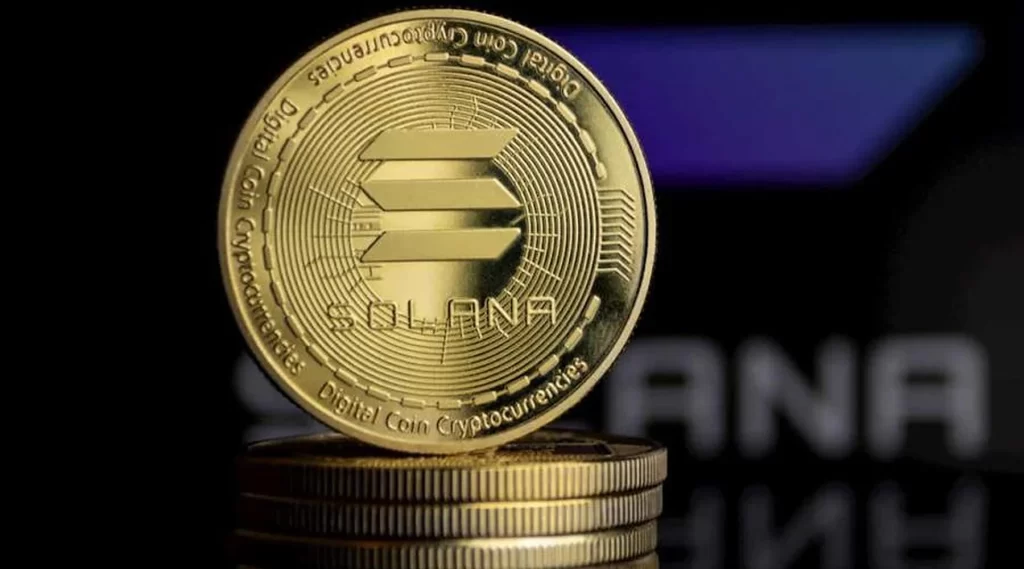
Solana bulls have fresh reason for optimism after technicians spotted a bullish fractal reminiscent of the token’s late-2024 surge.
Bull Flag Builds Beneath $180 Ceiling
SOL spent two weeks consolidating below $180, carving out a textbook bull-flag pattern that typically precedes further upside.
The daily relative strength index sits at 64, far from overheated territory, suggesting room to run if buyers step in.
Fractal Echoes 2024’s Explosive Breakout
Crypto trader Robert Mercer highlighted similarities to October 2024, when Solana cleared $180 and sprinted to an eventual $260 peak.
He argues a decisive weekly close above $180 “could trigger a sharp upward rally, mirroring the late-2024 move.”
Analyst Javon Marks added that a hidden bullish divergence on the three-day chart once sparked a 1,332 percent rally, implying even $450 is conceivable should history rhyme.
Volume Remains the Missing Ingredient
Skeptics point out that spot buying volumes have faded during consolidation, leaving the breakout thesis contingent on renewed demand.
Failure to conquer $180 could send SOL toward support in the $140-$150 corridor, invalidating the flag.
Popular trader XO recommends watching for a clean flip of $180 into support before entering longs.
Macro Rotations Could Help
With Bitcoin setting records, some speculators anticipate a rotation of profits into major altcoins, a pattern seen in prior cycles.
Whether that shift materializes will depend on risk appetite, macro data, and how quickly new capital filters through ETFs into the broader crypto complex.
For now, Solana sits at the crossroads, with chart watchers fixated on a single number: $180.

The United Kingdom has set 1 January 2026 as the date on which every crypto-asset service provider must begin reporting granular customer-transaction data to His Majesty’s Revenue and Customs.
The policy, unveiled on 14 May, is meant to close tax loopholes, align with international standards and protect consumers from fraud.
Mandatory data collection
Exchanges, brokers and custodians will be required to record the name, address and tax identification number of both sender and recipient for every trade or transfer.
They must also note the token type, quantity, sterling value and execution timestamp.
HMRC emphasised that errors or late filings could trigger penalties of up to £300 per affected user.
Officials urged companies to start gathering the necessary information immediately, even though technical guidance will be issued “in due course.”
Balancing compliance and innovation
Treasury staff say the mandate brings crypto disclosure into line with the transparency expected of banks and stockbrokers.
Industry lobbyists, however, warn that small start-ups may struggle with the added cost of sophisticated know-your-customer systems.
Chancellor Rachel Reeves acknowledged the concern while introducing a draft bill that extends regulatory oversight to crypto exchanges, custodians and broker-dealers.
“Today’s announcement sends a clear signal: Britain is open for business — but closed to fraud, abuse, and instability,” she told Parliament.
Divergence from Brussels
London’s plan integrates the OECD’s Crypto-Asset Reporting Framework directly into the existing financial-services rulebook.
By contrast, the European Union’s Markets in Crypto-Assets Regulation creates a parallel licensing regime and imposes volume caps on stablecoins.
Observers say Britain’s decision to allow foreign stablecoin issuers to operate without a domestic subsidiary could attract firms from across the Channel.
Yet the divergence raises operational headaches for platforms serving both jurisdictions.
Rising retail participation
A Financial Conduct Authority survey last November found that 12 percent of UK adults held crypto in 2024, tripling the rate recorded in 2021.
Policymakers cite the jump as evidence that clearer rules are now essential.
HMRC previously relied on court orders to obtain exchange data, a process criticised as slow and adversarial.
The new system flips the default, obliging firms to send annual reports proactively.
Data will feed into a global exchange mechanism modelled on the Common Reporting Standard that already covers bank accounts.
Treasury insiders believe uniform rules will also burnish London’s credentials as a responsible fintech centre in the wake of several high-profile exchange collapses abroad.
They point to last year’s failure of offshore platform Globex, which left thousands of British investors scrambling to retrieve funds that HMRC could not initially trace.
Consumer advocates agree that stronger oversight is overdue but urge the government to pair enforcement with public-awareness campaigns on phishing and romance scams.
Civil-liberties groups remain uneasy, warning that centralised troves of transaction data could become lucrative targets for hackers.
They are calling for end-to-end encryption of all submissions and mandatory breach-notification rules.
Officials say security standards will be addressed in forthcoming technical guidance.
Industry preparations
RegTech vendors are pitching software that maps blockchain transactions to verified customer identities and generates ready-to-file HMRC returns.
Larger exchanges are expanding compliance teams and consulting Big Four auditors on control frameworks.
Smaller operators are pressing for phased implementation or de-minimis thresholds to avoid being priced out of the market.
Lawyers warn that abrupt account freezes aimed at collecting missing data could trigger lawsuits, urging a pragmatic approach.
Institutional investors, meanwhile, welcome the clarity, arguing that tax certainty will encourage pensions and insurers to allocate to digital assets.
Looking ahead
Secondary legislation fleshing out the details is expected later this year, giving stakeholders a final chance to shape the rules.
HMRC plans educational campaigns to alert taxpayers to their obligations once the regime takes effect.
Officials will publish annual statistics outlining the amount of previously undeclared crypto income captured by the new system.
Analysts estimate the treasury could collect hundreds of millions of pounds in additional revenue within the first few years.
Critics, however, fear that heavy-handed surveillance will drive traders toward decentralised platforms beyond regulatory reach.
Regulators counter that most such protocols still rely on fiat on-ramps squarely within scope.
As the 2026 deadline looms, British crypto companies face a stark choice: invest now in robust compliance infrastructure or risk fines and reputational damage later.
Consultants say early adopters could gain a competitive edge by courting institutional clients who insist on high governance standards.
Either way, the era of lightly regulated crypto trading in Britain is drawing to a close.
The U.S. Securities and Exchange Commission has postponed its verdict on Grayscale’s proposed Solana and Litecoin exchange-traded funds, extending a review that now stretches well into the summer.
At the same time the agency invited public comments on BlackRock’s plan to shift its flagship Bitcoin ETF to an in-kind redemption model and on Nasdaq’s bid to list the 21Shares Dogecoin ETF.
The moves underscore Washington’s cautious yet increasingly structured approach to bringing a wider range of crypto assets into the regulated fund universe.
Solana Trust Under Microscope
Staff will spend the coming weeks determining whether Grayscale’s Solana Trust satisfies investor-protection and market-integrity requirements set out in Section 6(b)(5) of the Securities Exchange Act.
If approved the vehicle would hold SOL tokens in cold storage and trade on NYSE Arca, giving retail investors indirect exposure without setting up self-custody.
The SEC has up to 240 days—and multiple chances to pause the clock—before issuing a final ruling, meaning the earliest green light could slip past September.
Litecoin Also Waits
Grayscale’s Litecoin Trust received a parallel delay as commissioners opened formal proceedings to gather additional evidence and rebuttals.
Questions center on whether Litecoin markets are sufficiently surveilled to detect manipulation and whether existing futures oversight on the Chicago Mercantile Exchange offers a viable benchmark.
Both altcoin filings remain on hold until staff completes the deeper dive mandated by Tuesday’s notice.
BlackRock Reworks Bitcoin Redemption Model
Separately, Nasdaq’s filing to amend the iShares Bitcoin Trust is now in a 21-day comment window that will test appetite for so-called in-kind redemptions.
Under the proposal authorized participants could exchange ETF shares directly for Bitcoin rather than cash, a structure BlackRock says would reduce tracking error and capital-gains events.
The SEC approved the fund in January with a cash-only mechanism but signaled openness to alternative workflows once operational safeguards were in place.
Industry lawyers expect a decision on the amendment before the fourth quarter, provided no major objections arise during the rebuttal phase.
Dogecoin ETF Opens to Feedback
Nasdaq also submitted paperwork to list the 21Shares Dogecoin ETF under Rule 5711(d), the same framework used for commodity-based trust shares like gold.
The passive fund intends to mirror Dogecoin’s price via a CF Benchmarks reference rate and store coins with regulated custodian Coinbase.
Backers view the meme-coin product as a litmus test for how far the SEC is willing to extend spot-crypto approvals beyond the large-cap duo of Bitcoin and Ether.
Why the SEC Is Pressing Pause
New Chair Paul Atkins has vowed to replace the previous regime’s enforcement-first posture with clearer rulemaking but insists each novel ETF “meets the law as written.”
Delays allow staff to solicit data on trading volumes, offshore liquidity, and correlation between spot and futures prices—metrics commissioners say are key to detecting wash trades.
The agency also weighs whether surveillance-sharing agreements with major platforms will meaningfully curb insider manipulation before retail money can flow in.
Altcoin ETF Pipeline Widens
At least a dozen issuers, including 21Shares, Bitwise, and WisdomTree, have registered or signaled intent to launch funds tied to XRP, Avalanche, and even meme-tokens like Shiba Inu.
Bloomberg Intelligence estimates that more than $15 billion could migrate into altcoin funds within two years if the SEC gives even a handful the green light.
For now, however, only Bitcoin and Ether spot products have crossed the finish line, and both required multiyear legal tussles.
Market Reaction and Outlook
Prices for SOL and LTC drifted lower after the notice, though most analysts attributed the dip to broader risk-off sentiment rather than the procedural delay.
Dogecoin held steady near $0.28 as traders judged the start of a comment period to be net positive, keeping hopes alive for a first-of-its-kind meme-coin ETF.
Strategists at Galaxy Digital wrote in a note that the SEC’s staggered approach “signals momentum, not resistance,” provided applicants can supply robust market-surveillance data.
Still, they cautioned that a single high-profile hack or manipulation incident could prompt regulators to reapply the brakes.
Timeline From Here
Commenters have until June 4 to weigh in on BlackRock’s amendment and until June 7 on the Dogecoin proposal, after which rebuttals may be filed for an additional 35 days.
The Solana and Litecoin dockets now await a second SEC extension, a step that would push the ultimate decision into early autumn.
Market participants will track those deadlines closely, viewing each incremental action as a barometer of how quickly U.S. regulators are prepared to mainstream the next wave of crypto assets.

Goldman Sachs has significantly increased its exposure to BlackRock’s iShares Bitcoin Trust (IBIT), with a 28% jump in its holdings over the first quarter of 2025. The investment bank now owns over 30.8 million IBIT shares, valued at more than $1.4 billion.
This new data was revealed in a recent SEC filing, first reported by MacroScope. Goldman had previously held 24 million shares at the end of 2024, making the increase notable amid growing institutional interest in spot Bitcoin ETFs.
Minimal Change in Fidelity Exposure
While Goldman has expanded its IBIT position, its stake in Fidelity’s Bitcoin fund (FBTC) appears largely unchanged. Back in February, the firm reported about $1.2 billion in IBIT holdings and $288 million in FBTC. The latest filing shows no significant shifts in FBTC exposure.
According to financial analytics platform Fintel, Goldman now ranks as the top institutional holder of IBIT. Brevan Howard follows closely behind, with over 25 million shares valued at nearly $1.4 billion. Other institutional participants include Jane Street, Symmetry Investments, and D.E. Shaw & Co.
Strategic Shift in Derivatives Exposure
A notable change in Goldman’s approach is the absence of Bitcoin ETF options in the new disclosure. In December, the bank held call options worth $157 million and put options totaling $527 million on IBIT, along with $84 million in puts on FBTC. Those options have either been closed out or allowed to expire, signaling a pivot in strategy.
This shift suggests Goldman may now favor direct equity exposure in Bitcoin ETFs over derivatives as a way to manage risk or express confidence in Bitcoin’s medium-term outlook.
IBIT Dominates the Market
IBIT remains the largest spot Bitcoin ETF, managing approximately $62.8 billion in assets. Since its debut in January 2025, the fund has attracted over $44 billion in net inflows. This week alone, it has logged roughly $674 million, according to Farside Investors.
The ETF’s price also saw a gain during Friday’s trading session, rising $1.04 to close at $58.66. As institutional adoption accelerates, IBIT continues to be the central vehicle for Bitcoin exposure in traditional markets.
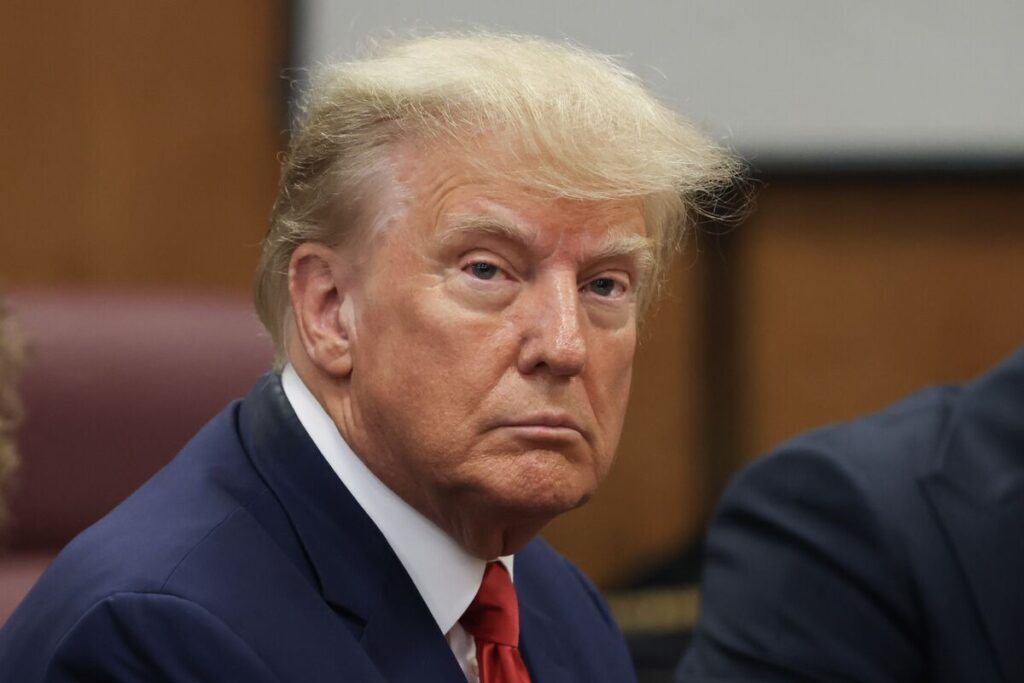
A sovereign wealth fund proposed by Treasury Secretary Scott Bessent and Commerce Secretary Howard Lutnick has encountered resistance within the White House, despite being developed at the direction of President Donald Trump.
Trump’s Initial Vision Sparks Speculation
Trump’s February executive order instructed the Treasury and Commerce Departments to draft a framework for a U.S. sovereign wealth fund within 90 days. This prompted speculation that such a fund might invest in Bitcoin or other digital assets, especially given Trump’s increasing interest in crypto.
While this sparked hope among crypto advocates, Bessent and Lutnick clarified early on that the focus would be on traditional financial assets such as equity and warrants. Nonetheless, David Sacks—appointed by Trump as his crypto adviser—hinted that Bitcoin could still be considered as part of the fund’s assets.
That possibility now seems unlikely following a separate move by Trump. In March, he signed an executive order to establish a dedicated Strategic Bitcoin Reserve and a digital asset stockpile, signaling a parallel but independent strategy for managing crypto assets.
Funding Source and Structure Remain Unclear
There were also discussions around whether tariffs or other government revenues could finance the fund, but Lutnick later dismissed the idea of using tariffs. “Tariffs will not be used to support the sovereign wealth fund,” he confirmed.
Although the plan was submitted to Trump in early May, no final decision has been reached. Kush Desai, a spokesperson for the White House, confirmed that the departments have fulfilled their directive, but emphasized that “no final decisions have been made.”
Desai added that the proposed sovereign wealth fund aligns with Trump’s broader objectives to bolster national and economic security.
Ongoing Deliberations and Potential Uses
The details surrounding how the fund will operate, or what it will invest in, remain unsettled. According to sources familiar with the matter, Trump has yet to decide how any returns from the fund would be used. One possibility he has floated is acquiring a stake in TikTok—currently facing a U.S. ban unless Chinese parent company ByteDance sells its stake.
Meanwhile, Bessent and Lutnick are also spearheading the development of the U.S. Strategic Bitcoin Reserve and Digital Asset Stockpile. These crypto-specific initiatives will include frameworks for acquisition, custody, and operation, and are being designed to have no impact on the federal budget.
As deliberations continue, both crypto and traditional finance communities are watching closely to see how the Trump administration’s vision for long-term national investments takes shape.
Online trading platform eToro could go public in the US as early as next week after delaying its IPO due to recent market volatility. The move would mark a significant return to form for one of fintech’s most highly anticipated public debuts.
IPO Delay Triggered by Trump’s Tariffs
Originally planning to go public earlier this year, eToro hit pause following President Trump’s sweeping tariff announcement on April 2. The move triggered a sharp increase in market instability and raised fears of a global trade war, forcing companies like Klarna, StubHub, and Medline to rethink their IPO timelines.
eToro, which offers access to stocks, ETFs, and digital assets, was among them. But with markets now showing signs of stability, the path to its IPO appears clear again.
$5 Billion Valuation Targeted
According to the Financial Times, eToro confidentially filed for a US IPO with backing from investment banks Goldman Sachs, UBS, and Jefferies. The company is aiming for a $5 billion valuation and plans to list its shares on the Nasdaq Global Select Market under the ticker symbol “ETOR.”
The filing outlines strong growth metrics, with the company reporting $931 million in total commission revenue for 2024 — a significant increase from the $639 million earned the previous year. Net income surged as well, jumping from $15 million in 2023 to $192 million in 2024.
No Final Decision Yet on Launch Timing
Despite the momentum, eToro has not yet finalized its IPO timing. Sources familiar with the matter suggest that while the company is prepared to move forward next week, plans could still change if the market outlook shifts again.
Even so, the recent stabilization in financial markets provides a favorable backdrop, especially for a company with exposure to both equities and cryptocurrencies.
Crypto-Friendly Regulatory Environment Helps
Another key factor supporting eToro’s IPO ambitions is the shifting regulatory environment in the US. The appointment of Paul Atkins, a pro-crypto figure, as SEC Chair has led to a more favorable outlook for firms in the digital asset space.
This change has reignited interest in crypto-adjacent listings, with other big names like Circle, Kraken, and Gemini also advancing plans to go public. These companies have benefited from recent regulatory settlements that have cleared long-standing hurdles.
What Comes Next for eToro?
With a renewed focus on expanding its US footprint, eToro appears well-positioned to take advantage of the evolving landscape. If successful, the IPO could open the door for further growth and solidify its role as a leading global platform for retail trading.
Should the firm proceed with its Nasdaq listing, it would mark a significant milestone not just for eToro but for the broader fintech and crypto sectors — both of which are looking to rebound in 2025 after a rocky start.
The U.S. Securities and Exchange Commission (SEC) has extended its review timeline for Franklin Templeton’s spot XRP exchange-traded fund (ETF), now setting a decision deadline of June 17, 2025. The regulator announced the delay in a notice issued earlier this week, stating it needed more time to consider the proposed rule change filed by the Cboe BZX Exchange.
More Time Needed for Evaluation
Originally submitted on March 13 and published in the Federal Register on March 19, the application was initially under a 45-day review period set to expire on May 3. The SEC explained its rationale for the delay, saying, “The Commission finds it appropriate to designate a longer period… so that it has sufficient time to consider the proposed rule change and the issues raised therein.”
Franklin Templeton is aiming to launch the Franklin XRP Fund, joining a growing list of asset managers—including Grayscale, Bitwise, 21Shares, and WisdomTree—seeking approval for crypto-backed investment products.
XRP Price and Market Position
XRP, which ranks as the fourth-largest cryptocurrency by market capitalization, was trading at around $2.30 at the time of the notice. The token saw a 7% increase over the past week, according to CoinGecko.
The ETF would allow traditional investors to gain exposure to XRP through a regulated investment vehicle, without the need to hold the crypto asset directly.
Other Delays in Crypto ETF Decisions
The SEC didn’t stop with the XRP fund. It also postponed decisions on other crypto-related ETFs, including Fidelity’s spot Ethereum ETF with staking capabilities, Bitwise’s Dogecoin ETF, and Franklin Templeton’s proposed Solana ETF.
These delays, while frustrating to some market participants, are not unexpected. The SEC often extends review periods to collect more information, open comment windows, and evaluate broader regulatory implications.
Analysts: Delay Is “Standard Procedure”
Industry experts were quick to interpret the delays as routine rather than signs of rejection. Bloomberg Intelligence analyst James Seyffart emphasized that the pause was “standard procedure” and wouldn’t necessarily hurt the ETF’s approval odds.
“This doesn’t change our (relatively high) odds of approval,” Seyffart said. He also noted that the final deadlines for these ETF decisions aren’t until October.
Echoing this view, Bloomberg’s Eric Balchunas referenced prior delays for Bitcoin and Ethereum ETFs that ultimately received regulatory approval. According to Balchunas, the current setbacks fit the established pattern used in past crypto fund evaluations.
Patience Required as Crypto ETF Landscape Evolves
For now, investors will have to wait a little longer to see if XRP will be available as a spot ETF on major exchanges. The SEC’s extended timeline may be part of a broader strategy to approach crypto-based financial products cautiously while balancing innovation with consumer protection.
While these procedural pauses are unlikely to derail the applications entirely, they highlight the SEC’s careful approach to regulating the fast-evolving digital asset market.
Neo X is teaming up with the Foundation for Interwallet Operability (FIO) to make blockchain technology more accessible and user-friendly. This collaboration will integrate the FIO Protocol into the Neo X ecosystem, aiming to lower the barriers between Web2 and Web3.
The FIO Protocol serves as a decentralized, open-source usability layer that works across all blockchains, tokens, and crypto applications. Central to the protocol is the FIO Handle — a human-readable name (such as yourname@neo) that links all public wallet addresses to one simple identifier. By replacing long, complicated wallet addresses with familiar usernames, the FIO Protocol makes blockchain transactions easier and more trustworthy for everyday users.
Soon, Neo X users will have the ability to register and manage their own FIO Handles. This will streamline sending, receiving, requesting, and signing blockchain transactions, creating a much smoother experience within the Neo X platform.
“Neo has always believed that for Web3 to truly take off, it must feel as intuitive and seamless as Web2 — without sacrificing decentralization. By integrating FIO Protocol into Neo X, we’re taking another step toward that goal, making blockchain more approachable for everyone, regardless of technical experience,” said John Wang, Head of EcoGrowth at Neo.
This partnership underscores both organizations’ commitment to user empowerment, aiming to make Web3 navigation straightforward for both seasoned users and newcomers.
“Previous technology adoption cycles have shown that usability is key to ensuring mass adoption and provides the guiding star for our team at FIO as we work to remove complexities in crypto and Web3. We are excited to be collaborating with Neo, as we work together to make digital assets accessible and easy to use for everyone,” added Wayne Marcel, Head of Growth at FIO.

Bitcoin is currently trading well below its intrinsic value, according to Charles Edwards, founder of Capriole Investments. Edwards claims that Bitcoin’s energy value, calculated based on mining costs and energy consumption, is approximately $130,000. This indicates that despite its current market price, Bitcoin is undervalued relative to its underlying energy consumption.
Institutional Buying and Exchange Outflows
On April 24, more than 8,756 BTC (around $830 million) were withdrawn from Coinbase, which could indicate institutional buying or ETF-related purchases. This aligns with recent Bitcoin ETF inflows, with Bloomberg’s ETF analyst Eric Balchunas noting that institutions have engaged in a $3 billion Bitcoin buying spree in recent days.
Binance also saw a significant outflow of 27,750 BTC on April 25, marking the third-largest outflow in the exchange’s history. While such outflows often indicate bullish sentiment, analyst Joao Wedson cautioned that these large withdrawals do not automatically guarantee a continued rally. He pointed out that in 2021, massive outflows did not prevent a market downturn following China’s crypto ban. However, continuous outflows, like during the FTX collapse, often signal a market bottom and potential recovery.
Bitcoin’s Fractal Patterns and the $100,000 Target
Bitcoin’s performance over the past week mirrors similar patterns from Q4 2024, when the cryptocurrency saw a series of significant price increases. As seen in the 1-day chart, Bitcoin has risen by 11% between April 21-25, and analysts suggest that a further 7-10% increase could push Bitcoin above the $100,000 mark in the near future.
While fractal patterns can offer insight into potential price movements, they are not always reliable. Unlike Q4 2024, when Bitcoin rallied without major resistance, the current overhead resistance level at $96,100 could prevent a breakout. However, if Bitcoin can break through this level, a surge above $100,000 could be within reach.
Conclusion
Bitcoin’s recent performance and bullish forecasts suggest it may continue to rise, with potential price targets ranging from $130,000 to $200,000 by the end of 2025. Factors like Bitcoin’s energy value, institutional buying, and the relationship between Bitcoin and gold all play a role in shaping its market dynamics. With strong outflows from exchanges and a weakening US Dollar, Bitcoin appears to be in a favorable position for further growth. However, key resistance levels and market conditions will determine how quickly it can reach new highs.
Bitcoin’s Intrinsic Value and Market Movements in Focus
Bitcoin (BTC) has been trading at a notable 40% discount to its intrinsic value, according to Charles Edwards, the founder of Capriole Investments. Edwards argues that Bitcoin’s true value, based on energy consumption and mining costs, stands at $130,000, significantly higher than its current market price.
Bitcoin’s Energy Value and Discounted Price
Edwards recently shared insights on X, explaining that since Bitcoin’s April 2024 halving event, which reduced block rewards to 3.125 BTC, the cryptocurrency’s energy value has remained significantly above its market price. This suggests that Bitcoin is undervalued, offering potential for substantial price appreciation in the future.
Coinbase, one of the largest cryptocurrency exchanges, experienced a substantial outflow of Bitcoin on April 24, with more than 8,756 BTC (around $830 million) being withdrawn. This negative netflow may signal growing institutional interest or the purchase of Bitcoin via exchange-traded funds (ETFs), which reflect a strong underlying demand for the asset.
Institutional Interest and ETF Activity
The outflows from Coinbase align with recent spot Bitcoin ETF inflows, which have garnered attention from institutional investors. Bloomberg’s ETF analyst Eric Balchunas noted that institutions have been on a $3 billion Bitcoin buying spree, suggesting that large investors are increasingly confident in Bitcoin’s future prospects.
Binance also saw significant Bitcoin outflows on April 25, with 27,750 BTC withdrawn. This marks the third-largest outflow in Binance’s history. While such withdrawals often indicate bullish sentiment, analyst Joao Wedson warned that large outflows do not always lead to sustained price increases. He pointed out that in 2021, significant outflows did not prevent a market decline triggered by China’s crypto ban. However, he also noted that continued outflows over several days, similar to the FTX collapse, could indicate a market bottom and a potential recovery.
Bitcoin’s Fractal Patterns and Price Predictions
Bitcoin’s recent performance mirrors the behavior seen in late 2024, particularly in November, when the cryptocurrency posted significant gains. Bitcoin’s price increased by 11% from April 21 to 25, showing similar buying pressure to previous rallies. If the price maintains this momentum, Bitcoin could see a 7-10% rise over the coming days, potentially pushing the cryptocurrency above the $100,000 mark.
However, analysts caution that fractal patterns, while insightful, are not always reliable. Unlike Q4 2024, when Bitcoin rallied without resistance, Bitcoin currently faces overhead resistance at $96,100. If Bitcoin can overcome this resistance level, a breakout above $100,000 could follow.
The Role of the US Dollar in Bitcoin’s Rally
Bitcoin’s rally is also being influenced by the weakening US Dollar. On April 21, the DXY (US Dollar Index) dropped to a three-year low, which has historically been a bullish indicator for Bitcoin. The DXY’s decline could signal a shift in market conditions that benefits risk assets like Bitcoin. As crypto analyst ‘Venture Founder’ explained:
“Traditionally, DXY going down is very bullish for $BTC, we now have a massive bearish divergence for DXY, which may suggest it goes to 90. The last 2 times this happened triggered a Bitcoin parabolic bull run in the final phase of the bull market (lasting 12 months).”
Conclusion: Bitcoin’s Bullish Prospects
Bitcoin’s recent price activity, its intrinsic value based on energy consumption, and institutional interest through ETF inflows all suggest a bullish outlook for the cryptocurrency. While significant outflows from exchanges like Coinbase and Binance are encouraging, the market faces key resistance levels that could impact Bitcoin’s near-term performance. However, the broader market dynamics, including the weakening US Dollar, indicate that Bitcoin is well-positioned for continued growth. With the potential for Bitcoin to reach $100,000 or beyond, the outlook for 2025 remains optimistic.
Tether has increased its ownership stake in Juventus Football Club, solidifying its position as a major shareholder. The crypto company now holds 10.12% of the club’s issued share capital and 6.18% of voting rights, following its latest share acquisition. This move marks a continued effort by Tether to diversify its portfolio and establish a presence in the world of professional sports.
Building on an Earlier Stake
This latest development expands on Tether’s earlier purchase, which gave the company an 8.2% stake in the Turin-based football powerhouse. The additional shares enhance Tether’s influence within one of Italy’s most prestigious football clubs.
Tether’s involvement is not merely financial. “We are proud to become a significant shareholder of Juventus, a club with a history, brand, and fanbase that is second to none,” said Tether CEO Paolo Ardoino. “This investment is not just financial—it’s a commitment to innovation and long-term collaboration. We believe Juventus is uniquely positioned to lead both on the field and in embracing technology that can elevate fan engagement, digital experiences, and financial resilience.”
A Vision Beyond Investment
The company’s global reach through its USD₮ stablecoin, which serves more than 400 million users, adds weight to its ambitions in the football sector. Tether has expressed an openness to participating in future equity injections, signaling a readiness to further support Juventus’ financial stability and growth.
Collaboration with club leadership is a key part of Tether’s strategy. The firm is exploring the potential for creating an integrated board of directors that would allow for more strategic alignment between the two organizations.
Expanding Its Sports Investment Portfolio
Earlier in the year, Tether began its foray into professional sports by acquiring a minority stake in Juventus. The move was part of a broader strategy to diversify its holdings by aligning with globally recognized brands that also prioritize innovation. Tether appears to see football—particularly a club of Juventus’ caliber—as a platform for both brand exposure and technology integration.
The company’s broader interest in technology-enhanced experiences hints at potential innovations in fan engagement, including blockchain-driven initiatives that may emerge in future collaborations.