


Solana (SOL) has recently experienced a significant price decline, reaching a five-month low of $131.90 on February 25, 2025. This downturn led to the liquidation of over $129 million in leveraged long SOL futures positions. Despite a brief recovery to the $140 range, SOL has depreciated by 17% since February 22, while the broader altcoin market saw a 10% decline.
Declining On-Chain Activity
A notable factor contributing to SOL’s underperformance is the reduction in on-chain activity. Decentralized exchange (DEX) volumes on the Solana network have decreased by 30% over the past week, hitting their lowest levels since October 2024.
Platforms such as Meteora and Raydium experienced activity drops of 48% and 28%, respectively. In contrast, Ethereum’s DEX volumes increased by 40% during the same period, indicating a shift in trader preference.
Staking Yields and Inflation Concerns
Solana’s staking yields are also under scrutiny. While the native staking offers a 9.5% yield, an anticipated 10% annualized inflation rate—due to the scheduled unlocking of over 16.1 million SOL tokens between February and May 2024—effectively results in a negative return for stakers during this period. This inflationary pressure may deter potential investors and stakers, further impacting SOL’s price stability.
Weak Demand in Derivatives Market
The derivatives market reflects a diminished demand for leveraged long positions on SOL futures, reaching its lowest levels in over a year. On February 24, SOL futures entered backwardation, indicating increased demand for short positions. The total open interest on SOL futures contracts decreased by 8.5%, from 31.6 million SOL to 28.9 million SOL, suggesting traders’ reduced confidence in a near-term price rebound.
Outlook for SOL Recovery
Given the decline in on-chain activity, inflationary pressures, and weak demand in the derivatives market, Solana’s price recovery may lag behind Bitcoin and other altcoins. Investors are advised to monitor these factors closely, as they play pivotal roles in influencing SOL’s market performance.
The Securities and Exchange Commission (SEC) has officially closed its investigation into Robinhood Markets’ cryptocurrency activities without pursuing any enforcement action. This development marks a significant milestone for Robinhood, which has been under regulatory scrutiny regarding its crypto offerings.
Background of the Investigation
The SEC’s inquiry primarily focused on whether Robinhood had failed to register certain crypto assets available on its platform as securities. This concern arose amid broader regulatory debates on the classification and oversight of digital assets. Misclassification could have led to substantial legal repercussions for the company.
Robinhood’s Response
Dan Gallagher, Robinhood’s Chief Legal Officer, expressed satisfaction with the SEC’s decision, stating, “We have always sought to adhere to federal securities laws in our operations.” This outcome allows Robinhood to continue its cryptocurrency services without the looming threat of legal challenges from the SEC.
Regulatory Climate Under the Current Administration
This development occurs in a regulatory environment where several lawsuits against cryptocurrency platforms have been dismissed. The current administration has adopted a more lenient stance toward cryptocurrency markets compared to previous leadership, reflecting a growing recognition of the industry’s potential and a desire to foster innovation within the financial sector.
Industry Implications
The closure of the SEC’s investigation into Robinhood may set a precedent for handling similar cases in the future. It suggests a trend toward more favorable regulatory outcomes for crypto platforms that demonstrate a commitment to compliance and transparency. This could encourage other companies in the sector to enhance their regulatory practices, knowing that adherence to guidelines may lead to positive resolutions in potential investigations.
Robinhood’s Future Plans
With the investigation behind them, Robinhood is poised to expand its cryptocurrency services. The company has been diversifying its offerings, venturing into retirement accounts, election betting contracts, and credit card services. Notably, Robinhood recently acquired crypto exchange Bitstamp for $200 million, aiming to attract institutional clients and broaden its market presence.
The appointment of Paul Atkins, a known crypto advocate, as the new SEC Chair, is anticipated to create a more innovation-friendly regulatory environment. This could further support Robinhood’s ambitious plans to rapidly innovate within the U.S. market, including the introduction of stablecoins and tokenized assets.
Conclusion
The SEC’s decision to close its investigation into Robinhood’s crypto operations without enforcement action is a significant victory for the company and the broader cryptocurrency industry. It reflects a shifting regulatory landscape that appears more accommodating to digital asset platforms. As Robinhood continues to expand its services, this development may pave the way for increased innovation and growth within the crypto sector.

A hacker who targeted crypto exchange Bybit has reportedly swapped $3.64 million worth of stolen funds into the stablecoin DAI using decentralized exchanges. The move has drawn attention from security analysts and the wider crypto community, as it showcases the evolving tactics of cybercriminals in laundering stolen digital assets.
Hacker Moves Stolen Funds to DEXs
According to blockchain security firms, the hacker exploited a vulnerability on Bybit’s platform before transferring the stolen funds to multiple wallets. To obscure the origin of the funds, the hacker converted them into DAI using decentralized exchanges (DEXs), bypassing centralized platforms that could have flagged the transactions.
Since DEXs operate without intermediaries and allow permissionless transactions, they have become an attractive tool for cybercriminals looking to launder stolen crypto assets. Unlike centralized exchanges (CEXs), which require Know Your Customer (KYC) verification, DEXs provide a higher level of anonymity.
Tracking the Funds: Blockchain Analysis
On-chain data reveals that the hacker initially moved the stolen assets through multiple wallets before swapping them for DAI, likely to avoid detection. The stolen funds were broken into smaller transactions, a common tactic used to prevent automated tracking systems from flagging large, suspicious transfers.
Security firms are monitoring the wallets involved, but tracing funds that have been converted into stablecoins on DEXs remains challenging. Since DAI transactions occur on Ethereum and other blockchain networks, blockchain investigators can follow their movements but may struggle to identify the hacker’s real-world identity.
Bybit’s Response and Security Measures
Following the attack, Bybit issued a statement confirming the security breach and reassuring users that it is working with cybersecurity firms and law enforcement to track the hacker. While the exchange has not disclosed the full extent of the breach, it has emphasized that user funds remain secure and that additional security measures are being implemented.
“We are actively investigating the incident and working with security experts to recover the stolen assets. Our priority remains the safety and security of our users,” Bybit stated.
The exchange has also encouraged affected users to reach out to its support team for further assistance.
Implications for the Crypto Industry
This latest exploit highlights the ongoing security challenges faced by crypto exchanges. While centralized platforms have strengthened their security measures in recent years, hackers continue to find new ways to exploit vulnerabilities. The use of decentralized exchanges as laundering tools has also raised concerns about the need for improved tracking solutions in the DeFi space.
Regulators have been pushing for stricter oversight of the crypto sector, and incidents like this may prompt further scrutiny. Some industry experts argue that while DeFi provides financial freedom, it also requires better security frameworks to prevent illicit activities.
Conclusion
The Bybit hacker’s successful laundering of $3.64 million in stolen funds through decentralized exchanges underscores the security risks present in the crypto industry. As exchanges and regulators work to prevent such incidents, the need for enhanced security measures and improved tracking solutions remains crucial.
With investigations ongoing, the crypto community will be closely watching whether Bybit and law enforcement agencies can recover the stolen assets and hold the perpetrator accountable.
Canary, a financial services firm specializing in digital asset investment products, has announced the launch of a new HBAR exchange-traded fund (ETF) on Nasdaq, marking a significant milestone for Hedera (HBAR) adoption in traditional financial markets.
The listing aims to provide institutional investors with regulated exposure to the Hedera network, further integrating distributed ledger technology (DLT) into mainstream finance.
HBAR ETF Brings Institutional Investment to Hedera
The listing of an HBAR-focused ETF is a crucial step toward expanding Hedera’s reach beyond the cryptocurrency sector and into traditional investment portfolios. ETFs provide institutional investors with a regulated vehicle to gain exposure to digital assets without directly purchasing or holding cryptocurrencies.
With increasing demand for blockchain-based assets in regulated markets, the HBAR ETF on Nasdaq is expected to attract a new class of investors who were previously hesitant due to regulatory uncertainties surrounding direct crypto investments.
“This is a major step forward in our mission to bridge traditional finance and the digital asset ecosystem,” said a Canary spokesperson.
Hedera’s Growing Adoption and Use Cases
Hedera has been gaining traction as one of the leading DLT platforms, offering high-speed transactions, low fees, and enterprise-grade security. Unlike conventional blockchains, Hedera operates as a hashgraph-based network, making it faster and more energy-efficient than many competing platforms.
The Hedera ecosystem has attracted partnerships from major corporations, including Google, IBM, Boeing, and LG, all of which are part of the Hedera Governing Council. These companies use the Hedera network for applications such as supply chain tracking, tokenized assets, and digital identity solutions.
With the introduction of an HBAR ETF, institutional investors now have a structured way to gain exposure to Hedera’s growth and adoption trends without navigating the complexities of buying and storing HBAR tokens.
Impact on HBAR Price and Market Sentiment
The announcement of the HBAR ETF listing on Nasdaq has already sparked excitement among Hedera supporters, with expectations that increased institutional access could drive demand for HBAR tokens.
Historically, the launch of ETFs for other major crypto assets, such as Bitcoin and Ethereum, has led to price surges due to the influx of new capital from traditional investors. However, whether HBAR will experience a similar rally depends on broader market conditions and the level of institutional interest.
“The listing of an HBAR ETF is a game-changer for Hedera’s adoption, potentially increasing liquidity and mainstream recognition,” said a crypto market analyst.
Regulatory Landscape and Institutional Confidence
The approval and listing of the HBAR ETF also signal a positive shift in regulatory sentiment toward digital asset investment products. While regulatory concerns continue to loom over some crypto projects, the ability of an HBAR-based ETF to meet Nasdaq’s listing standards suggests that institutional confidence in Hedera’s compliance and long-term viability is growing.
This move aligns with a broader trend of crypto ETF adoption following the approval of Bitcoin spot ETFs in various jurisdictions. As more asset management firms explore regulated crypto investment vehicles, the HBAR ETF could set a precedent for other altcoins seeking mainstream financial market exposure.
What’s Next for HBAR and Institutional Adoption?
With Canary’s HBAR ETF now trading on Nasdaq, investors will be closely monitoring its performance and the overall impact on Hedera’s ecosystem. If the ETF sees strong demand and inflows, it could pave the way for additional Hedera-based financial products, further legitimizing HBAR as an institutional-grade digital asset.
Additionally, if other blockchain networks follow suit by introducing their own ETFs, the market could witness an acceleration in institutional crypto adoption, reinforcing digital assets’ role in modern investment strategies.
Conclusion
The launch of the HBAR ETF on Nasdaq represents a major milestone for Hedera’s institutional adoption, opening the door for regulated investors to participate in the Hedera ecosystem. As crypto ETFs continue gaining traction, this move could contribute to wider adoption of distributed ledger technology while enhancing HBAR’s role as a mainstream financial asset.
With institutional confidence growing and Hedera’s enterprise adoption expanding, the HBAR ETF listing marks a key moment in the ongoing evolution of the crypto investment landscape.

Strategy, formerly known as MicroStrategy, is signaling another major Bitcoin acquisition following a brief pause. Co-founder Michael Saylor recently posted a BTC chart indicating that the firm is gearing up for another purchase.
On Feb. 10, the company acquired 7,633 BTC for over $742 million, bringing its total holdings to 478,740 BTC. As of now, Strategy’s Bitcoin reserves are valued at over $46 billion, marking a 47.7% increase on its investment, according to SaylorTracker.
Leveraging Bitcoin Investments
Saylor previously revealed that the company intends to intensify its “intelligent leverage” strategy in Q1 2025 to finance further Bitcoin purchases. As the largest corporate holder of BTC, Strategy aims to maximize shareholder value through continued acquisitions.
Institutional Investors Bet on Strategy
Despite concerns over sustainability, institutional investors remain confident in Strategy’s Bitcoin strategy. A Feb. 6 SEC filing revealed that BlackRock, the world’s largest asset manager, has increased its stake in the company to 5%.
Additionally, 12 U.S. states, including California, Texas, and Florida, hold Strategy stock in pension programs or treasury funds. California’s State Teachers’ Retirement Fund leads with nearly $83 million in Strategy stock, followed by the California Public Employees Retirement System with $76.7 million.
New Financing for BTC Expansion
On Feb. 20, Strategy announced a $2 billion convertible note offering to fuel additional Bitcoin acquisitions, further solidifying its commitment to Bitcoin investment.

Bybit recently suffered a $1.4 billion hack—the largest in crypto history—yet has maintained reserves exceeding its liabilities, according to DefiLlama.
The hack, which targeted liquid-staked Ether and other ERC-20 tokens, contributed to a $5.3 billion drop in Bybit’s total assets. Despite this, independent auditor Hacken confirmed that Bybit’s reserves remain fully backed.
Response and Industry Support
Bybit processed over 350,000 withdrawal requests within 10 hours, with CEO Ben Zhou emphasizing that all platform functions remain operational.
Crypto firms, including Binance and Bitget, provided emergency support, transferring significant amounts of Ether to assist the exchange. Meanwhile, security experts have linked the attack to North Korea’s Lazarus Group, which previously executed major crypto heists.
Blockchain analyst Meir Dolev indicated that Bybit’s Ethereum multisig cold wallet was compromised through a deceptive transaction, granting hackers control over the funds.

Bitcoin (BTC) has remained locked in a tight trading range for over two months, oscillating between $92,400 and $106,500 since December 18, according to Cointelegraph Markets Pro. Despite billions in institutional inflows, the cryptocurrency has failed to break out significantly.
A brief exception occurred on January 20, coinciding with U.S. President Donald Trump’s inauguration, when Bitcoin surged to an all-time high of $109,000 before swiftly retreating into its established range.
Market Manipulation Suspicions
Some industry leaders believe Bitcoin’s price stagnation may not be entirely organic. Samson Mow, CEO of Jan3 and founder of Pixelmatic, suspects deliberate price suppression. Speaking at Consensus Hong Kong 2025, Mow noted:
“If you look at the price movement, we peak, and then we stay steady and chop sideways. It just looks very manufactured.”
Mow further emphasized the unnatural nature of Bitcoin’s restricted price fluctuations, raising concerns about external forces shaping the market.
ETF Inflows and Institutional Buying Fail to Move Price
Despite steady accumulation by institutions and retail investors, Bitcoin’s price remains stagnant. Companies like Michael Saylor’s MicroStrategy continue to buy Bitcoin in large quantities, yet the price refuses to budge. According to Mow, this suggests that substantial selling pressure is counteracting these inflows.
“If Bitcoin’s price isn’t moving despite accumulation, then someone must be selling,” he explained.
FTX Repayments and Potential Sell-Off Pressure
Adding to market dynamics, FTX has begun repaying creditors, distributing over $1.2 billion based on Bitcoin’s November 2022 price of around $20,000. This could lead to increased selling pressure as recipients cash in on their gains. Mow pointed out that Bitcoin sales at mid-$20K levels are likely impacting market movements, preventing upward momentum.
Despite these concerns, analysts remain optimistic, with 2025 price targets ranging between $160,000 and $180,000. However, for now, Bitcoin remains firmly within its controlled price range.
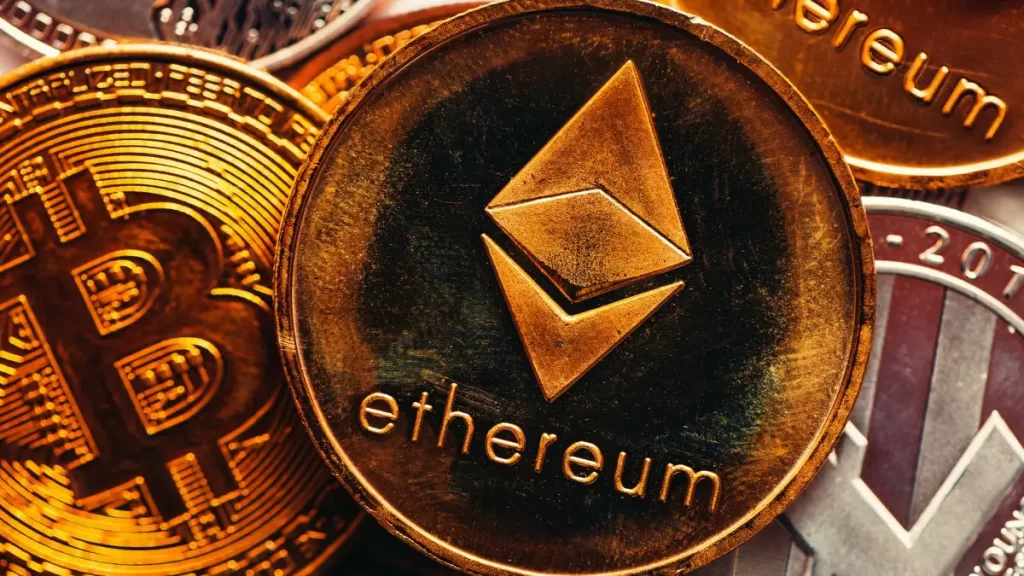
Ether reserves across centralized exchanges have dropped to their lowest levels in nearly nine years, reinforcing optimism that the market may have reached a bottom. According to CryptoQuant data, Ether reserves across all exchanges fell to 18.95 million on Feb. 18, a level last seen in July 2016 when ETH was trading at approximately $14.
A declining Ether supply on exchanges often suggests an impending price rally due to a “supply shock.” This occurs when strong buying demand meets a decreasing available supply, potentially driving ETH prices higher.
Investors Move ETH to Cold Storage
The diminishing Ether supply indicates that investors are transferring their ETH holdings to cold storage for long-term security rather than preparing for short-term sales. Nicolai Sondergaard, a research analyst at Nansen, considers this trend “generally bullish,” noting a similar pattern for Bitcoin.
“We are seeing similar trends for BTC, which makes me think if we a) are seeing demand outpaces supply and, or, b) is this a natural shift toward self-custody and cold storage,” Sondergaard told Cointelegraph.
Resistance and Potential for Breakout
Despite this bullish indicator, Ether still faces significant resistance at $2,750 and $2,800. CoinGlass data suggests that a breakout above $2,800 could trigger liquidations of over $822 million in leveraged short positions, potentially accelerating an uptrend.
Ether ETFs Could Tighten Supply Further
Another key factor influencing ETH’s future price is the potential approval of staking for Ether exchange-traded funds (ETFs). Marcin Kazmierczak, co-founder at Redstone, believes this could significantly tighten Ethereum’s liquid supply, enhancing its appeal as an investment asset.
“The potential introduction of staking ETFs could be a game-changer, further tightening Ethereum’s liquid supply and reinforcing its value proposition as a prime investment asset,” he stated.
As of late 2024, twelve U.S. states have disclosed holdings in Strategy, formerly known as MicroStrategy, through their state pension funds or treasuries. Bitcoin analyst Julian Fahrer reported on February 17 that these holdings collectively amount to $330 million.
California Leads with Largest Holdings
Among the states, California has the highest exposure. The California State Teachers Retirement System holds 285,785 shares valued at $83 million, while the California Public Employees’ Retirement System owns 264,713 shares worth approximately $76 million.
California’s pension funds also have significant investments in Coinbase (COIN), holding over $155 million worth of stock.
Other Major State Investments
Florida’s retirement fund owns 160,470 shares of Strategy, valued at $46 million, while Wisconsin’s investment board holds 100,957 shares worth $29 million. Additionally, North Carolina, New Jersey, Arizona, Colorado, Illinois, Louisiana, Maryland, Texas, and Utah also have Strategy stock in their public investment portfolios.
Strategy’s Growth and Market Performance
Strategy, the largest corporate holder of Bitcoin with 478,740 BTC worth $46 billion, has seen its stock price surge by 16.5% in early 2025. Over the past year, its value has increased by an impressive 383%, significantly outperforming the broader crypto market’s 62% growth.
Following its rebranding to Strategy on February 5, the company has continued to position itself as a key player in Bitcoin-focused investments, attracting growing interest from institutional investors and pension funds.
Scammers impersonating Saudi Arabia’s Crown Prince Mohammed bin Salman have launched a fraudulent cryptocurrency, capitalizing on the growing hype surrounding celebrity-backed memecoins. The so-called “Official” Saudi Arabia memecoin (KSA) emerged on February 17, promoted through a fake X (formerly Twitter) account, “SaudiLawConf.”
Red Flags and Impersonation Tactics
The first warning sign was the absence of any official government announcement or details regarding the token’s purpose and structure. The Saudi Law Conference, the legitimate entity behind the hacked X account, confirmed the breach via a February 17 LinkedIn post.
“The conference management announces that the official conference account in the X platform (@Saudilawconf) has been hacked and that any content currently published through the account does not represent our opinions or official orientations in any way,” the post stated.
Growing Trend of Political Figure Memecoins
This scam follows the rapid collapse of another high-profile political memecoin. On February 15, reports surfaced that the LIBRA token, linked to Argentine President Javier Milei, lost over 94% of its value within hours. Insiders allegedly cashed out $107 million in liquidity, leading to a sharp price drop.
Investor Losses and Market Impact
Another key indicator of fraud was the early creation of the token contract. On February 10, a week before its public announcement, the KSA token was deployed on the Solana-based memecoin launchpad Pump.fun. Despite the fraudulent marketing efforts, the scam token struggled to attract investors, reaching only $7,489 in market capitalization.
This incident adds to the growing concern over the risks associated with politically-linked memecoins, which continue to cause substantial financial losses for unsuspecting investors.