



As the debate over cryptocurrency regulation intensifies, prominent figures in the financial sector are urging US lawmakers to establish clear guidelines for the industry. Anthony Scaramucci, founder of investment firm SkyBridge Capital and former White House communications director, has emphasized the need for regulatory clarity, warning that the US risks falling behind in the rapidly evolving digital asset space.
Regulation has been a contentious topic in the crypto industry, with lawmakers and financial institutions struggling to balance innovation with consumer protection. While some officials advocate for stricter oversight, others argue that excessive regulation could stifle technological advancements and push companies to relocate to more crypto-friendly jurisdictions. The lack of comprehensive regulation has led to uncertainty, making it difficult for businesses and investors to navigate the market.
Scaramucci has been vocal about the importance of clear and fair regulations, stating, “We need to make sure that Washington is creating a framework that allows the industry to thrive while also protecting investors.” He believes that bipartisan cooperation is necessary to implement policies that foster innovation without excessive restrictions. His comments come as lawmakers ramp up discussions on cryptocurrency-related legislation, including proposals addressing stablecoins, securities classification, and anti-money laundering measures.
One of the key issues in crypto regulation is defining whether digital assets should be classified as securities or commodities. The Securities and Exchange Commission (SEC) has taken an aggressive stance, arguing that many cryptocurrencies fall under its jurisdiction as unregistered securities. However, industry leaders and some lawmakers have pushed back, advocating for a more nuanced approach that differentiates between various types of digital assets.
The regulatory uncertainty has led to high-profile legal battles, with major crypto companies facing lawsuits over alleged violations of securities laws. This has further fueled concerns that the US is taking a hostile approach to the industry, potentially driving innovation offshore. In contrast, regions like the European Union and the United Arab Emirates have introduced clearer regulatory frameworks, attracting businesses looking for legal stability.
Despite the challenges, Scaramucci remains optimistic about the future of crypto regulation in the US. “The key is finding common ground,” he said. “We need sensible rules that provide clarity for businesses while ensuring that bad actors are kept in check.” He believes that engaging with lawmakers and educating them on blockchain technology will be crucial in shaping balanced policies.
The push for regulation comes at a time when crypto adoption is growing among institutional investors and traditional financial institutions. Major banks and asset managers have increasingly explored digital asset offerings, signaling a shift in how cryptocurrencies are perceived in mainstream finance. However, without a well-defined regulatory framework, concerns about compliance and legal risks remain a major hurdle.
As discussions continue, the crypto industry will be closely watching legislative developments in Washington. The outcome of these debates could have a significant impact on the future of digital assets in the US, determining whether the country remains a leader in blockchain innovation or lags behind in the global market.

Bitcoin’s price has recently dipped below the $100,000 mark, a level it had maintained since January 27. This decline is attributed to rising inflation concerns following the imposition of import tariffs by President Donald Trump on goods from China, Canada, and Mexico.
Ryan Lee, chief analyst at Bitget Research, suggests that this downturn might precede a more significant correction, potentially bringing Bitcoin’s value down to $95,000. He stated, “On the downside, the $95,000 range remains a critical support area. The interplay between labor market trends, Fed policy expectations, and market sentiment will be the main catalysts to monitor in the coming weeks.”
The upcoming U.S. labor market report, scheduled for release on February 7 by the Bureau of Labor Statistics, is anticipated to play a pivotal role in Bitcoin’s near-term trajectory. Lee noted that weakening labor market data could bolster the case for a Federal Reserve rate cut, potentially creating a “more supportive environment for Bitcoin.”
Despite the recent dip, Bitcoin achieved a historic milestone by closing January above $102,000, marking its first monthly close above the $100,000 threshold. This represents a more than 6% increase from its previous record monthly close of $96,441 in November 2024.
Some market analysts interpret the current downturn as a potential “bear trap,” a scenario where a temporary decline in an asset’s price during a long-term uptrend leads investors to mistakenly believe a bear market has begun. This perspective suggests that the recent correction could be a coordinated effort to induce selling before a subsequent price increase.
Looking ahead, Bitcoin’s prospects for 2025 remain optimistic. The recent surpassing of a $125 billion milestone by spot Bitcoin exchange-traded funds (ETFs) in the U.S., just over a year after their debut in January 2024, underscores growing institutional interest. Analyst forecasts for Bitcoin’s value by the end of 2025 range from $160,000 to over $180,000.
In summary, while Bitcoin faces short-term challenges influenced by macroeconomic factors and market dynamics, its long-term outlook remains positive, supported by increasing institutional adoption and favorable market sentiment.

LayerZero Labs, a cross-chain protocol firm, has reached a settlement with the FTX estate concerning transactions from 2022 involving Alameda Ventures, the venture capital arm of Alameda Research. In a January 31 post on X (formerly Twitter), LayerZero co-founder and CEO Bryan Pellegrino announced that after incurring “millions in legal fees” and enduring two years of litigation, the company had settled with the FTX estate.
The dispute centered on allegations that LayerZero withdrew funds prior to FTX’s collapse in November 2022 and issues related to an equity stake in the protocol. FTX had been seeking over $21 million from LayerZero in the lawsuit.
Pellegrino stated, “Ultimately we decided this was not us vs FTX which is a fight we feel completely justified in, but it was us vs the creditors (which also we are one of). Original repurchase has been returned to the estate.”
In 2022, Alameda Ventures agreed to acquire approximately a 5% stake in LayerZero, involving transactions where Alameda sent $70 million to LayerZero and purchased $25 million worth of STG tokens. Following FTX’s bankruptcy filing in November 2022, LayerZero sought to repurchase its equity by forgiving a $45 million loan to FTX. However, the FTX estate filed a lawsuit in September 2023, alleging that LayerZero “negotiated a fire-sale transaction” with then-Alameda CEO Caroline Ellison, exploiting the firm’s liquidity crisis.
Court documents also revealed that LayerZero intended to repurchase the STG tokens for $10 million in a separate deal—approximately 40% of their original price. However, Alameda never transferred the tokens, and no funds were exchanged in this regard.
Since declaring bankruptcy in 2022, FTX debtors have initiated multiple lawsuits against crypto companies associated with the defunct exchange, aiming to recover funds. While some cases are ongoing, the estate’s reorganization plan took effect on January 3, allowing many users with claims under $50,000 to be repaid within 60 days.
All criminal cases against FTX executives have concluded, with Ellison, former FTX CEO Sam Bankman-Fried, and former FTX Digital Markets co-CEO Ryan Salame currently serving prison sentences. Bankman-Fried is appealing his conviction and 25-year sentence.

Since the launch of the United States spot exchange-traded funds (ETFs) for Bitcoin, the cryptocurrency market has seen a significant shift in Bitcoin holdings on exchanges.
Over $9.5 billion in Bitcoin has been withdrawn from exchanges, as reported by Glassnode, an on-chain analytics firm.
This withdrawal trend started on January 11 and has led to a reduction of over 136,000 BTC from exchange balances.
The dynamics of Bitcoin supply are increasingly favoring bulls with continued mass withdrawals observed this quarter.
The volume of Bitcoin on exchanges has dipped to its lowest since April 2018, with only 2,320,458 BTC remaining, indicating a substantial decline in available BTC for trading.
This trend continued with one of the largest single-day withdrawals occurring on March 27, where over 22,000 BTC, equivalent to $1.54 billion, were withdrawn.
The impact of U.S. spot Bitcoin ETFs, though they have been operational for just under three months, is becoming a pivotal factor in the market.
Additionally, notable market activities include a significant transfer of the stablecoin USD Coin (USDC) to Coinbase, highlighted by J.A. Maartunn from CryptoQuant.
READ MORE: Anthropic Shuns Saudi Investments Amid FTX Bankruptcy Sale, Citing National Security Concerns
This record transfer raised speculations about potential buying pressure in the market. Such movements underscore the evolving dynamics in the cryptocurrency market, particularly in the context of Bitcoin supply and demand.
Experts are closely watching the ETFs’ impact on Bitcoin’s supply, anticipating a possible “squeeze” where demand surpasses the available supply, potentially affecting prices.
This scenario is expected to intensify, especially with the upcoming block subsidy halving event in mid-April, which will further reduce the rate of new BTC entering the market to just 3.125 BTC per block.
Charles Edwards, founder of Capriole Investments, commented on the significance of the upcoming halving event, noting it as “the biggest Halving in Bitcoin’s history.”
He pointed out that Bitcoin would become even more scarce than gold, with the supply growth rate halving.
Edwards anticipates increased institutional demand through ETFs, a supply squeeze from the Halving, and Bitcoin’s new status as the world’s hardest asset, making April a month to watch for the cryptocurrency sector.
To submit a crypto press release (PR), send an email to [email protected].
Matthew Hougan, the Chief Investment Officer at Bitwise, has projected a transformative inflow of funds into Bitcoin from institutional investors through exchange-traded funds (ETFs), forecasting as much as $1 trillion could be funneled into the cryptocurrency.
In a detailed memo to investment professionals, Hougan tackled the issue of Bitcoin’s volatility, which has seen its value fluctuate between $60,000 and $70,000.
Despite these short-term swings, he advised a calm and long-term perspective, citing “keep calm and take the long view.”
Hougan pinpointed several pivotal moments on the horizon for Bitcoin, including the anticipated halving event and the approval of spot Bitcoin ETFs on major national platforms such as Morgan Stanley and Wells Fargo.
He also mentioned the ongoing due diligence processes by investment committees and consultants as an essential preparatory step before they can commit to investing in Bitcoin.
The Bitwise executive suggested that in the interim, Bitcoin’s price might experience sideways movement due to minor shifts in sentiment.
READ MORE: Driving Cats NFT Club Drop Begins in Challenge to SHIB, BONK, PEPE and DOGE
However, he remains optimistic about Bitcoin’s future, asserting that it is part of a “raging bull market,” supported by a 300% increase over the past 15 months and solid reasons to believe in continued growth.
Highlighting the significance of the recent spot Bitcoin ETF approvals in January, Hougan emphasized their role in opening the cryptocurrency market to investment professionals.
He outlined the gradual but inevitable shift of investment professionals, who manage trillions of dollars, towards cryptocurrencies, stressing that this transition is expected to unfold over years rather than months.
Hougan celebrated the remarkable success of ETFs, which have seen an inflow of $12 billion since their inception, marking them as the “most successful ETF launch of all time.”
Yet, he views this as just the beginning, with the potential for a massive $1 trillion influx once global wealth managers allocate a mere 1% of their portfolios to Bitcoin.
He concluded, “A 1% allocation across the board would mean ~$1 trillion of inflows into the space. Against this, $12 billion is barely a down payment.”
To submit a crypto press release (PR), send an email to [email protected].

The first phase of the Driving Cats NFT Club public sale got underway on 29 March at 8:30 AM (GMT) on OpenSea.
Cryptocurrencies like Shiba Inu (SHIB), Dogecoin (DOGE), Bonk (BONK) and Pepecoin (PEPE) have been attracting huge inflows from retail investors in recent weeks and months, amid the beginning of the bull run.
While these altcoins can deliver significant returns during the current cycle – potentially over 200% – investing in NFTs at the beginning of the drop can potentially generate even higher returns, in a much shorter period of time.
One such opportunity that has emerged is the Driving Cats NFT Club (DCNC.)
The first phase of the public sale of the Driving Cats NFT Club started today at 8:30 AM (GMT), and investors can now buy and mint their NFT from this collection.
During the first phase, each of the 999 NFTs that make up this collection will be available to buy for just 0.07 ETH (around $240).
Once the first phase of the public sale ends in late April, each NFT will be priced at 0.25 ETH – over four times its price during the first phase.
However, as the NFT collection is expected to sell out during the first phase, and as most buyers will likely hold onto their NFTs rather than trying to flip them in the secondary market, the price of each NFT could rally much higher than 0.25 ETH.
For investors who buy and mint their NFT during the first phase of the public sale, the Driving Cats NFT Club could be a great investment, potentially delivering much higher returns than if you were to invest in Shiba Inu (SHIB), Dogecoin (DOGE), Pepecoin (PEPE), or Bonk (BONK).
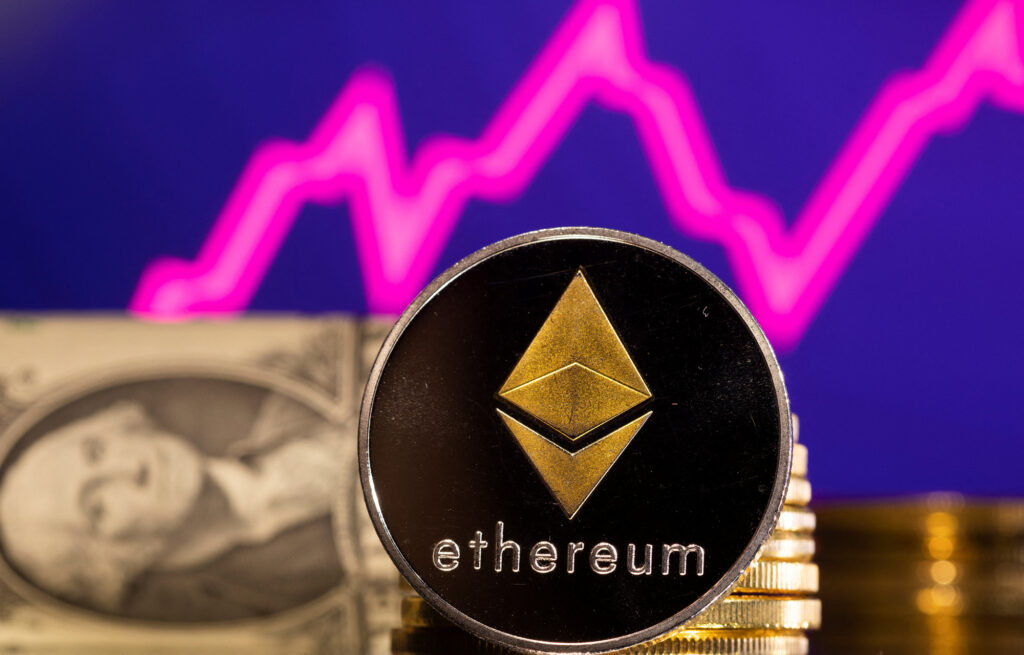
Despite concerns regarding the U.S. Securities and Exchange Commission’s (SEC) engagement level with spot Ether (ETH) exchange-traded funds (ETFs) applicants, Grayscale remains optimistic about approval prospects in May.
Grayscale Chief Legal Officer Craig Salm, in a recent X post, underscored his confidence, stating, “I don’t think perceived lack of engagement from regulators should be indicative of one outcome or another […] I personally am not deterred by it and believe the ETFs should be approved.”
Salm highlighted that the groundwork laid by the approval process for spot Bitcoin ETFs has addressed many issues relevant to spot Ether ETFs, including the mechanics of creation and redemption, asset protection strategies, and custody concerns.
He suggested that the SEC’s prior engagement in these areas means that there’s less new ground to cover this time, with the exception of the complexities introduced by staking in spot Ether ETF proposals.
Notably, firms such as Ark 21Shares, Fidelity, and Franklin Templeton, which are looking to include staking features in their ETFs, face additional regulatory scrutiny.
Bloomberg analysts Eric Balchunas and James Seyffart have expressed reservations about the SEC’s apparent disengagement, recently adjusting their approval odds to a “pessimistic 25%.”
Balchunas indicated that the SEC’s stance appears more strategic than procrastinatory.
Nevertheless, the path for spot Ether ETFs seems paved by the recent approval and regulation of Ether Futures ETFs.
The classification of these products as commodity futures suggests a favorable precedent for spot Ether ETFs, given the historical correlation between futures and spot markets.
This view is supported by Coinbase Chief Legal Officer Paul Grewal and former Commodity Futures Trading Commission Commissioner Brian Quintenz.
With several prominent financial institutions, including BlackRock, VanEck, ARK 21Shares, Fidelity, Invesco Galaxy, Grayscale, Franklin Templeton, and Hashdex, applying for SEC approval, the decision anticipated by May 23 is keenly awaited.
The outcome for VanEck’s application on this date is expected to signal the fate of all pending spot Ether ETF proposals.
To submit a crypto press release (PR), send an email to [email protected].

Coinbase, a leading cryptocurrency exchange, has announced a strategic shift in the management of its USD Coin (USDC) stablecoin accounts, signaling a significant move towards utilizing its Ethereum layer-2 blockchain, Base.
The transition, disclosed by Coinbase vice president Max Branzburg via a post on the social platform X on March 26, is designed to enhance the exchange’s capability to manage and secure customer funds with “lower fees and faster settlement times.”
This adjustment specifically affects Coinbase.com accounts, with Coinbase Wallet accounts remaining unaffected due to users’ control over their private keys.
Currently, the platform secures user tokens through multiparty computation technology.
Highlighting the company’s strict policy on asset management, Branzburg emphasized that Coinbase maintains a 1:1 holding of customer assets and refrains from lending funds without explicit authorization from the customers.
This move is not just a logistical change; it represents a step towards the realization of an on-chain financial ecosystem.
David Hoffman, a co-host of the Ethereum-centric Bankless show, noted this transition as a pivotal moment towards achieving such a future.
READ MORE: ARK Invest Sells Off $31.5 Million in Robinhood Shares Amid Crypto-Friendly Broker’s Stock Surge
Additionally, Ryan Sean Adams, another Bankless co-host, views this development as setting a standard for other cryptocurrency exchanges and banks, suggesting a future where every asset is tokenized and every bank operates on a blockchain.
Despite the optimism, some skepticism exists around the degree of decentralization of Base, with concerns raised over its current state of centralization, given Coinbase’s role as the sole sequencer.
However, Coinbase has expressed plans to gradually decentralize Base, reinforcing this intent by open-sourcing Base’s code in October for greater transparency and community involvement.
Launched on August 9, 2023, Base serves as an Ethereum scaling solution employing optimistic rollups for efficient off-chain transaction data storage.
It ranks as the fourth-largest Ethereum layer 2 by total value locked, boasting $2.63 billion, and recently achieved a record of 2 million daily transactions, indicating growing user engagement.
This strategic shift by Coinbase not only aims to enhance transaction efficiency and security but also signifies a broader move towards an on-chain financial infrastructure, setting a precedent for the industry at large.
To submit a crypto press release (PR), send an email to [email protected].
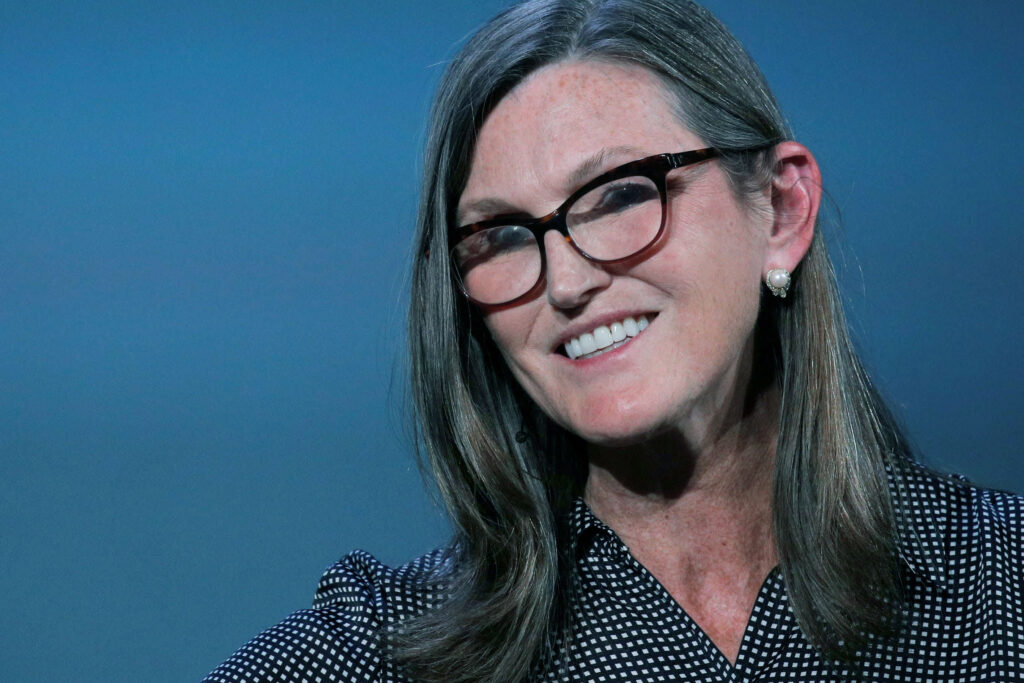
ARK Invest, an investment management firm established by Cathie Wood, recently began selling off substantial quantities of Robinhood (HOOD) shares, a brokerage known for its cryptocurrency-friendly stance.
On March 25, ARK sold 1.6 million shares from its various funds, a trade notification revealed.
These shares, valued at $31.5 million based on Robinhood’s latest closing price of $19.08, represent a significant move by the firm.
The bulk of the sale came from the ARK Innovation ETF (ARKK), with 1,247,181 shares sold for approximately $24 million.
Additionally, ARK reduced its holdings in Robinhood by selling 275,933 shares from the ARK Next Generation Internet ETF (ARKW) and 128,137 shares from the ARK Fintech Innovation ETF (ARKF).
This marks the largest sale of Robinhood stock by ARK since it began accumulating the broker’s shares last year.
Robinhood’s stock had seen a 36% increase over the prior month, making the timing of the sale notable.
ARK’s sales strategy appears to align with compliance requirements, specifically Rule 12d3-1, which restricts funds from holding more than 5% of their total assets in securities.
Despite the recent sales, Robinhood remains a significant asset in ARK’s portfolio, ranking eighth and comprising 4.3% of ARKK’s $8.2 billion in assets under management.
ARKK’s top three holdings include Coinbase (COIN), Tesla (TSLA), and Roku (ROKU), with substantial allocations of 10.6%, 8.4%, and 7.5%, respectively.
Amidst its divestment from Robinhood, ARK has been actively purchasing shares of Roblox (RBLX), acquiring 740,115 shares valued at $27 million for its three funds on the same day.
Moreover, the firm continued to sell shares of Coinbase, parting with 4,291 COIN shares worth roughly $21 million.
Robinhood, founded in 2013, is a platform that facilitates the trading of cryptocurrencies, stocks, exchange-traded funds (ETFs), options, and other assets.
It recently expanded its offerings by launching a self-custodial wallet app for Android on March 20, 2024, further solidifying its position in the cryptocurrency space.
To submit a crypto press release (PR), send an email to [email protected].
Following an unexpected rally, Bitcoin has notably rebounded, surpassing the $71,000 mark, hinting that the anticipated pre-halving dip may have concluded.
This surge came on the heels of a significant day of accumulation, as reported on March 25 by blockchain analytics firm Santiment, marking it as one of the most substantial in recent years.
Santiment highlighted that this rebound caught traders off guard, particularly as “key stakeholders” amassed a considerable amount of Bitcoin over the weekend.
Specifically, wallets categorized as “sharks” and “whales,” holding between 10 and 10,000 coins, accumulated 51,959 BTC on March 24, equating to approximately $3.4 billion.
This acquisition represented 0.263% of Bitcoin’s total available supply at the time.
With the Bitcoin halving event approaching in about three weeks, around April 19, Santiment suggested that the continued growth of these wallets could positively influence the overall cryptocurrency market caps.
Contrary to the expectations of some crypto analysts who anticipated a more significant drop ahead of the halving, Bitcoin’s decline was relatively modest.
Data from CoinGecko indicated that Bitcoin’s price only fell about 17% from its all-time high of $73,738 on March 14 to a low of $61,494 on March 20. This downturn mirrored the pre-halving retracement in 2020 closely.
Technical analyst Rekt Capital observed that the current retracement is nearly identical to the 2020 pre-halving dip, with Bitcoin’s price reducing by approximately 18% this cycle, compared to just over 19% previously.
He had earlier speculated that this year’s pre-halving retracement would likely be milder and shorter than in past cycles.
Kaiko, a crypto research firm, examined the market’s response to last week’s dip on March 25, finding that selling pressure increased after the U.S. market closed.
Their analysis pointed out that liquidity in the cryptocurrency market is fragmented not only across different exchanges but also among various trading pairs.
At the time of reporting, Bitcoin was experiencing a 5.2% increase in its value, trading at $70,252, after reaching an intraday high of $71,000 on March 25.
This recent movement underscores the volatile nature of the cryptocurrency market and the significant impact of strategic accumulations by large-scale investors.
To submit a crypto press release (PR), send an email to [email protected].