


The Philippines’ financial regulatory body has announced plans to restrict access to Binance, the leading global cryptocurrency exchange, due to concerns regarding its unauthorized operations within the nation.
This action is in response to the platform’s provision of investment services, such as leveraged trading and crypto savings accounts, without the necessary licenses, infringing on the Securities Regulation Code.
In collaboration with the National Telecommunication Commission (NTC), the Securities and Exchange Commission (SEC) of the Philippines aims to block Binance’s website and online trading services.
This decision was outlined in a document by the SEC dated March 25.
SEC Chairperson Emilio B. Aquino emphasized the risk posed to the security of Filipino investors’ funds if access to these platforms remains unrestricted, stating, “The SEC has identified the aforementioned platform and concluded that the public’s continued access to these websites/apps poses a threat to the security of the funds of investing Filipinos.”
To mitigate immediate disruptions, the implementation of this ban will be phased over three months, allowing investors sufficient time to close their positions with Binance.
Additionally, the SEC has approached Google and Meta to prevent Binance-related advertisements from reaching Filipino audiences.
READ MORE: StaFi Liquid Staking Protocol Launches Testnet Awaiting StaFi 2.0 Mainnet Launch
This regulatory action against Binance in the Philippines adds to the exchange’s growing list of global regulatory challenges.
Notably, in December 2023, Binance and its former CEO, Changpeng “CZ” Zhao, were fined $2.7 billion and $150 million, respectively, by a U.S. court following a CFTC lawsuit.
This legal battle, initiated in March 2023, accused Binance of contravening U.S. law by operating an illegal derivatives exchange without authorization.
The repercussions for CZ have been significant, with his agreement in November to resign from his leadership role at Binance amid a broader settlement with various U.S. regulatory bodies, including the Department of Justice and the CFTC.
Moreover, CZ admitted guilt to numerous civil infractions and a criminal charge related to violations of Anti-Money Laundering statutes.
While he awaits sentencing for money laundering charges, currently scheduled for April 30, CZ remains on a $175 million release bond.
To submit a crypto press release (PR), send an email to [email protected].

Over the last month, Boyaa Interactive, a Hong Kong-based online gaming company, has seen its shares skyrocket by 318% following its decision to diversify investments into cryptocurrencies.
The company announced a $100 million initiative to invest in Bitcoin (BTC), Ether (ETH), and stablecoins such as Tether (USDT) and USD Coin (USDC), allocating $45 million to BTC, $45 million to ETH, and $10 million to stablecoins.
As part of this strategic move, Boyaa Interactive disclosed the purchase of 1,110 Bitcoin at an average price of $41,790 each, 14,855 Ether at approximately $2,777 per unit, and around 8,000,000 units of Tether.
The firm expressed its intention to double down on its crypto investments with an additional $100 million.
This investment comes at a time when Boyaa’s core business, online gaming, continues to perform solidly, generating 100 million yuan ($13.90 million) in revenue and 32.05 million yuan ($4.46 million) in earnings, witnessing growth rates of 6% and 72%, respectively.
The broader context includes a bearish stock market in China, with many firms holding large cash balances and trading below their book values.
The NFT market has shown varying degrees of volatility, illustrated by the floor price of “Nobody,” a collection by legendary director Stephen Chow, which dropped over 70% within a month.
READ MORE: Bitcoin Nears $60K Amid Weekend Sell-Off; Market Eyes ETF Resurgence and Futures Gap for Recovery
Despite promotional efforts, the collection’s trading volume has stagnated after an initial surge.
Similarly, the Bruce Lee Foundation’s NFT collection and Wassie Avatars have experienced dramatic price fluctuations, reflecting the speculative nature of the NFT market despite its recovery from lows in 2020-2021.
Regulatory scrutiny in Hong Kong has increased, with the Securities & Futures Commission (SFC) adding crypto exchange Bybit and its investment products to its investment warning list.
This action underscores the regulatory requirements for operating within the city and the criminal implications of non-compliance.
Concurrently, discussions about a potential spot Bitcoin ETF in Hong Kong hint at a more direct and cost-efficient structure compared to those in the United States, indicating a keen interest in pioneering such financial products in the region.
This period signifies a dynamic phase for Hong Kong’s crypto landscape, marked by significant investments, regulatory developments, and speculative NFT market movements.
To submit a crypto press release (PR), send an email to [email protected].

In recent developments, Bitcoin may be witnessing a shift in momentum as institutional outflows diminish.
According to data from the UK-based investment firm Farside, the Grayscale Bitcoin Trust (GBTC) experienced a modest reduction of $170 million on March 22.
This comes amid discussions surrounding the United States Spot Bitcoin exchange-traded funds (ETFs), which have faced challenges, including decreased inflows and record-high outflows from GBTC, signaling a potential consolidation phase before Bitcoin tests its all-time high again.
Notably, the series of GBTC outflows coincided with reports of the bankrupt crypto lender Genesis liquidating its GBTC holdings.
This sell-off could be nearing its end, potentially easing the downward trends observed in ETFs.
Investor Alistair Milne highlighted a significant slowdown in GBTC selling, leading to a decrease in net outflows from Bitcoin ETFs to -$51.6 million. Milne’s observation raises the possibility of a momentum shift in the market.
Supporting this perspective, statistician Willy Woo introduced a new model that correlates ETF inflows with Bitcoin’s price movements, suggesting the most intense selling phase might have concluded.
READ MORE: SEC Delays Decision on Ether ETFs, Casting Doubt on Approval Odds Amidst Growing Skepticism
Woo anticipates continued market choppiness leading up to the Bitcoin halving event, echoing a sentiment for potential consolidation.
Echoing optimism, WhalePanda, a pseudonymous commentator, predicts a sideways market trend, potentially setting the stage for Bitcoin’s ascent to new all-time highs.
The commentator points to a significant demand for Bitcoin inflows to match the coin’s daily emission rate, which is expected to halve soon, further tightening supply.
However, GBTC faces criticism for its diminishing assets under management (AUM), now holding just half of its AUM since its ETF conversion.
Critics argue that GBTC’s reduction is beneficial for the Bitcoin ecosystem, with Vijay Boyapati blaming it for market instability and hindering Bitcoin’s growth.
Despite these challenges, spot Bitcoin ETFs have been historically successful, amassing $12.15 billion in cumulative flows.
Cathie Wood of ARK Invest anticipates more institutional engagement in the near future, signaling continued interest and investment in Bitcoin.
To submit a crypto press release (PR), send an email to [email protected].

The past week has been a rollercoaster for the cryptocurrency market, marked by significant events that shaped the landscape.
Unexpectedly, meme coins grabbed headlines, major cryptocurrencies experienced setbacks, and prominent figures voiced their opinions on the market’s future.
In a surprising turn of events, the “Book Of Meme” (BOME/USD) made remarkable gains, outshining its competitor, the so-called “Dogecoin Killer,” Shiba Inu (SHIB/USD).
On Sunday, BOME reported a 6.4% increase in its price and a significant 13.4% rise in trading volume, with a notable $1.5 billion in trades.
This surge was further bolstered by Binance’s announcement of BOME’s upcoming listing on both its spot market and futures platform.
The same week, major cryptocurrencies faced a downturn, with Tuesday highlighting a dramatic fall.
The sector saw over $650 million in liquidations within a day, largely due to Bitcoin’s (BTC/USD) decline below the $63,000 mark.
This drop resulted in an 8% shrinkage of the market cap within a mere 24 hours.
READ MORE: Bitcoin Futures Volatility Surges: Open Interest Hits $36 Billion Amid Price Fluctuations
In the midst of market turmoil, Robert Kiyosaki, the author of ‘Rich Dad Poor Dad,’ shared his investment insights.
He advocated for gold, silver, and Bitcoin as preferable investments over stocks and bonds, citing China’s economic volatility and its “foolish” financial strategies as a backdrop for his advice.
Further adding to the discourse, 10x Research released a report forecasting a downturn in Bitcoin’s value.
This prediction came to pass as Bitcoin fell by 13% over the week, underscoring the report’s identification of risk factors and potential support levels should the downturn persist.
Controversy also arose from Peter Schiff, a known Bitcoin skeptic, who criticized CNBC’s “Squawk Box” for allegedly displaying a bias towards Bitcoin.
He accused the show of highlighting the cryptocurrency’s successes while overlooking its failures, specifically pointing out a lack of coverage on a significant 6% loss Bitcoin suffered overnight.
These developments reflect the volatile nature of the cryptocurrency market, with fluctuations driven by various factors from market sentiment to economic conditions, illustrating the unpredictable journey of digital currencies.
To submit a crypto press release (PR), send an email to [email protected].
Ether recently encountered significant resistance at the $4,100 level on March 12, leading to a 9% drop in its price over the past week, a sharper decline than the broader cryptocurrency market, which saw a 2.5% decrease in total market capitalization.
This downturn has prompted speculation about the durability of Ether’s current $3,200 support level.
A key potential driver for Ether is the possibility of the U.S. Securities and Exchange Commission (SEC) approving a spot Ethereum exchange-traded fund (ETF), with a decision expected by May 23.
Yet, Bloomberg’s James Seyffart remains skeptical of approval, stating, “However, Bloomberg senior ETF analyst James Seyffart does not consider approval as his base scenario.”
Despite the price setback, the Ethereum network saw significant upgrades with the Dencun hard fork on March 13, aimed at improving scalability and layer-2 data processing.
This update has led to reduced transaction fees on platforms like Arbitrum, Optimism, and Base, bolstering the case for layer-2 solutions among Ethereum users.
Cointelegraph highlights this trend, noting, “Data indicates a surge in 7-day volumes for Arbitrum, Optimism, and Base by 145%, 144%, and 203%, respectively, thereby alleviating some of the downward pressure on Ether’s price that was attributed to high gas fees.”
However, competition from networks like BNB Chain and Solana, which offer lower base-layer transaction fees, remains fierce.
1Despite this, Ethereum continues to see positive ecosystem developments, even as regulatory scrutiny in the U.S. intensifies, with the SEC investigating connections to the Ethereum Foundation to potentially classify Ether as a security.
The recent SEC actions, especially in light of Ethereum’s shift to proof-of-stake, have led to a mixed response from the market and industry figures.
Some, like Van Buren Capital and lawyer Scott Johnsson, view the SEC’s scrutiny as a potential obstacle to Ether ETF approvals, while Coinbase’s chief legal officer, Paul Grewal, contends, “The SEC has no valid reason to reject the Ether ETP applications.”
Market sentiment, as gauged by the ETH options 25% delta skew, reflects a cautious stance, with a recent shift from 0% to 5%, indicating skepticism but not outright bearishness towards the $3,200 support.
Despite this, Ethereum’s position as a leading network, with a total value locked (TVL) of $94 billion and BlackRock’s initiative to launch a tokenized asset fund on Ethereum, underscores its enduring significance.
This backdrop suggests that, despite current challenges, Ether’s foundational support level remains robust.
To submit a crypto press release (PR), send an email to [email protected].
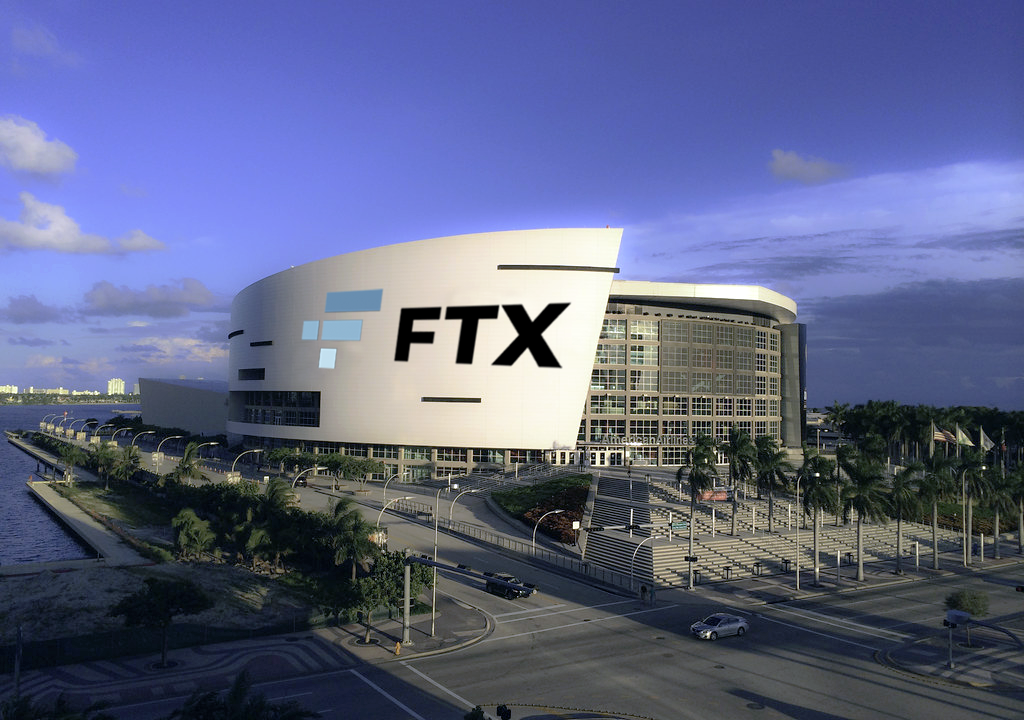
FTX, the cryptocurrency exchange that went bankrupt, is in the process of selling its investment in the artificial intelligence company Anthropic, valued at approximately $1 billion.
This move is part of FTX’s strategy to address its bankruptcy debts, a situation reported by CNBC on March 22.
Anthropic, an AI firm, is currently evaluating potential buyers for FTX’s stake, with a transaction expected to finalize within the next few weeks.
Sources close to the situation, preferring anonymity due to the sensitive nature of the financial discussions, informed CNBC of these developments.
The method of sale involves a special purpose vehicle (SPV), a separate corporate entity created to fulfill legal obligations during insolvency situations, indicative of FTX’s current financial state.
Interestingly, the sources revealed that Saudi Arabian entities have been excluded from the bidding process over national security concerns, although it remains unclear if this exclusion pertains to all Saudi investors or just state-related ones. It’s important to note that the shares in question are “Class B” non-voting shares.
The potential sale follows a decision by the Delaware Bankruptcy Court, where Judge John Dorsey authorized FTX to liquidate its Anthropic shares on February 22.
FTX initially acquired these shares for about $530 million in April 2022, and their value has nearly doubled since, propelled by the surge in generative AI technology, now estimated to be worth around $1 billion.
This development surfaces as FTX’s former CEO, Sam Bankman-Fried, prepares for his sentencing hearing on March 28, after being convicted on seven counts of fraud in November 2023.
Describing Bankman-Fried’s actions, U.S. Attorney Damian Williams stated, “a multibillion-dollar scheme designed to make him the king of crypto,” and highlighted the scale of the fraud as one of the most significant financial deceptions in U.S. history.
To submit a crypto press release (PR), send an email to [email protected].

Montenegro’s authorities are set to release Terraform Labs co-founder Do Kwon from prison while his extradition to the United States or South Korea remains undecided.
Kwon, detained for approximately one year, will be released on March 23 but must relinquish his travel documents to ensure he does not leave the country, as reported by Montenegrin news outlet Vijesti on March 22.
This decision by the Council of the Supreme Court precedes a review that may either approve or reject his extradition to South Korea, his homeland.
Kwon’s arrest in Montenegro in March 2023 alongside Han Chang-joon, Terraform Labs’ ex-chief financial officer, was due to the use of counterfeit travel documents.
This arrest was complicated by extradition requests from both the U.S. and South Korea, where Kwon faces charges of fraud, although a final ruling on his extradition has yet to be made.
In the U.S., Kwon would confront eight felony charges filed by prosecutors in March 2023.
READ MORE: Vitalik Buterin Doubles Grant for ENS, Fueling Growth and Innovation in Web3 Addresses
Alternatively, South Korea might indict him for fraud and breaches of capital markets law. The destination of his potential extradition remains uncertain.
The plan involves confiscating Kwon’s South Korean passport, which was set to be revoked in 2022 following Terra’s downfall.
Despite this, Kwon used a falsified Costa Rican passport in Montenegro, claiming it to be genuine, which led to his arrest in 2023.
Additionally, Terraform Labs co-founder Shin Hyun-Seong, also known as Daniel Shin, and others linked to the platform are facing criminal charges for investor fraud.
Following Terra’s collapse in May 2022, Shin remained in South Korea.
The collapse brought significant regulatory attention to the platform and played a part in a broader downturn in the cryptocurrency market.
To submit a crypto press release (PR), send an email to [email protected].
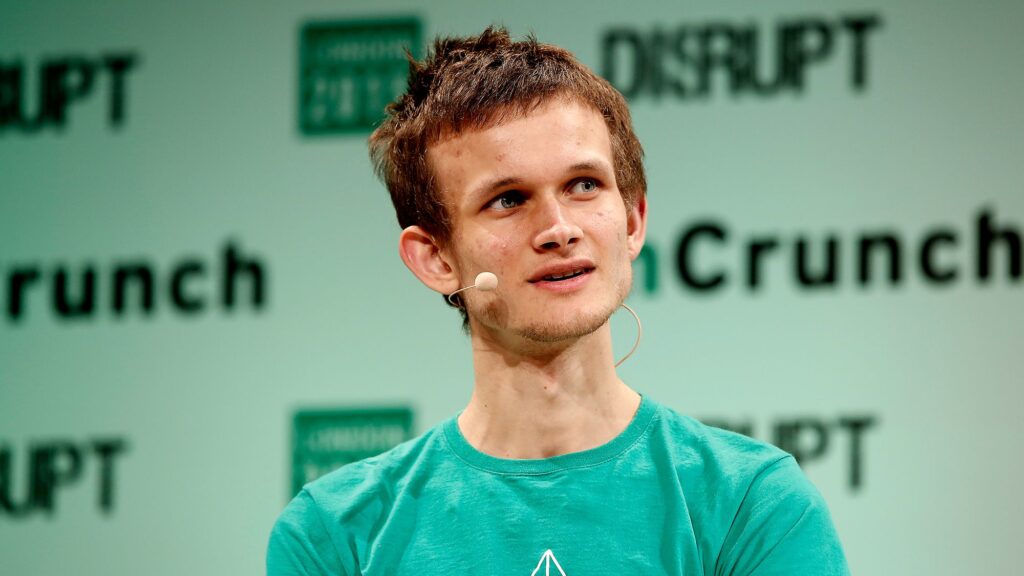
Nick Johnson, the brain behind Ethereum Name Service (ENS), embarked on this project with uncertain financial requirements.
To his surprise, Vitalik Buterin, co-founder of Ethereum, granted him twice the amount he requested from the Ethereum Foundation.
This pivotal moment was discussed by Johnson during an exclusive interview with Cointelegraph at ETHGlobal in London.
He delved into the inception and evolution of ENS, a service enabling the creation of human-readable Web3 addresses.
These addresses serve multiple purposes: as a Web3 wallet for cryptocurrencies and non-fungible tokens (NFTs), and as a domain for decentralized websites.
Before his venture into the blockchain world, Johnson, originally from New Zealand, contributed his expertise to Google.
His journey into cryptocurrency began with Bitcoin, but he quickly gravitated towards Ethereum, attracted by its programmability.
He noted, “I learned about Bitcoin not long after it came out. I initially thought this was really cool, but then I realized it is just money.
“There’s no programmability here.” With a robust background in infrastructure, tooling, and libraries, Johnson leveraged his skills to develop his own Ethereum strings library, essential for string manipulation in coding.
Johnson’s talent caught the attention of the Ethereum Foundation, which brought him onboard to tackle an existing gap in their infrastructure through the development of the name service.
This project initially commenced within the EthSwarm team but continued to flourish as Johnson transitioned to the Go Ethereum team, eventually becoming his primary focus.
READ MORE: Pro-XRP Lawyer John Deaton Challenges Senator Elizabeth Warren, Launches Crypto-Funded Senate Bid
The establishment of ENS as a separate organization was propelled by a significant grant from the Ethereum Foundation, aimed at supporting a two-year roadmap.
Buterin’s intervention to double the initial grant ensured the project’s sustainability and growth.
Johnson reminisced, “They took it to Vitalik, and he said, ‘No, that’s not nearly enough, take twice as much.’ That’s how it started. If he hadn’t got involved, ENS would have sputtered and failed.”
Since its launch, ENS has seen over two million addresses registered.
However, Johnson values the quality of user engagement over mere numbers, wishing to measure the utility of ENS addresses in crypto transactions more accurately.
Despite the challenges in gauging direct metrics, Johnson is optimistic about ENS’s expansion and its adoption on various networks to enhance Web3 utility.
Looking forward, ENS plans to integrate with Ethereum layer-2 solutions, aiming to become more user-friendly and accessible.
This strategic direction underscores Johnson’s commitment to bringing ENS closer to users and improving overall usability within the Web3 space.
To submit a crypto press release (PR), send an email to [email protected].
On March 21, Bitcoin maintained its upward trajectory, buoyed by a quick recovery that delivered a 12% increase in its price.
This uptick followed a period of consolidation within a tight range, sparked by a favorable response to comments made by the United States Federal Reserve, which opted to keep interest rates steady.
The Federal Reserve’s decision came after the Federal Open Market Committee (FOMC) meeting, with Chair Jerome Powell indicating potential rate cuts later in the year.
He stated it would be “appropriate” to initiate such cuts once there was greater confidence in inflation moving sustainably towards the 2% target.
A press release underscored this stance, emphasizing patience until there’s more certainty about the inflation trajectory.
This development helped Bitcoin avoid a drop below the $60,000 support level, propelling it to $68,000 and negating its recent losses.
The sentiment was encapsulated by a popular trader, Jelle, on X (formerly Twitter), who highlighted the importance of staying above $65,300 for Bitcoin to potentially revisit its 2021 cycle highs.
READ MORE: Starknet Expands Airdrop Eligibility, Addressing Immutable X and ETH Staker Concerns
This surge inflicted significant losses on short sellers, with CoinGlass reporting $70 million in short BTC liquidations on March 20.
Despite new withdrawals from U.S. spot Bitcoin exchange-traded funds (ETFs), market morale remained strong.
Farside, a UK investment firm, noted that $261 million exited new ETF products on March 20, largely due to $386 million in outflows from the Grayscale Bitcoin Trust (GBTC), even as other ETFs experienced inflows.
Market commentators expressed optimism amidst these developments. Dyme, a well-regarded voice, observed Bitcoin’s resilience against the backdrop of ETF outflows, suggesting the market’s independence from ETF movements.
Similarly, Samson Mow, CEO of crypto adoption firm Jan3, opined that ETF outflows would inevitably reverse, encouraging investors to plan with this future shift in mind.
These perspectives underscore a growing belief in Bitcoin’s enduring appeal and its capacity to withstand market fluctuations.
To submit a crypto press release (PR), send an email to [email protected].

The Ethereum layer-2 blockchain Starknet has expanded the eligibility for its first round of Starknet provisions, now including two sub-categories of users who initially encountered difficulties in claiming STRK tokens.
This adjustment comes after the Starknet Foundation, the entity behind the Starknet network, resolved uncertainties about the eligibility of certain pre-Merge ETH stakers and Immutable X users for the Starknet (STRK) airdrop scheduled for February.
Following a detailed evaluation, eligibility has been extended to include VeVe users, non-VeVe StarkEx users mistakenly identified as VeVe users, and pooled stakers.
According to a communication shared with Cointelegraph, the new group of users now eligible for the February airdrop will be able to start claiming their STRK tokens in April. Starknet discovered inaccuracies in a list from Immutable, which incorrectly categorized many Immutable X users as VeVe users.
This list was crucial for distinguishing between users of the nonfungible token (NFT) platform VeVe, which manages its users’ private keys, and other users.
As a result of correcting these inaccuracies, Immutable X users who executed eight or more transactions before June 1, 2022, are now entitled to claim their airdrop.
The conversation around airdrops for VeVe users is ongoing between Starknet and the VeVe team.
Additionally, pooled ETH stakers faced hurdles in receiving their STRK due to various complications with the staking protocols.
However, some protocols have now provided Starknet with a list of users eligible for the airdrop, which will commence in April.
Starknet also revised its unlock schedule in February, following concerns that the original plan favored early investors at the expense of retail users, leading to a more equitable distribution plan over three years.
This change followed criticism from Starknet users who felt excluded from the STRK airdrop despite significant transaction volumes, largely because they did not meet the requirement of holding at least 0.005 ETH as of November 15, 2023.
After the STRK airdrop on February 20, substantial sell-offs by large holders led to a dramatic 60% drop in the token’s value, from a peak of $4.40 to $1.90, within just over two days.
The struggle to recover the price of STRK continues, with it currently trading at $1.88, according to the latest CoinGecko data.
To submit a crypto press release (PR), send an email to [email protected].