


Tim Buckley, the CEO of The Vanguard Group, remains firmly against the introduction of Bitcoin exchange-traded funds (ETFs), despite facing customer backlash and continuous queries about the company’s potential plans for such offerings.
Buckley’s stance was reinforced in a video released by Vanguard, where he warned against incorporating Bitcoin ETFs into retirement investment portfolios, citing the cryptocurrency’s volatile nature.
He asserted, “We don’t believe it belongs, like a Bitcoin ETF belongs in a long-term portfolio of someone saving for their retirement. It’s a speculative asset.”
Further questioning Bitcoin’s reliability as a store of value, Buckley highlighted its performance during the 2022 stock market downturn, where Bitcoin’s value plummeted alongside the market.
“When stocks got hammered in the recent crisis, Bitcoin went right with them.
“And so it is speculative.
“Really tough to think about how it belongs in a long-term portfolio,” he explained.
Despite Bitcoin reaching new heights, with a record value of $73,835 after previously peaking at over $69,000, its value experienced a steep decline in 2022, falling to under $16,000 amidst a 21% drop in the S&P 500 during the first half of the year, largely attributed to the United States Federal Reserve’s interest rate hikes.
READ MORE: Bitcoin Dips Below Weekly Lows Amid Market Optimism, Traders Eye Bullish Trends Despite Pullback
Buckley made it clear that Vanguard has no intention of shifting its stance on offering spot Bitcoin ETFs to its clientele, stating the firm’s position would only change if the nature of the asset class itself transformed.
This resolution followed closely on the heels of the U.S. Securities and Exchange Commission’s approval of 11 spot Bitcoin ETFs on January 10, with Vanguard promptly announcing on January 12, via Cointelegraph, its decision to abstain from offering Bitcoin ETFs or any crypto-related products.
Despite this firm stance, certain Vanguard customers, especially those from the crypto sector, have expressed their discontent.
Notably, Coinbase’s senior engineering manager, Yuga Cohler, announced his decision to transfer his Roth 401(k) savings from Vanguard to Fidelity, criticizing Vanguard’s “paternalistic blocking of Bitcoin ETFs” as incongruent with his investment philosophy.
Yet, Vanguard maintains a considerable albeit indirect exposure to Bitcoin, holding an 8.24% stake in MicroStrategy, making it the second-largest institutional investor in the company, as reported by Cointelegraph on January 12.
To submit a crypto press release (PR), send an email to [email protected].
On March 15, Hong Kong’s Securities and Futures Commission (SFC) escalated its regulatory oversight of the cryptocurrency industry by adding MEXC, a global cryptocurrency exchange, to its warning list.
The SFC’s announcement highlighted MEXC’s unauthorized activities in Hong Kong, including its efforts to attract local investors without possessing the requisite license or having initiated the process for a virtual asset trading platforms (VATP) license.
The regulatory body emphasized the legal implications of such actions, stating, “Under the Anti-Money Laundering and Counter-Terrorist Financing Ordinance, it is an offense to carry on a business of providing a virtual asset service (i.e., operating a virtual asset exchange) in Hong Kong and/or actively marketing such services to Hong Kong investors without a license.”
In response to these developments, Cointelegraph reached out to MEXC for their comments on the matter.
Additionally, the SFC cautioned investors about the risks associated with using unlicensed exchanges for trading digital assets, including the potential total loss of their investments should these platforms cease operations.
READ MORE: Bitcoin Halving Not ‘Fully Priced In’ as Fresh Rally Expected with $100,000 Target
This warning comes closely on the heels of a similar advisory against Bybit, another crypto exchange, and expands the SFC’s warning list to include a total of 20 such platforms.
MEXC, recognized as the 11th-largest crypto exchange globally, boasts significant trading volumes and a broad cryptocurrency offering, underscoring the impact of the SFC’s warning.
The SFC has been active in safeguarding investors from fraudulent activities, previously issuing warnings against fake websites mimicking major local exchanges.
In a notable move on March 4, it alerted the public to sites impersonating OSL Digital Securities and Hash Blockchain Limited (HashKey), with MEXC also being a target of such impersonations.
As the deadline for VATP license applications expired on February 29, the SFC has made clear the implications for unlicensed exchanges operating in Hong Kong.
They must halt operations by May 31, or within three months if their VATP application is denied.
To date, only OSL exchange and HashKey Exchange have secured licenses from the SFC, on December 15, 2020, and November 9, 2022, respectively, marking a significant step towards regulatory compliance within the region’s burgeoning crypto market.
To submit a crypto press release (PR), send an email to [email protected].

Bitcoin’s value experienced a significant drop amidst a tumultuous day in the cryptocurrency market, leading to over $661 million in crypto liquidations and affecting nearly 200,000 traders.
The sharp decline saw Bitcoin‘s price fall by 7.5% from $72,000 to $66,500 within just a few hours of trading on March 15.
Despite a brief recovery to the $68,000 mark, the cryptocurrency faced resistance and dropped to approximately $67,500, marking an 8.3% decrease from its March 14 peak of $73,737.
The bulk of the liquidations, which accounted for 80% or $525.2 million, were long positions, while short-position liquidations amounted to $136.5 million.
This sell-off contributed to a 7.3% reduction in the overall crypto market capitalization, which fell to $2.68 trillion as around $175 billion left the market.
Greeks Live, a crypto derivatives tool provider, commented on a “recent change in market tempo” on March 14, indicating a potential shift in the trend of Exchange-Traded Fund (ETF) inflows.
Pav Hundal, a lead analyst at Swyftx, expressed concerns to Cointelegraph about the potential for a correction into the low $60,000 or high $50,000 range if ETF volumes continue to diminish.
He highlighted worries over hot inflation data and a notable 48% drop in Bitcoin ETF inflow volumes from their 14-day average, which could signify a significant market correction.
On March 14, Bitcoin ETF inflows reached a monthly low of just $133 million, according to Farside Investors.
READ MORE: Solana Surges to Yearly High Amid Memecoin Mania, Outshines Bitcoin in Market Shift
Crypto trader and analyst CrediBULL Crypto, addressing his 380,000 followers on X, suggested that the recent market downturn was anticipated and could lead Bitcoin to drop further to between $63,000 and $64,000.
He noted that the dip had erased most of the accumulated open interest in derivatives markets.
The downturn was seemingly hastened by the release of U.S. economic data, including above-expected Producer Price Index (PPI) figures, indicating potential for sustained high rates by the Federal Reserve.
Additionally, higher-than-anticipated Consumer Price Index (CPI) data compounded concerns about the U.S. economy’s challenges.
Following this data, Asian stock markets also saw declines, dampening hopes for imminent lower interest rates.
To submit a crypto press release (PR), send an email to [email protected].

In the rapidly evolving cryptocurrency market, meme coins like DOGE, SHIB, PEPE, and others have been capturing significant attention, particularly in a bullish phase.
Among these, PEPE, the third-largest meme coin by market cap, has notably stood out with an extraordinary performance.
In the last month alone, it has seen an astounding surge of over 840%, drawing considerable interest from investors and traders alike.
As of March 14, 2024, PEPE broke new ground by exiting a consolidation phase it had been in over the past five trading days and hitting a new all-time high at $0.0000108.
This breakout led to a further increase of over 14%, with the coin’s price stabilizing around $0.0000105. Experts analyzing PEPE’s market behavior consider it bullish post-breakout, suggesting potential for further gains.
They predict that if PEPE can maintain its position above the $0.0000105 level, it could climb to $0.000014 in the near future.
However, they also caution about the possibility of a correction or consolidation period, considering the coin’s recent substantial gains.
The 24-hour trading volume for PEPE has seen a 50% increase, reaching approximately $2.4 billion, indicating a heightened interest in the coin.
Over the past week, PEPE has gained over 55%, and over the past month, investors have enjoyed returns exceeding 840%.
A noteworthy event in this saga is the significant profit earned by a savvy trader, known by the address 0x522, who secured over $3.39 million from trading PEPE.
As reported by the on-chain analysis firm SpotOnChain, this trader moved 500 billion PEPE tokens, valued at about $4.26 million, to Binance, the world’s largest cryptocurrency exchange, within the last ten days.
This move resulted in a profit of $3.39 million from a mere 870K investment.
SpotOnChain further revealed that this trader still possesses 100 billion PEPE tokens, now worth approximately $1.07 million.
Additionally, the trader has earned nearly $900K in profits from trading other meme coins like FLOKI and SHIB.
This activity underscores the significant wealth creation in the meme coin sector, further amplified by the approval of the spot Bitcoin ETF, which has led to widespread gains across the meme coin market.
To submit a crypto press release (PR), send an email to [email protected].

A federal judge has deemed the allegations by the United States Securities and Exchange Commission (SEC) that Gemini and Genesis engaged in the sale of unregistered securities through their Gemini Earn program substantial enough to proceed in court.
The ruling came from Judge Edgardo Ramos of the New York District Court on March 13, denying motions by Gemini and Genesis to dismiss the SEC’s lawsuit in a detailed 32-page order.
The lawsuit, initiated by the SEC in January 2023, claims that the Gemini Earn program, a cryptocurrency yield-bearing product offered by Gemini and managed by Genesis, involved offering and selling unregistered securities.
Judge Ramos highlighted that the program appeared to meet the criteria of an investment contract according to the Howey test, which determines what constitutes a security.
Genesis was specifically noted for not segregating pooled assets on its balance sheet and lending these funds to institutional borrowers based on its discretion, making customers’ profit expectations reliant on Genesis’ efforts.
Furthermore, the court found reasonable the SEC’s position that the agreements underpinning Gemini Earn could be classified as notes, a type of debt security that mandates the repayment of loans with interest.
Judge Ramos stated, “At this stage, under both tests, the court finds that the complaint plausibly alleges that defendants offered and sold unregistered securities through the Gemini Earn program.”
READ MORE: Thetanuts Finance Launches Leveraged LRT Strategy Vault on the Ethereum Mainnet
This ruling does not imply a judgment in favor of the SEC but allows the regulatory body to proceed with its case, requiring the collection of further evidence.
The developments follow amidst a backdrop of challenges for Genesis and Gemini, including Genesis’ bankruptcy filing after the SEC’s lawsuit and subsequent agreement to a $21 million settlement with the SEC noted in a bankruptcy court filing last month.
The controversy surrounding the Gemini Earn program, which boasted around 340,000 customers and $900 million in assets under management as of November 2022, intensified following the market turmoil caused by FTX’s bankruptcy.
This turmoil led Genesis to halt withdrawals from Gemini Earn, citing liquidity issues.
In a move to resolve customer grievances, Gemini agreed in February to return $1.1 billion to Gemini Earn customers via a settlement in the Genesis bankruptcy proceedings, coordinated with New York’s financial regulator.
To submit a crypto press release (PR), send an email to [email protected].

United States Senator Elizabeth Warren is known for her critical stance on the cryptocurrency industry, prompting backlash from various sectors for her actions against digital assets.
In February, the Blockchain Association, along with military and national security professionals, expressed their concerns about Warren’s proposed cryptocurrency legislation, especially her Anti-Money Laundering bill.
They argue that the bill could significantly slow down the blockchain industry’s development in the United States, potentially harming the country’s strategic position, job market, and having minimal impact on the illicit activities it aims to curb.
Kristen Smith, CEO of the Blockchain Association, shared with Cointelegraph the strong industry and congressional support following their letter to Congress, highlighting the industry’s dedication to fostering an innovative environment while addressing regulatory challenges.
Despite opposition, Warren remains steadfast in her critique of the crypto sector.
In a Bloomberg interview, she expressed a desire to work with the industry but criticized its resistance to regulatory measures aimed at curbing illegal activities, implicating the industry in facilitating transactions for drug traffickers, human traffickers, and even contributing to North Korea’s nuclear program.
The crypto community has responded critically to Warren’s regulatory approach.
Danny Lim, from MarginX, criticized the bill for its inefficiency and lack of suitability for the crypto environment, suggesting that traditional finance regulations cannot be directly applied to cryptocurrencies.
Zac Cheah of Pundi X echoed these sentiments, calling for regulations that balance innovation with effective anti-money laundering measures.
Warren’s position could be further challenged by John Deaton, a lawyer and XRP advocate, who announced his candidacy for the Senate in Massachusetts, posing a direct threat to Warren’s seat.
Deaton’s campaign has garnered support from notable figures in the cryptocurrency community, including Cardano founder Charles Hoskinson.
Deaton’s candidacy underscores the growing political influence of the crypto industry and signals a potential shift in the political landscape for those with anti-crypto platforms.
With a significant portion of Boston.com poll respondents viewing Warren as vulnerable to Deaton’s challenge, the upcoming election could mark a pivotal moment in the intersection of cryptocurrency and politics.
To submit a crypto press release (PR), send an email to [email protected].
With only about 34 days left until the Bitcoin halving event, which will slash the Bitcoin issuance rate by half, there’s a buzz in the cryptocurrency market.
Basile Maire, D8X co-founder and former UBS executive director, in an interview with Cointelegraph, emphasized the significant impact this event could have on supply and demand dynamics.
He said, “There seems to be more demand and less supply, so according to the old economic rules, prices have to move up.
“So the question now: is the [Bitcoin halving] priced in? Probably not to the full extent.”
‘This anticipated event is set against the backdrop of Bitcoin’s price surging past $71,000 for the first time on March 11, signaling robust market optimism.
This bullish sentiment is further echoed in the Bitcoin futures market, where expectations are steering towards a remarkable climb to the $100,000 mark by May.
Maire detailed, “The option data says that people expect Bitcoin price to be in the range of $80,000 to $100,000.
READ MORE: Web 3.0 Gaming: Taki Games Set to Launch Genopets Match in April
“For instance, in May, there was quite a spike in open interest for $100,000. While it’s not a big volume [spike]. I still think this means something.”
Adding to the fervor is the upcoming U.S. presidential election, seen by Maire as a potential positive catalyst for the crypto market.
He believes measures to stabilize traditional markets will inadvertently benefit cryptocurrencies, especially with the enhanced linkage through ETFs.
The surge in Bitcoin’s value has also been partly attributed to the inflows from U.S. spot Bitcoin exchange-traded funds (ETFs), as noted by Sergei Gorev, a risk manager at YouHodler.
He highlighted the significant daily purchases by these ETFs, stating, “Spot Bitcoin ETFs buy 10 times more Bitcoin daily than miners produce each day.”
With a total on-chain holding of $60.5 billion as of March 13, and based on recent trends, Bitcoin ETFs are on track to absorb a substantial portion of the BTC supply annually, per Dune data, further underscoring the growing mainstream acceptance and investment in Bitcoin ahead of the halving event.
To submit a crypto press release (PR), send an email to [email protected].
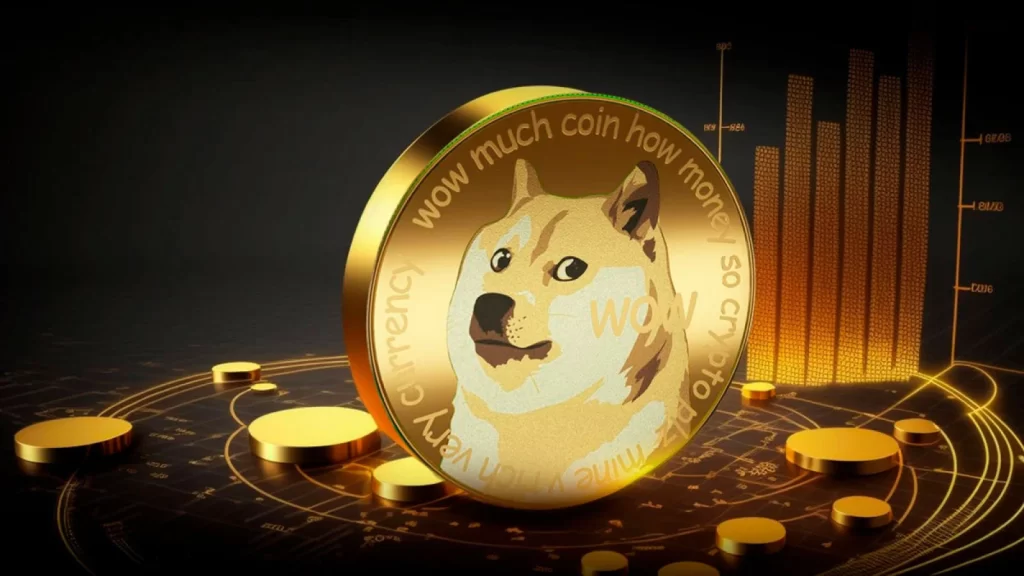
Binance, the leading crypto exchange in terms of market share, is capitalizing on the current enthusiasm for meme coins by launching a new promotion focused on popular crypto tokens such as Shiba Inu (SHIB), Dogecoin (DOGE), and Dogwifhat (WIF).
Announced recently, this promotion offers users who borrow selected meme coins on Binance Margin—including DOGE, SHIB, WIF, PEPE, FLOKI, BONK, and MEME—a waiver on interest fees for the first hour.
This incentive is available from March 12 to March 26, targeting the seven largest meme coins by market cap.
The mechanism behind the promotion is straightforward: interest accrues hourly, but traders can avoid any charges by repaying within the first hour of borrowing.
This strategy aligns with Binance’s broader goal to leverage the surging interest in meme coins, which have been at the forefront of the current bull cycle’s narrative.
The exchange aims to attract more users to trade these tokens by utilizing their popularity.
In addition to this promotion, Binance has expanded its offerings in the meme coin sector.
It has introduced WIF for spot trading and listed MYRO, a Solana-based meme coin, for futures trading.
READ MORE: Pepe Coin Surges to New Heights, Joining Bitcoin and Ether in Crypto Rally
Additionally, a PEPE/USDC trading pair has been added, complementing the existing PEPE/USDT pair, as part of efforts to appeal to meme coin traders.
The exchange is not just focusing on meme coins but also on the Game-Fi sector, acknowledging its potential in the upcoming bull cycle.
The interest fee waiver also covers gaming tokens such as PORTAL, GALA, BNX, YGG, and PIXEL, indicating Binance’s recognition of diverse investment narratives.
The increased interest in meme coins, particularly SHIB, is evident across the crypto trading platform landscape.
NewsBTC highlighted that platforms like Robinhood and Crypto.com have significantly increased their SHIB holdings, responding to the growing demand from traders.
SHIB’s popularity is further underscored by a reported 20-fold increase in daily new addresses in March compared to February and a new all-time high in the Total Value Locked (TVL) of its layer-2 network, Shibarium.
At the moment, SHIB’s price has seen an uptick in the last 24 hours, trading at approximately $0.00003318 according to CoinMarketCap data, reflecting the broader interest in this meme coin and its ecosystem.
To submit a crypto press release (PR), send an email to [email protected].

Binance, a leading cryptocurrency exchange, has declared its intention to remove several trading pairs involving TrueUSD (TUSD), a stablecoin with connections to Justin Sun, the founder of Tron.
On March 13, the exchange issued a statement announcing the forthcoming delisting of COMP/TUSD, EDU/TUSD, and PENDLE/TUSD pairs.
Additionally, BNB pairs with Arpa and EduCoin will also be discontinued. These changes are set to take effect on March 15, 2024, at 3:00 am UTC.
The decision to delist these pairs stems from Binance’s routine evaluation process, aimed at safeguarding users and ensuring the integrity of the trading environment.
The exchange pointed out that factors leading to the delisting of spot trading pairs could include inadequate liquidity and trading volume.
Nevertheless, Binance clarified the delisting’s implications, stating, “The delisting of a spot trading pair does not affect the availability of the tokens on Binance Spot.
“Users can still trade the spot trading pair’s base and quote assets on other trading pair(s) that are available on Binance.”
READ MORE: Starknet to Harness Ethereum’s Dencun Upgrade for Major Fee Reductions and Enhanced Scalability
“This ensures that TUSD remains accessible on the platform through its other trading pairs with major cryptocurrencies like Bitcoin, Cardano, Avalanche, and Bitcoin Cash.
In addition to removing specific trading pairs, Binance also announced the discontinuation of spot trading bot services for these pairs, effective concurrently with the delisting.
The platform advised users to adjust or terminate their bots by the deadline to prevent potential financial losses.
TUSD has encountered several challenges since late 2023. A significant security breach was reported on October 17, when a third-party service provider was compromised, leading to a potential exposure of user KYC and transaction data.
Moreover, the stablecoin’s stability was tested earlier this year when it deviated from its $1 peg.
On January 15, TUSD’s value dipped to $0.984 as a result of traders liquidating over $339 million in TUSD for Tether, following speculation about the token’s absence from Binance’s Manta launch pool initiative.
To submit a crypto press release (PR), send an email to [email protected].

Taki Games, a prominent social gaming network known for offering real money rewards to its users, is expanding its horizons by partnering with Genopets. This collaboration aims to extend the “move-to-earn” concept, a rapidly growing brand within the Solana blockchain ecosystem that has attracted a large player base.
Set to launch in April 2024, Genopets Match will join an expanding lineup of Web3-branded games on Taki’s Solana-based platform, such as Puzzle Smoofs, Game7 Food Fighter, and Pac-Cats. Through this partnership, Taki Games aspires to introduce billions of mobile gamers to Web3, enhancing the gaming experience with rewarding opportunities by collaborating with numerous top Web3 brands and communities.
Taki Games’ decentralized network revolutionizes mobile gaming by incorporating tokenized rewards and ownership of gaming assets, fostering a player-owned ecosystem. This approach not only offers developers new revenue avenues but also allows them to share success with their players. As a pioneer in the “play-to-earn” (P2E) gaming trend, Taki Games seeks to refine the model with a tokenomics structure designed to prevent token hyperinflation. This strategy aims to ensure players receive a fair portion of the over $200 billion annually generated by the gaming industry.
Central to Taki’s model is the TAKI token, featuring a “buy-and-burn” mechanism to sustain its value while motivating gamers to engage and earn. The developer team behind Taki includes the founders of Kabam, a leading studio in the free-to-play mobile and social gaming sector.
Genopets stands out in the Solana blockchain ecosystem as a top free-to-play mobile game with a vast active player base. The game, reminiscent of classics like Pokemon and Tamagotchi, involves nurturing NFT-based digital pets. It offers extensive customization and evolution options for the Genopets, adding depth and variety to the gameplay. Ahead of its public V1 launch, Genopets is integrating with Taki’s network to broaden its audience, encouraging new users to join through a special airdrop.
Both Taki and Genopets are committed to mainstreaming the Web3 industry, attracting a diverse audience including Solana token holders, NFT enthusiasts, and digital asset collectors. Jay Chang of Genopets expressed excitement about partnering with Taki Games to introduce mainstream gamers to the next generation of Web3 gaming.
This partnership marks a significant milestone in Taki Games’ journey, which has seen a 3,000% network growth since its pivot to Web3 gaming. Now ranked among the top dApps in the Polygon Proof-of-Stake ecosystem and across all blockchain networks, Taki’s success is evident in its native TAKI token’s trading volume and the widespread adoption of its mobile gaming app. Taki Games CEO Weiwei Geng envisions the company as Web3’s Zynga, aiming to drive mainstream adoption of Web3 through engaging gaming experiences and ownership opportunities.
This collaboration between Taki Games and Genopets illustrates the transformative potential of Web3 technologies in redefining traditional video game engagement and growth, promising a new era of enhanced value and opportunities for developers and gamers alike.