


The United States Securities and Exchange Commission (SEC) has taken a significant step in the potential approval of a spot Bitcoin exchange-traded fund (ETF).
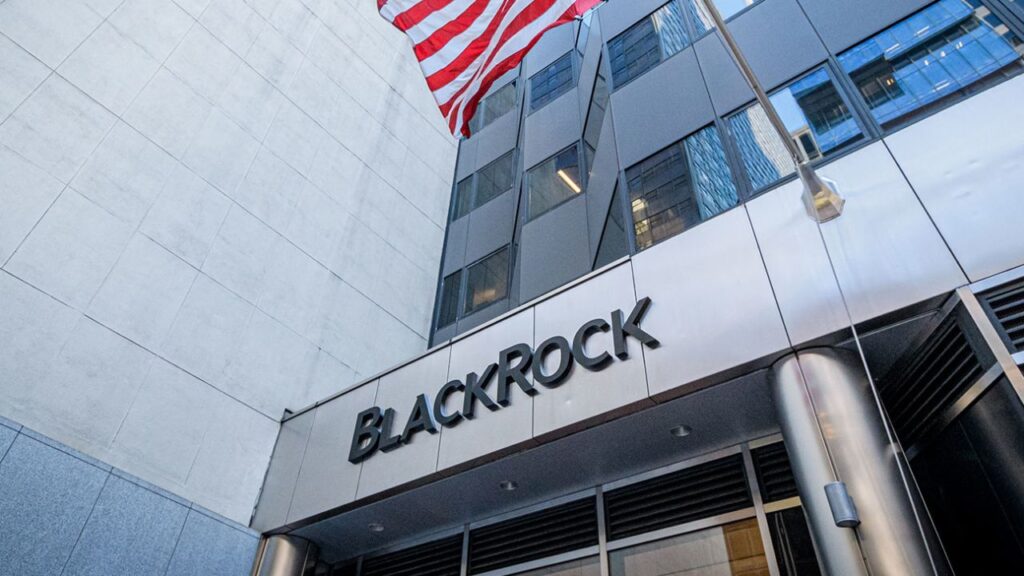
BlackRock, a prominent financial firm, has had its application accepted by the SEC, following a similar acknowledgment of Bitwise’s application the previous day.
Accepting BlackRock’s proposal marks the beginning of the official review process for their ETF.
While this is just the initial stage of a lengthy regulatory journey, it signifies the SEC’s willingness to explore the concept of a spot Bitcoin ETF and evaluate its potential impact on the market.
ETFs are investment funds that typically track specific indexes and are commonly traded on exchanges.
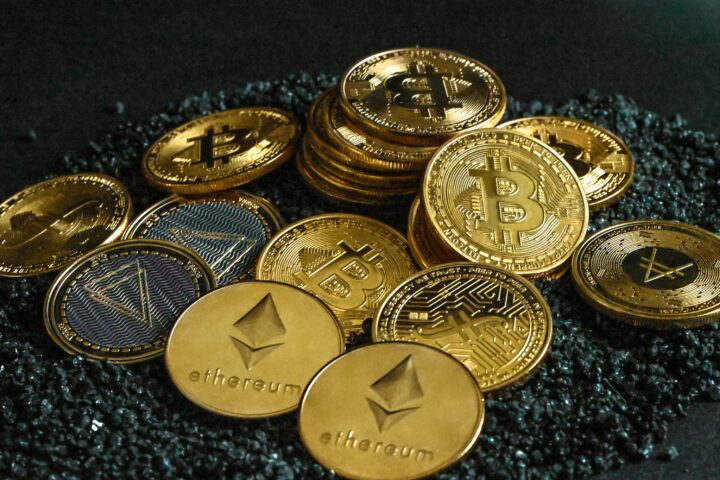
In the realm of cryptocurrencies, a cryptocurrency ETF refers to a fund that mirrors the value of one or more digital tokens and encompasses a range of cryptocurrencies.
On July 14, the SEC also announced that it is currently reviewing applications for various funds, including Wise Origin Bitcoin Trust, WisdomTree, VanEck, and Invesco Galaxy.
READ MORE: Bitcoin Long-Term Holders Return as BTC Price Surges
BlackRock’s participation in the race to launch a spot Bitcoin ETF holds great significance due to its stature in the financial industry.
Their filing for a spot Bitcoin ETF includes an agreement for “surveillance-sharing” with Coinbase, a prominent cryptocurrency exchange.
The competition among companies striving to be the first to introduce a Bitcoin ETF in the United States is viewed as a positive development for the crypto industry.
With multiple applications being considered, the chances of success increase, and the diverse proposals allow the SEC to evaluate different strategies and concerns.
While the SEC has not yet approved a spot Bitcoin ETF in the United States, such financial products are already available in Canada.
Regulators in the country have approved three significant funds: Purpose Bitcoin, 3iQ CoinShares, and CI Galaxy Bitcoin.
The acceptance of BlackRock’s application and the ongoing review process for other ETF proposals indicate a growing recognition of the potential of cryptocurrencies in the mainstream financial sector.
As the SEC continues its evaluation, the market eagerly awaits the decision on the first spot Bitcoin ETF in the United States.
Other Stories:
Coinbase Temporarily Suspends Staking Services
SEC Stresses Crucial Clarification Amid Coinbase Battle
Cardano Surges 23.9% Following Favorable XRP Ruling, Investors Eye Further Gains

Fantom network’s co-founder, Andre Cronje, expressed his concern over Multichain’s recent troubles, stating that it dealt a significant blow to the smart contract platform.
In recent weeks, Fantom has witnessed a sharp decline in activity. Data from DefiLlama revealed that Fantom’s total value locked (TVL) plummeted from over $364 million in early May to approximately $70 million on July 14. In 2022, the platform’s TVL reached its peak at $7.5 billion.
Additionally, the price of Fantom’s native token, Fantom (FTM), decreased from $0.41 to $0.28 within the same period.
Cronje conveyed his disappointment in a thread on Fantom’s forum, stating that Multichain’s failure had a profound impact.
He had received numerous assurances from the Multichain team regarding server decentralization, access, and geolocation distribution.
Reflecting on the situation, Cronje emphasized the need to “don’t trust, verify” even within his own projects.
READ MORE: Bitcoin Long-Term Holders Return as BTC Price Surges
Multichain made an announcement on July 14, revealing that it would be ceasing operations due to the arrest of its CEO in May.
As the sole controller of Multichain’s servers, the CEO’s arrest left the company in disarray.
Compounding the challenges faced by Multichain, the platform fell victim to an exploit on July 6.
The exploit resulted in the withdrawal of over $125 million worth of cryptocurrencies from multiple wallets, impacting the Ethereum side of Fantom, Moonriver, and Dogechain bridges.
These withdrawals accounted for a significant portion of the funds held on each bridge.
It was discovered that Multichain had stored all shards of its private keys in a “cloud server account” controlled solely by its CEO.
This cloud server account was subsequently utilized by an unauthorized individual to drain funds from the protocol.
The repercussions of Multichain’s issues also extended to the lending protocol Geist Finance, which was forced to permanently shut down due to losses incurred from the exploit.
Prior to the hack, Geist Finance had over $29 million worth of crypto assets locked in contracts on the Fantom network. The closure of Geist Finance had a profound impact on Fantom’s TVL.
In response to the exploit, stablecoin issuers Circle and Tether have frozen more than $65 million in assets associated with the attack.
Fantom is actively collaborating with both companies to explore options for native issuance and reviewing rollups for native bridge infrastructure.
Cronje affirmed their commitment to recover assets, stating that they are engaging with relevant organizations in pursuit of a solution.
Other Stories:
Cardano Surges 23.9% Following Favorable XRP Ruling, Investors Eye Further Gains
Lending protocol Geist Finance has announced its permanent closure due to significant losses resulting from the Multichain exploit, according to a social media post from the development team on July 14.
The protocol, which operated on the Fantom network, temporarily paused its contracts on July 6 and then resumed limited functionality, allowing only withdrawals and repayments, on July 9.
However, the latest announcement confirms that Geist Finance will not reopen for lending and borrowing activities.
Before the exploit occurred, Geist Finance had locked over $29 million worth of cryptocurrency assets in its contracts.
The lending protocol permitted users to borrow, lend, and utilize bridged tokens from the Multichain platform as collateral, including tokens such as USD Coin (USDC), Tether (USDT), Bitcoin (BTC), and Ether (ETH).
Chainlink oracles were employed to track the prices of these assets and determine their collateral and loan values.
READ MORE: Worldcoin’s World ID Project Surpasses 2 Million Users
The recent social media post revealed that the Chainlink oracles had ceased to provide reliable information.
They were now listing the values of the non-bridged, or “real,” versions of each coin, which were more than four times the value of their Multichain derivatives.
As a consequence, reopening lending activities would result in bad debt for holders of non-Multichain coins, rendering it impossible to resume operations.
Geist Finance clarified that it did not hold Chainlink oracles responsible for its closure and placed blame on Multichain.org.
Blockchain analytics experts initially reported the Multichain exploit on July 7. Over $100 million had been withdrawn from the Ethereum side of Multichain bridges, affecting platforms like Dogechain, Fantom, and Moonriver.
While the Multichain team labeled the transactions as “abnormal” and advised users to stop utilizing the protocol, they refrained from explicitly referring to it as a hack or exploit.
Further investigations by on-chain sleuths and Twitter user Spreek on July 11 unveiled an unknown individual draining funds from the protocol using a fee-based exploit.
On July 14, the Multichain team confirmed that the withdrawals on July 7 resulted from a hack.
It was discovered that all shards of the network’s private keys were stored in a cloud server account controlled solely by the CEO, who had been apprehended by Chinese authorities.
Subsequently, the cloud server account was accessed by an unauthorized party to siphon funds from the protocol.
In an attempt to recover the assets, the Multichain team engaged in a fee-based counter-exploit initiated by the CEO’s sister on July 11.
However, she was later arrested, and the status of the assets she recovered remains uncertain.
Other Stories:
Ripple’s XRP Victory Against SEC: A Blow to Regulator’s ‘War on Crypto’
Monochrome Asset Management Proposes Bitcoin ETF on ASX
OpenAI Faces FTC Investigation Over Privacy and Data Practices
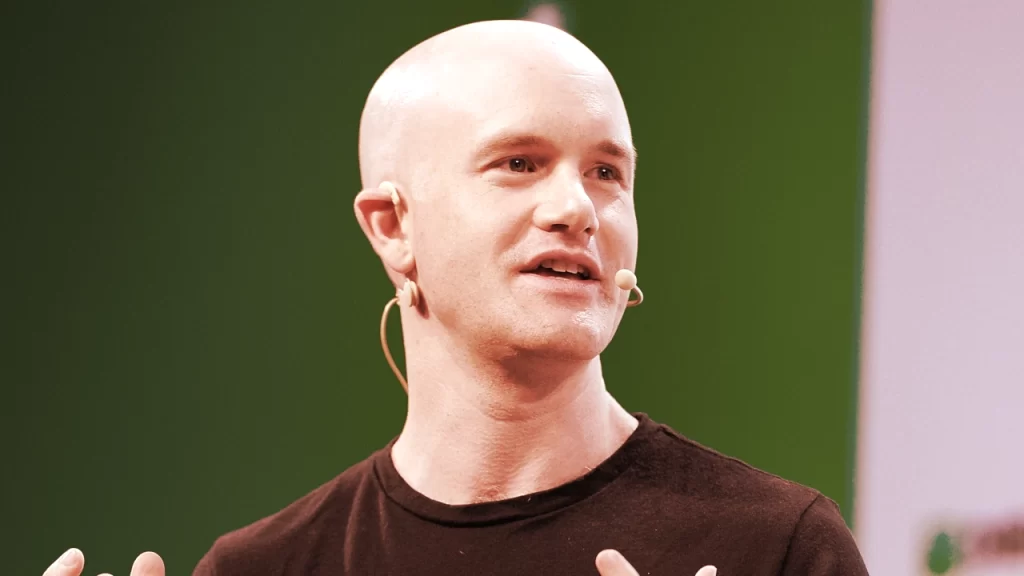
Coinbase, a prominent cryptocurrency exchange based in the United States, has made the decision to temporarily halt customers in four states from staking additional assets due to ongoing legal proceedings initiated by local regulators.
In a blog post published on July 14, Coinbase announced that users located in California, New Jersey, South Carolina, and Wisconsin would be restricted from utilizing specific staking services until further notice.
This move comes after the U.S. Securities and Exchange Commission (SEC) filed a lawsuit against the exchange in June, alleging the offering of unregistered securities.
Consequently, regulatory bodies in ten states took their own legal actions, leading Coinbase to suspend certain services.
Coinbase expressed its disagreement with the accusation that their staking services are considered securities, stating, “We strongly disagree with any allegation that our staking services are securities.”
READ MORE: Monochrome Asset Management Proposes Bitcoin ETF on ASX
However, the exchange emphasized its commitment to fully complying with the preliminary state orders, even before having an opportunity to defend itself.
According to Coinbase, the pause in staking additional assets is only applicable to the regulatory actions taken in California, New Jersey, South Carolina, and Wisconsin.
Users based in Alabama, Illinois, Kentucky, Maryland, Vermont, and Washington can continue to stake cryptocurrency as they did prior to the regulatory proceedings.
This announcement followed the first pre-motion hearing in the SEC’s case against Coinbase.
The commission filed the lawsuit on June 6, alleging that the exchange has been operating as an unregistered security broker since 2019. Coinbase has consistently denied these allegations.
In recent times, both state and federal regulators have targeted various cryptocurrency firms for their staking services, arguing that such services violate securities laws.
In February, Kraken, another prominent exchange, reached a $30-million settlement with the SEC, necessitating the cessation of staking services and programs for its U.S. clients.
Coinbase’s decision to temporarily halt staking services in certain states reflects the growing scrutiny and legal complexities surrounding the cryptocurrency industry.
As regulatory actions and lawsuits continue, exchanges are navigating the challenges posed by compliance requirements while striving to defend their business practices.
Other Stories:
Ripple’s XRP Victory Against SEC: A Blow to Regulator’s ‘War on Crypto’
Worldcoin’s World ID Project Surpasses 2 Million Users
OpenAI Faces FTC Investigation Over Privacy and Data Practices

Members of the House of Lords in the United Kingdom have expressed the need for legislation that encompasses activities in the metaverse as part of the Online Safety Bill.
During a parliamentary session on July 12, lawmakers deliberated on whether the bill should address potential harmful content that users may encounter in virtual environments like the metaverse.
The focus of their concerns primarily revolved around the well-being of children who could be exposed to objectionable material online.
Timothy Clement-Jones, a member of the House of Lords, emphasized that the metaverse and its associated environments should not be exempt from the scope of the Online Safety Bill.
He argued that failure to include these elements within the bill’s purview would be a disservice to children and vulnerable adults, implying a dereliction of duty.
Several members of the U.K. Parliament supported this viewpoint, highlighting that the bill’s current language includes “anything communicated by means of an internet service.”
Stephen Parkinson, another member, suggested that this definition could encompass not only text and images provided by other users but also virtual objects and avatars present in the metaverse.
Legislation pertaining to the regulation and safeguarding of online activities varies across countries and is still evolving alongside the increasing adoption of new technologies.
In the United States, advocacy groups have urged Meta, the parent company of Facebook, to restrict minors from using its metaverse platform, Horizon Worlds.
Concerns regarding harassment and privacy violations have been raised as potential risks associated with the platform.
The Online Safety Bill in the United Kingdom is scheduled for further debate in the House of Lords on July 17. Before becoming law, the bill will need to undergo a third reading in the House, during which final amendments can be proposed and considered.
The inclusion of provisions covering the metaverse within the bill’s framework would signify the government’s commitment to ensuring the safety and protection of individuals in virtual spaces.
Other Stories:
United States DoJ Moves $299 Million Worth of Bitcoin in Recent Transactions
Bitcoin ETF Approval Could Act as Government’s ‘Seal of Approval’
Elon Musk Launches xAI: A New Venture to Unravel the Mysteries of the Universe
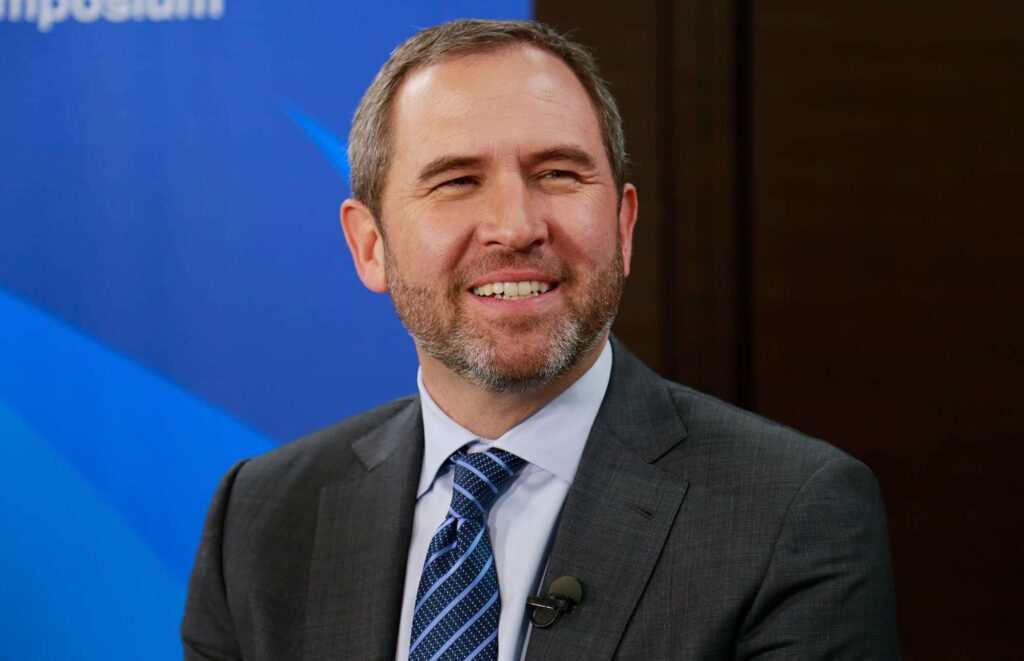
Ripple Labs’ recent victory against the U.S. Securities and Exchange Commission (SEC) has been seen as a blow to the regulator’s efforts to regulate the crypto industry.
However, experts caution that this ruling may not be a definitive victory for the industry as a whole.
In a groundbreaking decision on July 13, U.S. district court Judge Analisa Torres ruled that XRP, Ripple’s cryptocurrency, is not a security when sold to the general public.
This ruling was met with excitement from XRP tokenholders and led to a significant surge in the token’s price.
Industry leaders, including those from crypto exchanges Coinbase and Binance, hailed the decision as a positive development for their ongoing lawsuits.
Luke Martin, the founder of crypto investment firm Venture Coinist, believes that this ruling deals a substantial blow to the SEC and its Chair, Gary Gensler.
He sees it as a positive sign for the industry and its fight against allegations of offering unregistered securities.
While many celebrated the ruling, several digital asset lawyers urge caution.
READ MORE: Elon Musk Launches xAI: A New Venture to Unravel the Mysteries of the Universe
They highlight that the summary judgment is only partial and does not establish a binding precedent.
It may serve as persuasive commentary for future courts but does not guarantee consistent rulings.
Furthermore, there is a possibility that the SEC may appeal the decision, and a higher court could overturn the ruling made by Judge Torres.
Despite these warnings, some experts believe that the SEC may face challenges if it decides to appeal.
Justin Slaughter, Paradigm policy director and former SEC adviser, suggests that the Supreme Court has recently been critical of government agencies and may not miss the opportunity to scrutinize the SEC’s actions.
Ripple still faces the SEC’s claim that its CEO, Brad Garlinghouse, and co-founder, Chris Larsen, “aided and abetted” the institutional sale of XRP.
The SEC alleges that $728 million worth of XRP was sold through institutional sales. This claim was set aside by Judge Torres and will likely be contested at trial.
In conclusion, while Ripple’s victory in the XRP case is seen as a setback for the SEC’s regulatory efforts, it is not a definitive win for the entire crypto industry.
The ruling may be subject to appeal, and future courts may not necessarily follow Judge Torres’ decision.
The legal battle between Ripple and the SEC is far from over, and there are still significant challenges to overcome.
Other Stories:
United States DoJ Moves $299 Million Worth of Bitcoin in Recent Transactions
Bitcoin ETF Approval Could Act as Government’s ‘Seal of Approval’

OpenAI, the creator of the AI chatbot ChatGPT and other related products, has reportedly received a criminal investigative demand (CID) from the Federal Trade Commission (FTC) of the United States, as reported by The Washington Post on July 13. A CID is akin to a subpoena, requiring the recipient to comply with the information requests.
The FTC is initiating an investigation into OpenAI’s potential use of “unfair or deceptive privacy or data security practices” and “unfair or deceptive practices relating to risks of harm to consumers, including reputational harm.”
The CID suggests that the agency is also contemplating the imposition of a monetary penalty if the alleged practices are deemed to be against the public interest.
The 20-page document contains 49 detailed questions and requests 17 categories of documents for the investigation.
READ MORE: Elon Musk Launches xAI: A New Venture to Unravel the Mysteries of the Universe
OpenAI has been given a 14-day deadline to contact an FTC counsel to discuss how it intends to address the demands put forth by the agency.
Among the inquiries posed by the FTC in the CID are questions regarding the specific large language models used in OpenAI’s products, their application, training methodologies, and mechanisms to ensure accuracy.
The document also touches on advertising policies, risk assessments, personal information collection and protection, determination of “public figure” status, and procedures for handling feedback and complaints.
The introduction of Microsoft-backed ChatGPT on November 30 caused significant ripples in the IT industry.
Its powerful capabilities prompted concerns about potential implications, and competitors hurried to keep up with the technology.
Unsurprisingly, this triggered a wave of investigations in numerous countries. A letter signed by 2,600 tech figures, including Elon Musk and Steve Wozniak, called for a moratorium on AI development.
OpenAI CEO Sam Altman also testified on AI safety before the United States Senate.
OpenAI has additionally faced legal challenges. In June, a class action lawsuit was filed in the Northern California District Court, accusing the company of unauthorized scraping of personal data from the internet.
Furthermore, popular authors Mona Awad and Paul Tremblay filed a copyright infringement suit against OpenAI, and comedian Sarah Silverman, along with two other authors, sued OpenAI and Meta the following month, alleging the use of illegal “shadow libraries” in training their AI.
It remains to be seen how OpenAI will navigate these investigations and legal proceedings, which have significant implications for the company and the broader AI industry.
Other Stories:
Bitcoin ETF Approval Could Act as Government’s ‘Seal of Approval’
United States DoJ Moves $299 Million Worth of Bitcoin in Recent Transactions

Worldcoin’s World ID project, which aims to provide a global digital identification protocol, has experienced significant success with over two million users signing up for the program.
Surpassing the first million mark in less than half the time, World ID is gaining traction in its beta testing phase.
The primary goal of World ID is to offer a digital passport stored on users’ mobile devices, enabling them to validate their identity while safeguarding their privacy through zero-knowledge proofs.
To enroll in the World ID program and obtain a digital passport, individuals are required to visit an “orb” where they scan one of their irises.
This process generates a unique identifier called “IrisHash,” which verifies their distinctiveness.
READ MORE: United States DoJ Moves $299 Million Worth of Bitcoin in Recent Transactions
Users who successfully upload their sensitive biometric data are rewarded with Worldcoin, the project’s native cryptocurrency.
Worldcoin attributes the surge in sign-ups to its recent multicity tour across Barcelona, Berlin, and Tokyo. During the tour, an average of 40,000 new verified World ID members were added each week.
The project anticipates that the availability of the five-pound, chrome eye-scanning devices, known as “Orbs,” will expand globally in the coming months due to increased demand.
Moreover, Worldcoin highlights the growing adoption of the World ID protocol by various apps and services. Notably, Okta’s Auth0 and Talent Protocol have integrated World ID and Worldcoin into their respective onboarding procedures.
On May 8, Worldcoin introduced the World App, a gas-free crypto wallet designed for verified individuals, compatible with Android and iOS operating systems.
Shortly thereafter, on May 25, the project secured $115 million in a Series C funding round to support the widespread implementation of its World ID program.
Worldcoin’s World ID project has successfully garnered substantial interest, as demonstrated by the significant number of users signing up for the program.
With the integration of the World ID protocol into various platforms and the development of the World App, Worldcoin is poised to continue expanding its influence and establishing itself as a prominent player in the digital identification and cryptocurrency space.
Other Stories:
Bitcoin ETF Approval Could Act as Government’s ‘Seal of Approval’
Elon Musk Launches xAI: A New Venture to Unravel the Mysteries of the Universe

Monochrome Asset Management, a crypto investment firm based in Australia, has made an update to its application, aiming to introduce a spot Bitcoin exchange-traded fund (ETF) on the Australian Securities Exchange (ASX) in collaboration with Vasco Trustees.
The newly proposed ETF, called the Monochrome Bitcoin ETF, will provide direct exposure to Bitcoin and Ether (ETH) for retail investors in Australia, as stated in the company’s announcement on July 14.
Monochrome CEO Jeff Yew explained in an interview with Cointelegraph that the Bitcoin ETF would allow Australian retail investors to engage with Bitcoin in a regulated environment, offering them the freedom to utilize this asset class as they see fit while operating within the established regulatory framework.
Yew emphasized the advantage of investor protection that comes with a regulated ETF, in contrast to unregulated exchanges where such safeguards may be lacking.
Yew further expressed his belief that the introduction of a Bitcoin ETF on the ASX would convey a significant message to traditional investors, signaling the end of the unregulated “Wild West” phase.
The ETF’s existence would assure investors of a familiar, structured, and protected environment, enhancing their confidence in the crypto market.
READ MORE: Bitcoin ETF Approval Could Act as Government’s ‘Seal of Approval’
Vasco, Monochrome’s “Responsible Entity Partner,” holds the necessary authorization under an Australian Financial Services Licence to offer regulated exposure to cryptocurrencies to retail investors, as outlined by the company.
Spot Bitcoin ETF applications have garnered considerable attention in the industry recently, particularly in the United States.
Over the past few weeks, major financial firms such as Fidelity, Invesco, Wisdom Tree, Valkyrie, and the $10 trillion asset management giant BlackRock have all submitted filings for spot Bitcoin ETFs, indicating growing interest in providing regulated exposure to digital assets.
The introduction of a Bitcoin ETF on the ASX through Monochrome Asset Management’s application update marks a significant step toward facilitating mainstream adoption and regulatory acceptance of cryptocurrencies in Australia.
Other Stories:
United States DoJ Moves $299 Million Worth of Bitcoin in Recent Transactions
Elon Musk Launches xAI: A New Venture to Unravel the Mysteries of the Universe
Binance’s BNB Beacon Chain Set to Halt New Block Production in Upcoming Hard Fork for Enhanced
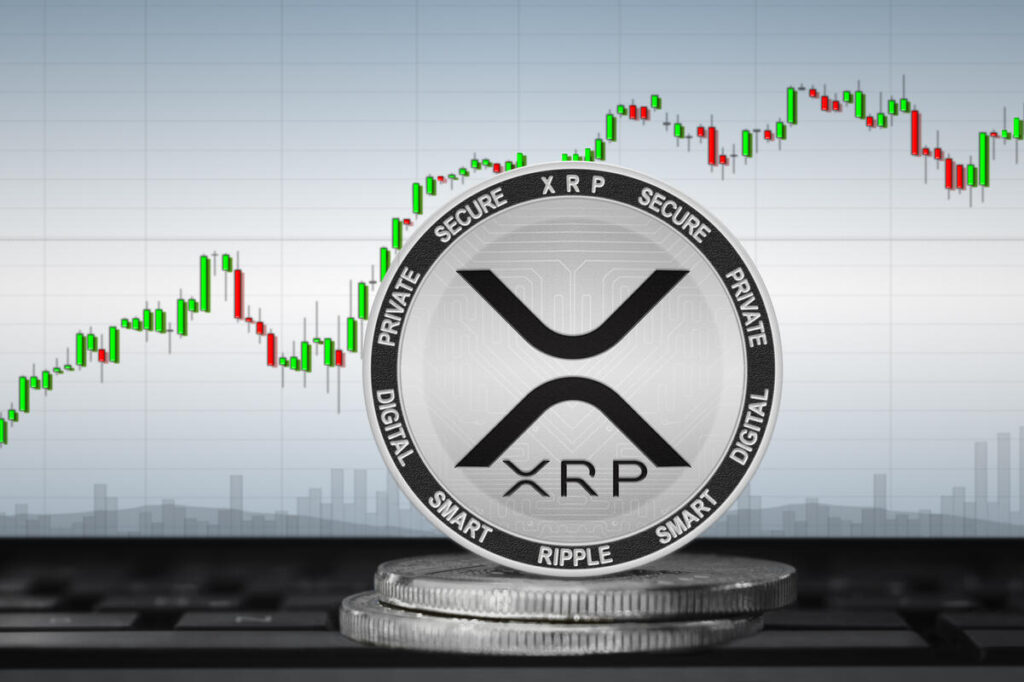
In a significant court ruling, Ripple Labs emerged victorious as the United States District Court for the Southern District of New York declared that XRP, the digital token associated with Ripple, is not a security.
This decision has reignited the excitement and enthusiasm surrounding the Ripple ecosystem. However, with the surge in XRP’s value, Ripple’s Chief Technology Officer, David Schwartz, felt compelled to issue a warning to potential investors.
The legal battle between Ripple and the United States Securities and Exchange Commission, which had been ongoing for two years, took a notable turn on July 13.
The court’s ruling, which removed the “security” label from XRP, had an immediate impact on the token’s market price.
Within a single day, XRP experienced a remarkable rally, surging over 70% and elevating its value from $0.47 to $0.82.
READ MORE: Elon Musk Launches xAI: A New Venture to Unravel the Mysteries of the Universe
This spike represents the most significant price increase for XRP in the past year.
Such hype surrounding cryptocurrencies and crypto ecosystems often attracts the attention of scammers seeking to exploit unsuspecting investors.
Schwartz, therefore, took to Twitter to caution against the surge in XRP-related scams.
He emphasized that there were no airdrops, giveaways, or special offers associated with the recent court ruling.
Due to Ripple’s widespread popularity and growing community, scammers frequently mimic the official Ripple website to promote fraudulent giveaways and airdrops.
Their intention is to deceive victims and gain access to their crypto wallets, enabling them to steal funds either immediately or at a later time.
In a related incident back in April 2023, a prominent YouTube creator, DidYouKnowGaming, faced a hacking attack that resulted in the promotion of XRP scams on their channel.
The hackers were able to exploit YouTube’s platform and gain control over the account, which had approximately 2.4 million subscribers.
Fortunately, with swift action from YouTube, the channel owner regained access and recovered the deleted videos.
However, the precise method employed by the hackers to breach YouTube’s security remains unknown.
As the court ruling on XRP’s security status brings renewed attention and value to the token, it is crucial for investors to remain vigilant and exercise caution.
The cryptocurrency ecosystem has unfortunately become a target for scammers seeking to take advantage of unsuspecting individuals.
It is essential to verify the authenticity of any promotional offers and be wary of suspicious activities to ensure the safety of one’s investments.
Other Stories:
United States DoJ Moves $299 Million Worth of Bitcoin in Recent Transactions
Bitcoin ETF Approval Could Act as Government’s ‘Seal of Approval’