



Britain’s Financial Services Minister, Andrew Griffith, has rejected the idea of treating cryptoassets as a form of gambling.
He argues that such a classification would not only put Britain at odds with global and EU regulators but also fail to address the risks posed by the crypto sector.
In a report released in May, Parliament’s Treasury Select Committee suggested that cryptocurrencies like bitcoin and ether should be regulated as gambling due to the significant risks they pose to consumers.
However, Griffith firmly disagrees with this recommendation, asserting that it could lead consumers to mistakenly believe that investing in crypto is safer than it actually is.
UK regulators have been warning investors about the potential to lose all their money in the volatile crypto market.
The UK government has ambitious plans to establish itself as a global hub for cryptocurrencies and blockchain technology.
Nevertheless, Griffith maintains that regulating cryptoassets as gambling would not be an appropriate solution to ensure the safety and stability of the sector.
Moreover, such an approach would contradict internationally agreed-upon recommendations from standard-setting bodies like the International Organization of Securities Commissions (IOSCO) and the G20 Financial Stability Board (FSB).
READ MORE: Nigerian Social Payments App Bundle Ceases Crypto Exchange Services
Both organizations have been actively working on establishing standards for the crypto sector, with IOSCO having proposed the world’s first set of rules for cryptocurrencies in May.
Griffith emphasizes that adopting a gambling regulation model would also risk creating confusion and overlapping mandates between financial regulators and the Gambling Commission.
This misalignment could hinder the growth and development of the crypto industry in the UK.
The European Union has already approved a comprehensive set of rules for trading cryptoassets, scheduled to take effect in mid-2024.
However, buying or selling cryptocurrencies is not currently classified as gambling under the UK’s Gambling Act.
The UK’s gambling watchdog previously investigated a fantasy sports company called Sorare, which uses cryptocurrency for buying and selling non-fungible tokens (NFTs) representing sports stars.
The investigation aimed to determine whether the game amounted to gambling.
Looking ahead, Britain is working on regulations for stablecoins, a type of cryptocurrency backed by underlying assets to maintain a stable value.
These regulations will differentiate stablecoins from the more volatile “unbacked” cryptocurrencies like bitcoin and ether.
In conclusion, the debate over how to regulate cryptoassets continues in the UK, with the government aiming to strike a balance between fostering innovation in the sector and protecting consumers from potential risks.
Other Stories:
OpenAI Unveils Android Version of ChatGPT
Bitcoin Laundering Couple Reach Plea Agreement with U.S. Authorities

On July 20, a British court granted an appeal to Craig Wright, allowing him the opportunity to argue that the Bitcoin file format deserves copyright protection. Since 2016, Wright has asserted that he is the original creator of Bitcoin, using the pseudonym Satoshi Nakamoto.
In his legal action, Wright filed a lawsuit against 13 Bitcoin Core developers and several companies, including Blockstream, Coinbase, and Block, alleging that they infringed on his copyright to the Bitcoin white paper, the file format, and database rights associated with the Bitcoin blockchain.
This recent court decision comes as a reversal of a previous ruling from February, which deemed Wright’s arguments insufficient to demonstrate the initial recording, or fixation, of the Bitcoin file format, a crucial concept in copyright law.
Wright’s tweet on July 20 emphasized the importance of protecting intellectual property to support creators and innovators, encouraging the generation of new ideas and creative works, although he didn’t explicitly mention the court’s decision.
The legal representation for the developers, the Bitcoin Legal Defense Fund (BLDF), countered Wright’s claims by arguing that he has failed to provide any evidence supporting his assertion of being Satoshi Nakamoto.
READ MORE: Vermont Department of Financial Regulation Issues Stark Crypto Warning
BLDF stated that Wright must first prove his identity as Nakamoto before the court can proceed with the primary claims of the lawsuit. The trial is anticipated to take place in early 2024.
One significant point of contention in the case is that the Bitcoin code is open-source and distributed freely under the Massachusetts Institute of Technology license.
This means that users have the right to reuse the code for any purpose, including in proprietary software.
However, Wright argues that the Bitcoin Core developers act as a centralized entity, referred to as the “Bitcoin Partnership,” which allegedly controls the Bitcoin network.
BLDF expressed concern over the court’s decision to hear Wright’s arguments, as they believe it sets a dangerous precedent not only for the crypto community but for the entire world.
Allowing developers to be sued for purportedly violating the file format of open-source software claimed by someone else could have far-reaching implications for the software development industry.
As the legal battle continues, the outcome of this case could have significant ramifications for the protection of intellectual property rights in the realm of open-source software and the broader cryptocurrency community.
Other Stories:
2023 Ranking: 4 Best Crypto Projects To Invest In
China’s Digital Yuan Soars: Business Travelers Can Now Pay for Flights with CBDC
XRP’s price experienced an astonishing 100% surge on the same day as the landmark ruling in the XRP securities case, where Judge Analisa Torres of the United States District Court for the Southern District of New York declared that XRP sales to retail investors do not classify the token as a security in the SEC’s case against Ripple.
This ruling reignited trading interest in XRP, leading to a surge in open interest volume for XRP futures contracts, which reached a high of $1.19 billion on July 20, the highest point since November 2021.
The surge in trading interest and the relisting of XRP on prominent U.S.-based exchanges, such as Gemini and Coinbase, boosted market sentiment.
However, despite the positive developments, network growth for XRP has not seen a corresponding increase.
The number of transactions on the XRP Ledger has remained steady for over a year, indicating a lack of new entities actively participating in the network.
Ripple, following its partial victory in the lawsuit, is striving to boost adoption of the XRP Ledger.
The company has invested $54 million in a metaverse project called Futureverse and plans to rebuild its relationships with banks, aiming to facilitate low-cost global payments.
READ MORE: China’s Digital Yuan Soars: Business Travelers Can Now Pay for Flights with CBDC
These initiatives are expected to promote network growth and serve as positive catalysts for the market.
From a technical perspective, the XRP/USD pair faces resistance from a long-term bearish trendline dating back to the 2018 peak.
A weekly close above this level could strengthen investor sentiment and potentially mark the end of the bearish trend.
However, if buyers fail to sustain the bullish momentum, XRP/USD might revisit support around $0.54 before making another upward move.
Similarly, the XRP/BTC pair is also encountering resistance between 0.00002533 BTC and 0.00003341 BTC, a level that has proven challenging to breach since 2019.
Failure to establish support above this level could lead the pair back to support around 0.00001555 BTC.
Despite the positive regulatory developments and technical progress, there are indications of potential short-term pullbacks due to the significant volatility exhibited by XRP, given its futures open interest reaching over $1 billion.
The funding rate for perpetual swaps has trended positively since the court ruling, suggesting an increase in long positions, which raises the possibility of a correction to liquidate overleveraged buyers.
However, considering the positive regulatory landscape, technical advancements, and the token’s popularity among retail users, it is plausible that XRP’s long-term negative trend may conclude in the coming weeks with the advent of positive catalysts related to mainstream adoption of XRP.
Other Stories:
Vermont Department of Financial Regulation Issues Stark Crypto Warning
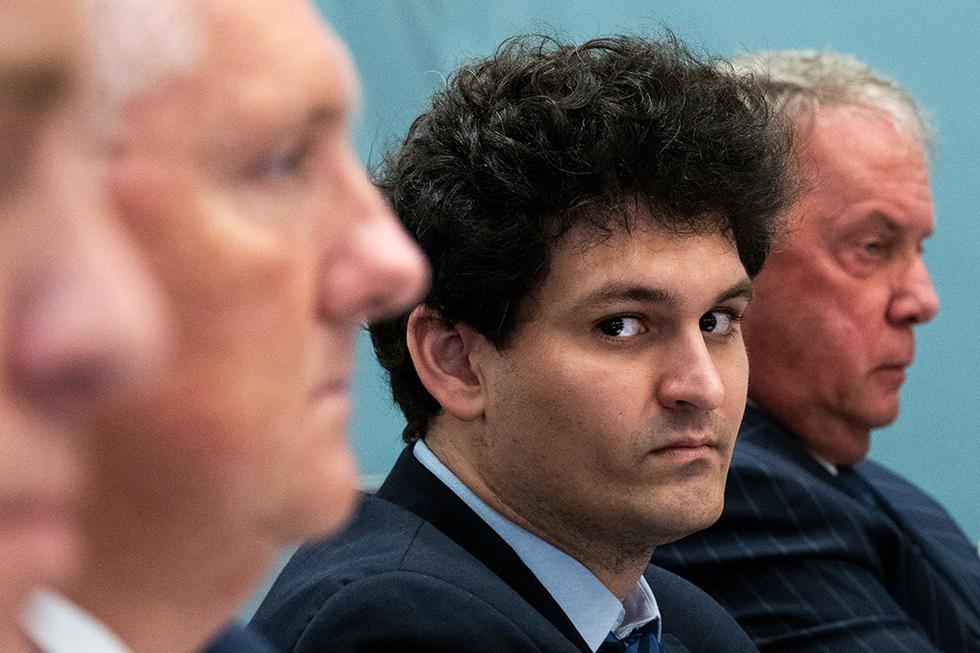
The United States Department of Justice (DoJ) recently filed a complaint against Sam Bankman-Fried (SBF), the founder of FTX, alleging that he leaked private documents belonging to Caroline Ellison, who was previously both his business ally and romantic partner.
According to the complaint filed on July 20, the DoJ claims that Bankman-Fried attempted to interfere with a fair trial by publicly discrediting Ellison, who had become a government witness in SBF’s case in late 2022.
The accusation is based on Bankman-Fried’s act of sharing Ellison’s personal writings with a reporter, resulting in the publication of an article by The New York Times on July 20.
The U.S. Attorney Damian Williams argued that SBF aimed to discredit the government witness by featuring her private documents in the article.
The DoJ does not explicitly name the source of the leaked documents in the article, but Williams asserts that it is apparent that Bankman-Fried was responsible for sharing them.
Defense counsel confirmed that SBF had met with one of the article’s authors in person and provided documents that were not part of the government’s discovery material.
Williams highlights that these documents seem to have originated from Bankman-Fried’s personal Google Drive account and were not part of the case’s discovery materials.
He emphasizes that releasing non-public information that could interfere with a fair trial is prohibited by U.S. federal rules of civil procedure.
The government requests the court to enter an order, pursuant to Local Rule 23.1, which prohibits extrajudicial statements by parties and witnesses likely to affect the right to a fair trial by an impartial jury.
Williams stresses that having the article published in a reputable newspaper without identifying the defendant as the source misleads readers and compounds the risk of tainting prospective jurors.
As of now, both the DoJ and SBF’s defense attorneys have not responded to media inquiries about the complaint.
FTX, once a major global cryptocurrency exchange, experienced a collapse in mid-November 2022, possibly due to the liquidity crisis of the company’s FTT token and the 2022 bear market.
The link between FTX and Alameda was also cited as a contributing factor to the collapse.
Following the implosion of his crypto empire, Bankman-Fried faced seven lawsuits by early December 2022.
He is scheduled to appear in court on October 2 to address multiple charges, including fraud, illegal political donations, and bribes to the Chinese government.
Other Stories:
Why You Should Be Bullish Despite Bitcoin Price Falling Below $30,000
Bitcoin Mining Companies Employ Derisking Strategies, Offload BTC to Exchanges
Robert F. Kennedy Jr. Pledges to Back US Dollar with Bitcoin if Elected President

Web3 crime is undergoing a significant shift away from Bitcoin (BTC) towards stablecoins, and Ponzi schemes continue to plague the cryptocurrency landscape, according to Tara Annison, former head of technical crypto advisory at Elliptic.
During her presentation at EthCC in Paris, Annison shed light on the various ways digital assets are being exploited for criminal activities or money laundering.
Drawing insights from Elliptic, Chainalysis, and TRM Labs, Annison, as a former Elliptic employee, emphasized that the days of Bitcoin being the go-to choice for illicit activities are over.
As the crypto industry has matured, decentralized finance protocols, mixing services, and stablecoins have opened up new opportunities for criminals.
Dollar-denominated assets like USD Coin (USDC) have become the preferred choice due to their ease of access and potential to be laundered through decentralized exchanges (DEXs).
Criminals target these assets because of their deep liquidity and substantial volume, making it relatively easy to obscure their activities.
However, Annison pointed out a potential positive aspect for law enforcement, noting that centralized issuers like Circle can freeze specific USDC tokens before criminals can convert them to fiat through DEXs or centralized exchanges, effectively blocking their access to the funds.
Ponzi and pyramid schemes continue to be a problem in the sector, with criminals having stolen a staggering $7.8 billion from unsuspecting victims through these scams.
Moreover, criminals have become more sophisticated in their money laundering techniques, resorting to chain swapping and asset swapping to evade detection by blockchain analytics firms, amounting to around $4.1 billion in laundered funds.
Interestingly, despite the prevalence of scams, the sector has seen a decline of 46% in scam-related activities compared to previous years.
Annison attributes this to the ongoing bear market, which has made the sector less attractive for cybercriminals due to decreased hype and lower cryptocurrency prices.
Annison also brought attention to the increasing misuse of cryptocurrencies to evade sanctions and finance terrorist activities, highlighting popular assets like TRON (TRX) and Tether (USDT) being used for illicit purposes.
The rise of metaverse experiences has also attracted criminal actors, with various crimes emerging in virtual worlds, including phishing attacks, non-fungible token theft, wallet tampering, and augmented reality hacks.
In conclusion, Annison’s presentation highlighted the reality of criminal activity in the Web3 sector, signaling the need for heightened security measures to protect users and combat illicit activities effectively.
As the landscape continues to evolve, staying vigilant and implementing robust security protocols will be crucial in safeguarding the digital asset ecosystem.
Other Stories:
Why You Should Be Bullish Despite Bitcoin Price Falling Below $30,000
Bitcoin Mining Companies Employ Derisking Strategies, Offload BTC to Exchanges
Robert F. Kennedy Jr. Pledges to Back US Dollar with Bitcoin if Elected President

The Royal Canadian Mounted Police (RCMP) in Richmond, located south of Vancouver, has issued a public warning about a concerning trend involving cryptocurrency investors falling victim to home robberies.
Over the past year, several similar incidents have been reported, prompting the RCMP to address the matter for public safety.
According to Staff Sergeant Gene Hsieh of the Richmond RCMP Major Crime Unit, the criminals behind these robberies are deliberately targeting high-value cryptocurrency investors.
In each case, the perpetrators have posed as delivery drivers to gain access to the victims’ homes. Once inside, they rob the victims of information that grants them access to their cryptocurrency accounts.
Staff Sergeant Jill Long of the Delta Police Investigative Services added that the suspects appear to have extensive knowledge about the victims’ cryptocurrency investments and their residential locations.
This suggests that the criminals are specifically targeting individuals who are heavily invested in cryptocurrencies.
While the RCMP has made one arrest in connection with these incidents, they have not confirmed whether multiple robberies are linked.
Due to ongoing investigations, specific details about the number of incidents and the amount of stolen cryptocurrency have not been disclosed.
READ MORE: Bitcoin Mining Companies Employ Derisking Strategies, Offload BTC to Exchanges
To prevent falling victim to such home robberies, the police department offered valuable safety advice.
They urge homeowners not to allow strangers or even seemingly legitimate delivery personnel into their homes.
Instead, all deliveries should be left outside, and if there is any doubt about the person’s identity, homeowners are encouraged to contact the delivery company for verification.
In cases where danger seems imminent, authorities should be notified immediately.
The RCMP also advised storing valuables and financial information securely within the household, such as in a safe or safety deposit box.
Additionally, they emphasized the importance of discussing financial matters in private, rather than on social media, and only with trusted individuals.
The warning comes after a previous incident in which a Canadian cryptocurrency investor, known as the “Crypto King,” was allegedly kidnapped, falsely imprisoned, and assaulted by five men involved in a cryptocurrency scheme.
One of the suspects, who invested a significant amount of money in the scheme, was charged with kidnapping the investor.
In light of these recent occurrences, the RCMP is urging cryptocurrency investors to exercise extreme caution and implement additional security measures to safeguard their assets and personal safety.
As the investigations continue, law enforcement authorities are working diligently to apprehend those responsible for these targeted robberies and ensure the protection of the public.
Other Stories:
Why You Should Be Bullish Despite Bitcoin Price Falling Below $30,000
Robert F. Kennedy Jr. Pledges to Back US Dollar with Bitcoin if Elected President
Bitcoin (BTC) experienced a drop below the $30,000 mark on July 18, surprising retail investors who had witnessed positive developments in the past month.
However, this downward movement does not indicate a shift in the long-term trend.
Despite the recent decline, there are positive signs to consider. Bitcoin is still making efforts to establish $30,000 as a support level, with numerous attempts since April.
Moreover, buyers consistently emerge within the $28,000 to $25,000 range, which seems to be viewed as an accumulation zone.
Glassnode’s Bitcoin Accumulation Trend Score aligns with this sentiment, revealing that larger entities are accumulating BTC rather than distributing it.
The Accumulation Trend Score indicates that buyers were accumulating from November to December and continued to do so from March to April when Bitcoin surpassed $30,000.
The score suggests that the same accumulation behavior is occurring in July, possibly due to Bitcoin’s attempt to conquer the $30,000 resistance or the positive news surrounding ETFs and XRP SEC.
The current price action and derivatives market data indicate that Bitcoin is in a crab market, characterized by a range-bound price that consolidates for an extended period.
Breaking through the $32,000 level could trigger a CME gap fill from the Luna Terra-crash era.
On a weekly market structure basis, $30,000 serves as a crucial pivot point, previously functioning as support in the last bull market cycle and now as resistance.
READ MORE: Celo Blockchain Plans Transition to Ethereum Layer-2 Solution
Surpassing this level would signify a higher high and confirm a trend reversal, with the next resistance point at approximately $37,000.
In the derivatives market, trading activity remains relatively muted, with funding down and open interest not displaying significant surges.
This suggests that a substantial breakout is yet to occur. While the recent dip in the DXY (U.S. Dollar Currency Index) may have influenced investor sentiment, it is unlikely to trigger an immediate massive reaction in Bitcoin.
Although short-term price fluctuations may concern new investors and day-traders, the on-chain perspective presents a compelling outlook.
The Total Balance in Accumulation Addresses metric has been on an uptrend since March 16, indicating that investors continue to increase their allocation to Bitcoin, even throughout the crypto market collapse and price sell-off.
It is worth noting that the metric also reveals a continuous increase in the total balance in accumulation addresses since January 2022, when Bitcoin was trading at $47,800 per coin.
This data highlights investors’ long-term confidence in Bitcoin and their ongoing accumulation of the cryptocurrency.
Other Stories:
PEPE Coin in Trouble? Financial Regulator Clamps Down On Crypto Memes
SEC Chair Gary Gensler Advocates Greater Use of Artificial Intelligence for Market Surveillance
FSB Proposes Global Regulatory Framework for Cryptocurrencies
Competition among leading development firms in the Ethereum ecosystem is driving the advancement of zero-knowledge Ethereum Virtual Machines (zkEVMs) to enhance network scalability, according to Jordi Baylina, co-founder of Polygon.
In anticipation of the EthCC conference in France, which serves as a gathering point for Ethereum ecosystem builders, zero-knowledge proof (ZK-proof) scaling tools are poised to take center stage.
Polygon’s zkEVM utilizes ZK-proofs to reduce transaction costs and boost the throughput of the Ethereum network, leveraging the security and finality of the layer-1 blockchain.
ZK-proofs have emerged as a crucial scaling tool for the Ethereum ecosystem, enabling protocols like Polygon’s zkEVM to conduct off-chain transaction computations and provide lightweight proofs to the Ethereum mainnet without compromising data privacy.
Baylina, leading the development of Polygon’s zkEVM, believes that the diverse array of projects utilizing ZK technology is highly advantageous for the broader Ethereum ecosystem.
READ MORE: Bitcoin On-Chain Data Reveals $30,000 as Most Popular ‘Buy’ Level
He emphasizes that the presence of different projects contributes valuable experience, enables the exploration of various approaches and problem-solving techniques, and allows for the identification of shortcomings that serve as learning opportunities for all ZK-based projects.
Polygon’s zkEVM is already live on the mainnet, with nearly 250,000 unique active addresses.
The increasing number of daily active addresses indicates growing user adoption and points to the platform’s expanding reach.
However, Baylina considers the number of applications building on Polygon’s zkEVM as the most crucial metric for his team.
Developer feedback and insights garnered from these applications shape protocol improvements and help address any identified issues.
Baylina cites the example of developers uncovering timestamp-related issues critical to decentralized finance oracles, leading his team to develop temporary workarounds while working on permanent solutions.
This collaborative approach with builders is instrumental in enhancing the protocol as more developers join the ecosystem.
Polygon co-founder Sandeep Nailwal has previously described Polygon’s zkEVM as the “holy grail of Ethereum scaling,” as it allows the submission of proofs to the Ethereum mainnet without the need to rerun computations on the layer-1 blockchain.
This technology holds the potential to significantly scale Ethereum, empowering developers to build decentralized applications without being hindered by the network performance of the base blockchain.
Other Stories:
Ex-Federal Prosecutor Surprised by Potential SEC Appeal in Ripple Case
3 Best Crypto PR Agencies – Fees, Results and Full Review
Web3 Needs Asset Protection, and This Startup Wants to Make it Widely Available

Unstoppable Domains, a prominent platform in the Web3 decentralized domain space, has recently announced its support for .eth domain names from the Ethereum Name Service (ENS).
This integration brings together two key players in the field, offering users a unified experience for creating human-readable domain names and cryptocurrency wallet addresses.
In early 2023, Unstoppable Domains and ENS collectively accounted for six million domain registrations, showcasing a significant increase in registrations since 2022.
With this new development, users can now purchase .eth names through Unstoppable Domains, benefiting from additional payment methods and enhanced functionality to manage ENS domains seamlessly.
Any .eth domain bought from Unstoppable will be registered through the ENS smart contract, providing the same features as domains registered directly through ENS.
One notable feature is the option to buy .eth domains from Unstoppable without connecting them to an existing Ether wallet.
Unstoppable Vault, a noncustodial service, enables users to secure Web3 domains even without initially owning a cryptocurrency wallet.
READ MORE: Aave Launches GHO Stablecoin on Ethereum Mainnet
Additionally, Unstoppable offers an auto-renewal mechanism, eliminating the need to renew .eth domains on-chain and reducing the risk of losing a domain.
The integration with Unstoppable extends the payment options for .eth users, allowing them to purchase their desired Web3 domain using various methods.
These methods include Bitcoin and 12 other cryptocurrencies, as well as traditional fiat payment options such as credit cards, PayPal, Google Pay, and Apple Pay.
Unstoppable is actively developing management tools for .eth domains.
These tools will empower users to set cryptocurrency addresses, manage on-chain profile data, and transfer .eth domains conveniently.
However, it’s important to note that while .eth domains purchased through Unstoppable can benefit from ENS integrations, they will not function with Unstoppable’s existing 800 integrations.
In addition to .eth domains, Unstoppable Domains also supports several other Web3 domains, including .nft, .crypto, .wallet, .dao, .bitcoin, .polygon, .BinanceUS, and .blockchain.
With their continued efforts to expand their services and improve the Web3 domain space, Unstoppable Domains remains at the forefront of empowering users within the decentralized internet landscape.
Other Stories:
Primed For Major BTC Rally? SEC Begins Review of BlackRock’s Bitcoin ETF Application
Former SEC Official Criticizes Ripple Ruling as ‘Troublesome on Multiple Fronts’
Binance Integrates Bitcoin Lightning Network for Lightning-Fast BTC Transactions
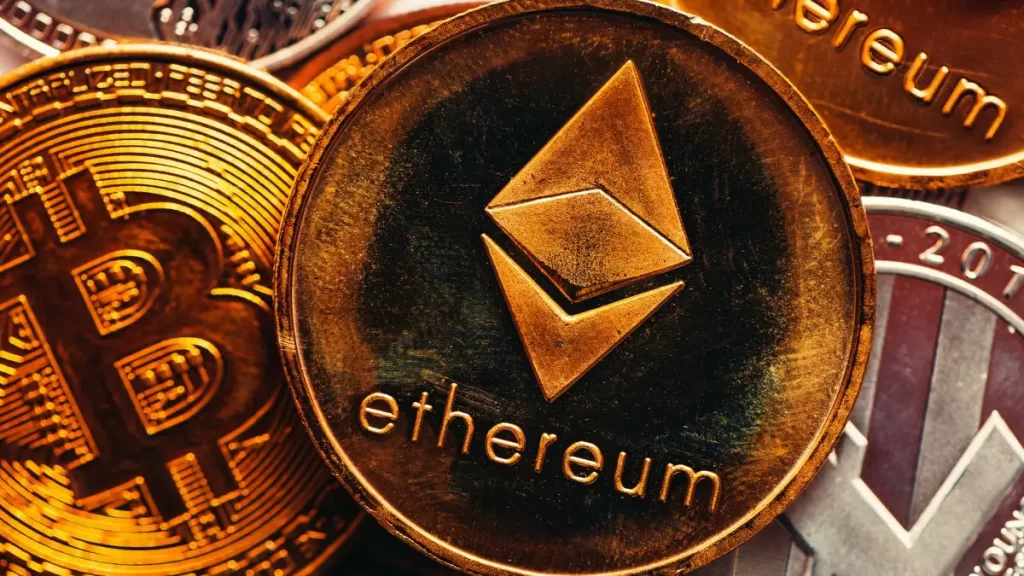
A wallet address holding a substantial amount of pre-mined Ethereum, valued at $116 million, has recently made a significant move.
After being dormant for eight years, the wallet transferred its entire stash of 61,216 Ether (ETH) to an address on the Kraken crypto exchange.
The pre-mined Ether was accumulated by early team members and co-founders of the Ethereum ecosystem during a sale event in June 2014.
At that time, the network was unable to generate tokens independently, so this sale allowed participants to acquire pre-mined Ether.
The tokens were valued at around $300–$400 during the pre-mine phase, making the wallet worth approximately $20 million.
However, the value of the tokens has grown exponentially over the years, and at present, they are worth over $116 million.
Data from Etherscan, a blockchain explorer for Ethereum, confirms that the 61,216 ETH were transferred to a Kraken wallet address on July 18 at 7:30 pm Eastern Time.
Remarkably, the transaction fee for moving $116 million worth of Ether amounted to only $1.5, with a gas price of 25.475673161 gwei.
READ MORE: FSB Proposes Global Regulatory Framework for Cryptocurrencies
The identity of the wallet owner remains unknown, underscoring the importance of hodling—a strategy that emphasizes long-term accumulation of cryptocurrencies.
The owner’s cautious approach is evident from the initial test transaction of 0.05 ETH sent to the Kraken address, ensuring no loss of funds due to human error.
Meanwhile, at the Ethereum Community Conference event in Paris on July 18, Ethereum co-founder Vitalik Buterin discussed the challenges associated with implementing a new blockchain feature.
He mentioned the concept of account abstraction extensions, referred to as “paymasters,” which would allow users to pay their fees using any coins they are transferring.
Buterin acknowledged the potential benefits of account abstraction for users but also recognized the need for developers to address challenges.
This includes the requirement of an Ethereum Improvement Proposal to upgrade current externally-owned accounts into smart contracts, as well as ensuring the protocol functions effectively in layer-2 solutions.
The movement of such a significant amount of pre-mined Ether highlights the ongoing evolution and adoption of cryptocurrencies, while also shedding light on the technical advancements being pursued by Ethereum developers.
Other Stories:
SEC Chair Gary Gensler Advocates Greater Use of Artificial Intelligence for Market Surveillance,.
PEPE Coin in Trouble? Financial Regulator Clamps Down On Crypto Memes
Celo Blockchain Plans Transition to Ethereum Layer-2 Solution