



Bitcoin held onto strong gains as it closed the week of May 11, keeping the crypto market in suspense with prices lingering around the $104,500 mark.
After a surge driven by weekend volatility, traders are eyeing whether the world’s top cryptocurrency is on the brink of a new breakout.
Volatility Fuels Multimonth Highs
Data showed Bitcoin reaching a high near $105,000 over the weekend.
This jump occurred during low liquidity trading hours and coincided with renewed speculation about a positive shift in US-China trade relations.
According to analyst Rekt Capital, the current price level is crucial. “Can Bitcoin do it? Can Bitcoin Weekly Close above the Range High of its recently reclaimed Re-Accumulation Range to kickstart the breakout process?” he asked on X.
He suggested that Bitcoin may be entering the second phase of its “Price Discovery Uptrend,” a period historically characterized by steep gains.
Bull Market May Still Have Room to Run
Rekt Capital’s analysis pegged the current bull market as 85.5% complete but noted that some of the most volatile gains may still be ahead.
Market monitoring site CoinGlass showed a concentration of sell orders just under $106,000, while buy orders stacked below $102,000 indicated strong interest around the current trading band.
This dense liquidity zone suggests both bulls and bears are gearing up for the next significant price move.
Skeptics Warn of a Fakeout
Despite the optimism, some traders remain cautious.
A popular trader known as HTL-NL suggested the current upswing could be a “fake out,” aimed at trapping latecomers betting on more gains.
“Will $BTC close/open the week remaining within the range, will it do a ‘fake out (UTAD)’ or was this really a reaccumulation range as many want to believe,” he said.
He admitted that while a genuine reaccumulation phase is possible, his primary expectation is that the rally may not sustain itself.
Correction Risks Still Linger
Il Capo of Crypto, a well-known bearish voice in the space, echoed similar warnings.
“This is the time to scale out, not in,” he posted on May 10, cautioning that the rebound since early 2024 could eventually be wiped out if Bitcoin fails to break through resistance convincingly.
With strong resistance being tested, the coming days could determine whether Bitcoin will soar to new highs or retreat once again.

Goldman Sachs has significantly increased its exposure to BlackRock’s iShares Bitcoin Trust (IBIT), with a 28% jump in its holdings over the first quarter of 2025. The investment bank now owns over 30.8 million IBIT shares, valued at more than $1.4 billion.
This new data was revealed in a recent SEC filing, first reported by MacroScope. Goldman had previously held 24 million shares at the end of 2024, making the increase notable amid growing institutional interest in spot Bitcoin ETFs.
Minimal Change in Fidelity Exposure
While Goldman has expanded its IBIT position, its stake in Fidelity’s Bitcoin fund (FBTC) appears largely unchanged. Back in February, the firm reported about $1.2 billion in IBIT holdings and $288 million in FBTC. The latest filing shows no significant shifts in FBTC exposure.
According to financial analytics platform Fintel, Goldman now ranks as the top institutional holder of IBIT. Brevan Howard follows closely behind, with over 25 million shares valued at nearly $1.4 billion. Other institutional participants include Jane Street, Symmetry Investments, and D.E. Shaw & Co.
Strategic Shift in Derivatives Exposure
A notable change in Goldman’s approach is the absence of Bitcoin ETF options in the new disclosure. In December, the bank held call options worth $157 million and put options totaling $527 million on IBIT, along with $84 million in puts on FBTC. Those options have either been closed out or allowed to expire, signaling a pivot in strategy.
This shift suggests Goldman may now favor direct equity exposure in Bitcoin ETFs over derivatives as a way to manage risk or express confidence in Bitcoin’s medium-term outlook.
IBIT Dominates the Market
IBIT remains the largest spot Bitcoin ETF, managing approximately $62.8 billion in assets. Since its debut in January 2025, the fund has attracted over $44 billion in net inflows. This week alone, it has logged roughly $674 million, according to Farside Investors.
The ETF’s price also saw a gain during Friday’s trading session, rising $1.04 to close at $58.66. As institutional adoption accelerates, IBIT continues to be the central vehicle for Bitcoin exposure in traditional markets.

Arizona has taken a significant step in integrating digital assets into state-level finance with the enactment of House Bill 2749. Signed into law by Governor Katie Hobbs, the bill creates a reserve fund composed of Bitcoin and other digital assets without relying on taxpayer dollars.
Hobbs Chooses Caution Over Aggression
This move comes shortly after Hobbs vetoed Senate Bill 1025, a more aggressive proposal that would have allowed the state to invest up to 10% of its treasury and pension assets in Bitcoin.
In her veto statement, Hobbs said, “Arizonans’ retirement system is strong because it sticks to proven investment strategies,” expressing concern about exposing public retirement funds to untested digital assets.
By contrast, House Bill 2749 gained her support thanks to its conservative, budget-neutral design. Dennis Porter, CEO of the Satoshi Action Fund, highlighted that of all the crypto legislation presented, HB 2749 was Hobbs’ preferred choice.
How the Reserve Fund Will Work
Backed by Representative Jeff Weninger and supported across party lines, the bill directs the state treasurer to manage a reserve fund consisting of digital assets received via airdrops, interest, and staking rewards.
Assets held for more than three years without any activity—such as logging in, initiating a transaction, or contacting the custodian—will be considered abandoned. In such cases, any earnings from those assets will be transferred into the reserve fund.
Importantly, the law mandates that the state must sell any digital assets at or above prevailing market prices. These sales will take place via regulated exchanges or other “commercially reasonable methods” for less-liquid tokens.
Comparison to New Hampshire’s Proactive Stance
Arizona’s law is more conservative compared to New Hampshire’s recently signed HB 302, which authorizes the direct allocation of up to 5% of state funds into Bitcoin. Unlike Arizona’s fund, which passively accumulates assets, New Hampshire’s legislation permits active investment and long-term crypto holding.
Nevertheless, Arizona’s HB 2749 lays crucial groundwork by integrating digital assets into public financial planning in a cautious, controlled way. It signals the state’s willingness to innovate without taking on undue financial risk.
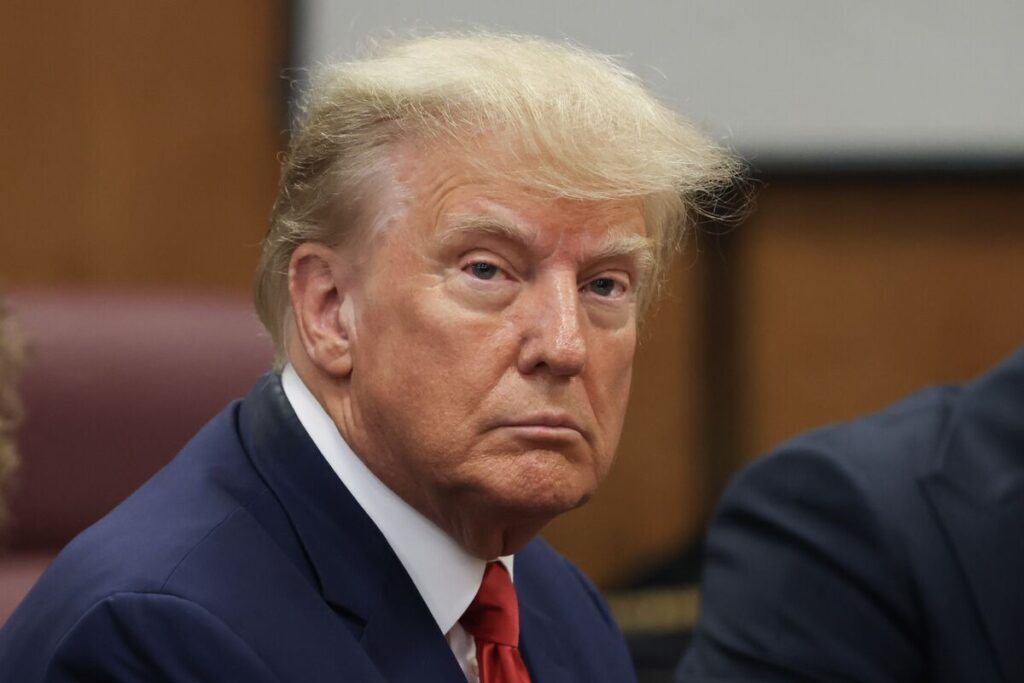
A sovereign wealth fund proposed by Treasury Secretary Scott Bessent and Commerce Secretary Howard Lutnick has encountered resistance within the White House, despite being developed at the direction of President Donald Trump.
Trump’s Initial Vision Sparks Speculation
Trump’s February executive order instructed the Treasury and Commerce Departments to draft a framework for a U.S. sovereign wealth fund within 90 days. This prompted speculation that such a fund might invest in Bitcoin or other digital assets, especially given Trump’s increasing interest in crypto.
While this sparked hope among crypto advocates, Bessent and Lutnick clarified early on that the focus would be on traditional financial assets such as equity and warrants. Nonetheless, David Sacks—appointed by Trump as his crypto adviser—hinted that Bitcoin could still be considered as part of the fund’s assets.
That possibility now seems unlikely following a separate move by Trump. In March, he signed an executive order to establish a dedicated Strategic Bitcoin Reserve and a digital asset stockpile, signaling a parallel but independent strategy for managing crypto assets.
Funding Source and Structure Remain Unclear
There were also discussions around whether tariffs or other government revenues could finance the fund, but Lutnick later dismissed the idea of using tariffs. “Tariffs will not be used to support the sovereign wealth fund,” he confirmed.
Although the plan was submitted to Trump in early May, no final decision has been reached. Kush Desai, a spokesperson for the White House, confirmed that the departments have fulfilled their directive, but emphasized that “no final decisions have been made.”
Desai added that the proposed sovereign wealth fund aligns with Trump’s broader objectives to bolster national and economic security.
Ongoing Deliberations and Potential Uses
The details surrounding how the fund will operate, or what it will invest in, remain unsettled. According to sources familiar with the matter, Trump has yet to decide how any returns from the fund would be used. One possibility he has floated is acquiring a stake in TikTok—currently facing a U.S. ban unless Chinese parent company ByteDance sells its stake.
Meanwhile, Bessent and Lutnick are also spearheading the development of the U.S. Strategic Bitcoin Reserve and Digital Asset Stockpile. These crypto-specific initiatives will include frameworks for acquisition, custody, and operation, and are being designed to have no impact on the federal budget.
As deliberations continue, both crypto and traditional finance communities are watching closely to see how the Trump administration’s vision for long-term national investments takes shape.
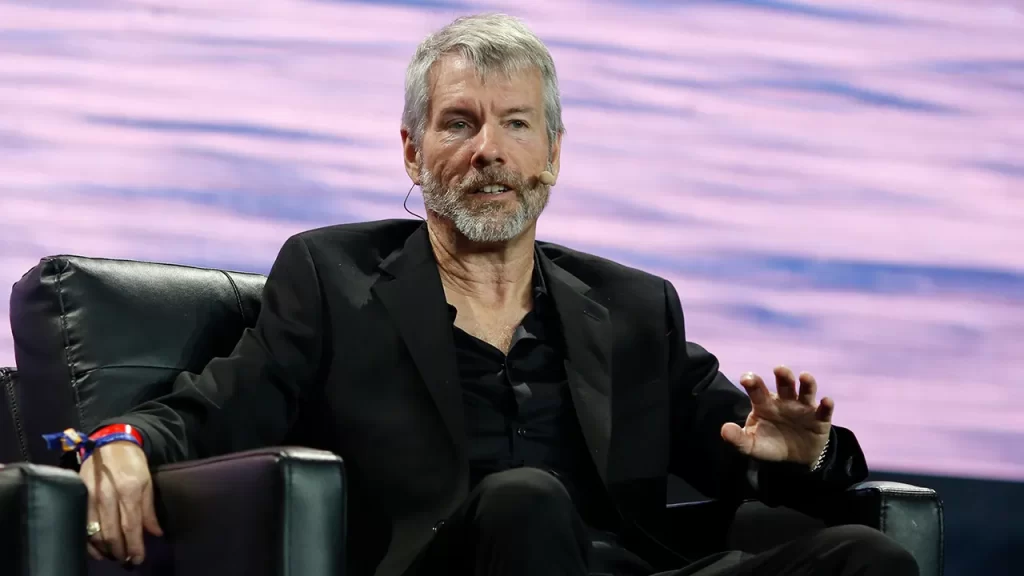
MicroStrategy Chairman Michael Saylor has called on Microsoft to abandon traditional financial strategies like stock buybacks and bonds in favor of Bitcoin, which he claims offers better long-term value and reduced risk.
A Radical Proposal for Microsoft’s Capital Allocation
Speaking at the Strategy World 2025 conference, Saylor said, “Microsoft should be powered by digital capital. Bitcoin is the highest-performing uncorrelated asset.” He pointed out that Bitcoin has significantly outperformed Microsoft stock over the past five years, yielding over 950% gains compared to MSFT’s 148%.
Despite this disparity, Saylor criticized Microsoft’s use of its large cash reserves, arguing that the current focus on stock repurchases and low-yield bonds weakens the company’s flexibility and leaves shareholders more exposed to risk. “Buying Bitcoin would be 10x better than buying your own stock,” he said.
Critique of Bonds and Buybacks
Saylor was scathing in his view of bonds, calling them “toxic,” and claimed that stock buybacks “destroy 97% of your capital over 10 years.” Instead, he advocated redirecting funds toward Bitcoin, which he believes could increase Microsoft’s enterprise value by up to $5 trillion.
“Bitcoin…emerged as the alternative to bonds in 2024. That was the point at which the SEC endorsed Bitcoin ETFs,” he noted. “That was kind of year zero. We’re now in year one.”
Bitcoin as the Future of Capital
Saylor characterized Bitcoin as the modern alternative to outdated investment strategies. “Bitcoin is the universal, perpetual, profitable merger partner,” he declared. He believes it is a “dirt cheap, one-time revenue that’s growing 30% to 60% a year.”
Previously, Saylor made a direct pitch to Microsoft’s board, delivering a three-minute presentation with 44 slides urging a strategic shift toward Bitcoin. However, a shareholder proposal to allocate 1% of Microsoft’s cash into Bitcoin was ultimately voted down, following opposition from the board.
Despite the rejection, Saylor’s push highlights a growing debate over how corporations should manage capital in a rapidly changing economic landscape.
Former President Donald Trump has reaffirmed his strong support for cryptocurrency, asserting that the United States must take the lead in digital asset innovation or risk being left behind by global competitors like China. In a recent interview, Trump emphasized crypto’s growing popularity and resilience amid market challenges.
“I Want Crypto,” Trump Declares
Speaking to NBC’s Meet the Press, Trump underlined the urgency for American leadership in the crypto space. When asked about concerns over profiting from his presidential role, Trump steered the conversation toward the strategic importance of digital currencies.
“I want crypto,” he said. “I think crypto is important because if we don’t do it, China is going to. It’s new. It’s very popular. It’s very hot.” Trump noted that even during periods of market turbulence, cryptocurrencies held up better than many traditional financial assets.
Highlighting Adoption and Attacking Biden
According to Trump, the sheer level of adoption and interest in crypto makes it impossible to ignore. He criticized the Biden administration for what he described as inconsistent and politically motivated regulation of the crypto industry.
He accused the current administration of initially cracking down on crypto, only to later relax its stance when it became politically convenient. Trump positioned himself as a consistent supporter of the digital asset space.
Addressing Allegations of Personal Gain
With questions swirling around the Official Trump Token (TRUMP), the former president sought to downplay any suggestion that he is financially benefitting from its existence. He insisted that his interest in crypto predates his latest presidential campaign.
“I’m not profiting from anything,” Trump said. “I haven’t even looked.” He added, “If I own stock in something, and I do a good job, and the stock market goes up, I guess I’m profiting.”
Trump reiterated that he donated his entire presidential salary during his time in office and intends to continue that practice. When pressed on whether he would contribute any potential crypto earnings, he responded candidly: “Should I contribute all of my real estate that I’ve owned for many years if it goes up a little bit because I’m president and doing a good job? I don’t think so.”
Market Decline and Token Performance
Despite Trump’s endorsement, the TRUMP token has seen a significant drop in value since his inauguration. Once boasting a market cap nearing $15 billion, it has since plummeted to around $2 billion, according to CoinMarketCap.
However, the token experienced a brief resurgence last week, surging over 70% on the news that Trump would host an exclusive event for top token holders.
Exclusive Dinner Sparks Controversy
Scheduled for May 22 at Trump National Golf Club, the invitation-only dinner will include the top 220 wallets holding TRUMP tokens. This high-profile gathering has prompted concern across the political spectrum.
Democratic Senators Elizabeth Warren and Adam Schiff have called for an ethics investigation, alleging that the event might be an example of “pay to play” and could signal the monetization of presidential access.
Even some Republicans have voiced discomfort. Senator Cynthia Lummis, known both for her support of Trump and her advocacy for Bitcoin, openly expressed her concerns.
“This is my president that we’re talking about, but I am willing to say that this gives me pause,” Lummis told CNBC.
Balancing Influence and Ethics
As Trump continues to lean into crypto as part of his political messaging, the intersection of personal branding, digital assets, and presidential influence is drawing scrutiny. His outspoken support for crypto may resonate with younger and tech-savvy voters, but it also raises fresh questions about transparency, conflicts of interest, and ethics in governance.
With a high-stakes election looming and digital assets becoming a key part of political and economic discourse, Trump’s crypto push could shape not only campaign rhetoric but also the regulatory landscape ahead.

A major shift has occurred in the crypto investment space as Two Prime, a US-based investment advisory firm, has decided to abandon Ethereum (ETH) in favor of an exclusive focus on Bitcoin (BTC). This move follows ETH’s significant price decline in early 2025, which prompted the firm to reassess its strategy.
From Dual Lending to Bitcoin-Only
Over the past 15 months, Two Prime facilitated $1.5 billion in loans using both Bitcoin and Ether. However, citing Ethereum’s instability and underwhelming performance, the firm announced on May 1 that it would now concentrate entirely on Bitcoin for both asset management and lending operations.
“ETH’s statistical trading behavior, value proposition, and community culture have failed beyond a point that is worth engaging,” Two Prime stated, signaling a complete pivot.
ETH’s Unpredictability a Major Concern
A key reason behind the firm’s decision is what it describes as Ethereum’s loss of predictable trading behavior. As an algorithmic trading firm, Two Prime emphasizes the importance of consistent data patterns for its models.
“Ether no longer trades predictably,” the firm said. “As an algorithmic trading firm, we value data more than narratives… the data suggests ETH has fundamentally changed.”
The firm explained that Ether has decoupled from Bitcoin and now behaves more like a memecoin. They noted ETH experienced “several multi-standard deviation moves” during Q1 2025, in contrast to Bitcoin’s relatively steady behavior.
“It trades now like a memecoin rather than a predictable asset,” the company added. “Even during the turbulence of Q1 2025, Bitcoin remained within its fundamental behavior, whereas ETH saw several multi-standard deviation moves.”
Impact on Algorithmic Trading and Lending
Such volatility poses serious challenges for firms like Two Prime that rely on quantitative strategies. The unpredictability of ETH’s price action not only complicates trading but also undermines ETH-backed lending practices, which rely on certain levels of price stability.
The firm remarked that ETH’s behavior creates a “headache” for algorithmic trading and undermines lending reliability, “even by the high volatility expectations of digital asset markets.”
Criticism Triggers Community Reaction
Two Prime’s harsh assessment of Ethereum didn’t go unnoticed. Some crypto enthusiasts saw the firm’s exit as a contrarian indicator — a possible sign that ETH is nearing a price bottom.
One user commented, “What a retarded essay statement,” referencing the S&P 500’s own 4.7% decline year-to-date. Others questioned Two Prime’s relevance altogether: “Never even heard of them. Seems irrelevant.”
“If this isn’t a bottom signal for ETH idk what is,” another person noted, suggesting that the worst might be over for Ethereum.
Weak ETH ETF Performance Adds Pressure
Adding to ETH’s woes, Two Prime pointed to the underwhelming performance of Ethereum-based ETFs. While Bitcoin ETFs have attracted substantial institutional investment, ETH ETFs have lagged far behind, with BTC ETF purchases outpacing ETH by nearly 24 times.
“The failure of ETH’s ETF creates a reflexive loop whereby institutions like BlackRock dedicate fewer resources to their promotion and sale. BTC has found the mainstream while ETH has floundered,” Two Prime stated.
Despite this, Ethereum still dominates among altcoin ETFs in terms of assets under management (AUM). Recent data shows Ether-based exchange-traded products hold $9.2 billion in AUM, well ahead of Solana and XRP, which have $1.4 billion and $1 billion, respectively.
ETF Landscape Adds to ETH Struggles
Following the US SEC’s approval of spot Ether ETFs in May 2024, the asset saw a muted reception. Investor enthusiasm has waned, and some issuers have backed away — VanEck halted Ether futures ETF trading, WisdomTree withdrew its proposal, and ARK dissolved its futures ETFs for both Bitcoin and Ether in March 2025.
Founded in 2019 by Alexander Blum and Marc Fleury, Two Prime had been active in both Bitcoin and Ethereum lending until this dramatic pivot. Whether their exit marks a low point for ETH or simply reflects a broader trend remains to be seen.

The Blockchain Group (TBG), a publicly traded Bitcoin treasury company, has revealed plans to amass as much as 260,000 Bitcoin over the next decade—a move that could see it hold approximately 1% of the total Bitcoin supply by 2034.
A Long-Term Bitcoin Accumulation Strategy
Outlined in its latest financial disclosure, TBG’s strategy focuses on an incremental acquisition approach. The company aims to increase its current holdings of 620 BTC to between 1,000 and 3,000 BTC by the end of this year. It has set an ambitious mid-term goal of owning 100,000 BTC by 2032 and hopes to reach between 170,000 and 260,000 BTC by 2034.
“If Bitcoin reaches €1-2 million per coin by 2033-2035, holding 210,000 BTC could represent between €210 billion and €420 billion in net asset value,” the report states.
This long-term vision is underpinned by a projection that Bitcoin’s value will appreciate substantially in the coming years. To measure progress, the company is tracking its proprietary “BTC Yield” metric, which saw a dramatic 709% increase in Q1 2025. During this period, its Bitcoin-per-share figure jumped from 41 to 332 satoshis.
Strategic Backing and Funding Pipeline
The firm, which trades under the ticker ALTBG on Euronext Growth Paris, underwent a strategic pivot in November 2024 to become a full-fledged Bitcoin Treasury Company. Since then, it has boosted its Bitcoin reserves significantly—from just 15 BTC in December 2024 to over 620 BTC by April 2025. The increase was achieved via equity placements and Bitcoin-denominated convertible bonds.
TBG’s strategy has attracted support from well-known names in the crypto investment space, including Fulgur Ventures, UTXO Management, and TOBAM. Prominent cryptographer and Blockstream CEO Adam Back has also joined as a strategic advisor.
Despite acknowledging the risks associated with the plan, the company maintains a clear goal: “accumulate as much BTC as possible, as fast as possible, in the most accretive way possible.”
To fund this effort, TBG has projected a capital-raising potential ranging from €150 million to €100 billion over eight years, depending on market conditions and investor appetite. If the roadmap unfolds as planned, TBG could soon become Europe’s top corporate holder of Bitcoin.
Share Price Soars in Six Months
Since adopting its Bitcoin-focused model, TBG’s stock performance has mirrored other successful Bitcoin treasury firms. Its share price surged by 120% within the first month, 265% by the third month, and 474% after six months. This trend draws strong parallels to the early growth patterns of companies like Strategy and Metaplanet, both of which committed to the Bitcoin treasury model before TBG.
“Bitcoin treasury companies are the fastest-growing companies in Europe,” TBG stated.
Currently, Strategy remains the leading publicly listed corporate Bitcoin holder with 553,555 BTC—around 2.6% of the global circulating supply.

In a landmark move that could set a national precedent, Arizona lawmakers have passed two innovative bills designed to integrate Bitcoin and other digital assets into the state’s financial infrastructure. If signed into law, these measures would make Arizona the first U.S. state to establish a formal Bitcoin reserve.
Two Key Bills Receive Legislative Approval
The Arizona House of Representatives passed Senate Bill 1025 and Senate Bill 1373, both of which are now on Governor Katie Hobbs’ desk awaiting final approval. SB 1025 enables the state to allocate up to 10% of its treasury and pension assets into digital assets, including Bitcoin. Meanwhile, SB 1373 lays the foundation for a Digital Assets Strategic Reserve Fund, designed to hold and manage these crypto assets for future use.
Together, the bills represent a strategic pivot toward blockchain-based asset management, aligning Arizona with other crypto-forward states such as Texas, Florida, and New Hampshire.
Funded by Seized Crypto and Future Appropriations
The legislation authorizes the use of seized digital assets as well as future budget appropriations to fund the reserve. These assets will be managed under strict audit protocols, featuring on-chain transparency and risk controls to ensure responsible stewardship.
Supporters argue that integrating Bitcoin into Arizona’s financial strategy could offer protection against inflation and traditional market volatility. The effort marks a bold step into crypto adoption at the state level—one that could ripple across the country if successful.
Bitcoin Prices Surge Amid Legislative Buzz
Shortly after the bills passed, Bitcoin’s price surged to nearly $95,000, a 25% increase from early-April lows. The price jump appears to be driven by renewed institutional interest and speculation over state-level crypto integration.
Crypto analysts view Arizona’s move as a confidence boost for broader adoption, potentially attracting similar initiatives elsewhere. If implemented, the state-backed reserve could serve as a blueprint for how governments can securely incorporate decentralized finance into their public asset strategies.
Governor Hobbs’ Decision Looms
Governor Hobbs has not yet taken a public position on the bills. Previously, she had threatened to veto all legislation over unresolved disability funding disputes. However, that blockade was lifted following a bipartisan deal reached on April 24.
Her final decision could determine whether Arizona takes the lead in Bitcoin adoption or faces a legislative override attempt to push the plan forward. However, it should be noted that she has vetoed dozens of Republican-sponsored bills, including legislation related to crypto and digital assets, so there is a high chance these bills will also be vetoed by Hobbs.
Strategy, the largest corporate holder of Bitcoin, has expanded its cryptocurrency portfolio once again. On Monday, the company revealed it had acquired an additional 15,355 Bitcoin between April 21 and April 27, investing approximately $1.4 billion. The average purchase price was $92,737 per Bitcoin.
The move was made possible through proceeds raised from stock sales. According to a new SEC filing, Strategy sold 4.02 million shares of its Class A common stock (MSTR) and 435,069 shares of its 8.00% Series A preferred stock (STRK), generating the necessary funds.
Growing Holdings and Soaring Value
This latest acquisition brings Strategy’s total Bitcoin holdings to a staggering 553,555 BTC, currently valued around $52.7 billion. Bitcoin’s price surge to roughly $95,300 has significantly boosted the company’s portfolio value, turning a $37.9 billion investment — purchased at an average of $68,459 per Bitcoin — into nearly $15 billion in unrealized gains.
Strategy’s aggressive buying spree shows no signs of slowing. The recent purchase follows a similar move last week when the company announced the acquisition of 6,556 Bitcoin.
Market Response and Future Outlook
Market watchers anticipated this move following a post by Michael Saylor on Sunday, in which he highlighted Strategy’s Bitcoin portfolio tracker — often a precursor to major announcements.
Following the news, Strategy’s stock (MSTR) rose 1.6% in pre-market trading on Monday, building on a 5% gain from the previous Friday. With Bitcoin prices maintaining strength, Strategy’s bold bet on the cryptocurrency appears to be paying off handsomely.