



Bitcoin’s recent rally to $88,500 has reignited enthusiasm among retail traders. However, blockchain analysis firm Santiment warns that social media sentiment could signal the need for caution.
Market Turbulence and Recovery
The cryptocurrency market faced significant turbulence in late February and early March, with Bitcoin plunging to $78,000 twice. Several factors contributed to this decline, including macroeconomic concerns, President Trump’s economic policies, and newly imposed tariffs.
The Federal Reserve’s stance on monetary policy further exacerbated market anxieties. Fears of rising inflation and potential interest rate hikes pushed investors toward safer assets, reducing the appeal of Bitcoin and other cryptocurrencies.
During the same period, gold emerged as a preferred hedge, reaching record highs. The precious metal climbed to $3,057 per ounce in March 2025, following a peak of $2,956 in February. As gold gained traction, Bitcoin suffered from declining investor confidence.
Despite this downturn, Bitcoin staged a strong recovery in the second half of March, climbing back to $88,500. This resurgence shifted market sentiment from fear to mild greed, according to Santiment’s analysis.
Bullish and Bearish Predictions Flood Social Media
With Bitcoin’s rally, optimism has surged across social media platforms. Santiment reports that bullish predictions now dominate discussions, with forecasts ranging between $100,000 and $159,000. Conversely, bearish outlooks suggest prices could drop as low as $10,000, with more conservative estimates landing between $69,000 and $78,000.
However, historical patterns indicate that extreme optimism among retail investors often precedes market corrections. Santiment cautions that when a majority of traders expect Bitcoin to skyrocket, the likelihood of a downturn increases. Conversely, when negativity dominates discussions, markets often experience a rebound.
Warnings Against Overconfidence
Santiment emphasizes the importance of exercising caution during periods of heightened market sentiment. The firm warns that phrases like “to the moon” and “lambo time” flooding social media may indicate an impending price correction.
“When you see ‘crypto is dead’ or ‘Bitcoin is a scam,’ this should be music to your ears,” Santiment noted, reinforcing the idea that pessimism often signals buying opportunities.
At the time of writing, Bitcoin was trading around $87,200, reflecting a 6% gain over the past week, according to CoinGecko data.
Expert Forecasts on Bitcoin’s Future
Arthur Hayes, co-founder of BitMEX, remains optimistic about Bitcoin’s trajectory. He predicts that the cryptocurrency could surpass $110,000, driven by the Federal Reserve’s anticipated shift from quantitative tightening to easing. A looser monetary policy could inject more liquidity into financial markets, benefiting Bitcoin and other risk assets.
Markus Thielen, founder of 10X Research, supports this perspective but remains cautious about the immediate future. While he acknowledges that easing measures and softened tariff policies could help Bitcoin maintain its upward momentum, he believes that a major catalyst for a dramatic price surge is currently lacking.
As Bitcoin continues to navigate macroeconomic uncertainties, traders should remain vigilant and avoid being swayed solely by social media sentiment. While the long-term outlook remains bullish for many analysts, past trends suggest that extreme optimism can often lead to market corrections.

Over 27,740 Bitcoin, valued at approximately $2.4 billion, were withdrawn from exchanges on March 25, marking the highest daily outflow since July 2024. Meanwhile, spot Bitcoin ETFs have continued attracting inflows, signaling renewed institutional interest.
Whale Activity and Market Sentiment
Analysis from Glassnode indicates that a significant portion of the withdrawals came from Bitcoin whales—holders of at least 1,000 BTC. On March 25 alone, these investors moved over 11,574 BTC (worth around $1 billion) off exchanges. This trend suggests accumulation and reduced selling pressure, which is often a bullish indicator for Bitcoin’s price.
Additionally, Arkham Intelligence reported that a “billionaire Bitcoin whale” added 2,400 BTC (worth over $200 million) on March 24. Despite some February sell-offs, this investor now holds over 15,000 BTC, hinting at strategic buying amid price dips.
Spot Bitcoin ETFs See Continuous Inflows
Another bullish sign is the steady inflow into spot Bitcoin ETFs. Since March 14, these funds have recorded eight consecutive days of inflows, totaling nearly $900 million. Market data provider Santiment noted that this is the longest streak of inflows seen in 2025.
Meanwhile, Bitcoin’s price remains in a crucial technical zone. Trading at $88,265, BTC faces resistance at the 20-week exponential moving average (EMA) of $88,682. Analysts highlight the importance of this level, as historical breakouts above the 20-week EMA have preceded major price surges.
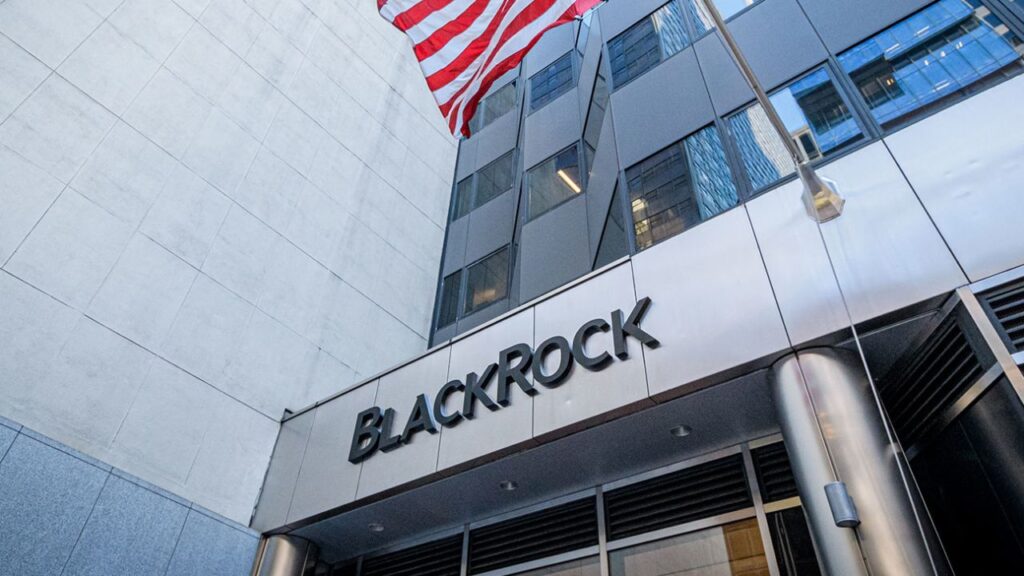
Global asset management giant BlackRock has launched a new Bitcoin exchange-traded product (ETP) in Europe, marking its first crypto-linked offering outside North America. This move follows the success of its US-listed iShares Bitcoin Trust (IBIT), which has accumulated $50.6 billion in assets under management.
According to Bloomberg, the new iShares Bitcoin ETP will trade under the ticker IB1T on Xetra and Euronext Paris, while it will be listed as BTCN on Euronext Amsterdam.
Competitive Pricing and Market Expansion
To attract investors, BlackRock has introduced a temporary fee waiver of 10 basis points, reducing the fund’s expense ratio to 0.15% until the end of the year. The expansion into Europe is driven by increasing retail and institutional demand, according to Manuela Sperandeo, BlackRock’s head of iShares Product for Europe and the Middle East.
While Europe already has over 160 crypto ETPs, the market remains smaller than in the US. Bloomberg ETF analyst Eric Balchunas noted that despite their recent introduction, US spot Bitcoin ETFs control around 91% of the global market due to lower costs and higher liquidity.
Market Potential and Investor Sentiment
If BlackRock can replicate its US success in Europe, significant market growth is possible. However, Balchunas highlighted that European investors tend to have lower risk tolerance than their counterparts in the US and certain parts of Asia.

Bitcoin’s bullish momentum continues, with analysts forecasting a new all-time high of $110,000. The cryptocurrency has been climbing steadily, closing above $86,000 on March 23, fueling optimism among investors.
BitMEX co-founder Arthur Hayes believes Bitcoin will reach $110,000 before experiencing any major pullback, citing shifts in U.S. monetary policy. “I bet $BTC hits $110k before it retests $76.5k,” he wrote on X. “The Fed is going from QT to QE for treasuries.”
Market Conditions Favor Further Gains
The Federal Reserve’s slowing of quantitative tightening (QT) has led to expectations of a liquidity boost, a historically bullish sign for Bitcoin. However, some analysts argue that QT is not completely over, pointing to ongoing mortgage-backed securities reductions.
Bitcoin’s historical performance suggests that a rally could follow, similar to its 1,000% surge during the 2020 QE period. Emmanuel Cardozo, an analyst at Brikken, supports this outlook, citing global liquidity increases and discussions around a U.S. Bitcoin strategic reserve.
While the path to $110,000 remains promising, some analysts caution that a correction to $76,500 could still occur due to profit-taking or unexpected market shifts. Nonetheless, market sentiment remains largely positive.
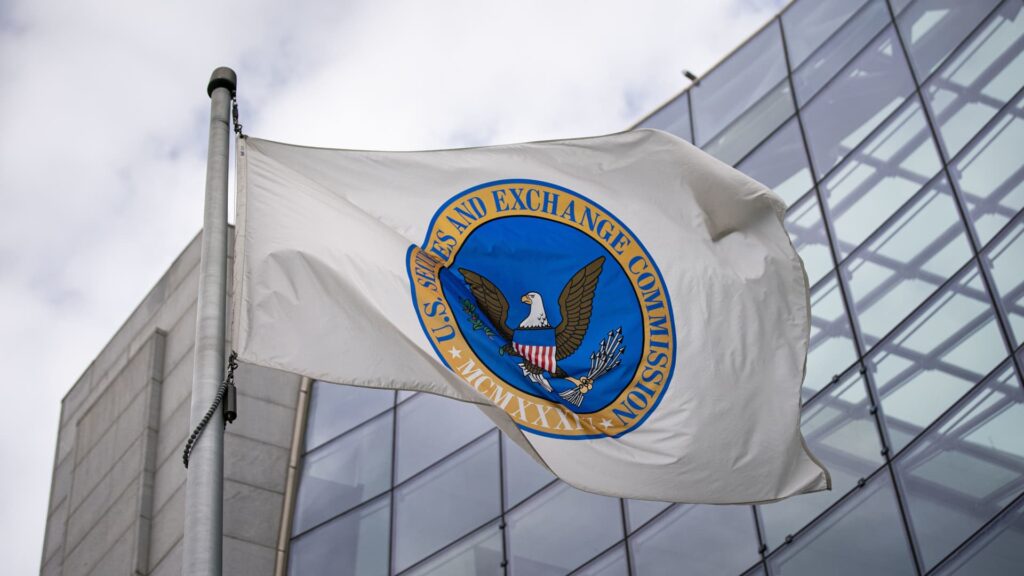
In a significant step toward reshaping U.S. crypto policy, the Securities and Exchange Commission’s (SEC) crypto task force held its first public roundtable, signaling a potential shift in regulatory strategy under President Trump’s administration.
New Era for Crypto Oversight
The meeting was led by Republican SEC Commissioner Hester Peirce, who acknowledged the broader shift underway. “Spring signifies new beginnings and we have a new beginning here, a restart of the commission’s approach to crypto regulation,” Peirce said.
This marks a departure from the more aggressive stance taken by the SEC under President Biden, which saw legal actions against major crypto firms like Coinbase and Kraken. Trump, who campaigned on being a “crypto president,” has pledged to reverse such crackdowns and foster a more supportive regulatory environment.
Roundtable Features Diverse Industry Voices
The roundtable featured influential voices from both the private and public sectors, including John Reed Stark, former chief of the SEC’s Office of Internet Enforcement; Miles Jennings, general counsel at a16z crypto; and former SEC Commissioner Troy Paredes.
The task force discussed the applicability of traditional securities laws to digital assets and whether crypto tokens merit their own regulatory category. Jennings advocated for a balanced approach, stating that the SEC should remain “technology-neutral.” He explained, “Looking at what differentiates a system like ethereum from ownership of equity in Apple opens new tab.”
Debate on Tailored Crypto Regulations
While many in the industry view crypto tokens as commodities, the SEC still treats some as securities, requiring them to adhere to strict registration and disclosure rules. The task force explored whether an entirely new framework would better serve the rapidly evolving digital asset space.
However, not everyone welcomed the idea of loosening regulations. Democratic Commissioner Caroline Crenshaw warned against making exceptions for crypto. “Modifying the law to facilitate the success of a chosen product category is fraught with risk. Risk not only of weakening regulatory protections for that category, but of creating the negative domino effect on other areas of the market protected by the same laws,” she said.
Trump Administration’s Broader Crypto Agenda
The task force’s meeting follows President Trump’s broader push to integrate crypto into national policy. Earlier this month, Trump signed an executive order to create a strategic crypto reserve and hosted a summit for blockchain and digital asset leaders at the White House.
These moves indicate a fundamental shift in how the federal government perceives and plans to engage with the digital asset sector. With the SEC reevaluating its stance and the administration pushing for innovation, the coming months are likely to redefine the U.S. regulatory landscape for crypto.

The US government is open to considering unconventional financial strategies as cryptocurrency gains further legitimacy at the highest levels of power. Bo Hines, head of Trump’s Presidential Council of Advisers for Digital Assets, recently suggested that the administration is willing to explore the idea of swapping some of the nation’s gold reserves at Fort Knox for Bitcoin — provided it remains budget-neutral.
Hines Open to Exploring New Avenues
In a FOX Business interview, Hines emphasized the openness of the current administration to fresh ideas.
“If it’s budget neutral and doesn’t cost a taxpayer a dime, you’re kind of exchanging one for the other,” he said, when asked about the possibility of trading US gold reserves for Bitcoin.
While nothing is set in stone, Hines stressed that the working group is in an exploratory phase. Rather than pushing a fixed plan, the Council aims to hear diverse perspectives and consider a wide range of “creative ideas.”
Expanding the Crypto Ecosystem
Hines also addressed the scope of crypto assets being considered by the administration. While President Trump previously mentioned Ethereum, XRP, Solana, and Cardano in his national crypto reserve announcement, Hines made it clear that the administration is not limiting itself to these four.
“These were highlighted because of their market cap dominance,” he said, echoing earlier remarks by entrepreneur David Sacks. But innovation across various blockchains remains a priority.
Lummis Pushes for Bitcoin Reserve Strategy
Senator Cynthia Lummis has long been an advocate for integrating Bitcoin into the national asset portfolio. Her earlier proposal, the BITCOIN Act, called for acquiring 1 million Bitcoin — around 5% of the current supply — by selling off Federal Reserve gold certificates.
“We already have the financial assets in the form of gold certificates to convert to Bitcoin,” Lummis said in a Bloomberg interview last year. “So the effect on the US balance sheet is pretty neutral.”
Although her 2023–24 proposal stalled in Congress, Lummis recently reintroduced a new version of the bill (S.954) at a crypto policy conference. The goal remains the same: transform a portion of America’s traditional gold holdings into a modern Bitcoin reserve.
An Unconventional but Growing Movement
While far from mainstream, the concept of a national Bitcoin reserve is slowly gaining traction among some US lawmakers and advisers. The idea of selling off legacy assets like gold to invest in digital currencies reflects a broader push for modernization in financial policy.
The debate over whether Bitcoin can or should become part of America’s official reserves is far from settled, but one thing is clear — it’s no longer being dismissed outright.

Michael Saylor’s Strategy is continuing its bold foray into the cryptocurrency world with a major financial move designed to ramp up its Bitcoin accumulation. On Friday, the firm revealed it expects to raise approximately $711 million in net proceeds from a newly launched preferred stock offering.
An Expanded Offering Amid Surging Demand
The offering, labeled as “Series A Perpetual Strife Preferred Stock” (STRF), has been expanded from an initial 5 million to 8.5 million shares due to overwhelming demand. Each share is priced at $85, with a cumulative fixed dividend rate of 10% annually, based on a stated amount of $100 per share.
Several major financial institutions are involved in the offering. Morgan Stanley, Barclays Capital, Citigroup Global Markets, and Moelis & Company are acting as joint book-running managers. AmeriVet Securities, Bancroft Capital, BTIG, and The Benchmark Company are onboard as co-managers.
Flexible Redemption Rights and Liquidity Provisions
The stock comes with a $100 liquidation preference per share. This value is recalculated daily, factoring in market activity and other financial indicators. Strategy retains redemption rights for the shares, which can be exercised if the outstanding share count drops below 25% of the original issue or in certain tax-related scenarios. Additionally, holders can demand repurchase if a significant structural change affects the firm.
The 21/21 Plan: Strategy’s Bold Bitcoin Vision
This offering is a critical element in Strategy’s ambitious “21/21” plan, which aims to raise $42 billion—split evenly between equity and debt—over three years to aggressively expand its Bitcoin reserves. The plan was first introduced in Strategy’s Q3 2024 earnings report and is already halfway to its funding goal.
Since October 2024, Strategy has steadily grown its Bitcoin portfolio, now holding an impressive 246,000 BTC. The Tysons, Virginia-based company has raised billions through convertible senior notes and similar financial instruments, and now holds nearly 2.4% of the total Bitcoin supply.
This latest financial maneuver further cements Strategy’s position as one of the world’s largest corporate holders of Bitcoin and underscores its unwavering belief in the asset’s long-term value.
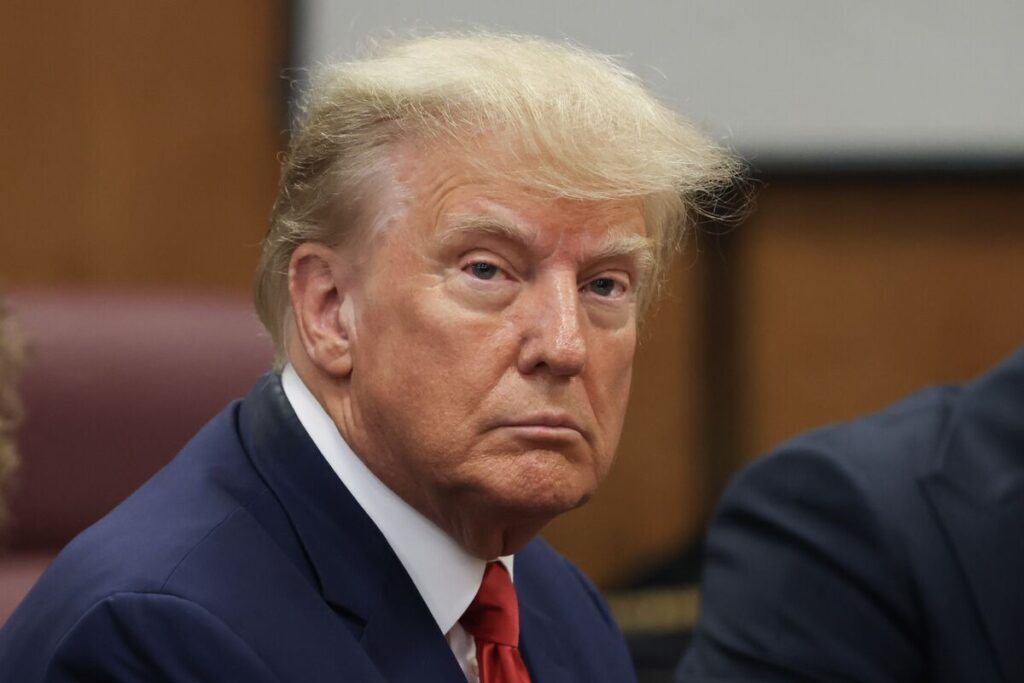
The Trump administration is making significant moves in the digital asset space, with a strategic focus on acquiring Bitcoin through innovative financial approaches that avoid impacting taxpayers. Bo Hines, the executive director of the Presidential Council of Advisers for Digital Assets, outlined these plans during a panel discussion at Blockworks’ Digital Asset Summit 2025.
Bitcoin’s Status as a Commodity
A key aspect of the administration’s policy is the recognition of Bitcoin as a commodity rather than a security. Hines emphasized Bitcoin’s unique qualities, distinguishing it from other digital assets.
“Bitcoin, it’s not a security, it’s a commodity. It has intrinsic stored value, it’s traditionally accepted. It has, as David likes to describe, the immaculate conception. There’s no issuer,” Hines stated.
This stance aligns with the administration’s broader objective of fostering innovation while ensuring Bitcoin remains a crucial part of the country’s financial strategy.
Budget-Neutral Approach to Bitcoin Acquisition
One of the administration’s top priorities is acquiring Bitcoin without adding to the financial burden on taxpayers. Hines revealed that the strategy involves collaboration between the Crypto Council, the Treasury, and the Secretary of Commerce to identify viable acquisition methods.
When asked about the scale of their Bitcoin acquisition plans, Hines compared it to a country’s approach to gold reserves.
“That’s like asking a country, how much gold do you want? Right? I mean, as much as we can get,” he remarked.
Stopping Liquidation of Government-Seized Bitcoin
In addition to acquiring more Bitcoin, the administration is also taking steps to prevent further liquidation of government-seized digital assets. Treasury Secretary Scott Bessent, a known advocate for Bitcoin, discussed this issue in a recent interview with CNBC’s Squawk Box, stating that the administration’s first priority is halting the sale of seized Bitcoin.
Bessent further elaborated that once this policy is in place, the government will explore additional methods to increase its Bitcoin holdings, signaling a long-term commitment to integrating the cryptocurrency into the national financial landscape.
Cryptocurrency exchange-traded products (ETPs) have experienced a significant wave of selling, marking the fifth consecutive week of outflows. The past trading week saw an accelerated liquidation trend, with investors pulling $1.7 billion from the market. This follows the previous week’s outflows of $876 million, bringing the total five-week outflows to a staggering $6.4 billion, according to a report from CoinShares on March 17.
The ongoing sell-off has set a new record, marking the 17th consecutive day of outflows. This represents the longest continuous negative streak since CoinShares began tracking market flows in 2015. Despite this persistent selling pressure, year-to-date (YTD) inflows remain positive, totaling $912 million.
Bitcoin ETPs Bear the Brunt of Outflows
Bitcoin ETPs have been the most affected by the sell-off. The first week of March saw $756 million in outflows, which escalated to $978 million in the following trading week from March 10 to March 14. The cumulative five-week outflows for Bitcoin ETPs now stand at $5.4 billion, leaving only $612 million in YTD inflows by March 14.
Both Ether (ETH) and Solana (SOL) ETPs also saw notable sell-offs, recording outflows of $175 million and $2.2 million, respectively. However, in contrast to the broader trend, XRP ETPs continued to attract investment, with inflows totaling $1.8 million over the past week.
Regional Outflows and Key Issuers Affected
Among ETP providers, European crypto ETP firm 21Shares recorded the largest outflows last week, amounting to $534 million. While Europe saw substantial selling, the United States remained the dominant region for outflows, with investors withdrawing $1.2 billion from its crypto ETP market.
BlackRock, one of the largest crypto holders, experienced significant outflows as well. The investment giant saw $401 million leave its ETPs in the past week, pushing its month-to-date outflows to $594 million.
A Few Issuers Still Holding Inflows
Despite the broad market trend of liquidations, ProShares emerged as one of the few issuers maintaining inflows. The firm recorded $2 million in inflows month-to-date (MTD) and remained one of the three major issuers to hold positive YTD inflows as of March 14. Other issuers managing to retain positive YTD inflows include BlackRock and ARK Invest.
Additionally, Binance has seen a drastic reduction in its assets under management due to a seed investor exit, leaving it with only $15 million in assets, according to CoinShares’ James Butterfill.

A prominent Bitcoin whale has placed a significant bet on a short-term decline in Bitcoin’s price, opening a 40x leveraged short position valued at over $368 million. This high-stakes move comes just before a pivotal week filled with crucial economic reports that could heavily influence Bitcoin’s trajectory and overall investor sentiment.
The whale’s position involves 4,442 Bitcoin (BTC), with an entry price of $84,043. If Bitcoin’s price surpasses $85,592, the position faces liquidation. Leveraged trading like this, which uses borrowed funds to amplify both gains and losses, carries substantial risk, making it far more volatile than traditional investment approaches.
The Whale’s Current Gains and Losses
According to Hypurrscan data, the whale has accumulated over $2 million in unrealized profit so far. However, due to high funding fees associated with the position, the investor has also incurred losses exceeding $200,000.
Despite the risks, some traders have found success with similar leveraged strategies. Earlier this month, a trader capitalized on an 11% drop in Ether (ETH) and earned $68 million on a 50x leveraged short position. These examples illustrate how significant profits—and losses—can result from high-risk leverage-based bets in the crypto market.
Key Economic Events Could Shape Bitcoin’s Future
The timing of this short position is crucial, as the Federal Open Market Committee (FOMC) is set to meet on March 19. Investors are closely watching this event, as its outcomes could impact risk assets like Bitcoin. The macroeconomic backdrop remains uncertain, with concerns surrounding global trade tariffs adding further volatility to the market.
Bitcoin Needs Strong Weekly Close to Avoid Further Downside
Bitcoin’s price remains vulnerable to substantial downside movements ahead of the FOMC meeting. According to Ryan Lee, chief analyst at Bitget Research, Bitcoin must secure a weekly close above $81,000 to maintain its upward momentum.
“The key level to watch for the weekly close is $81,000 range, holding above that would signal resilience, but if we see a drop below $76,000, it could invite more short-term selling pressure,” Lee stated.
Currently, market predictions suggest a 98% probability that the Federal Reserve will maintain its interest rates, based on the CME Group’s FedWatch tool. However, any unexpected hawkish stance from the Fed could lead to downward pressure on Bitcoin and other risk assets.
As traders anticipate these macroeconomic developments, Bitcoin’s price action remains highly sensitive, with leveraged positions like the one taken by the whale playing a significant role in shaping short-term market movements.