



Michael Saylor indicated that Strategy is preparing another Bitcoin purchase as the company maintains a remarkable twelve-week accumulation streak despite ongoing market volatility.
The signal arrived through the familiar acquisition chart posted on social media, a pattern investors now treat as advance notice of a new transaction.
The post suggested the firm is approaching its ninety-ninth Bitcoin acquisition since adopting its treasury strategy centered around the cryptocurrency.
Strategy last bought Bitcoin on Feb. 9, acquiring 1,142 coins for more than $90 million and bringing holdings to 714,644 BTC worth roughly $49.3 billion.
Buying Through The Downturn
The company has continued accumulating even after a severe market correction slashed Bitcoin prices by more than fifty percent from the previous record above $125,000.
That decline pushed the asset well below Strategy’s average acquisition cost of about $76,000 per coin, raising questions about risk exposure.
Analysts previously suggested the firm might pause or sell holdings during a prolonged downturn, but the ongoing purchases have contradicted those expectations.
Instead, management appears committed to long-term positioning regardless of short-term market conditions and volatility across the broader crypto sector.
Treasury Sector Under Pressure
The wider crypto treasury industry has struggled recently as valuations compressed and investor appetite weakened across listed companies holding large digital asset reserves.
A key metric, the multiple on net asset value, has dropped below one for several companies, indicating shares trade below the value of underlying assets.
Strategy’s own mNAV currently sits near 0.90, reducing financing flexibility compared with periods when shares traded at premium valuations.
Companies with higher ratios can issue stock more easily to purchase additional crypto, while lower ratios signal investor skepticism about future performance.
Financial Performance And Share Reaction
Earlier this month Strategy reported a fourth-quarter loss of $12.4 billion, which triggered a sharp selloff and pushed shares down roughly seventeen percent.
The stock has since recovered some ground and closed Friday at $133.88 as investors reassessed long-term exposure to Bitcoin price movements.
Despite accounting losses, the company continues treating Bitcoin as a strategic reserve asset rather than a trading position influenced by short-term fluctuations.
Saylor’s latest signal therefore reinforces the firm’s consistent approach of buying through downturns in expectation of future appreciation.

Cathie Wood’s ARK Invest moved back into Coinbase Global shares at the end of the week after recently trimming exposure across several exchange-traded funds.
The asset manager accumulated stock across its flagship ARK Innovation, Next Generation Internet, and Fintech Innovation funds in a coordinated buying move.
ARK purchased 66,545 shares through ARKK, added 16,832 through ARKW, and picked up 9,477 more via ARKF according to daily trade disclosures released by the firm.
The combined transaction represented roughly $15 million in additional exposure to the cryptocurrency exchange operator.
Coinbase shares jumped sharply the same day, closing at $164.32 after rising about 16.4% before gaining modestly again in extended trading.
The rebound coincided with improving investor sentiment following recent volatility in digital asset markets and renewed interest in technology-linked equities.
Alongside Coinbase, ARK also increased its holdings in Roblox Corporation across the same group of funds as part of broader portfolio adjustments.
Reversal After Recent Reductions
The new accumulation came shortly after ARK reduced its Coinbase exposure earlier in February.
The firm sold around $17.4 million worth of shares on February 5, marking its first reduction of the year and its first since August 2025.
Another $22 million in Coinbase stock was sold the following day as the manager rotated funds toward the digital-asset platform Bullish.
Coinbase had previously weighed heavily on ARK performance during the fourth quarter of 2025 amid a wider cryptocurrency downturn.
During that period the exchange’s shares declined more sharply than both Bitcoin and Ether as market trading activity weakened.
The renewed buying suggests ARK views the recent sell-off as a valuation opportunity rather than a structural shift in the company’s prospects.
Earnings Pressure And Market Conditions
Coinbase recently reported a fourth-quarter net loss of $667 million, ending eight consecutive profitable quarters.
Earnings per share came in at 66 cents compared with expectations of 92 cents while net revenue fell 21.5% year-over-year to $1.78 billion.
Transaction revenue declined nearly 37% to $982.7 million, reflecting weaker trading volumes during a softer crypto market environment.
Subscription and services revenue, however, rose more than 13% to $727.4 million as recurring product demand partially offset trading weakness.
The company generated $420 million in transaction revenue early in the first quarter but warned subscription and services revenue could decline.
The mixed outlook highlights how sensitive crypto exchanges remain to broader digital asset sentiment cycles.

Cryptocurrency exchange Binance confirmed it has finished converting its emergency protection fund entirely into Bitcoin after additional purchases this week.
The company acquired another $304 million worth of Bitcoin, bringing the Secure Asset Fund for Users holdings to approximately 15,000 BTC.
The coins were accumulated at an average cost basis near $67,000 per token according to company statements.
“With SAFU Fund now fully in Bitcoin, we reinforce our belief in BTC as the premier long-term reserve asset.”
The final acquisition occurred only three days after a previous $300 million purchase, completing the planned conversion far earlier than the 30-day target window.
Binance said it will rebalance the fund if volatility reduces its value below $800 million.
Market Sentiment Remains Extremely Weak
The move comes during a period of negative crypto sentiment following a recent correction that briefly pushed Bitcoin below $60,000.
The market fear and greed indicator dropped to five, the lowest reading ever recorded and a sign of extreme investor caution.
Data shows large traders identified as smart money currently hold significant net short positions across major cryptocurrencies.
Only Avalanche displayed meaningful net long exposure among leading tokens tracked in derivatives markets.
Glassnode data indicated the downturn forced a large portion of Bitcoin supply into unrealized losses, echoing stress levels seen during the Terra collapse in 2022.
Early Stabilization Signals Appear
Despite pessimistic positioning, analysts see tentative signs the market structure may be stabilizing rather than entering a deeper decline.
Derivative funding rates have turned neutral to slightly negative, suggesting leverage demand has cooled considerably.
Open interest measured in Bitcoin terms has returned to early-month levels instead of expanding rapidly.
Researchers interpret this as consolidation rather than renewed speculative expansion in the short term.
Binance’s decision to hold reserves in Bitcoin therefore reflects confidence in long-term value despite short-term volatility pressures.

Bitcoin moved back above the $71,000 mark on Monday, recovering from recent weakness as market sentiment indicators across the cryptocurrency sector plunged to their most pessimistic readings on record.
The rebound followed a sharp deterioration in trader confidence, with several sentiment gauges flashing levels historically associated with panic-driven selling and potential short-term price stabilization across risk assets.
While some analysts believe extreme fear conditions could help Bitcoin defend its yearly lows near $60,000, others remain cautious, warning that fragile market structure may still expose prices to further declines.
Oversold Signals Point To Potential Relief Rally
MN Capital founder Michaël van de Poppe said Bitcoin is displaying sentiment and momentum readings that have previously coincided with major market bottoms during past downturns.
He noted that the Crypto Fear & Greed Index dropped as low as 5 over the weekend, with the final recorded reading at 7, marking the lowest sentiment level ever observed.
Van de Poppe added that Bitcoin’s daily relative strength index has fallen to 15, signaling deeply oversold conditions not seen since the 2018 bear market and the March 2020 pandemic crash.
Such conditions, he argued, may allow Bitcoin to stage a recovery phase rather than immediately retesting the $60,000 level, provided selling pressure begins to ease in the coming sessions.
Liquidation Data Suggests Upside Pressure
Data from CoinGlass appears to support the possibility of a short-term rebound, showing a significant imbalance between potential upside and downside liquidations in the derivatives market.
More than $5.45 billion in cumulative short liquidations sit above current prices if Bitcoin rises by roughly $10,000, compared with around $2.4 billion in liquidations near $60,000.
This disparity suggests that any upward move could force short sellers to close positions rapidly, potentially amplifying price gains through a cascade of liquidations and momentum-driven buying.
Structural Weakness Keeps Risks Elevated
Despite improving sentiment indicators, broader market structure remains fragile, with CryptoQuant data showing Bitcoin trading well below its 50-day and 200-day moving averages.
The price remains far beneath these long-term trend levels, reflecting a corrective repricing phase rather than a confirmed trend reversal following the earlier rally.
CryptoQuant’s Price Z-Score is also negative at minus 1.6, indicating Bitcoin is trading below its statistical mean, a condition often linked to prolonged consolidation periods.
Analyst Darkfost highlighted growing selling dominance in derivatives markets, noting sharply negative monthly net taker volume and declining buy-sell ratios on major exchanges.
Adding longer-term caution, investor Jelle observed that prior Bitcoin bear market bottoms often formed below the 0.618 Fibonacci retracement, which currently sits near $57,000.

Bitcoin’s move below the $70,000 level is being interpreted very differently by long-term holders and institutional investors, according to Bitwise chief executive Hunter Horsley.
Contrasting Investor Reactions
“I think long-time holders are feeling unsure, and I think the new investor set, institutions are sort of getting a new crack at the apple,” Horsley said in an interview on Friday.
Horsley added that institutional buyers are “seeing prices they thought that they’d forever missed,” reflecting renewed interest after recent market weakness.
Only months earlier, expectations had been far more bullish, with predictions that Bitcoin would not revisit significantly lower levels.
Macro Pressures Weigh On Markets
Horsley acknowledged that Bitcoin’s recent decline has occurred during a period of increasing regulatory clarity and expanding institutional participation.
Bitcoin has fallen more than 22% over the past month, trading around $69,635 at the time of reporting, amid broad-based selling across liquid assets.
He described the current environment as a bear market, saying Bitcoin is “getting swept up” alongside other macro-sensitive investments.
“In the present moment, it is mostly trading with other liquid assets,” Horsley said.
Broader Asset Weakness
The pullback has not been limited to cryptocurrencies, with gold and silver also retreating sharply from recent highs amid tighter financial conditions.
These moves have reinforced the perception that investors are reducing exposure to risk and liquidity wherever possible.
Institutional Demand Remains Firm
Despite price volatility, Horsley stressed that institutional demand for Bitcoin remains strong, supported by consistent inflows into managed products.
He noted that Bitwise oversees more than $15 billion in institutional assets and recorded over $100 million in inflows on a single day during recent trading.
“There’s a lot of volume, and there are sellers and buyers,” Horsley said, pointing to active two-way participation in the market.
Retail curiosity has also surged, with online search interest spiking as prices revisited levels not seen since late 2024.
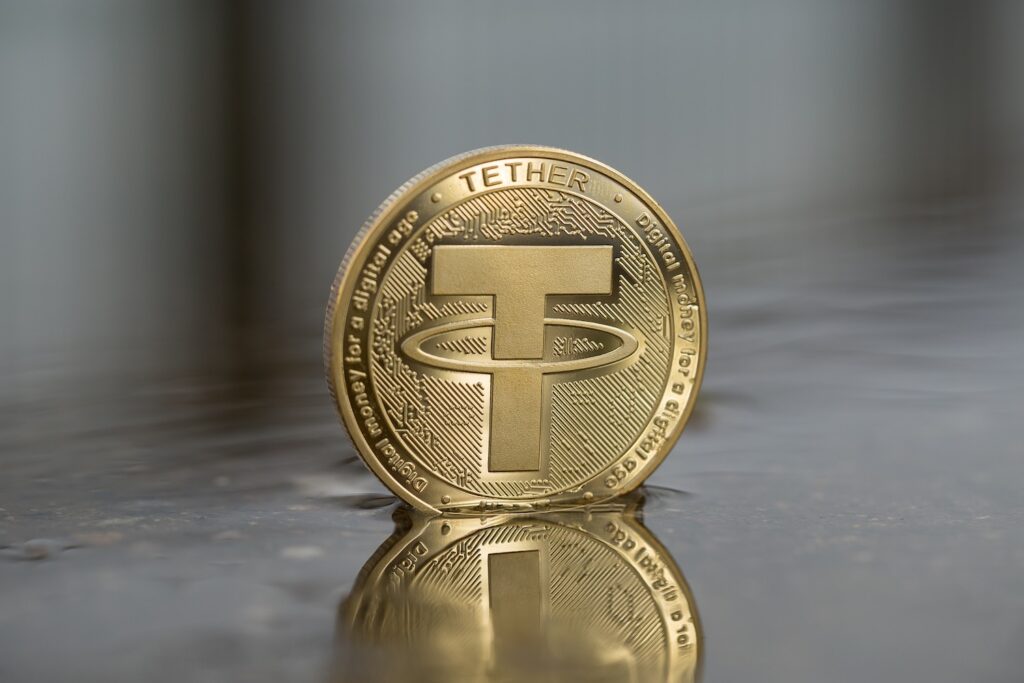
Tether has frozen more than half a billion dollars in cryptocurrency after receiving formal requests from Turkish law enforcement authorities investigating a large-scale illegal betting and money-laundering operation.
The move follows an announcement by prosecutors in Istanbul confirming the seizure of approximately €460 million in assets linked to Veysel Sahin, who is accused of running unlawful online gambling platforms.
While officials initially declined to identify the crypto issuer involved, Tether later confirmed it had blocked the funds tied to the investigation at the request of authorities.
Tether Confirms Cooperation With Law Enforcement
Tether CEO Paolo Ardoino said the company acted after reviewing information supplied by law enforcement agencies, stressing that compliance with local and international laws remains a core part of its operations.
“Law enforcement came to us, they provided some information, we looked at the information and we acted in respect of the laws of the country,” Ardoino reportedly said.
“And that’s what we do when we work with the DOJ, when we work with the FBI, you name it,” he added, highlighting the firm’s broader cooperation with regulators worldwide.
Growing Crackdown On Underground Finance
The Turkish investigation forms part of a wider effort to dismantle underground gambling and payment networks, with authorities reporting more than $1 billion in assets seized through related probes.
Analysts note that stablecoins are increasingly being scrutinised due to their use in cross-border transactions that can bypass traditional banking oversight mechanisms.
Stablecoin Blacklisting On The Rise
Blockchain analytics firm Elliptic has reported that stablecoin issuers, primarily Tether and Circle, had blacklisted roughly 5,700 wallets by late 2025.
Those frozen wallets were estimated to contain around $2.5 billion, with approximately three-quarters holding USDT at the time restrictions were imposed.
Tether has stated that it has assisted in more than 1,800 investigations across 62 countries, resulting in $3.4 billion in frozen USDT linked to alleged criminal activity.
Market Growth Continues Despite Scrutiny
Despite ongoing regulatory pressure, USDT continues to grow rapidly, reaching a record market capitalisation of $187.3 billion during the fourth quarter of 2025.
Network activity has also surged, with monthly active wallets climbing to nearly 25 million and quarterly transfer volumes hitting $4.4 trillion across billions of transactions.

Bitcoin has fallen more than 22.5% over the past week, dropping toward the $69,000 level and erasing gains accumulated over roughly fifteen months of upward price momentum.
Veteran trader Peter Brandt believes the decline reflects what he describes as “campaign selling,” suggesting large institutions are deliberately distributing holdings rather than retail investors panic selling positions.
Miners And ETFs Reduce Exposure As Selling Intensifies
Brandt observed that the price structure shows a consistent pattern of lower highs and lower lows, with little evidence of meaningful rebounds that would normally indicate dip-buying activity.
On-chain data supports this interpretation, with Bitcoin miners shifting into sustained net distribution throughout January as they sent increasing volumes of BTC onto the market.
At the same time, U.S. spot Bitcoin ETFs have reduced their holdings, with total balances declining from 1.29 million BTC at the start of the year to around 1.27 million BTC.
The Coinbase premium, often used as a proxy for institutional interest, has also dropped to yearly lows, reinforcing the idea that large buyers are stepping back rather than stepping in.
Technical Signals Point Toward Additional Weakness
Based on Brandt’s analysis, Bitcoin could fall another 10% toward a bear flag target near $63,800 if current selling dynamics continue without interruption.
On-chain analyst GugaOnChain has identified a potential deeper downside zone between $54,600 and $55,000, aligned with Bitcoin’s realized price bands that historically mark structural undervaluation phases.
“The current price convergence toward the band signaling the start of the accumulation phase, situated around $54.6K, suggests we are in the critical transition between Capitulation and Accumulation.”
Historical data shows that when Bitcoin entered this zone in 2022 near $20,000, it eventually formed a long-term bottom before beginning a sustained recovery that carried prices above $30,000 the following year.
Another perspective suggests that broader macroeconomic factors, including credit spread movements, may delay a full accumulation phase until after mid-2026 based on past cycle patterns.

Artificial intelligence has become the clear priority for the world’s largest family offices, with a strong majority identifying AI-driven opportunities as central to their future investment strategies across multiple regions and asset classes.
A new report from JPMorgan Private Bank surveyed 333 single-family offices across 30 countries and found that 65% are either currently investing in AI or planning to do so soon.
By comparison, cryptocurrencies and digital assets continue to attract far less enthusiasm, with only 17% of respondents identifying the sector as an important theme for future allocations.
The findings also revealed that 89% of family offices currently hold no crypto exposure at all, while the global average allocation to digital assets stands at just 0.4%.
Exposure to Bitcoin is even more limited, averaging just 0.2%, suggesting that digital assets remain on the fringes of institutional family wealth strategies.
Private Equity And Growth Sectors Lead Allocation Plans
Private equity remains the dominant asset class among respondents, with 37% planning to increase allocations over the next 12 to 18 months as they pursue long-term growth opportunities.
Growth equity and venture capital are also rising in prominence, particularly as family offices view them as primary entry points into early-stage AI innovation and emerging technology ecosystems.
Despite this, more than half of the offices surveyed still report having no exposure to those segments, indicating that capital deployment into innovation remains selective rather than widespread.
Geographically, 59% of respondents are based in the United States, while others span Europe, Latin America and the Asia-Pacific region, creating a diverse but cautious global investment footprint.
Gold And Traditional Hedges Fail To Attract Interest
Even traditional safe-haven assets such as gold are failing to capture meaningful attention from family offices, with 72% reporting no exposure despite heightened geopolitical uncertainty.
“Despite geopolitical fears, family offices avoid gold and crypto,” the report wrote, adding that “appetite for traditional and emerging hedges remains limited.”
Geopolitical instability was cited as the top portfolio risk by 20% of respondents, followed by concerns over liquidity and trade policy, each highlighted by 12% of participants.
Other concerns included asset valuations, slowing economic growth and risks tied to concentrated portfolio positioning across fewer high-conviction investments.
Asian Family Offices Show Growing Interest In Crypto
While global interest in digital assets remains subdued, family offices across parts of Asia appear to be taking a different approach toward cryptocurrency exposure.
Reports have suggested that wealthy families in Singapore, Hong Kong and mainland China are exploring allocations closer to 5% of their portfolios amid rising demand for crypto-focused funds.
One Hong Kong-based multi-family office with $4 billion under management recently confirmed plans to invest up to $10 million into specialist crypto strategies for the first time.
This regional divergence highlights how attitudes toward digital assets can vary significantly depending on market maturity, regulatory clarity and client demand.
Tether revealed that its net profit for 2025 declined by roughly $3 billion compared to the previous year, even as the company’s holdings of United States Treasury bills climbed to the highest level in its history.
Figures verified in a report prepared by accounting firm BDO showed the stablecoin issuer generated more than $10 billion in net profit during the year, down from the $13 billion it recorded in 2024.
Treasury allocation reflects focus on safety and liquidity
Direct exposure to U.S. Treasuries surpassed $122 billion, a level the company described as evidence of an ongoing shift toward highly liquid, low-risk assets within its reserve management strategy.
Total assets on the balance sheet increased by $49.17 billion year on year, reflecting expanding issuance and continued accumulation of reserves as the stablecoin ecosystem grew across international markets.
USDt issuance rises as demand for digital dollars accelerates
Over the past twelve months, the company issued approximately $50 billion worth of new USDt tokens as demand for digital dollars increased in regions where traditional banking systems remain slow or fragmented.
Tether chief executive Paolo Ardoino said the stablecoin’s adoption has expanded because of “global demand” for U.S. dollars increasingly moving outside conventional financial infrastructure.
“Particularly in regions where financial systems are slow, fragmented, or inaccessible,” he said, claiming that the stablecoin has “become the most widely adopted monetary social network in the history of humanity.”
Market attention remains fixed on Tether’s reserves
Market participants continue to monitor Tether’s disclosures closely because USDt represents a substantial share of liquidity used across exchanges, trading desks, and decentralised finance platforms worldwide.
USDt ranks as the third-largest cryptocurrency by market capitalisation behind Bitcoin and Ether, making its reported reserves an important indicator of confidence across the broader stablecoin market.
Traders frequently rely on USDt as a digital dollar substitute for collateral, settlement, and margin purposes, increasing the importance of reserve composition and overall profitability figures.
Gold exposure strengthens alongside dollar-backed reserves
Alongside Treasuries, Tether has steadily increased its exposure to gold, reporting approximately $12 billion in gold-related reserves as of September 2025.
The company holds 520,089 troy ounces of gold specifically backing its XAUt tokens, equivalent to roughly 16.2 metric tons, which are kept separate from its broader bullion holdings.
“Tether maintains approximately 130 metric tons of physical gold, and the gold backing every XAUT token is held separately, making it eligible for physical delivery redemption,” a spokesperson for Tether recently told Cointelegraph.
Broader physical gold reserves amount to about 130 metric tons, valued at nearly $22 billion at current market prices, adding another layer of perceived stability to its overall reserve structure.
Bitcoin showed sharp volatility on Wednesday after briefly rallying to $90,600 before losing momentum following the US Federal Reserve’s decision to leave interest rates unchanged.
The price reaction highlighted how sensitive crypto markets remain to macroeconomic signals, particularly those tied to monetary policy.
Although the rally faded quickly, traders are now focused on a higher price zone that could define Bitcoin’s next major move.
Market data suggests $93,500 has emerged as a critical level where billions of dollars in short positions are vulnerable to liquidation.
If Bitcoin approaches this area, forced buying could significantly accelerate price action.
This scenario would turn what appears to be a modest recovery into a fast-moving breakout.
Many traders view liquidation clusters as magnets that attract price due to the liquidity they provide.
The concentration of shorts near $93,500 makes it one of the most watched levels in the current market structure.
Why $93,500 Has Become a Key Target
Crypto trader Mark Cullen highlighted the importance of the $93,500 level on Bitcoin’s liquidation maps.
He described the zone as standing out clearly, calling it a “come get me” signal for traders.
According to Cullen, the size and visibility of the liquidation cluster make it difficult for the market to ignore.
Data shows more than $4.5 billion in cumulative short positions positioned around this price.
If Bitcoin trades into that region, many of these positions could be automatically closed.
Short liquidations force traders to buy Bitcoin to exit losing positions.
This buying pressure can quickly compound and push prices higher in a short period.
Such events often produce sudden, aggressive price spikes rather than slow upward movement.
Liquidation-driven rallies are common in markets dominated by leveraged trading.
Bitcoin’s derivatives market remains one of the most active in the global financial system.
The size of these positions suggests that even modest upward movement could create significant momentum.
Leverage Dominates While Spot Demand Lags
Despite the technical appeal of the $93,500 target, underlying market participation tells a more cautious story.
The Coinbase Bitcoin premium index remains firmly negative.
This indicates weaker demand from US-based spot investors.
A negative premium usually means Bitcoin is trading cheaper on Coinbase compared to offshore exchanges.
That gap suggests US institutional and retail buyers are not aggressively accumulating.
Instead, futures markets appear to be driving most of the recent volatility.
Futures trading relies heavily on leverage, which increases both potential gains and risks.
When price moves against leveraged positions, forced liquidations occur rapidly.
This structure makes rallies more explosive but also more fragile.
Without spot demand backing price increases, gains can reverse just as quickly.
Sustainable bull markets typically require strong participation from spot buyers.
At present, that component appears weak.
Risk-Off Signals Continue to Flash
Crypto analyst Leo Ruga highlighted that broader market indicators still reflect caution.
He pointed to the composite risk oscillator, which compares Bitcoin with assets like stocks, gold, oil, and the dollar.
The oscillator remains in what he described as risk-off territory.
Its current reading near 52 suggests stress rather than expansion.
Ruga also noted elevated readings in the on-chain pressure oscillator.
This metric tracks selling pressure from large holders and long-term investors.
Levels above 34 have historically coincided with market distribution phases.
These signals imply that sellers may still have influence.
For a sustainable recovery, selling pressure must diminish significantly.
Until that happens, bullish momentum may struggle to persist.
Short-term pumps remain possible, but they lack confirmation from broader indicators.
Whale Activity Remains Neutral
Analyst Pelin Ay focused on Bitcoin’s Whale Ratio as another important signal.
The Whale Ratio tracks the proportion of large transactions flowing into exchanges.
High readings often suggest whales are preparing to sell.
Low readings suggest accumulation or holding behavior.
Currently, the ratio sits near its 100-day moving average.
This position signals neutrality rather than conviction.
Whales are not aggressively selling, which limits downside risk.
However, they are also not accumulating aggressively, which limits upside momentum.
Strong bull trends usually emerge when whales actively accumulate.
The absence of that behavior suggests hesitation among large market participants.
This neutral stance contributes to choppy and unpredictable price movement.
Volatility may continue without a clear directional bias.
What Comes Next for Bitcoin
Bitcoin’s structure shows tension between liquidation-driven upside and weak underlying demand.
The $93,500 level remains a powerful magnet due to the massive short exposure clustered there.
If price moves higher, liquidations could push Bitcoin rapidly toward that zone.
However, without strong spot buying, such a rally may lack staying power.
Risk-off indicators and neutral whale behavior suggest caution is still warranted.
Bitcoin may continue moving in sharp, volatile swings rather than a smooth trend.
Traders will closely monitor whether price action becomes supported by spot market participation.
Until then, Bitcoin remains driven by leverage rather than conviction.