


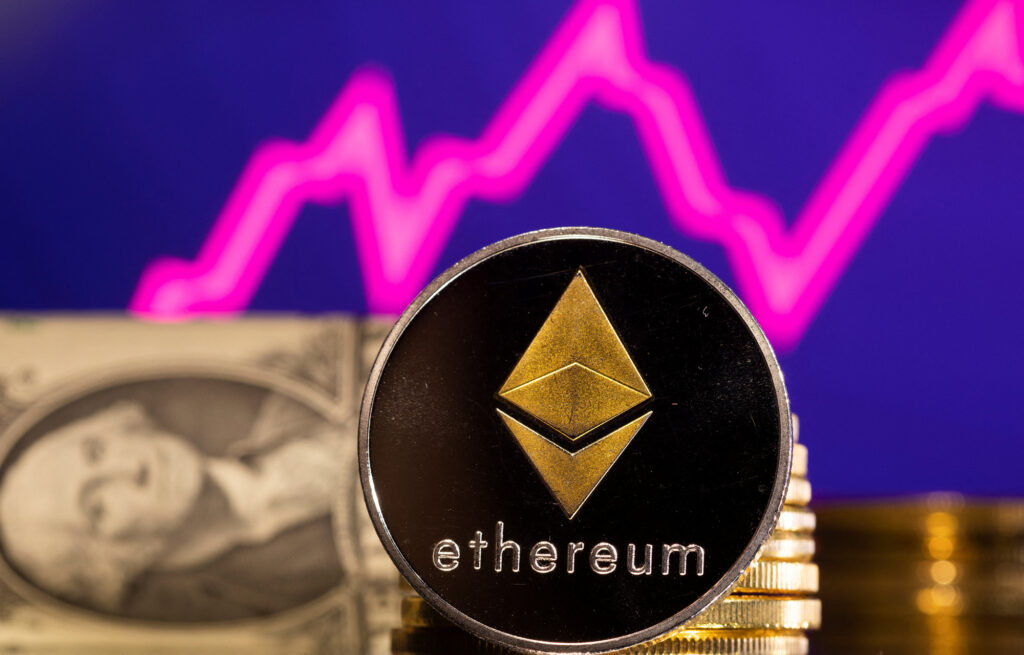
Ethereum’s social media sentiment has fallen to levels similar to those seen before its 2025 price surge, according to a crypto sentiment analyst.
The pattern has drawn comparisons to a period that preceded Ethereum’s return to its 2021 all-time highs.
“Ethereum is actually way down, this would argue against us falling too much further,” Santiment analyst Brian Quinlivan said in a YouTube video published Saturday.
“This is kind of reminiscent of what we saw before Ethereum went on its major run last year,” he added.
Echoes Of The 2025 Ethereum Rally
Quinlivan pointed to Ethereum’s sharp rebound during 2025 as a reference point.
On August 23, Ether surged back to its 2021 peak of $4,878.
That move represented a near 70% gain over four months.
The rally followed a steep decline earlier in the year, when Ether fell to a low of $1,472 in April.
According to Quinlivan, the breakout occurred as market confidence in Ethereum was fading.
“Ether’s price took off just as people were really starting to write-off Ethereum,” he said.
Ethereum Holds Firm As Market Number Two
Since hitting its all-time high, Ether has fallen roughly 36%.
It was trading near $3,089 at the time of publication.
The decline followed a $19 billion crypto market liquidation event in October that dragged down the broader market.
Despite the pullback, Quinlivan does not believe Ethereum faces the same skepticism seen earlier in 2025.
“I wouldn’t say that is happening now,” he said.
“Ethereum is kind of back to being an expected number two market cap for a lot of people.”
Coinbase Asset Management president Anthony Bassili has expressed a similar view.
“There’s a very, very clear view in the investor community,” Bassili said previously.
“The right first portfolio is Bitcoin. The next is Bitcoin, Ethereum,” he added.
Network Growth And Staking Interest
Quinlivan remains optimistic about Ethereum’s underlying fundamentals.
He described the network’s growth as “absolutely going bonkers.”
He linked the expansion to rising interest in staking.
Staking discussions have become increasingly prominent across social media platforms.
That trend suggests users are engaging with Ethereum beyond short-term price speculation.
Broader Crypto Market Remains Cautious
The wider cryptocurrency market continues to show signs of caution.
Sentiment has hovered between “Fear” and “Extreme Fear” since early November.
On Sunday, the Crypto Fear and Greed Index posted a score of 29.
Market participants remain largely risk-off outside of Bitcoin.
The Altcoin Season Index currently signals a “Bitcoin Season” environment.
The index score of 34 out of 100 reflects weaker relative performance among altcoins.
This backdrop highlights Ethereum’s challenge in gaining momentum despite improving fundamentals.

The opening days of 2026 saw Bitcoin and several major altcoins recover toward the upper end of their weekly trading ranges.
The move reflected improving investor sentiment and a pickup in trading volume across crypto markets.
Since Jan. 1, Bitcoin has shown signs of strengthening price structure.
Daily charts display a pattern of higher lows and higher highs.
This tightening consolidation pushed Bitcoin toward a weekly high near $94,800.
Market data shows clear liquidation zones forming above and below the current price range.
Long liquidation clusters have developed between $89,000 and $87,000.
Short positions have accumulated close to the $95,000 resistance area.
From a technical perspective, the early-year rally pushed Bitcoin above its 20-day moving average.
The 20-day moving average is now converging with the 50-day moving average.
This convergence is often watched by traders as a signal of trend continuation or reversal.
Bitcoin’s failure to hold above $95,000 suggests profit-taking by short-term participants.
Some traders appear to have exited positions in anticipation of a pullback.
A retest of support near the 20-day moving average around $89,400 is viewed as a possible scenario.
If buying pressure returns and volume remains strong, another attempt on $95,000 could follow.
A successful breakout could trigger short covering and forced liquidations.
Such a move would exploit a visible gap in the volume profile.
This could open the path for a rally of roughly 13% toward $101,500.
Recent price action highlights the growing influence of perpetual futures markets.
Intra-day volatility has largely been driven by leveraged traders rather than spot buyers.
On Jan. 5, futures buy volume surged by nearly $1.1 billion as Bitcoin rallied toward $94,800.
During the same move, around $100 million in short positions were liquidated on major exchanges.
These liquidations amplified upward momentum over a short time frame.
The data suggests that futures positioning remains crowded near key resistance levels.
If traders push Bitcoin back toward $94,000, similar liquidation dynamics could emerge again.
This creates a feedback loop where price moves trigger forced buying or selling.
While this can accelerate rallies, it also increases downside risk during pullbacks.
Altcoins have mirrored Bitcoin’s recovery, though with more muted moves.
Traders remain selective, focusing on high-liquidity assets rather than speculative tokens.
Overall market structure suggests cautious optimism rather than euphoric risk-taking.
Participants appear willing to buy dips but remain sensitive to resistance levels.
The coming sessions are likely to test whether spot demand can replace leveraged momentum.
A sustained breakout would require consistent volume beyond futures-driven spikes.
Until then, Bitcoin remains range-bound with clear levels shaping trader behaviour.

Stablecoin payment flows could surge to $56.6 trillion by 2030, according to new estimates from Bloomberg Intelligence, positioning stablecoins as one of the most significant payment tools in global finance.
Bloomberg estimates that stablecoin payment flows totaled $2.9 trillion in 2025, highlighting the scale of growth implied by the projection.
Reaching $56.6 trillion within five years would require an extraordinary compound annual growth rate of roughly 81%, underlining how rapidly the sector is expected to expand.
Drivers Behind The Expansion
Bloomberg Intelligence pointed to increasing institutional adoption as a central driver behind the projected growth in stablecoin payment volumes.
Rising use of stablecoins in countries facing inflationary pressure and economic instability is also expected to contribute meaningfully to adoption.
In these regions, dollar-backed stablecoins are increasingly used as both payment rails and informal savings tools, offering an alternative to volatile local currencies.
Payment Volumes Accelerated In 2025
Stablecoin payment flows grew by 81% year-on-year in 2025, according to Bloomberg, reinforcing the momentum behind the asset class.
Despite the surge in total volume, Bloomberg reported that the share of stablecoin activity occurring on decentralized crypto platforms declined during the year.
This shift was identified using data from crypto analytics firm Artemis, which tracks stablecoin usage across centralized and decentralized venues.
Centralized Versus Decentralized Usage
Tether’s USDT continues to dominate centralized finance usage, remaining the most widely used stablecoin for everyday payments, business transactions, and savings.
Circle’s USDC, by contrast, remains the preferred stablecoin across decentralized finance platforms, where transparency and regulatory alignment are often prioritized.
Artemis co-founder Anthony Yim attributed the decline in DeFi’s share of stablecoin flows to increased usage in emerging economies.
He said this trend reflects how users are navigating an “increasingly unstable geopolitical landscape.”
Transaction Volumes Highlight Market Concentration
Despite USDT’s dominance in circulation, USDC recorded higher total transaction volume in 2025.
USDC transactions reached $18.3 trillion during the year, compared with $13.3 trillion for USDT.
Together, the two stablecoins accounted for more than 95% of total stablecoin transaction volume.
Overall stablecoin transactions reached a record $33 trillion in 2025, representing a 72% year-on-year increase.
Market Capitalization Tells A Different Story
While USDC led in transaction volume, USDT continues to dominate from a valuation perspective.
Tether’s stablecoin currently holds a market capitalization of approximately $186.9 billion.
USDC’s market capitalization stands significantly lower, at around $74.9 billion.
This disparity reflects differences in geographic usage, regulatory positioning, and issuer strategies.
Broader Stablecoin Market Outlook
The overall stablecoin market is currently valued at roughly $312 billion.
In April, the U.S. Treasury estimated that the market could grow to $2 trillion by 2028, underscoring expectations for rapid expansion.
Bloomberg Intelligence’s longer-term projection extends this trajectory into the next decade, driven by payments rather than trading alone.
Nation-State And Institutional Adoption Gathers Pace
Government-level engagement with stablecoins has intensified following recent regulatory developments.
After U.S. President Donald Trump signed the GENIUS Act into law in July, both Canada and the United Kingdom renewed efforts to introduce stablecoin frameworks.
These initiatives are expected to roll out in 2026 or shortly thereafter, signaling broader acceptance of stablecoins in mainstream financial systems.
Payment Firms Prepare Stablecoin Integrations
Institutional adoption is also accelerating across the payments industry.
Western Union is preparing to launch a stablecoin settlement system on the Solana blockchain in the first half of 2026.
MoneyGram and Zelle are also rolling out stablecoin-based solutions aimed at enabling faster and cheaper cross-border payments.
Stablecoins Move Toward Financial Infrastructure Status
Bloomberg Intelligence’s forecast suggests stablecoins are evolving beyond niche crypto tools into core components of global payment infrastructure.
If the projected growth materializes, stablecoins could rival traditional payment networks in scale and importance by the end of the decade.

Bitcoin may remain largely flat in the first quarter of 2026 despite historical trends suggesting stronger gains, CryptoQuant CEO Ki Young Ju said Wednesday.
“Capital inflows into Bitcoin have dried up,” Ju explained, noting that investors are returning to “stocks and shiny rocks” as gold and silver prices soar.
Ju added that Bitcoin is unlikely to crash from its current peak and expects “just boring sideways for the next few months.”
At the time of publication, Bitcoin was trading around $90,890, down over 2% in the past 24 hours and off a high of $94,400 earlier this week.
First Quarter Trends
A sideways start would break with historical performance, as January has averaged 3.81% gains since 2013, with February and March showing stronger historic growth of 13.12% and 12.21%, according to CoinGlass.
Ju’s remarks follow warnings from veteran trader Peter Brandt and Fidelity’s Jurrien Timmer that Bitcoin could fall to $65,000 or even $60,000 this year.
Market sentiment remains muted, with the Crypto Fear & Greed Index hovering between “fear” and “extreme fear” since early November.
On Thursday, the index posted a “fear” score of 28, reflecting cautious investor behavior.
Spot Bitcoin ETFs Show Early Momentum
Spot Bitcoin ETFs have seen net inflows of $925.3 million in the first three trading days of 2026, according to Farside Investors data.
While Ju maintains a conservative outlook, other participants are bullish.
Venture capitalist Tim Draper predicted “2026 will be big,” noting that Bitcoin is going mainstream and referencing his $250,000 prediction from 2018.
Bitwise head of research Ryan Rasmussen expects Bitcoin to break the traditional four-year cycle and reach new all-time highs in 2026, contrary to historical patterns of three up years followed by a down year.
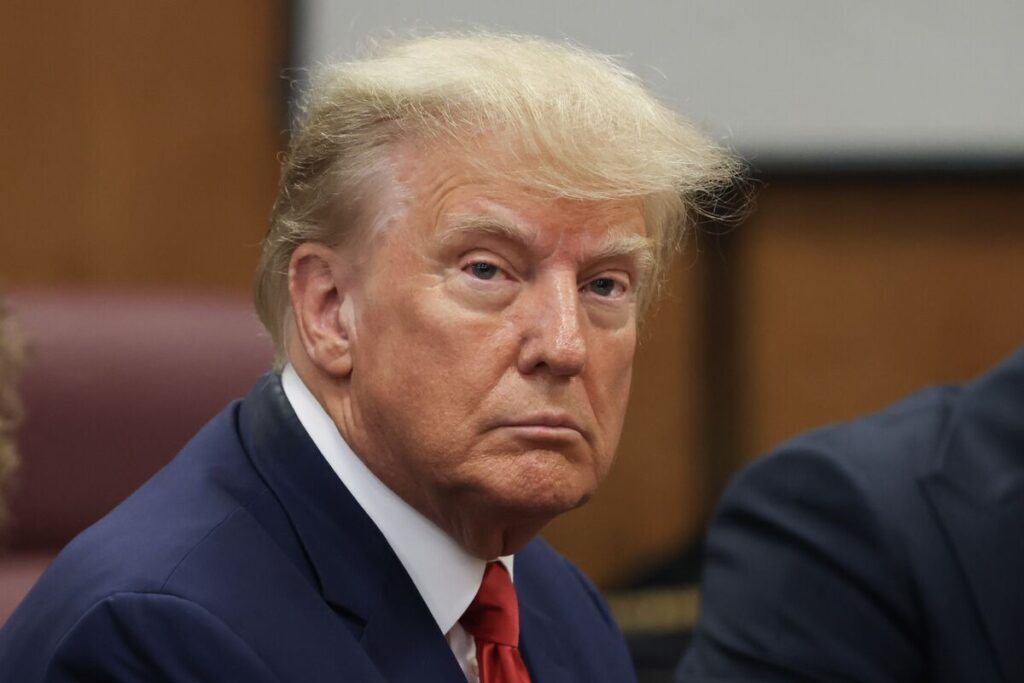
Two major cryptocurrency exchanges have jointly contributed more than $21 million to a political action committee aligned with US President Donald Trump, underlining the growing political influence of the digital asset industry.
The donations were disclosed in a filing submitted on Friday to the Federal Election Commission, detailing fresh inflows into the MAGA Inc. Super PAC.
According to the filing, Gemini Trust Company provided 1,500,000 liquidated USDC as part of its contribution to the group.
The document also revealed two separate $10 million donations from Foris Dax, the parent company of cryptocurrency exchange Crypto.com.
Crypto.com has expanded its ties with Trump’s media business since 2025, a relationship linked to the company’s evolving digital asset treasury strategy.
Together, the contributions significantly boosted the PAC’s already substantial financial reserves.
The filing shows the Super PAC now holds approximately $294 million in total funds.
Additional donations from the wider financial sector were also reported in the same disclosure.
An executive at payment processing firm Shift4 contributed $1 million to the PAC.
JP Morgan Chase Bank, N.A. was listed as having provided more than $4 million in contributions.
Midterms take centre stage
While Trump is not running for reelection in 2026, the funds raised by the Super PAC can still be used to support candidates with similar political views.
Trump’s second term is scheduled to conclude in January 2029, leaving the upcoming midterm elections as a key political battleground.
In 2026, all 435 seats in the US House of Representatives will be contested.
A total of 33 Senate seats will also be up for election.
Democrats are aiming to reclaim control of one or both chambers from Republicans.
The outcome could have far-reaching consequences for financial regulation and cryptocurrency policy in the United States.
Crypto-focused races draw attention
Several races viewed as important for the digital asset industry are already attracting attention.
Republican candidate John Deaton, known for his involvement in XRP-related legal advocacy, is seeking the Massachusetts Senate seat currently held by Ed Markey.
Wyoming Senator Cynthia Lummis, one of the Senate’s most vocal supporters of pro-crypto legislation, announced in December that she will not seek reelection in 2026.
Her departure leaves an open seat in a state closely associated with crypto-friendly regulatory thinking.
Industry figures see these contests as pivotal to the future legislative environment for digital assets.
Lessons from the 2024 election cycle
The cryptocurrency sector played a visible and increasingly coordinated role during the 2024 US elections.
Crypto companies and senior executives spent heavily on advertising and political messaging.
Media campaigns funded by crypto-backed PACs were credited with influencing several closely fought races.
One frequently cited example was Ohio’s Senate contest, which reportedly saw around $40 million in related spending.
Republicans ultimately secured control of the Senate following that election cycle.
The scale of spending marked a turning point in crypto’s political engagement.
Spending momentum continues
Crypto-backed political groups have shown little sign of reducing their activity ahead of the midterms.
In 2024, a spokesperson for the Fairshake PAC said the group was “keeping [its] foot on the gas” as it prepared for future races.
Fairshake and its affiliates spent millions during 2025.
Those funds were directed toward congressional races in Virginia’s 11th district and multiple Florida districts.
With large financial reserves already in place, crypto-linked PACs appear positioned to remain influential through the 2026 elections.

PricewaterhouseCoopers has decided to expand its cryptocurrency business, citing a clearer regulatory environment in the United States.
Chief executive Paul Griggs said changes in regulatory leadership and progress on stablecoin legislation played a central role in the shift.
New leadership at agencies such as the U.S. Securities and Exchange Commission, alongside proposed laws like the GENIUS Act, were key drivers behind the decision.
“The GENIUS Act and the regulatory rulemaking around stablecoin, I expect, will create more conviction around leaning into that product and that asset class,” Griggs said.
He added that “the tokenization of things will certainly continue to evolve as well. PwC has to be in that ecosystem.”
Big Four firm deepens digital asset involvement
PwC is one of the “Big Four” global accounting and professional services firms, reporting revenues of $56.9 billion as of October.
Like many large corporations, the firm has moved further into crypto after years of cautious engagement across the industry.
PwC already lists a wide range of crypto-related services, including accounting, cybersecurity, wallet management, and regulatory advisory support.
The firm also works with exchanges, traditional financial institutions entering crypto, and public-sector clients such as governments and central banks.
Investment in people and capabilities
Griggs said the expansion reflects a deliberate effort to build internal capacity rather than a sudden strategic pivot.
“We are never going to lean into a business that we haven’t equipped ourselves to deliver,” he said.
“Over the last 10 to 12 months, as we’ve taken on more opportunities in that digital assets arena, we’ve bolstered our resource pool inside and outside,” he added.
According to Griggs, demand is rising across both audit and consulting services tied to crypto and blockchain technologies.
“Whether we are doing work in the audit space or doing work in the consulting arena — we do all the above in crypto — we see more and more opportunities coming our way,” he said.
Industry-wide shift among major firms
PwC’s move aligns it with the rest of the Big Four, all of which now offer crypto-related services.
Deloitte provides blockchain strategy and consulting and maintains partnerships with companies involved in smart contracts and blockchain analytics.
Ernst & Young has developed crypto strategy, tax, and advisory offerings aimed at institutional clients.
KPMG has expanded into crypto audits, cybersecurity, and advisory services as demand from enterprises and regulators continues to grow.
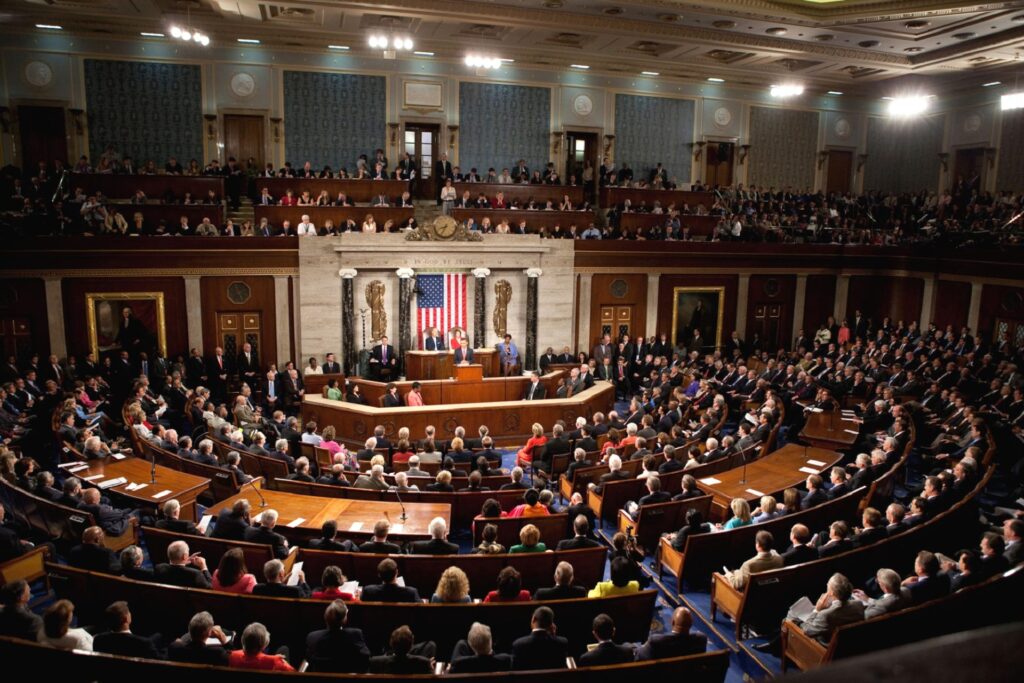
The Digital Asset Market Clarity Act, also known as the CLARITY Act, is advancing according to schedule, despite growing impatience from the cryptocurrency sector.
John D’Agostino, Coinbase Institutional’s head of strategy, spoke on CNBC on Friday, acknowledging the delays.
“I completely understand why this is taking longer,” D’Agostino said.
He emphasized that the legislation is foundational for the development of crypto and other real asset classes, making a deliberate pace reasonable.
“It’s the kind of bill that is quite frankly more foundational for the growth of crypto or any real asset class,” he said.
D’Agostino compared the CLARITY Act to the Genius Act, the stablecoin law passed in July.
While the Genius Act was transformative, he noted it was structurally simpler than comprehensive market structure legislation.
“Massive flight of talent” could accelerate passage
The remarks follow White House AI and crypto czar David Sacks’ comment that the CLARITY Act might pass in January.
”We are closer than ever to passing the landmark crypto market structure legislation that President Trump has called for. We look forward to finishing the job in January,” Sacks said on Dec. 19.
D’Agostino expressed confidence in eventual approval, pointing to global momentum for crypto regulation, including Europe’s MiCA framework and regulatory developments in the UAE.
He highlighted the ongoing “massive flight of talent” from the US, which may pressure lawmakers to act faster.
“Part of the rush to get Genius done was to stem that bleeding,” he said.
D’Agostino added that the return of Congress in session could bring renewed urgency.
“I think once we get back in session and everyone can take time to absorb what’s happening, that same burning platform will appear where we really don’t want the US to fall as behind as it’s been on transformational technologies like artificial intelligence and blockchain,” he said.
Delays in the CLARITY Act have already affected the market.
CoinShares reported $952 million in outflows from crypto investment products in the week ending Dec. 19, citing prolonged regulatory uncertainty as a contributing factor.
Veteran trader Peter Brandt suggested the Act’s passage may not dramatically affect Bitcoin’s price.
“Is it a world-shaking macro development? Nope. Needed for sure, but not something that should redefine value,” Brandt told Cointelegraph.
The CLARITY Act represents a pivotal step in US crypto legislation, balancing industry expectations with the careful design required for long-term growth.

Prediction market traders on Polymarket are expressing notable caution about Bitcoin’s near-term price potential, with relatively low odds assigned to extreme upside scenarios despite widespread bullish forecasts for next year.
Data from the Polymarket contract asking “what price will Bitcoin hit before 2027?” shows traders leaning toward modest gains rather than a rapid surge to new highs.
According to the platform, Bitcoin has a 45% probability of reaching $120,000, a level that remains below its previous all-time high and reflects restrained expectations.
Confidence declines further as price targets rise, with $130,000 carrying just a 35% probability and $140,000 priced at 28%.
Only 21% of traders believe Bitcoin will climb as high as $150,000 within the next two years, underlining the market’s current hesitancy.
The most widely supported outcome remains Bitcoin reaching $100,000, which holds an 80% probability and is viewed as the most realistic upside scenario.
End of the Four-Year Cycle Clouds Outlook
Market caution appears linked to Bitcoin closing 2025 in negative territory, an outcome that has shaken confidence in long-standing market patterns.
For years, many investors relied on the four-year cycle tied to Bitcoin’s halving events to anticipate major price movements.
That framework helped traders map out bull and bear phases with relative consistency across previous cycles.
With the latest cycle failing to deliver a clear upside finish, doubts have emerged about whether the model still applies.
The breakdown of this historical pattern has prompted traders to reassess risk, potentially explaining the subdued odds for aggressive price targets.
It has also opened the possibility that new trading dynamics could define Bitcoin’s future behavior.
Analysts Remain Firmly Bullish
Despite restrained prediction market sentiment, analysts continue to argue that Bitcoin’s longer-term outlook remains strong.
Much of this optimism is tied to shifting macroeconomic and political expectations in the United States.
President Donald Trump is expected to announce a new Federal Reserve chair in the coming weeks, a move many believe could signal a more accommodative monetary stance.
Markets are increasingly pricing in the likelihood of interest rate cuts, which historically favor risk assets such as cryptocurrencies.
This anticipation has already fueled strong rallies in precious metals, with gold and silver both reaching new all-time highs late in 2025.
By contrast, digital assets have lagged behind, suggesting potential upside if capital rotates back into crypto markets.
Regulation and Institutional Adoption in Focus
Regulatory developments are also seen as a key catalyst for renewed momentum.
Major crypto legislation, including the GENIUS Act and the CLARITY Act, is expected to bring clearer rules for market participants.
Greater regulatory certainty could encourage more institutional investors to enter the space with long-term commitments.
Several major financial institutions believe these factors will converge in Bitcoin’s favor during 2026.
Firms such as Standard Chartered, Strategy, and Bernstein have forecast Bitcoin reaching $150,000 next year.
More optimistic projections, including those from Fundstrat’s Tom Lee, suggest prices could ultimately rise toward the $200,000 to $250,000 range.
US-based cryptocurrency exchange-traded funds attracted more than $31.77 billion in net inflows during 2025.
The strong demand came despite digital asset markets losing momentum toward the end of the year.
Spot Bitcoin ETFs accounted for the majority of capital entering the sector.
Collectively, they recorded $21.4 billion in net inflows over the year, according to industry data.
That figure, however, represented a decline from the $35.2 billion seen in 2024.
Ether-focused ETFs told a different story.
Spot Ether funds pulled in $9.6 billion during 2025, a fourfold increase compared to the previous year.
The jump reflected the fact that Ether ETFs only launched midway through 2024.
As a result, 2025 marked their first full year of trading.
New products also expanded the market beyond Bitcoin and Ether.
Spot Solana ETFs entered the US market in late October and have already accumulated $765 million in inflows.
Regulatory changes played a role in the expansion.
A more crypto-friendly US administration and new leadership at the Securities and Exchange Commission helped speed up approvals.
That environment encouraged institutional investors to explore regulated crypto exposure.
BlackRock strengthens its dominance
BlackRock emerged as the clear leader in the crypto ETF space.
Its iShares Bitcoin Trust ETF recorded $24.7 billion in inflows by year-end.
The total is roughly five times larger than that of its closest rival, Fidelity’s Bitcoin fund.
The scale of demand placed IBIT among the top six ETFs of any kind by net inflows.
Bloomberg analyst Eric Balchunas highlighted the achievement despite Bitcoin’s price softness during the year.
“If you can do $25b in [a] bad year imagine the flow potential in [a] good year,” he said.
Excluding IBIT, the remaining spot Bitcoin ETFs experienced net outflows of $3.1 billion.
Several funds saw only modest gains, while one major trust shed roughly $3.9 billion.
Ethereum ETFs lose short-term momentum
BlackRock also leads the Ethereum ETF market through its iShares Ethereum Trust.
The fund holds nearly $12.6 billion in inflows overall.
However, it has failed to attract new capital over the past dozen trading sessions.
Rival Ethereum ETFs trail at a significant distance.
Recent on-chain data suggests subdued demand for both Bitcoin and Ether ETFs heading into 2026.
That slowdown may result in a cautious start to the new year.
Wave of new products expected
Litecoin, Solana, and XRP ETFs launched in the second half of 2025.
They expanded investor access to major altcoins through traditional investment vehicles.
Analysts expect far more products to follow.
Revised SEC listing standards could allow more than 100 crypto ETFs to launch in 2026.
Bloomberg analyst James Seyffart warned that many may struggle to survive.
“We’re going to see a lot of liquidations in crypto ETP products,” he said.
“Might happen at [the] tail end of 2026 but likely by the end of 2027.”
Blockchain analysts monitoring the Official Trump TRUMP memecoin on Solana have flagged substantial liquidity movements linked to project-associated wallets.
Over the past month, addresses labeled as part of the “Official Trump Meme” cluster have moved roughly $94 million in USDC out of TRUMP liquidity pools.
The latest transaction occurred on Tuesday, when approximately $33 million in USDC was withdrawn from liquidity.
Blockchain data platform Arkham reported that the funds were sent to an entity labeled Fireblocks.
From there, the stablecoins were routed onward to wallets labeled as belonging to Coinbase.
Public Solana records visible on Solscan corroborate the scale and timing of the USDC outflows from TRUMP-linked addresses.
A dramatic rise and fall
The transfers cap a volatile year for TRUMP, which launched on Jan. 18, just days before the US president’s inauguration.
The token surged rapidly, reaching an all-time high of $75.35 on Jan. 19.
From that peak, prices steadily unwound throughout the remainder of the year.
According to market data, TRUMP is now trading below $5.
That represents a decline of nearly 90% from its highs, leaving many late buyers facing steep losses.
Despite those losses, the token’s structure and trading activity have generated more than $320 million in fees for insiders and related entities.
What the transfers may mean
Onchain data alone cannot definitively establish who controls every wallet labeled within the Trump meme cluster.
Nor can it conclusively explain the purpose behind routing funds through Fireblocks toward Coinbase.
Such movements could reflect treasury management, tax planning or the settlement of offchain obligations.
However, for a politically branded asset closely tied to the image of a sitting US president, repeated large liquidity withdrawals attract attention.
Stablecoin movements of this scale naturally raise questions around transparency and governance.
Political scrutiny intensifies
The scrutiny is not limited to the crypto community.
Earlier this year, Democratic Party lawmakers formally requested details from the US Treasury Department regarding Trump’s crypto ventures.
The inquiry sought clarification on associated financial arrangements and potential conflicts of interest.
That political backdrop means that activity linked to the TRUMP token is being examined through both regulatory and partisan lenses.
A harsh year for memecoins
The broader memecoin sector in 2025 has provided little relief.
Major tokens such as Dogecoin, Shiba Inu and Pepe retained significant market capitalizations but ended the year far below their local peaks.
A long tail of smaller Solana and Ethereum-based memecoins experienced similar patterns.
Many election-themed and personality-driven tokens saw explosive early rallies followed by 80% to 90% drawdowns.
As liquidity thinned, exits became increasingly difficult for late participants.
At the time of publication, the TRUMP memecoin team had not responded to questions seeking clarification on the recent USDC transfers.