



The Dutch government is taking a significant step towards bolstering its presence in the world of artificial intelligence (AI).
On January 18th, the Ministry of the Interior and Kingdom Relations announced that they would allocate a substantial budget of 204.5 million euros ($222.07 million) to promote local investments in AI.
This initiative aims to prevent the Netherlands from falling behind in the global AI race, with Asia and the United States already leading in the responsible use of generative AI technologies.
One of the primary goals outlined in the announcement is to position the Netherlands and the European Union as competitive players in the development of AI technology.
The government recognizes the need to stay ahead of the curve and not remain passive observers in the AI landscape.
To achieve this, the Dutch government intends to channel these funds into various initiatives and campaigns.
One key aspect of their strategy is to educate the public about safeguarding their data from generative AI.
This step reflects their commitment to ensuring that AI technologies are used responsibly and ethically.
Simultaneously, they are exploring the creation of a secure and functional national AI testing facility, which would be available for public use.
The Dutch government is also cognizant of the risks associated with AI, such as misinformation and potential job displacement.
READ MORE: Crypto Rating Agencies Gain Importance in Managing Risks Amid Ongoing Industry Challenges
To address these concerns, they plan to implement measures that balance the benefits of AI while mitigating its negative impacts.
Furthermore, the government has pledged to adhere to the European Union’s AI Act, a regulatory framework governing the governmental use of AI and establishing rules for market entry.
In December 2023, the European Parliament and Council reached an agreement on a risk-based model for AI regulation, which is currently in the final stages of formal enactment.
Dutch Minister for Education, Culture, and Science, Robbert Dijkgraaf, emphasized the importance of developing and retaining AI talent to create generative AI systems that align with European standards and values.
Additionally, the government is considering investments in significant scientific and technological resources, such as supercomputers.
These investments would not only benefit the Netherlands but also contribute to the EU’s competitiveness in the field of large language models (LLMs) and other generative AI technologies.
As the Dutch government propels its AI agenda forward, it aims to strike a balance between innovation, ethical considerations, and global competitiveness.

ProShares, a prominent issuer of exchange-traded funds (ETFs) in the United States, is gearing up to introduce a range of Bitcoin ETFs, offering indirect exposure to Bitcoin as the era of spot Bitcoin ETF trading takes off on domestic stock exchanges.
In a filing submitted to the U.S. Securities and Exchange Commission (SEC) on January 16, ProShares outlined its plans to launch leveraged and inverse Bitcoin ETFs.
These ETFs aim to generate daily returns based on the fluctuations in Bitcoin’s price, which are determined by the daily performance of the Bloomberg Galaxy Bitcoin Index (BGCI).
ProShares has put forth proposals for five distinct Bitcoin ETFs, including the Plus Bitcoin ETF, Ultra Bitcoin ETF, UltraShort Bitcoin ETF, Short Bitcoin ETF, and ShortPlus Bitcoin ETF.
The Plus Bitcoin ETF and Ultra Bitcoin ETF from ProShares aspire to mirror a 1.5x and 2x increase, respectively, in daily BGCI performance.
Conversely, the other three funds, namely ProShares UltraShort Bitcoin ETF, ProShares Short Bitcoin ETF, and ProShares ShortPlus Bitcoin ETF, are designed to reflect daily returns inversely correlated to the BGCI at -2x, -1x, and -1.5x, respectively.
READ MORE: Rosario Witnesses Historic First as Tenant Pays Monthly Rent in Bitcoin
It’s important to note that these funds do not engage in direct shorting of Bitcoin; instead, ProShares aims to capitalize on price declines in Bitcoin.
At the time of filing, Bitcoin was trading at approximately $43,000, following a notable downturn subsequent to the introduction of spot Bitcoin ETFs in the United States.
Market analysts, such as ARK Invest CEO Cathie Wood, had previously anticipated a short-term sell-off as some investors looked to capitalize on the positive developments.
This announcement comes shortly after the U.S. SEC’s approval of the first batch of 10 spot Bitcoin ETFs on January 10, with trading commencing on January 11. ProShares did not participate in the initial launch of spot Bitcoin ETFs.
Previously, ProShares had been primarily focused on futures-based crypto ETFs, notably introducing one of the first Bitcoin futures-linked ETFs in the U.S. back in October 2021.
Their flagship BTC futures-based product, the Bitcoin Strategy ETF (BITO), has experienced substantial growth over recent months, briefly surpassing $2 billion in assets under management (AUM) for the first time in January 2024.
In addition to BITO, ProShares currently offers a range of ETFs related to cryptocurrency, including the Ether Strategy ETF, Bitcoin & Ether Market Cap Weight Strategy ETF, and the Bitcoin & Ether Equal Weight Strategy ETF.

Manta Network, a layer-2 blockchain powered by zero-knowledge proofs, recently faced a significant distributed denial-of-service (DDoS) attack while simultaneously enjoying a successful token listing on various exchanges.
The attack occurred on January 18 but has since been successfully resolved.
Kenny Li, one of the co-founders of P0xeidon Labs, the cryptographic development team responsible for Manta Network, reported that the blockchain’s nodes endured an onslaught of over 135 million remote procedure call (RPC) requests during the attack.
He described it as a “very aggressive and timed attack.” Fortunately, Li reassured the community that the blockchain’s security remained intact, and users’ funds remained safe.
However, the attack temporarily disrupted communication between apps and the blockchain.
Despite the challenges, Li expressed gratitude for the community’s support and emphasized their commitment to the project, noting that they had dedicated three years to its development.
Simultaneously, Manta tokens were listed on several prominent exchanges, including Binance, Bithumb, and KuCoin.
The Manta token’s initial trading price stood at $2.27, reflecting a fully diluted market capitalization of $2.27 billion.
READ MORE: Bitfinex Foils $15 Billion XRP Exploit Attempt as Security Measures Prevail
In the first few hours of trading, over $686 million worth of Manta tokens changed hands.
A spokesperson for Manta Network disclosed that Manta Pacific, another component of the project, experienced a remarkable 70x increase in total value locked (TVL) during the past quarter, reaching a value of $858 million.
Furthermore, the project announced an airdrop equivalent to 5% of Manta’s total supply, valued at $114 million, for ecosystem users and supporters.
Back in July 2023, Cointelegraph reported that P0xeidon Labs successfully raised $25 million in its Series A funding round.
Additionally, the team introduced the testnet for Manta Pacific, its layer-2 infrastructure, which transitioned to the mainnet on September 12, 2023.
The testnet launch in July 2023 led to the creation of 150,000 wallets and facilitated over 3.5 million transactions.
In a parallel development, Manta Atlantic’s flagship nonfungible token private offering platform made its debut in April 2023.
Since then, it has minted over 300,000 zero-knowledge soulbound tokens in collaboration with key ecosystem partners, including Arbitrum, Galxe, Linea, and CyberConnect.

Nathaniel Chastain, the former product manager of the nonfungible token (NFT) marketplace OpenSea, has launched an appeal against his conviction for wire fraud and money laundering related to insider trading.
Chastain’s legal team submitted a filing to the United States Court of Appeals for the Second Circuit on January 16, arguing that he should be acquitted because the U.S. government failed to demonstrate that the information concerning NFTs on the OpenSea platform qualified as property.
According to his lawyers, this information lacked commercial value to the platform and did not fall under the category of “protected property.”
The appellate brief emphasized that not all confidential information could be considered property and that confidential information must possess commercial value to its owner.
It clarified that OpenSea’s primary revenue source was commissions earned from NFT transactions on its website, rather than monetizing Chastain’s ideas about which NFTs to feature.
The filing further pointed out that OpenSea benefited from Chastain’s trading activities, as the platform earned commissions when he utilized it for purchasing and selling the featured NFTs.
During his 2023 trial in the U.S. District Court for the Southern District of New York, prosecutors presented evidence to establish that Chastain had the authority to select the NFTs to be featured on the OpenSea website.
READ MORE: Launch of Bybit Web3 Swap Accelerates DeFi Revolution
He had acquired 45 NFTs before their inclusion and subsequently resold them for Ether.
In May 2023, Chastain was found guilty of wire fraud and money laundering, resulting in a three-month prison sentence and a $50,000 fine.
The judge granted him until November 2 to surrender himself to authorities. The appellate filing now requests that Chastain’s conviction be overturned or replaced with a new trial.
Chastain’s appeal centers on the crucial argument that the information he used for insider trading did not constitute protected property, challenging the foundation of his conviction.
The outcome of this appeal could have broader implications for the legal treatment of insider trading in the context of NFTs and digital assets.
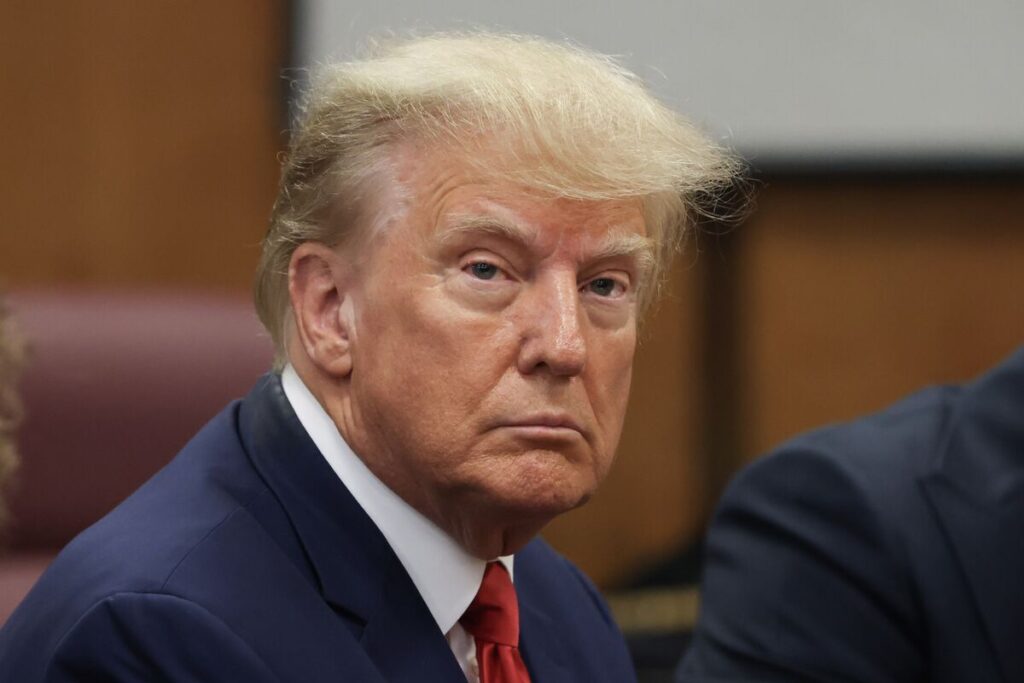
Former President and current United States presidential candidate, Donald Trump, has emphatically pledged to prevent the Federal Reserve from introducing a central bank digital currency (CBDC) in the country.
This promise was made during a campaign address in Portsmouth,
New Hampshire, on January 17, where Trump reiterated his commitment to safeguarding Americans against government overreach.
In his speech, Trump declared, “Tonight I’m making another promise to protect Americans from government tyranny.
I will never allow the creation of a central bank digital currency.” His statement was met with enthusiastic applause from the audience, prompting him to acknowledge their support, saying, “I didn’t know you know so much… New Hampshire, very smart people.”
Trump then went on to elaborate on his concerns about CBDCs, emphasizing that such a currency would grant the federal government absolute control over citizens’ money, potentially allowing them to seize funds without individuals even being aware of it.
He warned that this development posed a significant threat to freedom and vowed to take action to prevent it from becoming a reality in America.
Donald Trump, who controversially contested the results of the 2020 presidential election, officially launched his 2024 presidential campaign in November 2022.
READ MORE: South Korea Explores Sanctions on Cryptocurrency Mixing Services
The 60th quadrennial U.S. presidential election is scheduled for November 5, 2024.
It’s worth noting that another presidential candidate, Florida Governor Ron DeSantis, had also pledged to oppose central bank digital currencies on his first day in office.
However, DeSantis faced a setback when he lost to Trump in the Republican party primary election in Iowa on January 15, 2024, where he consistently trailed Trump by more than 10 points in the polls.
Additionally, another contender for the Republican Party nomination, Vivek Ramaswamy, who had proposed a crypto-focused policy framework, dropped out of the race on the same day as the Iowa caucus results, securing roughly 8% of the vote.
Ramaswamy officially endorsed Trump as his preferred candidate.
Former U.S. Securities and Exchange Commission enforcer John Reed Stark added an interesting perspective to the unfolding election landscape on January 17.
He suggested that the crypto movement could play a pivotal role in the 2024 presidential election and recommended that every presidential contender appoint an internal Crypto Czar to serve as the point person and spokesperson for cryptocurrency-related matters within their campaign.

Bitcoin experienced a dip in its price on January 17, just before Wall Street opened for the day. Data from Cointelegraph Markets Pro and TradingView showed that Bitcoin’s price fell to $42,400 on Bitstamp.
Despite recent volatility, the cryptocurrency has remained within a tight range and struggled to maintain support above $43,000 due to a lack of liquidity.
The negative sentiment surrounding Bitcoin was exacerbated by Jamie Dimon, the CEO of JPMorgan Chase, who criticized the cryptocurrency at the World Economic Forum (WEF) annual gathering in Davos, Switzerland. Dimon referred to Bitcoin as a “pet rock” and dismissed its utility.
He mentioned use cases such as anti-money laundering (AML), fraud prevention, tax avoidance, and combatting sex trafficking but reiterated widely debunked criticisms.
Dimon also announced that he would refrain from discussing Bitcoin in the future, asking others to stop talking about it as well.
This decision marked a change from his previous statements where he had promised to stop mentioning Bitcoin.
When asked about his thoughts on the recent launch of Bitcoin exchange-traded funds (ETFs), Dimon expressed ambivalence about competitors embracing Bitcoin.
He referred to Larry Fink, CEO of BlackRock, whose iShares Bitcoin Trust (IBIT) ETF received over $700 million in inflows within its first three days.
Dimon acknowledged that different people have different opinions, emphasizing the diversity of perspectives in the market.
READ MORE: Vanguard’s Indirect Crypto Exposure: Owning a Significant Stake in MicroStrategy
Traders in the cryptocurrency market are cautious about Bitcoin’s short-term price performance.
Daan Crypto Trades noted that Bitcoin has become unpredictable, and he preferred to wait for clear opportunities rather than rushing into trades. He stated that the previous ease of trading had disappeared, and the current market environment was more challenging.
Crypto Tony, another trader, predicted that Bitcoin would continue to trade within a range, possibly with a floor in the upper $30,000 area.
He expected Bitcoin to fluctuate between $47,000 and $38,000 in the coming months, with more attention shifting towards alternative cryptocurrencies (Altcoins).
In summary, Bitcoin faced a price dip and struggled to maintain support above $43,000. Jamie Dimon’s critical remarks at the World Economic Forum added to the negative sentiment, and traders were cautious about the cryptocurrency’s short-term performance, with some anticipating a continuation of its range-bound trading.

VanEck, the asset management firm, has decided to shutter and liquidate its Bitcoin Strategy Exchange-Traded Fund (ETF), a move that comes less than two years after its launch.
The decision was officially announced on January 17th, with VanEck’s board of trustees granting approval for the liquidation and dissolution of the ETF, which had been listed on the Cboe BZX Exchange since November 2021.
This strategic move follows VanEck’s recent approval from the United States Securities and Exchange Commission (SEC) to list shares of its spot Bitcoin ETF.
VanEck explained that this decision was the result of a comprehensive evaluation of multiple factors, including performance, liquidity, assets under management, and investor interest.
In a statement, the firm stated, “VanEck continuously monitors and evaluates its ETF offerings across a number of factors, including performance, liquidity, assets under management, and investor interest, among others.”
Shareholders who hold positions in the Bitcoin Strategy ETF will have until January 30th to sell their shares, as the fund’s ticker symbol, XBTF, is set to be delisted on February 6th.
READ MORE: Ether Surges Over 20% Against Bitcoin in 72 Hours, Traders Bullish on Further Upside
In a post dated January 17th, VanEck hinted that the decision to discontinue the ETF linked to Bitcoin futures was influenced by the SEC’s green light for spot Bitcoin investment vehicles.
VanEck has also made strides in the cryptocurrency space by launching the VanEck Bitcoin Trust ETF, with the ticker symbol HODL.
This ETF started trading on the Cboe BZX Exchange on January 11th, and it has seen impressive success, with all recently approved spot Bitcoin ETFs collectively amassing approximately $4.5 billion in trading volume on their first day of operation.
A report from CoinShares underlined the increasing popularity of cryptocurrency products in the United States, as it revealed that inflows into U.S. crypto products for the week ending on January 12th surpassed those of Canada, Germany, and Sweden.
This data suggests that despite the discontinuation of the Bitcoin Strategy ETF, the interest and investment in cryptocurrencies remain robust and continue to shape the financial landscape.
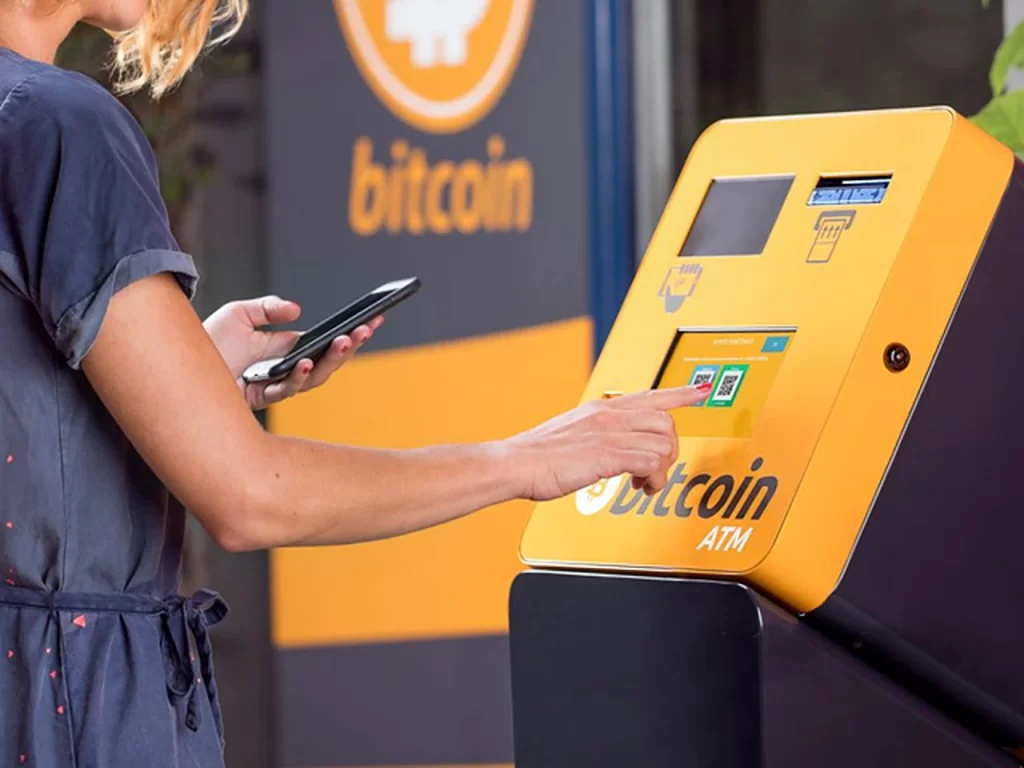
In 2022 and 2023, a significant shift occurred in the world of cryptocurrency-related illicit activities as stablecoins eclipsed Bitcoin in terms of transaction volume.
This transformation is highlighted in the latest report by blockchain analytics firm Chainalysis, which reveals that from 2018 to 2021, Bitcoin was the “go-to cryptocurrency” for cybercriminals. However, the years 2022 and 2023 saw stablecoins taking the lead in facilitating illicit transactions.
This transition coincided with the overall surge in stablecoin activity, encompassing both lawful transactions and nefarious ones.
Nonetheless, it’s important to note that Bitcoin remains the preferred choice for certain types of illicit activities, such as darknet market sales and ransomware extortion.
Stablecoins have gained favor among cybercriminals, particularly for activities like fraudulent schemes and transactions involving sanctioned entities.
These activities represent the most substantial portion of crypto-related crimes in terms of transaction volume.
READ MORE: Crypto Rating Agencies Gain Importance in Managing Risks Amid Ongoing Industry Challenges
According to Chainalysis, sanctioned entities and jurisdictions accounted for a combined transaction volume of $14.9 billion in 2023, constituting 61.5% of all illicit transactions during that year.
Chainalysis also points out that a significant portion of this volume stems from crypto services that continue to operate in regions not subject to U.S. sanctions.
This allows them to evade the reach of the United States Department of the Treasury’s Office of Foreign Assets Control.
In another positive development, blockchain security firm CertiK reported on January 4th that crypto hack revenue had decreased by more than 51% in 2023.
This marked a notable improvement in blockchain security, as noted by CertiK’s co-founder, Ronghui Gu.
Chainalysis corroborated these findings in their report, revealing a 54.3% decrease in crypto hack revenue and a 29.2% drop in profits from crypto scams.
Consequently, there has been a decline in transaction volume associated with illicit addresses in 2023.
In summary, the landscape of crypto-related illicit activities shifted dramatically in 2022 and 2023, with stablecoins taking precedence over Bitcoin for most of the illicit transaction volume.
This change is driven by the increased popularity of stablecoins among cybercriminals, particularly for fraudulent schemes and transactions involving sanctioned entities.
Despite these shifts, efforts to enhance blockchain security have yielded positive results, leading to a decline in hack revenue and scam profits, as reported by CertiK and Chainalysis.
Egger Mielberg is a mathematician, bioengineer, software developer, and the CEO & Founder of Arllecta. We sat down with him for an interview about his crypto project, his experience and background, and much more.
- What does your company Arllecta do?
Our company began its activities with the advent of a new mathematical theory for artificial intelligence that we created. We named it Sense Theory.
Several years of our research in search of solutions to such key problems in the field of creating real AI as identifying basic knowledge and forming new knowledge, led us to the conclusion that current traditional mathematics does not have the appropriate logical tools that could work with such important concepts for AI as meaning and self-awareness. This is how such important concepts in our new theory as semantic or sense function, semantic or sense derivative and other semantic concepts and definitions were born.
After several months of testing in terms of the search algorithm we created by meaning, we received a very high-quality search result that bypassed the existing search solutions of large IT giants by an order of magnitude. After this, we decided to launch several products in the field of AI using exclusively our own algorithms as the base ones in our products.
This is how products such as speechllect – speech recognition and synthesis, medzard – diagnostic system, senseprofile – speech analytics of meetings and others appeared.
- What is your background? What is your specialization?
Already at the age of 16, I was interested in problems that could not be solved by the greatest minds of mankind. At the age of 17, I actively began to study mathematical analysis and methods for solving incorrectly formulated mathematical problems. Then I realized that in mathematics there are many problems that have not had their solution for hundreds of years. This encouraged me to enter the Faculty of Mechanics and Mathematics at the European State University. That’s how I became a mathematician.
After graduating from university, I was invited to posgraduate school at the department of applied mathematics without exams. Additionally, I was invited to the Department of Information Technology as a senior lecturer. After a year of teaching, I created two fully innovative courses for university students in Calculus and the C++ programming language.

In 2010, while working in one of the American companies developing complex analytical diagnostic software products for medicine, I decided to write the core of a search system that would bypass the Google project in terms of the quality of searching for relevant information. After a year and a half of work, part of the search algorithms was sold to a European search project.
Working as one of our scientists in the field of medicine, I found the implementation of my mathematical algorithms in the direction of early diagnosis of diseases and methods for quickly searching for energy profiles of chemical compounds for the synthesis of new drugs. After this, we began research in the field of longevity since the problems in this area are perhaps the most incredibly complex and require great talent to solve.
- Why did you decide to create the SenseChain project and what is it about?
The main reason that made me come up with the SenseChain project is the basic principles of operation of the current global financial system, or rather the consequences to which this system leads, or rather the economic consequences that have already been described many times and have a cyclical nature of repetition.
The facts have become obvious that a person, as a biological species capable of self-education, should not spend the overwhelming time of his entire life earning monetary assets for existence on this planet. The key here is “capable of self-education.” In our opinion, it is precisely the artificially created barriers of the current financial system that do not allow a person who wants to improve their knowledge in the development of technologies in various fields of science and business.
At the current time, to eliminate these barriers, we see the creation of a global unified decentralized network in terms of eliminating the influence of its individual participants on its performance. However, simply creating a decentralized network will not eliminate these barriers and a strong economic model is needed here, as for a full-fledged large state.
This is how SenseChain technology was born.
The SenseChain in our context is a sense-to-sense algorithm based technology.
The four main characteristics of the SenseChain project are:
- A new digital economic model implemented on the basis of sense business contracts.
- A Sense-To-Sense algorithm realized. It is an revolutionary sense-focused method of searching a meaning point between a millions of objects of any kind and type.
- A new financial digital model based on a digital coin secured by the time spent by network participants.
- Native coin (SC) – equivalent to job hours (JH);
Stability of the native coin rate (minimum job rate): 1SC = 1JH = $10
One of the main goals of the SenseChain is to unite the people of our planet into one big digital family, giving people the opportunity to earn money and exchange experiences from different countries and to speed up technological progress as much as possible for the benefit of a comfortable and safe life for each of its members.
The main and fundamental difference between SenseChain and any other crypto projects is the implementation of its own paradigm of the main asset in the form of user hours spent and the realized economy. Also, it should be especially noted that SenseChain is not a pure crypto project, it is primarily an IT project with partial implementation of crypto characteristic of the crypto industry. Finally, SenseChain uses its own main network with own native digital currency (coin) – SenseCoin (SC).
- What is sense coin and how is it different from bitcoin?
In simple words, Sense Coins are the hours spent by a network participant to fulfill a certain sense contract. That is, every Sense Coin
economically secured by the actual spent lifetime of a real person.
In other words, behind each Sense Coin there is work performed under a sense contract for a certain lived time.
In comparison with Bitcoin, the author of which defines it as a chain of digital signatures and the emission of which is associated with the iterative search for a certain hash value, Sense Coin is not such a digital surrogate that cannot, by its nature, form the economic value of the object or subject being used.
Sense Coin is a full-fledged digital currency with its established nominal value, which is economically justified by a specific executed sense contract.
- Do you believe in the further development of any current project or several projects in the crypto industry?
At the current time in the crypto industry, almost all projects without exception have as their main goal to collect the maximum possible amount of money from users without giving the most important thing, in my opinion, long-term stability in earnings.
And this is not a problem of the creators of such projects, this is a derivative, again I want to repeat, of a weak and not far-sighted global financial system. Current technologies would not exist without the hard work of the best minds in our world. But to move forward in creating technologies that are unique and extremely necessary for humanity, it is necessary to create conditions for creation. These conditions are to provide comfortable conditions for everyone who has the desire to try to explore and create something that is very useful and necessary for all people. And monetary compensation as such should be paid for such work without any technology-incompetent supervisory authorities.
The incentive medium, fiat money, crypto currency, product tokens and other digital derivatives should play a secondary role in any work or scientific research.
And if you look at the top five liquidity projects in the crypto industry, it becomes obvious that all these projects, without exception, introduce more and more new programs or subprojects for users with only one goal – to show the bull rise of their coin or token to the skies. In other words, the creators of the projects offer nothing more than speculation.
I see the future of the crypto industry, at the current time, only if real decentralized economic and financial instruments are implemented, which will provide economic liquidity through real business contracts. I am for a decentralized economy!
- How do you combine your work on the medical project, Longevity Research, with your other AI projects?
Research in the field of longevity did not arise out of nowhere and is a logical continuation of the implementation of the algorithms of our theory Sense Theory in various fields. Thus, based on the algorithms of the Sense Theory, a hematological preventive method for early diagnosis of diseases was formulated and described in two technological articles. After analytical studies of the practical application of theory algorithms on anonymized data of patients diagnosed with myocardial infarction, we concluded that these algorithms have great potential in any of the most complex areas of early diagnosis. First, of course, we focused on especially dangerous diseases that in most cases lead to death.
In 2024, I will complete my master’s degree at the Department of Biotechnology of the European National Research Medical University. I deliberately entered this university for the practical implementation of my methods both in the field of oncology and in the field of longevity.
So, after an additional year of painstaking analysis, we concluded that without finding the true causes of cancer cells, we will not be able to create an elixir of youth, since the biochemical processes taking place inside a single human organ, or rather, inside individual cells, have their own specifics.
It became obvious to us that by creating the elixir of youth and not creating a cure for eliminating the causes leading to the appearance of cancer cells, we may find ourselves in a situation where, for example, an engineer who created a high-speed car forgot to create a braking system.
- Do you really believe that among humanity there can be people extremely smart enough to create a real elixir of youth?
We believe, no, we are even 100% convinced that all restrictions without exception are born in our heads. The reasons for this are different. The main reason is the lack of knowledge and the ability to look at a task or problem from different angles using the knowledge of different sciences.
In the current world of digital technology, the main obstacle to creating something new and innovative is the lack of information hygiene. The overwhelming number of people on our planet simply do not know how to conduct a qualitative analysis of the data they receive on the Internet. Our slogan is “Analyze more, ask less.”

The European Union has taken a significant step in its ongoing battle against financial crime by extending its Anti-Money Laundering and Counter-Terrorist Financing guidelines to encompass European crypto companies.
This decision, made by the European Banking Authority (EBA) on January 16, 2024, is aimed at enhancing the ability of crypto asset service providers (CASPs) to identify and address their exposure to financial crimes arising from various factors such as customers, products, delivery channels, and geographical locations.
The amended guidelines also offer specific recommendations on how crypto firms should adapt their anti-money laundering and counter-terrorist financing measures.
One notable suggestion is the incorporation of blockchain analytics tools into their compliance efforts. These new guidelines officially came into effect on December 30, 2023.
The EBA emphasized that these amendments represent a crucial advancement in the European Union’s fight against financial crime.
They also seek to create a harmonized approach for crypto firms across the union, facilitating the mitigation of money laundering and terror financing risks.
One significant aspect of the updated guidelines is the inclusion of cryptocurrency and crypto company-specific risks and guidance for financial institutions that either hold or serve crypto firms.
READ MORE: How Playable Ads Are Set to Reinvigorate the Streaming and Digital Content Industry
This addition recognizes the unique challenges and risks associated with the crypto industry and aims to provide clear guidance to traditional financial institutions operating in this space.
Furthermore, the guidelines provide detailed instructions for crypto firms regarding the assessment of financial crime risks.
These firms are directed to evaluate the potential risks associated with features that enhance anonymity, self-hosted wallets, decentralized platforms, and products facilitating transfers between the company and such services.
In 2023, the European Union finalized two critical pieces of regulation in the crypto space: the Transfer of Funds Regulation (ToFR) governing crypto transfers and the comprehensive Markets in Crypto-Assets (MiCA) regulations.
MiCA, which includes provisions for protecting crypto investors, is scheduled to take effect in December.
However, EU member states have the option to implement an 18-month transitional period for CASPs, allowing them to continue operating without a license during this time.
In conclusion, the extension of the Anti-Money Laundering and Counter-Terrorist Financing guidelines to European crypto companies represents a significant development in the regulatory landscape, aiming to create a safer and more compliant environment for crypto businesses while addressing the evolving challenges posed by financial crime.