

The spirit of Web3 is all about building deep connections between the users and the product, enabling new and exciting reward and participation systems, as many brands look into Web3 to reach the next level of fan and customer loyalty. Azarus is the leading proponent of this approach in streaming, creating a whole new experience for streamers and their viewers thanks to gamified ads.
Ads are the lifeblood of the entertainment industry. As much as we might dislike most of them, without ads we also wouldn’t have any of our favorite YouTubers, Twitch streamers, sports channels and much more. But with Azarus, ads become exciting games that you play to compete for unique prizes from brands that you enjoy.
Azarus integrates with all the most used streaming platforms, including YouTube, Twitch or even TV streaming services. Only here, instead of boring insurance and sleeping pill ads, you see a cool trivia game sponsored by Nike (or whatever fits your bill — imagine you’re a sneakerhead in this scenario).
Not only do you get to show off your knowledge with all the other stream viewers, but you might also get a limited-edition prize from Nike as a physical reward. Or you may receive AZA tokens, which can be exchanged in a rewards store for over 35,000 digital items (mostly, games and game keys for both new and older titles), or even cold hard cash.
The games are fast-paced, lasting only a few seconds, and make you feel connected through a massively multiplayer and interactive experience. It’s like a digital stadium in your living room — a sneak peek into a world of mass VR integration.
Active Participation vs. Passive Viewership
The platform sees itself as modernizing entertainment to the modern age, specifically by using the fact that streams offer way more opportunities for engagement than TV. Interacting with a TV show back in the day required picking up a phone, which might have meant going to a different room. Though this was modernized with the advent of smartphones, streams are already streamlined, as they bring a combined viewership and engagement platform all in one.
Only the most active users will actively join Twitch chats, and for really large general-purpose streams it all becomes noisy. What Azarus is trying to do is to bring order to the chaos, and engage more people who otherwise couldn’t care less about chatting with others. The viewership experience becomes more bi-directional, and all without catering to very specific social urges.
The platform of course shares part of its proceeds with the streamers who integrate it in their channels, which benefits them both monetarily and from a user engagement standpoint.
The platform distributed over $2M in rewards last year, with over 6 million unique players, so the phenomenon seems to be catching on.
Not Just an Average Crypto Platform
Now, while Azarus is a crypto project with its own tokens, this is only a means to an end here, which is different from many other startups that tried to merge blockchain with the “real world” or the wider digital realms.
Blockchain is used for its infrastructure, hosting the AZA tokens which are used for rewards. This gives a global nature to the platform right from the start, allowing anyone in the world to earn from Azarus, even if they live in a country with extremely poor financial infrastructure.
While the tokens are mostly meant to be used for rewards in the Azarus store, they do have a monetary value as well, which is an interesting fringe benefit of tokenizing reward points.
The users don’t need to know anything about blockchain, as it’s all managed directly from the Azarus app and extension. Thus, it offers a neat way for people to gradually ease into the concept, but only if they want to.
Azarus was recently acquired by Animoca Brands, a giant in the Web3 industry, which should give the platform all the resources it needs to scale even further. Already it’s been actively working with brands like Ubisoft and Logitech, which only goes to show even further that publishers and gaming industry brands are looking to reinvigorate their marketing.
Ultimately, Azarus is about creating a useful product for people so that we can improve the experience of watching and interacting with content. The fact that it’s a Web3 project is secondary to this fact.
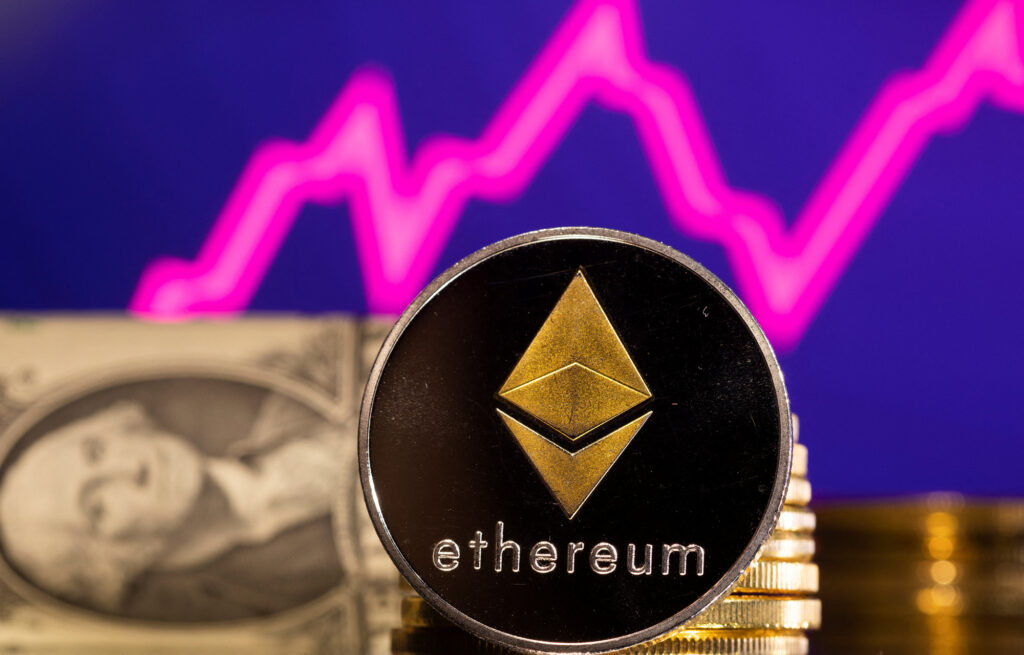
Ether has surged over 20% against Bitcoin within just 72 hours, and traders are anticipating further upward movement.
Data from Cointelegraph Markets Pro and TradingView reveals that ETH/BTC, which hit yearly lows of 0.0478 on January 9th, has now climbed to 0.0587.
ETH/USD is also experiencing a breakout, reaching levels not seen on the chart since mid-2022.
A bullish divergence on the moving average convergence divergence (MACD) indicator on weekly timeframes against Bitcoin has caught the attention of popular traders.
This week, Ethereum, the largest altcoin, has outperformed Bitcoin in terms of returns, even as Bitcoin celebrates the launch of spot exchange-traded funds (ETFs) in the United States.
Despite BTC/USD reaching its highest levels since the post-ETF announcement in December 2021, Ether’s resurgence seems to overshadow it.
The anticipation of Ethereum’s U.S. ETF debut later in the year has added to the bullish sentiment.
BlackRock’s CEO, Larry Fink, who recently released a Bitcoin ETF, expressed interest in a similar move for Ether, which further fueled optimism around Ethereum.
READ MORE: Turkey Gears Up for Cryptocurrency Regulation Overhaul
“Larry Fink is already beating the Ethereum drum. One day after the Bitcoin launch,” responded trader and analyst Scott Melker, also known as “The Wolf Of All Streets,” on X (formerly Twitter). “The rotation is real.”
Looking ahead, Michaël van de Poppe, founder and CEO of trading firm MNTrading, believes that Ether will continue to gain ground against Bitcoin as part of the overall cryptocurrency market cap.
He suggested that Bitcoin’s dominance appears to have peaked, especially in anticipation of the Bitcoin halving.
“Expecting to see a continuation as Ethereum is taking more momentum.
This might be the cycle’s high on the Dominance as the altcoin bull market has started,” said Van de Poppe.
He also pointed out that attention may shift away from BTC/USD until after the block subsidy halving in April, which is considered a price catalyst, albeit not an immediate one.
Meanwhile, the ETF narrative suggests a potential Bitcoin supply squeeze as institutions seek long-term exposure to BTC.
This factor could further impact the dynamics between Ethereum and Bitcoin in the coming months.
The United States House of Representatives Financial Services Committee (FSC) has taken a significant step in addressing the growing impact of artificial intelligence (AI) on the financial services and housing industries.
On January 11, 2024, FSC Chairman, Representative Patrick McHenry, and Representative Maxine Waters jointly announced the establishment of a bipartisan Working Group on Artificial Intelligence.
The primary objective of this working group is to delve into the multifaceted implications of AI in the financial services sector.
This includes an examination of how AI is reshaping the financial services workforce by driving the development of new products, fortifying defenses against fraud, streamlining compliance processes, and bolstering regulatory tools.
Another critical aspect of the group’s mission is to scrutinize the existing regulatory framework governing AI usage and ascertain that any new regulations are well-balanced, taking into account both the potential benefits and inherent risks associated with AI deployment.
This endeavor builds upon the groundwork laid by the Task Force on Artificial Intelligence in the 116th and 117th Congresses.
It is worth noting that this newly formed working group differs from the one established by the New Democratic Coalition in August 2023.
While both groups share a common objective of crafting bipartisan policies to address the evolving AI landscape, the FSC’s AI working group boasts a truly bipartisan composition, comprising members from both the Democratic and Republican parties.
READ MORE: DeRec Alliance Unveils Ambitious Plan for Decentralized Digital Asset Recovery System
Heading the bipartisan group are Representative French Hill, Chairman of the Digital Assets, Financial Technology, and Inclusion Subcommittee, and Representative Stephen Lynch.
This dedicated team brings together a diverse set of perspectives and expertise to tackle the complex issues surrounding AI.
Among the group’s Republican members are McHenry, Hill, Young Kim, Mike Flood, Zach Nunn, and Erin Houchin.
On the Democratic side, Waters, Lynch, Sylvia Garcia, Ayanna Pressley, Sean Casten, and Brittany Pettersen round out the lineup.
This development aligns with President Joe Biden’s Executive Order from October 30, 2023, which places a significant emphasis on the responsible development and use of AI.
The newly formed FSC working group will play a pivotal role in assessing and implementing the directives outlined in the Executive Order within the committee’s purview.
As AI continues to reshape the financial landscape, this bipartisan initiative signifies a commitment to ensuring that AI benefits are harnessed responsibly while mitigating potential risks.

Vanguard’s recent decision to exclude spot Bitcoin exchange-traded funds (ETFs) from its platform has raised concerns among some of its customers, leading them to consider alternative investment avenues.
The move comes as Vanguard emphasizes its commitment to traditional asset classes like equities, bonds, and cash, according to Investing Insider.
Vanguard officially stated that they will not offer spot Bitcoin ETFs for purchase on their platform and have no plans to introduce any Bitcoin or crypto-related products.
This decision is in line with their focus on conventional investment offerings, as they believe these assets are the foundation of a well-balanced, long-term investment portfolio.
Vanguard did not participate in the applications for spot Bitcoin ETFs in 2023, which has prompted investors to explore other platforms.
Tony Spencer, a Vanguard customer, claimed that the company informed him that they are not permitting the purchase of spot Bitcoin ETFs because it contradicts Vanguard’s investment philosophy.
Currently, Vanguard only allows investors to sell Grayscale’s flagship Bitcoin product, which was recently transformed into a spot ETF.
In response to Vanguard’s stance, some customers, including Coinbase’s senior engineering manager Yuga Cohler, are moving their funds to other platforms like Fidelity, which launched one of the ten spot Bitcoin ETFs on January 11.
Cohler expressed dissatisfaction with Vanguard’s decision, stating that it doesn’t align with his investment philosophy.
Neil Jacobs, a Bitcoin commentator, also voiced his disapproval and is in the process of transferring his funds out of Vanguard, describing the decision as a “terrible business decision.”
READ MORE: Congress Calls for Investigation into SEC Following Twitter Account Compromise
The Wall Street Journal reported that customers of investment firms such as Citi, Merrill Lynch, Edward Jones, and UBS faced similar restrictions on purchasing spot Bitcoin ETFs on their respective platforms.
Some of these firms are still evaluating their approach to these products.
UBS is reviewing unsolicited offers from prospective spot Bitcoin ETF investors on a case-by-case basis and is currently making the ETF available only for “aggressive investors.”
Not all approved spot Bitcoin ETFs are available on their platform.
Citi has made a spot Bitcoin ETF available for institutional clients and is considering its adoption for individual wealth clients.
Merrill Lynch is monitoring the efficiency of spot Bitcoin ETF trading before deciding to offer these products to their customers.
In contrast, JPMorgan’s brokerage platform allowed spot Bitcoin ETF trading, with JPMorgan being an authorized participant of BlackRock’s iShares Bitcoin Trust ETF. However, JPMorgan disclosed potential risks to prospective investors considering these trades.
The first day of trading for spot Bitcoin ETFs, following regulatory approval, saw trading volumes exceeding 4.5 billion dollars, primarily driven by BlackRock, Grayscale, and Fidelity’s Bitcoin ETFs.
Additionally, the United States Securities and Exchange Commission approved applications from various ETF issuers, including ARK 21Shares, Invesco Galaxy, VanEck, WisdomTree, Valkyrie, Bitwise, and Franklin Templeton, with Hashdex awaiting S-1 approval.

Several FTX clients have urged a U.S. bankruptcy judge to reconsider the defunct crypto exchange’s valuation of their cryptocurrency deposits, which is based on 2022 prices.
They argue that FTX’s approach is preventing them from benefiting from the recent surge in crypto prices.
The Official Committee of Unsecured Creditors, in support of the debtor’s motion to estimate claims based on digital assets, believes that collectively estimating claim values, as proposed in the motion, is the most efficient way to simplify the claim reconciliation process and expedite Chapter 11 confirmation.
The Debtors’ motion states that if the court determines that cryptocurrency deposits are not part of the estate, the appreciated cryptocurrency, which has grown by more than $5 billion since the petition date, must be returned to customers in kind and not used to pay administrative claims, among other things.
FTX’s bankruptcy plan outlines a reimbursement in U.S. dollars based on cryptocurrency prices at the time of the November 2022 bankruptcy filing.
FTX argues that U.S. bankruptcy law mandates valuing claims using that date, while customers contend that this method undervalues cryptocurrencies that have surged since the 2022 market low.
Sunil Kavuri, an FTX creditor activist, raised objections to the debtor’s motion to estimate claims.
When contacted by Cointelegraph, Kavuri clarified that his lawyers,
READ MORE: CFTC Issues Recommendations to Mitigate DeFi Risks in U.S. Financial Markets
Moskowitz and Boies, advocate for customers to receive “at least the value of crypto back” since property rights remain unresolved.
In addition to the Official Committee of Unsecured Creditors, FTX customers worldwide submitted letters to the U.S. bankruptcy court challenging FTX’s valuation approach before the Thursday deadline. FTX intends to have its list of cryptocurrency prices approved at a court hearing scheduled for January 25 in Wilmington, Delaware.
Some customers argue that the proposal unfairly favors stablecoin holders and external investors who acquired FTX bankruptcy claims at a lower cost, while holders of Bitcoin (BTC) and other volatile assets are left at a disadvantage.
The values of three major cryptocurrencies held by FTX customers—Bitcoin, Ether (ETH), and Solana (SOL)—have substantially increased since FTX declared bankruptcy.
Additionally, customers oppose the company’s decision to value its equity shares and token, FTT, at $0, which would erase over $700 million in FTT and FTX equity held by customers under the bankruptcy plan.
In a court filing on December 27, 2023, FTX argued that determining crypto prices based on the bankruptcy petition date is the only practical approach for initiating customer repayments.
FTX also pointed out that other bankrupt crypto firms like Celsius Network, BlockFi, and Voyager Digital had been permitted by courts to use petition-date prices to assess their customer claims.

Following the recent approval by the United States Securities and Exchange Commission (SEC) of spot Bitcoin exchange-traded funds (ETFs), SEC Commissioner Mark Uyeda has expressed significant reservations regarding several aspects of the approval process.
While Uyeda voted in favor of the groundbreaking decision to approve these Bitcoin ETF applications, he voiced concerns about the underlying analytical approach adopted by the commission.
One of Uyeda’s primary concerns revolves around the potential long-term repercussions of the SEC’s reasoning in the approval order.
He worries that the flawed rationale and legal analysis employed in this case may serve as a precedent for future decisions, impacting the crypto industry for years to come.
Uyeda’s foremost objection centers on the SEC’s differentiation between Bitcoin and other commodities.
He believes that Bitcoin should be treated on par with other commodities and criticizes the commission’s use of the “significant size” test as a unique benchmark for spot Bitcoin ETP (exchange-traded product) applications.
According to Uyeda, spot Bitcoin ETPs should have been approved much earlier under this standard, and he questions why they continue to be treated differently than Bitcoin futures ETPs under the “significant market” test.
Although none of the Bitcoin ETF applicants met the SEC’s significant market test, the approval cited “other means” that satisfied the requirements.
Uyeda contends that the SEC’s decision to introduce a new standard after applicants spent years pursuing the significant market requirement was unjust.
He argues that the commission should have communicated its expectations more clearly to applicants, rather than forcing them to make multiple attempts with uncertain criteria.
Furthermore, Uyeda suspects that the SEC’s motivation for expediting the approval of spot Bitcoin ETFs was to gain a competitive advantage.
He points out a lack of analysis concerning how the cash-only creation and redemption feature might prevent fraudulent activities.
He emphasizes the importance of transparency in the analysis and reasoning behind approval orders.
In a somewhat contradictory stance, Uyeda ultimately supports the issuance of the approval order, despite his objections to the legal analysis presented in it.
He cites independent reasons for concluding that the applications met the approval standards outlined in the Exchange Act.
Nonetheless, his critique underscores the need for greater clarity, consistency, and fairness in the SEC’s approach to regulating cryptocurrency-related financial products.

Ethereum’s community is currently embroiled in a debate sparked by Vitalik Buterin’s recent proposal to increase the gas limit on the network.
Buterin’s suggestion, made on January 11th, called for a “modest” 33% boost in the gas limit, aiming to enhance network throughput.
The proposed gas limit increase from the current 30 million to 40 million would potentially allow more transactions per block, thereby increasing the network’s overall throughput and capacity.
However, Ethereum developer Marius van der Wijden raised some concerns about this move in a blog post titled “Why increasing the gas limit is difficult.”
One of the primary concerns is the expansion of the blockchain state, which encompasses account balances and smart contract data.
Currently, the state requires approximately 267 gigabytes (GB) of storage space, and increasing the gas limit would only exacerbate this issue.
While storage costs may be relatively low, accessing and modifying this expanding data would become progressively slower, with no clear solutions for managing state growth.
Furthermore, increasing the gas limit would also lead to longer synchronization times and complicate the development of diverse Ethereum clients, according to Wijden.
READ MORE: Congress Calls for Investigation into SEC Following Twitter Account Compromise
Gnosis co-founder Martin Köppelmann echoed these concerns, highlighting the potential bandwidth increase associated with raising the gas limit.
Péter Szilágyi, Ethereum’s team lead, also acknowledged the downsides of increasing the gas limit, emphasizing the faster growth of the state, the quicker slowdown of synchronization, and the heightened potential for denial-of-service (DoS) attacks.
The gas limit represents the maximum amount of work and gas expended when executing Ethereum transactions or smart contracts in each block.
It serves to maintain block sizes within reasonable limits to preserve network performance and synchronization.
Potential solutions to these challenges include proposed upgrades such as EIP-4444, addressing chain history expiration, and EIP-4844, which introduces “blobs” to improve rollup data availability and mitigate long-term growth trends.
Software developer Micah Zoltu contributed to the discussion, emphasizing the importance of enabling real-world users to run Ethereum nodes on everyday machines.
However, achieving this goal becomes more challenging as the state and full blockchain size continue to expand, emphasizing the need for a holistic approach to Ethereum’s scalability and accessibility.

The recent decision by the United States Securities and Exchange Commission (SEC) to approve the country’s first spot Bitcoin exchange-traded funds (ETF) has sent ripples of excitement through both the traditional finance (TradFi) and decentralized finance (DeFi) spaces.
This historic decision has sparked curiosity about its potential impact on the markets and, of course, on the price of Bitcoin itself.
Across the Atlantic in Europe, however, the excitement surrounding a Bitcoin ETF has already somewhat subsided. Europe witnessed the introduction of its first spot Bitcoin ETF on August 15, 2023.
The Jacobi FT Wilshire Bitcoin ETF made its debut on the Euronext Amsterdam stock exchange, more than a year after its originally planned launch.
This pioneering ETF was issued by Jacobi Asset Management, a London-based firm.
What set the Jacobi Bitcoin ETF apart was that it was the first physical-backed Bitcoin fund, offering investors exposure to a financial product backed by actual Bitcoin.
Moreover, it was classified as an “environmental investing” or Article 8 fund, promoting environmental and/or social characteristics.
Grzegorz Drozdz, a market analyst at the European Union-based financial services platform Conotoxia, discussed the market implications of U.S. spot Bitcoin ETFs, particularly from a European perspective.
READ MORE: SEC Renews Warning on FOMO Crypto Investing Ahead of Expected Bitcoin ETF Approvals
He noted that the introduction of Bitcoin ETFs has significantly democratized access to the crypto market, moving beyond traditional cryptocurrency exchanges and wallets.
However, Drozdz pointed out that while Bitcoin ETFs are making waves, their size is still relatively small compared to the overall financial and crypto market.
The total capitalization of the cryptocurrency market stands at $1.78 trillion, and existing investment funds in this sector represent only 2.9% of this total value.
In the European Economic Area, there seems to be a greater openness to institutional investment in cryptocurrencies with the launch of Bitcoin ETFs.
However, Drozdz observed that these funds have not yet generated substantial inflows from institutions in Europe. Market expectations are currently more focused on the potential approval of such instruments in the U.S., which could have a more significant impact on the long-term development of the crypto world.
Despite the uncertainties, Drozdz emphasized the rapid increase in the inflow of new funds into the Bitcoin ETF space, which could potentially signal the start of a new bull market.
Given that Bitcoin still commands a substantial 53.7% share of the market’s capitalization, its success could have a significant ripple effect on the rest of the digital currency market.
This sentiment aligns with the speculations of other analysts and social media communities as they await the SEC’s decision on Bitcoin ETFs.

Bitcoin surged towards its recent high as Wall Street opened its doors on January 11th, as new U.S. macroeconomic data put inflation back on the radar. In the pre-market trading hours, Bitcoin’s price exhibited volatility, primarily hovering around $47,000.
The December Consumer Price Index (CPI) report defied expectations, revealing that inflation was accelerating faster than anticipated.
The month-on-month CPI showed a 0.3% increase, surpassing the expected 0.2%.
Furthermore, on a year-on-year basis, the index rose by 3.4%, exceeding the anticipated 3.2%, according to data from the U.S. Bureau of Labor Statistics.
This data confirmed a larger increase in the all-items index for the 12 months ending in December compared to November.
Although such reports usually trigger fluctuations in risk assets, this time they added to the already existing tension in the cryptocurrency markets.
On January 10th, the first U.S. spot Bitcoin exchange-traded fund (ETF) received approval, and its inaugural trading day was set for January 11th. Pre-market data indicated strong investor interest ahead of the ETF’s debut.
On that day, BTC/USD on Bitstamp briefly surpassed $47,700 but remained within its established range, with $48,000 acting as a resistance level.
READ MORE: SEC Renews Warning on FOMO Crypto Investing Ahead of Expected Bitcoin ETF Approvals
Prominent trader Jelle emphasized that shorting Bitcoin at this point was unwise, predicting an eventual upward acceleration.
Meanwhile, Ethereum outshone Bitcoin, with its 24-hour gains exceeding 10%.
This surge was attributed to traders shifting their focus to Ethereum after the ETF approval, as they didn’t witness the expected pump in Bitcoin’s price.
Crypto Tony, another trader, noted this shift in investor sentiment, driving ETH/USD to reach $2,666 on Bitstamp, its highest level since May 2022.
Other cryptocurrencies, such as Solana’s SOL and XRP, also posted double-digit gains.
In conclusion, Bitcoin’s price rallied as U.S. inflation data surprised investors, while the approval of the first U.S. Bitcoin ETF added to the cryptocurrency market’s anticipation.
Despite the volatility, Bitcoin remained within its established range, and Ethereum stole the spotlight with significant gains.
These developments illustrated the continued interest and resilience of the cryptocurrency market in the face of economic data and regulatory advancements.

On January 11, prominent figures from the Hedera and Algorand ecosystems, including the HBAR Foundation and Algorand Foundation, made an exciting announcement at the Crypto Finance Conference in St. Moritz.
Leemon Baird, co-founder of Hedera, and John Woods, Chief Technology Officer of the Algorand Foundation, introduced a groundbreaking initiative known as the DeRec Alliance, aimed at creating a decentralized recovery system for digital assets.
The primary objective of the DeRec Alliance is to simplify the process of securing and recovering digital assets, aligning it with the user-friendly experiences commonly associated with Web2 platforms.
Baird emphasized the importance of establishing standards and open-source code across the blockchain industry to enhance safety within the evolving landscape of Web3.
He stressed the need to make key recovery user-friendly and called upon all blockchain entities to collaborate in creating compatible standards across different wallet software and blockchains.
Notably, Hedera and Algorand are not alone in this venture.
They have already garnered support from banks, credit unions, and multiple wallet software projects, showcasing a strong industry-wide commitment to this crucial initiative.
In conjunction with the DeRec Alliance, the Decentralized Recovery (DeRec) open-source protocol was introduced as a standardized approach to secret management.
READ MORE: SEC Forges Ahead with Bitcoin ETF Decision Despite Social Media Hack
This protocol is built on the concept of secret sharing among a designated group of helpers, whether they be friends or businesses, allowing users to recover their secrets when needed. Each helper’s share reveals no information about the original secret, ensuring security and privacy even if a user loses their recovery device.
John Woods emphasized the importance of a seamless user experience and the need to minimize risks associated with self-sovereignty.
The DeRec protocol achieves this by incorporating automatic confirmations for the retention of secret shares by helpers, automatic resharing when secrets change or helpers join or leave, and a system that protects the identities or numbers of helpers, keeping them unaware of each other.
This initiative is especially timely as the DeFi space grapples with ongoing security challenges.
Just a day prior to the DeRec Alliance announcement, the United States Commodity Futures Trading Commission released recommendations aimed at mitigating DeFi-associated risks, underscoring the industry’s need for enhanced security measures.
Inquiries were made to the developers for additional details about this groundbreaking initiative, which has the potential to significantly bolster the security and usability of digital assets in the evolving blockchain ecosystem.