

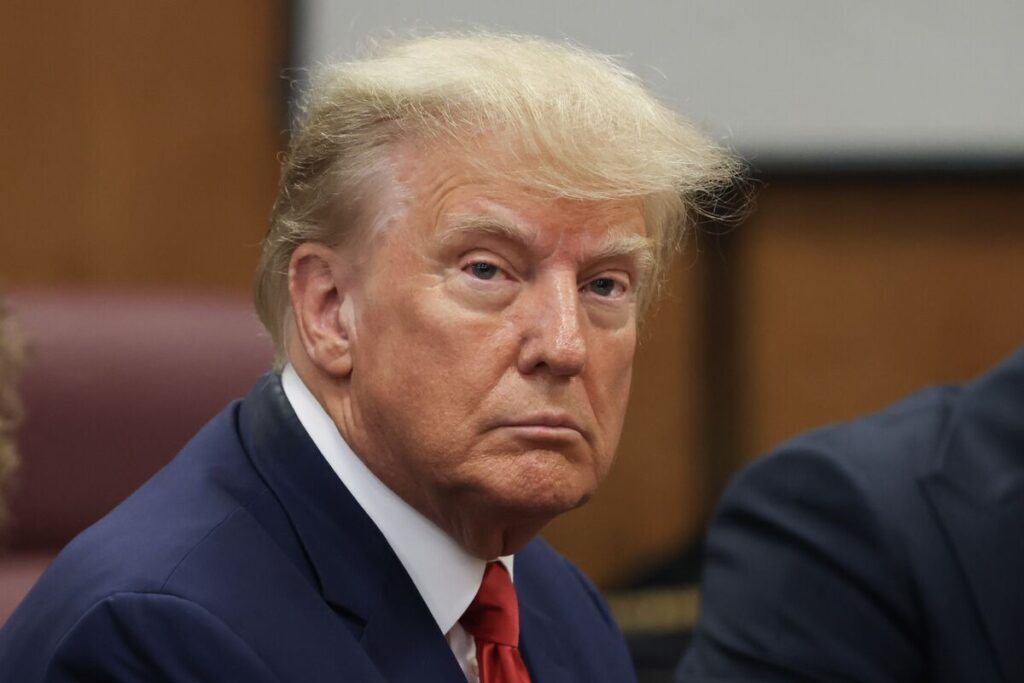
Former Donald Trump attorney, Michael Cohen, has publicly acknowledged a significant error in his legal research process, attributing it to the use of Google Bard, an artificial intelligence (AI) chatbot.
Cohen, who is preparing to testify against Trump in upcoming trials, admitted to unintentionally forwarding inaccurate legal citations generated by Google Bard to his lawyer, David Schwartz, in support of his case.
Cohen’s confession came to light in a recent court filing, where he clarified his misunderstanding of Google Bard’s capabilities.
He had mistakenly assumed it to be a highly advanced search engine rather than a generative AI service similar to Chat-GPT.
The problematic citations, as well as several others that were not included in the motion, were attributed to this misunderstanding.
Critics argue that Cohen, not being an active legal practitioner, bore no ethical obligation to verify the accuracy of the information he provided.
They contend that Schwartz, as a legal professional, should have reviewed the citations before incorporating them into official court documents.
Cohen’s legal team emphasized this point, stating, “Mr. Cohen is not a practicing attorney and has no concept of the risks of using AI services for legal research.”
READ MORE: Federal Judge Rules in Favor of SEC in Terraform Labs Securities Case
To further highlight the issue, Cohen’s statement outlined the sequence of events: He had sourced citations and case summaries online, believing them to be authentic, which were then added to the motion by Schwartz without proper validation.
This incident is not the first involving attorneys relying on AI tools only to discover inaccuracies.
Earlier this year, a similar case emerged when Steven Schwartz, an attorney at the New York law firm Levidow, Levidow & Oberman, faced criticism for incorporating AI-generated court citations that turned out to be false.
The judge presiding over the case expressed strong dissatisfaction with Schwartz’s reliance on AI for legal research, pointing out that six of the submitted cases contained fabricated judicial decisions, false quotes, and fictitious internal citations.
In both instances, the misuse of AI tools for legal research underscores the importance of thorough verification and the ethical responsibility of attorneys to ensure the accuracy of the information they present in court.
These cases serve as cautionary tales for legal professionals exploring the integration of AI technology in their practice.

The eagerly awaited 2024 Formula One season is set to witness the arrival of Stake F1 Team, an exhilarating partnership that melds the world of high-speed racing with the captivating allure of Stake, a renowned betting, entertainment, and lifestyle brand. This transformative collaboration underscores the evolution of sponsorship dynamics in Formula One and unveils an entirely new brand presence for the sport.
Stake, having previously inked a successful partnership with the team in 2023, is now poised to ascend to the role of exclusive Title Partner for both the 2024 and 2025 seasons, signaling its commitment to reshaping the Formula One landscape. In a bold move, Stake will assume full control of the team’s identity, securing exclusive naming rights, and even taking charge of the team’s social media platforms, which will now operate under the moniker Stake F1 Team, a clear reflection of the team’s fresh and dynamic image.
The Stake F1 Team is ushering in an era where traditional sponsorship norms are shattered, with a distinct emphasis on redefining marketing activations. Here, excitement is the linchpin, underlining a fan-centric approach that positions the team as one of the most captivating entities in the world of Formula One.
Founded in 2017 by a visionary group of technology and betting industry entrepreneurs, Stake has rapidly risen to prominence as a major player in the sports and entertainment sphere. Its expanded engagement with Formula One adds another jewel to its crown, alongside high-profile partnerships with global icons like Canadian superstar Drake, Everton Football Club, and the UFC.
In 2023, Stake made an indelible mark on the Formula One scene, leveraging unique activations that resonated far beyond the sport’s traditional fan base. The anticipation for the 2024 F1 calendar is palpable, with Stake gearing up for an array of high-profile experiences, beginning with the highly anticipated launch of the new C44 in February, heralding the start of a spectacular year.
Alessandro Alunni Bravi, Team Representative, lauded Stake’s burgeoning journey within Formula One, underscoring its unique ability to connect with fans and introduce newcomers to the sport. He also celebrated the exciting collaborations with Stake’s illustrious ambassadors, including Argentine football legend Sergio Aguero and Indian-Canadian rapper Karan Aujla, setting the stage for an even more thrilling 2024 season.
Edward Craven, Co-Founder of Stake, exuded enthusiasm for the team’s reimagined identity, driven by an unbridled passion for speed, innovation, and pushing boundaries. Craven tantalizingly hinted at “mind-blowing activations” on the horizon, both on and off the racetrack, as Stake F1 Team charts an electrifying future.
Akhil Sarin, Chief Marketing Officer of Stake, hailed the brand’s resounding success in elevating global brand awareness within the digital landscape. He affirmed Stake’s unwavering commitment to delivering unforgettable experiences that epitomize innovation, entertainment, and global connectivity as they embark on this exhilarating journey alongside Stake F1 Team.
As the curtain rises on the 2024 Formula One season, Stake F1 Team’s entry promises to redefine the sport, fusing the adrenaline of racing with the captivating allure of Stake, creating a thrilling experience that will leave fans on the edge of their seats both on and off the track.
In the midst of the mounting excitement surrounding the potential approval of a spot Bitcoin exchange-traded fund (ETF) in January 2024, certain industry analysts have raised concerns, particularly regarding the issue of backing.
Josef Tětek, a Bitcoin analyst at the hardware crypto wallet firm Trezor, voiced his apprehensions in December 2023, suggesting that spot Bitcoin ETFs might steer individuals away from self-custody, possibly leading to the creation of “millions of unbacked Bitcoin.”
He warned of a scenario where these ETFs could result in what is often termed “paper Bitcoin.”
Tětek’s remarks stirred a significant response within the crypto community, with some dismissing his claims as FUD (fear, uncertainty, doubt), while others pondered the means to ensure that ETF issuers truly hold Bitcoin on behalf of their clients.
Some observers even advocated for the publication of “actual on-chain addresses” in addition to reports on the issuers’ BTC holdings.
David Gerard, the author of “Attack of the 50 Foot Blockchain,” countered Tětek’s concerns, asserting that it was “unlikely” for ETF administrators to create unbacked BTC equivalents or misrepresent their assets.
He emphasized the regulatory oversight and credibility of well-established financial entities, dispelling the notion that unbacked ETF shares were a realistic threat.
However, he didn’t delve into whether clients could independently verify BTC holdings by issuers.
Drawing a comparison to gold ETFs, Bloomberg ETF analyst Eric Balchunas contended that spot Bitcoin ETFs would closely resemble them.
READ MORE: US Prosecutors Hint at No Second Trial for Ex-FTX CEO Sam Bankman-Fried
He pointed out that gold ETFs, having been in existence for two decades, diligently disclose the quantity of gold held by the custodian.
Balchunas emphasized the meticulousness of asset managers, stating they neither desired legal trouble nor wanted the negative publicity that would accompany any failure to hold Bitcoin or any shorting of it.
He also noted that companies like BlackRock and Grayscale were exposed to Bitcoin’s volatility.
The key distinction with spot Bitcoin ETFs, as currently conceived, is that investors would receive cash instead of Bitcoin upon redemption.
Balchunas advised individuals seeking direct ownership of Bitcoin to do so through self-custody, which aligns with the original vision of Bitcoin’s anonymous creator, Satoshi Nakamoto.
He underscored that the vast collective assets in mutual funds and ETFs, amounting to approximately $30 trillion, meant that most investors preferred to avoid direct interaction with the underlying assets.
While many industry observers expressed confidence in the integrity of ETF providers in the cash-create model, others remained convinced that there was a fundamental issue.
According to Tětek, the only way to eliminate concerns of “paper Bitcoin” would be if ETF shares were redeemable for actual Bitcoin.
However, given that the proposed ETFs only allowed for cash in and cash out, investors would have to place trust without the ability to independently verify holdings.
On the final day of consideration by the United States Securities and Exchange Commission (SEC) in January 2024, prominent asset management firms BlackRock, Valkyrie, and Van Eck submitted amended S-1 forms.
These revised documents represent the next step in their quest to establish Bitcoin exchange-traded funds (ETFs) and align with the SEC’s preferences.
Van Eck’s updated application emphasizes that “Authorized Participants” (APs), the financial entities permitted to buy or redeem shares with the Trust, will exclusively transact in cash for both share creation and redemption. This approach mirrors the SEC’s preferred method.
In its updated filing, BlackRock identified Jane Street and JPMorgan Securities as its “authorized participants” for the proposed spot Bitcoin ETF.
BlackRock has consistently advocated for a cash-only model.
Furthermore, the asset manager made history by executing the first trade on JPMorgan’s Tokenized Collateral Network service on October 11.
BlackRock originally submitted its application for a spot Bitcoin ETF in June, followed by Valkyrie’s application a week later.
READ MORE: ARK Invest Liquidates $200 Million in GBTC Holdings, Shifts Focus to Bitcoin Futures ETF
Both firms have actively engaged with the SEC throughout December, attending meetings to discuss their proposals.
Commenting on BlackRock’s amendment, Bloomberg ETF analyst Eric Balchunas noted, “Looks [like] we have our first horse at the starting gate,” alluding to the asset manager’s potential for SEC approval.
Balchunas previously anticipated the SEC’s decision on the outstanding spot Bitcoin ETF filings to occur by January 10, 2024.
If approved, trading could commence shortly thereafter.
Valkyrie, in its updated S-1, also designated authorized participants, namely Jane Street Capital and Cantor Fitzgerald. Additionally, StoneX Financial will assume the role of its lead market maker.
It’s worth noting that a slew of financial heavyweights, including BlackRock, Van Eck, Grayscale, Bitwise, WisdomTree, Invesco, Galaxy, Fidelity, ARK Invest, Valkyrie, Franklin, Hashdex, Global X ETFs, and Pando Asset, have all submitted S-1 applications for spot Bitcoin ETFs.
The outcome of these applications will have significant implications for the cryptocurrency market and its integration into traditional financial systems.
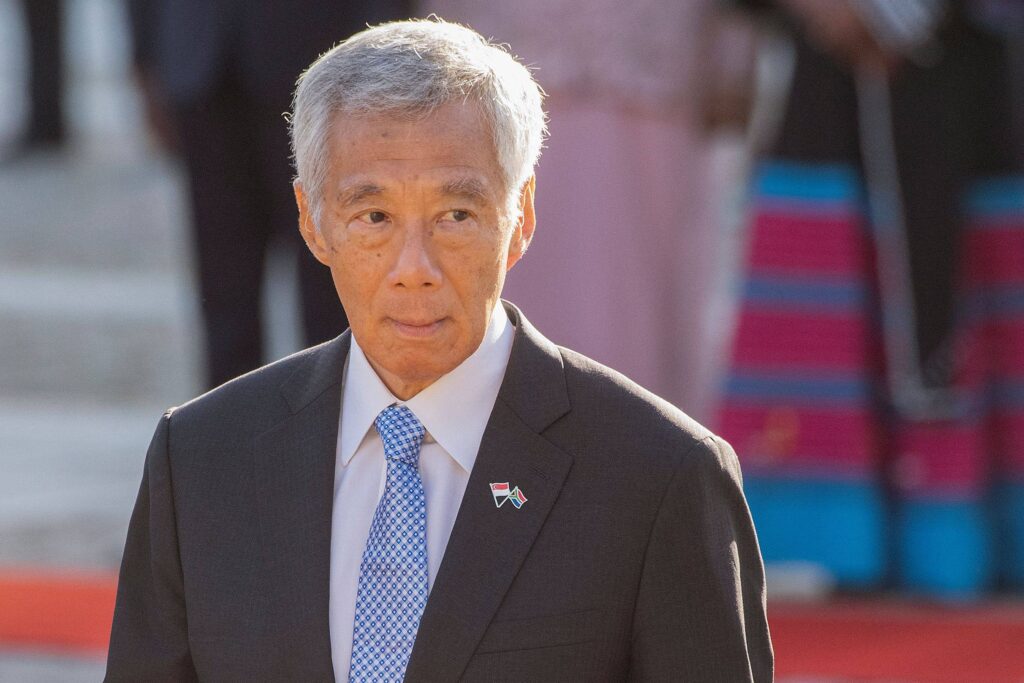
Singapore’s Prime Minister, Lee Hsien Loong, has issued a stark warning to his social media followers about the rising threat of deepfake videos leveraging his voice and image to promote fraudulent cryptocurrency schemes.
On December 28, Loong took to his social media platforms, including X (formerly Twitter), LinkedIn, and Facebook, to caution his supporters against falling victim to scammers who employ artificial intelligence (AI) technology to generate deepfakes that falsely attribute promises of “investment returns” and cryptocurrency giveaways to him.
He even shared an example of a deceptive video featuring himself being interviewed, which was manipulated by fraudsters to promote a bogus form of “hands-free crypto trading.”
Loong emphasized the growing danger posed by deepfake technology in spreading misinformation. He stressed the importance of remaining vigilant and educating oneself and loved ones on how to defend against such scams.
Notably, Prime Minister Loong has long been a target for scammers, predating the proliferation of AI-based tools in this arena.
READ MORE: Argentina’s New Government Takes Steps to Legalize Cryptocurrency Holdings
In 2021, he issued a cautionary message to Singaporeans, urging them to exercise caution when dealing with cryptocurrency platforms.
At that time, individuals had created fraudulent profiles on platforms like BitClout, using fake social media accounts to sell tokens, raising concerns about identity theft and fraud.
Furthermore, both Loong and Deputy Prime Minister Lawrence Wong faced inquiries from lawmakers in the wake of the FTX exchange’s collapse in 2022, underscoring the government’s commitment to safeguarding its citizens from cryptocurrency-related risks.
The cryptocurrency landscape has been rife with scams since its inception. Scammers have employed a variety of tactics to dupe users into parting with their fiat currency or digital tokens.
In 2020, high-profile Twitter accounts, including former United States President Barack Obama and President-elect Joe Biden, were compromised by hackers who used them to promote a fraudulent Bitcoin scheme.
These incidents illustrate the ongoing challenge of combating cryptocurrency scams and the importance of public figures like Prime Minister Lee Hsien Loong raising awareness to protect the community from financial fraud in the digital age.

Indonesian authorities have recently taken action against ten Bitcoin mining operations, accusing them of electricity theft amounting to nearly $1 million USD.
The North Sumatra Police Force initiated the crackdown, targeting a multi-site Bitcoin mining operation across various locations in Indonesia.
During the operation, they confiscated 1,134 Bitcoin mining machines, 11 meters of electrical cable, and assorted computer equipment.
The Chief of North Sumatra Police, Irjen Agung Setya Imam Effendi, asserted that the organizers of these mining operations had manipulated electrical circuits to power the extensive number of Bitcoin mining machines.
Effendi demonstrated the tampering, explaining that the electricity was being diverted from the upper part of the PLN box, bypassing the meter, which was improper and illegal.
READ MORE: ARK Invest Liquidates $200 Million in GBTC Holdings, Shifts Focus to Bitcoin Futures ETF
The total loss resulting from these ten cases of electricity theft was estimated to be 14.4 billion Indonesian Rupiahs (IDR), equivalent to approximately $935,666 USD.
This incident follows a high-profile case in China where a government official received a life sentence for facilitating access to electricity for Bitcoin miners.
Yi Xiao, a former vice chairman of the Jiangxi Provincial Political Consultative Conference Party Group, was convicted of abusing power in a Bitcoin mining enterprise.
Xiao had reportedly operated a massive $329 million Bitcoin mining venture under the corporate name Jiumu Group Genesis Technology from 2017 to 2021.
During this period, Xiao, along with other corporate executives, amassed a staggering 160,000 Bitcoin mining machines, which at one point accounted for 10% of the entire electricity consumption of the city of Fuzhou.
His sentence underscores the seriousness with which authorities are addressing illegal Bitcoin mining activities, particularly those involving electricity theft, as these operations can impose significant financial burdens on both governments and utility providers.
On December 29, the contenders in the race for a Bitcoin exchange-traded fund (ETF) spot waited until the eleventh hour to submit their final S-1 form applications.
Throughout the day, these applications trickled into the United States Securities and Exchange Commission (SEC), following earlier submissions by BlackRock, Van Eck, and Valkyrie.
Notable names in the crypto industry, including Invesco Galaxy, Bitwise, WisdomTree, and Fidelity, joined the fray.
In the latest filings, Fidelity, WisdomTree, and Invesco Galaxy revealed their authorized participants. Invesco Galaxy chose Virtu and JPMorgan, while WisdomTree and Fidelity opted for Jane Street Capital.
Interestingly, WisdomTree decided to stick with in-kind share creation and redemption, despite the SEC’s encouragement to switch to cash-based mechanisms.
Furthermore, it seems a price war has ignited among competitors. Invesco Galaxy, for instance, announced a waiver of fees for the first six months and the first $5 billion in assets.
Fidelity, on the other hand, set its fee at 0.39%.
Bitwise, though yet to disclose its authorized participants, mentioned in its S-1 filing that an undisclosed entity expressed interest in purchasing up to $200 million worth of the ETF shares.
READ MORE: Bitcoin Miners Surge: Marathon Digital Tops Trading Charts Ahead of Anticipated ETF Approval
It’s worth noting that several major players in the industry have thrown their hats into the ring.
BlackRock, Van Eck, Grayscale, Bitwise, WisdomTree, Invesco Galaxy, Fidelity, ARK Invest, Valkyrie, Franklin, Hashdex, Global X ETFs, and Pando Asset have all submitted S-1 applications for spot Bitcoin ETFs.
The SEC had set December 29 as the deadline for amendments to spot BTC ETF S-1 filings.
Grayscale made a last-minute submission on December 27 with a new S-3 filing, following the resignation of Barry Silbert from the board of directors.
In this filing, Grayscale announced its intention to convert its Grayscale Bitcoin Trust into a cash-only spot ETF, mirroring similar moves by Van Eck and BlackRock in earlier revisions.
Barry Silbert and his company, the Digital Currency Group, are currently under investigation by the SEC, adding another layer of complexity to the evolving landscape of Bitcoin ETF applications.
The Avalanche Foundation, a nonprofit organization overseeing the development of the Avalanche Network, has revealed plans to utilize its $100 million nonfungible token (NFT) incubator fund to purchase meme coins.
This strategic move is part of the foundation’s “Culture Catalyst” initiative, initially launched in March 2022 with the primary aim of funding promising NFT projects on the Avalanche Network.
The “Culture Catalyst” initiative is designed to position Avalanche as a hub for creativity, culture, and lifestyle fostered by blockchain technology.
The foundation intends to achieve this by deploying its fund to acquire select Avalanche-based meme coins, thereby curating a unique collection that celebrates the culture and fun embodied by these coins.
Avalanche argues that meme coins transcend mere utility assets, representing the collective spirit and shared interests of diverse cryptocurrency communities.
The foundation is committed to actively participating in the meme coin market, with plans to engage in max bidding for all meme coins on its network.
However, it’s important to note that not all meme coins will find a place in the foundation’s collection.
READ MORE: New York Times Files Copyright Infringement Lawsuit Against OpenAI Over AI Content Usage
Avalanche has established strict criteria for selecting meme coins, including the number of holders, liquidity thresholds, project maturity, adherence to fair launch principles, and overall social sentiment.
One meme coin that has gained significant attention on the Avalanche Network recently is Coqinu (COQ), a rooster-themed token known for its humorous and explicit approach to its lack of intrinsic value, team, and roadmap.
Surprisingly, COQ witnessed an astonishing surge of over 1.47 million percent in value between its inception on December 8 and its all-time high on December 20, as reported by DexScreener data.
Avalanche’s decision to enter the meme coin market comes amidst a broader market frenzy for meme coins across various blockchain networks capable of supporting smart contracts.
Remarkably, one trader managed to turn a $450 investment into over $1.5 million in realized profit.
This trader acquired 4.86 trillion COQ tokens with 17.26 Avalanche tokens, ultimately selling 4.61 trillion COQ for 32,251 AVAX, worth $1.26 million, just one week later.
The trader currently holds 250 billion COQ tokens, valued at $318,300 at the current market prices.
In conclusion, the Avalanche Foundation’s foray into meme coins reflects its commitment to embrace and support the evolving culture and creativity enabled by blockchain technology, even in unconventional and often speculative corners of the cryptocurrency space.
The Nigerian Securities Exchange Commission (SEC) has introduced crypto license requirements that are poised to reshape the landscape of the local cryptocurrency exchange market.
Despite the Central Bank of Nigeria (CBN) recently lifting restrictions on Nigerian banks facilitating cryptocurrency transactions, Rume Ophi, a Nigerian crypto analyst, believes that the SEC’s new regulations will have a significant impact.
In an interview with Cointelegraph, Rume pointed out a crucial issue: the minimum paid-up capital requirement of $556,620 (N500 million naira).
This substantial financial burden is a barrier that many local cryptocurrency exchanges may find insurmountable.
Consequently, Rume predicts that these stringent requirements will likely result in a reduced number of operational local exchanges, tilting the balance towards foreign exchanges dominating the Nigerian market.
The Nigerian SEC’s move to reshape the crypto landscape began in May 2022 when it published a comprehensive 54-page document titled “New Rules on Issuance, Offering Platforms, and Custody of Digital Assets.”
READ MORE: JPMorgan CEO Jamie Dimon Under Scrutiny Over Bitcoin ETF
This document aimed to provide guidelines for cryptocurrency service providers in Nigeria and outline how banking and financial institutions in the country could engage with digital assets.
To comply with the SEC’s regulations, cryptocurrency exchanges must obtain a virtual asset service provider (VASP) license, which involves meeting various requirements, including application processing, registration fees, and other associated costs.
Remarkably, a global survey spanning 15 countries revealed that Nigeria, Africa’s largest economy, boasts the highest level of cryptocurrency awareness in the world.
Despite this, Nigeria’s cryptocurrency adoption and usage rate ranked only eighth among 154 countries surveyed in Chainalysis’ 2020 Cryptocurrency Geography Report.
Rume suggests that the ban on financial institutions servicing crypto exchanges played a pivotal role in constraining investment in the country.
However, with the recent lifting of the CBN ban, Rume believes that Nigeria is poised for a positive shift in crypto investment.
This policy change is expected to encourage more foreign crypto investment, potentially revitalizing the Nigerian cryptocurrency industry.
Additionally, it could pave the way for the employment of locals in Web3 and the broader crypto sector, contributing to the growth and development of Nigeria’s digital economy.
Following an astounding 120% monthly surge in December, Solana’s token faced a cooling period in the days after Christmas. Despite this retracement, its market capitalization surpassed that of Binance’s BNB.
Solana’s price dipped below the $100 mark before stabilizing just above $101 in the pre-holiday hours, Investing Insider reported on Sunday.
Currently, Solana is trading at $105, representing a 14% decline from its annual peak of $123 on December 26, as reported by TradingView data.
Unexpectedly, Binance’s native token, BNB, experienced a 9% uptick in its price, reclaiming its position as the fourth-largest cryptocurrency by market capitalization.
Solana’s rally also had a ripple effect on SOL-based meme coins like Bonk (BONK) and Dogwifhat (WIF).
These meme coins witnessed remarkable price actions in the past few weeks, with Bonk posting gains of 650% and Dogwifhat skyrocketing by a staggering 123,000% between November 22 and December 22.
However, both meme coins retraced by over 50% from their all-time highs, coinciding with Solana’s dip just three days after it reached its yearly high on December 26.
READ MORE: Chinese Authorities Bust $2.2 Billion Crypto Underground Banking Operation
In tandem with Solana’s price surge, there was a surge in trading activity on the Solana network.
This surge briefly caused trading volumes on SOL-based decentralized exchanges (DEXs) to surpass those on Ethereum, marking a significant milestone.
However, Solana DEX volume has since decreased, currently standing at $1.1 billion over the last 24 hours, roughly half of Ethereum’s $2 billion, according to DefiLlama data.
In addition to Solana’s performance, Ethereum has also gained traction, with a 5% weekly increase.
Many traders and analysts are speculating that Ethereum could soon outperform its competitors in the crypto market.
In conclusion, despite a cooling period in Solana’s token price after its impressive December rally, the cryptocurrency market remains dynamic and subject to unexpected fluctuations.
The competition among top cryptocurrencies, such as BNB, Ethereum, and Solana, continues to shape the landscape of the digital asset market.