



Cathie Wood’s ARK Invest has increased its exposure to Tom Lee’s Ether treasury firm BitMine while reducing its holdings in Tesla.
According to the firm’s daily trading disclosures on Friday, ARK purchased 48,454 shares of BitMine, worth roughly $2 million.
The shares were acquired across three of ARK’s ETFs: ARK Innovation (ARKK), ARK Fintech Innovation (ARKF), and ARK Next Generation Internet (ARKW).
Wood’s funds have been steadily adding to BitMine positions since April, when the company began accumulating Ether as a treasury asset.
BitMine shares rose 7.65% in after-hours trading to $40.23, marking a year-to-date gain of 415%, according to Google Finance.
Tesla stake reduction
At the same time, ARK sold around 71,638 Tesla shares across its funds, a position valued at about $30 million based on Tesla’s closing price of $429.52.
The ARKK and ARKW ETFs both reduced their Tesla holdings.
Tesla has been a cornerstone of ARK’s portfolio since 2018.
The move follows shareholder approval of CEO Elon Musk’s nearly $1 trillion pay package, with 75% of voting shares in favor despite opposition from proxy advisors Glass Lewis and ISS.
The package, announced at Tesla’s annual meeting in Austin, Texas, will boost Musk’s ownership from roughly 13% to 25% if Tesla meets certain milestones.
Musk will receive 12 tranches of stock tied to performance goals, starting at a $2 trillion market cap and scaling to $8.5 trillion.
BitMine faces significant unrealized losses
BitMine is currently sitting on about $2.1 billion in unrealized losses linked to its Ether reserves, following the crypto market downturn, according to CryptoQuant.
The company holds nearly 3.4 million ETH, having acquired over 565,000 in the past month.
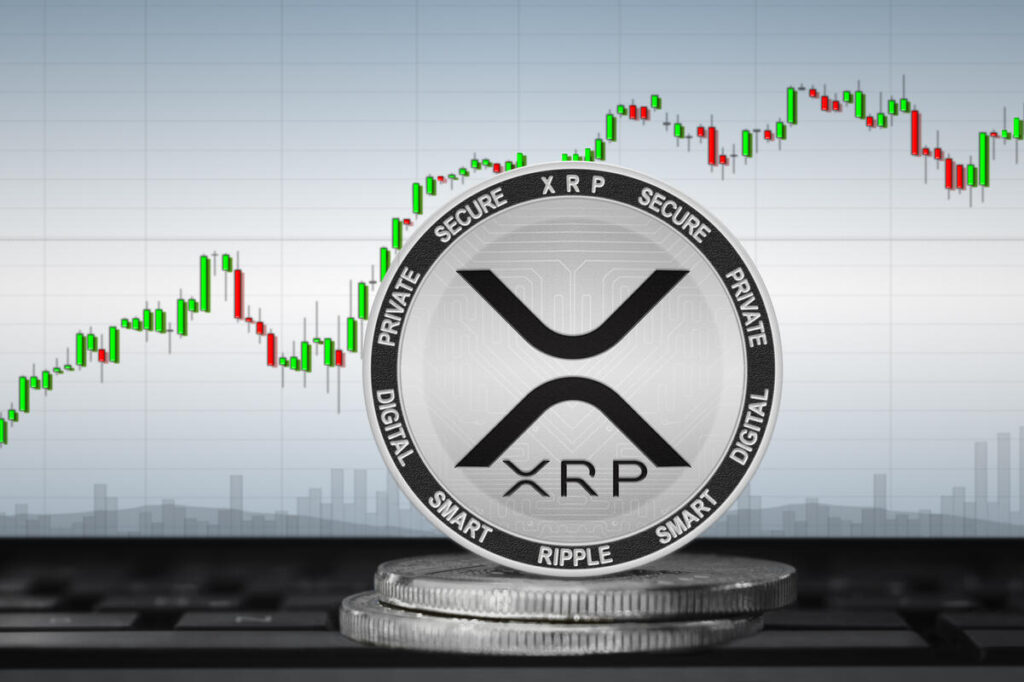
XRP has fallen sharply following Ripple’s annual Swell conference, erasing much of the brief rally seen during the event.
After reaching highs near $2.40 on November 5, XRP dropped over 9% to $2.19, despite several major announcements by Ripple, including a $500 million funding round led by Citadel Securities and Fortress Investment Group.
The company also unveiled new integrations for its RLUSD stablecoin and hinted at a decentralized lending protocol on the XRP Ledger (XRPL).
“Buy the Rumor, Sell the News” Trend Persists
The decline reflects a familiar pattern where XRP tends to fall after Ripple’s flagship event — a trend observed in four of the past five years.
Historically, XRP has posted negative returns between the Swell conference and year-end, as investor excitement fades following the announcements.
Technical Indicators Signal Further Downside
The broader crypto market’s pullback, including Bitcoin’s dip below $100,000, has also weighed on altcoin sentiment.
Technically, XRP’s recent price action has confirmed a bearish “flag” pattern, compounded by an impending death cross — when the 50-period exponential moving average drops below the 200-period EMA.
This setup suggests the potential for XRP to fall toward the $1.65–$1.70 range, aligning with previous support levels from April.

Bitcoin hovered around $102,000 on Thursday, as traders struggled to push the price beyond the $105,000 resistance level amid rising sell pressure.
Selling Pressure Builds Around $105,000
Data from Cointelegraph Markets Pro and TradingView showed Bitcoin’s rebound losing steam following the daily open.
Analyst Skew noted that Bitcoin’s price appeared capped by a cluster of sell orders just above $105,000, adding that this was “not surprising.”
He warned that the increase in sell-side liquidity could be a deliberate attempt to suppress prices during Asian trading hours.
Trading analytics platform Material Indicators highlighted that the significant ask liquidity had not yet caused a price correction, suggesting the seller could be trying to drive Bitcoin down toward the $98,000 to $93,000 range.
“If price hits $105k, I’d expect part if not all of those asks to get pulled,” the group said, noting that Bitcoin’s bounce from its 50-week simple moving average still carries “macro bullish implications.”
Traders Eye Potential Dip
Market commentator Exitpump described the $105,000 sell wall as “insane,” while other analysts suggested the liquidity might not be genuine.
Meanwhile, veteran investor Kyle Chasse cautioned that another short-term price drop could occur, pointing to a buildup of bid liquidity below current levels.
“Confidence could get wiped in a heartbeat,” he said, referencing CoinGlass data showing clusters of liquidations awaiting lower price zones.
External Market Factors at Play
Bitcoin’s latest movements also coincided with cooling momentum in U.S. equities, which have been retreating from all-time highs.
Speculation around the Supreme Court possibly overturning international trade tariffs added uncertainty to broader markets.
Analysts believe that if the Court strikes down the tariffs, it could trigger a rally in equities — but potentially divert short-term liquidity away from Bitcoin.
As of Thursday afternoon, Bitcoin remained volatile, trading narrowly between $101,500 and $103,500, with traders keeping a close watch on the critical $105,000 resistance zone.
Spot Bitcoin and Ether exchange-traded funds (ETFs) extended their losing streak on Tuesday, posting their fifth straight day of outflows amid broader market uncertainty.
Data from Farside Investors showed that spot Bitcoin ETFs recorded $578 million in net outflows — the steepest daily withdrawal since mid-October.
BlackRock’s iShares Bitcoin Trust (IBIT) and Fidelity’s FBTC led the exodus, signaling a pause in institutional accumulation.
Ether ETFs saw similar pressure, with $219 million in redemptions. Fidelity’s FETH and BlackRock’s ETHA were hit hardest, pushing total Ether ETF outflows close to $1 billion since late October.
Solana Defies Trend With Six Days of Inflows
While Bitcoin and Ether funds struggled, Solana-based ETFs continued to attract capital.
Spot Solana ETFs logged $14.83 million in net inflows on Tuesday — their sixth consecutive day of gains.
Bitwise’s BSOL and Grayscale’s GSOL led the charge, suggesting that investors are rotating toward newer, yield-generating assets despite the risk-off environment.
Institutions Reduce Exposure Amid Macro Uncertainty
Vincent Liu, chief investment officer at Kronos Research, told Cointelegraph the outflows are more about macroeconomic stress than fading belief in crypto.
“Straight days of redemptions show institutions are trimming risk as leverage unwinds and macro jitters rise,” Liu said. “Until liquidity conditions stabilize, capital rotation will keep the ETF bleed alive.”
He added that a stronger U.S. dollar and tightening liquidity have triggered broad risk aversion.
Solana’s Story Gains Momentum
Liu noted that Solana’s continued inflows represent a mix of curiosity and opportunity.
“Solana’s strength is partly fresh flow meets fresh story, a new ETF with yield appeal pulling in curious capital,” he explained. “Its speed, staking, and story keep momentum tilted upward.”
However, Liu warned that Solana’s growth remains niche. “It’s a narrative-driven move by early adopters chasing yield and growth. The broader market is still in risk-off mode,” he cautioned.

The Ethereum Foundation (EF) has restructured its long-running grants initiative, replacing the open application system with a more focused model under the Ecosystem Support Program.
Announced in a blog post Monday, the new structure will channel funding through two avenues: a “wishlist” of focus areas identified by EF teams, and formal requests for proposals (RFPs) addressing specific ecosystem needs.
A Shift Toward Strategic Coordination
The previous open grants process, paused earlier this year, had stretched the Foundation’s administrative capacity due to high demand.
According to EF, the revamped program will better align funding decisions with Ethereum’s long-term priorities by coordinating directly with internal technical and research teams.
“The previous open grants program successfully supported hundreds of projects that contributed key building blocks across Ethereum,” the Foundation said. “But the growing volume of applications limited our ability to pursue strategic opportunities.”
The first batch of wishlist items and RFPs is now available, covering areas such as cryptography, privacy, scalability, and community growth.
In 2024, the Foundation awarded around $3 million to 105 projects and initiatives, continuing its mission to foster open-source innovation since the program’s 2018 launch.
Ethereum’s Technical Upgrades Continue
The update comes just after Ethereum’s Fusaka upgrade went live on its final testnet, Hoodi, ahead of a mainnet launch expected December 3.
Fusaka introduces EIP-7594 (PeerDAS), allowing validators to access smaller data chunks from layer-2 networks, improving efficiency and scalability.
Additional proposals, EIPs 7825 and 7935, aim to increase gas limits and boost performance in preparation for Ethereum’s shift to parallel execution — a critical milestone that will allow multiple transactions to process simultaneously.
Ethereum’s last major upgrade, Pectra, launched on May 7, introduced staking optimizations and wallet enhancements, underscoring the network’s ongoing technical evolution.

Bitcoin’s onchain data is signaling renewed investor demand, with both institutional buyers and miners increasing their holdings despite a sluggish market backdrop following October’s $19 billion crypto crash.
Over the past week, Bitcoin’s realized capitalization — which measures the aggregate value of all coins based on their last moved price — rose by more than $8 billion to surpass $1.1 trillion.
BTC’s realized price also climbed above $110,000, indicating growing accumulation across the network.
The uptick is being driven primarily by Bitcoin exchange-traded funds (ETFs) and corporate holders such as MicroStrategy, according to Ki Young Ju, CEO of analytics platform CryptoQuant.
ETF and Institutional Momentum Slows, But Could Rebound
Ju noted on X (formerly Twitter) that “demand is now driven mostly by ETFs and MicroStrategy, both slowing buys recently. If these two channels recover, market momentum likely returns.”
He added that the slowdown in ETF inflows and corporate purchases has temporarily capped Bitcoin’s price recovery, even as onchain metrics show consistent inflows.
Miners Expand Operations Amid Hashrate Growth
Bitcoin’s rising hashrate — the measure of total computational power securing the network — also points to optimism among miners.
Ju described this trend as a “clear long-term bullish signal,” emphasizing that miner expansion indicates confidence in the cryptocurrency’s future profitability.
Major mining companies, including American Bitcoin, which has ties to the Trump family, have recently announced large-scale hardware purchases.
In August, the firm acquired 17,280 application-specific integrated circuit (ASIC) mining units worth approximately $314 million.
Analysts See Potential for $140K Bitcoin
Despite the positive onchain data, broader market sentiment remains cautious, with the crypto fear index still in “fear” territory since the early October sell-off.
However, analysts from Bitfinex believe the next catalyst could come from macroeconomic factors, including potential monetary easing by the U.S. Federal Reserve.
“Our base case sees Bitcoin rising towards $140,000, with total ETF inflows between $10 and $15 billion not being surprising,” Bitfinex analysts said.
They added that possible Fed rate cuts, combined with renewed ETF demand and typical Q4 seasonal strength, could help Bitcoin reach new all-time highs by November.
Still, risks remain tied to global trade tensions and the lingering effects of Trump’s tariff policies, they warned.
Cathie Wood’s ARK Invest has expanded its investment in Bullish, the digital asset exchange that recently made its public debut on the New York Stock Exchange under the ticker BLSH.
According to trade disclosures filed Friday, ARK Innovation ETF (ARKK) purchased 72,537 Bullish shares, ARK Next Generation Internet ETF (ARKW) acquired 21,354 shares, and ARK Fintech Innovation ETF (ARKF) bought an additional 11,122 shares.
The combined purchases amount to over $5 million in new exposure to Bullish, further strengthening ARK’s position in the exchange. This move follows an earlier $8.27 million investment made in mid-October across ARK’s funds.
Since Bullish’s $1.1 billion listing, ARK has accumulated roughly $172 million worth of shares across multiple ETFs, underscoring its growing confidence in the platform’s long-term potential.
Bullish Shares Rebound After Market Volatility
Bullish stock closed at $50.57 on Friday, marking a 1.24% increase and a recovery from recent market turbulence.
The exchange, founded by Block.one and led by CEO Tom Farley, has quickly become one of the most watched digital asset platforms following its NYSE debut.
Farley, the former president of the New York Stock Exchange, has been steering Bullish’s expansion strategy to position it as a leader in regulated crypto trading.
Celebrating the U.S. Expansion
The timing of ARK’s latest purchase coincides with Bullish’s U.S. launch celebration in New York, where the firm hosted an event featuring leading figures in the digital asset industry.
“The energy in the room said it all — the future is Bullish,” the company posted on X following the event.
Earlier in October, Bullish officially began operations in 20 U.S. states after securing both a BitLicense and a money transmission license from New York regulators.
Its first U.S. clients include BitGo and Nonco, which began spot trading on the platform as part of Bullish’s initial market rollout.
Global Growth and Trading Volume
Since its international launch in 2021, Bullish has processed more than $1.5 trillion in trading volume and now ranks among the top 10 exchanges globally for Bitcoin and Ether transactions.
The exchange’s rapid growth and its regulatory approval in the U.S. suggest that it could become a major player in bridging traditional finance with the digital asset ecosystem.

Bitcoin’s price dipped to $109,200 on Wednesday, marking a notable decline ahead of the U.S. Federal Reserve’s latest policy announcement.
The Fed confirmed a 25-basis-point interest rate cut, aligning with market expectations, but Bitcoin’s 6% slide from its Monday rally to $116,400 caught traders off guard.
Analysts attributed the drop to short-term risk aversion before Fed Chair Jerome Powell’s press conference, despite the anticipated cut.
Market Expectations vs. Reality
According to the Fed’s latest dot plot, policymakers expect three additional cuts in 2025.
Analysts at Goldman Sachs project at least two more 25-basis-point cuts by mid-2026, potentially bringing the benchmark rate down to the 3–3.25% range.
This outlook should theoretically support risk assets like Bitcoin, yet the crypto’s near-term movements diverged from expectations.
“Recent history has shown that the FOMC leads to a price drop in BTC, followed by a move up,” said analysts at Hyblock, a crypto analytics firm. “If price does dip post-FOMC and signs of bullish confluence emerge, such as bid-heavy orderbooks, it would likely present good opportunities for investors.”
Investors Eye Broader Economic Concerns
With rate cuts largely priced in, traders are now focusing on broader macroeconomic risks.
These include the rise in U.S. layoffs, the potential long-term impact of President Trump’s tariff measures, and uncertainty around whether the booming artificial intelligence sector represents a sustainable trend or a speculative bubble.
These factors could play a more significant role in shaping Bitcoin’s medium-term trajectory than Wednesday’s Fed decision itself.
End of Quantitative Tightening
One key takeaway from the FOMC’s statement was confirmation that the Fed will end its balance sheet reduction on December 1, marking the conclusion of its quantitative tightening program.
This policy shift may inject additional liquidity into markets over the coming months, potentially supporting risk assets like Bitcoin — though near-term volatility is expected to remain high.

Western Union has confirmed plans to launch a blockchain-based stablecoin settlement system using the Solana network.
Announced during the company’s third-quarter earnings call, the initiative will include the creation of a US Dollar Payment Token (USDPT) and a new infrastructure called the Digital Asset Network.
Both will be developed in collaboration with Anchorage Digital Bank.
Stablecoin Launch Expected in 2026
According to the company, USDPT will go live in the first half of 2026.
Customers will be able to access the stablecoin through partner exchanges, similar to how PayPal’s PYUSD is listed on Binance and other platforms.
Western Union said the Digital Asset Network will also operate as a global off-ramp for its 150 million customers across 200 countries and territories.
Speaking at the Money 20/20 USA conference in Las Vegas, CEO Devin McGranahan explained why Solana was chosen for the project.
He said his team had evaluated numerous alternatives before concluding that Solana was the “right choice” to build an institutional-grade platform.
Traditional Finance Moves Deeper into Crypto
Western Union joins a growing number of traditional payment firms exploring blockchain for remittances.
Supporters argue that blockchain technology allows faster, cheaper, and more transparent cross-border transactions compared to conventional payment systems.
In recent months, other financial giants have made similar announcements.
Zelle’s parent company revealed plans to introduce stablecoins for international payments, while MoneyGram rolled out a USDC wallet for customers in Colombia through its crypto app.
Regulatory Clarity Accelerates Adoption
The stablecoin industry’s momentum in the US has been fueled by clearer regulations following the passage of the GENIUS Act, signed into law by President Donald Trump in July.
McGranahan said the company had previously avoided entering the crypto market due to concerns over volatility and regulatory uncertainty but that the new legislation has opened the door for participation.
According to the US Treasury Department, the stablecoin market was valued at $311.5 billion in April and could reach $2 trillion by 2028.
Western Union’s move comes roughly three months after it first hinted at stablecoin integration earlier this year, marking a major shift in the remittance leader’s digital strategy.

Citigroup is reportedly preparing to become one of Wall Street’s first major banks to offer stablecoin payment services, signaling a major step toward mainstream adoption of blockchain-based financial infrastructure.
According to Bloomberg, Citi has partnered with Coinbase to expand its digital asset operations, starting with solutions to streamline fund transfers between fiat currencies and cryptocurrencies.
Debopama Sen, Citi’s head of payments, said that corporate clients increasingly seek faster, programmable, and more efficient payment options available around the clock.
“We’re exploring solutions to enable onchain stablecoin payments for our clients,” Sen said.
“Stablecoins will be another enabler in the digital payment ecosystem and it’ll help grow the space, it’ll help grow functionality for our clients.”
Stablecoins Becoming Central to Wall Street Strategy
The move comes just months after the passage of the U.S. GENIUS Act, which established a legal framework for stablecoin issuance and operations, effective in 2027.
Citi is joining other major financial institutions — including JPMorgan and Bank of America — that are developing or testing their own stablecoin-related services.
Even JPMorgan CEO Jamie Dimon, long critical of cryptocurrencies, recently confirmed that the bank “plans to be involved” in the stablecoin sector.
Citi’s Market Forecast Reflects Rapid Growth
In September, Citigroup sharply raised its projection for the stablecoin industry, forecasting a market size of up to $4 trillion by 2030 — a dramatic increase from the current valuation of around $315 billion.
The stablecoin market’s growth has been explosive, expanding from less than $5 billion in 2020 to more than $315 billion today, according to DefiLlama data.
Investor Enthusiasm Grows After Circle’s IPO
Investor interest in the sector has surged following Circle’s public listing earlier this year.
The USDC issuer’s shares jumped 167% on their debut, pushing its market capitalization to approximately $35 billion.
With regulatory clarity and growing institutional participation, Citigroup’s upcoming stablecoin payment platform could mark the beginning of a new era for global finance — one where traditional banking and blockchain technology converge.