


Spot Bitcoin exchange-traded funds (ETFs) in the United States have endured a challenging week, with more than $1.2 billion in total outflows as Bitcoin’s price slumped.
Data from SoSoValue showed that the 11 US-listed spot Bitcoin ETFs saw a combined outflow of $366.6 million on Friday alone, marking the fifth consecutive day of investor withdrawals.
The biggest losses came from BlackRock’s iShares Bitcoin Trust, which shed $268.6 million. Fidelity’s fund recorded $67.2 million in outflows, while Grayscale’s GBTC lost $25 million. Valkyrie also saw minor outflows, while other funds reported no net movement.
Over the full week, total redemptions reached $1.22 billion — the largest since early summer. The only exception was a modest inflow on Tuesday, which briefly interrupted the otherwise bearish streak.
Bitcoin Price Slides to Four-Month Low
The ETF exodus coincided with a steep decline in Bitcoin’s price.
The leading cryptocurrency plunged more than $10,000 over the week, falling from just over $115,000 on Monday to a low of under $104,000 by Friday.
This marks Bitcoin’s weakest performance in four months, with traders reacting to a combination of macroeconomic concerns and reduced risk appetite among institutions.
Analysts say the correction could test investor confidence in recently approved spot ETFs, which had previously seen steady inflows during Bitcoin’s rally earlier this year.
Schwab Reports Growing Crypto Engagement
Despite the ETF outflows, Charles Schwab remains optimistic about the long-term potential of crypto exchange-traded products (ETPs).
Rick Wurster, CEO of Charles Schwab, told CNBC on Friday that clients at the firm currently hold 20% of all crypto ETPs in the United States.
Crypto ETPs have been “very active,” he noted, adding that traffic to Schwab’s crypto site has risen 90% in the past year.
“It’s a topic that’s of high engagement,” Wurster said.
ETF analyst Nate Geraci highlighted Schwab’s growing presence in the market, commenting that the brokerage — one of the largest in the country — is positioning itself for wider crypto adoption.
Schwab currently provides access to crypto ETFs and Bitcoin futures but plans to launch spot crypto trading for clients in 2026.
October Reverses Bitcoin’s Seasonal Gains
Historically, October has been one of Bitcoin’s strongest months, often referred to by traders as “Uptober.”
According to data from CoinGlass, Bitcoin has recorded gains in ten of the past twelve Octobers. However, this year has bucked the trend, with the cryptocurrency losing around 6% so far this month.
Still, analysts remain hopeful that the second half of October could bring a rebound, as markets anticipate potential Federal Reserve interest rate cuts that may boost risk assets like Bitcoin.

A Florida lawmaker is making a second attempt to let the state invest in digital assets such as Bitcoin and crypto exchange-traded funds (ETFs).
Republican Representative Webster Barnaby filed the new proposal, known as House Bill 183, after his previous bill was withdrawn earlier this year.
Expanding Florida’s Investment Scope
HB 183, introduced Wednesday, would authorize the State Board of Administration and other public entities to invest up to 10% of their portfolios in digital assets.
These could include Bitcoin, crypto securities, exchange-traded products, NFTs, and other blockchain-based investments.
Barnaby’s new version strengthens rules around custody, documentation, and fiduciary duties, ensuring secure management of any digital holdings.
The lawmaker also broadened the scope of eligible assets beyond Bitcoin-only exposure, aiming to give Florida greater flexibility in diversifying its reserve strategy.
If approved, the measure would take effect on July 1, 2026.
Crypto Reserve Bills Face National Challenges
Despite the growing interest in crypto reserves, only three U.S. states — Arizona, New Hampshire, and Texas — have successfully passed similar legislation.
New Hampshire’s HB 302 allows up to 5% of public funds to be invested in digital assets with a market cap above $500 billion, currently limited to Bitcoin.
Texas’ Senate Bill 21 established a Bitcoin-only reserve, while Arizona’s HB 2749 permits digital asset reserves only from unclaimed property.
Barnaby’s Florida proposal would make it the first major state economy to pursue a diversified crypto investment policy.
Additional Bill Targets Stablecoin Regulation
In a related move, Barnaby also filed HB 175 to simplify the regulatory landscape for stablecoin issuers operating in Florida.
The bill specifies that stablecoin providers fully backed by U.S. dollars or Treasury securities should not require separate state licenses.
It also mandates monthly audits to ensure reserves are fully collateralized and publicly verifiable.
Like the crypto reserve bill, HB 175 is scheduled to take effect in July 2026.
California Strengthens Crypto Property Rights
Meanwhile, California Governor Gavin Newsom signed legislation last week protecting unclaimed digital assets from being automatically converted to cash.
Senate Bill 822 ensures that unclaimed crypto holdings remain in their original form under state custody.
The law allows account holders to recover their assets by submitting valid claims with the California State Controller’s Office, further establishing digital property rights in the U.S.
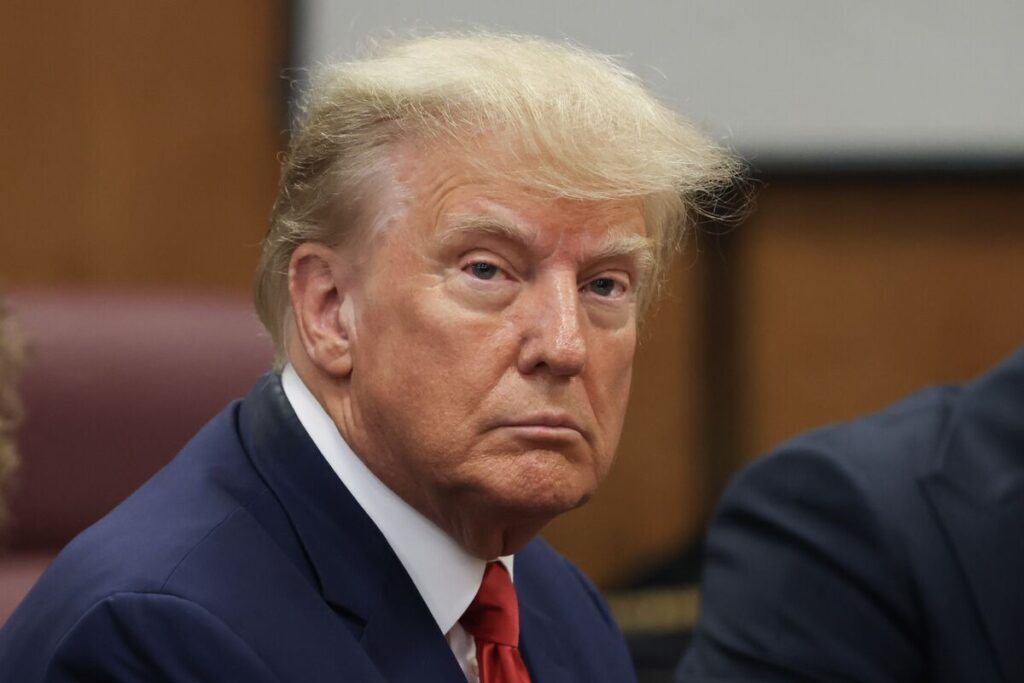
A Republican lawmaker in the US House of Representatives has introduced legislation to make one of President Donald Trump’s executive orders — which allows alternative assets such as cryptocurrencies in 401(k) retirement plans — a permanent part of federal law.
Representative Troy Downing presented the draft bill before the House Financial Services Committee, aiming to codify Executive Order 14330 and give it lasting legal authority.
The move, first reported by Politico, would mark a significant step toward integrating digital assets into mainstream retirement investment options.
Trump’s Executive Order on Retirement Options
Executive Order 14330, signed by Trump on August 7, directs that every American planning for retirement should have access to funds that include “alternative assets” when deemed suitable by a fiduciary overseeing the plan.
The order defines alternative assets broadly — including private market investments, real estate, commodities, infrastructure projects, lifetime income strategies, and digital assets through actively managed investment vehicles.
Although executive orders set federal priorities, they do not carry the permanence of law and can be overturned by subsequent administrations or court rulings.
To make such policies enduring, Congress must pass a bill approved by both chambers and have it signed into law.
Legislative Push Continues Despite Shutdown
Despite an ongoing government shutdown, Congress remains able to introduce and debate new legislation.
Trump’s executive order also instructed the Department of Labor, the Securities and Exchange Commission (SEC), and the Treasury Secretary to review and prioritize new guidance for 401(k) plans within six months.
The goal is to expand access to diversified retirement investment strategies, including exposure to digital and alternative assets.
Expanding Crypto Access for Retirement
The initiative to include digital assets in US retirement accounts has been building momentum throughout 2025.
Earlier this year, the Department of Labor withdrew Biden-era guidance warning fiduciaries to be “extremely cautious” about including crypto in retirement portfolios.
In September, shortly after Trump’s executive order took effect, nine lawmakers sent a letter to SEC Chair Paul Atkins urging faster implementation.
They argued that doing so could “help the 90 million Americans that are currently restricted from investing in alternative assets to secure a dignified, comfortable retirement.”
According to data from the Investment Company Institute (ICI), Americans held $9.3 trillion in 401(k) assets as of June 30, 2025 — highlighting the potential scale of impact if digital assets become a standard investment option.
Industry Divided on Crypto’s Role in 401(k)s
The proposal has sparked debate among financial experts.
Critics warn that crypto’s volatility could endanger retirement savings, while supporters see it as an important step toward financial modernization.
André Dragosch, head of European research at Bitwise, told Cointelegraph in August that the inclusion of cryptocurrency in US retirement plans “could mark a major step for Bitcoin adoption and attract billions in new capital.”

BitMine, the world’s largest corporate holder of Ether, leveraged last weekend’s market downturn to significantly expand its holdings, demonstrating continued institutional confidence in Ethereum.
The company said it purchased Ether more aggressively during the recent market volatility, bringing its total holdings to over 3 million ETH, representing roughly 2.5% of the cryptocurrency’s total supply.
BitMine’s average purchase price for the recent acquisitions was $4,154 per token.
Between Friday and Monday, the firm acquired 202,037 ETH, valued at approximately $827 million, according to a statement on X.
This increase pushed BitMine’s overall crypto portfolio to $13.4 billion, which includes $12.9 billion in cryptocurrency and “moonshot” investments, 192 Bitcoin, $104 million in cash, and a $135 million stake in Nasdaq-listed Eightco Holdings.
The purchases came amid a sharp market correction on Friday, which triggered around $19 billion in liquidations over the weekend.
Tom Lee, chairman of BitMine and head of research at Fundstrat, said the market downturn created an opportunity to buy Ethereum at discounted prices.
“The crypto liquidation over the past few days created a price decline in ETH, which BitMine took advantage of,” Lee said.
He added that the company is now “more than halfway towards our initial pursuit of the ‘alchemy of 5%’ of ETH.”
Lee also highlighted the broader investment logic, stating, “Volatility creates deleveraging, and this can cause assets to trade at substantial discounts to fundamentals, or as we say, ‘substantial discount to the future,’ and this creates advantages for investors, at the expense of traders.”
BitMine’s approach may influence other institutional investors to adopt similar long-term accumulation strategies.
Interest in the company extends beyond crypto investors, as its stock, BMNR, was recently the 22nd most widely traded on U.S. markets, averaging over $3.5 billion in five-day trading volume as of Friday.
Despite this, BMNR’s stock price fell 11% over the past five days, following a short position by Kerrisdale Capital, which criticized BitMine’s business model as “on its way to extinction.”
The company’s dual focus on cryptocurrency and traditional equities reflects a broader trend of institutional participation in digital assets.

Bitcoin’s price turbulence continued Friday after briefly plunging to $102,000, as traders reacted to U.S. President Donald Trump’s announcement of a 100% tariff on Chinese imports.
Swan Bitcoin CEO Cory Klippsten said the market should brace for more instability in the days ahead, warning that macroeconomic forces are likely to keep influencing Bitcoin’s short-term movements.
“If the broader risk-off mood holds, Bitcoin can get dragged around a bit before it finds support and starts to decouple again,” Klippsten said.
Market Wipeout Follows Tariff Announcement
The crypto market saw over $8 billion in long liquidations within 24 hours, according to CoinGlass data.
Bitcoin alone accounted for around $2.19 billion in liquidations, wiping out leveraged positions as prices fell sharply across exchanges.
“We’ve got a little panic in the markets right now, classic macro whiplash. Trump and China are trading tariff threats, equities are off, and traders are scrambling to derisk,” Klippsten added.
Ray Salmond, head of markets at Cointelegraph, said many traders “were totally caught off guard” by the speed of the sell-off. He described the tariff announcement as having “sent shockwaves across the crypto market.”
At the time of writing, Bitcoin had rebounded slightly, trading near $113,270, according to CoinMarketCap.
Cascading Liquidations Across Exchanges
Salmond highlighted how the price divergence between major trading platforms underscored the severity of the liquidation cascade.
On Coinbase, the BTC/USD pair hit a low of $107,000, while Binance’s perpetual futures saw Bitcoin fall to $102,000.
“The dislocation really illustrates the severity of the cascading liquidations and how stops were completely obliterated,” Salmond explained.
He referenced data from Hyblock, which revealed that nearly all downside long liquidity had been absorbed, leaving a liquidation cluster between $102,000 and $97,000.
Tariffs and Past Price Reactions
This isn’t the first time a tariff announcement from Trump has rattled the crypto markets.
In April, similar trade measures triggered fears of a global slowdown and sent Bitcoin tumbling.
On February 1, after Trump signed an executive order imposing tariffs on goods from China, Canada, and Mexico, Bitcoin briefly dipped below $100,000.
Analysts View Dip as Opportunity
Despite the turmoil, some analysts see the correction as a healthy market reset.
Bitwise Invest’s senior investment strategist Juan Leon noted that “the best time to buy BTC has tended to be when it is being dragged down by broader markets.”
Matt Hougan, chief investment officer at Bitwise, reminded investors that buying during pullbacks is rarely comfortable but often beneficial.
“It never feels good when you buy the dip. The dip comes when sentiment drops. Writing the number down can be a good form of discipline,” Hougan said.
Bitcoin’s sharp swings remain tied to macro events, but analysts maintain that the long-term outlook for the cryptocurrency remains intact.

Bit Digital has strengthened its Ethereum position, purchasing 31,057 ETH worth around $140 million, bringing its total holdings to over 150,000 ETH.
The deal, funded through proceeds from a $150 million convertible notes sale, establishes Bit Digital as the sixth-largest public Ether holder, according to StrategicETHReserve.xyz.
“This purchase demonstrates our commitment to building shareholder value by financing ETH accumulation on terms that are accretive to NAV per share,” said Sam Tabar, CEO of Bit Digital. “We view ETH as foundational to digital financial infrastructure and believe current levels provide a compelling long-term entry point.”
The notes were issued at $4.16 per share — an 8.2% premium to the company’s mark-to-market net asset value (mNAV) at the time. The offering attracted interest from well-known crypto institutions, including Kraken Financial, Jump Trading Credit, and Jane Street Capital.
Firm Joins Elite List of ETH Treasuries
Following the transaction, Bit Digital now holds approximately 150,244 ETH.
This ranks it just below PulseChain Sac (160,900 ETH) and the Ethereum Foundation (222,720 ETH). The largest holders include The Ether Machine (496,710 ETH), SharpLink Gaming (838,730 ETH), and Bitmine Immersion Technologies, which leads with 2.83 million ETH.
According to data from StrategicETHReserve.xyz, Bit Digital’s mNAV was $3.84 per share in late September, supported by $512.7 million in Ethereum and $723.1 million in shares of its majority-owned subsidiary, WhiteFiber Inc.
Tabar noted that the company intends to keep expanding its ETH position “in a cost-effective manner,” with a continued focus on building long-term net asset value for shareholders.
Ethereum’s Growing Institutional Demand
The acquisition highlights a broader trend of institutional confidence in Ethereum.
SharpLink Gaming, another major corporate holder, has seen its Ether reserves rise to nearly $4 billion, with unrealized profits exceeding $900 million. The company began its accumulation in June and is now the second-largest institutional ETH holder.
Collectively, reserve companies and ETFs now hold about 12.6 million ETH — roughly $56.4 billion — accounting for over 10% of Ethereum’s circulating supply.
Ether remains the second-largest crypto asset in corporate treasuries after Bitcoin, which has around 4 million BTC valued at approximately $500 billion.

Cryptocurrency investment products have recorded their highest-ever weekly inflows, fueled by investor concerns over US government stability and the ongoing rally in spot crypto markets.
According to CoinShares, global crypto exchange-traded products (ETPs) saw $5.95 billion in inflows during the week ending Friday, setting a new record.
Factors Behind the Surge
James Butterfill, CoinShares’ head of research, attributed the unprecedented inflows to several macroeconomic factors.
“We believe this was due to a delayed response to the FOMC [Federal Open Market Committee] interest rate cut, compounded by very weak employment data […], and concerns over US government stability following the shutdown,” he said.
Bitcoin, the largest cryptocurrency by market capitalization, hit a new historic high above $125,000 on Saturday, coinciding with the surge in inflows.
Bitcoin ETPs Lead the Pack
The $5.95 billion inflows surpassed the previous record of $4.4 billion from mid-July by 35%, underscoring the scale of investor interest.
Unlike the earlier record, which was almost evenly split between Bitcoin and Ether, this time Bitcoin dominated inflows, attracting a record-breaking $3.6 billion.
“Despite prices closing in on all-time highs during the week, investors did not choose to buy short investment products,” Butterfill noted.
Ether ETPs still posted strong results, drawing $1.48 billion in inflows and pushing year-to-date totals to $13.7 billion — nearly three times last year’s figure.
Solana ETP inflows ranked third at $706.5 million, while XRP products added $219.4 million, both setting their own records.
Total Assets Under Management Reach New High
In line with these inflows, the total assets under management (AUM) in crypto funds surged past $250 billion for the first time, hitting $254.4 billion.
This milestone signals renewed institutional and retail investor confidence in cryptocurrency-based products.
ETF Launches Continue Despite Shutdown Concerns
The record-setting week for crypto ETPs unfolded even as the US Securities and Exchange Commission (SEC) shut down operations last week due to a government shutdown.
This development raised concerns about potential delays for high-profile exchange-traded fund (ETF) approvals expected in October.
According to Crypto in America’s Eleanor Terrett, the SEC retains the ability to act on fraud and market emergencies during the shutdown but is widely expected to experience routine delays.
“It’s like a rain delay,” Bloomberg’s senior ETF analyst Eric Balchunas commented.
Despite these concerns, Grayscale Investments, the second-largest US crypto ETF provider after BlackRock, launched two new staking-focused products on Monday.
Staking-Focused ETFs Arrive
The Grayscale Ethereum Mini Trust ETF (ETH) and the Grayscale Ethereum Trust ETF (ETHE) now allow investors to receive additional staking rewards alongside gains from the funds’ market performance.
These launches highlight the continued innovation in crypto investment products, even amid regulatory and operational uncertainties in the United States.
The combination of record inflows, rising asset prices, and new product launches underscores a bullish environment for digital asset investment vehicles.
Solana is gaining renewed attention among institutional investors, according to Matt Hougan, Chief Investment Officer of crypto asset manager Bitwise.
Hougan recently told Solana Labs that Solana has the potential to become “the new Wall Street” among blockchain networks.
He emphasized that to traditional financial audiences, Bitcoin feels “very ephemeral” and difficult to conceptualize in institutional investment frameworks.
Instead, he said, these investors are watching stablecoins and tokenization more closely:
“Really important people are saying that stablecoins will reinvent payments and tokenization will reinvent stock, bond, commodity, and real estate markets.”
When evaluating blockchain platforms, Hougan said institutions gravitate toward efficiency, low latency, and transaction finality.
In that context, he pointed to improvements in Solana’s settlement speed—from 400 microseconds to 150 microseconds—as an attribute that interfaces well with how institutional players like to trade.
Solana’s Place in the Stablecoin Landscape
Despite Solana’s growing traction, it remains small in comparison to Ethereum in the stablecoin space.
On Solana, on-chain stablecoin value totals about $13.9 billion, giving it 4.7% market share as measured by RWA.xyz.
Ethereum, by contrast, holds a dominant position: ~$172.5 billion in stablecoin value, or ~59%, which rises to 65% when layer-2s are included (e.g. Arbitrum, Base, Polygon).
AJ Warner, Chief Strategy Officer at Offchain Labs, contrasted the two platforms, asserting:
“TVL is definitely not everything, but I don’t think you can doubt where the best place to launch new stablecoins is. Build within the EVM.”
This underscores that many in the industry still see Ethereum’s ecosystem and compatibility as a strong moat.
Bitwise’s Long Bet on Solana
Bitwise has been publicly bullish on Solana before. At Token2049 in Singapore, its CEO Hunter Horsley argued that Solana may outshine Ethereum in the staking ETF arena.
His argument hinged on Solana’s faster unstaking period, which is important for funds that must be able to redeem assets swiftly.
Bitwise currently offers a Physical Solana ETP, allowing investors exposure to SOL via fully backed assets in institutional custody.
However, this product remains modest in size, with approximately $30 million in assets under management.
A more ambitious move is Bitwise’s application for a spot Solana ETF, with regulatory approval expected (or decided) around October 16.
At the time of Hougan’s remarks, SOL was trading around $227, down 2% on the day and more than 22% below its January high.
Betting on the Future of Tokenization
Hougan’s thesis frames Solana not merely as a blockchain, but as a platform poised for adoption by Wall Street players.
Stablecoins and tokenization represent an entry point for institutional flows.
If a network offers low friction, high throughput, and reliable finality, it could become a preferred infrastructure for tokenizing real-world assets.
Whether Solana can climb further against Ethereum’s entrenched position remains a question—yet Bitwise is clearly positioning itself for that possibility.

Bitcoin miner CleanSpark ended September with 13,011 BTC in its treasury, reflecting stronger efficiency and output compared to the previous year.
The company’s monthly production rose 27% from September 2024, mining 629 BTC and selling 445 BTC for approximately $48.7 million at an average price of $109,568.
In its Friday update, CleanSpark reported that its fleet efficiency improved 26% year over year, while its average operating hashrate for the month reached 45.6 EH/s.
Push for Financial Independence
CleanSpark has been selling a portion of its monthly Bitcoin production since April as part of its strategy to become financially self-sufficient.
It also opened an institutional Bitcoin trading desk to facilitate these sales.
In August, the company generated $60.7 million from the sale of 533.5 BTC, demonstrating the scale of its operations.
The miner’s shares on Nasdaq rose 5.28% following the report and gained more than 23% over the week, according to Yahoo Finance.
The broader market has also been buoyant.
The market capitalization of 15 major publicly traded Bitcoin miners reached a record $58.1 billion in September, up from $41.6 billion in August and more than double the $19.9 billion recorded in March, according to The Miner Mag.
Challenges Ahead for Bitcoin Miners
Despite investor enthusiasm for mining stocks, the industry faces increasing headwinds.
Higher energy costs and the risk of tariffs on imported mining equipment could weigh on profitability.
In August, The Miner Mag reported that U.S. Customs and Border Protection alleged some of CleanSpark’s 2024 mining rigs were manufactured in China.
This could leave the company with potential tariff liabilities of up to $185 million.
Iris Energy (IREN), the largest Bitcoin miner by market capitalization, is also contesting a separate $100 million tariff dispute with the agency.
According to Cointelegraph, the effective duty on China-made mining rigs stands at 57.6%, while machines imported from Indonesia, Malaysia, and Thailand face tariffs of 21.6%.
Rising Mining Difficulty
Bitcoin mining difficulty reached record highs in September and October.
This means miners now expend more computing power and energy to produce the same amount of Bitcoin, putting further pressure on operational costs.
CleanSpark’s push for efficiency and its growing BTC reserves highlight its determination to navigate these challenges while maintaining financial independence.

BNB, the native cryptocurrency of the BNB Chain developed by Binance, reached a historic milestone on Friday as its price surged to an unprecedented $1,111.90.
The token, which has become one of the largest in the market, climbed more than 7.4% in the past 24 hours and has soared 17.5% over the past week, according to CoinGecko data.
This rally coincides with a renewed wave of institutional interest. Analysts noted that treasury companies have been accumulating BNB, particularly since the coin’s previous all-time high in July. Regular token burns conducted by Binance have also been cited as a major driver of price appreciation, with some predicting even more growth ahead.
Predictions Point to Further Upside
Standard Chartered projected in May that BNB could peak at $1,275 in 2025, forecasting that its performance would mirror gains in other top cryptocurrencies like Bitcoin and Ether.
The broader crypto market also participated in Friday’s upswing. Total cryptocurrency market capitalization rose 1.6% to reach $4.2 trillion, highlighting continued investor appetite for digital assets.
BNB Chain Metrics Show Robust Growth
The rally in BNB’s price is not happening in isolation. Activity on BNB Chain has been climbing sharply, according to DefiLlama.
The network’s total locked value (TLV) increased 2.5% in the past 24 hours, topping $8.23 billion. At the same time, the number of active addresses hit 73.24 million last month, the highest level on record.
Transaction volumes have also surged. In September, BNB Chain logged 4.34 million transactions, its second-largest monthly tally behind June’s record high.
This growth comes despite a recent security scare. The official X account for BNB Chain was compromised on Wednesday, with hackers posting phishing links designed to target crypto wallets.
Network Upgrades Aim to Boost Efficiency
BNB’s team is also implementing key upgrades to improve network efficiency. On Wednesday, validators and builders operating on the chain adopted a new minimum gas price of 0.05 gwei. According to a post on X, this change is expected to deliver faster and cheaper transactions.
“Next step for wallets, CEXs and trading platforms: To adopt 0.05 gwei to align with the network and keep BNB Chain the most attractive home for onchain activity,” the BNB team stated.
Looking further ahead, the team plans to increase the block gas limit from 100 million to 1 billion in order to handle rising demand. By 2026, the goal is to create a blockchain architecture capable of processing 20,000 transactions per second with confirmation times under 150 milliseconds.
More Upgrades Already Live
Two major upgrades have already been implemented this year. The Maxwell upgrade went live in June, designed to produce faster blocks, enhance validator coordination and improve overall performance. It also fueled speculation that another price rally could be imminent.
In April, the Lorentz Hard Fork was activated, cutting block times and strengthening validator networking. This adjustment made BNB Chain more suitable for latency-sensitive applications and set the stage for its current growth.
The BNB team has also outlined plans for native privacy features, upgradable virtual machines, and more user-friendly tools in 2026, positioning the network as a major competitor in the blockchain space.