



Citigroup is reportedly preparing to become one of Wall Street’s first major banks to offer stablecoin payment services, signaling a major step toward mainstream adoption of blockchain-based financial infrastructure.
According to Bloomberg, Citi has partnered with Coinbase to expand its digital asset operations, starting with solutions to streamline fund transfers between fiat currencies and cryptocurrencies.
Debopama Sen, Citi’s head of payments, said that corporate clients increasingly seek faster, programmable, and more efficient payment options available around the clock.
“We’re exploring solutions to enable onchain stablecoin payments for our clients,” Sen said.
“Stablecoins will be another enabler in the digital payment ecosystem and it’ll help grow the space, it’ll help grow functionality for our clients.”
Stablecoins Becoming Central to Wall Street Strategy
The move comes just months after the passage of the U.S. GENIUS Act, which established a legal framework for stablecoin issuance and operations, effective in 2027.
Citi is joining other major financial institutions — including JPMorgan and Bank of America — that are developing or testing their own stablecoin-related services.
Even JPMorgan CEO Jamie Dimon, long critical of cryptocurrencies, recently confirmed that the bank “plans to be involved” in the stablecoin sector.
Citi’s Market Forecast Reflects Rapid Growth
In September, Citigroup sharply raised its projection for the stablecoin industry, forecasting a market size of up to $4 trillion by 2030 — a dramatic increase from the current valuation of around $315 billion.
The stablecoin market’s growth has been explosive, expanding from less than $5 billion in 2020 to more than $315 billion today, according to DefiLlama data.
Investor Enthusiasm Grows After Circle’s IPO
Investor interest in the sector has surged following Circle’s public listing earlier this year.
The USDC issuer’s shares jumped 167% on their debut, pushing its market capitalization to approximately $35 billion.
With regulatory clarity and growing institutional participation, Citigroup’s upcoming stablecoin payment platform could mark the beginning of a new era for global finance — one where traditional banking and blockchain technology converge.

Former Binance CEO Changpeng “CZ” Zhao’s pardon by U.S. President Donald Trump followed a high-stakes lobbying campaign involving millions of dollars and key political connections in Washington.
Zhao, who served a four-month sentence last year for violating U.S. anti-money laundering laws, was the focus of a Politico report detailing Binance’s behind-the-scenes effort to secure his freedom.
Binance Mobilized Lobbying Network
According to the report, Binance hired Ches McDowell — a close associate of Donald Trump Jr. — and his North Carolina-based firm, Checkmate Government Relations, to lobby the White House and Treasury Department for “executive relief.”
The firm received $450,000 for one month of work and earned over $7.1 million in just three months.
In February, Binance and Zhao also retained crypto lawyer Teresa Goody Guillén, once considered for the SEC chair role under Trump. Her firm earned $290,000 from Binance this year alone.
Political Fallout and Criticism
The pardon drew strong criticism from Democratic lawmakers, with Representative Maxine Waters calling it a “massive favor for crypto criminals.”
Trump defended his decision, claiming Zhao was “persecuted by the Biden administration” and that “what he did is not even a crime.”
Waters dismissed that defense, saying the pardon followed months of lobbying and “funneling billions into Trump’s personal crypto company, World Liberty Financial.”
Despite the backlash, the move underscores Trump’s increasingly open stance toward the crypto sector as his administration embraces industry ties.

U.S. President Donald Trump is preparing to nominate Michael Selig as the next chair of the Commodity Futures Trading Commission (CFTC), following the withdrawal of Brian Quintenz’s nomination.
Bloomberg first reported the development, citing an unnamed official within the Trump administration.
An official announcement has not yet been made.
Selig’s Crypto Background and Role at SEC
Michael Selig currently serves as chief counsel for the Securities and Exchange Commission’s (SEC) crypto task force and senior adviser to SEC Chair Paul Atkins.
He has earned a reputation as a “pro-crypto” regulator, a label welcomed by many in the digital asset community.
Selig’s potential appointment is being viewed by industry participants as a sign of continuity in Trump’s growing focus on cryptocurrency regulation.
Analysts believe that his experience bridging financial regulation and crypto innovation could help define the next phase of U.S. digital asset policy.
Nomination Shift After Quintenz Withdrawal
The CFTC nomination process has faced delays since September.
Brian Quintenz, Trump’s initial pick, withdrew his name following reported pressure from the Gemini crypto exchange co-founders, Tyler and Cameron Winklevoss.
Quintenz later confirmed he would return to the private sector, ending speculation about his role in the administration.
Trump has considered transferring greater responsibility for cryptocurrency oversight to the CFTC since early 2024.
Under his administration’s “Working Group on Digital Assets,” the CFTC and SEC are expected to share joint responsibility for regulating various types of crypto assets.
Policy Framework for Digital Assets
The Working Group’s July report recommended assigning oversight of spot crypto markets to the CFTC, recognizing most cryptocurrencies as commodities rather than securities.
In contrast, digital assets categorized as securities — such as tokenized bonds or stock-like instruments — will remain under SEC jurisdiction.
This split aims to clarify how different types of tokens are regulated and prevent overlapping mandates.
Joint SEC–CFTC Cooperation Intensifies
In September, the two agencies issued a joint statement pledging to “harmonize” their crypto regulatory frameworks.
Legal experts described the move as a major step toward reducing uncertainty and building a more cohesive approach to U.S. crypto oversight.
The CFTC also launched a “crypto sprint” in August to fast-track policy actions based on the White House Working Group’s recommendations.
These initiatives have fueled speculation that the SEC and CFTC could eventually merge into a single body.
However, SEC Chair Paul Atkins dismissed that notion, clarifying that only Congress or the U.S. president has the authority to merge the agencies.
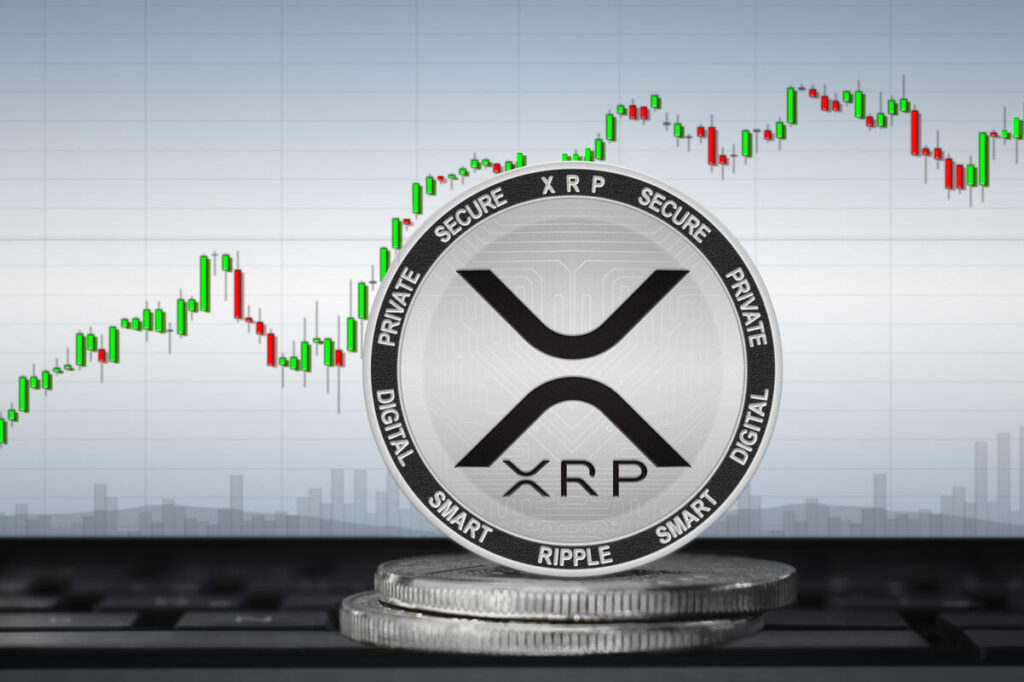
XRP may be gearing up for a 35% price breakout as technical indicators align with new bullish momentum from Ripple’s expanding institutional strategy.
The token traded around $2.60 on Saturday after rebounding from a key support level, supported by renewed confidence from CEO Brad Garlinghouse.
XRP Holds Key Support Zone
XRP has maintained a strong base at the lower trendline of its long-term ascending triangle — a technical pattern that has historically preceded major rallies.
Earlier in 2025, similar rebounds from this support zone led to price jumps of 70–80%.
The token has climbed more than 8% from its recent low, aligning with the 50-week exponential moving average (EMA) of $2.33.
If momentum holds, XRP could rise toward the triangle’s upper boundary near $3.45 by December — a 35% upside from current levels.
However, a breakdown below support could push the token back toward June lows near $1.65.
Ripple Prime Adds Institutional Strength
Ripple strengthened its market position on Friday by acquiring Hidden Road and rebranding it as Ripple Prime, positioning the firm as the first crypto company to operate a global, multi-asset prime brokerage.
The company said: “Ripple’s foundational digital asset infrastructure across payments, crypto custody and stablecoin, as well as the use of XRP, will complement the services offered within Ripple Prime.”
CEO Brad Garlinghouse called the move “another step toward building an Internet of Value,” adding that “XRP sits at the center of everything Ripple does.”
Market Reaction and Analyst Expectations
Analysts view Ripple Prime as a major step in XRP’s institutional adoption story.
Trader Credibull Crypto said Ripple’s massive XRP holdings give it a strong incentive to drive the token’s success, since higher valuations directly benefit the company’s balance sheet.
Ripple also announced plans to buy $1 billion worth of XRP to create a new treasury fund, which will trade on Nasdaq under the “XRPN” ticker.
Another analyst, Zeiierman Trading, said XRP could surpass $3 in the short term due to the Hidden Road acquisition, noting that “the token is now positioned at the center of institutional adoption.”
With strong technical support and a growing institutional push, XRP could continue its upward trajectory as Ripple expands its global footprint.

Ether (ETH) maintained its rebound toward the $4,000 mark on Friday as bullish traders increased their bets on a breakout, supported by growing confidence in the broader crypto market.
ETH/USD was last trading near $3,940 after reaching an intraday high of $4,025, according to data from Cointelegraph Markets Pro and TradingView.
Key Resistance and Trader Optimism
Analysts say a move above $4,100 would mark a critical turning point.
“To get things going again, you’d want to break back above $4.1K, which has been the cycle high for a long time,” trader Daan Crypto Trades said.
“This is a key area to get back above to turn this recent flush into a big deviation. Possibly followed by a real breakout after.”
Market sentiment remains optimistic ahead of the release of the September Consumer Price Index (CPI), expected to show inflation at 3.1%.
While elevated inflation may raise concerns, most traders expect the Federal Reserve to continue leaning toward interest rate cuts, with odds exceeding 94% according to the CME FedWatch Tool.
Trader’s $131 Million Long Bet Draws Attention
Market watchers took note of one anonymous trader with a 100% win rate who reportedly expanded their long position to 33,270 ETH, worth around $131 million at current prices.
The trader also opened a 4x long on 80 Bitcoin, valued at $8.9 million, with an entry price of $110,900 per BTC.
“In the past two weeks, he’s already pocketed $16M in profit,” said X user Discover, adding, “Looks like he’s betting big on the next Ethereum pump.”
Large-scale Ethereum holders — or “mega whales” — have also been accumulating ETH between 10,000 and 100,000 tokens, further signaling bullish confidence in a breakout beyond $4,000.
Bullish Predictions Strengthen
Several analysts are forecasting significant upside for ETH if the $4,000 resistance level is cleared.
Master of Crypto highlighted that Ethereum’s exchange reserves recently hit their lowest level in years, suggesting a looming supply squeeze.
“More and more ETH is leaving exchanges every day. Exchange reserves just hit their lowest level in years,” he wrote. “People are holding, not selling. When this happens, prices usually explode.”
Another analyst, Crypto Zee, described Ether’s current formation as a “textbook continuation” pattern.
“Look for a steady climb through the $4,250 resistance, followed by the primary goal, the $4,750 Demand Zone,” he said.
Fellow trader Jelle maintained a long-term price target of $10,000 as long as ETH continues to hold its previous highs.
Market data from Cointelegraph also supports the bullish case, showing a potential rally toward $4,500 by the end of October, backed by positive MVRV metrics and a confirmed bull flag breakout.

Fintech giant Revolut has received a Markets in Crypto-Assets Regulation (MiCA) license from the Cyprus Securities and Exchange Commission (CySEC), paving the way for the company to offer regulated crypto services across the European Economic Area (EEA).
The license allows Revolut to operate under a unified regulatory framework, granting access to 30 European markets and strengthening its foothold in the digital asset sector.
“This authorisation enables us to deliver groundbreaking crypto products with enhanced transparency and trust for our growing customer base, while further reiterating our commitment to crypto as an asset class,” said Costas Michael, CEO of Revolut Digital Assets Europe.
Revolut Expands Crypto Ambitions
The move marks a significant step in Revolut’s expansion strategy as it prepares to launch its “Crypto 2.0” platform, designed to enhance trading, staking, and stablecoin services for users.
Revolut, which has more than 65 million customers worldwide — including 40 million in Europe — said the license would help it scale its crypto offerings under MiCA’s investor protection and compliance standards.
The fintech’s upcoming platform, Crypto 2.0, will feature access to more than 280 tokens, zero-fee staking with yields up to 22% annual percentage yield, and instant 1:1 stablecoin-to-dollar conversions without spreads.
Introducing Crypto 2.0 and Revolut X
Revolut said Crypto 2.0 would integrate seamlessly with its Visa and Mastercard crypto-enabled cards and Revolut X exchange, offering low trading fees between 0.00% and 0.09%.
The company aims to provide one of the broadest crypto experiences in Europe by combining on/off-ramping tools with transparent pricing and advanced security measures.
Revolut X, launched last year as a dedicated desktop trading platform, supports over 100 tokens and is now available in 30 EEA markets with mobile access via iOS and Android.
The company said Revolut X has already attracted more than 14 million crypto users globally, underscoring its growing dominance in digital asset services.
Looking Ahead to Crypto Derivatives
Revolut is reportedly exploring expansion into the crypto derivatives market, targeting institutional clients.
A company spokesperson confirmed in June that Revolut is strengthening its crypto division, following reports of plans to enter derivatives trading.
In May, the firm also announced a €1 billion investment in France and revealed intentions to apply for a local banking license — part of its broader European growth strategy.

World, the digital identity project founded by OpenAI CEO Sam Altman and formerly known as Worldcoin, is broadening its reach into the prediction market sector by integrating with Polymarket.
The partnership introduces Polymarket directly into the World App ecosystem, marking a major step in the company’s strategy to merge digital identity, financial tools, and decentralized applications.
World App Adds Polymarket Mini App
World announced on Tuesday that its mobile wallet, World App, which already includes World’s decentralized identity tool, World ID, has integrated the Polymarket Mini App.
“World App users can download and access the new Mini App today in countries where Polymarket’s services are permitted,” the company said in its statement.
The feature allows users to place bets on prediction markets without leaving the World App, using Circle’s USDC stablecoin and World’s native token, WLD.
However, access remains restricted in certain jurisdictions. “Eligibility for Worldcoin tokens is restricted based on geography, age and other factors,” World noted, adding that the token is not available in restricted regions, including New York state.
The company further clarified that “World Assets and World Foundation are not responsible for the availability of WLD on third-party platforms, such as centralized or decentralized exchanges.”
100 Million Mini App Downloads and Growing
The integration comes as World celebrates a significant milestone — surpassing 100 million Mini App downloads earlier this month.
World’s Mini Apps, introduced in October 2024, are web applications built directly into the World App ecosystem.
As of March 2025, the company had at least 150 Mini Apps active on its platform, with over 10 million WLD (valued at around $8.8 million) transacted.
By July, the project had reached 14 million verified human users across 160 countries, and a total user base of 30 million.
Prediction Markets Reach Record Volumes
The timing of the Polymarket integration coincides with a global surge in prediction market activity.
According to data from Dune Analytics, weekly trading volumes across prediction markets surpassed $2 billion for the first time in mid-October, setting a new record.
Polymarket led the sector, accounting for 52.3% of all trading volume, while rival platform Kalshi followed closely with $950 million, or roughly 47% of total activity.
The growth has attracted institutional attention. Earlier this month, Polymarket secured a $2 billion investment from the Intercontinental Exchange, while Kalshi raised $300 million in a round led by Sequoia Capital and Andreessen Horowitz.
As prediction markets continue to expand, World’s integration with Polymarket positions the company at the intersection of digital identity, decentralized finance, and global prediction ecosystems.

Bitcoin slipped back to its lowest levels of the week on Tuesday, as traders closely watched an open gap in the Chicago Mercantile Exchange (CME) Bitcoin futures market.
Data from Cointelegraph Markets Pro and TradingView showed Bitcoin dropping to $107,460 on Bitstamp, marking a 2.5% decline for the day.
The move halted Bitcoin’s early-week rebound but stopped just short of completely filling the latest CME futures gap.
Understanding the CME Futures Gap
CME Bitcoin futures often create “gaps” when trading closes on Fridays and reopens on Mondays at different price points, typically due to weekend volatility in the spot market.
These gaps tend to fill relatively quickly as prices move back into the missing range between the prior close and the new open.
“$BTC opened with a small CME gap below this week. Price did come down to close some of it, but there’s still a bit left. So good to keep that in mind if price were to trade close to it,” trader Daan Crypto Trades said on X.
He added that Bitcoin had already filled a larger gap at $110,000 last week — one that had persisted since late September before Bitcoin rallied to record highs.
Market Eyes $107,000 as Key Level
For now, the remaining unfilled portion of the current CME gap sits near $107,390.
Last week’s market turbulence saw Bitcoin futures drop as low as $103,750, increasing concerns that further downside could occur if momentum fails to return.
“The bulls would want to hold $107K going forward,” Daan Crypto Trades said.
“If this were to start grinding back down, and get close to last Friday’s wick, then that’d just show a lot of weakness to me.”
Traders Warn of Potential Dip Below $100,000
Some traders believe the $100,000 support zone could soon be tested again.
Analyst Roman pointed out that Bitcoin’s recent rebound lacked sufficient trading volume to confirm a sustainable recovery.
“Didn’t trust the low volume ‘breakout’ as volume never validated a true reclaim of support. 100-98k here we come!” Roman posted.
Similarly, investor and trader Crypto Tony shared a bearish short-term outlook, noting, “Overall I expect $100,000 to hit with a possible smack lower to $95,000.”
Crypto investor Ted Pillows echoed that view, suggesting that if Bitcoin fails to find a new floor, the correction could deepen toward those lower ranges.
While Bitcoin remains above the critical $100,000 threshold for now, traders appear increasingly cautious as the market looks to determine whether recent highs were a temporary surge or the start of renewed volatility.
Fundstrat’s Tom Lee believes the hype around digital asset treasuries (DATs) may be waning, but his optimism toward Ether remains strong.
According to on-chain data, BitMine Immersion Technologies has purchased around 379,271 Ether (ETH), worth nearly $1.5 billion, since last weekend’s record crypto market crash.
The company’s recent acquisitions were made across three transactions: 202,037 ETH following the crash, 104,336 ETH on Thursday, and another 72,898 ETH on Saturday, as reported by Arkham Intelligence and tracker “BMNR Bullz.” While BitMine has yet to confirm the figures publicly, data indicates the firm has been highly active in accumulating Ether throughout the recent downturn.
BitMine is currently the largest Ether treasury holder globally, possessing over 3 million ETH — equivalent to about 2.5% of the total supply — valued at around $11.7 billion. Having only started buying in July, when ETH traded near $2,500, the company has already reached half its goal of controlling 5% of the supply.
“Ethereum could flip Bitcoin similar to how Wall Street and equities flipped gold post 71,” Lee said during a discussion with ARK Invest CEO Cathie Wood on Thursday.
DAT Valuations Under Pressure
Despite the significant buying, Lee has suggested that the broader DAT market could be showing signs of fatigue.
He noted that several DATs are currently trading below their net asset value (NAV), meaning the market price of these entities is less than the value of the crypto they hold. “If that’s not already a bubble burst… How would that bubble burst?” Lee remarked in an interview with Fortune.
Research firm 10x Research also pointed out that major DATs, including Metaplanet and Strategy, are trading at or below their NAV. However, it added that firms with strong balance sheets and experienced management teams may still be able to “generate meaningful alpha.”
Huobi founder Li Lin has reportedly raised about $1 billion to launch his own Ether-focused treasury, signaling that investor appetite for institutional-level ETH exposure remains intact.
Gold’s Strength Adds Pressure to Crypto
In an interview with CNBC on Friday, Lee explained that many investors are still recovering from the recent market crash, calling it a period where they are “licking their wounds.”
He also said the crypto market is facing a case of “gold envy,” with the precious metal outperforming digital assets this year. “This is not the top of the crypto cycle, but leveraged longs in crypto are near record lows, so I think […] we’re at the basement and working our way back up,” Lee added.
Currently, the broader crypto market is down roughly 15% from its all-time high reached on October 7, while gold prices have declined about 3% from their recent peak.

Bitcoin held around $107,000 on Saturday, as traders signaled caution and warned of possible new lows in the near term.
Data from Cointelegraph Markets Pro and TradingView indicated subdued volatility heading into the weekend, providing a short break after a turbulent week that saw BTC drop roughly 7%.
At its lowest levels in months, the cryptocurrency remains under pressure due to weak buyer demand and shifting macroeconomic conditions.
“It all lines up nicely across the board for another wave down,” trader Crypto Tony said in an X post.
“Bitcoin I see us dropping to $95,000, possibly testing the $91,000 region before we find a bottom.”
Short-Term Sentiment Divided
While some traders anticipate further declines, others expect price stability over the weekend.
“BTC did a good job recovering some ground on Friday before the CME close,” said trader Daan Crypto Trades.
“This makes it so we’re likely to stick around this ~$107K level during the weekend.”
He identified $105,000 as a crucial support level, suggesting a potential rebound if global stock markets continue to strengthen.
Equities ended the week on a more optimistic note, with the S&P 500 closing at 6,664 — recovering roughly half of its previous losses.
Analysts attributed the rebound partly to U.S. President Donald Trump’s comments that recent tariff increases on China may not last, easing investor concerns.
Gold prices, which recently reached record highs, also moderated slightly.
RSI Suggests a Potential Reversal
Some technical indicators point to possible relief for Bitcoin bulls.
Analysts have noted that Bitcoin’s relative strength index (RSI) is at its lowest level since April, when BTC briefly fell to $75,000 before rebounding.
On the four-hour chart, RSI is forming a bullish divergence — with price reaching lower lows while RSI moves higher, suggesting selling pressure is beginning to ease below $110,000.
However, market sentiment remains cautious.
The Crypto Fear & Greed Index fell to 22 out of 100 on Friday, its first time entering “extreme fear” territory since April, indicating heightened bearishness across the market.