


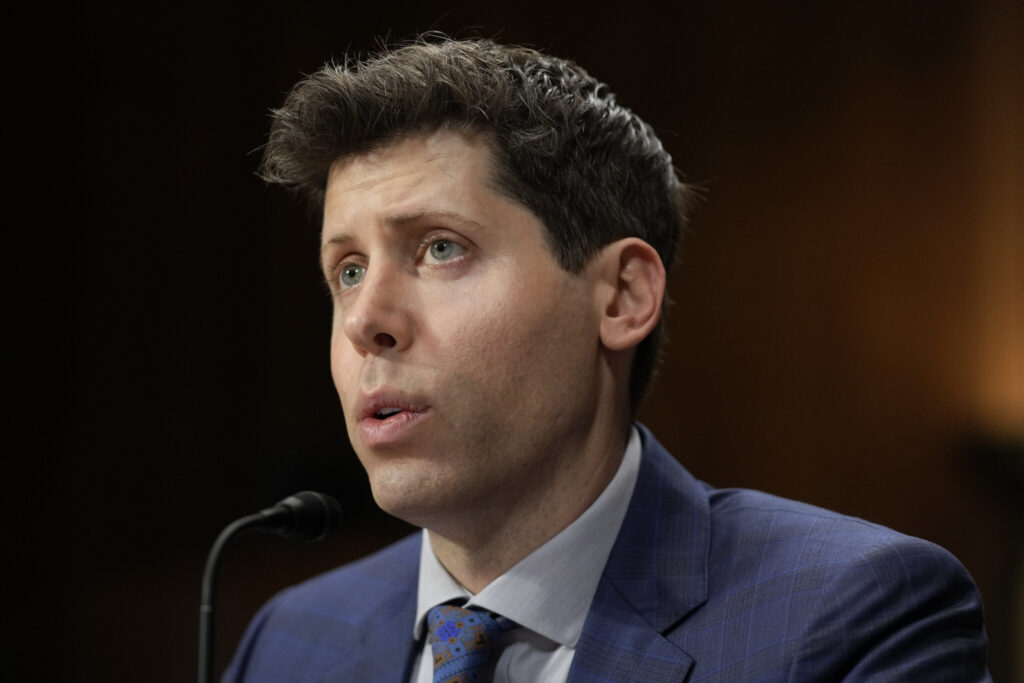
The ongoing upheaval at OpenAI has reached new heights with the sudden removal of its founder, Sam Altman, on November 17, causing a ripple effect throughout the artificial intelligence (AI) company.
In the wake of Altman’s ousting, three senior researchers have reportedly chosen to resign from their positions.

The decision to remove Altman from his role as CEO was officially announced in a blog post by OpenAI’s board of directors.
They cited Altman’s alleged lack of consistent transparency in his communications with the board as the primary reason for his removal, asserting that this hindered the board’s ability to fulfill its responsibilities.
Consequently, Mira Murati, the company’s chief technology officer, has assumed the role of interim CEO.
This significant change in leadership set off a chain reaction within OpenAI, resulting in key figures departing from the organization.
Co-founder and president Greg Brockman made his exit public mere hours after Altman’s removal.
Several senior staff members have also reportedly tendered their resignations, including Jakub Pachocki, the director of research; Aleksander Madry, the head of preparedness; and Szymon Sidor, a senior researcher.
Additionally, one employee, Alex Cohen, found himself laid off alongside Altman.
READ MORE:Sushi Partners with ZetaChain for Native Bitcoin Swaps Across 30 Blockchains
Cohen, responsible for preparing presentations for OpenAI’s board of directors, expressed his confusion over the situation, revealing that he received a cryptic text message from Sam Altman before his abrupt dismissal.
This unexpected turn of events has left many speculating about the future of OpenAI, with Cohen predicting that more employees may follow suit and seek new opportunities elsewhere.
The decision to remove Altman from his leadership role is believed to have arisen from disagreements with Ilya Sutskever, co-founder and chief scientist at OpenAI.
These disagreements appear to revolve around issues related to fundraising and the development of AI technologies.
As for Altman’s future endeavors, they remain uncertain in the wake of these recent developments.
Altman is also a founder of Tools for Humanity, a developer involved in the crypto project Worldcoin.
He has received invitations to join other projects, including one from Charles Hoskinson, the founder of Cardano, who has extended an offer for Altman to join the ecosystem’s decentralized large language model.

Yearn.finance’s governance token experienced a tumultuous ride on November 18, plunging by more than 43% within a mere five hours.
This drastic downturn followed a remarkable surge of nearly 170% earlier in the month, sparking concerns of a potential exit scam.
Data from CoinMarketCap revealed that this sharp decline resulted in the erasure of over $300 million in market capitalization, effectively wiping out the gains made in November.
Presently, the YFI token is valued at $9,069, down from $14,185 just a day prior.
Nevertheless, it’s worth noting that the token remains 83% higher in value compared to its position 30 days ago.
The sudden sell-off instilled a sense of fear, uncertainty, and doubt (FUD) within the cryptocurrency community over the weekend.
Speculation on X (formerly Twitter) raised suspicions, with some users suggesting that 50% of the token supply resided in 10 wallets controlled by developers.
However, data from Etherscan hinted that some of these holders might actually be crypto exchange wallets.
Furthermore, some X users pointed out that the plunge might have been triggered by an influx of short positions.
READ MORE:Singapore’s Central Bank Launches Live Pilot for Singapore Dollar-Based CBDC
Coinglass data indicated a surge in YFI open interest, implying that traders were betting against the coin following its substantial gains in November.
One trader on X commented, “I bought the dip… someone sold 1000 coins perhaps that’s why it dropped massively.
Will see.” Another user noted that YFI’s price movement after the decline appeared atypical for an exit scam, stating, “Doesn’t look like a rug pull at all.
Because despite so much sell-off, the price is still stable at 9k, which is 80% above its bottom.”
Yearn.finance, founded by Ethereum developer and entrepreneur Andre Cronje in July 2020, is a decentralized finance protocol that offers automated trading solutions for the DeFi market.
Despite attempts to reach out to Cronje and Yearn.finance for comment, Cointelegraph did not receive an immediate response.
In conclusion, the rollercoaster ride of Yearn.finance’s governance token has left the crypto community on edge, with suspicions of a possible exit scam amidst a backdrop of market volatility.
The situation underscores the inherent risks associated with investing in the cryptocurrency space.

On November 17, decentralized exchange (DEX) dYdX found itself compelled to tap into its insurance fund, allocating $9 million to cover user liquidations.
Antonio Juliano, the founder of dYdX, has characterized these losses as a result of a “targeted attack” on the exchange.
According to information shared by the dYdX team on X (formerly known as Twitter), the v3 insurance fund was employed “to address deficiencies in liquidation processes within the YFI market.”
This move came in response to a significant drop in the Yearn.finance token, which plummeted by 43% on the same day, following a remarkable 170% surge in the preceding weeks.
This sudden and drastic price decline gave rise to concerns within the crypto community, with some speculating about a potential exit scam.
The purported attack specifically singled out long positions in YFI tokens on the dYdX platform, leading to the liquidation of positions valued at nearly $38 million.
Antonio Juliano suspects that both the trading losses experienced by dYdX and the sharp YFI decline were the consequences of market manipulation.
He stated, “This was pretty clearly a targeted attack against dYdX, including market manipulation of the entire $YFI market.
“We are investigating alongside several partners and will be transparent with what we discover.”
READ MORE:CoinShares Gains Exclusive Option to Acquire Valkyrie Funds, Eyes U.S. ETF Market Expansion
Juliano reassured users that their funds remained unaffected by the incident, emphasizing that the v3 insurance fund still retained $13.5 million.
He also pledged to conduct a comprehensive review of their risk parameters, potentially implementing changes to both v3 and the dYdX Chain software as needed.
In the aftermath of this profitable trade, the YFI token’s market capitalization suffered a staggering loss of over $300 million.
This development led to speculations within the community, with some raising concerns about the possibility of insider involvement in the YFI market.
Some users alleged that 50% of the YFI token supply was concentrated in 10 wallets controlled by developers.
However, data from Etherscan suggests that some of these wallets belong to crypto exchanges.
Despite efforts by Cointelegraph to seek comments from dYdX and Yearn.finance, neither party has responded as of yet.
The incident has brought to the forefront the challenges and vulnerabilities faced by decentralized exchanges in the cryptocurrency ecosystem.

Mike Belshe, the CEO of cryptocurrency exchange BitGo, is optimistic about the prospects of a spot Bitcoin exchange-traded fund (ETF) gaining approval.
However, he acknowledges that there are hurdles to overcome in this journey.
In an interview with Bloomberg on November 16, Belshe revealed that discussions between companies seeking Bitcoin ETF approval and the United States Securities and Exchange Commission (SEC) indicate a favorable outcome is on the horizon.
Despite his optimism, Belshe cautioned that challenges lie ahead.
He believes that the SEC may still reject more ETF proposals before granting approval.
One key requirement emphasized by the SEC is the separation of cryptocurrency exchanges from custodial services. Belshe stresses that addressing this condition is essential to securing approval.
Belshe referenced Sam Bankman-Fried, the former CEO of the now-defunct crypto exchange FTX, who advocated for multifaceted operations.
Bankman-Fried proposed taking on various functions within the industry to improve efficiency and compliance with regulations.
READ MORE:Singapore’s Central Bank Launches Live Pilot for Singapore Dollar-Based CBDC
The anticipation surrounding the potential approval of a spot Bitcoin ETF has led to a significant increase in fees on the Bitcoin blockchain.
On November 16, transaction fees on the Bitcoin blockchain reached $11.6 million, representing a 746% rise in average transaction fees compared to 2022.
Despite these challenges, Bitcoin has remained stable, trading near 18-month highs and surpassing its previous bear market range.
Currently, 12 asset management firms are awaiting decisions on their Bitcoin ETF applications.
Bloomberg analyst James Seyffart predicts a 90% chance of approval for these applications by January 10, 2024.
In summary, Mike Belshe, CEO of BitGo, remains hopeful about the approval of a spot Bitcoin ETF.
While he anticipates a positive outcome, he acknowledges the need to address market structure concerns outlined by the SEC.
The surge in Bitcoin blockchain fees underscores the growing excitement surrounding the ETF’s potential approval, and the cryptocurrency market continues to show resilience despite regulatory challenges.
James Wallis, the Vice President for Central Bank Engagements and Central Bank Digital Currencies (CBDCs) at Ripple, has emphasized the pivotal role that CBDCs play in promoting global financial inclusion.
In a concise video, Wallis elucidated that financial inclusion seeks to extend financial services to individuals worldwide, especially those with meager incomes and no affiliations with financial institutions.
Wallis identified the primary factors contributing to financial exclusion, which include low incomes and the absence of existing connections with financial institutions, resulting in the lack of a credit history.
In regions grappling with financial exclusion, banks often operate as profit-driven commercial entities, making it challenging to cater to individuals with limited resources, as turning a profit from such a demographic is a formidable task.
Wallis argued that CBDCs offer an economical solution by facilitating financial services at significantly lower costs compared to traditional methods.
CBDCs provide streamlined payment alternatives and opportunities to establish credit, even for individuals without prior affiliations with financial institutions.
This empowerment allows individuals to construct credit histories, gain access to borrowing facilities, and invigorate the expansion of their businesses.
READ MORE:CoinShares Gains Exclusive Option to Acquire Valkyrie Funds, Eyes U.S. ETF Market Expansion
Wallis concluded that CBDCs represent a transformative innovation addressing global challenges associated with financial inclusion.
Ripple is actively collaborating with more than 20 central banks globally on CBDC initiatives and has assumed the role of technology partner for the second phase of Georgia’s digital lari project.
Furthermore, Ripple is deeply involved in CBDC partnerships in Bhutan, Palau, Montenegro, Colombia, and Hong Kong.
It is worth noting that Ripple is currently embroiled in an ongoing legal dispute with the United States Securities and Exchange Commission.
Despite these legal challenges, in July, Ripple garnered recognition from Currency Research for its contributions to the advancement of digital currencies and its outstanding sustainability initiatives, particularly for fostering innovation in the realm of CBDCs.
Ripple’s commitment to reshaping the financial landscape remains unwavering, even in the face of legal hurdles.
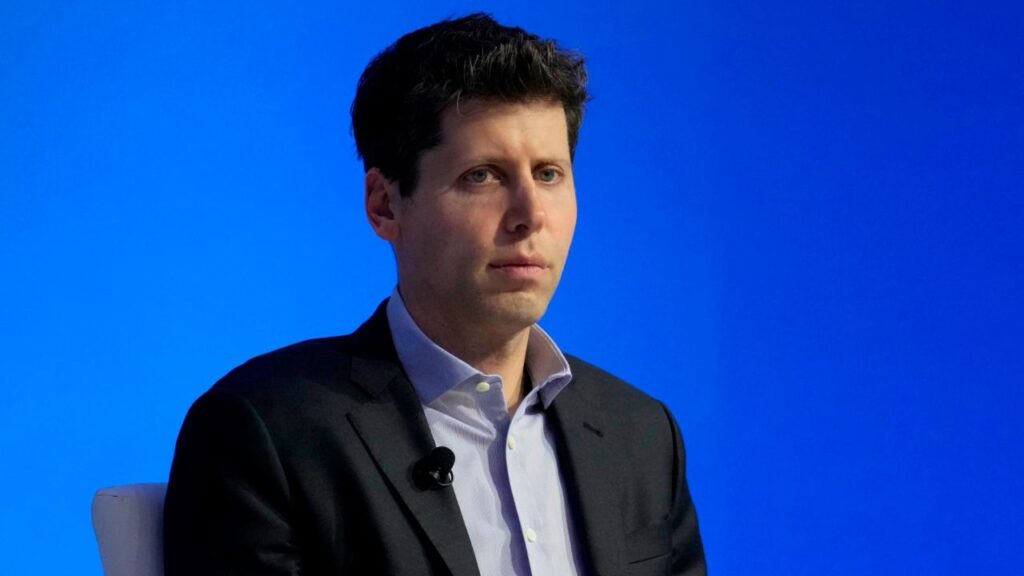
The OpenAI board of directors is facing criticism from investors regarding their recent decision to remove CEO Sam Altman from his position.
According to a Bloomberg report on November 19, several investors, including Microsoft, the largest shareholder of OpenAI, are seeking to reinstate Altman as CEO.
On November 17, OpenAI made the announcement that Altman would no longer serve as CEO, with Mira Murati, the company’s chief technology officer, stepping into the role.
The board justified this decision in a blog post, citing concerns about Altman’s communication style, which they believed lacked clarity and honesty, hindering a comprehensive understanding of the company’s operations.
Thrive Capital, a key player expected to lead a tender offer for employee shares, has reportedly not yet provided the funds, and Altman’s removal could have an impact on its plans.
Thrive is pushing for the board to reconsider its decision and reinstate both Altman and Greg Brockman, the company’s president, who also departed shortly after Altman’s removal.
Brockman publicly announced his departure on X (formerly Twitter), stating, “Based on today’s news, I quit.”
This news led to the departure of three senior researchers from OpenAI: Jakub Pachocki, director of research; Aleksander Madry, head of preparedness; and Szymon Sidor, senior researcher.
READ MORE:Sushi Partners with ZetaChain for Native Bitcoin Swaps Across 30 Blockchains
Meanwhile, reports suggest that Altman is willing to return to the company, but under the condition that the current board resigns by the end of the weekend.
Microsoft CEO Satya Nadella has reportedly expressed his support for Altman’s decision, as the board’s move also came as a surprise to him.
Since Altman’s dismissal on Friday, recent reports have indicated that he is working on a new AI venture, according to sources familiar with the matter.
Additionally, it has been reported that Brockman will be joining Altman in this new venture.
The situation at OpenAI remains fluid, with investors, board members, and former executives engaged in discussions about the company’s leadership and future direction.
The outcome of these discussions will likely have a significant impact on the trajectory of OpenAI and its role in the AI industry.

Fidelity, a prominent asset management firm overseeing an impressive $4.5 trillion in assets, has joined the growing list of entities seeking approval for a spot Ether exchange-traded fund (ETF).
Their request was formally submitted to the United States Securities and Exchange Commission (SEC) on November 17.
Fidelity’s proposal centers around listing and trading shares of the Fidelity Ethereum Fund on the Cboe BZX Exchange.
The filing outlines the structure of the proposed ETF, where each share will represent a fractional undivided beneficial interest in the Trust’s net assets.
These assets will primarily consist of Ethereum (ETH), securely held by a Custodian on behalf of the Trust.
One of the primary motivations behind Fidelity’s request is to provide U.S. citizens with a secure and regulated vehicle for gaining exposure to ETH.
The filing argues that up until now, American retail investors have been deprived of a low-risk option for investing in Ethereum.
It emphasizes that the existing methods for accessing digital assets in the United States involve significant counter-party risk, legal uncertainties, and technical complexities.
In contrast, the filing points out that European investors have access to products that are traded on regulated exchanges and offer exposure to a wide range of spot cryptocurrency assets.
As an example, it mentions the approval of the Jacobi Bitcoin ETF for listing on the Euronext Amsterdam stock exchange, demonstrating the more favorable environment for cryptocurrency investment in Europe.
READ MORE:CoinShares Gains Exclusive Option to Acquire Valkyrie Funds, Eyes U.S. ETF Market Expansion
Fidelity also highlights the potential benefits of an Ether ETF for American investors, suggesting that it could have mitigated losses suffered by investors involved with now-defunct firms like FTX, Celsius Network, and BlockFi.
The filing suggests that if a Spot ETH ETP (Exchange-Traded Product) had been available, a substantial portion of the funds tied up in these defunct companies might still be held in the brokerage accounts of U.S. investors.
Fidelity’s move to seek approval for a spot Ether ETF follows BlackRock’s recent filing for a similar product, the iShares Ethereum Trust, with the SEC on November 16.
This development comes after BlackRock previously registered the iShares Ethereum Trust with Delaware’s Division of Corporations, about six months after filing its spot Bitcoin ETF application.
Notably, Fidelity is the seventh firm to apply for an Ether ETF, joining a list that includes VanEck, 21Shares, ARK Invest, Hashdex, Grayscale, and Invesco Galaxy, as the financial industry continues to explore opportunities in the rapidly evolving cryptocurrency market.

Sushi, the decentralized finance (DeFi) platform, has joined forces with interoperability platform ZetaChain to explore the potential for native Bitcoin swaps across 30 different blockchain networks.
This collaboration aims to allow users to trade BTC in a “native, decentralized, and permissionless manner” without the need for wrapping on various blockchains.
Sushi’s decentralized exchange (DEX) will be deployed on ZetaChain, integrating both its v2 and v3 automated market makers, as well as Sushi’s cross-chain swap, SushiXSwap.
ZetaChain’s core contributor, Ankur Nandwani, emphasized that this partnership could introduce Bitcoin’s extensive user base to the DeFi sector in a native manner.
He refuted arguments claiming that bridging BTC without wrapping on another chain is impossible, citing examples like THORChain that already trade Bitcoin natively with other chain assets.
Nandwani explained that ZetaChain’s approach allows anyone to build Bitcoin-interoperable decentralized applications (DApps) for settling contracts and transactions natively.
However, he acknowledged the necessity of trust assumptions, particularly regarding the decentralization of the network facilitating cross-chain transactions.
ZetaChain has successfully tested the technology on its testnet and plans to demonstrate its utility upon the launch of its mainnet through partnerships with SushiSwap and other DeFi protocols.
READ MORE: Solana (SOL) Achieves New Yearly Highs with 17% Surge after Cathie Wood’s Praise
Jared Grey, Sushi’s head chef, hailed the integration as a significant advancement for DeFi, describing the ability to swap Bitcoin natively as a “game-changer” for the industry.
He emphasized that this development opens up new possibilities for interoperability and enhanced connectivity within the DeFi ecosystem.
The integration between Sushi and ZetaChain will occur in two phases.
The first phase will see the introduction of a DEX on ZetaChain’s testnet to support basic asset swaps and liquidity provision, including beta testing and incentives for application testing.
Sushi will become one of ZetaChain’s launch partners when it deploys its mainnet, enabling full functionality for Bitcoin interoperability.
Nandwani detailed the technical process behind native BTC cross-chain swaps, explaining that a cross-chain swap contract is deployed on ZetaChain’s Ethereum Virtual Machine, allowing value to be passed to it from any connected chain, including Bitcoin.
Users initiate a cross-chain swap contract by sending a regular native token transfer transaction on Bitcoin with a special memo to a TSS address, containing the omnichain contract address on ZetaChain and the destination token and recipient address on the destination chain.
The TSS address is owned by ZetaChain’s signer validators, and once enough votes are cast, an inbound cross-chain transaction (CCTX) is created from Bitcoin to ZetaChain.
This leads to the minting of ZRC-20 BTC, which can then be swapped for other tokens on ZetaChain.
Finally, the destination token is withdrawn to the destination chain, concluding the decentralized and native BTC-to-ETH swap facilitated by ZetaChain’s network validators across connected chains.

Singapore’s central bank, the Monetary Authority of Singapore (MAS), has taken a significant step in its pursuit of a central bank digital currency (CBDC) with the announcement of a live pilot program for a Singapore dollar-based CBDC.
The program aims to facilitate instant settlements between local commercial banks, marking a crucial development in the world of digital currencies.
MAS Managing Director Ravi Menon unveiled the pilot program on November 16 during the Singapore Fintech Festival.
This initiative represents a departure from earlier simulated CBDC issuance, signaling the central bank’s commitment to moving forward with practical testing.
In the near future, MAS intends to collaborate with local banks to explore the use of CBDCs as settlement assets for domestic payments.
Under this testing program, participating banks will issue tokenized liabilities that represent claims on their balance sheets.
Retail customers can then utilize these tokenized liabilities to conduct transactions with merchants, and settlements will occur seamlessly through the automatic transfer of a wholesale CBDC.
This streamlined process eliminates the traditional lag associated with clearing and settlement, where these activities typically occur on separate systems.
READ MORE: Paxos Secures Initial Approval from MAS for U.S. Dollar-Backed Stablecoin Launch in Singapore
Wholesale CBDCs primarily serve central and commercial banks, as well as other large financial institutions, to facilitate efficient payment settlements.
By introducing a live pilot program for a Singapore dollar-based CBDC, MAS aims to enhance the efficiency and speed of financial transactions within the country’s banking ecosystem.
This announcement follows the MAS’s expansion of its financial infrastructure test program, Project Guardian, on November 15.
The program now boasts 17 members, including major financial institutions like BNY Mellon, HSBC, and Citigroup, up from its original 12.
Project Guardian focuses on assessing various use cases for asset tokenization, further demonstrating Singapore’s commitment to staying at the forefront of fintech innovation.
Moreover, the MAS, in collaboration with the New York Federal Reserve, recently concluded a six-year-long trial program, known as Project Ubin, aimed at evaluating the utility of CBDCs in cross-border payments.
The results underscored the potential for CBDCs to enhance the efficiency and cost-effectiveness of cross-border transactions, reinforcing the importance of ongoing experimentation in the digital currency space.
In summary, Singapore’s central bank is actively pushing the boundaries of CBDC development with its live pilot program, bringing the nation closer to realizing the benefits of digital currencies for efficient and secure financial transactions.

CoinShares, the prominent European digital asset manager, has recently secured an exclusive option to acquire Valkyrie Funds, the exchange-traded fund (ETF) unit of its United States-based competitor, Valkyrie Investments.
This strategic move, announced on November 17, signifies CoinShares’ intent to expand its operations into the United States, potentially positioning itself at the forefront of the burgeoning ETF market in the country.
Jean-Marie Mognetti, CEO of CoinShares, expressed his optimism about this acquisition, emphasizing its potential to capitalize on the current fragmentation within the global ETF market.
He noted that the establishment of crypto spot ETPs in Europe since 2015 is an indicator of the evolving landscape, with the U.S. poised to follow suit.
Mognetti believes that this market disparity presents both challenges and significant opportunities for CoinShares.
The option to acquire Valkyrie Funds will remain active until March 31, 2024.
During this period, Valkyrie Funds will continue to operate as an independent entity until the acquisition by CoinShares is finalized, marking an exciting development in the digital asset investment sphere.
In addition to the acquisition option, CoinShares and Valkyrie have also agreed on a brand licensing term.
This agreement allows CoinShares’ name to be used in future S-1 filings with the U.S. Securities and Exchange Commission (SEC), which are typically filed when companies plan to go public.
READ MORE: New York Tightens Cryptocurrency Listing and Delisting Rules to Enhance Investor Protection
If the SEC approves the Valkyrie Bitcoin Fund, it will incorporate the CoinShares name into the ETF, further solidifying their collaboration.
Valkyrie had previously filed for the spot Bitcoin (BTC) ETF on June 21, along with other financial heavyweights like BlackRock.
CoinShares, overseeing more than $3.2 billion in assets under management, had already expressed optimism about the U.S. cryptocurrency ETF market in September.
They emphasized that the United States, as an economic powerhouse, is actively addressing digital asset regulation, dispelling any notion of lagging behind in this rapidly evolving space.
In summary, CoinShares’ exclusive option to acquire Valkyrie Funds marks a strategic leap towards expanding its presence in the United States and tapping into the potential of the growing ETF market.
This move holds the promise of reshaping the digital asset investment landscape on a global scale.