


Amy Peck, the CEO of tech-focused consulting firm EndeavourXR, emphasized the need for the crypto industry to shift its focus towards building blockchain-based solutions that benefit a broader audience, rather than pursuing quick cash grabs for brands.
Speaking at the Web Summit in Lisbon, Portugal, Peck urged Web3 companies to adopt a “build-first” mentality and create appealing products to attract newcomers.

She expressed concerns about the current trend of using Web3 and nonfungible tokens (NFTs) solely as a means for brands to generate wealth, stating that it tarnishes the reputation of an otherwise elegant technology.
Peck believes that the crypto industry has vast potential and should leverage blockchain to reinvent economic structures, inviting more individuals to participate rather than perpetuating the creation of a privileged 1%.
Peck outlined key areas that builders in the crypto space should prioritize to maximize the value of Web3.
These include establishing on-chain proof of identity, empowering individuals to control and own their data, connecting blockchain-based assets to real-world applications, and fostering participation in the creator economy.
READ MORE:Binance and Gulf Energy Join Forces to Launch Thailand-Based Crypto Exchange by Early 2024
Addressing recent industry setbacks, such as the collapse of FTX, Peck acknowledged that some clients were apprehensive about cryptocurrency and viewed Web3 with skepticism.
However, she also pointed out the existence of a “Web2.5 center lane” that larger brands could leverage while transitioning into Web3.
Peck emphasized the importance of blockchain technology in providing consumers with greater control and ownership over their data, highlighting the need for a more transparent data exchange, especially in light of emerging technologies collecting biometric data like fingerprints and facial recognition.
She expressed caution regarding cryptocurrency exchange-traded funds (ETFs), acknowledging the interest of Wall Street firms in the crypto industry but warning against attempts to reshape it to fit existing financial paradigms.
Peck emphasized the importance of preserving the core principles of decentralization and innovation that underpin the crypto sector, rather than allowing it to be manipulated by traditional financial institutions.
In conclusion, Amy Peck urged the crypto industry to prioritize building inclusive blockchain solutions and remain vigilant in preserving the integrity of Web3, resisting attempts to co-opt it for short-term financial gain.

The Texas State Securities Board has taken action against a network of companies operating under the “GS” brand based in Germany, accusing them of engaging in fraudulent activities related to digital assets and investments in a staking pool within their proprietary metaverse.
The network is reportedly controlled by Josip Dortmund Heit.
According to regulatory authorities, on November 16th, GS Partners, GS Smart Finance, and GS Wealth, under the leadership of Josip Dortmund Heit, conducted three rounds of metaverse property sales starting in September 2021.
During this period, investors were offered the opportunity to purchase XLT Vouchers or BNB Chain tokens, which represented ownership of one square inch of a unit within the company’s G999 Tower metaverse.
These tokens were initially priced at 9.63 USDT per voucher. However, their value plummeted rapidly to less than 0.0000049 USDT each on the decentralized exchange PancakeSwap after the respondents failed to meet their $175 million fundraising target.
The Texas State Securities Board also noted that the respondents had never been registered with the Securities Commissioner as dealers or agents, which is a legal requirement for conducting such financial activities.
READ MORE: Paxos Secures Initial Approval from MAS for U.S. Dollar-Backed Stablecoin Launch in Singapore
Furthermore, regulators allege that various other investment products offered by the GSB network, including Lydian World metaverse tokens, gold tokens, G999 coin, and Elemental Certificates, also constituted unregistered security offerings.
In response to these allegations, the Texas State Securities Board has filed an emergency enforcement action, demanding that the GSB group of companies immediately cease and desist from engaging in these activities within the state of Texas.
This is not the first time the GSB network has faced regulatory scrutiny.
On August 15th, the Ontario Securities Commission issued a warning, stating that GS Partners was not authorized to conduct business in the Canadian province of Ontario.
Prior to this, securities regulators in other Canadian provinces, including Saskatchewan, British Columbia, Alberta, and Quebec, had also issued warnings about the activities of GS Partners.
In conclusion, the Texas State Securities Board’s actions against the GS network of companies highlight the growing concerns surrounding unregistered security offerings and fraudulent activities in the digital asset and metaverse space.
It serves as a reminder of the importance of regulatory oversight in protecting investors and maintaining the integrity of financial markets.
Tether, a prominent stablecoin company, is gearing up for a substantial expansion into the realm of Bitcoin mining, as revealed by Paolo Ardoino, who is slated to assume leadership of the company in the near future.
In an interview with Bloomberg, Ardoino disclosed that Tether is contemplating an investment of approximately $500 million over the next six months.
This capital will be allocated towards the development of mining facilities and investments in other mining entities.
To bolster its mining capabilities, Tether intends to establish mining facilities in Uruguay, Paraguay, and El Salvador.
The aim is to command 1% of the Bitcoin mining network’s computational power. These forthcoming sites will boast impressive capacities ranging from 40 to 70 megawatts (MW).
Interestingly, a portion of Tether’s mining investment is derived from the $610 million debt financing arrangement recently announced with the German mining firm Northern Data Group.
This move aligns with Tether’s strategic approach, which has seen the company extend loans throughout the year.
READ MORE: Solana (SOL) Achieves New Yearly Highs with 17% Surge after Cathie Wood’s Praise
In September, Tether had already made a strategic investment in Northern Data Group to support their artificial intelligence initiatives.
Ardoino further outlined Tether’s ambitious plans, with expectations to elevate its direct mining operations to 120 MW by the end of the year, and a grander vision of reaching 450 MW by the close of 2025.
Notably, the company is also exploring the possibility of establishing a 300-MW facility, and they are setting up their mining facilities within mobile containers that can be relocated to leverage favorable electricity prices.
Ardoino emphasized that their approach to mining involves gradual learning and growth, underscoring that they are not rushing to become the largest mining entity globally.
Paolo Ardoino is slated to assume the role of Tether’s CEO in December while maintaining his position as the Chief Technical Officer of the parent company, Bitfinex, as per the plans disclosed in October.
As of the time of this publication, Tether had not responded to an inquiry from Cointelegraph.

The Canadian Security Intelligence Service (CSIS), Canada’s primary national intelligence agency, has expressed growing concerns regarding the use of artificial intelligence (AI) deepfakes in disinformation campaigns on the internet.
These deepfakes, which are becoming increasingly realistic, pose a significant threat to Canadians, as they are often difficult to recognize or detect.
CSIS has highlighted instances where deepfakes have been utilized to harm individuals, emphasizing the potential risks associated with this technology.
In its report, CSIS warns that deepfakes and other advanced AI technologies have the potential to undermine democracy, as certain actors may exploit uncertainty or propagate false information based on synthetic or falsified content.
This threat is exacerbated when governments are unable to prove the authenticity of their official content.
CSIS also referenced Cointelegraph’s coverage of deepfakes targeting crypto investors, particularly those featuring Elon Musk.
Since 2022, malicious actors have been using sophisticated deepfake videos to deceive unsuspecting crypto investors into parting with their funds.
Elon Musk himself issued a warning against deepfakes after a fabricated video of him endorsing a cryptocurrency platform with unrealistic returns circulated on X (formerly Twitter).
READ MORE: New York Tightens Cryptocurrency Listing and Delisting Rules to Enhance Investor Protection
In addition to the threat of deepfakes, CSIS has identified other concerns related to AI, including privacy violations, social manipulation, and bias.
The agency recommends that governmental policies, directives, and initiatives evolve in response to the increasing realism of deepfakes and synthetic media.
CSIS emphasizes the need for governments to act swiftly, as delaying interventions may render them irrelevant.
CSIS proposes collaboration among partner governments, allies, and industry experts to address the global distribution of legitimate information.
Canada has taken steps to involve allied nations in addressing AI concerns, as evidenced by the Group of Seven (G7) industrial countries’ agreement on an AI code of conduct for developers on October 30.
This code comprises 11 points aimed at promoting safe, secure, and trustworthy AI worldwide while addressing and mitigating the associated risks.
In conclusion, the Canadian Security Intelligence Service is deeply concerned about the use of deepfake technology in disinformation campaigns and its potential impact on democracy and individuals.
CSIS calls for proactive measures, international collaboration, and the development of policies to counter the growing threat posed by AI deepfakes and synthetic media.

Gas fees on Ethereum’s Layer-2 network, Polygon, experienced an astonishing surge, skyrocketing by over 1,000% to peak at $0.10.
This sudden escalation in fees was triggered by an influx of users flooding the network while minting tokens inspired by Ordinals, known as POLS tokens.
Polygon founder, Sandeep Nailwal, expressed his astonishment on Nov. 16, through a post on X (formerly Twitter), as he observed this unprecedented transactional activity.
Speculation circulated that this surge might have been linked to the launch of a new nonfungible token (NFT) collection built on the Polygon network.
The primary driver behind the surge in network activity and the subsequent spike in gas fees was the fervor surrounding the minting of POLS tokens.
Data from Dune Analytics revealed a rush of minting activity coinciding with the use of over 102 million MATIC tokens, valued at $86 million at current market prices, for gas.
READ MORE:Solana (SOL) Achieves New Yearly Highs with 17% Surge after Cathie Wood’s Praise
The POLS token is based on the PRC-20 protocol, which functions similarly to the Bitcoin Ordinals-derived BRC-20 token standard.
As per data from Ethereum Virtual Machine data provider EVM, only 8.7% of the total POLS supply has been minted, with slightly over 18,100 individuals claiming ownership of the token.
As of the time of this publication, Polygon’s gas fees have reverted to their typical levels, settling at around 882 gwei.
Gas fees measure the computational effort required to execute transactions on a blockchain, with 1 gwei being approximately equivalent to 0.000000001 MATIC.
This surge in gas fees on Polygon resembles a similar occurrence on the Bitcoin network earlier in the year.
In May, the Bitcoin network experienced a prolonged surge in activity following the release of the Ordinals protocol, allowing users to mint NFTs directly on the Bitcoin blockchain.
The ensuing frenzy for Ordinals NFTs and BRC-20 tokens led to Bitcoin fees reaching levels not seen since April 2021.
Some more traditional Bitcoin enthusiasts, like Samson Mow and Adam Back, criticized the NFT protocol and token standard as wasteful due to this development.
Hong Kong, Hong Kong, November 15th, 2023, Chainwire
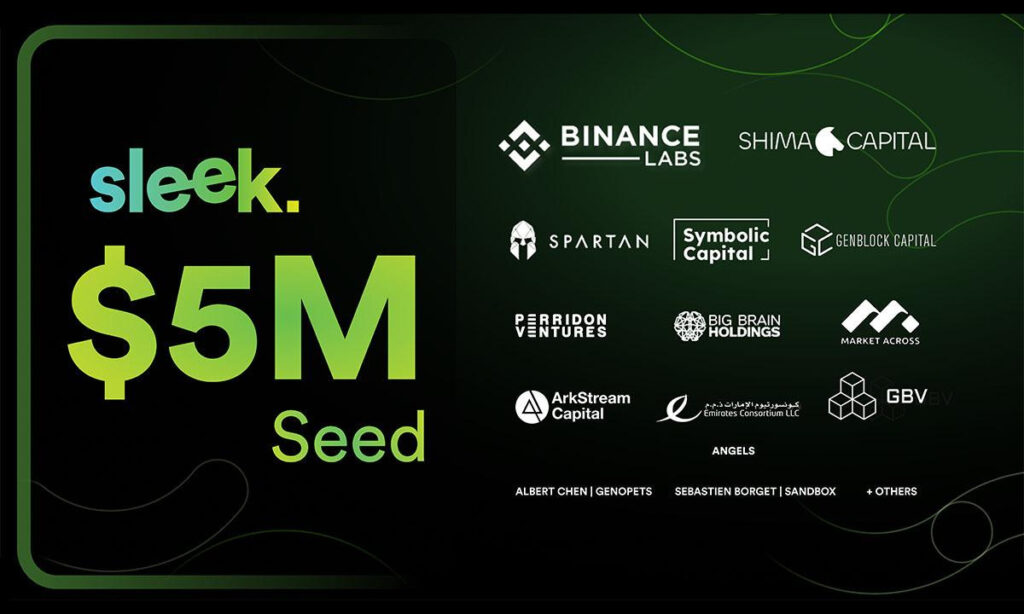
Sleek, a Web3 social network, today announces they have successfully raised US$5 million in a seed round, enabling them to power the ownership economy and bring blockchain-powered social media to the masses.
Officially launched in April 2023, the company aims to revolutionize human connection by making networking simple, fun, and productive. Sleek offers a comprehensive platform that enables users to seamlessly exchange information, onboard new people into their network, as well as incentivize community building via Web3 Social Finance (SocialFi) business models. For the very first time, users can directly monetize their content and social capital to become a new class of creators.
Sleek’s first product, Sleek Card, was designed to empower Web3 professionals to network in person. Each card creates a blockchain wallet and a decentralized identity for each user, seamlessly onboarding individuals into the Web3 space. Sleek Card leverages NFC technology and its proprietary messaging bot to help users efficiently capture data and manage contacts, creating powerful on-chain social graphs.
To date, the Sleek Card has powered over 300,000 connections, solidifying its position as a leading player in the Web3 space. Sleek Card has also partnered with Solana Hacker Houses, Coinfest, Digital Art Fair, and NFTNow to bring innovative event experiences to life.
“We are launching monetization models in our platform that are only possible through the blockchain, so talented creators from various verticals who don’t have a full team supporting them can earn sustainably”, said co-founder, Tania Tse.
“Leveraging our own experiences and lessons learnt, we are building applications alongside our users to power the future of Web3 social”, said co-founder, Chase Guo.
In the first half of 2024, Sleek will launch an open marketplace that empowers domain experts to become creators by tokenizing their knowledge into liquid and accessible assets. The future holds the promise of a more equitable, user-centric, and transparent digital social landscape.
Sleek’s investors include Binance Labs, Shima Capital, Spartan Group, Symbolic Capital, Genblock Capital, Big Brain Holdings, Market Across, Emirates Consortium, Arkstream, Perridon, GBV, and several angel investors. Binance Labs, the VC arm of Binance, invested in Sleek through the Binance Labs Incubation Program.
With blockchain-based social assets and a suite of pioneering products, Sleek is poised to reshape the social networking landscape and open new doors for creators to prosper in the Web3 era.
About Sleek
Sleek is a Hong Kong-based Web3 social network that revolutionizes authentic human connection in the digital age. Their mission is to power the ownership economy and bring blockchain-powered social media to the masses.
Sleek’s platform consists of Sleek Card and a knowledge marketplace launching in the first half of 2024. Sleek Card is an identity platform for seamless networking in person. Sleek’s NFC cards and proprietary messaging bot bring together the user’s collective identities with a single tap, facilitating 300,000+ connections and powering 60+ global events. Sleek’s knowledge marketplace facilitates the discovery of domain experts who can monetize directly with consumers.
For more information visit Sleek’s: Official Website | Twitter | Telegram
Contact
Marketing and PR
Sleek
[email protected]
Grayscale Investments has adopted a strategic approach to navigate the regulatory landscape surrounding Ether-based exchange-traded funds (ETFs) in the United States.
Bloomberg ETF analyst James Seyffart suggests that Grayscale is employing its Ether futures ETF application as a “trojan horse” to push the United States Securities and Exchange Commission (SEC) towards approving its spot Ether ETF.
On November 15th, Seyffart took to Twitter to express his viewpoint following the SEC’s decision to delay Grayscale’s ETH futures ETF application.
He believes that if the SEC were to give the green light to Grayscale’s application for an Ether futures ETF, it would set a precedent that could be leveraged to argue for the approval of its spot Ether ETF application.
Conversely, if the SEC were to deny Grayscale’s bid for an Ether futures ETF, the asset management firm could argue that the SEC is applying different standards to Bitcoin and Ether futures ETFs.
This differentiation would manifest by permitting one under the Securities Act of 1933 while rejecting the other.
READ MORE: Kazakhstan’s Chairman Conducts Historic Transaction with Digital Tenge
Seyffart predicts that the SEC will be faced with a challenging decision: either approve the Ether futures ETF and justify its differentiation from spot ETFs, or deny it and defend why products governed by the 1933 act are substantially distinct from those regulated by the 1940 act.
In his opinion, both scenarios pose difficulties for the SEC, making Grayscale’s move strategically astute.
Notably, Grayscale submitted its Ether futures ETF application via a 19b-4 form, a filing intended to inform the SEC about a security-based swap request.
Seyffart observed that none of the approximately 40 approved Ether ETF products had followed this 19b-4 approval process, initially leaving him puzzled about Grayscale’s choice.
However, Seyffart now interprets this move as part of Grayscale’s strategic “chess” game with the SEC.
By using the Ether futures ETF as a “trojan horse,” Grayscale seeks to secure a 19b-4 order from the regulator, positioning itself to corner the SEC into a precarious situation, regardless of their decision.
In summary, Grayscale Investments is strategically maneuvering within the regulatory framework to gain approval for its spot Ether ETF by leveraging its Ether futures ETF application as a catalyst for change in the SEC’s stance on cryptocurrency-based ETFs.
This calculated approach aims to leave the SEC in a challenging position, regardless of their ultimate decision.
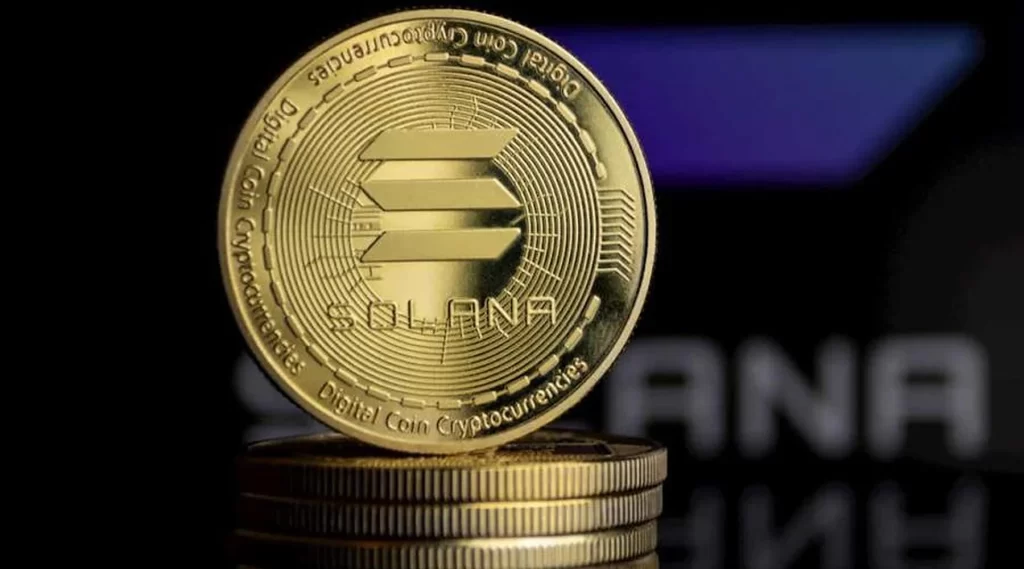
Solana’s SOL token has surged to new yearly highs, registering a remarkable 17% gain just a day after Cathie Wood, CEO of ARK Invest, praised the network’s efficiency and cost-effectiveness during a CNBC interview on November 15th.
Wood hailed Solana as a major player in the broader blockchain ecosystem, commending its performance in recent market conditions.
Comparing Solana to Ethereum, Wood emphasized the former’s superior speed and cost-effectiveness, stating, “Ether was faster and cheaper than Bitcoin in the day – that’s how we got Ether.
Solana is even faster and more cost-effective than Ether.” She underscored the significance of Ethereum and Solana as essential infrastructure layers within the blockchain ecosystem, capable of supporting a wider range of real-world applications compared to Bitcoin.
While the overall cryptocurrency market is experiencing an uptrend, Solana’s recent gains have outstripped those of other major cryptocurrencies, surging by an impressive 197% over the last month.
READ MORE: Poloniex Prepares to Resume Operations Following $100 Million Hack
In contrast, Bitcoin and Ether have seen more modest gains of 32% and 28%, respectively, during the same period.
As of now, Solana is trading at just over $66, according to TradingView data.
Wood also addressed the current market anticipation surrounding pending spot Bitcoin exchange-traded fund (ETF) products.
She urged investors to stay focused on the fundamental importance of Bitcoin as a catalyst for “the money revolution” and cautioned against becoming too fixated on short-term price fluctuations.
Acknowledging the possibility of a “sell on the news” scenario, where investors’ anticipation of ETF approval exceeds the market’s demand for the actual event, Wood warned of a potential rapid selloff in the days following such an approval.
In essence, Wood emphasized the importance of maintaining a long-term perspective on the transformative potential of cryptocurrencies and blockchain technology, regardless of short-term market dynamics.
Paxos, a prominent crypto infrastructure company, has achieved preliminary approval from Singapore’s regulatory authority for the establishment of a new entity dedicated to launching a stablecoin backed by the U.S. dollar.
In an announcement made on November 15th, Paxos revealed that it had received an initial endorsement from the Monetary Authority of Singapore (MAS) for its newly formed entity, Paxos Digital Singapore Pte. Ltd.
This new entity is authorized to provide digital payment token services and has intentions to introduce a stablecoin denominated in U.S. dollars, which will comply with MAS’ forthcoming stablecoin regulations.
Upon obtaining full regulatory approval, Paxos intends to collaborate with enterprise clients to facilitate the issuance of the stablecoin within Singapore.
Walter Hessert, Paxos’ head of strategy, emphasized the increasing global demand for the U.S. dollar while acknowledging the challenges faced by consumers outside the United States in accessing dollars securely, reliably, and with regulatory safeguards.
He noted that the in-principle approval from MAS would enable Paxos to extend its regulated platform to a broader international user base.
READ MORE: Global Tech Giants Unveil Ambitious Plan After Poloniex Hack
The Monetary Authority of Singapore previously outlined its regulatory framework for stablecoins on August 15th.
This framework is designed to oversee stablecoins linked to the Singapore dollar or major G10 currencies like the euro, British pound, and U.S. dollar, provided their circulation exceeds 5 million Singapore dollars ($3.7 million).
On August 7th, PayPal launched its own USD-backed stablecoin, PYUSD, which was issued by Paxos.
It’s worth mentioning that Paxos had previously minted Binance’s BUSD stablecoin, but it was compelled by the New York Department of Financial Services to cease issuing the token due to the agency’s classification of it as an unregistered security.
Paxos clarified that all of its stablecoins are fully backed by U.S. dollars and cash equivalents, underscoring their commitment to compliance.
They further highlighted their practice of issuing monthly attestations and reserve reports to ensure transparency and regulatory adherence.
This commitment to regulatory compliance aligns with Paxos’ mission to provide a reliable and secure platform for the issuance of stablecoins, catering to the growing global demand for the U.S. dollar.
New York’s financial regulator, the New York State Department of Financial Services (NYDFS), has recently introduced stricter guidelines for cryptocurrency firms listing and delisting digital assets in the state.
The primary aim of these new regulations is to enhance investor protection and mitigate potential risks associated with cryptocurrencies.
Under these new rules, cryptocurrency companies are now required to submit their coin listing and delisting policies for approval by the NYDFS.
These policies will be subject to a comprehensive evaluation based on more rigorous risk assessment standards established by the NYDFS.
The evaluation will encompass various factors, including technological, operational, cybersecurity, market, liquidity, and illicit activity risks associated with the tokens.
These regulations apply to all digital currency businesses operating in New York, including those licensed under the New York Codes, Rules, and Regulation, or limited purpose trust companies governed by the state’s Banking Law.
The NYDFS initially sought public feedback on these proposed regulations in September.
READ MORE: Poloniex Prepares to Resume Operations Following $100 Million Hack
One notable provision in these regulations is that cryptocurrency firms with previously approved coin listing policies are no longer allowed to self-certify tokens unless they obtain approval from the NYDFS.
Prominent cryptocurrency firms like Circle, Gemini, Fidelity, Robinhood, and PayPal are among those obligated to comply with these new rules.
These companies are required to meet with the NYDFS by December 8, 2023, to present their draft coin listing and delisting policies, with final submissions due by January 31, 2024.
Adrienne A. Harris, the Superintendent of Financial Services, emphasized that the NYDFS plans to adopt an “innovative and data-driven approach” to oversee coin listings, delistings, and the broader cryptocurrency market.
She clarified that these regulations are not indicative of a state-wide crackdown on the cryptocurrency industry but rather an effort to ensure that New Yorkers have a well-regulated means of accessing the virtual currency marketplace while positioning New York as a hub for technological innovation and forward-looking regulation.
The NYDFS has been proactive in addressing cryptocurrency-related concerns, expanding its capacity to identify illicit activities such as insider trading and market manipulation within the cryptocurrency space.
With approximately 690 blockchain-based companies headquartered in New York and nearly 19% of New Yorkers owning cryptocurrencies, these regulations are pivotal in creating a safer and more regulated environment for cryptocurrency investors and businesses in the state.