

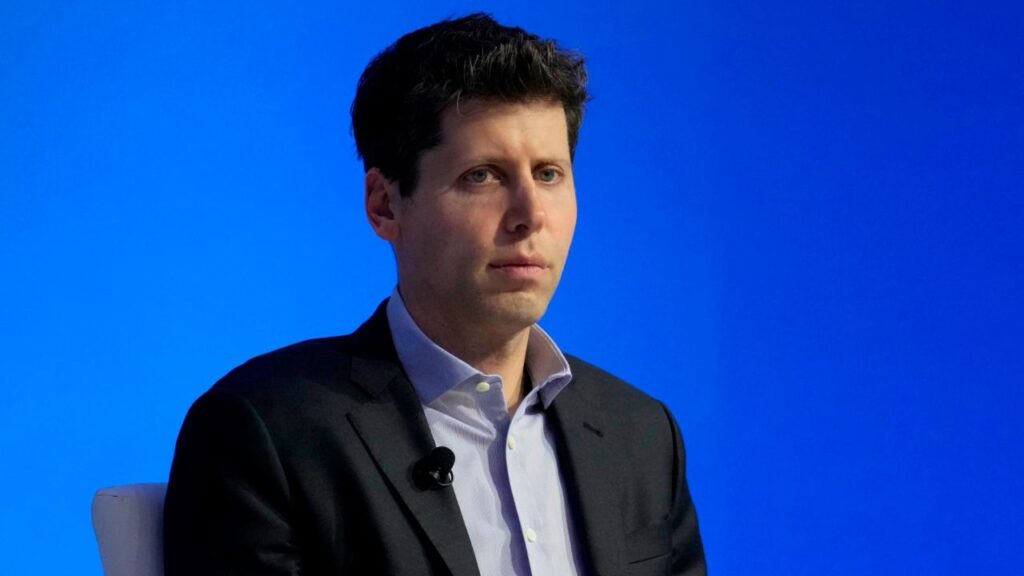
Worldcoin (WLD), the cryptocurrency associated with Sam Altman’s innovative retina-scanning project, experienced significant fluctuations in its value in recent days, coinciding with Altman’s departure from OpenAI and subsequent rumors of his potential return before ultimately being replaced.
On November 16, WLD reached a high of $2.48, but its value began to decline shortly thereafter.

The decline intensified after Altman’s departure from OpenAI became public on November 17 in the United States, causing WLD to plummet to a low of nearly $1.84, according to data from CoinGecko.
However, the token managed to stage a recovery, surging by 12% within the following 24 hours, reaching an intraday high of $2.54 during Asian trading on Monday morning.
Nevertheless, WLD once again faced a drop in its value, falling to $2.30 after Altman was officially replaced as CEO by Emmett Shear, co-founder of Twitch.
It’s worth noting that Altman was one of the co-founders of Worldcoin, which was launched in July as a digital identity platform with grand ambitions of creating a global ID and financial system.
READ MORE:The Best Ways to Earn Passive Income with Cryptocurrency in 2023
This system would rely on retina scanning technology to authenticate individuals, addressing concerns related to privacy and security amidst the growing influence of artificial intelligence (AI) technology.
The launch of Worldcoin sparked a polarized response within the cryptocurrency community, with many questioning the project’s degree of centralization and its implications for user privacy.
Interestingly, over the past 24 hours, AI-related cryptocurrencies have exhibited strong performance.
The market capitalization of AI-related tokens recorded a notable 7.2% increase, reaching $6.5 billion.
Tokens like Fetch.ai (FET), SingularityNET (AGIX), and Akash Network (AKT) have witnessed double-digit gains during this period, as reported by CoinGecko.
In summary, Worldcoin’s recent volatility was closely tied to the developments surrounding Sam Altman, its co-founder, and his departure from OpenAI.
The cryptocurrency continues to be a subject of scrutiny and debate within the crypto community, while AI-related tokens as a whole are demonstrating resilience and growth in the market.

Bitcoin is currently approaching a crucial Fibonacci retracement level, which could signify the peak of its pre-halving surge. Titan of Crypto, a prominent social media trader, has reiterated his BTC price target of up to $50,000 on November 19.
Bitcoin is encountering significant resistance as it struggles to surpass the $40,000 threshold, with several unsuccessful attempts in the past week.
This price region also holds significance for overall market profitability, as $39,000 serves as a break-even point for those who entered the market during the 2021 bull run.
Titan of Crypto has identified $39,000 as an essential boundary, but this time, it pertains to where BTC/USD should ideally stabilize before the April 2024 block subsidy halving event.
He mentioned, “The pre-halving rally I mentioned a year ago is on the verge of reaching its target range between $39k-$50k,” emphasizing the importance of patience.
READ MORE:Former Bithumb Chairman Faces 8-Year Prison Sentence in Cryptocurrency Governance Scandal
This update refers to a previous post from December 2022 when Bitcoin was recovering from a low of $15,600.
Titan of Crypto had then used Fibonacci retracement levels to predict a pre-halving peak of up to $50,000, representing a 220% increase.
Filbfilb, co-founder of the trading platform DecenTrader, still considers around $46,000 as a probable level, while not ruling out the possibility of a temporary BTC price dip.
Looking beyond the halving, there’s growing curiosity about Bitcoin’s future prospects, with forecasts ranging from $130,000 or more by the end of 2025.
On the downside, $30,900 has emerged as a potential support level for Bitcoin’s next correction. Some argue that a lower move to test liquidity would be beneficial and a typical element of Bitcoin market uptrends.
Currently, BTC/USD is trading at $36,500, as per data from Cointelegraph Markets Pro and TradingView. It has maintained a sideways trend over the weekend.
Decentralized crypto exchange dYdX has taken significant steps to enhance risk management following the depletion of a $9 million insurance fund on November 17th, which was used to cover users’ losses.
This move comes in response to a targeted attack that caused the liquidation of nearly $38 million worth of positions due to a profitable trade on the YFI token.
In an announcement made on X (formerly Twitter), dYdX disclosed that it has raised margin requirements on several “less liquid markets,” impacting tokens such as Eos, 0x Protocol (ZRX), Aave, Algorand, Internet Computer, Monero, Tezos, Zcash, SushiSwap, THORChain, Synthetix Network Token, Enjin Coin, 1inch Network (1INCH), Celo, Yearn.finance, and Uma.
The founder of dYdX, Antonio Juliano, described the attack as a “targeted attack” on the exchange.
He explained that the individual behind the attack caused YFI’s open interest on dYdX to surge from $0.8 million to $67 million in just a few days.
This same individual had previously attempted to manipulate the SUSHI market on dYdX a few weeks earlier.
Despite increasing initial margin ratios for YFI, it proved insufficient to prevent the attack, as the actor managed to withdraw a significant amount of USDC just before the YFI price crash.
To mitigate similar risks in the future, dYdX has banned “highly profitable trading strategies” on its platform, using language reminiscent of Mango Markets’ exploiter Avraham Eisenberg during his $116 million attack in 2022.
READ MORE:Yearn.finance’s YFI Token Plummets 43% in Five Hours, Raising Exit Scam Concerns
The YFI token experienced a sharp decline of 43% within a few hours on November 17th, erasing over $300 million in market capitalization after a rapid 170% surge in November.
Nevertheless, over the past 30 days, the token still managed to gain more than 90%, trading at $9,190 at the time of writing.
Although the Yearn.finance team has not officially commented on the incident, there is no indication of them controlling the majority of the token supply.
Etherscan data shows that large centralized exchanges hold a significant portion of YFI tokens, dispelling initial concerns of a potential scam.
These developments mark a significant effort by dYdX to fortify its defenses and protect its users from similar incidents in the future.

WisdomTree, a global exchange-traded fund (ETF) provider, has taken another step towards launching a spot Bitcoin ETF by filing an amended Form S-1 prospectus with the United States Securities and Exchange Commission (SEC) on November 16, 2023.
This move follows WisdomTree’s initial refiling of its spot Bitcoin ETF application in June 2023, where it proposed a rule change to list and trade shares of the WisdomTree Bitcoin Trust on the BZX Exchange, facilitated by the Chicago Board Options Exchange (CBOE).
The newly updated prospectus reveals that the WisdomTree Bitcoin Trust ETF plans to trade under the ticker symbol BTCW, with Coinbase Custody Trust acting as the custodian responsible for holding all the trust’s Bitcoin assets.
Bloomberg ETF analyst James Seyffart noted that this amended filing signals WisdomTree’s continued commitment to launching a Bitcoin ETF and suggests ongoing discussions with the SEC.
Seyffart emphasized that this step is part of the process and not a critical development.
Eric Balchunas, another Bloomberg ETF expert, expressed concerns about the time it took for WisdomTree to amend its Form S-1 Bitcoin ETF filing.
READ MORE:Yearn.finance’s YFI Token Plummets 43% in Five Hours, Raising Exit Scam Concerns
He questioned whether the SEC was waiting for all S-1 filings to be updated before issuing a second round of comments.
Seyffart’s data revealed that among the 12 firms in the U.S. that have submitted spot Bitcoin ETF filings, only two have yet to amend their S-1 filings with the SEC: Franklin Templeton and Global X.
Franklin Templeton’s initial spot Bitcoin ETF deadline was set for November 17, but the SEC postponed it to January 1, 2024. Hashdex, which faced a similar deadline, also had its deadline moved to January 1, 2024, on November 15.
Global X, another firm that has not updated its S-1 filing, is awaiting its second spot Bitcoin ETF deadline on November 21.
While some expect the SEC to announce further delays in its decisions regarding upcoming deadlines, Seyffart maintains his belief that these delays will not significantly impact the high probability—90%—of the SEC approving a spot Bitcoin ETF before the end of January 2024.
The ETF industry continues to closely monitor these developments as the quest for a spot Bitcoin ETF in the U.S. unfolds.

Meta, the social media giant, has undergone a significant restructuring by disbanding its responsible AI division, responsible for overseeing the development and deployment of its artificial intelligence (AI) ventures.
This move has led to team members from the disbanded division transitioning into various roles within Meta’s generative AI product division and the AI infrastructure team.
The generative AI team at Meta, which was established in February, is dedicated to creating products that can generate language and images to closely resemble human-made content.
This initiative reflects Meta’s efforts to keep up with the growing demand for machine learning development in the tech industry, as major players race to stay competitive in the AI field.
Meta’s decision to restructure its divisions coincides with the conclusion of what CEO Mark Zuckerberg referred to as the “year of efficiency.”
This period has witnessed a flurry of company layoffs, team consolidations, and reorganizations aimed at streamlining operations and increasing efficiency.
READ MORE:OpenAI Founder Sam Altman Ousted as Turmoil Escalates, Triggering Wave of Resignations
The emphasis on AI safety has become a paramount concern for leading companies in the AI industry, especially as regulators and officials pay closer attention to the potential risks associated with AI technology.
In July, a consortium consisting of Anthropic, Google, Microsoft, and OpenAI formed an industry group dedicated to establishing safety standards for the advancement of AI.
Despite the reshuffling, the team members from Meta’s responsible AI division remain committed to supporting the responsible development and use of AI. The company continues to invest in this critical area.
Meta has recently introduced two AI-powered generative models.
The first, called Emu Video, builds upon Meta’s previous Emu model and can generate video clips based on textual and image inputs.
The second model, Emu Edit, focuses on image manipulation, promising greater precision in image editing.
Cointelegraph reached out to Meta for further information regarding these changes but has not yet received a response.

Argentina’s presidential run-off election on November 19th witnessed a victory for Bitcoin-friendly candidate Javier Milei, who triumphed over his opponent Sergio Massa.
Milei secured over 55% of the votes, amassing a nearly 3-million-vote lead with almost 99% of the ballots counted, as per Bloomberg data.
In a show of sportsmanship, Massa, the incumbent minister of the economy, graciously congratulated Milei on his victory when more than 90% of the votes had been tallied, even before the official results were announced. Milei is set to assume office on December 10.
The central issue gripping Argentina throughout the election was its persistent inflation crisis, with the Argentine peso witnessing a staggering 140% annual inflation increase in the past year.
Milei has been a vocal critic of the country’s central bank, labeling it a “scam” and accusing politicians of using it to impose an “inflationary tax” on the populace.
READ MORE: OpenAI Founder Sam Altman Ousted as Turmoil Escalates, Triggering Wave of Resignations
He has also endorsed Bitcoin as a move toward “returning money to its original creator, the private sector.”
Nevertheless, Milei has not indicated any immediate plans to make Bitcoin legal tender in the country.
In stark contrast, Massa holds opposing views on money, banking, and cryptocurrencies.
In October, he pledged to introduce a central bank digital currency (CBDC) if elected, with the aim of addressing Argentina’s persistent inflation crisis.
While Massa emerged victorious in the initial round of the presidential election in October, his success was insufficient to secure the presidency outright, leading to the final run-off vote.
Javier Milei’s triumph signifies a significant shift in Argentina’s political landscape, with a leader who is outspokenly supportive of Bitcoin and skeptical of traditional banking institutions set to take the reins.
As the country grapples with its inflation woes and economic challenges, the world will be watching to see how Milei’s presidency unfolds and whether any changes in financial policy will accompany his tenure.
The cryptocurrency landscape has come a long way since the inception of Bitcoin over a decade ago. Today, it’s a bustling ecosystem with thousands of cryptocurrencies and numerous exchanges facilitating trading. However, this rapid growth has attracted regulatory attention worldwide.
In this post, we’ll explore the global regulatory landscape for cryptocurrency exchanges, discussing the challenges and opportunities it brings. We’ll also shed light on how exchanges, like ChangeNOW, are navigating these regulations to ensure legitimacy and why ChangeNOW stands out as the best cryptocurrency exchange platform.
The Global Regulatory Patchwork
Cryptocurrency exchange regulations vary greatly from one country to another. Some nations have embraced cryptocurrencies, while others have taken a more cautious approach or imposed outright bans. It’s crucial for crypto users to understand where exchanges are legal and regulated.
Countries like the United States, Canada, and the European Union have developed comprehensive regulatory frameworks for cryptocurrency exchanges. These regulations often involve rigorous KYC (Know Your Customer) and AML (Anti-Money Laundering) requirements to enhance security and prevent illicit activities. Compliance with these regulations can be challenging for exchanges, but it’s essential for building trust and legitimacy.
Challenges Faced by Crypto Exchanges
Navigating this patchwork of regulations is a complex task for cryptocurrency exchanges. They must invest in legal counsel and compliance teams to ensure adherence to various rules and guidelines. Here are some common challenges they face:
- Regulatory Uncertainty: The evolving nature of cryptocurrency regulations often leads to uncertainty for exchanges. They must adapt to changes and anticipate new regulatory developments.
- Compliance Costs: Meeting regulatory requirements can be costly in terms of legal fees, infrastructure, and personnel.
- Geographic Restrictions: Some exchanges are forced to restrict their services to specific regions due to varying regulations, limiting their user base.
Opportunities for Compliance
While regulatory compliance poses challenges, it also brings opportunities for cryptocurrency exchanges to thrive. Compliance measures can enhance user trust and open doors to institutional investors, ultimately driving market growth.
ChangeNOW: The Best Cryptocurrency Exchange Platform
In this dynamic regulatory environment, ChangeNOW has emerged as a leading crypto exchange platform. Offering a seamless and user-friendly experience, ChangeNOW excels in several key areas:
- Compliance: ChangeNOW is committed to adhering to all applicable regulations, implementing robust KYC/AML procedures to ensure a secure and legitimate exchange environment.
- Accessibility: ChangeNOW’s platform is available to users from around the world, providing a wide range of cryptocurrencies for trading, including Bitcoin, Ethereum, and many altcoins.
- Speed and Convenience: ChangeNOW offers lightning-fast transactions, enabling users to exchange or buy cryptocurrencies quickly and easily.
- Non-Custodial: ChangeNOW is a non-custodial exchange, meaning users retain control of their funds throughout the exchange process, enhancing security.
Conclusion
Crypto exchange regulations are shaping the industry’s future, bringing both challenges and opportunities. For those seeking the best cryptocurrency exchange platform, ChangeNOW stands out as a leader in compliance, accessibility, speed, and security. As the regulatory landscape continues to evolve, ChangeNOW remains committed to providing a safe and reliable platform for crypto enthusiasts worldwide.
When it comes to cryptocurrency exchange, ChangeNOW is your trusted partner in navigating the legal landscape while enjoying the benefits of a user-friendly and secure platform.
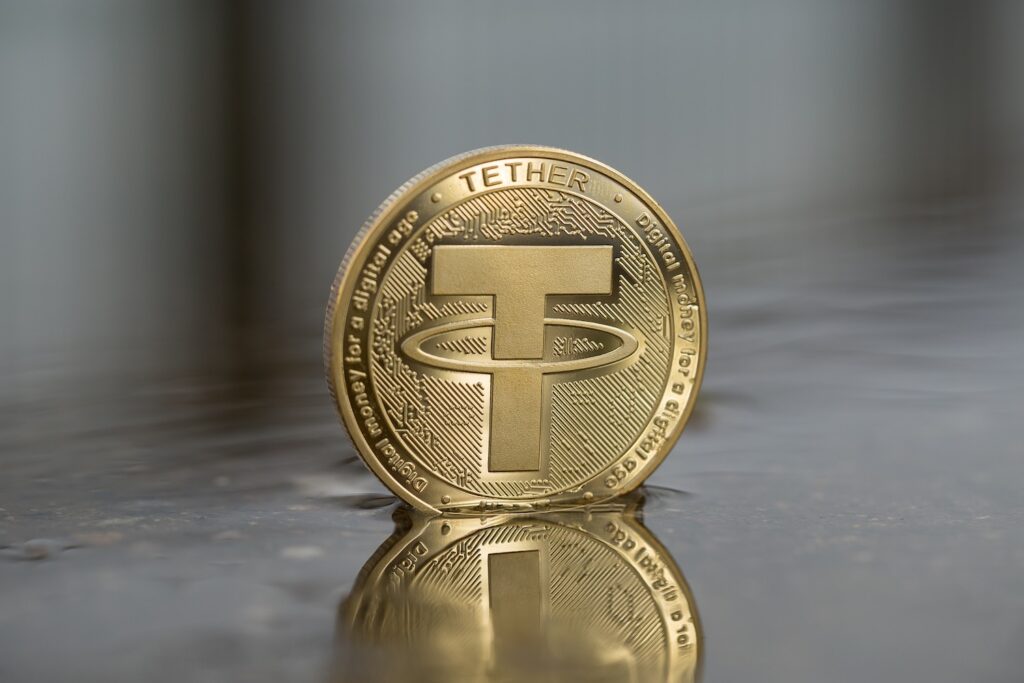
Stablecoins, or crypto assets that follow the price of a well-known fiat currency like the US Dollar, have grown to over $100 billion total market capitalization — and with great transaction volumes to boot. Amid an increasingly welcoming regulatory environment, we might soon see stablecoins as the most widely used crypto product.
The premise of stablecoins is fairly simple: you get to benefit from the versatility of a global blockchain network, but with none of the annoyances from the unstable value of even major cryptocurrencies like Bitcoin and Ethereum.
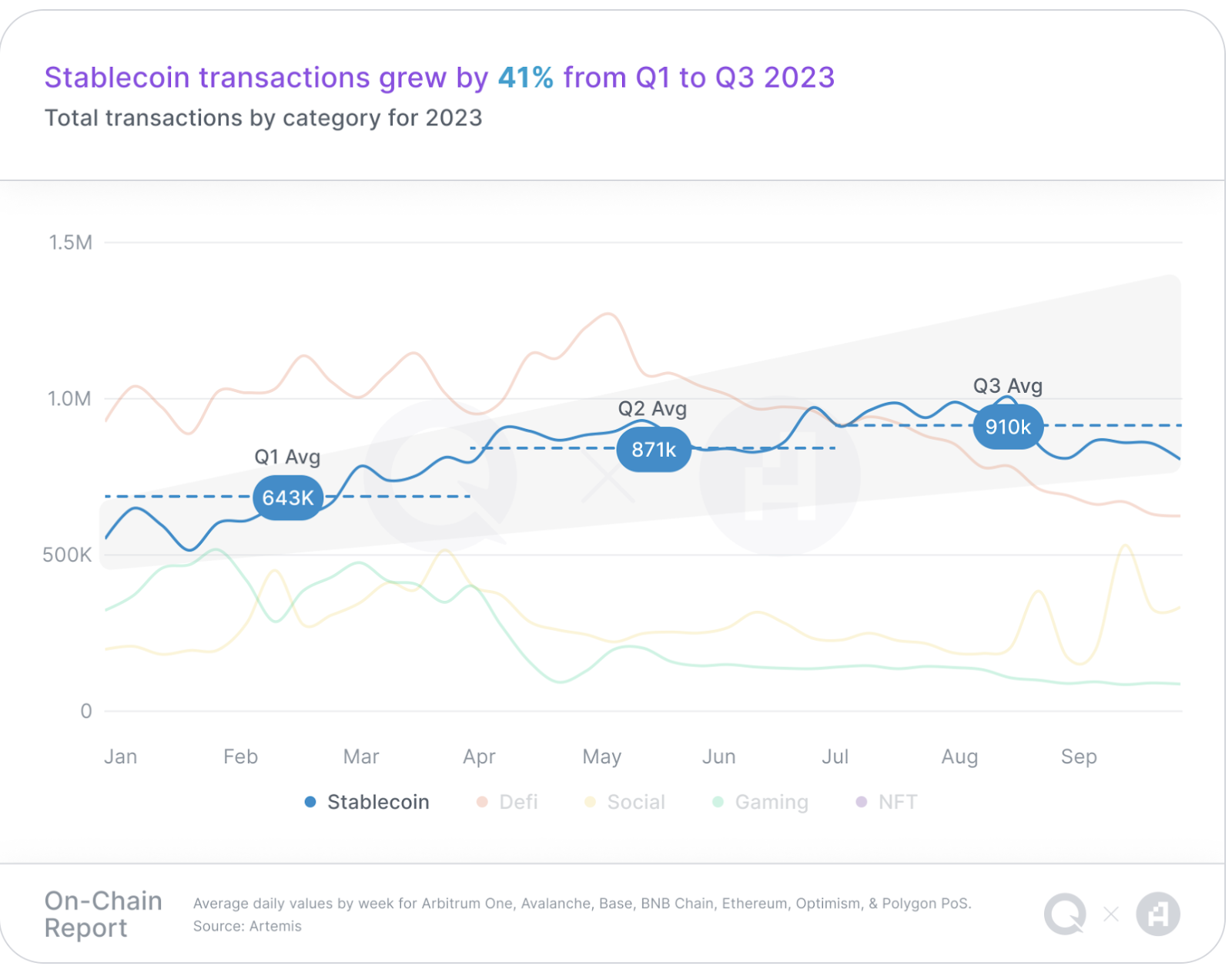
And just as the value of the entire crypto market went through a major downturn, stablecoins have continued to grow and reach new heights of adoption throughout this year, according to QuickNode’s Q3 On-Chain Report.
Growing business and grassroots adoption
While 2023 has been largely tough on crypto markets — VC funding continued to dry up, DeFi and NFT usage declined — stablecoin active user counts are up on the year.
Leading stablecoins like USDT, USDC, DAI can be found across most layer-1 and layer-2 networks, offering a large degree of versatility and ease of use. Ultimately, decentralized bridges further expand the range of stablecoins usable on-chain, though they’ll most likely need to be bridged back for peer-to-peer integrations and fiat conversion.
The rosy picture for the stablecoin class, in truth, is mostly the story of one of them. With BUSD being culled bowing to pressure from the NY Department of Financial Services, and the Silicon Valley Bank collapse and subsequent USDC depeg severely affecting its momentum, only USDT has seen a positive and uneventful year.
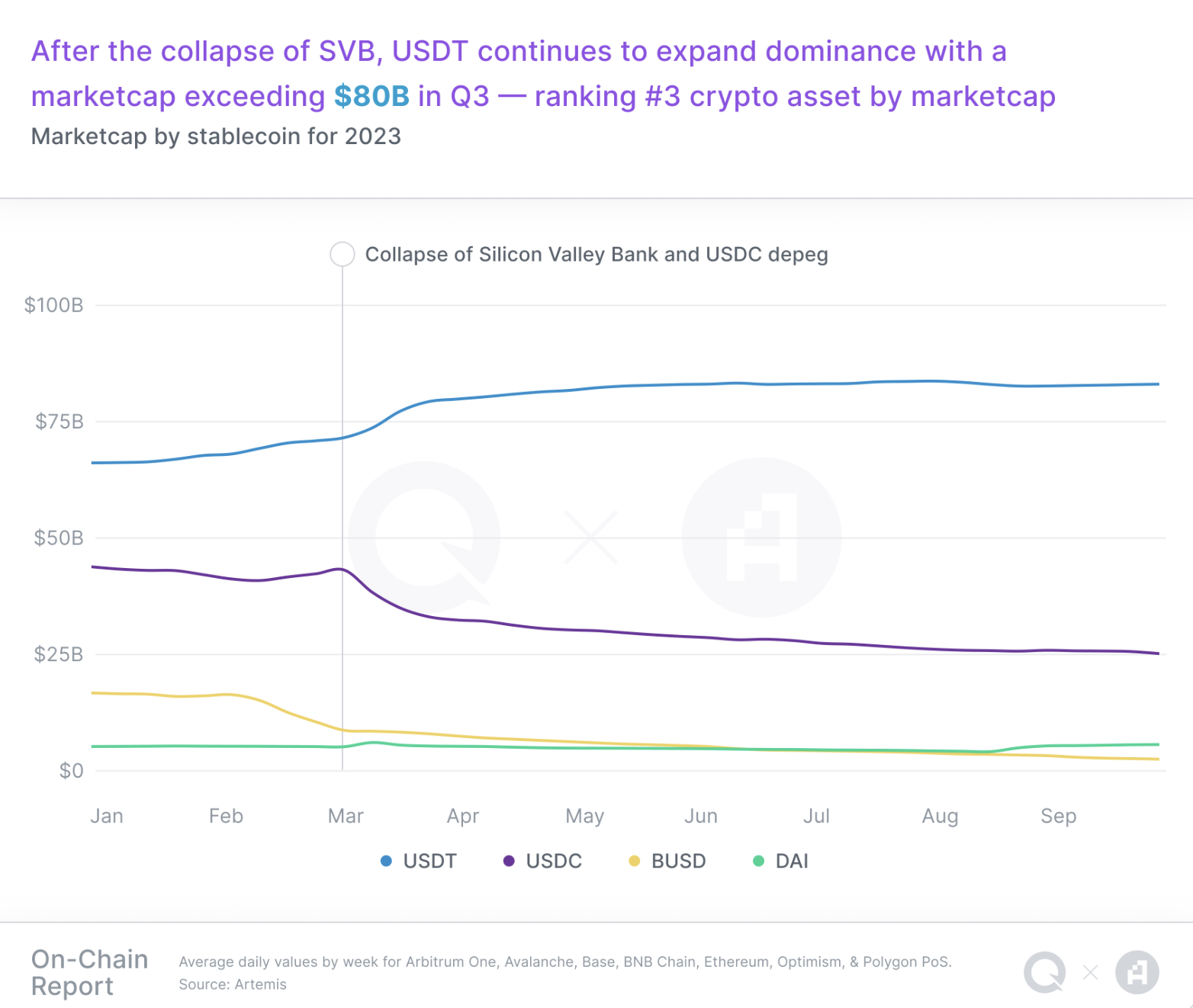
Beyond the large, crypto-related transactions, USDT is also seeing some signs of local grassroots adoption. Earlier in the year, it became possible for Argentinians to purchase groceries at Mercado Central, one of the largest markets in the region, with USDT and other cryptocurrencies. As countries torn by inflation look to adopt the US Dollar — unofficially, at least — stablecoins offer an ideal source of it for both local and global usage.
Finally, some regulatory clarity
Importantly for stablecoins, regulators have now taken a closer look at stablecoin transactions, and the verdicts seem overall positive.
Earlier this year, the milestone MiCA regulation passed in the EU, mandating among other things the full auditability of “centralized” stablecoins. The implementation takes multiple steps, with the bulk of the measures set to be enforced starting December 2024.
Other jurisdictions across the world have mostly followed along, with the UK, Singapore, Hong Kong and others passing a mostly similar set of regulations in the summer of 2023 — a period some have termed the “stablecoin summer.”
As always, regulations carry a double-edged sword. By defining clear rules, they are designed to ensure that episodes like the Terra UST collapse could never happen again, as well as potentially putting an end to the longstanding speculations about reserves and trust in stablecoin providers. But the more stringent requirements for operating legally could make it tough for decentralized alternatives to establish themselves effectively, especially considering an outright ban on “algorithmic” stablecoins seen across many of the regulatory frameworks.
Stablecoins are a big business, and about to become even bigger
Rumors are circulating about Circle, the issuer of USDC, actively considering an IPO in early 2024. According to Bloomberg, the firm is actively studying a potential go-to-market strategy, though the plans are not finalized just yet.
At their last 2022 valuation for a SPAC-driven listing, Circle was valued at 9 billion, taking its rightful place as one of the most valuable crypto companies.
It’s unclear if Tether has anything similar in plan, though it too is an incredibly profitable company. The recent shuffle with Paolo Ardoino, formerly CTO, now officially becoming CEO might be a sign of a longer duration plan.
Regardless, stablecoins are proving their worth and rapidly growing. Though crypto purists might not like this outcome, stablecoins can be the first killer application of blockchain — a way for everyone across the world to experience it.
Lee Jeong-hoon, the former chairman of Bithumb, a prominent cryptocurrency exchange in South Korea, is currently embroiled in a legal battle that could result in an eight-year prison sentence.
The verdict for his case is scheduled to be delivered on January 18, 2024.
Reports from Korean local media indicate that prosecutors allege Lee’s involvement in a scheme to manipulate Bithumb’s governance in order to profit from exchange tokens while evading financial regulations.
This complex legal saga dates back to October 2018 when Lee, then-chairman of Bithumb, supposedly engaged in fraudulent activities during negotiations for the acquisition of Bithumb by Kim Byung-gun, the chairman of the cosmetic surgery firm BK Group.
Prosecutors assert that Lee was aware of difficulties related to the listing of the BXA token but failed to disclose this crucial information to Kim.
Despite the challenges with listing, Lee allegedly received payments without informing Kim about the decision not to proceed with the BXA token listing.
As a consequence, South Korean prosecutors have requested an eight-year prison sentence for Lee.
READ MORE:Tech CEO Calls for Inclusive Blockchain Solutions and Warns Against Web3 Cash Grabs
In his defense, Lee has raised objections to the prosecution’s claims, highlighting inconsistencies in Kim’s statements and questioning his credibility.
Lee maintains that Kim was fully aware of the progress regarding the BXA token listing and argues that Kim was well-equipped to lead Bithumb.
Lee is facing legal charges under the Act on Aggravated Punishment for Specified Economic Crimes, particularly pertaining to allegations of fraud.
The outcome of Lee’s ongoing appeal could potentially set a precedent for future legal proceedings involving cryptocurrency exchanges and their governance.
This development is particularly significant as Bithumb is actively preparing for an initial public offering (IPO) on Kosdaq by 2025.
The verdict of the appeal carries substantial implications for both Bithumb’s future and the fate of BXA tokens.
A guilty verdict could trigger a reevaluation of governance structures within cryptocurrency exchanges, potentially leading to heightened regulatory scrutiny.
As the cryptocurrency community and investors eagerly await the outcome of the appeal, this case underscores the ever-evolving nature of the industry and the pressing need for well-defined regulatory frameworks to address governance issues and uphold trust among investors and stakeholders.

As the cryptocurrency market continues to develop and receive attention from all sides, more and more players are entering this market. Additionally, Bitcoin continues to solidify its position as the top cryptocurrency and attracts interest from users around the world.
Do you want to increase your passive income from Bitcoin and cryptocurrencies? Do you want to know the fastest way to activate the Bitcoin income you are receiving now?
Traditional cryptocurrency mining methods often require expensive computers, which consume large amounts of electricity. This also leads to difficulties in maintaining and profitability.
Beginners may prefer cloud-based software that does not require mining equipment and programs designed for more basic CPU and GPU mining.
They may also prefer software with low withdrawal requirements, as it may take a long time to mine enough Bitcoins to make it worthwhile to use mining software with high limits.
SunMiner is one of the leading cloud mining companies and a trusted partner for users.
Compared with other platforms, SunMiner is more suitable for beginners because it eliminates many technical terms and presents it to customers in the simplest form. Let novices also participate in cloud mining and obtain high profits.
As one of the best providers in the world, SunMiner is committed to making users’ cloud mining experience safe and comfortable.

SunMiner key advantages include:
·Sign up and get an instant $10 bonus.
·High profitability levels and daily payouts.
·There are no other service or administrative fees.
·You can generate more than six other currencies using the platform.
·The company’s affiliate referral program allows you to refer friends and earn up to $20,000 in referral bonuses.
·McAfee® security. Cloudflare® Security.
·Backed by a 100% uptime guarantee and outstanding 24/7 technical support, any questions or concerns are promptly resolved.

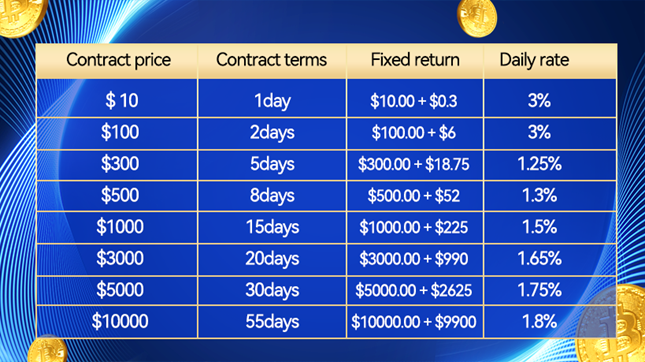
This is a great opportunity for those looking for passive income from cryptocurrencies, as SunMiner offers excellent mining contracts. The platform is suitable for anyone with no technical experience or financial resources,The registration process is simple and takes less than 3 minutes. Users can start mining immediately after registration. There are no calculation fees or investment requirements when registering. Currently, the SunMiner platform has more than 9.55 million members operating in more than 200 countries around the world and earning cryptocurrency. Additional features, such as the option to withdraw your own profits on a daily basis and monitor or predict potential gains, are popular among investors and traders.
In addition to mining services, SunMiner also offers an attractive partner program. This move allows you to easily make money by attracting new partners. The process is simple and does not require any initial investment. Just invite friends and acquaintances and you’ll receive up to $20,000 in bonuses.
Summarize
If you are looking for ways to increase your passive income, cloud mining is a great way to do it. If used correctly, these opportunities can help you grow your cryptocurrency wealth on “autopilot” mode with minimal time investment. At the very least, they should take less time than any kind of active transaction. Passive income is the goal of every investor and trader, and with SunMiner you can maximize your passive income potential easier than ever.
If you want to know more about SunMiner, please visit its official website: https://sunminer.com
SunMiner can be searched and downloaded by entering “SunMiner” in the Apple Store.