



Despite recent events that would typically be expected to have a severe negative impact on the cryptocurrency market, Bitcoin (BTC) has managed to maintain its price stability, trading near $37,000 on November 22, which is essentially unchanged from three days earlier.
This surprising performance comes in the wake of Binance’s plea deal with the U.S. government on November 21 for violating money laundering and terror financing laws.

Some speculate that entities may be manipulating Bitcoin’s price to avoid contagion, potentially through the issuance of unbacked stablecoins, especially those connected to exchanges facing regulatory scrutiny.
To gauge investor risk aversion, it’s essential to examine Bitcoin derivatives rather than focusing solely on its current price.
The U.S. government had filed indictments against Binance and its co-founder, Changpeng “CZ” Zhao, on November 14, but these documents were unsealed a week later.
CZ admitted to the offenses and stepped away from Binance management as part of the deal. The penalties, including fines imposed on CZ personally, totaled over $4 billion.
Surprisingly, this news only led to a modest $50 million decline in BTC leveraged long futures contracts, with Bitcoin briefly trading down to $35,600.
On November 20, the United States Securities and Exchange Commission (SEC) sued crypto exchange Kraken, alleging the commingling of customer funds and failure to register as a securities broker, dealer, and clearing agency.
Kraken defended itself, claiming that the SEC’s commingling accusations pertained to previously earned fees, not customer assets.
READ MORE: FTC Takes Bold Step to Streamline Investigations into AI Misuse
Another potentially impactful development was the announcement by the Mt. Gox trustee, Nobuaki Kobayashi, on November 21 regarding the redemption of $47 million in trust assets and plans to initiate cash repayments to creditors in 2023.
Although no information about the sale of Bitcoin assets was provided, investors speculated that this milestone was drawing closer.
Many experienced traders and analysts had predicted a crypto market crash if Binance were indicted by the Department of Justice (DOJ).
However, the opposite seemed to be happening. Binance’s move towards compliance could increase the chances of a spot ETF approval, as it weakens the SEC’s argument about excessive market share on unregulated exchanges.
Bitcoin’s resilience in the face of these regulatory actions is reflected in Bitcoin derivatives markets.
Monthly futures contracts for Bitcoin are currently holding an 8% premium, indicating demand for leverage long positions, though it’s lower than the 11.5% seen in mid-November.
The options 25% delta skew, which measures arbitrage and market makers’ pricing for upside or downside protection, has remained optimistic.
In summary, despite regulatory actions and potential sell pressure from Mt. Gox, the cryptocurrency market has remained buoyant, as evidenced by derivative indicators.
The liquidation of $70 million leveraged BTC longs has further reduced the pressure from negative price fluctuations, suggesting that the path to $40,000 for Bitcoin is becoming more certain, especially with upcoming ETF decisions in January and February.

On November 21, Binance CEO Changpeng “CZ” Zhao resigned from his position after pleading guilty to Anti-Money Laundering law violations.
Following his resignation, CZ addressed the company’s staff through a messaging platform, and his statement began circulating on social media the next day.
In his message, CZ expressed his pride in the Binance team’s work, both in the present and the past, and he expressed confidence in the company’s future, stating, “Binance will be fine.”
He also hinted at potential restructuring plans. In a nod to the famous science-fiction series Star Trek, CZ encouraged everyone to “continue performing admirably.”
Furthermore, CZ requested that the Binance community, which he affectionately referred to as “Binancians,” extend a warm welcome and support to the new CEO, Richard Teng.
He mentioned that he would appear at an upcoming town hall meeting to formally hand over his responsibilities to Teng.
Notably, Richard Teng previously served as the head of regional markets outside the United States at Binance. CZ had previously praised Teng as a “highly qualified leader” who would guide the company through its next phase of growth.
READ MORE: Submit Your PR to Cointelegraph
As part of the legal proceedings, CZ agreed to pay a bail amount of $175 million and committed to returning to the United States two weeks before his sentencing, scheduled for February 23, 2023.
This arrangement potentially allows CZ to return to his residence in Dubai.
Additionally, CZ posted $15 million in a separate trust account, with the understanding that these funds would be forfeited if he failed to comply with his bond conditions.
The resolution of CZ’s legal case also involved a $4.3 billion settlement and plea deal between the U.S. authorities and Binance.
This agreement marked the conclusion of various civil and criminal investigations that had surrounded the cryptocurrency exchange over the past year.
In summary, CZ’s resignation as Binance CEO came in the wake of legal troubles related to Anti-Money Laundering violations.
Despite his departure, he expressed confidence in the company’s future and encouraged support for the incoming CEO, Richard Teng.
Legal agreements, including a substantial bail and settlement, were reached to address the issues at hand and bring some resolution to the situation.
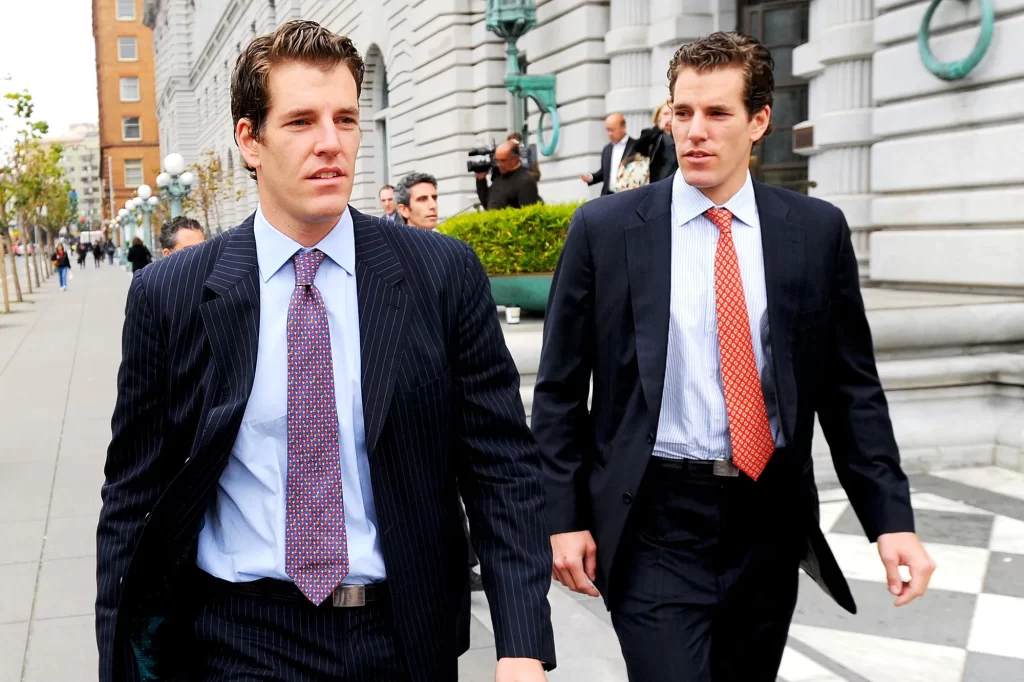
Crypto lender Genesis Global Capital has taken legal action against cryptocurrency exchange Gemini, aiming to recover $689 million in preferential transfers.
The lawsuit, filed on November 21, alleges that within the 90-day period before Genesis declared bankruptcy in January, Gemini withdrew approximately $689,302,000, prioritizing its own interests over other creditors.
Genesis’s legal team has urged the court to employ remedies outlined in the United States Bankruptcy Code to rectify this perceived unfairness and ensure that Gemini is treated on par with other creditors in a similar position.
The ongoing dispute between these crypto industry heavyweights began after the collapse of the crypto exchange FTX in November 2022.
It escalated into a public feud, with both CEOs accusing each other of noncooperation and issuing threats of legal action.
In a countermove, Gemini filed an adversary proceeding against Genesis on October 27. This proceeding sought to use 62,086,586 shares of the Grayscale Bitcoin Trust as collateral.
READ MORE: Bitcoin Overtakes Ethereum in Daily Transaction Fees Amidst Ordinals Frenzy
These shares had been pledged by 232,000 Gemini users to secure loans provided by Genesis through the Gemini Earn program.
As of now, the collateral is valued at approximately $1.6 billion.
Genesis had initially filed for bankruptcy in January following the suspension of withdrawals in November 2022.
The fallout from Genesis’s bankruptcy had a detrimental impact on the Gemini Earn program, prompting the crypto exchange to initiate legal action against Genesis’s parent company, Digital Currency Group (DCG), and its CEO, Barry Silbert, for alleged fraud in July.
In another legal move, Genesis itself filed a lawsuit against DCG in September, seeking repayment of multiple loans totaling over $600 million.
This legal battle between Genesis, Gemini, and DCG underscores the complexities and disputes that can arise in the crypto industry, particularly in the realm of lending and asset collateralization.
The outcome of these lawsuits will likely have significant implications for the involved parties and the broader crypto sector as a whole.

Creditors of the now-defunct Mt. Gox Bitcoin exchange, which suffered a devastating hack in 2014 resulting in the loss of 850,000 BTC, have received an encouraging email hinting at forthcoming repayments.
On November 21, Nobuaki Kobayashi, the trustee responsible for overseeing the estate of Mt. Gox, began sending emails to rehabilitation creditors, indicating the start of repayments.
According to the email circulating on social media, Kobayashi plans to initiate the first repayments in cash during 2023, with expectations of continuing into 2024.
However, specific timelines for individual rehabilitation creditors were not provided, citing the complexity of handling repayments for the large number of creditors with various types of claims.
This news coincided with the announcement of the redemption of trust assets on November 22.
The rehabilitation trustee disclosed the receipt of 7 billion Japanese yen (approximately $47 million) to finance the repayment of claims, leaving trust assets at 8.8 billion yen, roughly $59 million.
The trustee also affirmed ongoing preparations for base, lump-sum, and intermediate repayments.
The Mt. Gox community greeted these developments with mixed reactions. Some found the email from the Mt. Gox trustee cautiously promising, finally seeing progress after years of uncertainty.
READ MORE: BNB Skyrockets Over 7% Amidst DOJ’s $4 Billion Settlement Talks with Binance
However, others pointed out that the email only mentioned cash payments, whereas many victims of the Mt. Gox hack anticipated the return of substantial Bitcoin holdings.
Data from the Mt. Gox balance bot on X (formerly Twitter) indicated that the trustee holds 135,890 BTC in known addresses, valued at nearly $5 billion at the time of writing.
An additional 3,795 BTC (equivalent to $130 million) is held in unknown addresses, according to the Mt. Gox balance bot.
Some creditors acknowledged that while cash payments represent progress after a decade of waiting, they eagerly await the return of their Bitcoin holdings.
Additionally, the recent lawsuit filed by the United States Securities and Exchange Commission (SEC) against Kraken on November 21 caught the attention of the Mt. Gox community.
Kraken has played a significant role in the repayment process for Mt. Gox hack victims.
Concerns were raised about potential delays if Kraken were to face difficulties, leading to further delays in the repayment process.
Despite the newfound optimism within the Mt. Gox community, some remain skeptical due to the exchange’s history of failing to meet repayment deadlines.
Initially expected to complete repayments by October 2023, the trustee officially extended the deadline to October 2024 in September 2023.
The road to recovery for Mt. Gox creditors continues to be marked by uncertainty and anticipation.

In the past 24 hours, the cryptocurrency world has been thrust into a tumultuous whirlwind of events, primarily revolving around the renowned crypto exchange, Binance, and its CEO, Changpeng “CZ” Zhao.
These developments have sent shockwaves through the digital asset space, resulting in a rollercoaster ride that witnessed a staggering $175 million in liquidations for traders who had taken long positions.
On November 21, CZ made a startling announcement amidst his ongoing legal battle with the U.S. Department of Justice (DOJ).
He revealed his intention to plead guilty to charges related to violating Anti-Money Laundering laws and subsequently announced his resignation as the CEO of Binance.
In a parallel move, the DOJ disclosed a monumental $4.3 billion settlement with Binance, marking a significant chapter in the exchange’s history.
As part of its restructuring, Binance swiftly appointed a new CEO.
The repercussions of these events were felt far and wide across the cryptocurrency markets.
According to data from CoinGlass, a crypto derivatives platform, a staggering $175 million worth of long positions were liquidated within the span of 24 hours.
Conversely, short positions worth $51 million faced a similar fate.
The overall market experienced tumultuous movements, with over $226 million in crypto assets being liquidated during this period, affecting 92,742 traders.
READ MORE: Blockchain Association Stands Firm in Support of Tornado Cash Users in Legal Battle
Notably, the largest liquidation occurred on the BTC/USD pair of crypto exchange Bybit, where approximately $2.35 million was liquidated.
Aside from the extensive liquidations, there were significant shifts in the flow of crypto assets within the Binance exchange itself.
Data from DefiLlama, a data aggregator, indicated that Binance’s asset inflows plummeted by over $1 billion in the last 24 hours.
This suggests that some traders have temporarily halted their deposits into the exchange, possibly due to uncertainties arising from the recent developments.
Interestingly, on November 21, Binance’s native token, BNB, embarked on a bullish rally, defying the prevailing market sentiment for the day.
However, this rally was short-lived, as news of the DOJ settlement emerged. BNB reached an impressive five-month high of $271.9 before retracing to $237 at the time of writing.
In conclusion, the last 24 hours have been marked by a whirlwind of developments in the cryptocurrency space, with Binance and CZ at the center of attention.
The impact has been profound, with significant liquidations, market fluctuations, and a notable shift in asset flows within the Binance exchange itself.
The cryptocurrency market remains as dynamic and unpredictable as ever, responding swiftly to unfolding events.

The United States Federal Trade Commission (FTC) has taken a significant step to address the growing concerns surrounding the unlawful use of artificial intelligence (AI).
In a unanimous decision, the FTC approved a streamlined process for investigating cases related to AI, signaling a heightened focus on potential legal violations within the realm of AI applications.
The approved measure empowers the FTC staff to issue civil investigative demands (CIDs), a legal instrument akin to a subpoena, in AI-related investigations.
This streamlining aims to expedite the acquisition of crucial documents, information, and testimonies necessary for consumer protection and competition investigations.
It’s worth noting that the FTC retains its authority to judiciously decide when to issue CIDs.
This omnibus resolution will remain effective for the next ten years, reinforcing the agency’s commitment to scrutinizing AI-related cases.
This move by the FTC, in conjunction with other initiatives, underscores its dedication to addressing the challenges posed by AI technology.
Critics of AI have voiced concerns about its potential to facilitate fraudulent activities, particularly in areas like phishing emails and robocalls.
During a Senate confirmation hearing in September, FTC Commissioner Rebecca Slaughter, who was being considered for re-nomination, echoed the sentiment that the focus should be on tackling issues like the use of AI to enhance the persuasiveness of phishing emails and robocalls.
READ MORE: Bitcoin Overtakes Ethereum in Daily Transaction Fees Amidst Ordinals Frenzy
While AI has unlocked new avenues for human expression and creativity, it has also introduced novel challenges.
Notably, the emergence of deep fakes, digitally generated AI identities used for fraudulent purposes, has been on the rise.
According to Sumsub data, the proportion of fraud attributed to deep fakes more than doubled between 2022 and the first quarter of 2023, with a significant increase in the United States, from 0.2% to 2.6%.
Recognizing the potential risks associated with voice cloning technology, the FTC unveiled a competition on November 16 to identify the most effective methods for safeguarding consumers from fraud and other risks linked to voice cloning.
As text-to-speech AI technology has advanced, voice cloning has become increasingly sophisticated.
While it holds promise for beneficial applications like providing medical assistance to individuals who have lost their voices due to accidents or illnesses, it also poses security concerns that the FTC is determined to address.
In summary, the FTC’s approval of a streamlined process for investigating AI-related cases reflects its commitment to addressing the challenges and risks associated with the expanding use of artificial intelligence in various domains, while also emphasizing the importance of protecting consumers from potential harm.

The CEO of Binance, Changpeng “CZ” Zhao, is set to plead guilty to a felony charge as part of a settlement reached with the United States Department of Justice.
This agreement resolves both criminal and civil cases involving the cryptocurrency exchange.
Attorney General Merrick Garland made the announcement during a press conference on November 21st, revealing that CZ appeared in person in a U.S. federal court, despite residing outside the country.
The settlement, valued at $4.3 billion, will address “civil regulatory enforcement actions” involving various government departments, including the U.S. Treasury and Commodity Futures Trading Commission (CFTC).
Garland accused Binance of allowing criminals engaged in illicit activities to use the platform to move “stolen funds.”
He claimed that the exchange had only pretended to comply with U.S. federal laws by providing certain users with access to Binance, despite their connections to illicit funds.
As part of the settlement, Binance will be subject to monitoring, reporting requirements, and the filing of suspicious activity reports for past transactions.
Garland criticized Binance for prioritizing profits over the safety of the American people, stating, “Using new technology to break the law does not make you a disruptor — it makes you a criminal.”
READ MORE: National Bank of Cambodia Teams Up with Alipay to Enable Cross-Border Transactions
Treasury Secretary Janet Yellen announced that Binance would pay over $3.4 billion in penalties to the Financial Crimes Enforcement Network and approximately $1 billion to the Treasury’s Office of Foreign Assets Control. CFTC Chair Rostin Behnam disclosed that Binance would pay $2.7 billion in civil monetary penalties and disgorgement, while CZ would pay $150 million.
Former compliance chief Samuel Lin would also contribute $1.5 million to the proposed settlement, with the Justice Department crediting approximately $1.8 billion toward these resolutions.
In response to the settlement, Binance released a blog post on November 21st, expressing their satisfaction with reaching a resolution with U.S. authorities. They emphasized their commitment to user security and safety.
CZ announced his resignation as CEO, with Richard Teng, Binance’s global head of regional markets, taking over the position. CZ acknowledged his mistakes and expressed his belief that stepping down was in the best interest of the Binance community and himself.
He also asserted that Binance had not misappropriated user funds or engaged in market manipulation.
The indictment against CZ, filed under seal on November 14th, charged him with failing to maintain an effective Anti-Money Laundering program at the crypto exchange, in violation of the Bank Secrecy Act.
Court records related to charges against Binance and CZ remained sealed from November 14th to 21st.
While this settlement resolves many of the civil and criminal investigations into Binance, the exchange still faces a pending civil case with the U.S. Securities and Exchange Commission, which filed charges for securities law violations in June.
Grayscale, the prominent crypto asset manager, recently held a crucial meeting with the Securities and Exchange Commission (SEC) to discuss the transformation of its flagship Bitcoin trust into a spot Bitcoin exchange-traded fund (ETF).
The meeting, which took place on November 20th, involved key figures such as Grayscale CEO Michael Sonnenshein, legal chief Craig Salm, ETF head Dave LaValle, and four other executives, alongside five representatives from the Davis Polk law firm.
The primary focus of these discussions was NYSE Arca, Inc.’s proposal to list and trade shares of the Grayscale Bitcoin Trust (BTC) under NYSE Arca Rule 8.201-E, as revealed in an SEC memo.
Grayscale has taken significant steps to advance this conversion, including entering into a Transfer Agency and Service Agreement with BNY Mellon, a major financial institution. Under this agreement,
BNY Mellon will serve as the agent for Grayscale Bitcoin Trust (GBTC), overseeing the issuance and redemption of shares and maintaining shareholder accounts.
Bloomberg ETF analyst James Seyffart noted that the collaboration with BNY Mellon was a strategic move, likely necessary for the conversion process but not necessarily indicative of an imminent transformation of GBTC.
Moreover, it was observed that the SEC’s division of trading and markets plays a crucial role in approving or denying 19b-4s, which are used to notify the SEC of proposed rule changes by self-regulatory organizations.
In a Twitter post on November 22nd, ETF Store President Nate Geraci emphasized a significant aspect of Grayscale’s meeting with the SEC, referring to the GBTC conversion as an “uplisting.”
READ MORE: BNB Skyrockets Over 7% Amidst DOJ’s $4 Billion Settlement Talks with Binance
Geraci pointed out that Grayscale could gain a substantial advantage in the ETF category if they manage to “uplist GBTC to NYSE Arca” simultaneously with other issuers launching spot Bitcoin ETFs.
He stressed the importance of competitive fees in this endeavor and projected that Grayscale could enter the market with a substantial $20 billion in assets under management, even competing with industry giants like BlackRock.
Grayscale had previously submitted an S-3 form registration statement with the SEC on October 19th, expressing its intent to list GBTC shares on NYSE Arca under the ticker symbol GBTC.
In October, a U.S. appellate court directed the SEC to review its decision to deny Grayscale’s request to convert GBTC into a spot ETF.
Grayscale joins other major asset managers, including BlackRock and Fidelity, in seeking SEC approval for spot Bitcoin ETFs.
Seyffart remained optimistic about the progress of these developments, maintaining a 90% likelihood of ETF approval on or before January 10, 2024.
This indicates that the crypto industry continues to navigate regulatory channels in its pursuit of expanding investment opportunities for digital assets.
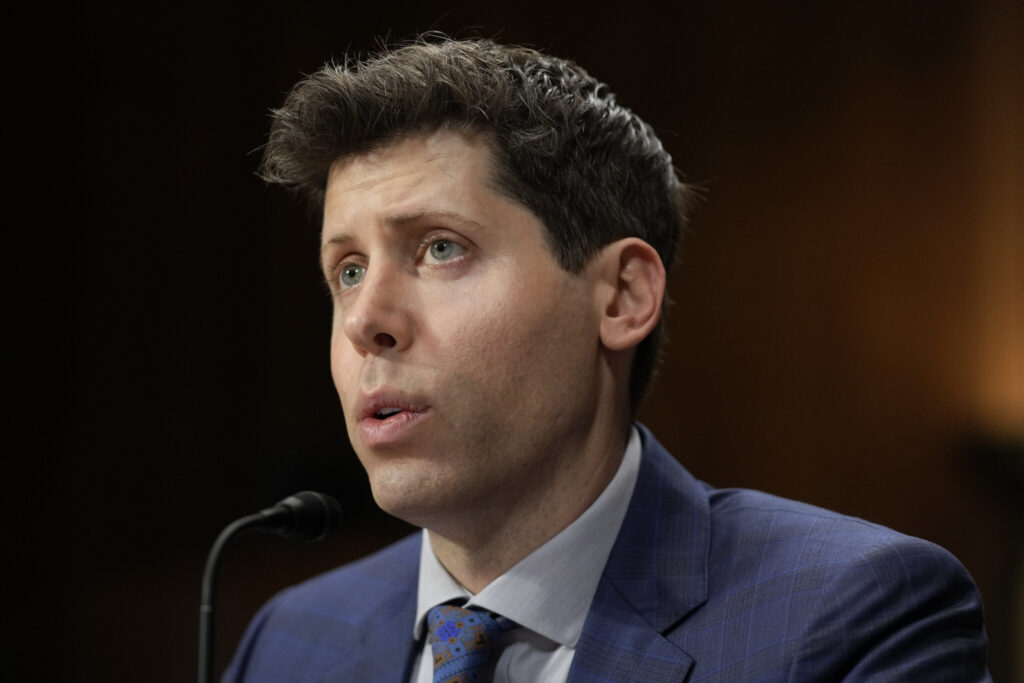
Just two days after Microsoft’s CEO, Satya Nadella, made headlines by hiring former OpenAI CEO Sam Altman to lead a groundbreaking advanced artificial intelligence (AI) research team, a surprising twist in the tale unfolded.
OpenAI, the organization Altman co-founded, announced a remarkable decision: Sam Altman was returning as its CEO.
This surprising development was confirmed via a post on OpenAI’s official X (formerly Twitter) account on November 22, effectively retracting Altman’s previous dismissal.
In their announcement, OpenAI revealed that they and Altman were actively working together to finalize the details of this unexpected reunion.
Altman, expressing his profound commitment, shared the announcement with a heart emoji, signifying his affection for OpenAI and his eagerness to return to the organization.
Altman’s decision to step away from his newly acquired role at Microsoft was driven by his affection and dedication to OpenAI.
READ MORE: Blockchain Association Stands Firm in Support of Tornado Cash Users in Legal Battle
He conveyed his excitement about returning to OpenAI and building upon the strong partnership between the organization and Microsoft. Satya Nadella, Microsoft’s CEO, wholeheartedly supported Altman and OpenAI’s co-founder and president, Greg Brockman, in their choice to rejoin OpenAI.
Nadella emphasized the critical importance of ensuring that OpenAI continues to thrive and remains committed to its mission.
The brief departure of Sam Altman from OpenAI brought to light his pivotal role in uniting the team.
On November 20, a stunning revelation occurred when 505 out of 700 OpenAI employees signed a letter expressing their discontent with the board’s decision to dismiss Altman.
They asserted that the process through which Altman and Greg Brockman were removed from the board had jeopardized the organization’s work and undermined its mission and overall purpose.
This significant backlash from OpenAI employees, combined with the well-timed job offer from Microsoft, underscored Altman’s influential position within the AI ecosystem.
His return to OpenAI marked a pivotal moment in the organization’s history, promising renewed focus and collaboration as they continued their mission to advance artificial intelligence research.
Binance Coin (BNB) experienced a remarkable surge, surging by more than 7% within the past 24 hours, following breaking news from Bloomberg.
The report from Bloomberg unveiled that the United States Department of Justice (DOJ) is currently in discussions with Binance regarding a potential $4 billion settlement.
This significant settlement would aim to bring closure to the ongoing investigation into various alleged wrongdoings by the company, including violations of sanctions, money laundering, and fraudulent activities.
The Cointelegraph Markets Pro data indicated that BNB swiftly responded to the breaking news, spiking by 6% to reach a price of $262 just half an hour after Bloomberg’s revelation on November 20.
However, the cryptocurrency experienced a brief dip, falling to $252 approximately four hours later.
Nonetheless, BNB made a notable recovery and reached $266, marking its highest value since June 7.
This surge occurred shortly after the Securities and Exchange Commission (SEC) initiated legal action against Binance and its CEO, Changpeng “CZ” Zhao, accusing them of violating securities laws.
READ MORE: Bitcoin Nears Crucial Fibonacci Level Amidst Pre-Halving Rally
BNB’s price movement in the last 24 hours stands out among the top 75 cryptocurrencies by market capitalization, boasting the most substantial increase.
Currently, BNB occupies the fourth position among tokens, commanding a market capitalization exceeding $40 billion.
Despite this recent surge, it’s worth noting that BNB still lags considerably behind its all-time high of $686 achieved on May 10, 2021, with a decline of 61.4%.
Nevertheless, it has managed to achieve a modest 6.5% gain year-to-date.
One potential outcome of the settlement discussions envisions Binance agreeing to pay the substantial $4 billion fine while agreeing to operate within the United States under specific conditions mandated by regulatory authorities.
Bloomberg has reported that an official announcement regarding this potential agreement could be made by the end of the month.
If indeed Binance consents to this settlement, it will mark one of the largest fines ever levied in a criminal cryptocurrency case, underscoring the increasing scrutiny and regulation within the cryptocurrency industry.