


In a world often consumed by individualism and consumerism, charity initiatives stand as a testament to our inherent humanity.
However, the trust in charitable organizations and nonprofits has witnessed a significant decline in recent years, jeopardizing the noble causes they support.

Many businesses and individual influencers have harnessed the power of philanthropy for branding and promotion, sometimes neglecting the crucial task of ensuring that their contributions reach their intended destinations.
The “Trust in Civil Society” report by Independent Sector sheds light on this disturbing trend, revealing a substantial decline in trust in nonprofits and philanthropy among U.S. citizens in 2023 compared to 2020.
Similarly, the Charity Commission of England and Wales reports a decline in the percentage of people who view charity as ‘very important’ in the UK, dropping from 72% in 2008 to a mere 56% in 2023.
Amidst this crisis of trust, blockchain technology emerges as a beacon of hope, capable of restoring faith in charity endeavors.
Blockchain’s core feature, decentralization, empowers communities and diminishes the reliance on intermediaries.
This translates to enhanced transparency, borderless interactions, and cost-effective and swift transactions.
Charities and nonprofits can harness the potential of blockchain and Web3 technologies to enhance transparency and expand their outreach:
- Transparency: Blockchain can establish a transparent donation process, allowing donors to track where their contributions are directed.
- Supply Chain Monitoring: Decentralized networks can monitor the entire supply chain, ensuring resources efficiently reach those in need.
- Results Tracking: With Web3 technologies, donors can monitor the impact of their funding, ensuring tangible results.
Furthermore, decentralized autonomous organizations (DAOs) governed by communities can mitigate the risk of mismanagement in the charity sector.
READ MORE: Australian Tax Regulator’s Cryptocurrency Tax Guidance Leaves DeFi Users in the Dark
One shining example of blockchain’s impact on charity is Uno Farm, a cross-chain yield farming ecosystem committed to social causes. Uno Farm allocates a portion of its funds to charitable initiatives, resembling corporate social responsibility but with an equitable distribution of resources.
Recently, Uno Farm sponsored the Humans Care Foundation Water (HCF Water) to build a well in Uganda, benefiting over 1,000 people.
HCF leverages blockchain technology to ensure the credibility and transparency of transactions, offering various reports, including visual evidence and banking statements.
The journey of this initiative in Uganda was meticulously documented, enhancing the transparency of the entire process.
Max, the chief product officer at HCF, emphasized, “We believe that the right way of using blockchain technology can take almost every field to the next level, and we prove it on charity.”
Uno Farm’s commitment to social responsibility and charity reflects the transformative potential of Web3 technologies in philanthropy.
In addition to their charitable endeavors, Uno Farm empowers individuals to engage in DeFi yield opportunities.
Their partnership with DEX aggregator 1inch introduces the Single Asset Entry feature, simplifying yield farming for individuals of all experience levels.
In conclusion, blockchain projects like Uno Farm exemplify the potential for transparency and credibility within the charity sector.
By harnessing blockchain technology, these initiatives ensure that donations are used effectively, ultimately restoring trust in charities and inspiring more people to contribute to meaningful causes.

BitMEX co-founder Arthur Hayes has expressed his bullish stance on Bitcoin, offering insights on the cryptocurrency’s potential trajectory.
In a recent post, accompanied by a chart illustrating net reverse repurchase agreement (RRP) and treasury general account (TGA) balance changes, Hayes humorously referred to United States Treasury Secretary Janet Yellen as “Bad Gurl Yellen.”
Hayes urged fellow Bitcoin enthusiasts to maintain their focus, citing a notable increase in U.S. dollar liquidity.
He posited that Bitcoin’s price is likely to mirror the rise in dollar liquidity, potentially leading to an uptick in its value.
The provided chart showcases fluctuations in RRP and TGA balances, hinting at a potential correlation between heightened dollar liquidity and Bitcoin’s price.
In a parallel development, crypto analyst dharmafi offered more precise data points.
The post highlighted an RRP of $65 billion and a TGA balance of $35 billion, resulting in a substantial net liquidity surge of $106 billion since November 21.
As Hayes pointed out, this surge in liquidity reflects shifting dynamics within financial markets. Investors and Bitcoin enthusiasts closely monitoring these liquidity injections are anticipating potential repercussions for the cryptocurrency market.
READ MORE: Hong Kong’s Hospital Authority Harnesses AI to Tackle Rising Superbug Threat
While Hayes emphasized the connection between dollar liquidity and Bitcoin’s price movement, dharmafi’s data further underscores the impact of the liquidity surge.
The substantial increase in net liquidity since November 21 has raised questions regarding its potential effects on various asset classes, including cryptocurrencies.
In contrast to the enthusiasm expressed by Hayes and others in the crypto space, Janet Yellen, who has been a vocal skeptic of Bitcoin, recently issued a caution to cryptocurrency exchanges.
During a meeting of G20 finance ministers and central bank governors, Yellen emphasized the importance of compliance within the digital currency industry.
She underlined the necessity for cryptocurrency exchanges to adhere to regulations to operate within the U.S. financial system, reinforcing her commitment to maintaining regulatory oversight in the crypto sector.
This stance by Yellen reflects ongoing discussions and debates surrounding the regulatory framework for cryptocurrencies in the United States.

Azuki DAO, a decentralized autonomous organization linked to a nonfungible token (NFT) collection, has made significant updates, including a rebranding to “Bean.”
This transformation comes in tandem with the abandonment of a proposed lawsuit against Zagabond, the founder of the NFT collection, in relation to a contentious $39 million minting event.
The development was confirmed following a clarification statement from an Azuki DAO spokesperson.
In its new avatar as Bean, Azuki DAO has charted a course to become a memecoin project and integrate into the Ethereum layer-2 Blast ecosystem.
The transition has also been facilitated by a substantial infusion of funds, as Bean has secured $10 million from notable investors to support its growth and acceleration within the Blast ecosystem.
The forthcoming Bean memecoin will have a total supply capped at 1 billion tokens. Azuki DAO developers clarified that the previously displayed token distribution plan on their website is outdated.
READ MORE: Ethereum’s Resilience: Price Holds Above $2,000 Amidst Binance’s Regulatory Challenges
The updated allocation includes 50% of Bean tokens earmarked for the Azuki DAO community as part of an airdrop of Azuki series NFTs that concluded four months ago.
The remaining tokens are held in the project’s address. Furthermore, 40% of Bean tokens have been allocated to the Bean Treasury, while 10% are designated for Zagabond and remain in the project’s address.
The Azuki NFT collection comprises 10,000 anime-themed profile pictures (PFPs).
A second series of 10,000 PFPs called “Elementals” was introduced by Zagabond in June, which led to concerns over the resemblance between Elementals and Azuki PFPs, resulting in an oversupply and a 44% drop in Azuki NFT prices.
This event triggered a lawsuit proposal from the Azuki DAO community against Zagabond.
The developers of Bean have promised to share more detailed information about their financing and future development roadmap in the near future.
These changes mark a significant shift for Azuki DAO, now known as Bean, as it embraces the memecoin space and looks to thrive within the Blast ecosystem while settling its legal disputes.

In just four days since its launch, the Web3 protocol Blast network has amassed over $400 million in total value locked (TVL), as per data from blockchain analytics platform DeBank.
However, concerns about the network’s security have been raised by Polygon Labs developer relations engineer Jarrod Watts in a November 23 social media thread.
Watts argues that Blast’s centralization poses significant security risks.
In response to Watts’ criticism, Blast issued a statement on its X (formerly Twitter) account, defending its decentralization claims.
They asserted that their network is as decentralized as other layer 2 solutions like Optimism, Arbitrum, and Polygon.
Blast network touts itself as “the only Ethereum L2 with native yield for ETH and stablecoins,” allowing users’ balances to be “auto-compounded” and stablecoins to be converted into “USDB,” a stablecoin that auto-compounds through MakerDAO’s T-Bill protocol.
However, technical documentation explaining the protocol’s workings has yet to be released, with the promise of publication accompanying an airdrop in January.
Watts’ original post raised concerns that Blast’s security is compromised as it relies on a 3/5 multisig mechanism.
If an attacker gains control of three out of five team members’ keys, they could potentially steal all the crypto deposited into its contracts.
Watts also pointed out that Blast contracts can be upgraded through a Safe (formerly Gnosis Safe) multisignature wallet account, requiring three out of five signatures.
READ MORE: Australian Tax Regulator’s Cryptocurrency Tax Guidance Leaves DeFi Users in the Dark
If these private keys are compromised, an attacker could upgrade the contracts and transfer the entire $400 million TVL to their account.
Furthermore, Watts contested Blast’s classification as a layer 2 solution, asserting that it merely “accepts funds from users” and “stakes users’ funds into protocols like LIDO” without utilizing a bridge or testnet for these transactions.
He also highlighted the lack of a withdrawal function, relying on trust in developers to implement it in the future.
Despite these vulnerabilities, Watts expressed doubt that funds would be stolen but cautioned against sending funds to Blast in its current state.
Blast defended its security posture, explaining that it employs upgradeable contracts to address potential vulnerabilities.
They emphasized the security measures in place, including storing Safe account keys in cold storage, managed by an independent party and geographically separated.
The debate over upgradeable contracts is not unique to Blast, as other protocols like Stargate and Ankr have faced similar concerns in the past.
In the case of Ankr, a former employee exploited an upgrade to create unauthorized tokens.
In conclusion, while Blast network has rapidly accumulated significant TVL, concerns about its security and decentralization persist, prompting a lively discussion in the crypto community.

CoinW, a prominent cryptocurrency exchange, has unveiled an exciting new partnership with the legendary soccer player, Andrea Pirlo.
The worlds of sports and cryptocurrencies share several common traits, such as passionate fan bases and a relentless pursuit of excellence.
Both industries are driven by innovation and the desire to break new ground.
It’s no surprise that crypto companies have become prominent sponsors in major sporting events, adorning stadiums, team jerseys, and fan tokens from the Super Bowl to Formula 1, the Premier League, and UFC.
However, this exposure alone does little to convey the values and principles of a crypto business to the masses.
To bridge this gap, trusted figures can play a pivotal role in introducing curious individuals to the possibilities and financial freedoms offered by digital assets.
Enter Andrea Pirlo, one of the greatest midfielders in the history of soccer, known for his impeccable ball control, precise free kicks, and creative genius.
Having left an indelible mark on the global soccer scene by playing for Inter Milan, AC Milan, and Juventus, Pirlo has seamlessly transitioned into coaching, dedicating his expertise to nurturing the next generation of soccer talent.
Now, at the age of 44, Pirlo has added another milestone to his illustrious career by becoming an ambassador for CoinW, a cryptocurrency exchange boasting over 10 million users worldwide, with ambitious plans for further expansion.
READ MORE: Australian Tax Regulator’s Cryptocurrency Tax Guidance Leaves DeFi Users in the Dark
CoinW’s desire to align with top-tier entities has led to several high-profile partnerships, including associations with La Liga and the prestigious Globe Soccer Awards Ceremony, which have introduced its platform to new audiences.
Pirlo himself is excited about the role, stating, “Being appointed as CoinW’s global brand ambassador is an honor, especially as we celebrate its sixth-year milestone.
I’m enthusiastic about our potential to drive impactful initiatives and introduce Web3 technology to sports fans worldwide.” The collaboration will also feature a high-profile video production.
For CoinW, this partnership signifies not just the presence of a well-known face in their advertisements but also a testament to their journey and progress over the years.
Sonia Shaw, CoinW’s President of Partnerships, describes the collaboration as a “vibrant celebration” that brings together the excellence of both CoinW and Pirlo in their respective domains.
Since its inception in 2017, CoinW has prioritized security, innovation, and user-centric services.
It offers a user-friendly interface, robust security measures, and a diverse range of tradable assets to cater to the needs of both novice and experienced crypto traders.
With a presence in over 200 countries and regions, CoinW is committed to fostering a global cryptocurrency trading ecosystem while maintaining strict compliance with Know Your Customer (KYC) and Anti-Money Laundering (AML) procedures.
Their dedication to expansion and partnership-building further solidifies their status as a major player in the crypto exchange industry.

Australia’s tax regulator, the Australian Taxation Office (ATO), has caused confusion in the decentralized finance (DeFi) space with its recent guidance indicating that capital gains tax (CGT) may apply to various everyday DeFi transactions.
The ATO’s failure to provide clear answers to inquiries from Cointelegraph has left DeFi users uncertain about their tax obligations.
According to the ATO’s guidance issued on November 9, CGT may be triggered when transferring tokens to another address or smart contract where the sender doesn’t have “beneficial ownership” or if the destination address holds a non-zero token balance.
The guidance mentions DeFi activities that could incur CGT, such as exchanging one crypto asset for a right to receive an equivalent number of the same crypto asset in the future, providing liquidity to a protocol, wrapping tokens, and loaning assets.
However, it does not explicitly clarify whether activities like liquid staking or using layer-2 bridges are subject to CGT.
The ATO responded to inquiries by stating that the tax consequences of a transaction depend on the specific steps taken on the platform or contract, as well as the individual circumstances of the taxpayer.
This vague response has left investors unable to determine how to comply with the new guidelines, which have not yet been tested in court.
READ MORE: Decentralized Exchange KyberSwap Suffers $46 Million Crypto Heist in Latest DeFi Exploit
A CGT event could have significant implications for DeFi users in Australia. For instance, if a user bought ETH for $100 and later staked it or sent it through a bridge to a layer-2 network when the price was $1,000, they might need to pay tax on the $900 “profit,” even if they haven’t sold the ETH.
Liberal Party Senator Andrew Bragg criticized the lack of legislative clarity in the cryptocurrency tax rules, pointing out that the ATO has been left to make its own rules due to delays in government-commissioned findings on the matter.
Experts in the field have varying opinions on the ATO’s stance.
Some believe that a transfer via a bridge might trigger a CGT event, depending on changes in beneficial ownership, while others argue that staking contracts do not necessarily result in a CGT event as beneficial ownership remains with the user.
Critics, such as Matt Walrath, the founder of Crypto Tax Made Easy, suggest that the ATO’s rules reflect a lack of understanding of DeFi and are overly aggressive.
These rules make it more challenging for Australian DeFi users to engage in activities like staking and transferring funds to layer-2 blockchains.
In conclusion, the ATO’s unclear and potentially overreaching guidance regarding CGT on DeFi transactions has created uncertainty and complexity for Australian crypto users.
The lack of legislative guidance exacerbates the situation, leaving users and experts in a state of confusion and concern about the tax implications of their DeFi activities.

Terraform Labs co-founder Do Kwon’s legal saga has taken another turn as a court in Montenegro granted approval for his extradition to either South Korea or the United States.
The decision, revealed in an official statement posted on the High Court of Podgorica’s website on November 24, marks a significant development in the ongoing legal proceedings against him.
The court’s decision paves the way for Kwon’s potential extradition, but the final determination lies with Montenegro’s minister of justice.
Kwon’s legal troubles began when a Montenegrin court sentenced him to four months in jail for attempting to use a forged passport in an ill-fated escape attempt to Dubai via a private jet.
His subsequent charge in June 2023 involved another attempt to flee the country, this time using a counterfeit Costa Rican passport.
Should the minister of justice ultimately approve the extradition, it will take place after Kwon serves the previously announced criminal sanction related to the forged documents.
READ MORE: U.S. Prosecutors Seek to Prevent Former Binance CEO CZ Zhao’s Departure
Kwon’s legal woes in Montenegro stem from his arrest in March 2023, linked to his alleged role in the $40-billion collapse of the Terra ecosystem in May 2022.
Both the United States and South Korea have requested his extradition, leading to speculation that he may face multiple sentences in different countries.
In the United States, Kwon faces a civil lawsuit from the Securities and Exchange Commission (SEC) for fraud-related charges, in addition to several criminal charges filed by the Justice Department, all relating to the TerraUSD and LUNA collapse.
If extradited to South Korea, he could potentially face a lengthy 40-year jail sentence in connection with most of his alleged crimes.
Recent developments include the denial of Kwon’s appeal by Montenegro’s highest court, which has kept him incarcerated.
Reports suggest that he is currently held at Spuž prison near the Montenegrin capital of Podgorica, where he is allowed only one hour of outdoor time daily.
European officials have expressed concerns about the conditions in the prison, citing cramped and poorly ventilated facilities.
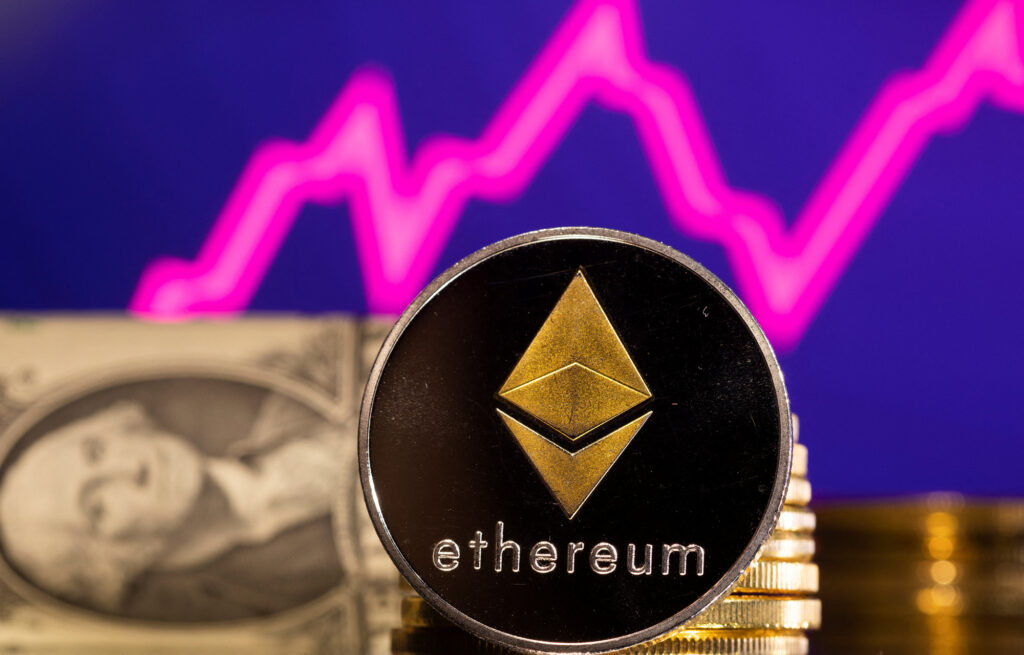
On November 23rd, the price of Ether exhibited a slight increase, maintaining its position above the $2,000 mark. This stability followed a brief dip to $1,930 on November 21st.
Over the past week, Ether has seen a 2.5% price surge, while the total market capitalization of the cryptocurrency market has grown by 0.5%.
Several factors contribute to this upward trend, including improved metrics for decentralized applications (DApps), increased protocol fees, and Ethereum’s dominant position in the nonfungible token (NFT) market.
However, the recent regulatory challenges faced by Binance, a major player in the cryptocurrency space, have caused concerns among investors.
Binance accounts for 30% of ETH futures contracts’ open interest and leads in Ether spot trading volume.
The closure of Binance’s $2.35 billion worth of ETH derivatives contracts within a short period could have significant consequences.
Despite initial analyses indicating minimal changes in spreads and liquidity, Binance experienced net outflows of $1.53 billion between November 21st and November 23rd, as reported by DefiLlama.
The regulatory landscape surrounding Binance presents both risks and opportunities.
While some view Binance’s actions as evidence of holding sufficient reserves, others are worried about the $4.3-billion fine facing Binance and its former CEO, Changpeng “CZ” Zhao.
This uncertainty has prompted some Bitcoin advocates to advise followers to withdraw their coins from exchanges.
Even if Binance continues to operate and safeguards all client assets, the long-term effects of full compliance and increased scrutiny remain uncertain.
READ MORE: OpenAI’s CEO Turmoil Sparks Debate Over AI Regulation and Congressional Action
Additionally, the relationship between Binance and stablecoins like Tether, TrueUSD (TUSD), and Binance USD (BUSD) raises further questions.
Government agencies gaining access to previously undisclosed money laundering and terrorist financing operations through Binance, including fiat payment gateways and banking partners, increases the likelihood of regulatory actions against stablecoin providers.
This news has been particularly detrimental to Ethereum, given Binance’s status as the third-largest ETH staker, with $1.24 billion in deposits, according to DefiLlama.
However, recent regulatory developments also offer some positives.
Binance’s move toward full compliance reduces the risk associated with unregulated exchanges, making it more likely for the U.S. Securities and Exchange Commission (SEC) to approve spot exchange-traded fund (ETF) instruments for cryptocurrencies.
Leading industry mutual fund managers, such as BlackRock and Fidelity, have expressed interest in launching Ether spot-based ETFs.
Furthermore, the SEC’s lawsuit against Kraken on November 20th, which lists 16 cryptocurrencies as securities, excludes Ether.
This omission reduces the likelihood of regulatory actions against the Ethereum Foundation and entities involved in the 2015 initial coin offering (ICO), providing a silver lining amid regulatory uncertainties.
In terms of the Ethereum network’s health, Ethereum DApps achieved a total value locked (TVL) of $26 billion on November 23rd, representing a 5% increase from the previous week.
However, a hack significantly impacted dYdX, resulting in a 16% decline in the protocol’s deposits.
While Ether’s market capitalization of $248 billion trails behind Bitcoin’s $728 billion, the two networks generate similar protocol revenues.
Over the past seven days, the Bitcoin network has collected $57.5 million in fees, compared to Ethereum’s $54.3 million.
These figures do not include ecosystem fees from platforms like Lido, Uniswap, or Maker protocols.
Ethereum also reclaimed its leadership position in NFT sales, recording $12.6 million in transactions within 24 hours.
Despite a brief period where Bitcoin led in NFT activity, Ethereum remains the preferred blockchain for prominent NFT projects.
The positive performance of Ethereum on November 23rd can be attributed to improved on-chain metrics, growing expectations of a spot ETF approval, and reduced regulatory concerns stemming from the 2015 ICO.

Hong Kong’s Hospital Authority is gearing up to confront a significant uptick in two formidable superbugs, vancomycin-resistant enterococci and Candida auris, through the power of artificial intelligence (AI).
Over the past three years, the prevalence of multidrug-resistant organisms, commonly referred to as superbugs, has seen a troubling rise on the island.
This surge can be attributed to the reallocation of resources aimed at combatting the COVID-19 pandemic.
Dr. Raymond Lai, the chief infection control officer at the Hospital Authority, explained that this shift in resources resulted in a shortage of isolation wards available for patients infected with MDROs.
He stated, “A significant number of isolation wards were allocated to Covid-19 patients, leaving fewer wards available for those infected with MDROs.”
Additionally, the COVID-19 pandemic led to a substantial increase in the prescription of broad-spectrum antibiotics, fostering the development of antibiotic resistance within these superbugs.
READ MORE: OpenAI’s CEO Turmoil Sparks Debate Over AI Regulation and Congressional Action
According to the authority, the antibiotic resistance rate of vancomycin-resistant enterococci surged from 0.22% in 2021 to 1.2% in 2023, with the number of patients carrying these microorganisms rising from fewer than 40 in 2021 to approximately 140 by late September 2023.
Candida auris, first discovered in Hong Kong in 2019, has also witnessed a spike in carriers, escalating from nearly 200 in 2020 to over 300 by October 31, 2023.
Dr. Lai cautioned that about 10% of individuals hosting this fungus could progress to invasive infections, posing a mortality risk ranging from 53% to 83.3%.
To address this pressing issue, the Hospital Authority is set to launch an AI pilot program in January 2024 at the Prince of Wales Hospital in Sha Tin and Princess Margaret Hospital in Kwai Chung.
The AI system will analyze clinical data to assess the necessity of prescribing antibiotics, initially focusing on a single popular type of antibiotic before expanding its scope to include eight other types and covering 17 public hospitals.
This initiative is not the first instance of AI being harnessed to combat antibiotic resistance.
In May 2023, researchers from the Massachusetts Institute of Technology and McMaster University employed AI to identify a new antibiotic capable of combating Acinetobacter baumannii, a bacteria responsible for numerous drug-resistant infections.

A coalition of businesses and tech firms has jointly penned a letter addressed to European Union regulators, cautioning against excessive regulation of potent artificial intelligence (AI) systems that may stifle innovation.
This collective appeal, comprising 33 companies operating within the EU, underscores the potential detriment of imposing overly rigorous rules on foundational AI models such as OpenAI’s ChatGPT and general-purpose AI (GPAI).
Such stringent regulations, the letter contends, could potentially impede much-needed innovation within the European region.
To buttress their argument, the signatories point to data revealing that merely 8% of European companies are currently harnessing AI technologies, a figure notably distant from the European Commission’s ambitious 2030 target of 75%.
Furthermore, a mere 3% of the world’s AI unicorns originate from the EU. The signatories stress that Europe’s competitiveness and economic stability are heavily reliant on its businesses and citizens effectively deploying AI across vital sectors such as green technology, healthcare, manufacturing, and energy.
READ MORE: Decentralized Exchange KyberSwap Suffers $46 Million Crypto Heist in Latest DeFi Exploit
The companies underscore that for Europe to emerge as a “global digital powerhouse,” it must champion AI technologies like foundation models and GPAI, both of which are under scrutiny as the EU prepares to introduce new legislation.
The letter also provides constructive suggestions for EU leaders, aiming to strike a balance between fostering innovation and addressing legitimate concerns.
These proposals encompass measures such as reducing compliance costs for companies, concentrating regulatory efforts on high-risk use cases rather than specific technologies, and offering clarity on areas where existing legislation already overlaps.
This development unfolds against the backdrop of the EU’s ongoing efforts to finalize the landmark EU AI Act, originally passed in June and currently undergoing scrutiny and revision by member states.
Following the initial passage of the act, 160 executives from the technology industry issued a similar letter to EU officials, highlighting the potential repercussions of excessively strict AI regulations.
The convergence of industry leaders in advocating for a balanced approach to AI regulation underscores the significance of striking the right equilibrium between promoting innovation and safeguarding societal interests in an increasingly AI-driven world.