


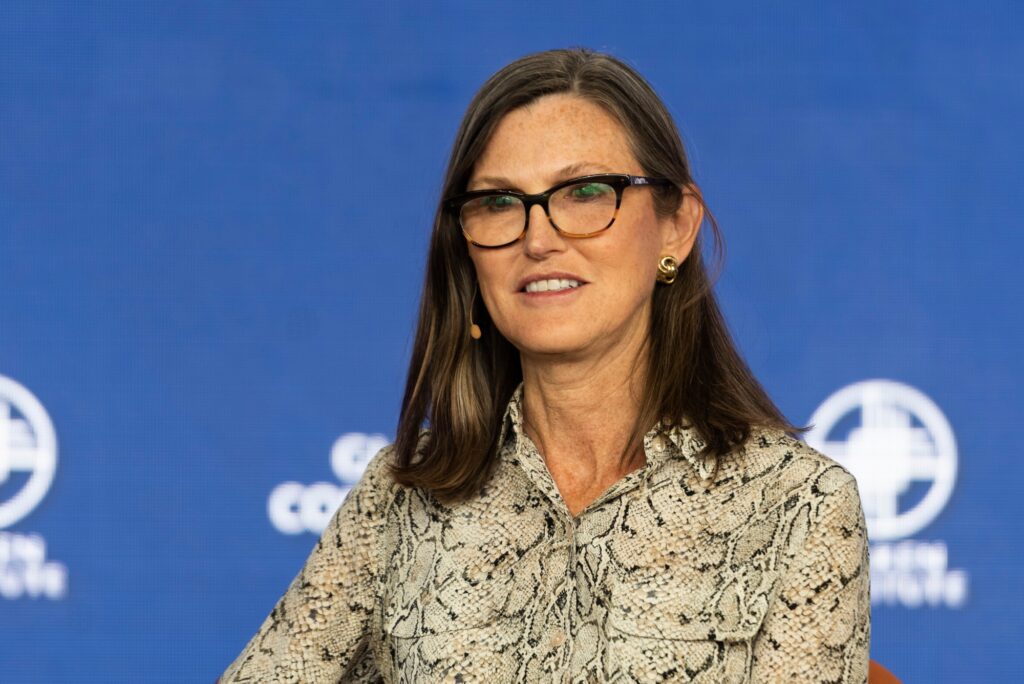
ARK Invest, the investment firm led by Cathie Wood, has recently made significant moves in the cryptocurrency market by selling 700,000 shares of the Grayscale Bitcoin Trust (GBTC) in the last month.
This decision comes amidst Bitcoin’s surge to 17-month highs, driven by growing excitement surrounding the potential approval of a spot Bitcoin exchange-traded fund (ETF).

The ARK Next Generation Internet ETF (ARKW) initiated this selling spree on November 22, disposing of 36,168 GBTC shares, bringing their total GBTC sales to 697,768 since October 23, as revealed by ARK’s daily trading data.
On November 22, as Grayscale’s trust was trading around $30 (closing at $30.50 according to Google Finance data), ARKW divested approximately $1 million worth of GBTC.
Notably, U.S. markets were closed on November 23 due to the Thanksgiving holiday.
ARK’s decision to sell GBTC shares began on October 23, 2023, when Bitcoin was nearing the $34,000 mark.
Prior to this, ARK had last reported a GBTC transaction in November 2022, when they sold 450,272 GBTC shares.
READ MORE: U.S. Prosecutors Seek to Prevent Former Binance CEO CZ Zhao’s Departure
Despite the substantial sell-off, ARK’s ARKW still retains a sizable position in GBTC, with holdings worth $131.8 million, equivalent to over 4.3 million GBTC shares.
As of November 24, Grayscale Bitcoin Trust makes up 9.2% of ARKW’s portfolio, ranking third behind Coinbase and Roku, according to official ARKW data.
It’s worth noting that the ARK ETF that offloaded these funds has performed admirably, boasting a year-to-date gain of over 68%.
However, this pales in comparison to the impressive over-271% gain achieved by Grayscale’s trust during the same period, as per Google Finance data.
Meanwhile, the cryptocurrency giant Bitcoin has enjoyed substantial growth, with a year-to-date increase of 125%.
On November 16, it nearly touched $38,000, marking its highest value since May 2022, according to Cointelegraph Markets Pro.
These developments in the cryptocurrency and investment markets underscore the dynamic nature of digital assets and the strategies employed by prominent investment firms like ARK Invest.

Numerous users of the cryptocurrency analytics platform Nansen have fallen victim to phishing attempts by scammers promoting an enticing yet entirely fictitious opportunity known as the “Nansen Airdrop.”
This malicious campaign came to light on November 23 when vigilant members of the cryptocurrency community on X (formerly Twitter) flagged ongoing phishing activities targeting Nansen’s user base.
In these fraudulent schemes, the scammers masquerade as Nansen and distribute counterfeit invitations to an exclusive airdrop event.
Crypto investigator Officer’s Notes (Officercia) first alerted the community to the ongoing attack, suspecting that the scammers may have obtained user data from a prior third-party database breach and are now exploiting it to target Nansen users.
The breach in question occurred on September 22 when one of Nansen’s third-party vendors suffered a security breach, impacting nearly 7% of the system’s users.
Those affected by the breach had their email addresses exposed, some had password hashes compromised, and a few even had their blockchain addresses compromised.
READ MORE: Cryptocurrency Industry Calls for Greater Self-Regulation Amid Binance Investigation
Nansen had promptly responded by identifying and notifying the affected users, urging them to change their passwords.
Importantly, Nansen reassured users that their wallet funds remained unaffected by the breach.
One screenshot of a phishing email, shared with Cointelegraph, revealed that the sender’s address was “[email protected],” a completely unrelated email domain to the legitimate Nansen platform.
The fraudulent email promised users a guaranteed allocation of fake NANSEN tokens for the next 48 hours, accompanied by a link that potentially directed unsuspecting victims to a rigged website.
Officercia advises individuals to report suspected phishing links to databases such as chainabuse.com, cryptoscamdb.org, and phishtank.org, all of which contribute to the collective effort in reducing the success rates of such cyberattacks.
Despite these alarming developments, Nansen has not yet responded to Cointelegraph’s request for comment on the phishing campaign.
It’s worth noting that an increasing number of cryptocurrency investors are becoming susceptible to phishing attempts, especially in the wake of recent data leaks from platforms like TrueCoin and FTX bankruptcy claims.
However, Friend.tech has denied allegations of a data leak involving its database of over 100,000 users, asserting that the information in question was obtained through scraping its public API and did not result from a security breach.

Australia’s largest cryptocurrency exchanges are gearing up for a major rally, as the number of crypto buyers begins to climb.
According to the heads of these exchanges, this upward trend is expected to gain momentum in early 2024.
Adrian Przelozny, CEO of Independent Reserve, is actively preparing for the anticipated bull market.
He recognizes the need to fortify infrastructure and expand the team in anticipation of rapid growth.
Przelozny emphasizes the importance of being well-prepared to handle the surge in business when the bull market arrives, as it tends to unfold swiftly.
Caroline Bowler, the CEO of BTC Markets, notes that market conditions have become increasingly bullish throughout the year.
She acknowledges that market gains have not followed a linear path but highlights the industry-wide growth in asset prices and technological applications as reasons for confidence.
She also points to the influx of new users, increased trading volumes, and the deployment of “dry powder” as indicators that the market is in the early stages of a bull run.
Tommy Honan, the head of product strategy at Swyftx, reports a rising trend in buying activity on their exchange.
To address recent challenges faced by the Australian crypto scene, Swyftx is swiftly improving direct debit functionality.
READ MORE: U.S. Prosecutors Seek to Prevent Former Binance CEO CZ Zhao’s Departure
Honan attributes the uptick in activity to improved market fundamentals, drawing back investors who had stayed on the sidelines during the bear market.
Jonathon Miller, the managing director of Kraken Australia, exercises caution in determining the market’s phase. He dispels the notion that the crypto market is solely in a bull or bear phase, emphasizing the existence of a gray area in between.
Miller highlights factors like the upcoming Bitcoin halving and Ethereum’s Dencun upgrade as catalysts that are catching the attention of both institutional and retail investors.
Ben Rose, the general manager of Binance Australia, refrains from making a definitive call on the arrival of a bull market.
He observes an increase in new registrations and trading activity on Binance Australia recently.
To prepare users for a potential rally and prevent FOMO buying, Binance Australia is focused on educating its users.
Rose underscores the significance of responsible onboarding and ensuring users understand the long-term benefits of cryptocurrency beyond short-term price gains.
In conclusion, Australia’s cryptocurrency exchanges are bracing themselves for what they anticipate to be a significant market rally in 2024.
While optimism prevails, caution and preparedness are key themes among these industry leaders as they navigate the unpredictable crypto landscape.

U.S. government prosecutors are taking steps to prevent former Binance CEO Changpeng “CZ” Zhao from leaving the United States, citing concerns about his potential flight risk.
In a filing made on November 22 to a federal court in Seattle, prosecutors requested a review and reversal of a judge’s decision that would have allowed Zhao to return to his home in the United Arab Emirates (UAE) on a $175 million bond, provided that he comes back to the U.S. two weeks before his sentencing scheduled for February 2024.
The prosecutors argued in their proposed order that Zhao poses an “unacceptable risk of flight and nonappearance” if allowed to leave the United States before his sentencing. They expressed serious doubts about their ability to ensure his return if he decides not to come back voluntarily.
The government’s case against Zhao is based on his strong ties and privileged status in the UAE, coupled with the absence of an extradition treaty between the UAE and the U.S. Prosecutors pointed out that Zhao has a partner and three young children in the UAE, and once he is in the UAE, he might choose to remain there with his family rather than facing the prospect of up to 18 months in a U.S. prison.
READ MORE: CEO Resignation and Binance-DOJ Settlement Send Shockwaves Through Cryptocurrency Markets
Furthermore, prosecutors argued that the majority of Zhao’s wealth, which was used to secure his $175 million bond, is held outside the United States and beyond the reach of U.S. jurisdiction.
Changpeng Zhao recently admitted to failing to maintain an effective Anti-Money Laundering program at Binance as part of a plea agreement.
This led to his resignation as CEO of the exchange and a $50 million fine.
Despite this legal setback, industry experts and observers view Binance’s settlement with the Justice Department as a positive development for the cryptocurrency industry, as it further legitimizes the industry in the United States.
Crypto markets have already rebounded from the negative news surrounding one of the industry’s most influential players, with the total market capitalization returning to pre-Binance news levels, reaching $1.48 trillion during the Thursday morning Asian trading session.
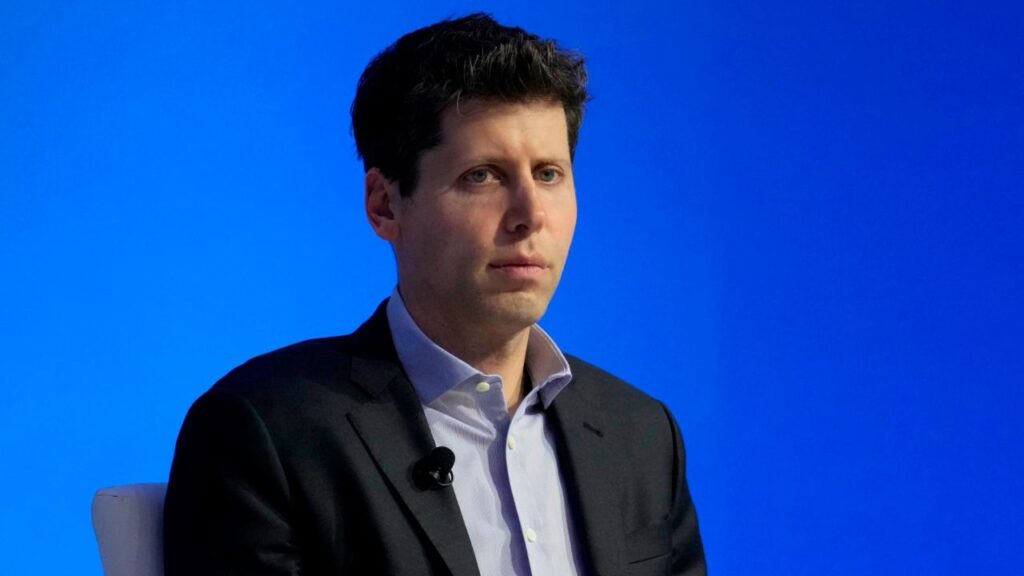
OpenAI, the developer behind ChatGPT, made headlines recently when it abruptly ousted its CEO, Sam Altman, citing a loss of confidence from the board.
However, this decision took an unexpected turn when Altman returned to the company after an astounding 90% of OpenAI staff threatened to resign.
This episode triggered a flurry of excitement in the tech industry, with companies rushing to match OpenAI’s salaries in an attempt to poach top talent.
The OpenAI debacle underscored the urgent need for regulations in the field of artificial intelligence, especially concerning security and privacy.
Many companies are rapidly expanding their AI divisions, and a reshuffling of talent could propel one ahead of the rest, potentially outpacing existing laws and regulations.
While President Joe Biden has taken some steps in this direction through executive orders, these orders lack the stability and legislative input required for comprehensive and lasting regulations.
Biden’s executive order this year addressed the need for “safe, secure, and trustworthy artificial intelligence” and aimed to protect workers from potential job losses due to AI advancements.
It tasked various government bodies, such as the Office of Management and Budget (OMB), the Equal Employment Opportunity Commission (EEOC), and the Federal Trade Commission (FTC), with establishing governing structures and evaluating their authority in overseeing AI-related issues.
READ MORE: Mt. Gox Creditors Receive Encouraging Email on Repayments
However, relying solely on executive orders has its shortcomings. Such directives lack permanence, can be subject to interpretation by the courts, and may not adequately address the complex ethical implications of widespread AI implementation, such as algorithmic bias, surveillance, and privacy concerns.
These critical issues should be debated and addressed by Congress, where elected officials can represent the interests of the people rather than leaving them to be resolved by appointed agency bureaucrats.
A lack of congressional involvement also hinders the development of laws that provide users of AI with control over their personal data and ensure that companies conduct responsible risk assessments and maintain automated systems safely.
Relying solely on federal agencies to enact regulations can lead to confusion and a lack of trust among consumers, as seen in the cryptocurrency sector when the SEC filed lawsuits against crypto companies.
It is imperative for President Biden to engage with Congress on these AI-related issues rather than relying solely on executive branch actions.
Congress, in turn, must craft legislation that encompasses the concerns and aspirations of diverse stakeholders.
Without collaborative efforts between the executive and legislative branches, the United States risks falling behind in AI innovation and jeopardizing the security and privacy of its citizens and others worldwide.

Kraken co-founder Jesse Powell has publicly expressed his approval of the recent investigation into Binance, a major cryptocurrency exchange, in a post on the X social media platform (formerly known as Twitter).
Powell emphasized the importance of having long-term-oriented visionaries and shareholders in the crypto industry.
Over the past year, leaders of prominent cryptocurrency exchanges like FTX and Binance have faced scrutiny from U.S. government agencies over allegations that range from misusing investors’ funds to circumventing Anti-Money Laundering (AML) regulations.
Powell believes that these investigations offer crucial answers to questions like “How are they growing so rapidly?” and “How are they avoiding consequences?”
Powell views the legal proceedings against Binance and its former CEO, Changpeng “CZ” Zhao, as a positive development.
He believes that going after the most egregious offenders operating offshore requires significant effort.
He pointed out that U.S.-based crypto businesses like Kraken, Coinbase, and Ripple are more accessible targets for regulatory scrutiny, as they operate within the United States.
READ MORE: FTC Takes Bold Step to Streamline Investigations into AI Misuse
In light of CZ’s recent admission that Binance violated AML requirements, Powell emphasized the need for self-regulation to enhance the crypto industry’s reputation.
He stated that every illicit operation provides governments with an opportunity to cast a negative light on the entire crypto ecosystem.
Powell urged the crypto community to collaborate in restoring the industry’s image by endorsing reliable services that prioritize a long-term approach.
He also expressed support for the Know Your Customer (KYC) requirement, as long as it facilitates the legal onboarding of new users to the crypto space.
Despite Kraken’s commitment to a long-term perspective, the U.S. Securities and Exchange Commission (SEC) filed a lawsuit against Kraken on November 20th.
The SEC alleges that Kraken commingled customer funds and failed to register as a securities exchange, broker, dealer, and clearing agency, arguing that crypto assets fall under U.S. securities law.
A spokesperson for Kraken contested the SEC’s complaint and stated the company’s intention to defend itself in court.
The spokesperson expressed disappointment in the SEC’s approach, characterizing it as “regulation by enforcement,” which they believe harms American consumers, stifles innovation, and damages the global competitiveness of the United States.
Approximately $46 million in various cryptocurrencies have been siphoned from the decentralized KyberSwap exchange in a recent exploit within the decentralized finance (DeFi) space.
On November 23, the Kyber Network team issued a warning to its users through a Twitter post, revealing that KyberSwap Elastic had fallen victim to a security breach.
As a precautionary measure, they urged users to withdraw their funds and assured them that an investigation into the incident was underway.
Blockchain enthusiasts and investigators quickly identified the wallet addresses affected by the attack and those belonging to the exploiter, which were still active at the time of discovery.
According to data from Debank, the exploit resulted in the theft of approximately $46 million, including roughly $20 million in Wrapped Ether (wETH), $7 million in wrapped Lido-staked Ether (wstETH), and $4 million in Arbitrum (ARB).
These stolen funds were spread across multiple blockchain networks, including Arbitrum, Optimism, Ethereum, Polygon, and Base.
READ MORE: Mt. Gox Creditors Receive Encouraging Email on Repayments
In a separate post, blockchain investigator Spreek expressed confidence that the issue was not related to approval permissions but rather connected to the Total Value Locked (TVL) in the Kyber pools themselves.
The attacker left an on-chain message for protocol developers and DAO (Decentralized Autonomous Organization) members, indicating their willingness to engage in negotiations once they were fully rested.
As a result of the hack and user withdrawals, KyberSwap’s Total Value Locked (TVL) plummeted by 68% within a few hours, with nearly $78 million exiting the protocol.
Its current TVL stands at $27 million, a significant drop from its peak of $134 million in 2023.
Following the news of the exploit, the Kyber Network Crystal (KNC) token experienced a brief 7% decline in price but has since recovered to trade at $0.74.
It’s worth noting that the Kyber Network team had identified a vulnerability back in April and had advised users to withdraw their liquidity. Fortunately, no funds were lost in that incident.

Netflix’s sci-fi series “Conquest” has been embroiled in controversy as its director, Carl Erik Rinsch, reportedly diverted $4 million from the show’s budget to invest in Dogecoin, resulting in a $27 million windfall.
Now, Rinsch is seeking an additional $14 million from Netflix, according to a confidential arbitration proceeding mentioned in a November 22 report by The New York Times.
The behind-the-scenes drama of “Conquest” is outlined in The New York Times report, revealing that Netflix had allocated a substantial budget of $55 million for the series, but no episodes have been delivered as yet.
In March 2020, approximately 16 months after Netflix greenlit Rinsch’s concept and provided an initial budget of $44 million,
Rinsch requested additional funds. Netflix agreed to release $11 million on the condition that he completed the show.
Financial records obtained by The New York Times disclosed that Rinsch used $10.5 million from the new funding to speculate in the stock market, experiencing significant losses of nearly $6 million in just a few weeks through options bets on pharmaceutical firms and the S&P 500.
Left with slightly over $4 million, Rinsch transferred the remaining funds to the cryptocurrency exchange Kraken and invested heavily in Dogecoin.
READ MORE: FTC Takes Bold Step to Streamline Investigations into AI Misuse
When he cashed out in May 2021, he realized approximately $27 million in profits, as confirmed by an account statement obtained by the newspaper.
Rinsch expressed his gratitude to cryptocurrency in a conversation with a Kraken representative, saying, “Thank you and god bless crypto.”
With his newfound wealth, Rinsch purportedly splurged on high-end furniture, designer clothing, an extravagant watch worth over $380,000, five Rolls Royces, and a Ferrari. A forensic accountant hired by Rinsch’s ex-wife for divorce proceedings provided this information.
In response to his cryptocurrency adventures, Rinsch initiated a confidential arbitration proceeding against Netflix, alleging that the streaming service had breached its contract and owed him $14 million in damages.
Netflix, however, has vehemently denied any financial obligations to Rinsch, characterizing his demands as extortion.
Rinsch initially argued that the lavish expenditures were related to “Conquest.” Later, in his case against Netflix, he asserted that the money was rightfully his, and he was entitled to an additional $14 million.
The case is currently pending a ruling, and an arbitrator heard arguments in November, with a decision expected in the near future.
Binance’s recent $4.3-billion settlement with the United States is seen by many as the final hurdle standing in the way of the country’s securities regulator approving spot Bitcoin exchange-traded funds (ETFs).
This significant development involved Binance agreeing to have Justice Department and Treasury compliance monitors oversee its operations for a period of up to five years.
These monitors will have the authority to ensure Binance’s compliance with Anti-Money Laundering (AML) and sanctions regulations, among other requirements.
The U.S. Securities and Exchange Commission (SEC) has previously cited concerns about market manipulation as a reason for denying spot Bitcoin ETFs.
To gain approval for these ETFs, Binance’s market dominance needed to be addressed.
Travis Kling, the chief investment officer of Ikigai Asset Management, emphasized this point in a June tweet, asserting that the ETF approval was unlikely with Binance’s current level of market dominance.
Kling’s prediction prompted discussions about the relationship between BlackRock and the U.S. government in obtaining a favorable position in the spot Bitcoin ETF market.
READ MORE: Genesis Global Capital Files $689 Million Lawsuit Against Gemini in Crypto Clash
Some speculated whether Binance’s settlement was a strategic move by BlackRock to acquire Bitcoin at a lower cost or to eliminate competition from U.S. markets before the ETFs launch.
Furthermore, the fact that BlackRock and its competitor Vanguard collectively own 11.5% of Coinbase, a major competitor to Binance, raised suspicions about the timing of the action against Binance.
BlackRock recently met with the SEC on November 20 to present its proposal for a spot BTC ETF, outlining how it could utilize either an in-kind or in-cash redemption model for the iShares Bitcoin Trust.
Other firms like Grayscale, Fidelity, WisdomTree, Invesco Galaxy, Valkyrie, VanEck, and Bitwise are also awaiting SEC approval for their spot Bitcoin funds, indicating the growing interest in this financial product.
Mike Novogratz, the CEO of Galaxy Digital, expressed optimism about the Binance settlement, deeming it “super bullish” for the cryptocurrency industry.
However, not everyone is fixated on speculating about the implications of the Binance settlement on spot BTC ETF approvals.
Piper Alderman partner Michael Bacina suggested that it might be wise to let the speculation run its course rather than jump to conclusions about the outcome.
The future of spot Bitcoin ETFs in the United States remains uncertain, but these recent developments have undoubtedly added intrigue to the regulatory landscape.
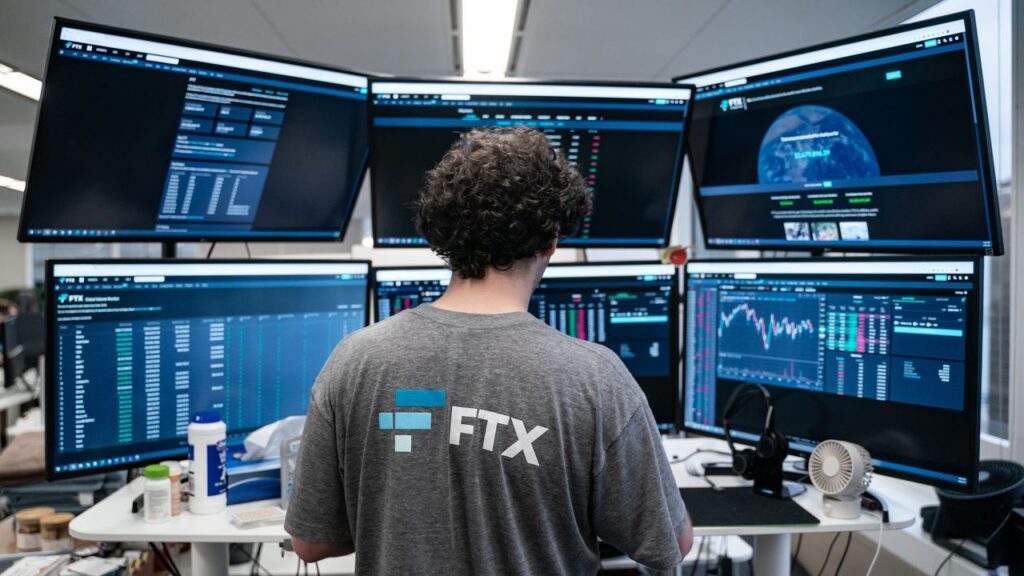
FTX founder, Sam Bankman-Fried, who has been convicted of fraud, has been denied his request for release by a U.S. appellate court while his legal team appeals his conviction.
The U.S. Court of Appeals for the Second Circuit, in a mandate issued on November 21, stated that one of the key reasons for rejecting his request was his previous attempts to tamper with witnesses while on pretrial release.]
Bankman-Fried faced accusations from government prosecutors that he leaked Caroline Ellison’s diaries to The New York Times in July.
This action led to the revocation of his bail by a New York District Court. In response, Bankman-Fried argued that the New York court had failed to recognize that his actions were protected under the First Amendment as freedom of speech.
However, the appellate court upheld the New York District Court’s decision, asserting that witness tampering is not constitutionally protected.
Bankman-Fried’s legal team also contended that the district court did not adequately consider alternatives to detention.
READ MORE: CEO Resignation and Binance-DOJ Settlement Send Shockwaves Through Cryptocurrency Markets
However, the appellate court dismissed this argument, emphasizing that the district court had meticulously examined all relevant factors, including Bankman-Fried’s behavior while on pretrial release.
On November 2, Bankman-Fried was found guilty of seven charges related to fraud and money laundering. As a result, the former CEO of FTX will remain in custody until his sentencing, scheduled for March 28 next year.
In summary, Sam Bankman-Fried’s efforts to secure his release from jail pending the appeal of his conviction have been denied by the U.S. Court of Appeals for the Second Circuit.
The court cited his previous attempts to tamper with witnesses as a significant factor in their decision.
Despite arguments about freedom of speech and alternative detention options, the court upheld the New York District Court’s decision to revoke his bail.
Bankman-Fried will remain in custody until his sentencing in March next year following his conviction on fraud and money laundering charges.