


Phishing scammers have devised a cunning scheme to deceive unsuspecting readers by cloning the websites of two prominent crypto platforms, Blockworks and Etherscan.
Their nefarious plot aims to trick individuals into connecting their crypto wallets to a fraudulent source, ultimately resulting in the theft of their digital assets.
The counterfeit Blockworks website took a deceptive approach by displaying a fabricated “BREAKING” news report regarding a supposed multimillion-dollar “approvals exploit” on the decentralized exchange Uniswap.
Users were lured into visiting a counterfeit Etherscan website under the pretense of rescinding approvals related to this purported incident.
This fake news article was disseminated on Reddit through compromised accounts within various crypto-related subreddits, amplifying its reach and potential victims.
The imposter Etherscan website, masked as a token and smart contract approval checker, concealed a treacherous trap: a wallet-draining mechanism.
Beosin, a reputable blockchain security firm, conducted an examination of the drainer’s smart contract.
They discovered that the attacker’s objective was to siphon off wallets holding a minimum of 0.1 Ether, equivalent to $180.
READ MORE: FTX Pursues Investigation into $6.5 Million Payments to AI Safety Nonprofit CAIS Amid Bankruptcy
However, the drainer had a critical flaw; it failed to initiate any phishing transaction after a wallet was connected, undermining its malicious intent.
A closer examination of the fraudulent domains revealed that the sham Etherscan site, approvalscan.io, was registered on October 25th, while the counterfeit Blockworks site, blockworks.media, was registered just a day later.
This quick domain registration turnaround showcased the scammers’ urgency in launching their deceitful campaign.
In an October 25th tweet, Web3’s anti-scam platform, Scam Sniffer, exposed another instance of scammers deploying a wallet-draining mechanism on a cloned website imitating the crypto news outlet Decrypt.
Intriguingly, Scam Sniffer clarified that the phony Blockworks and Decrypt sites were operated by distinct groups of scammers, adding a layer of complexity to their fraudulent operations.
As phishing scams continue to evolve in sophistication, it is essential for users in the crypto space to exercise utmost caution and verify the authenticity of websites and information sources before connecting their wallets or engaging in any transactions.
Vigilance remains the best defense against these cunning cybercriminals seeking to exploit the crypto community’s trust.

On October 25th, Taiwanese lawmakers unveiled the Virtual Asset Management Bill in the country’s unicameral parliament, the Legislative Yuan.
This legislation is designed to enhance customer protection and establish proper oversight within the virtual asset industry.
Spanning 30 pages, the bill puts forth a set of reasonable requirements for virtual asset service providers (VASPs).
These include the segregation of customer funds from the company’s reserve funds, the implementation of an internal control and audit system, and membership in the local trade association.
Notably, the bill currently does not mandate stablecoin issuers to maintain a 1:1 ratio of reserve funds, and it does not address algorithmic stablecoins.
The specific rules governing advertising and marketing activities will be determined by the “competent authority.”
For VASPs operating without a license, the bill proposes fines ranging from a minimum of 2 million Taiwanese dollars (approximately $60,000) to a maximum of 20 million TWD ($600,000).
READ MORE: SEC Chair’s $5 Billion Enforcement Actions Make Waves at 2023 Securities Forum
Existing companies in the Taiwanese market will have a grace period of six months from the bill’s enactment to secure the necessary licenses.
In September 2023, Taiwan’s Financial Supervisory Commission (FSC) also issued industry guidelines tailored to VASPs.
Foreign virtual asset service providers are prohibited from offering their services in Taiwan without obtaining regulatory approvals from the FSC.
These regulatory measures have emerged as prominent cryptocurrency exchanges in Taiwan have taken proactive steps toward self-regulation.
On September 26th, several local exchanges, including MaiCoin, BitstreetX, Hoya Bit, Bitgin, Rybit, Xrex, and Shangbito, united to establish the Taiwan Virtual Asset Platform and Transaction Business Association.
Their primary objectives are to support the cryptocurrency industry and collaborate closely with regulators to ensure responsible growth.
Bitcoin (BTC) has achieved remarkable milestones by reaching all-time highs against several inflation-ridden fiat currencies in a span of just 30 hours from October 23 to 24.
Notably, these currencies include the Argentine peso, Nigerian naira, Turkish lira, Laotian kip, and the Egyptian pound.
It’s important to emphasize that this surge in Bitcoin’s value is primarily attributed to the continuous devaluation of these national currencies, which has been further exacerbated by Bitcoin’s recent 16% price surge.
The situation for the naira and lira is particularly dire, as they plummeted to their lowest exchange rates against the United States dollar on October 24 and 25, respectively.
The Argentine peso is also not faring well, currently resting at a mere 0.85% above its all-time low against the U.S. dollar.
According to data from the International Monetary Fund (IMF), the Venezuelan bolivar leads the world with an alarming annual inflation rate of 360%, followed closely by the Zimbabwean dollar at 314%, the Sudanese pound at 256%, and the Argentine peso at 122%.
The Turkish lira and Nigerian naira also feature on this distressing list, ranking sixth and fifteenth, respectively, with annual inflation rates of 51% and 25%.
Cryptocurrency enthusiasts have long considered digital assets like Bitcoin and stablecoins as effective hedges against rampant inflation, and the recent data only strengthens this narrative.
Notably, Nigeria, Turkey, and Argentina are among the countries with high cryptocurrency adoption rates globally, as per a September 12 report by Chainalysis.
READ MORE: Bitcoin Searches Skyrocket as Crypto Rally Sparks Global Frenzy
However, it’s worth mentioning that these countries’ governments have not always been aligned with the cryptocurrency industry.
Nigeria, for instance, initially banned local banks from providing services to cryptocurrency exchanges in February 2021.
Yet, progress has been made, with Nigeria signaling its intention in December 2022 to pass a bill recognizing cryptocurrencies as “capital for investment,” citing the need to align with global practices.
In Turkey, despite a strong interest in cryptocurrencies among the populace, the central bank banned the use of cryptocurrencies for payments of goods and services in April 2021.
Simultaneously, they have been actively exploring the creation of a central bank digital currency (CBDC) to digitize the Turkish lira.
Meanwhile, Argentina’s inflation crisis remains a key concern, with a presidential election scheduled for November. The presidential candidates, Javier Milei and Sergi Massa, have differing approaches.
Massa, currently the country’s minister of economy, aims to launch a CBDC swiftly to address the persistent inflation problem and intends to keep the U.S. dollar away from Argentinians.
In contrast, Milei advocates for adopting the U.S. dollar and abolishing Argentina’s central bank as part of his vision for economic reform. The election outcome will likely shape the country’s economic trajectory significantly.

United Nations Secretary-General António Guterres made a significant announcement on October 26, revealing the creation of a 39-member advisory committee dedicated to addressing global issues surrounding the regulation of artificial intelligence (AI).
The committee’s composition is remarkably diverse, encompassing a wide array of experts from various sectors.
It includes leaders from the tech industry, government officials representing countries like Spain and Saudi Arabia, and scholars hailing from nations such as the United States, Russia, and Japan. Some notable figures among them are Hiroaki Kitano, Sony’s Chief Technology Officer; Mira Murati, the Chief Technology Officer of OpenAI; and Natasha Crampton, Microsoft’s Chief Responsible AI Officer.
Moreover, the committee members come from six different continents, representing a rich tapestry of backgrounds and perspectives, ranging from AI expert Vilas Dhar in the United States to Professor Yi Zeng from China and Egyptian lawyer Mohamed Farahat.
In his official statement, Secretary-General Guterres acknowledged the profound positive impact of AI, but also highlighted the potential for malicious use that could erode trust in institutions, weaken social cohesion, and even threaten democracy.
READ MORE:Alameda Research and FTX Transfer Over $10 Million to Exchange Accounts
This recognition of AI’s dual nature underscores the urgency of addressing its governance on a global scale.
The surge in interest and concern surrounding AI’s societal implications, especially following the introduction of technologies like ChatGPT by OpenAI, has prompted researchers and policymakers worldwide to advocate for enhanced international cooperation.
Many governments are actively working on legislation to regulate AI, further emphasizing the need for global collaboration in this realm.
The United Nations is taking proactive steps in this direction. It plans to release preliminary recommendations by the end of the year, with comprehensive guidelines scheduled for the summer of 2024.
Immediate priorities include fostering a global scientific consensus on potential AI-related risks and challenges while bolstering international cooperation in AI governance.
The inaugural meeting of the advisory committee is scheduled for October 27, signifying the organization’s commitment to addressing the complex issues surrounding AI regulation on a global scale.

Staking has grown increasingly popular since the emergence of the Proof-of-Stake (PoS) consensus mechanism. The industry has witnessed the emergence of all sorts of platforms where people could stake crypto in exchange for rewards.
Most platforms operate by gathering funds from those staking crypto in exchange for rewards, also called the yield, and subsequently directing the acquired funds to liquidity pools or to cover other financial needs.
Liquid staking implies that a user who forms a crypto stake, a certain amount in crypto (mostly ETH, ranging from 0.5 to thousands) receives so-called ‘liquidity tokens,’ which they may subsequently sell on an exchange if that token gets listed.
Some staking projects also allow users to become network validators. Projects like Stakefish utilize a network of Web3 wallets (such as MetaMask) to stake users’ crypto, primarily ETH.
When it comes to CryptoStake, our goal is to ensure the maximum protection of user funds by providing a non-custodial solution (wallet). This solution allows users to retrieve their crypto staking rewards through a unified seed phrase across all compatible crypto wallets (Exodus, Atom, etc.).
CryptoStake’s non-custodial wallet, produced in the form of the proprietary crypto staking app, features a one-click mechanism that enables users to create a unique validator with an identification number. This number is displayed on our monitoring network as well as other platforms, ensuring the security of a given validator. In essence, users can stake crypto through validators while retaining full control of their funds in their wallet.
In other words, CryptoStake never gains control of user funds; it functions more as a system for monitoring validator status, while they can earn interest on crypto in a safe environment with us being a trustworthy intermediary.
The user only needs their validator number, along with the public and private keys, to restore the validator at any time, even without relying on our service.
The primary concept behind CryptoStake is to demonstrate that non-custodial staking on our platform is safer than traditional crypto wallet storage or liquid staking. Safety is achieved through a 7-day unstaking period and the provision of a validator number.
CryptoStake’s advantage over liquid staking pools is rooted in our exclusive use of utility tokens like ETH that boast a solid annual percentage yield or APY. Utility tokens actively contribute to blockchain operations, unlike liquidity staking, which provides users with unbacked tokens in exchange for cryptocurrencies with genuine value, such as ETH. These unbacked tokens can be susceptible to losses during FOMO events or even theft.
It’s crucial to understand that CryptoStake does not, and cannot, offer crypto staking rewards greater than what a specific blockchain network permits. We prioritize the security of crypto assets by providing users uninterrupted access to the validator node on a designated server and ensuring control over their crypto funds stored in their respective wallets. It’s worth reiterating that CryptoStake does not have access to user funds; we only require a specific file to launch the validator.
Our service is designed for customers who require proof of ownership to meet regulatory requirements and for taxation purposes. CryptoStake offers a complete reward allocation history for the entire staking period, along with statements suitable for taxation authorities. Furthermore, CryptoStake provides a single access point for four top cryptocurrencies (ETH, DOT, ATOM, and ADA), each with inherently different staking and reward claiming mechanisms. However, users won’t need to worry about these differences if they choose to stake with CryptoStake. An in-built crypto staking rewards calculator shows an expected yield across different timeframes, while the collection process is minimized to a few clicks.
CryptoStake generates revenue from network fees for ‘renting’ our validator capacities on servers, except for ETH where we receive ‘execution fees.’ Our fees, which are set at 3%, are among the lowest in the industry. It’s essential to note that our marketing strategy is centered on attracting ‘whales’ with significant ETH holdings. We promise them complete asset protection in the long run, the ability to retrieve assets from the wallet without our intermediary assistance, and support in dealing with tax-related matters.
Key takeaways:
- CryptoStake prioritizes the security of funds and proof of their legality over offering extravagant staking rewards.
- Users become full-fledged network validators instead of receiving low-value tokens.
- Our primary clientele consists of ETH whales, with a future focus on BTC holdings
Social media:
https://www.linkedin.com/company/89361538/admin/feed/posts/
https://www.facebook.com/Cryptostakecom
https://www.instagram.com/cryptostakecom/
https://www.reddit.com/user/Cryptostakecom/
The above information regarding CryptoStake, its concept, and operations, is intended for informational and marketing purposes only. Full or partial copying, reproduction, or publication of this material is prohibited without prior written consent from CryptoStake. Nothing in this material constitutes financial or investment advice. For more detailed and up-to-date information about CryptoStake, including news, products, and offers, please visit its official website https://cryptostake.com/ or follow its official social media accounts:
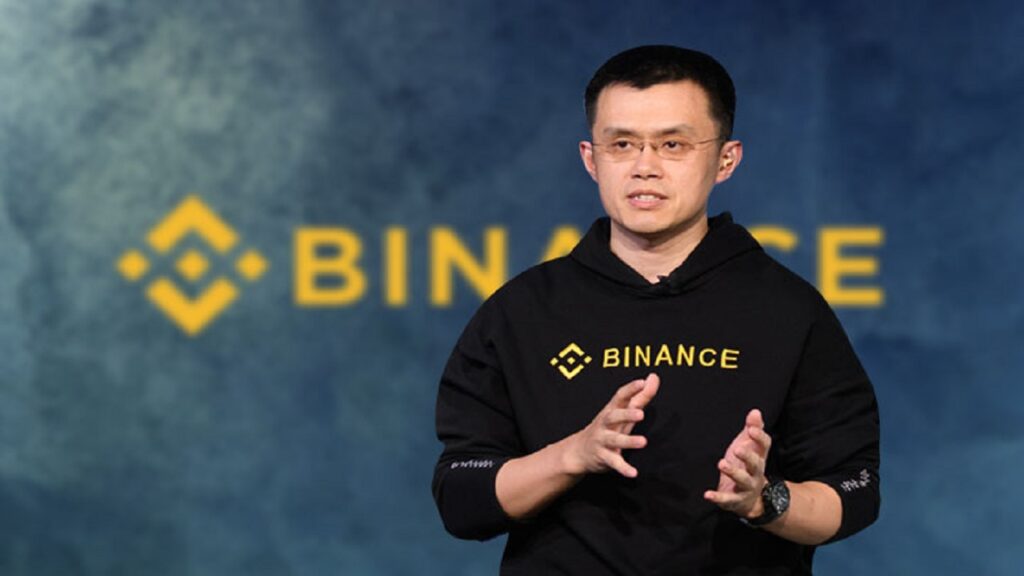
Binance co-founder and CEO, Changpeng “CZ” Zhao, has experienced a significant reduction in his net worth, amounting to a staggering $11.9 billion, largely attributed to declining trading volumes on the Binance exchange.
On October 26, the Bloomberg Billionaires Index revised down Binance’s revenue estimates by 38% due to a slump in exchange volumes, causing Zhao’s ranking on the list of the world’s wealthiest individuals to plummet to the 95th position.
Zhao’s current net worth stands at $17.3 billion, marking an astonishing 82% decline from its peak of $96.9 billion in January 2022, when he held the 11th position on the global rich list.
The decline in Zhao’s wealth correlates with the downturn in the cryptocurrency market, where Binance played a significant role.
Bloomberg’s index calculated Binance’s revenues by analyzing data from crypto data aggregators CoinGecko and Coinpaprika, focusing on spot and derivatives trading.
Notably, Binance’s spot trading market share experienced a continuous decline for seven consecutive months, plummeting to 34.3% as of September, compared to over 55% in January.
This decline in trading volumes was also observed at Binance.US, the United States-based arm of the exchange.
READ MORE: $1M Crypto Drop: Celebrate BetFury’s 4th Anniversary
Zhao’s financial setbacks have been further exacerbated by legal challenges.
The U.S. Securities and Exchange Commission (SEC) and the Commodity Futures Trading Commission (CFTC) both filed lawsuits against Zhao, Binance, and Binance.US.
The SEC accused the exchanges of operating illegally, selling unregistered securities, and mishandling customer assets, designating Zhao as the “controlling person.”
Meanwhile, the CFTC alleged that Binance failed to properly register with the regulator. In response, Zhao and Binance have vehemently denied these allegations and are actively seeking to dismiss both lawsuits.
Comparatively, the decline in Zhao’s wealth is reminiscent of his former rival, Sam Bankman-Fried, who faced a massive loss of his $16-billion fortune in November 2022.
This financial crisis was triggered by CZ’s announcement that Binance was selling its FTX Token (FTT) holdings, prompting a rush of withdrawals from FTX.
Although Zhao initially attempted to acquire FTX, he withdrew from the deal within 48 hours.
Bankman-Fried, on the other hand, found himself in the midst of a criminal trial, where he has pleaded not guilty to two counts of fraud and five counts of conspiracy, underscoring the tumultuous nature of the cryptocurrency industry.
According to on-chain analytics firm Glassnode, Bitcoin is poised to conclude 2023 much as it began the year, with significant gains in October.
The latest issue of their weekly newsletter, “The Week On-Chain,” released on October 24, highlighted that the past week has set the stage for a potential uptrend in BTC’s price.
Bitcoin’s price surged to $35,200 during the week, surpassing several crucial trendlines that had previously acted as support for months.
These included various moving averages (MAs), notably the 200-week simple MA at $28,400, which is often considered a critical support level during bear markets.
Glassnode pointed out, “A cluster of long-term simple moving averages of price are located around $28k, and have provided market resistance through September and October.”
However, the recent market strength allowed Bitcoin to break through the 111-day, 200-day, and 200-week averages convincingly.
This breakthrough had a positive impact on the profitability of various investor groups, including speculators and newcomers, whose cost basis was around $28,000.
The Short-Term Holder (STH) cost basis also reached $28k, resulting in an average profit of approximately +20%.
Glassnode presented a chart of the short-term holder market-value-to-realized-value (STH-MVRV) ratio, which measures the profitability of STH coins.
READ MORE: SEC Chair’s $5 Billion Enforcement Actions Make Waves at 2023 Securities Forum
They noted that even before the October surge, there was no significant capitulation behavior among STH holders.
In contrast to previous years when STH-MVRV experienced deep corrections of -20% or more, the August sell-off only reached -10%, suggesting robust support and potentially paving the way for the recent rally.
Despite facing their own profitability challenges, long-term holders (LTHs) now own over 75% of the available BTC supply for the first time.
Their cost basis is lower, closer to $20,000, and while some believe Bitcoin could return to that level, Glassnode remains optimistic about the year-end outlook.
Glassnode concluded, “This sets the foundation for a resumption of the 2023 uptrend.
At the very least, the market has crossed over several key levels where aggregate investor psychology is likely to be anchored, making the weeks that follow important to keep an eye on.”
As per data from on-chain monitoring resource CoinGlass, BTC/USD has seen a 26% increase this month, which, by October standards, is considered relatively modest.
However, Glassnode’s analysis suggests a positive outlook for Bitcoin as it closes out the year.
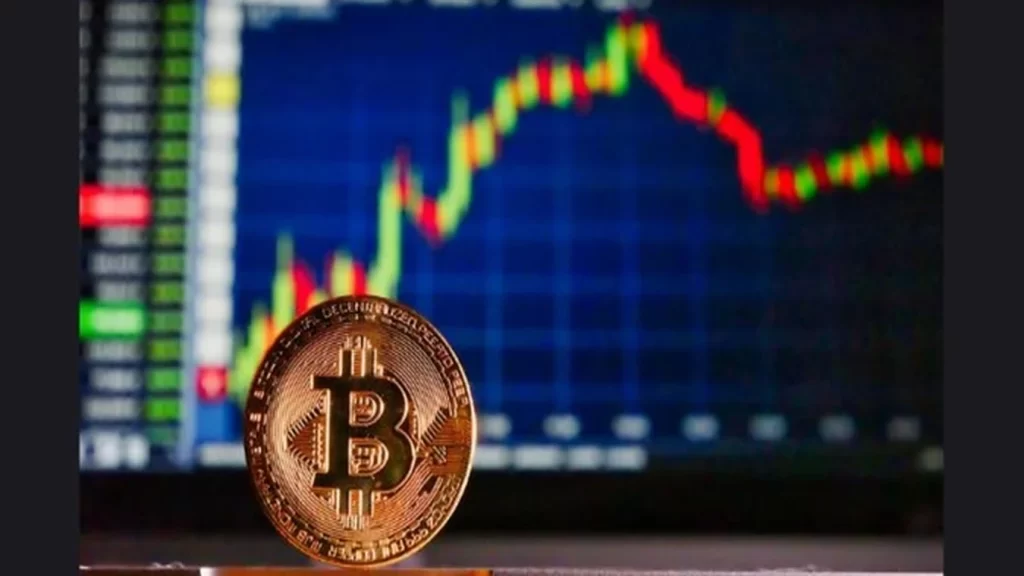
Google searches for “buy Bitcoin” have experienced a global surge amidst a significant crypto rally, with the United Kingdom witnessing an astounding 826% increase in searches over the past week, according to research by Cryptogambling.tv.
This remarkable surge in the UK, coupled with the cryptocurrency’s resurgence, reflects the growing interest and potential impact of traditional financial institutions’ engagement in digital assets.
While the UK led the way in this search frenzy, a notable rise in Bitcoin-related queries was observed worldwide.
In the United States, searches for “should I buy Bitcoin now?” spiked by over 250%, and more niche inquiries like “can I buy Bitcoin on Fidelity?” saw an astonishing 3,100% surge in the past week.
A broader perspective reveals that the global search term “Is it a good time to buy Bitcoin?” witnessed a 110% increase.
READ MORE: FTX Pursues Investigation into $6.5 Million Payments to AI Safety Nonprofit CAIS Amid Bankruptcy
Concurrently, searches for “BlackRock Bitcoin ETF” soared by 250%, indicative of widespread enthusiasm for information related to BlackRock’s pending spot Bitcoin exchange-traded fund (ETF).
This sudden surge in interest coincides with a sharp increase in Bitcoin’s price over the past fortnight, briefly exceeding $35,000 on October 24, marking its first climb to such heights since May 2022.
This excitement appears closely tied to the anticipation of a spot Bitcoin ETF’s approval, a development that many experts believe will trigger a fresh wave of institutional buying.
Senior ETF analysts Eric Balchunas and James Seyffart have expressed confidence in a 90% probability of approval by January 10, 2024.
Notably, at the time of this report’s publication, Bitcoin has gained over 27% in value over the past two weeks, as per TradingView price data.
In conclusion, Google searches for “buy Bitcoin” have surged dramatically, highlighting the global interest in cryptocurrency, especially in the United Kingdom.
This fervor is intertwined with the recent uptick in Bitcoin’s price and the anticipation of a spot Bitcoin ETF’s approval, indicating a shifting landscape in the world of digital assets and traditional financial institutions’ increasing involvement.
London, United Kingdom, October 27th, 2023, Chainwire
Roobet, the pioneering entertainment company and next-generation crypto brand, is thrilled to announce its official launch in the Japanese market.
This exciting expansion coincides with the highly anticipated season opening of the Nippon Professional Baseball League (NPB) on October 28. As the season kicks off, Roobet is ready to bring a fresh wave of innovation and excitement to Japanese sports and esports enthusiasts.
To celebrate, Roobet is hosting a $1,000,000 Pick’em contest on Roobet Picks, the company’s free-to-play platform. Baseball and esports fans can participate to test their sports knowledge, make predictions, and compete for life-changing prizes – at no cost, other than perhaps a bruised ego.
The Roobet brand has a proven commitment to fostering crypto and web3 innovations, curating a strong sense of community empowered by competitive connections, and leveraging cutting-edge technologies to make experiences seamless and fun. Roobet.fun, as a pillar brand, exemplifies this mission by providing a player-centric, free-to-play experience on an immersive and secure platform.
A Roobet spokesperson stated: “We couldn’t be more excited to bring Roobet to Japan! Japan has a rich gaming and esports culture, and we’re here to pioneer completely new ways for Japanese fans to engage with their favorite sports and esports. Our $1,000,000 Pick’em contest is just the beginning of what we have in store for our friends all across the world – get ready!”
The million-dollar Pick’em contest is set to become a highlight in the Japanese gaming calendar, but Roobet Picks has more to offer – with a wide array of predictor quizzes covering various competitive sports globally, including the Nippon Professional Baseball League (NPB), the US’ National Football League (NFL), Ultimate Fighting Championship (UFC), boxing, the English Premier League (EPL), and esports such as the Roobet Cup and a Daily Game, with more leagues and competitions to be added soon.
With Roobet.fun catering to those trying out crypto or simply enjoying free-to-play games, and Roobet.com continuing its industry-leading innovation in the crypto gaming space, the Roobet brand is redefining the entertainment landscape and leading the way in inclusive and creator-led gaming.
ABOUT ROOBET
Roobet is creating a space for every type of gamer. What started as a haven for crypto enthusiasts has hit the mainstream: with over 300M views on TikTok, the drumbeat from Gen Z and Millennials is building – Roobet is a brand “for the internet, by the internet.”
Roobet.fun catering to those trying out crypto or simply enjoying free-to-play games, and Roobet.com continuing its industry-leading innovation in the crypto casino space, the Roobet brand is redefining the entertainment landscape and leading the way in inclusive and creator-led gaming.
*Roobet.fun is available in Japan and worldwide except the United Kingdom, Australia, North Korea, Ukraine, Romania, Serbia, India, Philippines, Malta, and Iran, and in all US states and territories except Kentucky, Florida, New York, Washington and Nevada.
Contact
Roobet
[email protected]
In a significant legislative move, authorities in the United Kingdom have successfully passed a new law that empowers them to seize and freeze cryptocurrencies such as Bitcoin if they are found to be involved in illicit activities.
The legislation, known as the Economic Crime and Corporate Transparency Bill, is poised to receive royal assent on October 26, marking the completion of all necessary stages in both houses of parliament.
This development comes after the bill was introduced in September 2022.
The primary objective of this legislation is to bolster the government’s capacity to combat cryptocurrency-related crimes, particularly in areas such as cybercrime, scams, and drug trafficking.
One notable provision in the bill allows for the confiscation of crypto assets even without a formal conviction, as some wrongdoers may operate from remote locations.
Additionally, the legislation has been designed to address concerns related to the use of digital assets for terrorism and associated activities.
READ MORE: ARK Investments Sells GBTC Shares Amid Bitcoin ETF Speculation and Surging Crypto Market
This latest legal development aligns with the U.K. government’s broader strategy to establish robust regulatory frameworks for cryptocurrencies in order to curtail their illicit usage.
This strategy is part of the government’s economic crime plan, spanning from 2023 to 2026.
Back in March, U.K. lawmakers announced their intentions to pass the Economic Crime and Corporate Transparency Bill by the fourth quarter of 2023, along with adopting the Financial Action Task Force’s Travel Rule.
Remarkably, as the U.K. intensifies its efforts to combat crypto-related crimes, it has also emerged as a prominent player in the cryptocurrency industry.
According to a report released in October 2023 by blockchain analytics firm Chainalysis, the United Kingdom now leads Central, Northern, and Western Europe in terms of raw transaction volume in the cryptocurrency market.
Furthermore, in February 2023, the crypto tax platform Recap identified London as the world’s most crypto-ready city for businesses.
London claimed this top position, surpassing major global financial hubs like Dubai and New York, further cementing the U.K.’s status as a burgeoning cryptocurrency economy.