



Former FTX CEO, Sam “SBF” Bankman-Fried, will remain incarcerated until the commencement of his criminal trial on October 3rd, according to a federal judge’s order.
The decision came during a September 28th hearing held in the United States District Court for the Southern District of New York, where Judge Lewis Kaplan rebuffed a plea from SBF’s legal team, who had sought his temporary release for trial preparations.
This request had been pursued vigorously by Bankman-Fried’s defense since his bail was revoked on August 11th due to allegations of witness intimidation.
Notably, the matter had twice been appealed without success.
Judge Kaplan cited concerns about SBF potentially being a flight risk, especially if the trial’s outcome appeared unfavorable.
This assessment took into account SBF’s age and the potential prison sentence he might face.
READ MORE: Do Kwon Requests Extradition Denial Amidst SEC Investigation
Despite the denial of an early release, the judge did grant the former FTX CEO the opportunity to arrive at court early on specific days to consult with his legal team.
The countdown to Bankman-Fried’s trial has entered its final phase, and observers from both within and outside the crypto community eagerly anticipate revelations concerning alleged fraud at FTX and the testimony of former Alameda Research CEO, Caroline Ellison.
In a recent development on September 27th, Judge Kaplan approved some procedural motions, allowing SBF to wear a suit during the trial and permitting the use of an air-gapped laptop in the courtroom for note-taking.
The forthcoming trial on October 3rd will be the first of two legal proceedings that Bankman-Fried will face.
In this initial trial, he confronts seven charges related to the alleged misuse of customer funds in October.
A second trial, scheduled for March 2024, will involve five additional charges.
Throughout these legal battles, SBF has consistently pleaded not guilty to all counts, and the crypto world continues to closely follow these high-profile proceedings.
Other Stories:
Fornite Developer Cuts 16% of Workforce Amid Metaverse Revenue Shortfall
Chinese Consultant Fined $144,907 for Unauthorized VPN Use
Marathon Digital Mines Invalid Bitcoin Block in Experiment, Network Resilience Proves Robust

The World Federation of Exchanges (WFE) has highlighted the growing potential of crypto-asset trading platforms (CTPs) in contributing to the broader economy and society.
In a paper released on September 28, the WFE emphasized the need for regulation to enhance the appeal and legitimacy of these platforms.
One of the primary principles proposed by the WFE is the segregation of functions within CTPs to prevent conflicts of interest, a concern echoed by Gary Gensler, the Chairman of the United States Securities and Exchange Commission.
Until CTPs adhere to these standards, the WFE recommends that they refrain from referring to themselves as exchanges.
The WFE also expressed concerns about the integration of distributed ledger technology (DLT) into traditional financial (TradFi) exchanges it represents.
Regulators are urged to consider the mutual benefits of this integration, rather than stifling regulated institutions from offering crypto asset services, potentially pushing such activities into less-regulated spaces.
Regarding decentralized finance (DeFi), the WFE noted that although it operates differently from traditional and centralized finance (TradFi and CeFi), the distinctions are not as pronounced as they might seem. DeFi platforms, where buyers and sellers interact, inherently possess central elements.
The WFE pointed out that even the Ethereum Merge, which transitioned the network from proof-of-work to proof-of-stake, was largely driven by a centralized team at the Ethereum Foundation.
READ MORE: Fornite Developer Cuts 16% of Workforce Amid Metaverse Revenue Shortfall
Consequently, the WFE suggested regulating DeFi on the level of decentralized applications (DApps) rather than at the protocol level.
Furthermore, the WFE commended the Financial Action Task Force (FATF) for its efforts to extend Know Your Customer (KYC) regulations, commonly referred to as the “travel rule,” to the crypto sector.
It also endorsed the International Organization of Securities Commissions (IOSCO) Principles for Secondary and Other Markets, aiming to elevate standards in crypto markets.
In summary, the WFE believes that CTPs have the potential to become significant contributors to the real economy and society.
However, to realize this potential, adherence to regulatory principles is essential.
The organization also underscores the need to balance innovation and regulation while acknowledging the interconnectedness of DeFi with centralized elements.
Finally, the WFE supports the application of KYC regulations and the elevation of market standards in the crypto industry.
Other Stories:
Marathon Digital Mines Invalid Bitcoin Block in Experiment, Network Resilience Proves Robust
Chinese Consultant Fined $144,907 for Unauthorized VPN Use
Do Kwon Requests Extradition Denial Amidst SEC Investigation

Vitalik Buterin, the co-founder of Ethereum, has voiced concerns about the potential monopolization of node operator selection in decentralized autonomous organizations (DAOs) within liquidity staking pools.
In a recent blog post dated September 30, Buterin highlights the risks associated with the adoption of DAO governance models in staking pools, where node operators hold responsibility for managing the pool’s funds.
Buterin’s main worry is that if a single staking token gains dominance within a DAO, it could result in a vulnerable governance system that controls a substantial portion of Ethereum validators. This vulnerability exposes the network to potential attacks from malicious actors, putting the security of the Ethereum ecosystem at risk.
Lido, a liquid staking provider, is cited as an example of a DAO that validates node operators.
While Lido has implemented some protective measures, Buterin cautions against relying solely on these safeguards, emphasizing that a single layer of defense may prove inadequate.
On the other hand, Buterin acknowledges Rocket Pool, a platform that allows anyone to become a node operator by depositing 8 Ether (equivalent to approximately $13,406 at the time of writing).
However, he notes that this approach carries risks, as attackers could potentially orchestrate a 51% attack on the network and impose substantial costs on users.
READ MORE: French Authorities Conduct Surprise Raid on Nvidia’s Offices Amid Antitrust Inquiry
Buterin argues that striking a balance is essential.
While it is necessary to have mechanisms in place to vet node operators, unrestricted access could invite malicious actors.
The challenge lies in designing a system that prevents abuse without stifling innovation and participation.
To address this issue, Buterin suggests encouraging ecosystem participants to diversify their use of liquid staking providers.
By spreading the utilization across various providers, the likelihood of any one provider becoming too dominant and posing systemic risks decreases.
However, Buterin also cautions against overreliance on moralistic pressure as a long-term solution, as this approach may not guarantee stability.
Balancing the need for security with open participation in the Ethereum ecosystem remains a challenge that requires thoughtful consideration and continued development to ensure the network’s resilience against potential threats.
Other Stories:
New U.S. Bill Proposes Enhanced Oversight for Cryptocurrency Transactions
NFT Artist Raises £114,000 at Edinburgh Charity Event to Support Cancer Treatment
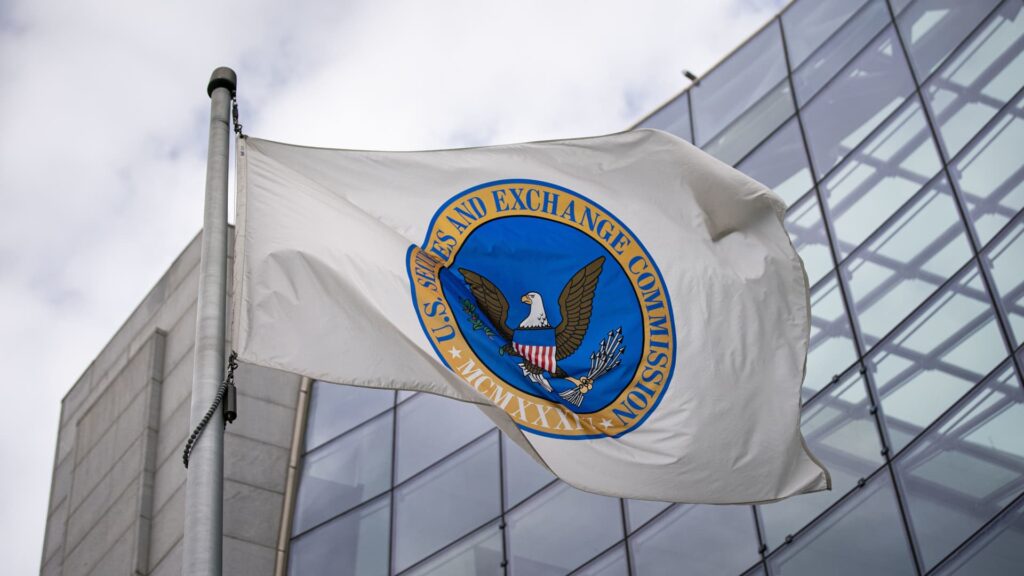
The United States Securities and Exchange Commission (SEC) has initiated legal proceedings against accounting firm Prager Metis, which had previously provided services to the cryptocurrency exchange FTX before the exchange’s declaration of bankruptcy.
According to an official statement released on September 29th, the SEC alleges that Prager Metis failed to maintain the necessary independence while offering auditing services to its clients, which is in violation of the auditor independence framework.
To prevent conflicts of interest, accounting and audit functions are required to be kept separate.
The SEC claims that these intertwined activities took place over a span of nearly three years, constituting a significant breach of fundamental auditing principles.
The statement underscores the critical importance of auditor independence in safeguarding investor interests.
While the SEC’s statement does not explicitly mention FTX or any other specific clients, it highlights that there were allegedly “hundreds” of violations of auditor independence throughout the three-year period in question.
This suggests a widespread problem within Prager Metis’ practices.
A previous court filing disclosed that FTX Group had engaged Prager Metis to audit its subsidiaries, FTX US and FTX, at some point in 2021. Subsequently, FTX declared bankruptcy in November 2022.
The filing argued that Prager Metis should have recognized that FTX would use their audit results to build public trust, especially after former FTX CEO Sam Bankman-Fried had publicly disclosed previous audit outcomes.
Concerns had been previously raised about the content presented in FTX’s audit reports.
On January 25th, FTX’s current CEO, John J. Ray III, expressed substantial concerns regarding the information presented in the audited financial statements during a bankruptcy court proceeding.
Senators Elizabeth Warren and Ron Wyden had also voiced concerns about Prager Metis’ impartiality, suggesting that the firm had operated more as an advocate for the cryptocurrency industry.
Meanwhile, another entity involved with FTX, U.S.-based law firm Fenwick & West, has recently faced legal challenges.
In a court filing dated September 21st, plaintiffs alleged that Fenwick & West should bear partial responsibility for FTX’s collapse due to its alleged excessive service offerings to the exchange.
However, Fenwick & West contends that it cannot be held accountable for a client’s misconduct as long as its actions remain within the bounds of its representation of the client.
This legal dispute further complicates the aftermath of FTX’s bankruptcy declaration and raises questions about the responsibilities of service providers in such cases.
Other Stories:
French Authorities Conduct Surprise Raid on Nvidia’s Offices Amid Antitrust Inquiry
NFT Artist Raises £114,000 at Edinburgh Charity Event to Support Cancer Treatment
New U.S. Bill Proposes Enhanced Oversight for Cryptocurrency Transactions

Decentralized data warehouse Space and Time (SxT) has announced that its flagship Proof of SQL solution has been integrated into Chainlink. As a result, SxT’s zk-Verifier will run natively on Chainlink nodes. The move is a boon for blockchain projects looking to tap into offchain data and use it to deliver the results onchain. Chainlink’s node network is relied on by thousands of decentralized applications (dapps), providing tamperproof data from on- and off-chain sources.
Chainlink Embraces SxT
Proof of SQL is Space and Time’s solution for enabling data queries to be run offline. The results can then be broadcast onchain, with zero knowledge proofs used to show that the output is accurate and the data has not been tampered with. In putting the zk-Verifier component inside Chainlink’s existing nodes, SxT’s Proof of SQL will be easier to access, placing trusted data within reach of dapps throughout the cross-chain ecosystem.
“We are thrilled to make Proof of SQL available to all databases and to integrate Chainlink as the consensus layer,” said Space and Time CEO Nate Holiday. “As the world’s business increasingly moves to operate at the intersection of blockchain and AI, verifiable data and compute will become more critical than ever. We see a future where every database needs to be verified by Space and Time’s zk-proof.”
As more enterprises embrace blockchain, and the growth of IoT spawns billions of smart sensors whose actions are recorded on high-performance distributed networks, the need for reliable data processing will come into sharp focus. Crunching vast amounts of data onchain is inefficient, while doing so off-chain risks breaking the tamperproof guarantees that are one of blockchain’s hallmarks. Proof of SQL allows dapps to have their cake and to eat it: the benefits of operating within a secure onchain environment while being able to attest to the validity of data introduced from external sources.
The Convergence of AI and Blockchain
Space and Time is convinced that the future of blockchain is very much intertwined with that of AI, and not just because both industries have an unquenchable thirst for GPUs. In July, SxT released a chatbot powered by ChatGPT for database querying, making it easier for developers to query off-chain data using natural language prompts. AI’s requirement for LLMs using vast repositories of data is an ideal use case for Space and Time’s Proof of SQL. With such intensive computation required to be undertaken off-chain, solutions such as Proof of SQL are the only practical way to deliver the outputs from data analysis onchain.
“We’re excited that Space and Time is using Chainlink for secure decentralized computation in its novel Proof of SQL ZK protocol,” said Chainlink’s Sergey Nazarov. “By enabling developers to underpin application databases with cryptographic proof, Chainlink and Space and Time are powering the creation of an end-to-end decentralized tech stack that helps scale web3.”
Decentralization exists on a spectrum, and it may never be possible to create high performance dapps that do not intersect with centralized architecture in any way. Solutions such as Proof of SQL show there are pragmatic workarounds that preserve blockchain’s core value while tapping into data from real world sources.
On September 29th, Polygon Labs made a significant announcement, revealing that Google Cloud had joined the Polygon proof-of-stake network as a validator.
This development marked a significant milestone for Polygon, as Google Cloud brought its extensive expertise and resources to the table.
As part of this collaboration, Google Cloud joined a diverse group of over 100 validators responsible for verifying transactions on Polygon’s layer-2 Ethereum network.
This move showcased Google Cloud’s commitment to supporting the growth and security of blockchain technology.
In a statement shared on the X platform (formerly known as Twitter), Polygon Labs expressed their enthusiasm for this partnership, highlighting that the same infrastructure powering platforms like YouTube and Gmail would now contribute to the security and efficiency of the Ethereum-based Polygon protocol.
Validators play a crucial role in maintaining the integrity of the Polygon network by operating nodes, staking MATIC tokens, and participating in the proof-of-stake consensus mechanism.
READ MORE: Marathon Digital Mines Invalid Bitcoin Block in Experiment, Network Resilience Proves Robust
The Google Cloud Singapore account officially confirmed its role as a validator on the Polygon proof-of-stake network, emphasizing its dedication to enhancing the network’s security, governance, and decentralization.
Notably, Google Cloud joined the ranks of other prominent validators, including Deutsche Telekom, one of Europe’s largest telecommunications firms.
Google Cloud described its collaboration with Polygon Labs as an ongoing strategic partnership, indicating a long-term commitment to blockchain technology. In tandem with this announcement, Google Cloud Asia Pacific released a YouTube video titled “Polygon Labs is solving for a Web3 future for all,” further underscoring their dedication to the Web3 ecosystem.
Polygon Labs had recently initiated “Polygon 2.0,” aimed at updating and enhancing the Polygon network.
This multi-phase project, with “Phase 0” being the current focus, involves several Polygon Improvement Proposals (PIPs). PIP 17 stands out as it involves transitioning from the MATIC token to the new POL token.
PIPs 18 and 19 address essential aspects like the technical description of POL and the update of gas tokens.
These changes are scheduled to be implemented in the fourth quarter of 2023, reflecting Polygon’s commitment to continuous improvement and innovation within the blockchain space.
Other Stories:
Fornite Developer Cuts 16% of Workforce Amid Metaverse Revenue Shortfall
Chinese Consultant Fined $144,907 for Unauthorized VPN Use
Do Kwon Requests Extradition Denial Amidst SEC Investigation

The United States Securities and Exchange Commission (SEC) has opted to postpone its ruling on a series of proposals concerning spot Bitcoin exchange-traded funds (ETFs).
Notably, BlackRock’s ETF proposal is among those affected, and this delay comes ahead of an anticipated government shutdown.
In addition to BlackRock, the SEC has also extended the waiting period for spot Bitcoin ETF applications submitted by Invesco, Bitwise, and Valkyrie.
These postponements were officially disclosed in separate filings made on September 28.
Notably, Bloomberg ETF analyst James Seyffart anticipates that the applications filed by Fidelity, VanEck, and WisdomTree will likely encounter similar delays at the hands of the securities regulator.
These recent delays have materialized roughly two weeks ahead of the originally scheduled second deadline.
Many applicants were expecting a response from the securities regulator between October 16 and 19. The timing of these delays appears to be closely linked to the looming prospect of a U.S. government “shutdown” set to occur on October 1.
Such an event would disrupt the functioning of the country’s financial regulators and various other federal agencies.
The root cause of these delays lies in the fact that both chambers of Congress, the House, and Senate, have yet to reach an agreement on several funding bills essential for the government’s operational activities.
To avoid a shutdown, Congress must successfully pass 12 separate full-year funding bills by the impending deadline of October 1.
READ MORE: Fornite Developer Cuts 16% of Workforce Amid Metaverse Revenue Shortfall
It’s important to note that this isn’t the first time the SEC has postponed spot Bitcoin ETF applications.
A similar postponement occurred in late August as the initial deadline approached. Looking ahead, the third set of deadlines for these seven firms is scheduled around mid-January.
However, they, too, may encounter further delays. Regardless, the SEC must make a definitive decision no later than mid-March.
In a related development from late August, Bloomberg ETF analyst Eric Balchunas revised his estimation regarding the likelihood of a spot Bitcoin ETF gaining approval by the close of 2023.
He increased the probability from an earlier estimate of 65% to 75%.
Balchunas attributed this heightened likelihood to the unanimous and decisive ruling by the U.S. Court of Appeals Circuit in favor of Grayscale in their legal battle against the SEC.
Furthermore, Balchunas raised these odds to an even more optimistic 95% by the end of 2024, reflecting a growing sense of optimism regarding the potential regulatory approval of a spot Bitcoin ETF.
Other Stories:
Do Kwon Requests Extradition Denial Amidst SEC Investigation
Chinese Consultant Fined $144,907 for Unauthorized VPN Use
Marathon Digital Mines Invalid Bitcoin Block in Experiment, Network Resilience Proves Robust

Paradigm, a prominent venture capital firm, has voiced strong criticism against the United States Securities and Exchange Commission (SEC) for what it perceives as a deviation from standard rulemaking procedures in its current legal action against the cryptocurrency exchange giant, Binance.
In a statement released on September 29th, Paradigm accused the SEC of attempting to reshape the legal landscape by leveraging the allegations in its complaint against Binance to effect changes in the law without adhering to established rulemaking processes.
Paradigm firmly contends that the SEC is overstepping its regulatory boundaries and vehemently opposes this unconventional approach.
The SEC initiated legal proceedings against Binance in June, alleging multiple violations of securities laws, including operating without the required registration as an exchange, broker-dealer, or clearing agency.
Paradigm emphasized that the SEC has been pursuing similar cases against various cryptocurrency exchanges lately, raising concerns that the SEC’s stance “could fundamentally reshape our comprehension of securities law in several critical aspects.”
Furthermore, Paradigm expressed reservations about the SEC’s application of the Howey test, a legal standard used to determine whether transactions qualify as investment contracts subject to securities regulations.
READ MORE: Do Kwon Requests Extradition Denial Amidst SEC Investigation
Paradigm’s amicus brief argued that many assets are actively marketed, purchased, and traded based on their profit potential. Despite this, the SEC has consistently exempted them from being classified as securities.
Paradigm cited examples such as gold, silver, and fine art, underscoring that the mere potential for value appreciation does not inherently classify their sale as a security transaction.
In a related development, Circle, the issuer of USD Coin (USDC), has entered the fray of the ongoing legal dispute between Binance and the SEC.
Circle firmly contends that stablecoins should not be categorized as securities by the SEC.
They argue that individuals who acquire stablecoins are not doing so with the intention of deriving profits, thereby challenging the SEC’s attempt to regulate these assets as securities.
In summary, Paradigm’s criticism of the SEC centers on the agency’s unconventional approach to legal action against Binance, which they believe goes beyond established rulemaking procedures and could have far-reaching implications for the cryptocurrency and securities landscape.
Meanwhile, Circle has joined the legal dispute, asserting that stablecoins should not be treated as securities by the SEC due to their distinct nature and use cases.
Other Stories:
Fornite Developer Cuts 16% of Workforce Amid Metaverse Revenue Shortfall
Chinese Consultant Fined $144,907 for Unauthorized VPN Use
Marathon Digital Mines Invalid Bitcoin Block in Experiment, Network Resilience Proves Robust

Nearly a year has passed since the infamous FTX hack, which saw cybercriminals abscond with a staggering $600 million in tokens.
However, on Saturday, September 30, 2023, on-chain data unveiled intriguing activity within the perpetrator’s wallet, identified as 0x3e957.
This revelation unfolds in close proximity to the imminent launch of an Ethereum-based ETF in the United States.
Spot On Chain, a reliable source for on-chain data, has recently detected a resurgence in activity emanating from the exploiter’s address.
Currently, this enigmatic wallet contains a substantial treasure trove of $16.75 million worth of Ether.
Further examination of the data exposes two significant transactions involving the movement of 2,500 ETH each, a combined value of $4 million.
Such transfers often correlate with selling activities, which could potentially exert downward pressure on the price of Ether, thereby impacting smaller investors.
Conversely, there is a tantalizing prospect that the price of ETH could embark on a bullish trajectory in the near future, coinciding with the launch of several Ethereum exchange-traded funds (ETFs) within the United States.
READ MORE: Marathon Digital Mines Invalid Bitcoin Block in Experiment, Network Resilience Proves Robust
Multiple companies are eagerly awaiting the approval of the U.S. Securities and Exchange Commission (SEC), which is poised to make a momentous decision on October 2.
If granted, this decision could greenlight up to nine ETF products, facilitating unprecedented access to Ethereum for mainstream investors.
The convergence of these developments is poised to inject significant volatility into the Ethereum market.
Investors and enthusiasts alike are keenly observing the situation, gauging the potential impact on ETH prices and the broader cryptocurrency landscape.
The lingering specter of the FTX hack, with its audacious $600 million heist, continues to cast a shadow over the crypto world, serving as a stark reminder of the importance of security and vigilance in this rapidly evolving digital frontier.
As we approach the fateful SEC decision date, the crypto community braces itself for the possible repercussions, hoping that the launch of Ethereum-based ETFs can bring not only increased accessibility but also stability and legitimacy to the world of cryptocurrencies in the United States.
Other Stories:
Do Kwon Requests Extradition Denial Amidst SEC Investigation
Fornite Developer Cuts 16% of Workforce Amid Metaverse Revenue Shortfall
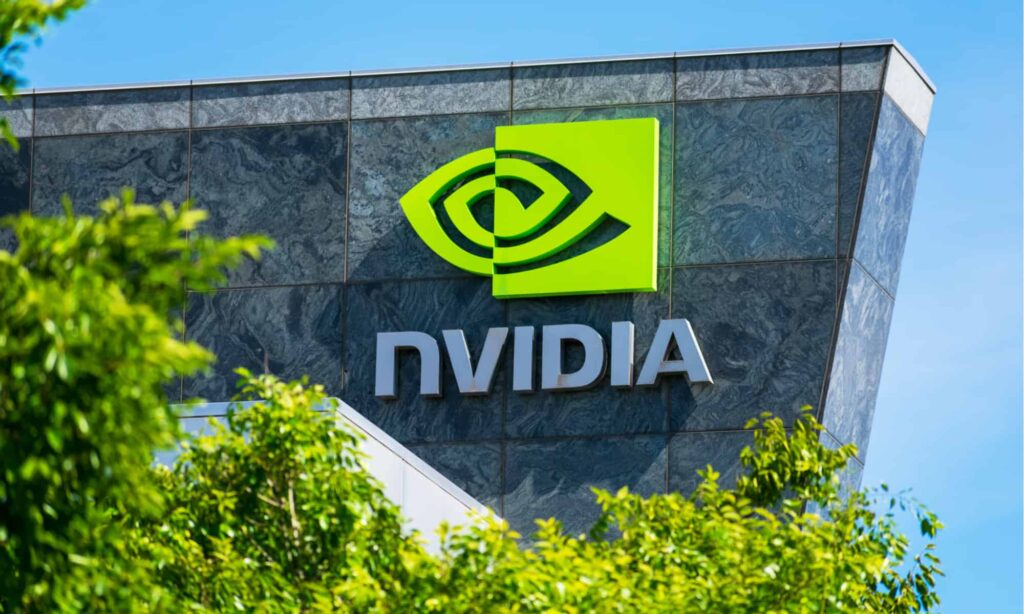
Nvidia, a global powerhouse in artificial intelligence (AI) chip manufacturing with its headquarters in California, found itself at the center of attention this week as French law enforcement conducted an unexpected raid on its offices.
This move is part of a broader investigation by French antitrust authorities into the cloud computing sector, as reported by The Wall Street Journal on September 28. So far, neither Nvidia nor French enforcement agencies have officially disclosed details about the incident.
A press release on the website of the French antitrust agency, Autorité de la Concurrence, mentions an unannounced inspection focused on the graphics cards sector.
The agency obtained a judicial authorization for this action based on suspicions of Nvidia’s involvement in “anticompetitive practices in the graphics cards sector.”
Notably, the agency emphasizes that the raid does not automatically imply the existence of a legal violation attributable to the company.
This development comes in the wake of Autorité de la Concurrence’s extensive analysis of the cloud computing sector, which culminated in a report published in June 2023.
Notably, this report did not explicitly mention Nvidia but instead concentrated on major tech giants like Amazon Web Services, Google Cloud, and Microsoft Azure.
According to the agency’s findings, these three hyper-scalers accounted for a staggering 80% of the spending growth in public cloud infrastructures and applications in France during 2021.
The agency expressed concern about the market power wielded by these companies and their potential to stifle competition.
READ MORE: Hypothekarbank Lenzburg Joins SDX: Swiss Bank Expands Digital Asset Presence
To address this issue, Autorité de la Concurrence is exploring various avenues under national competition laws and the European Data Act to counteract this monopolistic trend.
Nvidia has attracted the regulators’ scrutiny due to its unique role as a hardware provider to some of the most cutting-edge segments of the digital industry.
Notably, Nvidia’s recent quarterly report revealed that United States regulators had requested the company to limit the export of AI chips to “certain Middle East countries.”
However, the U.S. Department of Commerce later denied this information, adding a layer of complexity to Nvidia’s ongoing interactions with regulatory bodies.
In summary, Nvidia’s encounter with French authorities underscores the growing regulatory scrutiny faced by tech giants operating in the AI and cloud computing sectors, particularly those with a significant influence on the digital landscape.
The outcome of this investigation will likely have ramifications not only for Nvidia but also for the broader tech industry as it navigates complex antitrust and competition concerns.
Other Stories:
Crypto Trader’s Cross-Country Journey Ends in Seattle: A Bitter Twist of Fate
Binance Completes Exit from Russian Market, Sells Operations to CommEX
Major Cryptocurrency Exchange Bitspay Faces Scrutiny Over Alleged Fake License Claims