

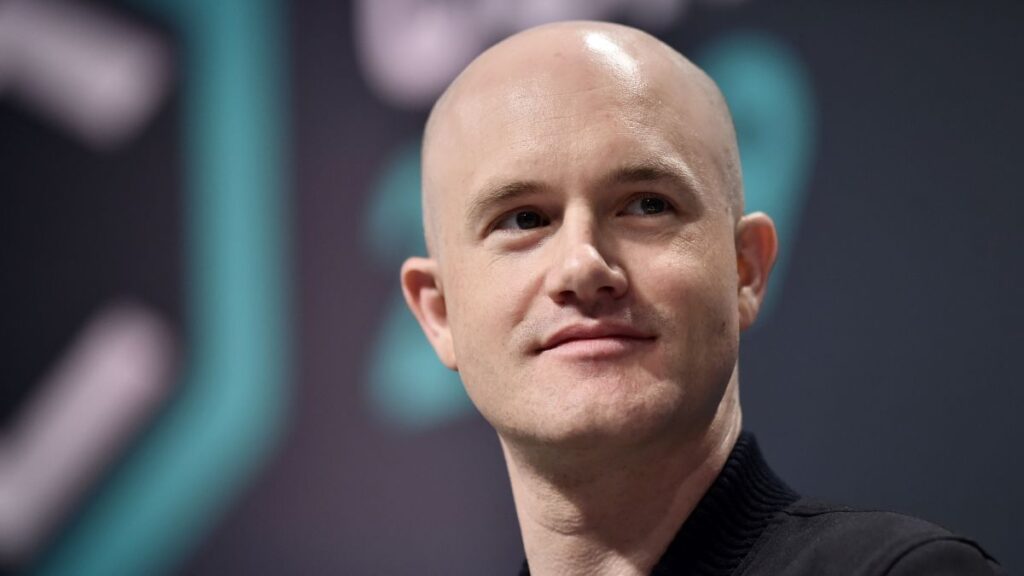
Coinbase, a prominent United States-based cryptocurrency exchange, is expanding its operations in Singapore following significant regulatory approval from the country’s central bank.
On October 1st, Coinbase announced that it had secured a Major Payment Institution (MPI) license from the Monetary Authority of Singapore (MAS).
This milestone comes one year after Coinbase initially received in-principle approval in Singapore, granting the company the authority to extend its digital payment token services to individuals and institutions within the nation.
The MPI license allows approved firms to conduct payment services without being bound by transaction limits, specifically the 3 million Singapore dollars ($2.2 million) cap for any payment service and the 6 million SG$ ($4.4 million) monthly transaction limit for two or more payment services, excluding e-money account issuance and money-changing services, as outlined by MAS.
Coinbase views this newly acquired license as a validation of its operations and as a commitment to the burgeoning crypto and Web3 community in Singapore.
The company has been actively developing products tailored for the Singaporean market, such as the launch of PayNow and FAST bank transfers in March 2023.
Furthermore, Coinbase has integrated Singapore’s digital identity service, SingPass, to streamline onboarding procedures.
Additionally, the exchange has collaborated with prominent local blockchain companies like Nansen.ai, Blockdaemon, and Infura to expand its product offerings, including Base blockchain and wallet-as-a-service.
READ MORE:Venture Capital Firm Paradigm Criticizes SEC’s Unconventional Approach in Binance Case
The exchange expressed its commitment to Singapore as a pivotal market, citing its recent survey that revealed over 30% of Singaporeans have been current or past owners of cryptocurrencies. Coinbase also highlighted Singapore’s significance in the crypto and Web3 economy, with more than 700 Web3 companies calling the city-state home.
It’s worth noting that Coinbase has not provided a response to Cointelegraph’s request for comment at this time.
This development aligns with a broader trend, as major global cryptocurrency firms increasingly seek to obtain Singapore’s MPI license.
In August 2023, Blockchain.com, a crypto data and wallet provider, became the 12th firm to secure this license. Prior to that, in June 2023, Circle, the issuer of the USD Coin (USDC) stablecoin, also received the MPI license, following in the footsteps of crypto exchange Crypto.com.
Singapore’s regulatory framework is becoming increasingly attractive to cryptocurrency companies, positioning the nation as a significant hub for the crypto and Web3 industries.
Other Stories:
Space and Time Integrates Its Proof of SQL Verifier Into Chainlink Nodes
Google Cloud Joins Polygon Network as Validator, Boosting Blockchain Security
SEC Delays Decision on Spot Bitcoin ETF Proposals Amid Looming Government Shutdown

Friend.tech, the decentralized social media platform built on Coinbase’s layer-2 protocol, Base, has achieved remarkable milestones in terms of revenue growth and total value locked (TVL) on its platform.
Recent data from Dune Analytics reveals that Friend.tech’s revenue has surged to an impressive 10,663 Ether, while its TVL has exceeded 30,000 ETH as of October 2nd.
These accomplishments are especially noteworthy as they come at a time when the initial hype surrounding the platform has subsided.
Launched in August 2023, Friend.tech offers users a unique experience by allowing them to exchange “keys” associated with X accounts, formerly Twitter handles, belonging to their friends or influencers.
These keys grant users access to private in-app chatrooms and exclusive content restricted to the respective X account holder.
Additionally, users have the opportunity to invest in shares of their friends and favorite influencers within the platform.
The concept of a decentralized social network with a revenue-sharing model received praise within the Web3 community.
However, it also attracted its fair share of critics. Some skeptics declared Friend.tech “dead” shortly after its launch, citing concerns about its revenue model.
READ MORE: Google Cloud Joins Polygon Network as Validator, Boosting Blockchain Security
Predictions were made that the platform would lose its charm within six to eight weeks, and doubts were raised about the sustainability of the rapid share price increases observed in the initial weeks.
Despite the skepticism, Friend.tech has defied expectations by continually achieving record-breaking revenue and user growth.
Notably, the recent surge in revenue coincides with a significant increase in communicative transactions on the platform, reaching a staggering 9,200,882.
While current trading metrics have dipped from their peak in the first week of September, the consistent growth in both revenue and TVL indicates that the platform is still gaining traction among users.
In conclusion, Friend.tech’s decentralized social media platform, built on Coinbase’s Base protocol, has demonstrated its resilience and appeal in the face of initial doubts and criticisms.
Its impressive revenue growth and rising TVL attest to its ability to capture and retain user interest, even as the initial hype has waned.
Friend.tech appears to be well on its way to establishing itself as a significant player in the decentralized social networking space.
Other Stories:
Space and Time Integrates Its Proof of SQL Verifier Into Chainlink Nodes
SEC Delays Decision on Spot Bitcoin ETF Proposals Amid Looming Government Shutdown
Venture Capital Firm Paradigm Criticizes SEC’s Unconventional Approach in Binance Case
Bitwise Asset Management has made significant moves in the world of cryptocurrency investment by revising its application for a spot Bitcoin (BTC) exchange-traded fund (ETF).
Additionally, the company has announced that trading for two Ethereum (ETH) futures ETFs will kick off on October 2nd, marking an important milestone in the evolving crypto landscape.
The two ETFs set to launch are the Bitwise Ethereum Strategy ETF and the Bitwise Bitcoin and Ether Equal Weight Strategy ETF.
These ETFs will provide investors with access to the Chicago Mercantile Exchange’s Ether futures market, opening up new avenues for diversification and trading opportunities.
Bitwise’s Chief Investment Officer, Matt Hougan, emphasized the unique potential of Ethereum in the crypto market.
He stated that Ethereum offers a more expansive portfolio opportunity compared to Bitcoin.
While some investors view Ethereum as an alternative investment, others see it as a conventional growth asset with a blend of characteristics from both categories.
Bitwise’s move into the Ethereum ETF space comes as several other companies await approval for their spot Bitcoin ETF applications from the United States Securities and Exchange Commission (SEC).
Notable contenders include BlackRock, Invesco, and Valkyrie.
READ MORE: New U.S. Bill Proposes Enhanced Oversight for Cryptocurrency Transactions
However, the SEC has delayed its decision-making process, partly due to the looming possibility of a U.S. government shutdown and the uncertainty surrounding the Grayscale lawsuit.
The Grayscale lawsuit pertains to the transformation of the Grayscale Bitcoin Trust (GBTC) into a Bitcoin ETF. A U.S. court’s decision on August 29th paved the way for potential approval of the Grayscale spot Bitcoin ETF by dismissing the SEC’s objections.
The outcome of this lawsuit could significantly influence the SEC’s stance on approving spot Bitcoin ETF applications.
In a related development, Bloomberg analyst James Seyffart has disclosed that nine Ethereum Futures ETFs are set to receive expedited approval from the SEC, with a launch date slated for Monday, October 2, 2023.
This signals a growing interest in Ethereum-based investment products and demonstrates the crypto market’s continued evolution.
In summary, Bitwise Asset Management’s revised ETF application and the upcoming launch of Ethereum futures ETFs mark significant developments in the crypto investment landscape.
As regulatory approvals and legal decisions unfold, the industry is poised for further growth and diversification.
Other Stories:
French Authorities Conduct Surprise Raid on Nvidia’s Offices Amid Antitrust Inquiry
NFT Artist Raises £114,000 at Edinburgh Charity Event to Support Cancer Treatment
Global asset manager VanEck has pledged to donate 10% of profits generated from its upcoming Ether futures exchange-traded fund (ETF) to Ethereum core developers over a span of 10 years.
The announcement was made via the company’s X (formerly Twitter) account on September 29.
The recipient of these donations will be the Protocol Guild, a collective of more than 150 developers responsible for maintaining Ethereum’s core technology.
VanEck emphasized the importance of asset managers giving back to the community that underpins the crypto protocol, stating:
“As traditional finance (TradFi) stands to benefit from the contributions of Ethereum’s core developers, it is only right that we contribute to their ongoing efforts.
We encourage other asset managers and ETF issuers to consider adopting a similar approach.”
This commitment by VanEck aligns them with other crypto-native entities that actively support the Ethereum network, such as Lido Finance, Uniswap, Arbitrum, Optimism, ENS Domains, MolochDAO, and Nouns DAO.
The donations made to the Protocol Guild are tracked through a public dashboard, revealing that 4,846 contributions have amassed over $12 million.
These funds are then distributed among guild members based on a weighted ratio that takes into account their contribution periods.
Ethereum’s core developers are currently focused on Ethereum Improvement Proposal EIP-4844 (Proto-Danksharding), an upgrade that will introduce a novel transaction type to the Ethereum ecosystem.
This development aims to reduce transaction fees for layer-2 protocols, further enhancing the network’s efficiency.
VanEck recently disclosed its plans for an Ethereum Strategy ETF on September 28.
This ETF will invest in Ether futures contracts and will be actively managed by Greg Krenzer, the head of active trading at VanEck.
It is anticipated to be listed on the Chicago Board Options Exchange in the near future.
In addition to VanEck, other traditional investment firms like Valkyrie and Bitwise are gearing up to offer exposure to Ether futures.
Furthermore, there is a growing lineup of firms waiting for regulatory approval to launch a spot Ether ETF, including Invesco Galaxy, ARK 21Shares, and VanEck.
The United States Securities and Exchange Commission (SEC) recently postponed its decision on approving a spot Ether product until December, highlighting the continued interest and potential growth in the crypto investment space.
Other Stories:
New U.S. Bill Proposes Enhanced Oversight for Cryptocurrency Transactions
NFT Artist Raises £114,000 at Edinburgh Charity Event to Support Cancer Treatment
French Authorities Conduct Surprise Raid on Nvidia’s Offices Amid Antitrust Inquiry

The Brazilian government has announced a groundbreaking initiative to implement blockchain technology for digital identity, which will impact over 214 million Brazilians.
This transformative project is set to roll out initially in the states of Rio de Janeiro, Goiás, and Paraná.
Serpro, Brazil’s national data processing service, has developed a private blockchain specifically for this purpose.
According to a decree issued on September 25th, the entire nation is expected to adopt blockchain technology for identity documents by November 6th.
The president of Serpro, Alexandre Amorim, emphasized the importance of blockchain for this digital identification project.
He highlighted blockchain’s key attributes, such as immutability and decentralization, which are instrumental in safeguarding personal data and preventing fraudulent activities.
The adoption of the b-Cadastros blockchain platform significantly enhances the security and reliability of the National Identity Card project.
The government has underscored the significance of the national ID project in combating organized crime, facilitating collaboration between government sectors, simplifying access to services, and streamlining administrative records.
READ MORE: New U.S. Bill Proposes Enhanced Oversight for Cryptocurrency Transactions
This initiative mirrors a similar effort in Buenos Aires, Argentina, where residents can access identity documents through a digital wallet.
Over recent years, Brazil has been working towards a unified identity issuance system across its nearly 30 states.
The adoption of blockchain technology will foster more secure data exchange between the Federal Revenue and various government departments, enhancing overall efficiency and security.
In addition to the digital identity project, Brazil is also making strides in the realm of central bank digital currencies (CBDCs).
In August, the government provided further details about this initiative, which has been rebranded as “Drex.”
The central bank plans to expand business access to capital through a tokenization system associated with Drex.
However, concerns have been raised about the Drex code, as it could potentially allow a central authority to freeze funds or reduce balances, as noted by a local developer.
As Brazil takes pioneering steps in the realms of blockchain-based digital identity and CBDCs, the nation is poised to transform the way its citizens access services, conduct financial transactions, and protect their personal data, all while enhancing security and efficiency in government operations.
Other Stories:
NFT Artist Raises £114,000 at Edinburgh Charity Event to Support Cancer Treatment
French Authorities Conduct Surprise Raid on Nvidia’s Offices Amid Antitrust Inquiry
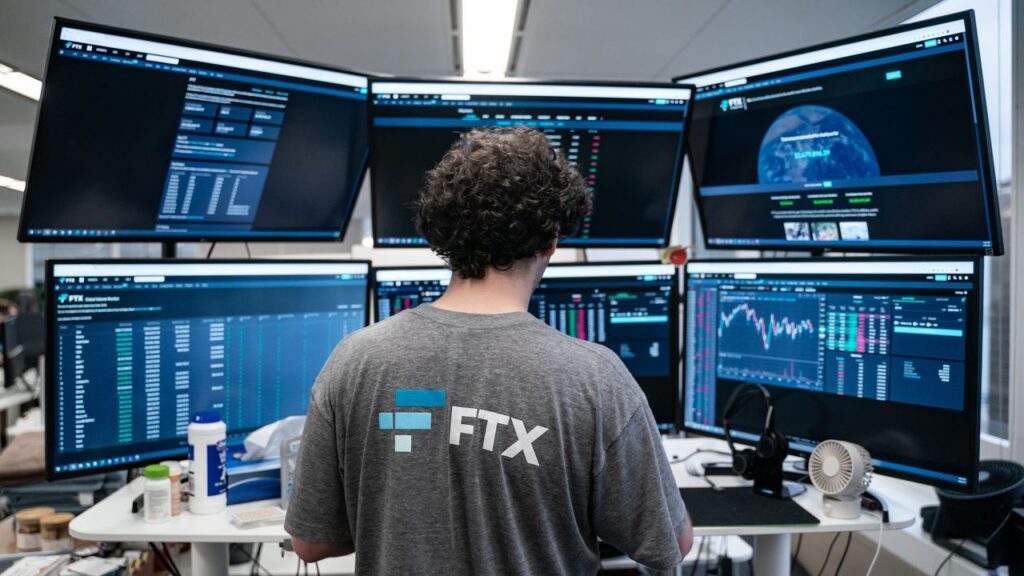
In the lead-up to its eventual collapse in November 2022, crypto exchange FTX was ensnared in a web of increasingly perilous decisions, fueled by the ideology of effective altruism, according to a former software engineer at Alameda Research, Aditya Baradwaj.
Just days before FTX founder Sam “SBF” Bankman-Fried’s trial on October 3, Baradwaj provided insights into the role this philosophy played in the demise of the company, shedding light on his experiences working under the former billionaire.
Effective altruism, which encourages individuals to amass wealth to later donate for the greater good, took hold at FTX, gradually shifting the decision-making process towards irrationality.
Baradwaj remarked, “This ideology was used to justify increasingly risky and ridiculous actions that, honestly, should have been looked at with a saner mind.”
Despite being prevalent in Silicon Valley and quantitative finance circles, effective altruism led to a skewed perspective at FTX and Alameda Research.
Baradwaj highlighted the allure of the ideology, saying, “All of us at the company had this vision of, ‘I think altruism is good, and I think doing things effectively is good.’
So, you put these things together, and it’s like, ‘Obviously this thing is good.'”
However, he emphasized the danger when this philosophy turns into a means-to-an-end mentality, especially when the ends are bizarre and irrational.
READ MORE: Space and Time Integrates Its Proof of SQL Verifier Into Chainlink Nodes
Under the guise of effective altruism, Bankman-Fried made substantial donations to prevent pandemics and combat malaria in developing nations.
He was also a major donor to the Democratic party but later admitted to contributing to Republicans as well.
Notably, he even proposed paying Donald Trump $5 billion not to run for president in 2024, claiming it was to “protect democracy,” as revealed by Big Short author Michael Lewis in a recent interview.
Despite allegations that Bankman-Fried hid behind a fabricated altruistic persona, Baradwaj maintained that the former FTX founder genuinely believed in his mission.
He described Bankman-Fried as highly motivated and trustworthy, which may explain his staunch denial of the charges pressed against him.
Baradwaj reflected on Bankman-Fried’s possible mindset, stating, “Maybe he does genuinely believe that what he did was fine, or he actually believes that he did nothing wrong.”
He emphasized the importance of the truth and expressed hope that the trial would provide clarity on the events that transpired, leaving many questions unanswered.
Other Stories:
Google Cloud Joins Polygon Network as Validator, Boosting Blockchain Security
SEC Delays Decision on Spot Bitcoin ETF Proposals Amid Looming Government Shutdown
Venture Capital Firm Paradigm Criticizes SEC’s Unconventional Approach in Binance Case

The Department of Justice (DOJ) has confirmed its plan to summon former FTX clients, investors, and staff as witnesses in the upcoming trial involving Sam Bankman-Fried, the former CEO of FTX.
In a letter motion submitted on September 30, the DOJ outlined its intention to call witnesses who can shed light on FTX’s handling of customer assets.
These testimonies aim to provide insights into the interactions between the accused and the witnesses and to gauge the witnesses’ understanding of Bankman-Fried’s statements and actions, particularly concerning FTX’s asset management.
The DOJ seeks to emphasize the experiences of both retail and institutional clients who entrusted substantial assets to FTX with the belief that their assets would be securely safeguarded.
However, a complication has arisen regarding one of the DOJ’s witnesses, identified as “FTX Customer-1,” who resides in Ukraine.
Given the ongoing conflict in Ukraine, the prospect of traveling to the U.S. to testify poses significant challenges.
To address this, the DOJ has proposed using video conferencing as a viable alternative, although Bankman-Fried’s defense has not yet approved this proposal.
Meanwhile, Bankman-Fried’s legal team, led by attorney Mark Cohen, has raised concerns about the jury questions presented by the DOJ.
Bankman-Fried’s defense argues that these inquiries could imply guilt on his part, potentially undermining the fundamental principle of “innocent until proven guilty.”
Furthermore, they assert that these questions may not effectively uncover potential biases among jurors, particularly concerning their familiarity with cryptocurrencies.
Specific questions could inadvertently influence the jury’s perspective rather than eliciting genuine insights, potentially compromising the trial’s impartiality.
As the jury selection is scheduled to commence on October 3, followed closely by the trial, all eyes are on this high-stakes legal showdown.
The proceedings will not only scrutinize the actions of Sam Bankman-Fried but also the integrity of the legal process itself, as both the prosecution and defense grapple with issues related to witness testimony and jury questions.
The outcome of this trial is eagerly anticipated by the cryptocurrency community and the broader financial industry.
Other Stories:
New U.S. Bill Proposes Enhanced Oversight for Cryptocurrency Transactions
French Authorities Conduct Surprise Raid on Nvidia’s Offices Amid Antitrust Inquiry
NFT Artist Raises £114,000 at Edinburgh Charity Event to Support Cancer Treatment
In recent updates shared by Spot On Chain, it has been revealed that an address associated with the FTX exploit, known as 0x3e9, has been actively involved in transferring over 10,000 Ether, with an estimated value of approximately $17 million, across five distinct addresses since September 30th.
Remarkably, these addresses had lain dormant for an extended period before the sudden resurgence of activity.
Notably, a significant portion of the aforementioned 10,000-plus Ether, valued at around $13 million, found its way to the THORChain router and Railgun contract.
Additionally, the exploit operator conducted a swap involving 2,500 ETH, equivalent to approximately $4.19 million, converting it into 153.4 tBTC tokens at an average rate of $27,281 per token.
It’s worth recalling that the initial hack on September 30th resulted in losses nearing 50,000 ETH, causing significant concern within the crypto community.
These developments have unfolded amidst the crypto market’s anticipation of the launch of Ethereum futures ETFs scheduled for October 2nd.
READ MORE: New U.S. Bill Proposes Enhanced Oversight for Cryptocurrency Transactions
Looking beyond the exploits and market developments, legal proceedings involving prominent FTX founder Bankman-Fried have garnered attention.
The trial, expected to span six weeks, is set to commence with jury selection on October 3rd, followed by initial court proceedings on October 4th.
Bankman-Fried is facing seven charges related to fraudulent activities, encompassing two substantive charges and five conspiracy charges.
Throughout the legal proceedings, Bankman-Fried has staunchly maintained his innocence, pleading not guilty to all allegations.
Despite numerous attempts to secure temporary release, he remains in custody, with Judge Lewis Kaplan recently denying his most recent request for release due to concerns about the potential flight risk posed by the defendant.
In light of these ongoing developments, the crypto community continues to monitor the evolving situation closely, with both market dynamics and legal outcomes poised to have far-reaching implications.
Other Stories:
French Authorities Conduct Surprise Raid on Nvidia’s Offices Amid Antitrust Inquiry
NFT Artist Raises £114,000 at Edinburgh Charity Event to Support Cancer Treatment
Toronto, Canada, October 2nd, 2023, Chainwire
In an exhilarating development in the world of crypto and blockchain, TYRION the trailblazer in decentralized advertising, announces its strategic move to build its advertising platform on Coinbase’s Base Chain. This monumental announcement underscores TYRION’s commitment to leveraging cutting-edge technology to offer unparalleled advertising solutions, anchored in transparency, efficiency, community incentivization, and innovation.
Base Chain, renowned for its robust scalability, security, and efficiency, aligns seamlessly with TYRION’s mission to revolutionize and decentralize the $377 Billion digital advertising landscape. By building on Base Chain, TYRION not only amplifies its technical prowess but also extends its reach, tapping into a dynamic ecosystem of builders, innovators, and users.
Brian Armstrong, CEO of Coinbase and Base Chain recently stated that he believes decentralized advertising is one of the top 10 next large developments in the blockchain industry. “The best business model in Web 2 has been ads. It’s a reasonable bet that some form of advertising will be big in Web 3. Developers and startups in Web 3 will increasingly be willing to pay for distribution, but can we do better than the traditional ad model? In Web 2, the big innovation was going from CPM (pay per thousand impressions) to CPC (only pay if someone clicks the ad). In Web 3, maybe we can go all the way to CPA (only pay when someone buys or takes an action onchain).”
This is precisely what TYRION is building with the future on-chain capabilities of its platform as it moves to disrupt the way ads are bought and sold in the future–while tackling the global digital marketing monopoly held tightly by Meta and Google.
The launch of $TYRION, the platform’s native token, has been noted in the crypto community. Twice TYRION has been the featured guest on Twitter’s (X) biggest crypto space, The Roundtable. Friday, at 12:30 PM Eastern Standard Time, September 29th 2023, Tyrion spoke on Twitter’s largest space, The Future of Crypto by Mario Nawfal. This routinely gathers 500,000 listeners and features guests like Elon Musk, CZ from Binance.
During the AMA segment of the show, Mario expressed interest in using the Tyrion platform when the MVP Beta is launched. This is a large step towards global adoption. Mario is one of the world’s leading figures in crypto and finance.
“As we build out our product on Base Chain, we are essentially stepping into a future where the confluence of advanced blockchain technology and innovative advertising solutions is not just a possibility but a tangible reality,” stated Patrick Gajda, CEO at TYRION. “Our decision is rooted in our unwavering commitment to offering our users an experience marked by speed, security, incentive, and seamless interaction.”
Base Chain’s impressive low transaction costs, quick transaction finality, and immense scalability offer TYRION an environment where the platform’s features can truly thrive. Advertisers and Ad Publishers on TYRION will experience enhanced performance, swift transactions, and an ecosystem that is ready to scale globally, without compromising on the user experience or security.
This strategic alignment heralds a new chapter where the synergies between TYRION and Base Chain will drive unprecedented value for users, partners, and stakeholders. The adaptability and resilience of Base Chain complement TYRION’s innovative approach to decentralized advertising, promising a future where digital advertising is not just seen but is also responsive, engaged, and trusted.
For media inquiries and more information on this exciting partnership, please contact:
Cale Tompkins, VP Of Communications, via email: [email protected]
About TYRION
TYRION is a beacon of innovation in the decentralized advertising space, committed to transforming digital advertising through transparency, efficiency, and community engagement. With its groundbreaking platform, TYRION is not just shaping the future of advertising but is also ensuring that it is participative, value-driven, and anchored in trust.
Contact
VP of Communications
Cale
Tyrion
[email protected]

Bitwise Asset Management is making significant moves in the world of cryptocurrency investment, with revisions to its spot Bitcoin (BTC) exchange-traded fund (ETF) application and the confirmation of trading commencement for two Ether (ETH) futures ETFs set for October 2nd.
The company’s forthcoming offerings include the Bitwise Ethereum Strategy ETF and the Bitwise Bitcoin and Ether Equal Weight Strategy ETF, aimed at providing investors access to the Chicago Mercantile Exchange Ether futures.
Matt Hougan, the firm’s Chief Investment Officer, emphasized Ethereum’s broader investment potential compared to Bitcoin, describing it as an asset that appeals to both alternative and traditional growth investors due to its versatile attributes.
Interestingly, Bitwise is not alone in its pursuit of Ethereum-based ETFs. Invesco, another asset management giant, is exploring the introduction of the Invesco Galaxy Ethereum ETF, indicating the growing interest in Ethereum-focused investment products.
However, a cloud of uncertainty looms over the approval of spot Bitcoin ETF applications from Bitwise, BlackRock, Invesco, and Valkyrie by the United States Securities and Exchange Commission (SEC).
The SEC has yet to make a decision, partly due to the threat of a U.S. government shutdown.
READ MORE: Fornite Developer Cuts 16% of Workforce Amid Metaverse Revenue Shortfall
Moreover, the outcome of the Grayscale lawsuit adds another layer of complexity.
This lawsuit involves the transformation of the Grayscale Bitcoin Trust (GBTC) into a Bitcoin ETF. A U.S. court’s decision on August 29th paved the way for the approval of the Grayscale spot Bitcoin ETF by dismissing the SEC’s objections.
This development could influence the SEC’s decision regarding spot Bitcoin ETF applications.
In parallel, Bloomberg analyst James Seyffart has unveiled a roster of nine Ethereum Futures ETFs that are poised to receive expedited approval from the SEC, with a launch date set for October 2, 2023.
This signals a growing interest in Ethereum futures as an investment avenue.
In conclusion, Bitwise’s strategic moves in the cryptocurrency ETF space, coupled with Invesco’s foray into Ethereum ETFs, underscore the evolving landscape of crypto investments.
The fate of spot Bitcoin ETFs remains uncertain, hinging on regulatory decisions and legal developments.
Meanwhile, Ethereum’s prominence continues to rise, attracting investors seeking diversified opportunities in the cryptocurrency market.
Other Stories:
Marathon Digital Mines Invalid Bitcoin Block in Experiment, Network Resilience Proves Robust
Chinese Consultant Fined $144,907 for Unauthorized VPN Use
Do Kwon Requests Extradition Denial Amidst SEC Investigation