

Earlier this year, a novel concept known as Ordinals emerged, causing a stir in the Bitcoin community.
Ordinals introduced a distinctive marking on the smallest unit of Bitcoin, the Satoshi.
While some dismissed it as spam, others embraced it as a bridge for BRC-20 tokens and NFTs onto the Bitcoin platform. This innovation sparked a series of advancements.
Now, attention is shifting to “recursive inscriptions,” a complex but potentially powerful evolution.
Recursive inscriptions offer the promise of enabling more intricate functionalities on the Bitcoin blockchain, similar to Ethereum’s smart contracts.
Enthusiasts believe that recursive inscriptions could catalyze Ordinals’ progression from NFTs and digital artifacts to forming the foundation for a comprehensive decentralized finance (DeFi) ecosystem on Bitcoin.
There are also expectations that it could facilitate Bitcoin’s expansion into competing with decentralized storage provider IPFS, or even the creation of an interconnected on-chain supercomputer.
Stanford PhD Danny Yang, the creator of OCM Dimensions and a Bitcoin enthusiast since 2013, regards recursive inscriptions as the key to the next phase of Bitcoin’s evolution.
He envisions them enabling the emergence of valuable digital assets beyond just NFTs.
While these advancements remain speculative and early-stage, they are rejuvenating interest in Bitcoin.
Despite being a subject of criticism for not covering Bitcoin extensively, it’s now evident that meaningful developments are unfolding.
Danny Yang has been actively working on recursive inscriptions since February, demonstrating their potential through projects like OCM Dimensions and OCM Genesis.
READ MORE: UK Prime Minister Allocates £100 Million to Acquire Computer Chips for AI Advancement
These projects showcase the possibilities unlocked by recursive inscriptions, marking a significant turning point in people’s understanding of their significance.
Recursive inscriptions expand the horizons of Bitcoin applications by interlinking data through a chain of calls, much like smart contracts.
This functionality enables the hosting of complex data sets on the Bitcoin blockchain, such as video and audio files, which was previously unfeasible.
Furthermore, these inscriptions can be reused, drastically reducing storage costs.
This mechanism offers a multitude of possibilities, from hosting open-source libraries on-chain to enabling applications like on-chain AI, effectively building a community-driven public infrastructure.
Although still in its infancy, the potential impact of recursive inscriptions and smart contracts on Bitcoin is vast.
They could pave the way for a Bitcoin-native DeFi ecosystem and challenge data storage conventions through the blockchain’s decentralized nature.
This wave of innovations is transforming Bitcoin’s image and fostering a new era of development driven by creators and developers.
In conclusion, the emergence of Ordinals and subsequent recursive inscriptions is reinvigorating Bitcoin’s landscape.
These developments hold the potential to redefine Bitcoin’s role, from being a simple currency to a dynamic platform for diverse applications.
As the Bitcoin community begins to grasp their implications, a future filled with possibilities is emerging.
Other Stories:
Bitget Cryptocurrency Exchange Enhances KYC Procedures to Align with Global Regulations
Ordinal Inscriptions Maintain Dominance on Bitcoin Network Despite Price Dip
New DeSo Network Friend.tech Generates Over $1 Million in 24 Hours
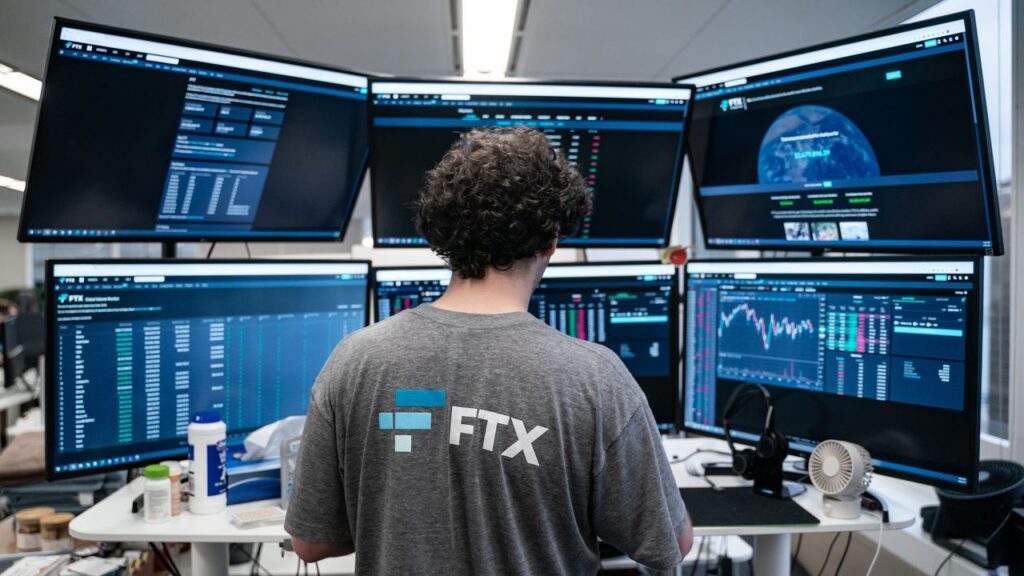
Galaxy Digital, helmed by Mike Novogratz, appears poised to oversee the remaining cryptocurrency assets from the defunct FTX cryptocurrency exchange.
On August 24, Galaxy Digital submitted a motion to the US District Court for the District of Delaware, seeking approval for protocols governing the sale of digital assets recuperated during the ongoing bankruptcy proceedings.
The filing details FTX’s intentions to transfer approximately $7 billion worth of recovered cryptocurrency tokens to Galaxy Digital’s management, subsequent to FTX’s collapse in 2022.
FTX aims to arrange for the potential sale of its cryptocurrency reserves and stake tokens through Galaxy Digital, as outlined in its preliminary proposal.
This approach is underpinned by a comprehensive strategy to manage and monetize the cryptocurrency assets, intended to mitigate volatility exposure and potential fiat repayments to creditors.
FTX plans to retain Galaxy Digital’s services as a registered investment adviser, leveraging the firm’s specialized expertise in digital asset markets to optimize the valuation of its token portfolio.
The partnership offers several advantages, including the ability to anonymously offload holdings in the markets and reduce susceptibility to market manipulation.
Moreover, FTX envisions Galaxy Digital playing a critical role in assessing timing, trading platforms, and counterparties for prospective transactions.
The investment guidelines established will lead Galaxy Digital to sell various digital assets owned by FTX, while also managing Bitcoin (BTC) and Ether hedging prior to potential sales.
FTX’s strategy encompasses liquidating crypto holdings for fiat currency to minimize exposure to market volatility.
READ MORE:Bybit Unveils NFT Collection as Part of Velocity Series
Concurrently, leveraging liquid hedging markets for Bitcoin and Ether aims to mitigate the impact of unexpected price fluctuations before the assets are sold.
The filing also highlights FTX’s interest in Decentralized Finance (DeFi).
It plans to stake specific cryptocurrencies to generate passive income under Galaxy Digital’s guidance, stating that this approach will yield low-risk returns on dormant digital assets, ultimately benefiting the estate and creditors.
As the bankruptcy proceedings continue, FTX has recently proposed a restructuring plan that contemplates the establishment of a rejuvenated offshore exchange.
This initiative could provide creditors with the choice of reclaiming a portion of their lost funds or participating in equity, tokens, and other stakes within the rebooted FTX framework.
Other Stories:
FTX Founder Seeks Release for Defense Collaboration
Global Disparities in Bitcoin Mining Costs Highlighted: From $208,560 in Italy to $266 in Lebanon
SEC Lawsuit Stifles XRP’s US Adoption Potential, Pro-XRP Advocate Asserts Amid Coinbase’s Moves
Amidst the aftermath of Judge Analisa Torres’ ruling in the United States Securities Exchange Commission v. Ripple Labs case, which declared XRP not to be a security, the digital asset is grappling to maintain its upward trajectory.
This struggle has prompted some investors to offload their holdings, exacerbated by a substantial player in the market moving a sizable amount of 29 million XRP – equivalent to a value exceeding $15 million – to the Bitstamp crypto exchange.
This transfer has coincided with a decline in XRP’s price that is precariously approaching a crucial support level.
A recent announcement from Whale Alert on August 24 revealed the movement of a significant holder’s 29.3 million XRP tokens, valued at $15.13 million, to the Bitstamp exchange.
There are indications that this whale might be divesting its XRP assets, given its prior transfer of 14 million XRP to Bitso just a few hours earlier.
Judge Torres’ decision to allow the U.S. SEC to pursue an interlocutory appeal concerning XRP token sales has triggered a marked downturn in the market.
Consequently, the price of XRP has experienced a sharp descent, breaching vital support thresholds of $0.6 and $0.5.
Though XRP’s price is currently recuperating from the $0.5 support level, the specter of a substantial plunge looms if traders and prominent holders choose to liquidate their positions.
READ MORE: UK Prime Minister Allocates £100 Million to Acquire Computer Chips for AI Advancement
Meanwhile, the anticipated trial involving Ripple and the SEC is projected to take place either towards the end of April or in mid-May.
This timeline aligns with notifications from both the SEC and Ripple Labs, including CEO Brad Garlinghouse and Executive Chairman Chris Larsen, who cited their unavailability during the second quarter of 2024.
This development did temporarily boost XRP’s price; however, the bullish momentum proved short-lived.
In the past 24 hours, the value of XRP has encountered a decline exceeding 3%, presently settling at $0.51. Within this timeframe, the price has vacillated between $0.510 and $0.528.
Additionally, a decrease in trading volume has been observed over the same 24-hour period.
Other Stories:
New DeSo Network Friend.tech Generates Over $1 Million in 24 Hours
Ordinal Inscriptions Maintain Dominance on Bitcoin Network Despite Price Dip
Bitget Cryptocurrency Exchange Enhances KYC Procedures to Align with Global Regulations
Bitcoin’s influence in West Africa is particularly prominent in Nigeria, a key player in the region’s economic landscape.
Yet, amid growing anti-French sentiment, French-speaking West African nations are also witnessing a surge in Bitcoin-related activities.
Senegal has inaugurated Bitique, its inaugural physical Bitcoin exchange and educational hub. Additionally, a Bitcoin Forum is scheduled for December in Dakar, Senegal’s capital.
Notably, a local Bitcoin advocate, Nourou, manages an autonomous Bitcoin node via satellite technology.
Meanwhile, Benin, located west of Nigeria, is preparing for its first exclusive Bitcoin Mastermind conference.
This pioneering event will unite local crypto enthusiasts and entrepreneurs from groups like Izichange, GoesPay, and Flash, fostering a space for Bitcoin education.
Nourou, founder of Dakar Bitcoin Days and Bitcoin Senegal, and Loïc Kassamoto, creator of Bitcoin Mastermind, offer insight into West Africa’s crypto evolution.
These French-speaking countries are beholden to the West African CFA franc currency, a remnant of colonialism.
Dissatisfaction with this currency has amplified anti-French sentiment, evidenced by recent public demonstrations and actions like Mali’s abandonment of the French language.
READ MORE: FTX Founder Seeks Release for Defense Collaboration
The region is witnessing a surge in alternative currency initiatives, with Bitcoin gaining traction as a savings mechanism and medium of exchange.
In contrast to online discussions in the West, West African countries prioritize in-person meetups for financial discourse.
Although the pandemic temporarily shifted discussions to virtual platforms, a post-pandemic resurgence of physical spaces is underway.
Kassamoto highlights the significance of real-world interactions in advancing financial literacy and demonstrating Bitcoin’s potential in West Africa. He emphasizes the role of conferences, meetups, and stores in educating and engaging the community.
Nourou has established Bitique as Dakar’s inaugural physical Bitcoin store, not only facilitating cryptocurrency transactions but also offering in-person educational programs. Moreover, Bitcoin Senegal’s “Baol Digital Kids” initiative imparts Bitcoin and Lightning Network usage to children.
Across borders in Benin, Kassamoto and his peers maintain one of the country’s first Bitcoin nodes.
While Bitcoin adoption grows, Kassamoto acknowledges associated risks due to the broader crypto space’s challenges.
He distinguishes Bitcoin from other cryptocurrencies and underscores the importance of the West African community’s grasp of this distinction.
Bitcoin meetups continue to expand, providing platforms to differentiate Bitcoin from the broader crypto market.
Notably, the Central African Republic’s adoption of Bitcoin as legal tender garnered attention, though its subsequent development of Sango Coin and experimentation with asset tokenization diverted focus.
Ghana will also host a significant Bitcoin and educational conference this year, contributing to the ongoing Bitcoin education drive in West Africa.
Other Stories:
Bybit Unveils NFT Collection as Part of Velocity Series
Global Disparities in Bitcoin Mining Costs Highlighted: From $208,560 in Italy to $266 in Lebanon
SEC Lawsuit Stifles XRP’s US Adoption Potential, Pro-XRP Advocate Asserts Amid Coinbase’s Moves

Binance, a prominent cryptocurrency exchange, recently announced its forthcoming adjustment to the zero-fee Bitcoin trading program on August 24, a move that could potentially trigger a considerable market downturn akin to the significant trading volume slump of around 90% witnessed after Binance terminated zero-fee trading in March.
The exchange’s official statement disclosed plans to implement updates to the zero-fee Bitcoin trading, effective from September 7.
Binance’s focus is on modifying the zero-fee trading model for the Bitcoin True USD (TUSD) spot and margin trading pair.
Previously, traders enjoyed fee-free transactions, both as makers and takers, when participating in BTC trading with TUSD pairs. However, changes are afoot.
A standard taker fee will soon be in place, determined by the user’s VIP level.
That said, users will continue to encounter zero maker fees when conducting Bitcoin trades using the BTC/TUSD spot and margin trading pair.
Furthermore, the trading volume corresponding to the BTC/TUSD spot and margin trading pair will now factor into VIP tier calculations and various Liquidity Provider programs.
BNB discounts, referral rebates, and other fee adjustments will also apply once again to BTC/TUSD spot and margin trading volumes.
The decision to discontinue the zero-fee Bitcoin trading initiative for TUSD suggests waning support for the TUSD stablecoin due to various apprehensions.
READ MORE: FTX Founder Seeks Release for Defense Collaboration
Nevertheless, users will still benefit from zero maker and taker fees when engaging in Bitcoin trading through the FDUSD spot and margin trading pair.
Binance’s modification of the zero-fee Bitcoin trading arrangement for the BTC/TUSD spot and margin trading pair could inadvertently stimulate a fresh round of market selloffs.
CoinMarketCap data indicates that BTC/TUSD and BTC/USDT pairs are the most frequented options for Bitcoin trading, accounting for 11% and 7% respectively.
After Binance’s shift from BUSD to TUSD as the exclusive trading pair for zero-fee Bitcoin trading, trading volume in Tether (USDT) pairs plummeted considerably.
Once more, the exchange is steering attention away from the widely traded TUSD to the lesser-known FDUSD stablecoin.
Notably, FDUSD fails to secure a spot among the top 10 Bitcoin pairs by trading volume, and its market capitalization stands at $324 million.
Other Stories:
SEC Lawsuit Stifles XRP’s US Adoption Potential, Pro-XRP Advocate Asserts Amid Coinbase’s Moves
Global Disparities in Bitcoin Mining Costs Highlighted: From $208,560 in Italy to $266 in Lebanon
Numerous conjectures arise whenever the price of Bitcoin undergoes a sudden and steep plummet.
The usual suspects encompass government regulations, potential price manipulation by exchanges, actions of Bitcoin whales, overleveraged traders, and even certain conspiracies involving Tether.
Between August 15 and 18, Bitcoin encountered a notable 12% decline in its price.
This occurrence adhered to a familiar sequence, eliciting a range of explanations from analysts and experts.
Nevertheless, the decentralized nature of cryptocurrencies and the opacity prevailing among exchanges create hurdles in confirming whether a particular entity influenced the price shift.
On August 11, Ceni, a co-founder of Ceni Capital, offered a prediction that manifested partially correct. Ceni foresaw a Bitcoin price below $29,000, envisioning that the United States Securities and Exchange Commission (SEC) might delay its verdict concerning the ARK Bitcoin exchange-traded fund (ETF).
It’s important to acknowledge that this prediction lacked specifics regarding timing and precise support levels. Consequently, the statistical basis for this theory becomes less reliable.
Despite this, Ceni has indicated BlackRock as a conceivable initiator of Bitcoin’s downturn, a proposition necessitating thorough inquiry.
The notion that BlackRock might gain from a reduced Bitcoin price prior to launching a spot Bitcoin ETF is not as straightforward as it may appear.
While the concept of a lower Bitcoin price heightening profitability upon ETF introduction might seem logical, various factors could misalign with BlackRock’s broader interests.
Primarily, BlackRock has established itself as a reputable financial institution grounded in upholding market stability and investor confidence.
An abrupt and substantial drop in Bitcoin’s worth could undermine the general credibility of the cryptocurrency market, a situation BlackRock would aim to evade.
Preserving the market’s legitimacy might outweigh immediate gains stemming from a low Bitcoin price.
Secondarily, obtaining regulatory endorsement is pivotal for launching any financial product, particularly in the cryptocurrency realm.
The SEC diligently evaluates potential manipulation risks and safeguards for investor security.
Engaging in actions that could be construed as price manipulation might imperil BlackRock’s prospects of obtaining necessary regulatory approvals for its ETF proposition.
Lastly, fostering investor assurance holds paramount significance when introducing any investment product, particularly a novel one such as a Bitcoin ETF.
A sharp descent in Bitcoin’s price could erode trust among investors, not solely in the asset class itself, but also in the ETF.
Hence, BlackRock’s vested interest probably lies in unveiling the ETF amid a phase of positive sentiment, wherein investors feel assured about potential future gains.
Another frequently pondered likelihood when elucidating a Bitcoin price drop is the potential for government intervention in the cryptocurrency sector. The motive behind regulation would be to curtail demand, bolstering the strength of the U.S. dollar.
READ MORE: Bybit Unveils NFT Collection as Part of Velocity Series
Typically, these theories propose measures to oversee stablecoins and non-U.S.-based exchanges.
Market analyst Joe Kerr discussed this on X (formerly Twitter).
However, this theory faces challenges and factors that render it less plausible.
Firstly, government wallets can be tracked to a degree, but it’s crucial to remember that governments typically possess only a fraction of all Bitcoin, thus their sway over the entire market remains limited.
Moreover, the notion of speculating against the price of BNB is not as facile as it sounds.
Traders aiming to bet against BNB would need to borrow it, a feat unfeasible on regulated platforms.
Furthermore, by scrutinizing Binance’s transparency page, one can ascertain in real-time whether the exchange’s Bitcoin wallets are dwindling compared to other exchanges.
This might indicate unusual activities, such as improper utilization of customer funds or financial predicaments.
Tangible data from these observations holds more value than mere conjecture, offering insights into the exchange’s performance.
Ultimately, most of these theories hinge on assumptions and oversimplifications, disregarding the intricate nature of cryptocurrency markets, exchanges, and regulations.
The actual outcomes might substantially diverge from suggested hypotheses.
While the truth might forever remain elusive to the public, individuals can at least dismiss theories like BlackRock deliberately crashing Bitcoin prior to a spot Bitcoin ETF approval.
Other Stories:
FTX Founder Seeks Release for Defense Collaboration
Global Disparities in Bitcoin Mining Costs Highlighted: From $208,560 in Italy to $266 in Lebanon
SEC Lawsuit Stifles XRP’s US Adoption Potential, Pro-XRP Advocate Asserts Amid Coinbase’s Moves
On August 22nd, Bitcoin exhibited a noteworthy departure from prevailing trends, as it gravitated towards the $26,000 mark, capturing the attention of intraday BTC price movements.
Despite being in a state of significant overselling, as indicated by the relative strength index (RSI), Bitcoin displayed an unyielding resistance to staging any form of recovery rebound from its levels last observed two months earlier.
Market participants grew increasingly restless, with prominent trader Jelle characterizing the intraday fluctuations as the ominous “death chop.”
Monitoring entity Material Indicators likened the current scenario to a high-stakes game of chicken, anticipating a decisive move that would break the ongoing choppy pattern.
A comprehensive analysis of liquidity within the Binance BTC/USD order book conducted by Material Indicators unveiled a general paucity of liquidity, thereby intensifying the potential for a sharp and abrupt price shift in either direction.
The entity elaborated on the prevailing situation on X (formerly Twitter), stating, “The market is in a state of anticipation, gauging whether greater bid or ask liquidity will be drawn towards this range.”
Despite observing minor increments of bid liquidity moving from the $20,000 threshold towards the active trading zone, no substantial liquidity – either freshly introduced or relocated – was found to be fortifying the range against a potential dip to a lower low (LL).
The implications were considerable, particularly for bullish sentiments, as a LL could jeopardize even the foundational support at $20,000.
READ MORE: SEC Lawsuit Stifles XRP’s US Adoption Potential, Pro-XRP Advocate Asserts Amid Coinbase’s Moves
Material Indicators underscored that the outcome would be of paramount significance, potentially driving BTC to levels below $20,000 if two consecutive LLs were to materialize.
On a more optimistic note, there remained a glimmer of hope that Bitcoin could reclaim its broader upward trajectory.
Michaël van de Poppe, the founder and CEO of Eight, a trading firm, emphasized the heavily oversold signals emanating from the RSI in a dedicated YouTube update on August 22nd.
Highlighting RSI measurements of under 19 on 12-hour timeframes, which were comparable to levels during the 2018 bear market nadir, and analogous daily measurements, which mirrored the lows witnessed during the March 2020 COVID-19 market crash, van de Poppe inferred that such downturns often precipitate a V-shaped recovery, culminating in equilibrium at a higher floor.
Anticipating a resurgence targeting $26,500 or beyond, van de Poppe articulated a distinct possibility of Bitcoin mirroring a trajectory akin to the prelude of the previous bull market.
Drawing parallels with the market dynamics of September 2020, Jelle alluded to a gradual ascent and absorption, echoing a pattern that could potentially unfold in the current scenario, thereby fostering an environment reminiscent of the commencement of the prior bull market.
Other Stories:
Bybit Unveils NFT Collection as Part of Velocity Series
Global Disparities in Bitcoin Mining Costs Highlighted: From $208,560 in Italy to $266 in Lebanon
A former Chinese government official, Xiao Yi, has received a life sentence for his involvement in illicit business activities linked to a substantial Bitcoin mining venture valued at 2.4 billion Chinese yuan (approximately $329 million).
This ruling was accompanied by additional convictions related to corruption charges. The Intermediate People’s Court of Hangzhou City pronounced the sentence on August 22.
Xiao Yi, a previous member of the Jiangxi Provincial Political Consultative Conference Party Group and vice chairman, was found guilty of corruption and abuse of power.
The corruption allegations primarily revolved around non-crypto matters, specifically bribery that spanned from 2008 to 2021.
In addition, abuse of power charges were based on actions taken between 2017 and 2021, where financial and electricity subsidies were provided to Jiumu Group Genesis Technology, a company located in Fuzhou.
Notably, this firm managed over 160,000 Bitcoin mining machines at one point.
Prosecutors argued that Yi orchestrated a concealment of the mining operation.
He allegedly directed various departments to falsify statistical reports and manipulate electricity consumption records.
During the period from 2017 to 2020, Jiumu Group Genesis Technology was responsible for 10% of Fuzhou’s total electricity usage.
The court noted that Xiao Yi admitted guilt, demonstrated remorse, returned embezzled funds, and all confiscated bribes and their profits were recovered.
READ MORE: FTX Founder Seeks Release for Defense Collaboration
China currently prohibits cryptocurrency transactions, exchange activities, and the conversion of fiat currency to crypto. However, complete ownership of cryptocurrencies has not been explicitly banned.
In a recent decision on August 3, a Chinese court invalidated a $10 million Bitcoin lending contract based on the country’s Bitcoin-related restrictions, precluding any legal recourse for debt recovery.
Additionally, on August 14, a Chinese citizen was sentenced to nine months in prison for aiding an associate in purchasing Tether, earning a $20 profit from the transaction.
In conclusion, Xiao Yi, a former Chinese government official, has been handed a life imprisonment sentence for his involvement in unauthorized business endeavors tied to a substantial Bitcoin mining venture and for corruption-related charges.
This verdict underscores China’s strict stance on cryptocurrency-related activities, while various legal actions continue to unfold in the country’s evolving regulatory landscape.
Other Stories:
Bybit Unveils NFT Collection as Part of Velocity Series
Global Disparities in Bitcoin Mining Costs Highlighted: From $208,560 in Italy to $266 in Lebanon
SEC Lawsuit Stifles XRP’s US Adoption Potential, Pro-XRP Advocate Asserts Amid Coinbase’s Moves

Layer-1 blockchain Terra has taken the precautionary step of temporarily shutting down its website to safeguard users from ongoing phishing scams plaguing the platform.
In an official announcement shared on Aug. 22 via the platform’s X (formerly Twitter) account, Terra revealed that the terra.money domains have been successfully frozen in an effort to halt further phishing scams.
However, a comprehensive resolution is still in progress and being diligently pursued by Terra’s team.
In light of these circumstances, Terra has advised all users to refrain from interacting with any sites linked to the terra.money domain until an official “all-clear” notice is released through the same account.
Despite working tirelessly to address the issue, Terra acknowledged encountering delays due to third-party responses.
The announcement also contained updates on the multichain wallet known as Station Wallet, which empowers users to access decentralized applications across diverse blockchain networks such as Terra, Juno, and Kujira.
On Aug. 21, Station Wallet shared important safety enhancements, urging users to avoid utilizing Station desktop and mobile apps until their safety can be confirmed.
The release of updated versions will be announced in due course.
The decision to freeze operations follows an incident where hackers compromised the Terra website over the weekend, attempting to exploit users through phishing attacks.
Warnings were initially issued on Aug. 19, advising users to refrain from engaging with any sites associated with the Terra money domain until further updates were available.
A similar cautionary statement was reissued on Aug. 20.
READ MORE: Binance Contemplates Legal Action Against Former Payment Provider
This setback occurs more than a year after the prior iteration of the Terra digital ecosystem collapsed in May 2022, resulting in a $40 billion loss and industry-wide turmoil following the collapse of Terra’s algorithmic stablecoin UST.
Despite these challenges, a faction of the Terra community led by co-founder Do Kwon chose to persevere and work towards reviving the project.
This determination led to the launch of Terra 2.0, with a commitment to recovering the lost funds.
As of the time of writing, CoinGecko data indicates that Terra’s (LUNA) market capitalization stands at $152.7 million.
However, recent news of the Terra money hack has caused the token to plummet by 22% over the past seven days and by more than 70% over the past year.
Given Terra’s history of issues, some online observers have shown limited sympathy for those affected by these latest challenges.
The sentiment within certain online discussions highlights the skepticism and caution surrounding the Terra ecosystem.
Other Stories:
Ripple Labs vs. SEC: Appeals Process Sparks Debate Over Ongoing Legal Case
Binance Labs, the venture capital arm of Binance, has joined the ranks of investors in the Zero-Knowledge Proof (ZK-proof) technology, as it allocates a significant investment to Delphinus Lab’s ZK-proof-powered infrastructure.
The highlight of this development is Binance Labs’ strategic injection of $2.2 million into Delphinus Lab. This funding will bolster the ongoing advancement of Delphinus Lab’s application rollup platform, known as zkWASM Hub.
This platform is designed to provide automated proving and batching services specifically tailored for Web3 applications.
At the core of this innovation lies the zero-knowledge WebAssembly (zk-WASM) virtual machine, which is being heralded as a groundbreaking open-source virtual machine.
It boasts the distinctive feature of supporting ZK computation and application software development kits. The zk-WASM Hub’s purpose is to streamline the development of ZK applications across various developer languages, seamlessly deployable within the WebAssembly-supported environments.
The technology’s potential to enhance the security and privacy of decentralized applications through ZK-proof technology is highly anticipated.
A remarkable facet of the zkWASM Hub is its capability to facilitate the distribution of GitHub applications within its ecosystem.
This is achieved through an automated compilation and updating service, which adds to its user-friendly and versatile nature.
Delphinus Lab has taken strides in implementing application-specific software development kits across diverse languages and applications.
This includes dynamic programmable non-fungible tokens, fully on-chain games, high-performing trustless Central Limited Order Book (CLOB), and trustless oracles.
The founder and CEO of Delphinus Lab, Sinka Gao, articulated the aspiration to merge the robustness of Web2 with the decentralized and trustless attributes of Web3, fostering the creation of advanced decentralized applications within the zkWASM Hub.
READ MORE: Binance Contemplates Legal Action Against Former Payment Provider
Binance Labs’ investment orientation encompasses a broad spectrum of innovations aimed at scalability and user onboarding to Web3.
This approach aligns with their exploration of projects supporting modular blockchain, liquid staking decentralized finance protocols, and ZK-proof solutions.
Notably, ZK-proof technology has played a pivotal role in scaling the Ethereum ecosystem, with influential players such as ConsenSys, Polygon, and StarkWare pioneering its adoption.
An exemplar of ZK-proof’s application is seen in the decentralized Web3 data service Space and Time.
Here, ZK-proof technology is utilized to cryptographically validate information queries within the ecosystem.
Through Proof of SQL, succinct non-interactive arguments of knowledge (SNARK) cryptographic proofs are generated, assuring users of query accuracy and integrity in the decentralized data network.
The collaboration between Binance Labs and Delphinus Lab underscores the enduring significance of ZK-proof technology in shaping the future of decentralized applications and Web3 ecosystems.
Binance Contemplates Legal Action Against Former Payment Provider
Crypto Industry Adapts to Bear Market
Ripple Labs vs. SEC: Appeals Process Sparks Debate Over Ongoing Legal Case