

FTX, a bankrupt crypto exchange, and Genesis, a crypto lender, have taken a significant step towards resolving their claims in the ongoing bankruptcy case.
On July 27, both companies’ legal counsels communicated that they had reached an agreement in principle to settle the dispute, as reported to bankruptcy Judge Sean Lane.
The details of the settlement were not disclosed in the letter, but it aims to address the claims brought by FTX against Genesis debtors and vice versa.
Additionally, the agreement would withdraw any pending motions related to these claims. Both parties intend to promptly document the settlement and seek court approval.
In order to finalize the terms of the agreement, FTX and Genesis have requested the court to adjourn upcoming deadlines for current motions and due briefs.
Previously, FTX had claimed that Genesis owed them as much as $4 billion, but this amount was later reduced to $2 billion in a letter addressed to Judge Lane.
Genesis had filed for Chapter 11 bankruptcy protection in a New York bankruptcy court back in January, following the collapse of crypto hedge fund Three Arrows Capital.
READ MORE: 3 Best Crypto Projects That Will Boom In 2023 & During The Next Bull Run
Court filings reveal that Genesis is the largest unsecured creditor of FTX and its affiliates, with an outstanding amount of $226 million.
During the course of the bankruptcy proceedings, FTX debtors had objected to Genesis’ estimation that it was entitled to claims totaling zero.
However, it seems that these objections and disputes have now been resolved with the latest development of the agreement in principle.
Both FTX and Genesis have been operating under court supervision while trying to collect funds for their respective creditors.
The proposed settlement could be a significant step towards resolving their financial woes and settling the bankruptcy case between the two parties.
However, the actual details of the settlement and its implications remain to be seen until the documentation is finalized and court approval is obtained.
Other Stories:
Tennessee Realtor Couple Charged in $6M ‘Blessings of God Thru Crypto’ Investment Fraud
Ripple’s Chief Legal Officer Dismisses Concerns of SEC Appeal, Predicts Further Victory
KuCoin Denies Layoff Rumors Amidst Crypto Industry Stabilization
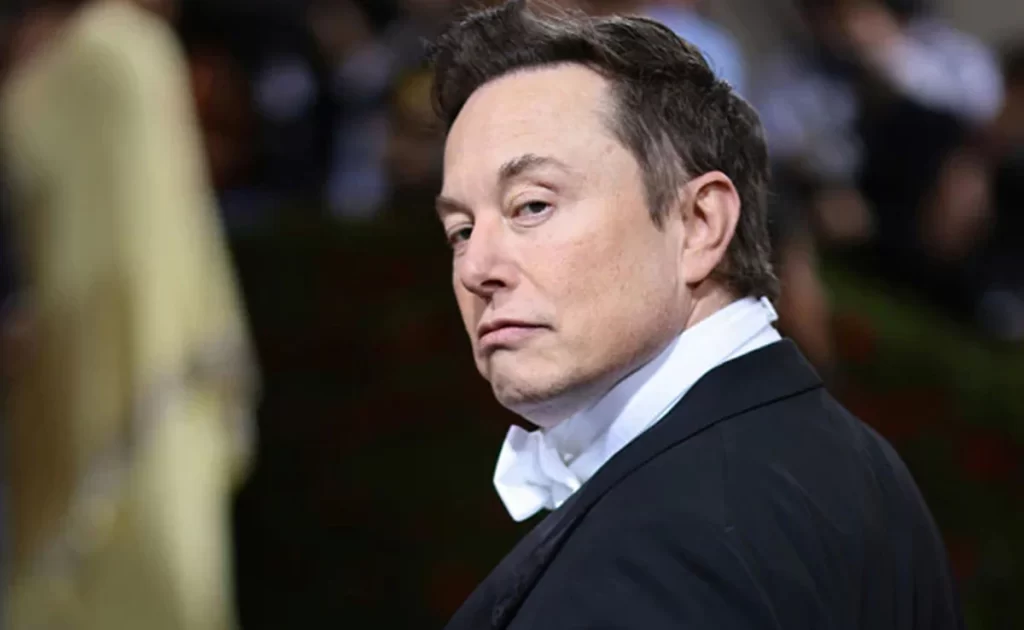
Formerly a product director at Twitter, now identified only as X, has revealed new insights into the inner workings of the social media giant under entrepreneur Elon Musk’s leadership.
In a lengthy 2,400-word tweet and accompanying video, X described the pre-Musk era at Twitter as a mixture of “amazing and terrible,” plagued by bureaucracy.
However, under Musk’s leadership, the post-Musk Twitter has been a rollercoaster of challenges and drama.
X was among the few original members of the Twitter team who decided to stick around when Musk took over, hoping that his influence would steer the company in the right direction.
Unfortunately, she was one of the 200 employees who got laid off during Musk’s round of layoffs in February.
X initially viewed Musk as a bold and inspiring entrepreneur, responsible for creating successful companies like Tesla and SpaceX. She believed that Musk’s ownership could breathe new life into Twitter.
Despite Musk’s charm, X soon discovered that his leadership style had its downsides.
He often lacked empathy to a painful extent, and his unpredictability made employees afraid to share bad news or contradictory opinions with him.
This fear led to the formation of a fanatical inner circle that unquestionably supported everything Musk said.
Musk’s aversion to criticism led him to seek advice from unconventional sources, like polling Twitter, consulting friends, or even turning to his biographer for product advice.
READ MORE: Tennessee Realtor Couple Charged in $6M ‘Blessings of God Thru Crypto’ Investment Fraud
He seemed to trust random feedback more than the dedicated employees in the room who were experts in solving the company’s problems. This approach puzzled X and others.
Since Musk took over Twitter in October 2022, he introduced various crypto and finance-related features to the app.
Under the rebranded name “X,” Musk envisions turning the social media platform into an “everything app” with features like electric payments, voice calls, and a potential integration with the meme token Dogecoin (DOGE).
Cointelegraph reached out to Twitter for comments, but they did not receive an immediate response.
In conclusion, X’s revelations shed light on the challenges and peculiarities of working under Elon Musk’s leadership at Twitter.
While his bold and inspiring personality brought some optimism, his unpredictable and unresponsive nature created an environment of fear and an inner circle of unquestioning support.
Despite these hurdles, Musk continues to drive the company forward with ambitious plans for its future as “X.”
Other Stories:
Ripple’s Chief Legal Officer Dismisses Concerns of SEC Appeal, Predicts Further Victory
KuCoin Denies Layoff Rumors Amidst Crypto Industry Stabilization
Crypto.com has been granted approval by the Dutch central bank, De Nederlandsche Bank (DNB), to provide cryptocurrency services in the Netherlands.
The exchange has successfully registered as a cryptocurrency service provider after undergoing a thorough review of its business operations and compliance with the country’s Anti-Money Laundering and counter-financing of terrorism requirements.
At present, there are 36 cryptocurrency-related businesses registered with the DNB, which include prominent players like Coinbase Europe, eToro, and Bitstamp.
Tobias Oudejans, the DNB press officer responsible for supervision, fintech, cryptocurrencies, resolution, and payment systems, shared insights on the matter with Cointelegraph.
Due to legal obligations tied to supervisory laws, he refrained from commenting on specific registrations.
It’s crucial to note that the registration obtained by Crypto.com specifically permits the company to offer cryptocurrency wallets to customers and facilitate the processing of fiat currency on cryptocurrency exchanges.
This move ensures that the company’s services are in compliance with the country’s regulations.
It is worth mentioning that even before the registration announcement, Crypto.com’s services were already accessible to users in the Netherlands. Oudejans clarified that Dutch residents are legally allowed to sign up for the company’s services.
READ MORE: KuCoin Denies Layoff Rumors Amidst Crypto Industry Stabilization
However, any unregistered company soliciting or advertising its cryptocurrency services to Dutch users would be considered operating illegally.
In contrast, Binance, another major cryptocurrency exchange, faced challenges in obtaining approval from the DNB.
As a result, Binance made the decision to forgo further efforts to register as a cryptocurrency service provider in the Netherlands and ceased its operations within the jurisdiction.
With the green light from the Dutch central bank, Crypto.com is set to expand its presence and offerings in the Netherlands, providing Dutch users with a legally compliant platform for cryptocurrency transactions and services.
As the cryptocurrency industry continues to evolve, regulatory compliance is becoming increasingly important for businesses seeking to operate in various countries and jurisdictions.
Other Stories:
Ripple’s Chief Legal Officer Dismisses Concerns of SEC Appeal, Predicts Further Victory
Best Crypto Projects to Invest in For The Next Bull Run
Tennessee Realtor Couple Charged in $6M ‘Blessings of God Thru Crypto’ Investment Fraud
Animoca Brands’ co-founder and executive chairman, Yat Siu, is optimistic about the potential of personalized Web3-based services, as his firm allocates $30 million for the neobank platform, hi.
Siu’s investment firm plans to support a Web3 app that integrates a cryptocurrency exchange, digital banking services, and a customizable nonfungible token (NFT)-styled crypto debit card, all within its growing ecosystem.
Speaking exclusively to Cointelegraph, Siu explained that hi’s vision for its NFT debit card aligns with his views on the interplay of culture and Web3.
Hi’s flagship Mastercard debit card, designed for crypto enthusiasts, allows users to personalize their physical cards with an NFT avatar they own.
Siu believes this reflects the ongoing shift towards personalization, empowering users to express themselves and showcase their individuality in innovative ways using Web3 technology.
One crucial aspect of the partnership is the potential to enhance the utility of various Web3 tokens and NFTs.
The hi ecosystem incorporates Web3-integrated financial applications and its hi protocol, an Ethereum Virtual Machine-compatible sidechain.
Furthermore, the collaboration aims to promote a “unique-human authentication mechanism” through the hi protocol’s proof of human identity solution.
Hi co-founder Sean Rac explained that this approach addresses the drawbacks of the Web2 era, where a few dominant companies controlled user data and identity as primary credential providers.
The hi protocol utilizes a dual-node structure, with identity validators verifying accounts owned by humans, while block producers secure the network.
This setup could pave the way for “human-only” networks and decentralized applications.
READ MORE :Ripple’s Chief Legal Officer Dismisses Concerns of SEC Appeal, Predicts Further Victory
The partnership will enable users to send and receive Animoca Web3 ecosystem tokens, including The Sandbox (SAND) and ApeCoin (APE). With over 3.5 million users, the Web3 app is gaining popularity.
The hi card service will allow users to make payments worldwide using a fiat or crypto debit card, leveraging Mastercard’s extensive network of about 90 million merchants.
By focusing on Web3, hi aims to enter the space previously shaped by neobanks like Revolut and N26.
This emphasis on Web3 is likely to attract proponents and enthusiasts, even those seeking a debit card to showcase their prized NFTs like Bored Ape Yacht Club, Meebit, or Pudgy Penguin.
Siu believes that investing in hi will bring new users to Web3 and bolster the adoption of Animoca’s own brands, such as The Sandbox.
The neobank has obtained approval as a virtual asset service provider (VASP) in Lithuania and is recognized as a digital currency operator by Italy’s payments service regulator.
While hi is establishing its presence in Asia, it is currently in the pre-registration phase to obtain a VASP license from the Hong Kong Securities and Futures Commission.
Animoca’s focus on blockchain gaming and Web3 projects remains strong, as evidenced by their ongoing pursuit of a regulatory license in Hong Kong for their proposed $1 billion metaverse fund.
The company continues to invest significantly in these burgeoning areas.
Other Stories:
Best Crypto Projects to Invest in For The Next Bull Run
Tennessee Realtor Couple Charged in $6M ‘Blessings of God Thru Crypto’ Investment Fraud
KuCoin Denies Layoff Rumors Amidst Crypto Industry Stabilization

Phoenix Technology, a leading crypto mining hardware provider, is reportedly in discussions to launch an initial public offering (IPO) in the United Arab Emirates (UAE), as per Bloomberg’s anonymous sources.
While the specifics of the IPO are yet to be finalized, the company is known for its development of one of the largest mining facilities in the Middle East.
Additionally, it holds distribution rights for various tech hardware manufacturers across the Middle East, Africa, and Türkiye. Cointelegraph reached out to Phoenix Technology for a comment, but no immediate response was received.
The UAE has emerged as one of the most crypto-friendly jurisdictions worldwide, striving to establish regulatory clarity through its crypto-dedicated regulator, the Dubai Virtual Asset Regulatory Authority (VARA).
Moreover, the emirate of Ras Al Khaimah (RAK) has established a crypto-focused free trade zone called the RAK Digital Assets Oasis, also known as RAK DAO.
In an effort to further solidify its position in the sector, the UAE approved the virtual assets law and established the Dubai Virtual Assets Regulatory Authority, aiming to ensure transparency and security for investors through collaboration with relevant entities.
Crypto players operating in the UAE have expressed their preference for the country’s business-friendly infrastructure over that of the United States.
READ MORE: KuCoin Denies Layoff Rumors Amidst Crypto Industry Stabilization
Saqr Ereiqat, an executive at Crypto Oasis, highlighted in a previous Cointelegraph interview that the regulatory frameworks in the UAE are more streamlined compared to the fragmented regulatory environment in the US.
Despite its crypto-friendly stance, the UAE’s regulators are stringent regarding compliance with requirements and deadlines.
This was evident when the Dubai Virtual Asset Regulatory Authority suspended the license of BitOasis, one of the country’s largest local exchanges, and the first to obtain an operating license in Dubai.
The suspension was due to BitOasis’s failure to meet the deadlines for submitting the required documents as mandated by the regulator.
In summary, Phoenix Technology is exploring the possibility of launching an IPO in the UAE, a jurisdiction known for its friendly approach to crypto businesses.
However, despite this friendliness, the UAE’s crypto regulators are strict when it comes to compliance, as demonstrated by the recent suspension of BitOasis’s license.
Other Stories:
Tennessee Realtor Couple Charged in $6M ‘Blessings of God Thru Crypto’ Investment Fraud
Ripple’s Chief Legal Officer Dismisses Concerns of SEC Appeal, Predicts Further Victory

The European Commission’s proposal for the Artificial Intelligence Act (AI Act) has undergone extensive negotiations between the Council of the European Union and the European Parliament.
However, the two legislative bodies face challenges due to differences on specific issues, including biometric surveillance.
In Germany, political groups and digital experts are raising concerns about the proposed changes to the AI Act.
Die Linke, a left-wing party in Germany, is calling for stricter regulation and transparency in European AI legislation.
They emphasize the need for consumer protection and want high-risk AI systems to be thoroughly checked by a supervisory authority before being launched on the market.
Die Linke also advocates for an explicit ban on biometric identification systems in public spaces and AI-driven election interference, among other measures.
On the other hand, the center-right coalition, known as “the Union,” prioritizes fostering innovation and openness in AI.
They believe that excessive regulation should be avoided and emphasize the importance of aligning with existing data protection and digital market regulations.
READ MORE: Tennessee Realtor Couple Charged in $6M ‘Blessings of God Thru Crypto’ Investment Fraud
The German AI Association (KI Bundesverband), representing innovative SMEs and startups, also advocates for openness to innovation but disagrees with the EU’s approach.
The association suggests a focus on mitigating real AI application threats and risks and protecting fundamental rights and European values.
Germany’s government supports the AI Act but aims to strike a balance between regulation and openness to innovation. They are implementing measures to promote German AI companies and continue advocating for an ambitious approach to AI testbeds during negotiations on the AI Act.
Despite these efforts, concerns arise that Europe might fall behind in AI compared to the dominance of U.S. and Chinese tech companies.
A feasibility study commissioned by the German Ministry for Economic Affairs and Climate Action explores the potential of large AI models for Germany, including the establishment of an AI supercomputing infrastructure to foster development.
Experts argue that Europe’s reliance on non-European software and services threatens its AI sovereignty.
They propose the creation of a globally recognized “CERN for AI” to facilitate cutting-edge research and attract talent, contributing to the success of “AI made in Europe.”
In conclusion, the negotiations on the AI Act continue to be complex due to differing perspectives. While Die Linke advocates for stricter regulation, the Union seeks to prioritize innovation.
Germany’s government is working to strike a balance between regulation and innovation, and the German AI Association calls for practical solutions to address AI risks.
To avoid falling behind, Europe must focus on fostering its AI landscape and investing in foundational technologies.
A shift in AI strategy and targeted public investments are essential for the success of “AI made in Europe.”
Other Stories:
Ripple’s Chief Legal Officer Dismisses Concerns of SEC Appeal, Predicts Further Victory
Best Crypto Projects to Invest in For The Next Bull Run
KuCoin Denies Layoff Rumors Amidst Crypto Industry Stabilization

Bitcoin (BTC) experienced a pullback on July 27, erasing the gains from the previous day, while macroeconomic data in the United States had a muted effect on the cryptocurrency’s price.
After reaching a brief peak of $29,680 just before the daily close, BTC’s strength started to fade, even though the Federal Reserve had already raised interest rates to their highest level since 2001, which had been anticipated by the markets.
On the same day, the U.S. gross domestic product (GDP) for Q2 exceeded expectations, growing at an annualized rate of 2.4%.
This result suggested that inflationary pressures were still subsiding, potentially benefiting risk asset performance.
Surprisingly, Bitcoin did not show a noticeable reaction to this positive economic data, and stocks remained fairly flat after the Wall Street open.
Michaël van de Poppe, the founder and CEO of trading firm Eight, expressed hope that the release of the July 28 Personal Consumption Expenditures (PCE) Index would provide a more concrete growth incentive.
He believed that a better-than-expected PCE could drive the markets higher.
READ MORE: Best Crypto Projects to Invest in For The Next Bull Run
However, van de Poppe also cautioned that BTC/USD might experience a dip before any potential upward movement, with the critical support level now identified at $29,700.
On-chain monitoring resource Material Indicators had previously suggested that the GDP report would have little impact on the cryptocurrency market, labeling it a “nothingburger” for crypto.
An analysis of the BTC/USD order book on Binance indicated that there was thin support above $28,500, which could ease a market drop if one were to occur.
While the GDP data had little effect on market expectations for the next interest rate decision in September, the U.S. dollar strengthened to two-week highs on July 27.
The U.S. Dollar Index (DXY) reached 101.84, bouncing back from its lowest levels in over a year.
Financial commentator Tedtalksmacro noted that the rate hike event was rather unremarkable, as the markets were reacting as if it were just a step closer to a potential pause in rate hikes, leading to higher prices for both BTC and U.S. equities.
In conclusion, Bitcoin’s price showed some weakness despite positive macroeconomic data from the U.S., and the U.S. dollar strengthened on the same day.
Market participants were keeping a close eye on the upcoming PCE Index release to assess its impact on asset performance.
Other Stories :
Ripple’s Chief Legal Officer Dismisses Concerns of SEC Appeal, Predicts Further Victory
KuCoin Denies Layoff Rumors Amidst Crypto Industry Stabilization
Tennessee Realtor Couple Charged in $6M ‘Blessings of God Thru Crypto’ Investment Fraud

Grayscale, a leading crypto fund manager, has called on the U.S. Securities and Exchange Commission (SEC) to approve all pending spot Bitcoin ETFs simultaneously, arguing that selective approval would grant an unfair advantage to certain proposals.
The request, articulated in a letter submitted by Grayscale’s Chief Legal Officer, Craig Salm, included their own application among the eight filings.
The letter proposed that the SEC could approve the spot ETFs based on precedents set for Bitcoin futures ETFs, as these fund types are closely linked.
Grayscale also refuted the SEC’s requirement for surveillance sharing agreements (SSAs) between the ETF providers and Coinbase, a leading crypto exchange, which aims to prevent market manipulation.
Recently, ETF filings from top financial companies, including Invesco, BlackRock, Valkyrie, VanEck, Wisdom, Fidelity, and ARK Invest, were updated to incorporate SSAs with Coinbase.
The SEC, in turn, had delayed the ETFs’ approval in June citing the absence of such agreements.
READ MORE: Best Crypto Projects to Invest in For The Next Bull Run
However, Grayscale contends that these SSAs are not requisite or sufficient under SEC standards as Coinbase is not a registered securities exchange, broker-dealer, or futures exchange.
Grayscale emphasized that the approval of the ETFs would mark a considerable but positive shift in the SEC’s standard application, warning against any discriminatory ‘first-mover’ benefits to certain proposals.
The firm’s Grayscale Bitcoin Trust (GBTC) currently has close to a million investors, tracking Bitcoin’s price.
Conversion to an ETF could yield billions in investor value, making Grayscale question the SEC’s rationale in withholding GBTC investors from a spot Bitcoin ETF.
The SEC rejected Grayscale’s application to convert the GBTC into a spot Bitcoin ETF last June, leading to a lawsuit by Grayscale against the regulator.
Grayscale accuses the SEC of inconsistency in handling similar investment vehicles, considering it an arbitrary act.
Other Stories:
KuCoin Denies Layoff Rumors Amidst Crypto Industry Stabilization
Tennessee Realtor Couple Charged in $6M ‘Blessings of God Thru Crypto’ Investment Fraud
Ripple’s Chief Legal Officer Dismisses Concerns of SEC Appeal, Predicts Further Victory

Crypto exchange Binance and its CEO Changpeng “CZ” Zhao have taken steps to contest a lawsuit filed by the United States Commodity Futures Trading Commission (CFTC).
In a recent court filing on July 27, legal representatives for Binance and CZ made a formal request for the dismissal of the CFTC’s claims, citing concerns of regulatory overreach and the exceeding of the commission’s regulatory authority.
The filing strongly argued that the CFTC was attempting to regulate foreign entities and individuals operating outside the borders of the United States, which, according to Binance and CZ, falls beyond the scope of the commission’s statutory jurisdiction.
This approach, they asserted, interferes with the established principles of comity with foreign sovereigns, raising significant legal questions.
According to the defense, the initial six charges presented by the CFTC did not directly relate to the foreign conduct at the core of the case.
Furthermore, certain charges were argued to not meet the required legal standards. As for the seventh charge, which accused Binance of evading the Commodity Exchange Act (CEA), Binance’s legal team maintained that the CFTC failed to meet the necessary requirements to sustain such an accusation.
One of the primary contentions of the motion to dismiss was the CFTC’s alleged lack of regulatory authority over spot trading both domestically and internationally.
The defense questioned whether Binance․com should be subjected to specific registration and regulatory compliance provisions in the CEA and CFTC regulations, considering factors such as the introduction of additional products after 2019 and previous limitations on U.S. users.
READ MORE: KuCoin Denies Layoff Rumors Amidst Crypto Industry Stabilization
The legal clash between Binance and the CFTC began in March when the commission initiated a lawsuit against the exchange.
The CFTC’s allegations included the offering of unregistered derivatives products in the United States, encompassing cryptocurrency trading services, futures, and options products.
Additionally, the CFTC accused Binance of inadequate supervision, lack of a reliable Know Your Customer (KYC) or Anti-Money Laundering (AML) program, and failure to register as a futures commissions merchant, designated contract market, or swap execution facility.
In addition to the CFTC lawsuit, Binance has been facing further legal challenges in the United States due to a separate lawsuit filed by the Securities and Exchange Commission (SEC) in June.
The outcome of the motion to dismiss will undoubtedly be critical for Binance, CZ, and the regulatory landscape surrounding cryptocurrency exchanges in the United States.
As the legal battle continues, industry observers and stakeholders await further developments in this high-profile case.
Other Stories:
Best Crypto Projects to Invest in For The Next Bull Run
Ripple’s Chief Legal Officer Dismisses Concerns of SEC Appeal, Predicts Further Victory
Tennessee Realtor Couple Charged in $6M ‘Blessings of God Thru Crypto’ Investment Fraud

In the wake of the recent flood of scam tweets on the Twitter account of pro-XRP lawyer Jeremy Hogan, which was hacked, the XRP community rallied together to raise awareness and report the malicious activity.
Since July 24, the account had been relentlessly tweeting fraudulent links, claiming to offer an XRP giveaway.
However, as of 1 am UTC on July 28, all the tweets related to the XRP giveaway were removed, indicating that Hogan might have regained control of his account or that Twitter support had intervened.
The last deleted tweet from Hogan’s account expressed false generosity, promising to return double the amount of XRP sent to a specified address.
On analyzing the blockchain data, it was found that the mentioned address received 784 XRP, valued at approximately $561 at the time, from 12 users in a span of three hours.
The hackers utilized various tactics during the attack, including sharing links to a fraudulent website called “Ripplex.win,” which has now been suspended, making it difficult to determine how much XRP may have been misappropriated through it.
In response to the incident, Hogan apologized for any inconvenience caused and expressed his efforts to regain control of his account.
He acknowledged the malicious hackers’ proficiency and hoped that no one had suffered financial losses due to the hack.
READ MORE: KuCoin Denies Layoff Rumors Amidst Crypto Industry Stabilization
Fortunately, the “XRP Army” community actively warned potential victims about the scam, with influential figures within the crypto community, such as pro-XRP lawyer John Deaton and XRPcryptowolf, cautioning their combined 591,000 followers against engaging with Hogan’s compromised account.
Hogan is not the first prominent figure to have fallen prey to such cyber attacks.
On June 4, lawyer John Deaton’s account also faced a similar hack where hackers promoted a fraudulent token called “LAW” before Deaton regained control.
The dissemination of false and deceptive financial information in the cryptocurrency sector poses substantial risks to investors and markets.
Traders often rely on guidance from influential figures, and such scams can lead to financial losses and tarnish the reputation of legitimate projects.
Vigilance and quick action from the crypto community are essential in combating such fraudulent activities and protecting investors.
Other Stories:
Best Crypto Projects to Invest in For The Next Bull Run
Tennessee Realtor Couple Charged in $6M ‘Blessings of God Thru Crypto’ Investment Fraud
Ripple’s Chief Legal Officer Dismisses Concerns of SEC Appeal, Predicts Further Victory