



In a recent development, an unknown entity has executed a significant Bitcoin transfer, worth over $160 million, from a wallet connected to the Luna Foundation Guard (LFG).
This organization is associated with Terraform Labs and its co-founder, Do Kwon.
On July 3, the unidentified party moved 5,292 Bitcoin (BTC), equivalent to approximately $30,719 per coin, from an LFG address to a wallet that does not appear to be linked to Terra.
At the time of this report, the total value of the transferred cryptocurrency amounted to roughly $161 million.
This transfer is part of a series of movements of crypto assets from LFG-controlled wallets, which have been occurring since the collapse of Terra in May 2022.
Analysis of blockchain data reveals that the reported LFG wallet held about 6,983 BTC in October 2022, with several transactions dispersing funds to different addresses over the past nine months.
READ MORE: Hong Kong Threatening US As It Emerges As Preferred Web3 Destination
As of now, the wallet contains a balance of 0.152427 BTC, valued at approximately $4,649.
While South Korean news outlets have claimed that the sender’s wallet address is associated with LFG, this assertion has not been independently verified by Cointelegraph.
It is important to note that the Luna Foundation Guard was established to mitigate the volatility of LUNA tokens by supporting the project with TerraUSD.
Unfortunately, this approach ultimately proved unsuccessful.
The exact amount of digital assets moved by Kwon or other individuals associated with Terra during its collapse remains unclear.
In February, the United States Securities and Exchange Commission reported that Kwon and Terra were involved in laundering over $100 million worth of BTC.
Additionally, South Korean prosecutors identified more than $314 million in crypto assets connected to Kwon and his associates, some of which were subsequently frozen.
After evading authorities for several months following Terra’s collapse, Kwon was arrested in Montenegro in March for allegedly using counterfeit travel documents.
In June, he and former Terra chief financial officer Han Chong-joon were sentenced to four months in prison.
This recent Bitcoin transfer from an LFG-controlled wallet further adds to the complexity and ongoing investigations surrounding Terra and its affiliated entities.
The implications of these movements and the future of the individuals involved remain uncertain as legal proceedings continue.

Governments worldwide are facing significant challenges in effectively taxing cryptocurrencies, according to a recent working paper by the International Monetary Fund (IMF).
The paper highlights the complexity arising from crypto’s semi-anonymous nature, its dual role as an investment vehicle and payment method, and its high volatility.
Furthermore, the emergence of blockchain technology and the diverse range of crypto assets it has spawned adds another layer of complexity to tax systems that were designed before this technology existed.
The IMF acknowledges that crypto’s high fees and volatility make it less attractive for tax evasion.
However, it suggests that if governments could harness the potential for crypto tax collection, it could serve as a corrective measure to counter the undesirable macroeconomic impacts of crypto and contribute to environmental goals.
The paper highlights the need for exploring mechanisms such as green taxation but emphasizes that more consideration is required in this area.
Although there is a wealth of data available on cryptocurrency transactions, there is a lack of analytical work and empirical evidence on this subject.
READ MORE: Hong Kong Government Urged To Challenge Tether and USDC
The IMF also notes the challenges faced in emerging economies, where technology for tax collection may be limited.
Even in cases where crypto is seized, such as by the U.S. Federal Bureau of Investigation, the process for doing so remains unclear.
Another factor that complicates taxation is the division between large crypto holders (“whales”) and small holders, which may require distinct approaches.
The paper suggests that proper tax design is crucial and proposes the possibility of imposing a flat-rate tax on anonymous transactions.
The primary challenge lies in the technology itself, as tax authorities struggle to insert themselves into blockchain transactions.
The paper highlights the potential value of distributed ledger technology and smart contracts in facilitating tax administration and ensuring compliance.
Centralized exchanges are seen as more amenable to enforcing tax compliance than decentralized exchanges, although implementing such measures would require significant work.
The IMF argues that Anti-Money Laundering and Know Your Customer measures, while necessary for other purposes, are insufficient for effective tax reporting.
To enhance tax compliance, the IMF suggests imposing greater reporting requirements on crypto miners.
Additionally, it emphasizes the need to address the inconsistencies surrounding sales and value-added taxation in the context of cryptocurrencies.
In conclusion, governments are grappling with the complexities of taxing cryptocurrencies due to their unique characteristics and the technological advancements that underpin them.
Addressing these challenges will require innovative tax design, leveraging distributed ledger technology, and establishing clear reporting requirements.
As the popularity of cryptocurrencies continues to grow, it is crucial for governments to find effective solutions to ensure fair and efficient taxation in this evolving landscape.

Bitcoin Lightning Network development firm, Lightning Labs, has introduced a new toolkit designed to facilitate artificial intelligence (AI) interactions with the Bitcoin network.
The toolkit enables AI applications like OpenAI’s ChatGPT to send, receive, and hold Bitcoin on the network’s layer-2 solution.
By leveraging Lightning, AI developers can enjoy faster, cheaper, and more convenient payment options, while also enabling pay-per-use AI models.
Lightning Labs announced the release of the toolkit on July 6, highlighting the potential for innovation in the field of large language models (LLMs) that can generate human-like responses and perform various tasks.
The tools are built on the “L402 protocol,” which serves as a lightning native authentication mechanism, and employ “Langchain,” a library that simplifies operations involving AI applications.
READ MORE: Coinbase, Binance and Gemini have least happy employees
By providing these tools, Lightning Labs aims to foster the development of more accessible AI infrastructure for both humans and AI agents.
The company also acknowledges the challenge faced by AI developers who lack native web-based payment mechanisms.
Currently, these developers must rely on outdated payment methods like credit cards, resulting in additional costs for users.
Lightning Labs’ solution seeks to address this issue and eliminate the need for traditional payment rails.
Kody Low, a developer at the community payments platform Fedi, highlighted the interoperability between AI and Bitcoin for payments during an interview on the Stack Sats podcast.
He emphasized that Bitcoin offers unparalleled solutions for AI monetization and that AI companies have yet to solve their financial challenges.
Despite the promise of the Lightning Network, data from Lightning Network analytics platform 1ML shows that its current capacity stands at 5,432 BTC (approximately $163.5 million).
Additionally, Bitcoin Visuals reports a decline in the number of lightning channels over the past year, dropping from around 80,000 in July 2022 to approximately 70,000 at present.
Lightning Labs’ introduction of these new tools for AI-Bitcoin interactions marks a significant step towards expanding the capabilities and accessibility of AI applications on the Lightning Network.
As the Lightning Network continues to evolve, it has the potential to revolutionize the way AI developers integrate payment systems and monetize their models, ultimately driving further innovation in the field.

Twitter Payments LLC, a subsidiary of Elon Musk’s Twitter social network, has made progress in its venture as it has received money transmitter licenses from Michigan, New Hampshire, and Missouri.
These licenses enable the company to offer transfer services and payment instruments, emphasizing consumer protection in money transmission rather than just the purchase of goods and services.
Although the exact nature of Twitter Payments’ offerings remains uncertain, the company has applied for licenses in all 50 U.S. states.
However, there is no clear timeline for the approval process, and both Musk and CEO Linda Yaccarino have yet to provide substantial details regarding their plans.
According to insiders familiar with the company, Twitter Payments will initially focus on providing fiat currency transaction services, potentially resembling the services offered by Stripe, Venmo, and PayPal.
READ MORE: How A Crypto Trader Turned $900 Into $176,000 With Pepe 2.0
In the future, Twitter Payments reportedly aims to expand its platform to include cryptocurrency services.
Speculations have also surfaced about the company’s intention to introduce its own token through a project known as “Twitter Coin” and the development of its own digital wallet.
Elon Musk’s commitment to making daring decisions is evident in his statement that Twitter would “do lots of dumb things,” aligning with the mantra of the modern tech industry to “move fast and break stuff.”
While these changes have sparked mixed reactions, some changes implemented by Twitter have raised eyebrows.
For instance, the platform limited non-paying users to accessing only 500 posts within a specific timeframe through the rate limiter feature.
Furthermore, the recent restriction that required users to be logged into their Twitter accounts to view posts was quietly rescinded on July 5, according to reports from TechCrunch and Engadget.
As Twitter Payments progresses with its licensing and development, users and industry observers eagerly await further announcements from Elon Musk and Linda Yaccarino, hoping for more clarity on the company’s future plans and potential impact on the financial and cryptocurrency sectors.
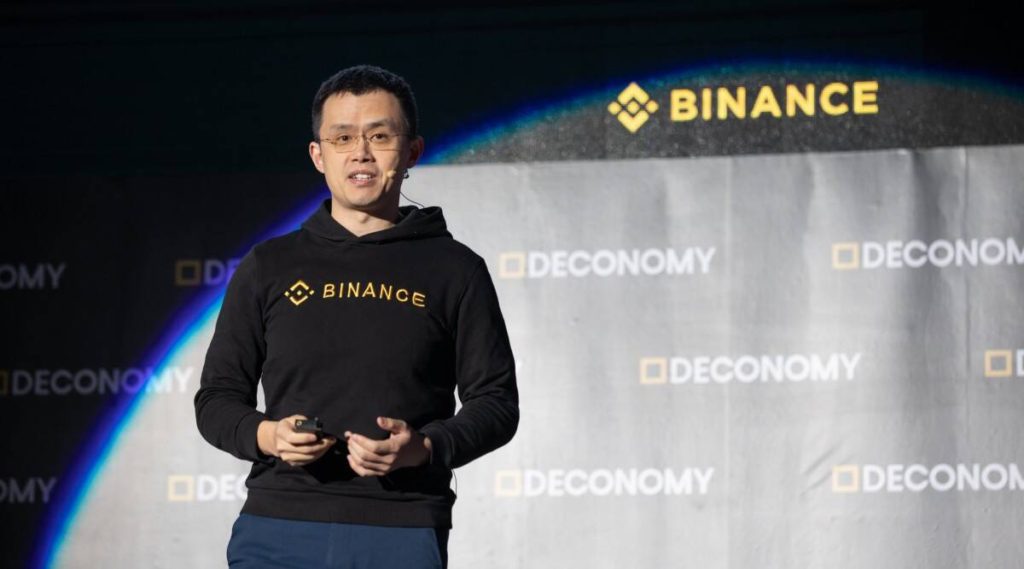
Binance.US has experienced a significant decline in market share of over 20% due to an ongoing lawsuit filed by federal financial regulators.
Reuters, citing data from Kaiko, reported on July 5 that Binance.US’ market share plummeted from over 22% in April to approximately 0.9% as of June 26.
The legal action was initiated by the U.S. Securities and Exchange Commission (SEC), which accused Binance.US, along with its parent company Binance and CEO Changpeng “CZ” Zhao, of operating as an unregistered securities exchange.
Prior to this lawsuit, the Commodity Futures Trading Commission had already filed a similar complaint against Binance and CZ in March.
READ MORE: How A Crypto Trader Turned $900 Into $176,000 With Pepe 2.0
In a parallel development, Coinbase, another prominent cryptocurrency exchange facing a lawsuit from the SEC, witnessed an increase in its market share in the U.S. According to Reuters, Coinbase’s market share rose from around 48% to 55% in June.
This surge in market share can be attributed, at least in part, to Coinbase being named as a surveillance partner in several SEC filings submitted by asset managers aiming to launch a spot Bitcoin exchange-traded fund in the United States.
On July 5, Cointelegraph reported that the combined trading volume of spot and derivatives on centralized cryptocurrency exchanges surged to over $2.7 trillion.
This increase in trading activity can be attributed, in part, to growing investor sentiment following BlackRock’s filing for a spot Bitcoin ETF.
However, it is important to note that the SEC has yet to approve any spot cryptocurrency ETFs in the United States, and it has rejected numerous applications from various firms.
Overall, Binance.US has witnessed a significant decline in market share due to the SEC lawsuit, while Coinbase has experienced a boost in its market share amidst its own legal challenges.
The cryptocurrency market as a whole has seen a surge in trading volume, driven in part by investor optimism surrounding the possibility of a spot Bitcoin ETF.
Nevertheless, the SEC’s stringent stance on approving such ETFs has resulted in the rejection of multiple applications from various companies.

On-chain derivatives are predicted to experience significant growth in the decentralized finance (DeFi) sector, according to Henrik Andersson, the Chief Investment Officer of Australian crypto investment firm Apollo Crypto.
In an interview with Cointelegraph, Andersson highlighted the increasing popularity of decentralized spot trading as a catalyst for the growing demand for decentralized derivatives.
Andersson emphasized that while decentralized spot exchanges have been gaining market share from centralized exchanges for the past six years, decentralized perpetuals and futures trading are relatively new, presenting a high-growth opportunity for on-chain derivatives.
This trend has been further accentuated by the surge in daily trading volume on decentralized exchanges (DEXs) during the memecoin frenzy in May, which briefly surpassed that of established centralized crypto exchanges like Coinbase.
Additionally, the trading volumes on DEXs spiked by over 400% following regulatory actions against Binance and Coinbase in June.
READ MORE: Law Firm Seeks Huge Compensation From Voyager Digital’s Creditors
Andersson revealed that Uniswap, a leading DEX, has been trading more daily volume than Coinbase over the past year, and DEXs have been steadily gaining ground in terms of overall market share.
He pointed out that monthly spot trading volumes on DEXs have exceeded $50 billion.
Furthermore, Andersson anticipated that the trend of futures-heavy trading seen in centralized exchanges would also be replicated in DeFi, making on-chain derivatives the best product-market fit for the DeFi space in years.
He noted that futures trading accounted for nearly 80% of the entire crypto market’s trading volume on centralized exchanges in June.
In addition to on-chain derivatives, Andersson mentioned two emerging market sectors that have caught his attention.
The first is NFTFi, which combines non-fungible tokens (NFTs) and DeFi, enabling investors to rent, borrow, fractionalize, create derivatives, and establish prediction markets based on NFTs.
Andersson believed that NFTs would be utilized for a wider range of functions within the DeFi space due to their strong investment narrative.
The second emerging theme mentioned by Andersson is LSDFi, which leverages liquid staking derivative (LSD) tokens, such as Lido Staked ETH (stETH) and Rocket Pool ETH (rETH), allowing investors to borrow, speculate, and hedge against their LSD tokens.
The popularity of LSDs has grown rapidly, with LSD protocols surpassing DEXs in terms of total value locked (TVL) after Ethereum’s Shapella upgrade.
Andersson acknowledged the need to address the issue of centralization among certain staking providers in the LSD space and called for a more balanced array of protocols to ensure a diversified environment.
In conclusion, Andersson’s insights highlight the potential of on-chain derivatives as a significant growth sector within DeFi.
He also recognized the emerging sectors of NFTFi and LSDFi as areas of interest, indicating their potential impact on the DeFi landscape.

The United States military is embarking on a series of tests to explore the potential of generative artificial intelligence (AI) in aiding the planning of responses to global conflicts and enhancing access to internal information.
According to a recent report by Bloomberg on July 6, the U.S. Department of Defense, along with undisclosed allies, is conducting experiments involving five large language models (LLMs) in collaboration with the Pentagon’s digital and AI office.
Although the specific LLMs being tested remain undisclosed, AI startup Scale AI has revealed that its “Donovan” model is among the five under examination.
Air Force Colonel Matthew Strohmeyer shared with Bloomberg that an initial test utilizing an LLM proved to be “highly successful” and “very fast,” indicating the potential for this technology.
However, Strohmeyer acknowledged that it is not yet ready for widespread implementation.
READ MORE: Hong Kong Threatening US As It Emerges As Preferred Web3 Destination
One notable test described by Strohmeyer involved an AI model generating a request for information in a mere 10 minutes, an unprecedented speed considering such requests traditionally take days and involve multiple personnel.
These LLMs have already been provided with classified operational data to generate responses for real-world scenarios.
The objective of the tests is to ascertain whether these models can effectively contribute to the planning of responses in the face of potential escalations, particularly concerning the already tense military situation with China.
While the current round of tests is scheduled to conclude on July 26, the U.S. military has been researching the potential applications of AI in warfare for some time.
In May, the Defence Science and Technology Laboratory of the United Kingdom hosted a joint trial involving the U.S. and Australia, focusing on AI-enabled military drones for target tracking.
The trial achieved significant milestones, including the real-time retraining of AI models during flight and the interchangeability of models among participating entities.
The agency expressed its commitment to swiftly integrating these technologies into military capabilities, signaling the growing interest and investment in AI within the defense sector.
As the U.S. military continues to explore the possibilities offered by generative AI, these tests mark an important step in leveraging advanced technologies to enhance operational efficiency and decision-making processes.
While challenges and limitations persist, the promising results thus far demonstrate the potential for AI to revolutionize the field of defense and security.

Crypto exchange dYdX has achieved a significant milestone with the launch of the public testnet for its latest iteration, version four (v4), as stated in an announcement by the exchange’s development team on July 5.
This advancement brings the exchange one step closer to the eventual launch of the v4 mainnet, which is anticipated to enable full decentralization of the platform.
dYdX operates on the Ethereum and StarkEx networks and is widely recognized as a decentralized exchange (DEX) since it doesn’t hold users’ funds.
READ MORE: Hong Kong Threatening US As It Emerges As Preferred Web3 Destination
However, it does feature a centralized order book and matching engine, allowing market makers to place limit orders.
This sets it apart from automated market maker DEXs like Uniswap, which leverage on-chain pricing algorithms for buyer-seller matching.
The upcoming version four of dYdX aims to eliminate the need for a centralized order book and matching engine, resulting in a fully decentralized exchange that doesn’t rely on an automated market maker.
According to the protocol’s documentation, this will be achieved by deploying parts of the application on a separate dYdX network with its own validators, enabling the order book to be stored on-chain.
The recent announcement also revealed that users can now request testnet funds to explore the app and engage in virtual trades, track profit and loss, and perform other essential exchange functions starting from 5:00 pm UTC on July 5.
Although the ability to test bridging between networks has yet to be implemented, it is expected to be introduced during the public testnet phase.
Upon the completion of the testnet phase, the protocol’s team plans to proceed with the fifth milestone on their roadmap.
This milestone will involve integrating stablecoins into dYdX and incorporating support for Cosmos Inter-Blockchain Communication, granting Cosmos users access to the dYdX app. Following the accomplishment of this final milestone, the release of version four is anticipated.
It is worth noting that dYdX faced regulatory challenges in Canada, which led to the decision to wind down its services in the country, as announced in April.
In September 2022, the exchange faced criticism from privacy advocates after offering a $25 bonus to new users who could prove they were not bots.
However, this promotion was eventually abandoned.
In a remarkable turn of events on July 5, a fortunate cryptocurrency investor unexpectedly found themselves $322,000 richer.
Conor Grogan, the head of product at Coinbase, took to Twitter to share the story of how he stumbled upon dormant crypto assets and successfully contacted the unknowing owner.
Grogan explained that when the Ethereum blockchain underwent a fork in 2016, creating Ethereum Classic (ETC), anyone holding the standard Ether (ETH) on-chain was airdropped an equal amount of ETC.
However, many investors never touched these newly acquired funds.
Grogan remarked that it is common for individuals to forget about funds on-chain or fail to keep track of airdrops.
READ MORE: Hong Kong Threatening US As It Emerges As Preferred Web3 Destination
He revealed that he had previously recovered six-figure sums for investors in similar situations, such as notifying a Twitter user of 23 ETH that had remained untouched.
Tracking down these wallets proved to be a challenging task. Grogan began by meticulously searching the “ETC rich list” for accounts that had never accessed their ETC.
After identifying around 20 addresses holding over $250,000 worth of ETC, he painstakingly examined each one to find a means of communication.
Grogan faced multiple dead ends in most cases until he stumbled upon an address with the prefix “0x475.”
Curiously, this wallet contained a cryptocurrency called eosDAC (EOSDAC), which had been airdropped to Ethereum holders in 2018.
Armed with this newfound information, Grogan used the airdrop amount and snapshot date to connect with the owner’s EOS wallet.
As Grogan delved deeper, he discovered that the 0x475 ETH address had an intriguing history, which eventually enabled him to uncover the legal name associated with it by scrutinizing legal documents.
In an uplifting conclusion, Grogan successfully reached out to the owner and informed them about their long-forgotten wealth.
Reflecting on the experience, Grogan expressed his hope that he had brightened the owner’s day by reconnecting them with their lost funds.
This tale serves as a reminder of how easy it can be to overlook or lose track of valuable assets in the fast-paced world of cryptocurrencies.

A recent analysis of employee reviews on Glassdoor has revealed that crypto exchanges such as Gemini, Binance, and Coinbase have some of the least happy employees in the industry.
The data, collected by tech recruitment firm TrueUp, compared employee happiness to company growth and placed 27 of the most valuable cryptocurrency firms on a quadrant chart.
According to the chart, Celsius, a defunct crypto lender, along with Gemini and Amber Group, both crypto exchanges, had the least happy employees based on the reviews of 80, 139, and 42 individuals, respectively.
Binance and Coinbase also appeared on the less happy side of the chart, with a total of 1,257 reviews on Glassdoor.
READ MORE: How A Crypto Trader Turned $900 Into $176,000 With Pepe 2.0
Although Glassdoor does not have a specific happiness metric, it assesses whether reviewers would recommend the company to a friend, approve of the CEO they worked under, and have a positive outlook for the company.
Binance, when questioned about the negative reviews, attributed them to the demanding and fast-paced work environment that the company seeks to maintain.
They stated that not all employees are cut out for such an environment and acknowledged the importance of negative feedback in addressing issues and improving the employee experience.
It is worth noting that Glassdoor reviews are user-submitted and subject to a moderation process, which raises concerns about the reliability of the data.
Some recruiters have previously questioned the legitimacy of Glassdoor reviews, suggesting that they can be easily manipulated or falsified.
However, Glassdoor maintains that each review goes through a moderation process before being published on the website.
Neil Dundon, founder of Crypto Recruit, expressed his view that employees involved in building blockchain infrastructure tend to be more satisfied than those working at exchanges.
He suggested that employees in speculative/exchange environments may feel less fulfilled compared to those working on infrastructure projects, as the latter group may have a stronger sense of purpose.
Dundon also noted that the industry-wide layoffs that occurred over the past year likely influenced the job satisfaction levels.
He mentioned that the general insecurity among employees caused by these layoffs makes it difficult for them to feel happy in their roles.
However, he believes that the worst may be behind crypto employees now.
On a positive note, the TrueUp chart indicated that the “happiest” workers in the industry were associated with Ava Labs, Blockchain.com, and Fireblocks. Glassdoor data also revealed that Alex Mashinsky, the founder and former CEO of Celsius, received low approval ratings from past and present employees.
While Brian Armstrong of Coinbase and Changpeng Zhao (CZ) of Binance had lower-than-average approval ratings among technology-based CEOs.
In summary, the analysis of employee reviews on Glassdoor suggests that certain crypto exchanges have less satisfied employees compared to others in the industry.
However, the reliability of the data and the potential impact of recent layoffs should be considered when interpreting the results.