

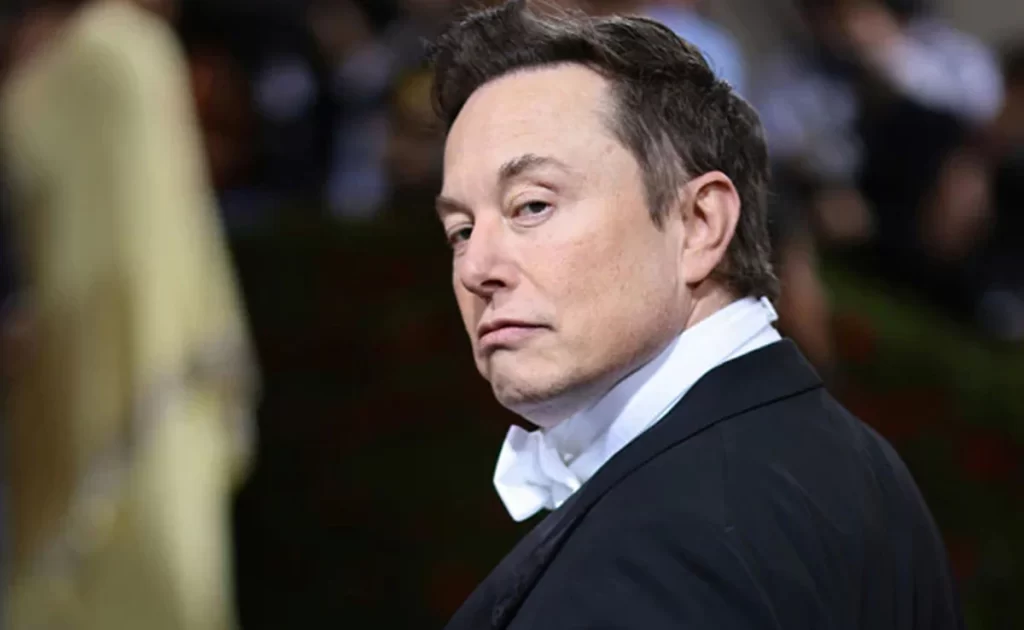
Elon Musk and Tesla are fighting back against allegations of conflicts of interest in a $258 billion lawsuit related to Dogecoin.
Lawyers representing Musk and Tesla recently filed a response in a United States district court, requesting the dismissal of a motion that sought to have them sanctioned over alleged conflicts of interest.
The motion, filed by Evan Spencer, a lawyer representing the plaintiffs in the case against Musk, claimed that the defendants’ legal team was acting as “yes men” and had a conflict of interest by representing both Musk and Tesla.
READ MORE: Top Executives Depart Binance Amidst Legal Scrutiny and Compliance Concerns
Spencer argued that the lawyers’ true loyalty lay with Musk alone.
In their response, Musk and Tesla’s legal team firmly rejected Spencer’s allegations, referring to the motion as “unsubstantiated” and “frivolous.”
They cited New York law, stating that there is no conflict of interest when legal teams represent both company officers and the companies themselves, unless they are legal adversaries.
The response further criticized Spencer’s track record, accusing him of a history of filing frivolous motions to delay court procedures.
The defense team denied allegations that they leaked a letter disparaging Spencer’s behavior to the New York Post, instead claiming that it was Spencer who introduced the letter to the jury pool by publicly docketing and introducing it through the motion.
The legal battle between Musk, Tesla, and the plaintiffs revolves around allegations of Musk’s involvement in an illegal racketeering scheme tied to Dogecoin, a cryptocurrency currently valued at $0.07 per coin.
The plaintiffs are seeking a staggering $258 billion in damages.
Musk and Tesla’s lawyers characterized Spencer’s motion as an abuse of process, asserting that it wasted the court’s time and insulted the credibility of their legal team.
They emphasized their dedication to upholding the principles of the legal profession and expressed their commitment to vigorously defending their clients against the allegations.
As the case progresses, both sides will present their arguments and evidence to the court.
The judge will ultimately decide whether the motion to have Musk and Tesla’s legal team sanctioned holds merit.
The outcome of this lawsuit will have significant implications for Musk, Tesla, and the cryptocurrency industry as a whole.

The DeFi ecosystem has been facing an increasing number of hacks, but there is some good news on the horizon.
A smart contract developer has introduced a new Ethereum request for comment (ERC) proposal that could potentially reduce losses from hacks by 70%.
This proposal suggests the implementation of a circuit breaker, which would help prevent suspiciously large token outflows from DeFi protocols.
However, the security concerns continue as certain Multichain contracts on Ethereum experienced significant withdrawals, raising fears of a possible exploit.
READ MORE: BarnBridge DAO Halts Operations Amidst SEC Investigation
The Poly Network, a cross-chain bridge platform, was also targeted by hackers due to a compromise in a private key.
This exploit affected 57 different crypto assets, prompting the platform to request users to withdraw their funds.
In a separate incident, the BarnBridge DAO, a decentralized autonomous organization, faced regulatory scrutiny from the United States Securities and Exchange Commission (SEC). As a result, members of the DAO were advised to halt all project-related activities.
Shifting gears to new developments, the decentralized social media protocol DeSo has offered a $1 million bounty for the creation of a Reddit competitor built on its native blockchain.
This initiative aims to foster innovation and competition within the decentralized social media space.
Taking a look at the market performance, the top 100 DeFi tokens had a mixed week.
While most tokens traded within a similar range as the previous week, a minor bearish correction was observed.
In summary, a new ERC proposal for a DeFi circuit breaker could potentially reduce losses from hacks by 70%.
However, the DeFi ecosystem continues to face security challenges, as demonstrated by recent exploits and regulatory scrutiny.
On a positive note, DeSo’s bounty program seeks to drive innovation in decentralized social media.
The overall performance of the DeFi market remained relatively stable, with the total value locked in DeFi protocols remaining below $50 billion.
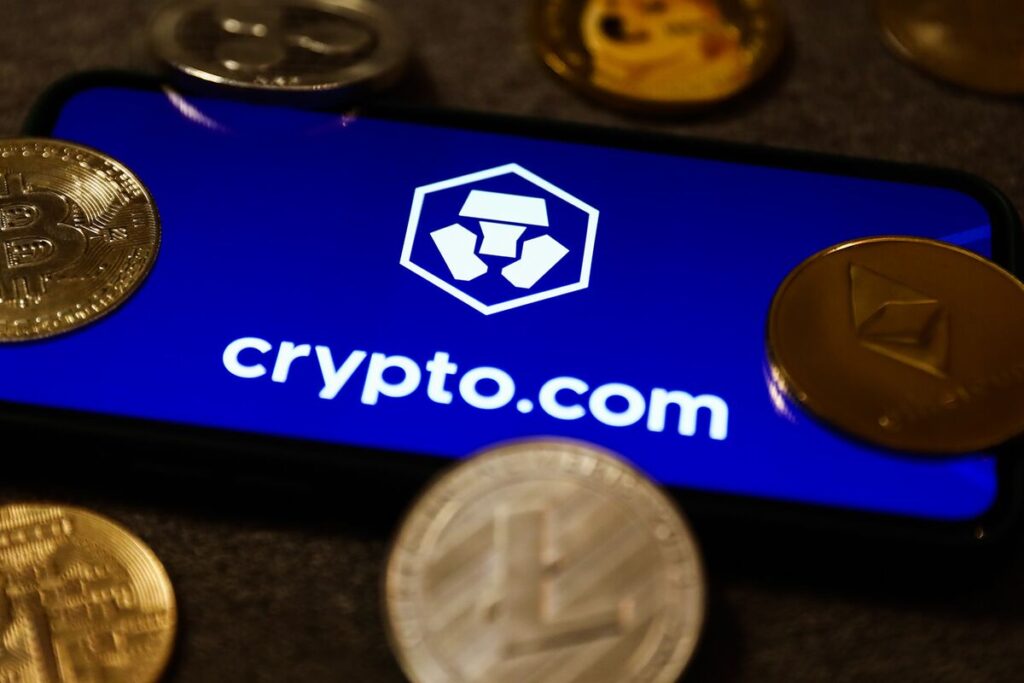
Cryptocurrency exchange Crypto.com has filed a petition with a Florida court to confirm a judgment obtained through arbitration after mistakenly depositing $50,000 into a user’s account.
The court filing, dated July 6, states that Crypto.com made an “erroneous deposit” into James Deutero McJunkins’ account in June 2022.
The user did not appear to have earned the funds through trades or other activities and promptly transferred the money to an external bank account, beyond the reach of Crypto.com’s authority.
Despite repeated requests for the return of the funds, McJunkins ignored the exchange’s appeals.
READ MORE: Top Executives Depart Binance Amidst Legal Scrutiny and Compliance Concerns
In October 2022, Crypto.com sought arbitration to address the missing funds, accusing McJunkins of civil theft and breach of contract.
The arbitrator ruled in favor of the company and awarded Crypto.com a total of $76,391.46 in April 2023.
This amount included the original $50,000 transaction, $1,786.11 in statutory interest, $21,205.35 in attorneys’ fees, and $3,400 in arbitration costs.
However, the arbitrator’s ruling did not possess the authority to enforce payment from McJunkins.
Consequently, Crypto.com has turned to the federal court system to seek resolution.
The petition, submitted on July 6, requests the Florida court to “confirm the Arbitrator’s Award and enter a final judgment in its favor and against McJunkins” for the outstanding amount owed.
This incident bears similarities to a previous case involving Crypto.com and two users based in Australia.
In May 2021, the exchange mistakenly transferred over $6 million to the couple’s account, only discovering the error in December of the same year.
The recipients purportedly spent a substantial portion of the funds, believing it to be a prize from the exchange.
The Australian authorities subsequently charged the duo with theft, and the case remains ongoing.
By petitioning the Florida court, Crypto.com aims to obtain a final judgment to secure the repayment of the mistakenly deposited funds.
This legal action showcases the complexities and challenges faced by cryptocurrency exchanges in rectifying errors and holding users accountable for their actions.

Ryan Wyatt, who has served as president of Polygon Labs for over a year, has announced his decision to step down from his current role and transition into an advisory position within the company.
Wyatt revealed his plans to leave Polygon by the end of July but expressed his intention to remain involved in the crypto space by continuing to provide guidance and advice to the firm.
Taking on the mantle of the new CEO will be Marc Boiron, Polygon’s chief legal officer and former chief legal officer of dYdX.
READ MORE: BarnBridge DAO Halts Operations Amidst SEC Investigation
Meanwhile, Rebecca Rettig, currently serving as Polygon’s chief policy officer, will assume the role of chief legal officer following Boiron’s departure.
Rettig’s expertise in legal matters and her recent appointment by Caroline Pham of the United States Commodity Futures Trading Commission (CFTC) to the CFTC’s Global Markets Advisory Committee’s Subcommittee on Global Market Structure, Technical Issues, and Digital Asset Markets further bolsters her qualifications for the position.
This change in leadership comes at a pivotal time for Polygon, as the platform has been diligently working on a series of upgrades known as “Polygon 2.0” with the aim of establishing the “Value Layer” of the internet.
One of the key milestones in this endeavor is the implementation of “decentralized governance,” which Polygon plans to achieve by July 17.
These upgrades and advancements will contribute to Polygon’s growth and solidify its position in the blockchain and cryptocurrency industry.
Polygon has already achieved significant milestones, as demonstrated by its ascent to become the second-largest blockchain gaming network in terms of the number of unique active wallets, surpassing Hive.
The growing popularity of the platform and its underlying cryptocurrency, Polygon (MATIC), is a testament to its success.
As of the time of this article’s publication, the price of Polygon (MATIC) stood at $0.6804, signifying its market value.
With the upcoming changes in leadership and the continued pursuit of Polygon 2.0, the future of Polygon Labs looks promising, poised to make further advancements in the realm of decentralized finance and beyond.
Coinbase users have taken to Twitter to report an increasing number of scams and phishing attacks involving the company’s services and applications.
These reports include claims that scammers are exploiting Coinbase’s domain name.
The most recent incident was disclosed by a Twitter user named Daniel Mason on July 7. Mason received texts and emails from fraudsters who used links under the domain Coinbase.com.
READ MORE: Abnormally Large Outflows Spark Fears of Exploit
The scammer contacted Mason using a legitimate phone number and subsequently triggered an email from a Coinbase.com domain.
This was followed by a phishing text message directing Mason to a Coinbase subdomain URL.
The fraudster then proceeded to obtain Mason’s personal information, including his address, social security number, and driver’s license number.
Mason highlighted that the scammer was articulate and spoke English fluently. During a phone conversation, the fraudster informed Mason that he would receive an email from Coinbase regarding a supposed breach of his account.
Almost immediately, an email arrived from [email protected]. Mason questioned whether the scammer had created a case on his behalf or gained access to Coinbase’s mail servers.
Numerous individuals on social media have reported similar security incidents involving Coinbase.
Users have complained about various types of scams, including phishing attempts on Coinbase Wallet and criminals exploiting the company’s web address.
Cointelegraph interviewed an anonymous victim who experienced a similar approach.
This individual called Coinbase’s support line to verify the authenticity of an email claiming their account had been compromised.
A Coinbase employee confirmed the communication was genuine, but it turned out that the email was the work of a hacker.
The victim alleges that the hacker, masquerading as a Coinbase employee, stole their cryptocurrency.
Despite having evidence such as a witness, the date and time of the call, and the name of the employee they spoke to, the victim claims Coinbase took no accountability.
The case is currently in litigation, and the victim estimates a loss of approximately $50,000.
These reports mirror the attack on Twitter user Jacob Canfield. On June 13, Canfield received a text message and phone calls from a scammer who claimed there had been a change in his two-factor authentication.
The fraudster redirected Canfield to the “security” team, attempting to verify his account to avoid a 48-hour suspension.
The scammer possessed Canfield’s name, email, and location, and sent a “verification code” email from [email protected] to his personal email.
The criminal became agitated and hung up when Canfield refused to provide the code.
The email address [email protected] is listed as an official and reliable address on Coinbase’s support page.
The company’s blog emphasizes that its staff will never ask users for passwords or two-step verification codes, nor will they request remote access to devices.
Coinbase stated in a response to Cointelegraph that it has dedicated extensive security resources to educate customers about preventing phishing attacks and scams.
The company collaborates with international law enforcement to ensure that anyone defrauding Coinbase customers faces legal consequences
To enhance security, experts recommend using strong and unique passwords for cryptocurrency accounts and enabling two-factor authentication on applications.

Over $765,000 worth of nonfungible tokens (NFTs) have reportedly been stolen in a SIM swap attack targeting the Gutter Cat Gang NFT project.
The breach came to light around 8:00 pm UTC on July 7 when members of the NFT community noticed suspicious activity.
Gutter Mitch, co-founder of Gutter Cat Gang, issued a warning on Twitter, alerting users that their account had been compromised and urging them not to interact with any links.
READ MORE: Vitalik Buterin Fires Warning About Bitcoin’s Future
In addition to the official Gutter Cat Gang account, co-founder Gutter Ric also fell victim to the hackers.
The attackers exploited the compromised accounts to distribute links to fake limited edition Gutter Cat Gang NFT sneaker airdrops.
When users clicked on these links, their hot wallets were drained of funds.
To lend credibility to their scheme, the hackers incorporated recent Gutter Cat Gang branding and images from the project’s phygital sneaker drop, which featured a collaboration with Puma and NBA/Charlotte Hornets star LaMelo Ball.
Prominent blockchain investigator ZachXBT, responding to Gutter Mitch’s tweet, suggested that the team had fallen prey to a SIM swap attack, raising questions about their cybersecurity practices.
He emphasized the need for a compensation plan for the victims, considering the negligence of using SMS 2FA given the recent surge in SIM swap attacks.
ZachXBT also highlighted two victims of the attack, one losing a Bored Ape Yacht Club NFT valued at $65,913 and another losing a staggering $700,000 worth of NFTs from various renowned collections.
Gutter Dan, another co-founder of Gutter Cat Gang, provided an update, stating that they were working with Twitter to regain control of the compromised accounts.
He expressed deep sympathy for those affected and assured the community that they were treating the matter seriously, collaborating with law enforcement to investigate the hack and security breach.
As of now, the compromised accounts remain under the control of the attackers.
Gutter Cat Gang, launched in mid-2021, consists of 3,000 unique NFT cartoon cat avatars.
The current floor price for these NFTs is 0.5 Ether (ETH), equivalent to approximately $1,858, representing a substantial increase of nearly 615% from the initial minting cost, according to NFT Price Floor.

Google Cloud, the $225-billion cloud and data service provider, has recently joined the ranks of companies showing interest in Bitcoin.
In a partnership with Voltage, an infrastructure provider specializing in the Bitcoin Lightning Network, Google Cloud aims to expand its Bitcoin-based services globally while assisting Voltage in expanding its operations.
Through this collaboration, Voltage will leverage Google Cloud to cater to its customers on a global scale.
Graham Krizek, CEO of Voltage, explained that they have larger customers who require nodes deployed in specific geographic regions such as the U.K. or Asia.
READ MORE: Abnormally Large Outflows Spark Fears of Exploit
On the other hand, Google can utilize Voltage as an outsourced Bitcoin and Lightning team, supporting companies interested in integrating Bitcoin or Lightning into their services.
The announcement of the partnership has garnered significant attention on social media, highlighting Google’s growing understanding and acceptance of Bitcoin and Lightning.
However, the implications of this collaboration run deeper than mere interest.
Christopher Calicott, managing director of venture capital firm Tramell Venture Partners, revealed that former Googlers had expressed how such unexpected social media engagement captures the attention of Google.
Additionally, Google’s open-minded approach to Lightning sets it apart from its competitor, Apple. Apple recently removed Damus, a Lightning-friendly decentralized social media protocol, from the App Store, indicating its aversion to Lightning.
Calicott suggested that the tech industry may be warming up to Lightning, particularly those involved in payment services.
Operating under the umbrella of Alphabet, Google Cloud benefits from its parent company’s extensive reach. Google Pay, the payment platform, boasts millions of users across more than 15 countries.
Since 2020, Google Ventures (GV), the investment arm of Google, has exhibited a strong interest in blockchain, Web3 companies, and Bitcoin.
GV participated in a $6-million seed round for Voltage in 2021, indicating the growing momentum in the crypto space.
Despite Apple’s actions, Lightning continues to gain traction among billion-dollar businesses worldwide.
One of Mexico’s largest companies has started experimenting with Lightning, and major crypto exchanges like Binance and Coinbase have promised Lightning integrations.
While it is still early in the adoption process, industry observers like Calicott emphasize the need to monitor its growth. Krizek, with his experience in the Bitcoin space since 2012, stressed the significance of the partnership.
As organizations are exposed to Bitcoin and its possibilities through Lightning, the increasing interest and demand have already captured their attention.
Krizek expects more services to be rolled out soon, accompanied by efforts in Bitcoin education.

According to a report by JPMorgan managing director Nikolaos Panigirtzoglou, the approval of a spot Bitcoin exchange-traded fund (ETF) in the United States may not have a significant impact on crypto markets, but it could benefit the leading cryptocurrency.
Panigirtzoglou, based in London, is part of JPMorgan’s global market strategy team and believes that a Bitcoin ETF in the US would have a similar effect as those seen in Canada and Europe, where such ETFs have been available for some time.
The report reveals that Bitcoin ETFs have generally attracted little investor interest in other jurisdictions over the past two years.
They have also failed to benefit from investor outflows from gold ETFs.
READ MORE: Top Executives Depart Binance Amidst Legal Scrutiny and Compliance Concerns
Despite this, Panigirtzoglou sees potential benefits if a Bitcoin ETF is approved in the US.
He suggests that it could bring more liquidity to Bitcoin markets and possibly lead to a shift in trading activity from BTC futures products.
Panigirtzoglou’s perspective differs from the high expectations surrounding the approval of a Bitcoin ETF in the United States. BlackRock’s CEO, Larry Fink, expressed during an interview on July 6 that investors might turn to Bitcoin as a hedge against inflation and the devaluation of fiat currencies.
Fink emphasized that Bitcoin is an international asset, not tied to any specific currency, making it an alternative asset for people to consider.
The annual inflation rate for the US, as reported by the Labor Department, was 4.0% for the 12 months ending in May.
The success of BlackRock in filling ETFs has generated optimism that their attempt to launch a Bitcoin ETF might also succeed.
Data from Bloomberg Intelligence’s Eric Balchunas and James Seyffart indicates that only one out of the 550 funds filed by BlackRock has been rejected to date.
Following BlackRock’s application, other companies such as Invesco, Fidelity, WisdomTree, and ARK Invest have also submitted applications or refilings with the Securities and Exchange Commission (SEC).
However, it’s worth noting that the SEC has previously denied several applications for Bitcoin ETFs.
In conclusion, while the approval of a Bitcoin ETF in the US may not be a game changer for crypto markets, it could have some positive implications for the leading cryptocurrency, such as increased liquidity and potential shifts in trading activity.
However, the overall impact might not be as significant as some anticipate, considering the historical investor interest in Bitcoin ETFs in other jurisdictions.
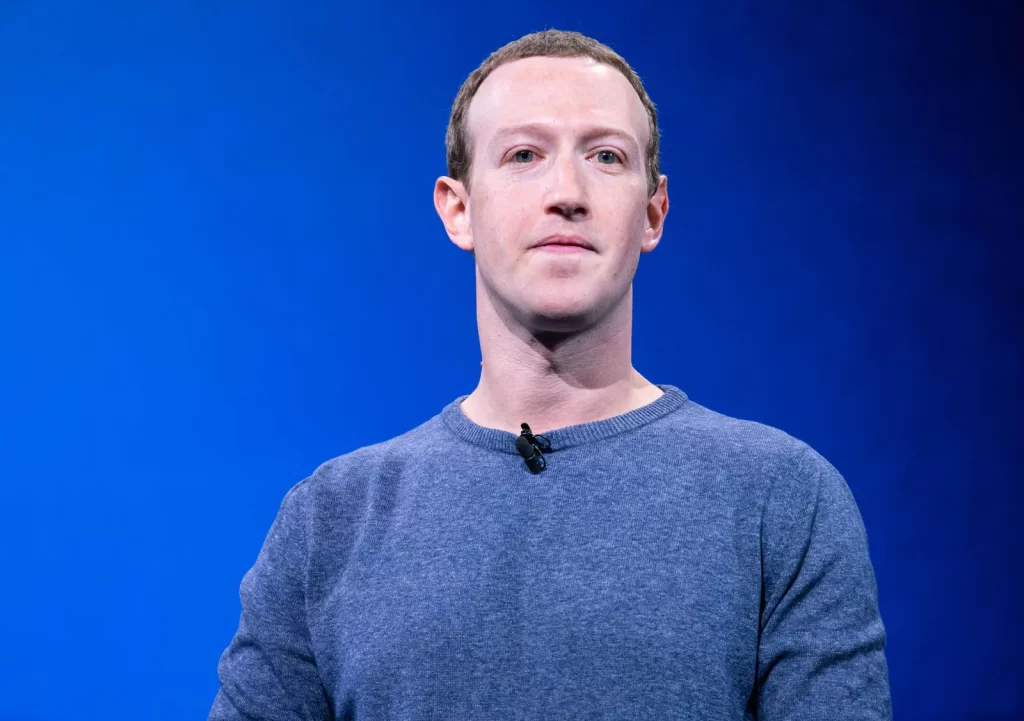
Meta has issued a response to Elon Musk’s lawsuit threat against their new platform Threads, stating that none of the app’s staff members have any former affiliation with Twitter.
After Meta’s text-based platform, Threads, was launched in collaboration with Instagram, it quickly gained massive popularity with tens of millions of signups, making it the fastest downloaded app ever and the most popular alternative to Twitter.
However, just hours after its release, Twitter’s attorney, Alex Spiro, sent a letter to Meta CEO Mark Zuckerberg, alleging that the company had unlawfully copied Twitter’s platform by hiring former Twitter employees.
The letter, as reported by Semafor, claimed that Meta engaged in the “systematic, willful, and unlawful misappropriation of Twitter’s trade secrets and other intellectual property.”
READ MORE: Crypto Exchange Launches Public Testnet for v4, Paving the Way for Full Decentralization
Spiro’s letter demanded that Meta immediately cease using any of Twitter’s trade secrets or confidential information and warned of potential legal action.
He emphasized Twitter’s intention to protect its intellectual property rights and mentioned the possibility of seeking civil remedies and injunctive relief.
According to Spiro, Meta hired multiple former Twitter employees who allegedly had access to Twitter’s trade secrets and confidential information.
He argued that Meta’s Threads app was developed with the explicit intention of utilizing Twitter’s intellectual property to expedite the development of Meta’s competing platform.
Spiro claimed that this action violated both state and federal laws, as well as the ongoing obligations of the employees to Twitter.
In response to these allegations, Meta’s communications director, Andy Stone, addressed the claims by stating that the Threads engineering team does not include any former Twitter employees.
He explicitly clarified on the Threads platform, “To be clear: No one on the Threads engineering team is a former Twitter employee – that’s just not a thing.”
Elon Musk, upon hearing about Twitter’s threat of legal action against Meta, responded by stating, “Competition is fine, cheating is not.”
As the situation unfolds, it remains to be seen how Meta and Twitter will resolve this dispute. Both companies are prominent players in the social media landscape, and the outcome of this conflict could have significant implications for the industry.

The reported sponsorship deal between FTX, a now-defunct cryptocurrency exchange, and Taylor Swift has taken a new turn as recent information suggests that it was former CEO Sam Bankman-Fried (SBF) who requested the deal to be called off, and not the popular singer-songwriter, as previously believed.
According to an article published by The New York Times on July 6, three individuals familiar with the sponsorship deal revealed that Bankman-Fried was the one responsible for ending the agreement worth approximately $100 million with Swift before FTX filed for bankruptcy.
Swift’s team had reportedly agreed to the deal after more than six months of negotiations, only to be left frustrated and disappointed when SBF abruptly canceled it.
This revelation contradicts the narrative presented by various media outlets, which had previously suggested that Swift’s team had diligently assessed the FTX deal before withdrawing.
READ MORE: Crypto Investor Discovers $322,000 Worth of Ether (ETH)
Notably, several celebrities such as Tom Brady and Stephen Curry, along with other prominent figures, have faced legal scrutiny following the collapse of the exchange.
Some of them have been named in class-action lawsuits filed by disgruntled FTX investors.
Before the news of the potential FTX deal emerged, Taylor Swift had remained relatively detached from the cryptocurrency space.
However, she is no stranger to the concept of owning one’s own data, as evidenced by her famous decision to re-record and re-release many of her albums in 2021 following a dispute with one of her previous labels.
This showcases her awareness of the power of retaining control over her music and intellectual property.
Sam Bankman-Fried’s upcoming criminal trial, pertaining to his alleged involvement in fraud at FTX, is scheduled to commence in October.
Meanwhile, the crypto exchange’s bankruptcy case continues to unfold in the United States District Court for the District of Delaware.
The development surrounding the sponsorship deal between FTX and Taylor Swift shines a light on the complexities and controversies surrounding both the crypto industry and celebrity endorsements.
As the legal proceedings progress, further details may emerge, providing a clearer understanding of the events that transpired and the implications for all parties involved.