



Cryptocurrency exchange Binance has entered into an agreement with Coinmerce to facilitate the transition of its users as it winds down its operations in the Netherlands.
Coinmerce, a Dutch crypto exchange, announced the collaboration in a blog post on July 6.
The partnership will enable hundreds of thousands of Binance users in the Netherlands to transfer their digital assets to Coinmerce’s platform at no cost.
READ MORE: Larry Fink Advocates for Crypto, Fuels Hopes for Bitcoin ETF Amid Regulatory Uncertainty
Binance had previously revealed plans to significantly reduce its services for Dutch users starting from July 17 due to its failure to acquire a virtual asset service provider license in the country.
Coinmerce co-founder Nick Smits van Oyen stated that their platform is fully compliant with European laws and regulations and offers Binance users an equivalent alternative.
He assured a smooth transition process, emphasizing that they had worked closely with Binance to make the switch as effortless as possible for the users.
The trouble for Binance in the Netherlands began in April 2022 when the country’s central bank imposed a fine of approximately $3.3 million on Binance Holdings for operating crypto services without the necessary registration.
At that time, the central bank highlighted the exchange’s large customer base in the Netherlands.
While Binance has been expanding its operations into various countries, it has encountered regulatory challenges in certain jurisdictions.
In the United States, the exchange has faced legal action from both the Securities and Exchange Commission (SEC) and the Commodity Futures Trading Commission (CFTC).
Furthermore, reports suggest that Binance’s French division is currently under investigation.
Despite these regulatory hurdles, Binance continues to explore opportunities for growth in other regions, such as Kazakhstan.
The exchange remains a prominent player in the global cryptocurrency market, but it faces increasing scrutiny from regulators, who are aiming to establish clear frameworks for the operation of digital asset platforms.
As Binance collaborates with Coinmerce to assist its Dutch users with the transition, it remains to be seen how the exchange will navigate the regulatory landscape in different countries moving forward.

London, United Kingdom, July 8th, 2023, Chainwire
Aptius Ltd, a British financial enterprise, has developed a new cryptocurrency called BritanniaCoin which will be available for pre-sale from June 18th onwards, ahead of its launch later this year. BritanniaCoin is a British-built blockchain that introduces real-world applications while honouring British cultural heritage.
The pre-release contains 316,000 coins for sale, fixed at 6 USD per coin, in honour of the official unification of England and Scotland in 1707, 316 years ago. The pre-release presents an opportunity to purchase BritanniaCoin before its launch on exchanges at 8 USD per coin. BritanniaCoin is also launching a software wallet for the public, downloadable on the Apple App Store and Google Play. As part of BritanniaCoin’s commitment to charitable causes, 10% of the proceeds from the pre-sale will be donated to charity, as listed on the BritanniaCoin website.
During its pre-sale this summer, BritanniaCoin intends to give away 125,000 coins. BritanniaCoin is 100% self-funded and developed with no silent partners, as detailed in the white paper. These initiatives aim to foster an ecosystem that represents British values, integrates historic cultural legacy with technological innovation, and supports charitable organizations such as Hearts of Gold to improve the lives of vulnerable people.
BritanniaCoin introduces a proprietary blockchain with zero fees and a 20% faster block confirmation time than Bitcoin.
After the 1st round pre-release for commercial customers started in September 2022, BritanniaCoin launched its own bespoke hardware infrastructure. This hardware wallet platform intends to facilitate customer security, anonymity, and technological innovation. This exclusive hardware wallet is currently available to private investors and commercial clients who get in touch via their website. Moreover, the prospect of providing customers of the planned NFT project with access to hardware wallets in the future is something that is currently being considered. Following the completion of its 2nd stage ICO, BritanniaCoin intends to center its blockchain ecosystem, brand identity, and community on this hardware technology basis.
BritanniaCoin pursues multiple long-term goals, including expanding its community and improving the user experience. In addition, BritanniaCoin has its own British-themed NFT project that provides holders unique advantages, offering access to airdrops, special discounts, voting rights, an active role in selecting which charity institutions to support and signature events, such as their recent pre-release party held at the East India Club.

In the aftermath of the ICO, BritanniaCoin intends to launch BritanniaPay, consisting of their software wallet compatible with iOS and Android and connected with the company’s current hardware wallet network. BritanniaPay is an innovative new initiative that prioritizes British brands and businesses by integrating blockchain technology into its own payment system. Users can pay for their purchases at various UK and international retailers with BritanniaCoin alongside Bitcoin, Ethereum and other established cryptocurrencies.
BritanniaCoin unites a diverse team, as the Co-founder and CEO Daniel M. Ashworth brings over five years of experience in the cryptocurrency sector and co-founded Aptius in 2018, a Crypto and Forex trading company. Co-founder and CTO Jonathan Peters has 10 years of programming experience, including blockchain architecture, network infrastructures, and algorithmic trading software. COO Demetri Georgiev has over 10 years of experience in logistics operations and supports the project’s day-to-day operations. Events Manager Mark Turley has acquired over 18 years of experience arranging entertainment events and manages the project’s unique range of events in magnificent venues, such as the East India club. Charities Co-ordinator Mary Johnston has over 30 years of experience in sales and marketing and is actively involved in Hearts of Gold, the nominated charitable foundation supported by BritanninaCoin.
For more details about BritanniaCoin, access the project’s website.
About BritanniaCoin
BritanniaCoin is a cryptocurrency that deploys real-world utilities developed by Aptius Ltd, a British financial organization. Available for pre-sale from June 18th, BritanniaCoin intends to celebrate British cultural heritage.
Contact
Daniel M. Ashworth
Britanniacoin Ltd
[email protected]

Bitcoin Mining Stocks Outperform BTC with Impressive Gains, but Potential Risks Loom
Bitcoin mining companies have significantly outperformed Bitcoin itself amid the recent bullish price action in the cryptocurrency market.
The top nine publicly traded Bitcoin mining firms have seen an average year-to-date stock price gain of 257.14% in 2023, nearly three times higher than Bitcoin’s gain in the same period.
The leveraged beta effect explains the higher gains of mining stocks.
READ MORE: Crypto Investor Discovers $322,000 Worth of Ether (ETH)
When Bitcoin experiences an upward trend, these stocks tend to outperform, while they face greater downside risk during Bitcoin slumps.
Consequently, the performance of Bitcoin will remain a crucial factor in determining the direction of mining stocks.
While miners are positioning themselves for the long term by expanding their operations and purchasing more machines, the accumulation levels have not matched those of previous bull markets.
This suggests that the upward trend in mining stocks may stall in the medium term.
Recent developments within the mining sector have added to positive sentiments and long-term value.
Some mining companies have made significant moves, such as Hut 8 Mining merging with US Bitcoin Corp, increasing its total hash rate to become the third-largest public mining entity in the US.
Cleanspark also invested to increase its hash rate, and Riot Blockchain entered a deal with mining hardware manufacturer MicroBT to double its hash rate capacity by 2024.
However, on-chain data reveals that miners have been selling a significant portion of their holdings, which could indicate an impending downturn.
Additionally, some mining stocks, like Marathon Digital Holdings, Riot Blockchain, and Cipher Mining, have attracted a substantial amount of short interest, possibly due to excessive debt and stock dilution, which can impact existing shareholders’ profitability.
While mining profits have improved, miners continue to sell their Bitcoin holdings.
The network’s total hash rate reached a new all-time high initially but has since dropped due to heat waves in Texas, where some mining farms are located.
The profitability of running miners has increased with Bitcoin’s price surpassing $30,000, but companies with operations in Texas may face losses due to the adverse climate conditions.
Despite revenue improvements, miners have been allocating funds to expansion and operation costs, suggesting that a full-fledged crypto bull market is yet to materialize.
The expansion plans of mining companies and the decline in on-chain miner holdings indicate a potential sideways price action or a correction in mining stocks if the BTC price drops.

The Bitcoin Legal Defense Fund (BLDF) argues that a recent report released by the United Kingdom’s Law Commission could undermine a crucial argument made by Craig Wright in his controversial lawsuit against 12 Bitcoin core developers.
The 300-page report, which focuses on digital assets, was published in late June by the Law Commission, an independent organization responsible for reviewing and recommending reforms to UK and Welsh laws.
It includes a classification of fiduciary duty that supports the developers’ defense, asserting that they are not directly responsible for the loss of 111,000 Bitcoin (BTC) valued at approximately $30,170, due to hacking.
READ MORE: Coinbase, Binance and Gemini have least happy employees
In his lawsuit filed in 2021, Craig Wright, the owner of Tulip Trading, claimed that the developers involved in the open-source development of Bitcoin Core owed him a fiduciary duty regarding his financial loss.
Wright is seeking access to the Bitcoin Core blockchain as a means to recover the allegedly stolen funds. He is also known for asserting that he is the pseudonymous creator of Bitcoin, Satoshi Nakamoto.
The UK report delves into the definition of fiduciary duty, identifying recognized categories such as “agents, trustees, partners, company directors, and solicitors.”
The report emphasizes that fiduciary duty rarely exists outside of these established categories. The BLDF, acting as the developers’ legal representative, argues that the defendants do not fall into any of the criteria outlined by the Law Commission.
In a recent blog post, the BLDF stated, “They are not agents, trustees, partners, company directors, or solicitors, and they never undertook or were entrusted with authority to manage the property or make discretionary decisions on behalf of another person.”
Furthermore, the BLDF emphasized that Bitcoin was designed to facilitate transactions between individuals without the need for third-party authority.
The outcome of the Tulip Trading lawsuit could establish a legal precedent for the liability of open-source developers concerning assets.
The trial is expected to take place in 2024 and could have far-reaching implications for the community of open-source developers, as 97% of the world’s software programs are open-sourced, as noted by Jessica Jonas, Chief Legal Officer of the BLDF, during the Bitcoin 2023 conference in May.
The UK Law Commission report also advocates for the creation of a new and distinct category of personal property to accommodate the unique characteristics of digital assets.
Cryptocurrency exchange Gemini, based in the United States, has taken legal action against Digital Currency Group (DCG) and its CEO, Barry Silbert, accusing them of “fraud against creditors.”
In a filing made on July 7 in a New York court, Gemini claimed that DCG and Silbert were involved in a scheme where they lent large amounts of cryptocurrency and U.S. dollars to Genesis, a subsidiary of DCG.
Gemini seeks to recover funds it incurred due to alleged false representations and omissions by DCG and Silbert, as well as their alleged role in facilitating Genesis’s fraud against Gemini.
READ MORE: Vitalik Buterin Fires Warning About Bitcoin’s Future
The exchange also intends to pursue legal avenues in Genesis’s bankruptcy case.
Genesis had been responsible for operating an Earn program in partnership with Gemini, allowing users to loan crypto with the promise of repayment and interest.
However, the program suspended withdrawals in November 2022, citing market turmoil, and subsequently filed for Chapter 11 bankruptcy.
Gemini co-founder Cameron Winklevoss, in a Twitter thread on July 7, claimed that Silbert was aware of Genesis’s insolvency when attempting to continue the Earn program.
The complaint further alleged false financial reporting by DCG and Silbert, starting with the collapse of Three Arrows Capital in June 2022, which resulted in a significant deficit in Genesis’s balance sheet.
Winklevoss asserted that Genesis and DCG owed $900 million to Gemini’s clients.
Winklevoss accused Silbert and other DCG executives of conspiring to create false financial reports to deceive Gemini and creditors, stating, “This fraud goes to the very top.”
Winklevoss had previously threatened to sue DCG and Silbert over delays in resolving the issues between Gemini and Genesis.
In response to the lawsuit, DCG called the legal action a “publicity stunt” by Winklevoss and dismissed claims of wrongdoing as “baseless, defamatory, and completely false.”
Both Genesis and Gemini have faced regulatory scrutiny following the fallout of the Earn program.
The U.S. Securities and Exchange Commission filed a lawsuit against the two firms in January, alleging the offering of unregistered securities.
Additionally, the New York Department of Financial Services reportedly initiated an investigation into Gemini regarding claims related to its Earn program.

According to a report from The New York Times on July 6, the Federal Bureau of Investigation (FBI) conducted a search of Kraken co-founder Jesse Powell’s home in March as part of an investigation into allegations of hacking and cyber-stalking against a nonprofit arts group.
The Verge Center for the Arts, which Powell founded, claimed that he had interfered with computer accounts by blocking access to emails and other messages from contributors.
Three individuals with knowledge of the matter informed The NYT that the FBI, along with the U.S. Attorney’s Office for the Northern District of California, had been investigating Powell since at least September 2022.
READ MORE: Larry Fink Advocates for Crypto, Fuels Hopes for Bitcoin ETF Amid Regulatory Uncertainty
During the search, electronic devices were seized from Powell’s home in Brentwood, Los Angeles.
However, it is important to note that prosecutors have not formally charged Powell with any crimes.
Powell’s lawyer, Brandon Fox, stated that the investigation primarily focused on the allegations made by the nonprofit and was unrelated to Powell’s involvement in the cryptocurrency arena.
This statement was reportedly supported by a spokesperson from Kraken.
When approached for comment, Jesse Powell did not immediately respond to Cointelegraph’s request.
Powell founded the Sacramento-based arts group in 2007, although his LinkedIn profile indicates that he has been working as a founder and board member since April 2010.
Kraken, the cryptocurrency exchange co-founded by Powell, currently holds the position of the second largest U.S.-based exchange, trailing behind Coinbase according to CoinMarketCap.
However, in February, Kraken faced enforcement action from the U.S. Securities Exchange Commission (SEC) for its failure to register the offer and sale of their staking service program.
As a result, Kraken reached a settlement with the SEC, agreeing to pay a substantial $30 million fine.
The investigation into Jesse Powell’s alleged activities involving the Verge Center for the Arts is ongoing, and it remains to be seen whether any charges will be brought against him in relation to these accusations.

Binance’s chief strategy officer, Patrick Hillmann, has confirmed his departure from the cryptocurrency exchange amidst reports of other top compliance executives resigning in the United States.
In a tweet on July 6, Hillmann stated that he is leaving Binance on good terms after two years with the company.
He mentioned that it is time for him to move on to the next challenge, especially as he is expecting his second child.
Fortune had previously reported that several Binance executives, including Hillmann, left the exchange due to CEO Changpeng “CZ” Zhao’s response to the U.S. Justice Department’s investigation, citing an internal source.
READ MORE: Coinbase, Binance and Gemini have least happy employees
It was further revealed that the general counsel, Han Ng, and the senior vice president for compliance, Steven Christie, have also departed from the exchange.
In response to these reports, Zhao dismissed them as “FUD” (fear, uncertainty, and doubt) in a tweet, claiming that the reasons for the executive departures were fabricated and completely false.
According to another report from Bloomberg, Binance’s head of legal for APAC and MENA, Eleanor Hughes, will assume the role of the new general counsel, replacing Ng.
Meanwhile, Noah Perlamn, who joined as the chief compliance officer in February, will continue to work at the company. When asked for comment on the matter, Binance referred to Zhao’s tweet.
The U.S. Justice Department is reportedly investigating Binance for allegedly permitting Russians to use the exchange in violation of U.S. sanctions.
Additionally, in June, the Securities and Exchange Commission filed a lawsuit against Binance, accusing them of offering unregistered securities and misusing customer funds.
Earlier in March, the Commodities Futures Trading Commission also sued Binance, alleging that the exchange failed to properly register with the regulator.
As Binance faces these legal challenges and the departure of key compliance executives, the cryptocurrency exchange will need to navigate through these obstacles and maintain transparency to regain trust within the industry and with regulatory authorities.

Concerns are rising as abnormally large outflows from the Multichain MPC bridge platform have sparked fears of a potential multimillion-dollar exploit.
On July 6, significant amounts of cryptocurrency were withdrawn from Multichain’s bridges on different chains, leading to suspicions of unauthorized activities.
The withdrawals from Multichain’s Fantom bridge on the Ethereum side amounted to approximately $102 million worth of crypto. In addition, $666,000 was withdrawn from Dogechain, and $5 million was taken from Moonriver.
Specifically, the Fantom bridge’s Ethereum smart contract witnessed the withdrawal of 7,214 Wrapped Ether (WETH) tokens valued at $13.6 million, 1,024 Wrapped Bitcoin (WBTC) worth $31 million, and $58 million worth of USD Coin (USDC).
The Ethereum contract of the Dogechain bridge saw a withdrawal of $666,000, which accounted for over 86% of its total deposits, leaving only around $100,000 remaining.
READ MORE: Larry Fink Advocates for Crypto, Fuels Hopes for Bitcoin ETF Amid Regulatory Uncertainty
Similarly, the Multichain Moonriver bridge contracts experienced the withdrawal of $5,872,661 worth of USDC and Tether (USDT), leaving approximately $700,000 in assets behind.
The event triggered suspicions of an exploit, with blockchain security firm PeckShield alerting the Multichain team through a tweet highlighting the transactions.
Other on-chain investigators shared similar concerns, referring to the incident as a possible hack.
At the time of publication, it was not confirmed whether the contracts were fully drained or if users had simply withdrawn significant amounts of funds.
Cointelegraph reached out to the Multichain team but did not receive a response by the time the article was published.
Multichain later acknowledged the abnormality of the movements on Twitter and stated that the team was currently investigating the situation.
Multichain operates as a multi-party computation (MPC) bridging network, facilitating the transfer of assets between different chains.
The process involves confirming the locking of assets on one chain and minting derivative assets on the target chain.
Withdrawals reverse this process by ensuring the destruction of derivative coins on the second chain and releasing the backing assets on the first chain.
The Multichain team claims that the cryptographic keys controlling these processes are distributed across multiple shards within the network, making unauthorized withdrawals theoretically impossible.
However, the platform has faced technical issues in recent weeks, including the CEO going missing and delayed transactions.
Binance even suspended withdrawals of some Multichain derivative tokens due to the network’s failure to process transactions promptly.
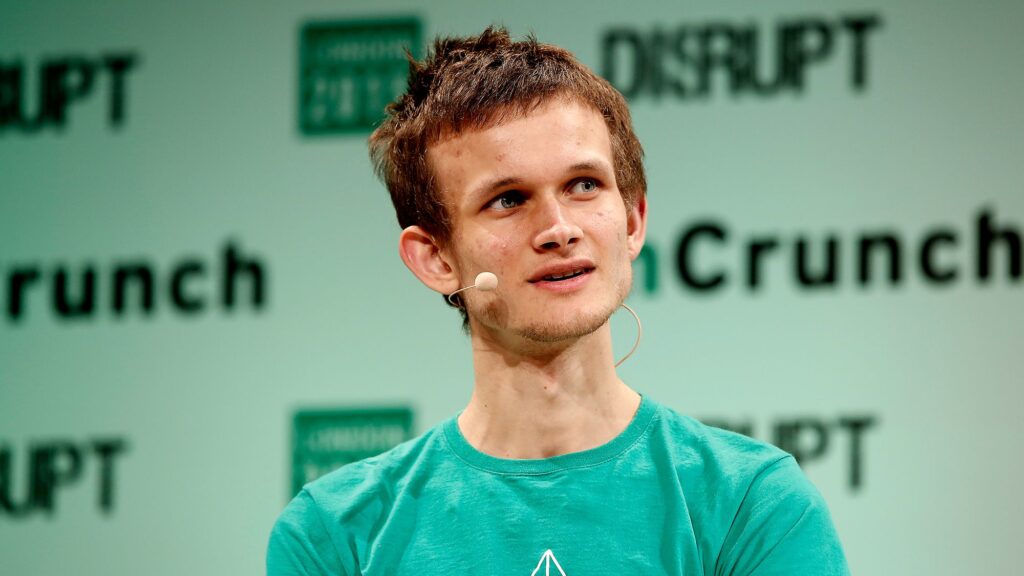
Bitcoin’s recent price drop to $30,098 has sparked discussions about the future of the cryptocurrency and the direction of its development.
Vitalik Buterin, co-founder of Ethereum, believes that the rise of projects like Ordinals signals the resurgence of a builder culture in the Bitcoin network.
In a Twitter Space conversation with Bitcoin proponents Eric Wall and Udi Wertheimer, Buterin praised Ordinals and its BRC-20 token standard as a rejection of the stagnant politics within the Bitcoin ecosystem.
READ MORE: Crypto Exchange Launches Public Testnet for v4, Paving the Way for Full Decentralization
According to Buterin, Ordinals are reintroducing a culture of action and pushing back against the laser-eye movement, which he views as positive progress.
The main focus of the two-hour-long conversation revolved around scalability.
Wall expressed concerns about Bitcoin’s Lightning Network, stating that it struggles to scale for future users and frequently fails when processing medium-sized payments.
Buterin proposed that a solution would be to implement various layer-2 solutions and find ways to enhance the efficiency of the Bitcoin base layer.
He emphasized the importance of rollups and ZK-snark-based scaling solutions.
Wertheimer added that zero-knowledge rollups could potentially enable smart contracts on Bitcoin, creating a new execution environment.
However, proponents of the Ordinals project, such as Wall and Wertheimer, face criticism from traditional Bitcoin advocates.
Some argue that introducing NFTs and smart contracts on Bitcoin dilutes its primary function as a peer-to-peer cash network.
Samson Mow, CEO of Jan3, believes that Ordinals waste valuable block space that should be allocated to Bitcoin payments.
Wall responded to these criticisms by suggesting that Bitcoin could serve as a proof system for zero-knowledge proofs, avoiding network congestion.
He expressed the desire to utilize the Bitcoin base layer as a judge or arbiter of computations, rather than running them on-chain.
Wall urged the community to consider second layers as a means of achieving expressive capabilities, not just facilitating payments.
The discussion sparked controversy within the Bitcoin community, with Wertheimer criticizing Samson Mow and Adam Beck, CEO of Blockstream, for dismissing the conversation with Buterin.
The clash of opinions highlights the ongoing debate about the future of Bitcoin’s development and the potential for increased functionality within its network.
As Bitcoin enters this new era of development, it remains to be seen how the community will navigate these conflicting perspectives and shape the future of the world’s largest cryptocurrency.

BarnBridge DAO, a decentralized autonomous organization, has instructed its members to halt all activities associated with the project following reports of an investigation by the United States Securities and Exchange Commission (SEC).
Douglas Park, a lawyer representing the organization, conveyed this information to the members through a post on the platform’s Discord channel on July 6.
To mitigate potential legal liabilities, Park recommended the suspension of all work related to BarnBridge, including the closure of liquidity pools.
READ MORE: Crypto Exchange Launches Public Testnet for v4, Paving the Way for Full Decentralization
Additionally, individuals were advised not to receive compensation for their involvement in the DAO’s investment endeavors.
Co-founder Tyler Ward, known as “Lord Tyler” on Discord, subsequently confirmed the authenticity of Park’s message on BarnBridge’s Discord platform.
The reason behind the SEC’s probe into BarnBridge DAO was not explicitly stated by Park or Ward.
Park clarified that due to the investigation being ongoing and non-public, only limited details could be shared with the members.
Notably, prior to the SEC investigation, a proposal was put forth to retain the law firm Park & Dibadj, managed by Park himself, as the legal counsel for the DAO.
The proposal was voted on by BarnBridge tokenholders, with an overwhelming majority (94.3%) in favor.
However, some members have expressed skepticism regarding the SEC’s investigation, speculating that the founders may be leveraging it as an excuse for an exit strategy to potentially defraud investors.
Ward refuted these claims, emphasizing the implausibility of such an attempt.
Responses from BarnBridge DAO members on Discord varied, with some jokingly suggesting moving to Europe to evade the SEC’s jurisdiction, while others expressed concerns about the investigation’s impact on their involvement with BarnBridge.
BarnBridge is a decentralized finance protocol aimed at managing risks associated with inflation and interest rate volatility across multiple platforms.
Since news of the SEC investigation broke, the price of BarnBridge’s native token, BOND, has experienced a 1.9% decline, trading at $3.12 according to CoinGecko.
The token’s value has dropped significantly (98.3%) from its all-time high of $185.7 on October 27, 2020, resulting in a current market capitalization of $29 million.
Given the recent SEC lawsuits against major exchanges Binance and Coinbase for alleged unregistered securities offerings, the investigation into BarnBridge DAO, a relatively smaller organization, suggests that the securities regulator is widening its focus beyond just the crypto industry’s largest players.
Cointelegraph reached out to the SEC for comment but did not receive an immediate response.