
According to a report by CoinShares, institutional investors have primarily concentrated on Bitcoin in the past two weeks as the cryptocurrency achieves new 2023 highs.
The research, led by James Butterfill, revealed Bitcoin-centric products accounted for $310.6 million of the total inflows in the past fortnight, marking a considerable 98% of all digital asset flows.
This is a significant shift following nine continuous weeks of outflows.
In 2023, this is the second instance where Bitcoin products composed 98% of total inflows into cryptocurrency investment vehicles.
The recent boost aligns with Bitcoin’s escalating price and market dominance.
The surge is widely attributed to the Bitcoin ETF application by BlackRock on June 15, followed by similar filings from Invesco, Fidelity, Wisdom Tree, and Valkyrie.
Since these submissions, Bitcoin’s price has seen a substantial increase of 25.2%, valued at $31,131.
Additionally, Bitcoin’s market dominance, gauged by its market cap compared to the total market cap of all cryptocurrencies, rose to 51.46%.
Contrastingly, Ethereum investment products registered inflows of $2.7 million last week, marking the second consecutive week of inflows and breaking a prolonged outflow trend.
Fireblocks CEO, Michael Shaulov, indicated in a conversation with Cointelegraph that institutional investors were interested in core assets like Bitcoin and Ether, but less enthusiastic about alternate cryptocurrencies.
Shaulov explained that the Ethereum narrative revolves around the likelihood of future tokenization ecosystems being based on Ethereum Virtual Machine (EVM).
This factor could boost Ethereum’s utility. However, for Bitcoin, the narrative is less defined, but most investors recognize the cryptocurrency’s essentiality in their portfolio.
Other Stories:
Bank of America’s Crypto Research Division Publishes Tokenization Report
Bittrex Copies Coinbase As It Challenges SEC’s Authority in Legal Dispute
Binance’s Reversal on Delisting Privacy Coins Marks a Major Win for Privacy Advocates
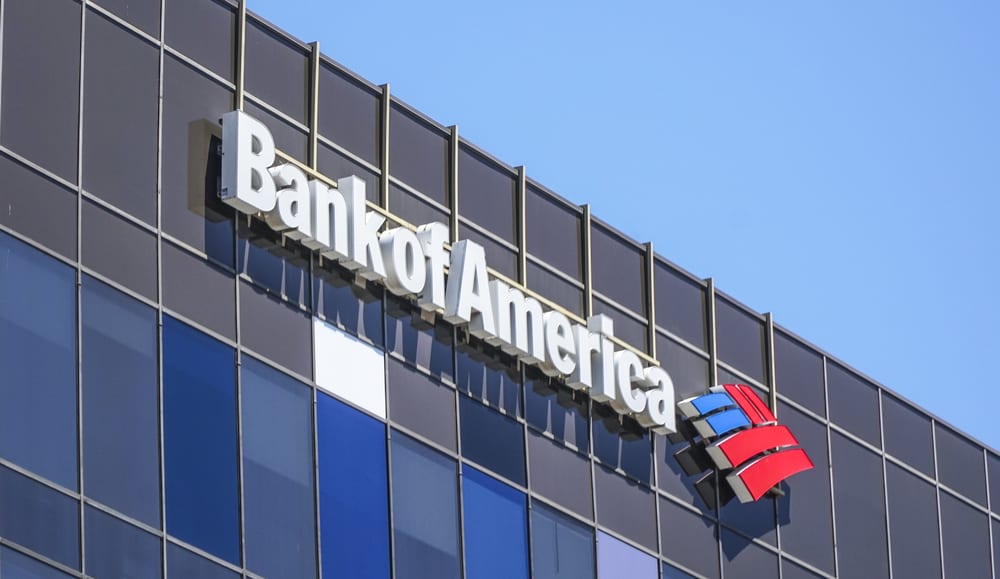
Bank of America has released a research report highlighting the transformative potential of tokenization in the next five to 15 years.
Tokenization, which involves converting real-world assets into digital tokens on a blockchain network, could revolutionize financial and non-financial infrastructure, according to the report.
The report emphasizes the wide-ranging implications of tokenization across various sectors.
BofA’s Cryptocurrencies Research Team believes that the adoption of tokenization will redefine value transfer, settlement, and storage in all industries, leading to a transformative infrastructure revolution.
Tokenization has the potential to reshape asset management and trading over the next decade, offering increased efficiency, liquidity, and reduced transaction costs.
By representing assets as tokens on a blockchain, traditional complexities associated with intermediaries and paperwork can be minimized, enabling faster and more efficient transactions.
Bank of America suggests that the mainstream adoption of digital assets through blockchain technology will occur much faster than previous disruptive technologies like radio, television, and email.
The bank predicts rapid momentum among financial institutions and corporations in implementing blockchain technology due to the untapped efficiencies it offers.
The report clarifies that distributed ledger technology and tokenized traditional assets should not be confused with cryptocurrencies.
While blockchains record the ownership of the thousands of tokens in the digital asset ecosystem, BofA expects most of the current tokens to disappear within the next ten years.
The report explores various applications of tokenization in the digital realm, acknowledging that some tokens lack inherent value but can attract attention by representing a community’s value.
It provides examples such as memecoins like Shiba Inu (SHIB) and Pepecoin (PEPE) that gained significant attention despite their lack of utility.
However, the report recognizes that other tokens serve distinct purposes.
Furthermore, the report highlights the importance of certain digital assets, even if they lack intrinsic value, due to the emergence of public permissionless blockchains like Bitcoin and Ethereum.
These decentralized networks require tokens as incentives for participants involved in processing transactions within the network.
In conclusion, Bank of America’s research report emphasizes the transformative role of tokenization in finance and beyond.
Tokenization has the potential to revolutionize asset management, enhance efficiency, increase liquidity, and reduce transaction costs.
The report anticipates rapid adoption of digital assets and blockchain technology, driven by the efficiency gains they offer.
Other Stories:
Cboe Resubmits Bitcoin ETF Application With Fidelity, Collaborates with Coinbase
Shiba Inu Twitter Scam Exposed By ‘Shibarmy Scam Alerts’
U.S. Federal Reserve Certifies 57 Companies to Utilize ‘FedNow’ Instant Payments System
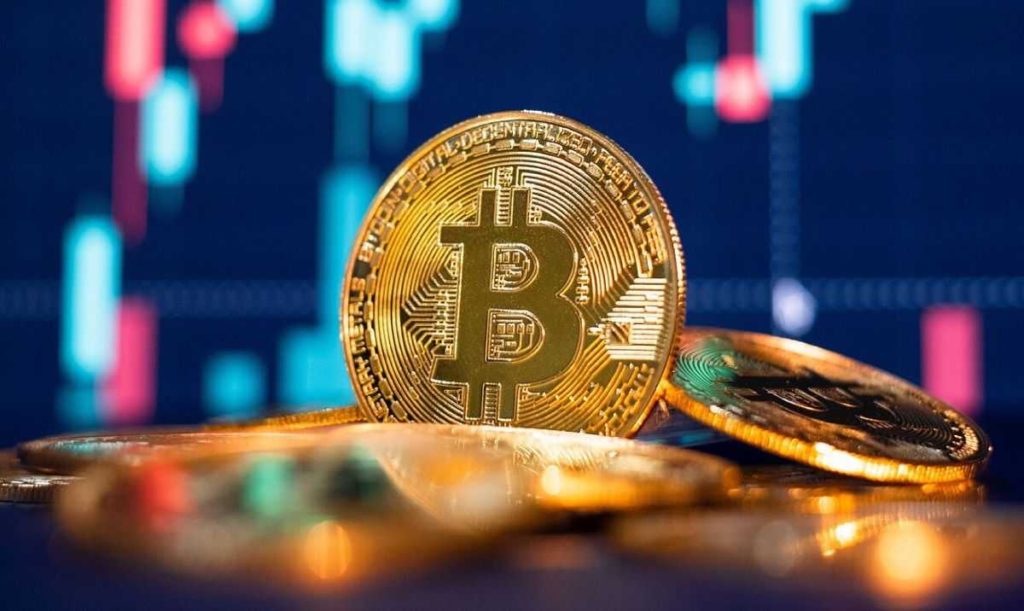
Bitcoin (BTC) has been trading within a narrow range in recent days, but its remarkable 84% rally in 2023 remains a significant achievement.
This impressive recovery in Bitcoin’s price has also contributed to the rise of several altcoins, which have experienced substantial gains from their yearly lows.
As the second half of the year commences, the burning question on every investor’s mind is whether the rally will continue.
Data from CoinGlass reveals that since 2013, July has only seen three negative monthly closes, with the largest decline being 9.69% in 2014.
This indicates that the bulls currently have a slight advantage.
The recent surge in Bitcoin and altcoins can be attributed in large part to the hopes surrounding the approval of a spot Bitcoin exchange-traded fund by the United States Securities and Exchange Commission.
However, any negative news on this front could quickly shift the sentiment to bearish, resulting in a significant sell-off.
At present, Bitcoin and select altcoins are displaying strength. Let’s examine the charts of the top five cryptocurrencies that may sustain their upward movement in the coming days.
Bitcoin’s price analysis indicates that it continues to trade near the strong overhead resistance at $31,000.
This suggests that the bulls are not in a hurry to take profits as they anticipate another upward surge.
Typically, a consolidation near a crucial overhead resistance leads to an upward breakout.
The rising 20-day exponential moving average ($29,278) and the positive relative strength index (RSI) indicate that the path of least resistance is upwards.
If the bulls manage to propel and maintain the price above $31,000, the BTC/USDT pair is likely to initiate the next leg of the uptrend.
This bullish momentum may push the price above the immediate resistance at $32,400, potentially propelling the pair further towards $40,000.
On the other hand, if the bears regain control, they would need to sink the price below the 20-day EMA, potentially leading to a decline towards the 50-day simple moving average ($27,622).
Litecoin’s price analysis reveals that it recently surged above the descending channel and broke the overhead resistance at $106 on June 30, signaling the resumption of the uptrend.
Although the bears briefly pulled the price back below the breakout level on July 1, the bulls quickly bought the dip.
If buyers successfully sustain the price above $106, it increases the likelihood of a continued rally. In that case, the LTC/USDT pair could soar towards the overhead resistance zone between $134 and $144.
However, a slip and sustained price drop below $106 would indicate that bears are selling at higher levels, potentially leading to a decline towards the psychological level of $100 and the breakout level from the channel.
Monero’s price analysis suggests that it rose above the downtrend line on June 23, invalidating the developing descending triangle pattern.
This failure of the bearish pattern often results in a short squeeze, as seen in the XMR/USDT pair’s surge from $150 on June 23 to $171 on June 27.
After the sharp rally, the price has been consolidating between $171 and $160.
This consolidation indicates that the bulls are holding their positions, anticipating another upward move.
If buyers manage to push the price above $171, the pair may initiate the next leg of the up-move, potentially skyrocketing to $187.
However, a drop back below the 50-day SMA ($149) would suggest bearish control.
Aave’s price analysis indicates that the pair has been trading within a descending channel pattern for several weeks.
However, recent price action suggests a change in sentiment, as the bulls are now buying on dips instead of selling during rallies.
The repeated retests of the resistance line weaken it over time. The rising 20-day EMA and the positive RSI indicate an upside bias.
If buyers successfully propel and maintain the price above the channel, the AAVE/USDT pair may embark on a new upward move towards $84.
On the downside, the 20-day EMA serves as crucial support, and a break below it may prolong the pair’s time inside the channel.
Maker’s price analysis reveals that the pair is attempting to start an upward move.
The recent dip to the moving averages between June 24 and 28 indicated demand at lower levels. The rising 20-day EMA and the overbought RSI favor the bulls.
However, the strong selling pressure observed at higher levels suggests caution.
If buyers manage to break above the downtrend line, the MKR/USDT pair may rally towards $979.
On the other hand, a drop below $772 would indicate weakness and potentially lead to a deeper correction towards the 20-day EMA.
In conclusion, Bitcoin and select altcoins are currently displaying strength in their price movements. While Bitcoin is trading near a crucial resistance level, the charts suggest an upward bias.
Litecoin, Monero, Aave, and Maker also show positive signs, but caution is advised as there may be some resistance at higher levels.
Traders and investors should closely monitor these cryptocurrencies to assess their potential for continued upward movement or a shift in market sentiment.
Other Stories:
U.S. Federal Reserve Certifies 57 Companies to Utilize ‘FedNow’ Instant Payments System
Cryptocurrency exchange Bittrex has taken a significant step in its legal battle against the United States Securities and Exchange Commission (SEC) by filing a motion to dismiss the case.
Bittrex’s argument centers around the claim that the SEC lacks the authority to regulate cryptocurrencies as securities unless specifically granted by Congress.
By challenging the SEC’s interpretation of existing securities regulations, Bittrex aims to establish a clearer regulatory framework that accommodates digital assets.
In a strategic move reminiscent of Coinbase, Bittrex has closely aligned its arguments with those of the larger cryptocurrency exchange.
This alignment suggests that Bittrex intends to leverage the robust legal framework established by Coinbase and construct a unified defense against the SEC’s lawsuit.
Similar to Coinbase, Bittrex’s legal team highlights what they perceive as deficiencies in the SEC’s allegations concerning the trading of investment contracts.
While both defendants acknowledge that the initial sale of certain crypto assets could be classified as securities contracts, they contend that this classification does not extend to assets traded on secondary markets.
Bittrex argues that once an asset is launched and actively traded on secondary markets, it should no longer be considered a security but rather categorized as a commodity or another class of digital asset.
Furthermore, Bittrex asserts that the SEC did not adequately convey that its actions were prohibited, employing a defense strategy commonly used by cryptocurrency defendants challenging the SEC’s allegations.
The legal dispute between Bittrex and the SEC originated in April when the SEC charged Bittrex and its co-founder, William Shihara, with operating an unregistered national securities exchange.
The complaint alleges that Bittrex facilitated the trading of digital assets that met the securities criteria outlined in U.S. federal securities laws without obtaining SEC registration as an exchange.
Additionally, the SEC charged Bittrex Global, the foreign affiliate of Bittrex, with failing to register as a national securities exchange in the same complaint.
Bittrex’s motion to dismiss represents a pivotal moment in its fight against the SEC.
By challenging the SEC’s authority and aligning its arguments with those of Coinbase, Bittrex aims to establish a more defined regulatory framework that accommodates the unique characteristics of digital assets.
The outcome of this legal battle will likely have significant implications for the cryptocurrency industry as a whole, as it could set a precedent for how cryptocurrencies are regulated in the United States.
Other Stories:
Cboe Resubmits Bitcoin ETF Application With Fidelity, Collaborates with Coinbase
Shiba Inu Twitter Scam Exposed By ‘Shibarmy Scam Alerts’
U.S. Federal Reserve Certifies 57 Companies to Utilize ‘FedNow’ Instant Payments System

Privacy advocates achieved a significant victory in June as Binance announced its reversal on delisting privacy coins for users in several European countries.
This decision means that traders in Italy, Poland, Spain, and France can continue trading privacy coins such as Zcash, Secret, Firo, Navcoin, MobileCoin, Beam, and PIVX.
The potential ban on these coins would have been a grave mistake.
Privacy coins provide individuals with enhanced transactional security, countering financial surveillance, and safeguarding user confidentiality.
In an era plagued by excessive surveillance and a lack of privacy, the significance of these coins cannot be overstated.
Privacy coins possess fungibility, making each unit interchangeable and resistant to censorship, which sets them apart from most other cryptocurrencies.
Losing these additional layers of security and anonymity would have been a considerable loss for the crypto community.
The increasing adoption of privacy coins in recent years is a response to stringent regulations.
Binance’s decision aligns with the European Union’s efforts to establish standards for digital assets through the Markets in Crypto-Assets (MiCA) regulations.
As the European Securities and Markets Authority prepares to launch a MiCA consultation process in July, it is evident that Europe continues to shape the regulatory landscape for the crypto industry.
It is essential to recognize that privacy is a fundamental human right protected by the United Nations.
Article 12 of the Universal Declaration of Human Rights emphasizes the right to privacy and protection against interference.
This right should extend to the world of cryptocurrencies as well.
In the digital age, the need for privacy becomes even more critical as data exploitation risks escalate, and tech giants strive to control private information.
Binance’s decision reflects the delicate balance exchanges must maintain between regulatory compliance and users’ privacy needs, considering the varying international regulations they face.
Looking to the future, Binance’s decision, along with the regulatory pressure in Europe, may lead to increased demand and development within the privacy coins sector.
Paradoxically, this precedent could encourage other exchanges to reconsider their stance on privacy coins, potentially leading to wider availability.
This news highlights the power of community sentiment in shaping crypto policies and regulations.
Binance’s official statement acknowledged the influence of community feedback in their decision-making process.
It is crucial to understand and harness the community’s power to shape the future of the crypto industry.
The crypto community must unite and continue advocating for privacy, as it forms the foundation of Web3. As the Romans said, “ibi semper est victoria ubi est concordia”: There is always victory where there is unity.
Other Stories:
Shiba Inu (SHIB) Price Prediction For 2023 & 2025
U.S. Federal Reserve Certifies 57 Companies to Utilize ‘FedNow’ Instant Payments System
Cboe Resubmits Bitcoin ETF Application With Fidelity, Collaborates with Coinbase

Pepepcoin, the frog-themed cryptocurrency, experienced a notable surge in prices during the latter half of June, reaching a monthly high of $0.00000179.
This price rally was fueled by increased volume, indicating strong buying momentum from market participants.
However, the current Pepecoin price is undergoing a post-rally correction, which has the potential to reignite the bullish momentum for another rally.
Analyzing the daily chart, we can observe the formation of a flag pattern within the 4-hour time frame.
A breakout above the upper trendline of this pattern would signal a continuation of the uptrend.
The trading volume for Pepecoin over the past 24 hours is $85.1 million, showing a 71% decrease compared to previous levels.
In the daily chart, the Pepecoin price has displayed alternating green and red candles for over a week, reflecting uncertainty among traders.
However, this pullback is contained within two downward sloping trendlines, suggesting the formation of a flag pattern.
The presence of this bullish continuation pattern implies that the ongoing correction is temporary, and buyers may resume the upward trend once the resistance trendline is broken.
As of now, Pepecoin is trading at $0.00000153, experiencing a 1.92% intraday loss and continuing to decline during the retracement phase.
Potential buyers may consider waiting for a breakout above the resistance trendline, which would provide a strong foundation for prices to reach the highs of $0.00000193 and $0.0000021.
The question remains whether Pepecoin can sustain its position above the $0.0000014 mark.
Flag patterns support the continuation of an established uptrend by offering intermittent pullbacks to recover bullish momentum and present better entry opportunities.
However, if the trendlines of the pattern are breached, Pepecoin’s price may experience an extended correction and potentially drop below the $0.00000140 mark.
Therefore, the support level aligned with the 38.2% Fibonacci retracement level becomes crucial in assisting buyers to break the overhead trendline.
Examining the Vortex Indicator, a VI+ slope above the VI- line indicates a bullish alignment and positive sentiment for further rally.
Additionally, the correction phase sustaining above the 50% Fibonacci retracement level indicates that the overall market trend remains bullish.
Other Stories:
Shiba Inu Twitter Scam Exposed By ‘Shibarmy Scam Alerts’
Shiba Inu (SHIB) Price Prediction For 2023 & 2025
U.S. Federal Reserve Certifies 57 Companies to Utilize ‘FedNow’ Instant Payments System

Sales of Ethereum (ETH) and Polygon (MATIC)-based non-fungible tokens (NFTs) on the popular marketplace OpenSea hit their lowest point of the year in the second quarter (Q2), according to data from Dune Analytics.
The decline in sales was primarily attributed to a decrease in interest in profile-picture NFTs, leading to a significant drop in monthly sales volume.
In February, sales of Ethereum-based NFTs on OpenSea reached a nine-month high of $643.61 million.
However, as the market interest in profile-picture NFTs waned, sales on the platform plummeted, resulting in a 75% decline in monthly sales by the end of June.
During the three-month period, OpenSea saw the highest sales volume in April, with monthly sales totaling $285.98 million.
However, this figure dropped by 36% in May and further declined by 43% in June, closing the quarter with total sales of $161.79 million.
Although June had the lowest sales volume for Ethereum-based NFTs on OpenSea this year, data from Dune Analytics revealed an 82% increase in the number of NFTs sold during the month.
In May, only 246,857 Ethereum-based NFTs were sold, while in June, this number surpassed 450,000. Nevertheless, there was still a 23% decrease in the total count of NFTs sold during the quarter.
OpenSea’s Polygon-based NFTs also experienced a significant decline in sales volume during Q2, with a drop of 59%.
After a record-breaking sales volume of $83.49 million in February, Polygon-based NFT sales on OpenSea have since declined by 89%.
June saw the lowest sales count of Polygon NFTs during the quarter, with a total of 228,859 sold, representing a 34% decline over the 90-day period.
The Blue Chip NFT Index, which measures the performance of top-tier NFT collections by market capitalization, also suffered in Q2. According to data from NFTgo, the index fell by 28% during the period, reaching 5990 ETH on June 30.
Leading NFT projects like the Bored Ape Yacht Club (BAYC) and CryptoPunks have experienced a downward trend in floor prices over the past six months.
The average price of a BAYC NFT currently stands at 31.5 ETH, marking a 54% decrease since the beginning of the year.
Similarly, the value of CryptoPunks has dropped by 34% in the same period.
Overall, the second quarter witnessed a decline in sales volume for both Ethereum and Polygon-based NFTs on OpenSea, as well as a decrease in the performance of Blue Chip NFT collections.
The market has been impacted by changing trends and a waning interest in certain types of NFTs.
Other Stories:
U.S. Federal Reserve Certifies 57 Companies to Utilize ‘FedNow’ Instant Payments System
Shiba Inu Twitter Scam Exposed By ‘Shibarmy Scam Alerts’
Cboe Resubmits Bitcoin ETF Application With Fidelity, Collaborates with Coinbase
The Shiba Inu ($SHIB) cryptocurrency, inspired by memes, has experienced a surge in activity and transactions as its layer-2 scaling solution, Shibarium’s testnet called Puppynet, achieved a significant milestone of 25 million transactions.
Notably, SHIB’s burn rate surged by 1,800% in the preceding 24-hour period.
PuppyScan, a dedicated block explorer for the Shiba Inu network, provided data indicating that the Shibarium testnet has processed a total of 25.5 million transactions, with an average of approximately 270,000 transactions per day.
Earlier this month, CryptoGlobe reported that Puppynet had surpassed the 20 million transaction mark, with around 16 million wallet addresses actively moving funds on the network.
Since then, the number of wallets on Puppynet has surpassed 17 million.
Another significant metric for the testnet is the processing of 1.49 million blocks.
The average block time, a crucial parameter in blockchain technology that measures the speed of adding new blocks to the blockchain, stands at 5 seconds.
The increased activity and interest can be attributed in part to a cryptic message shared by Shytoshi Kusama, the enigmatic lead developer of SHIB.
Kusama, who played a vital role in the development of Shiba Inu, posted a 19-second video clip on Twitter, hinting at upcoming developments within the Shiba Inu ecosystem.
Shibarium represents a milestone for the Shiba Inu ecosystem, which currently operates on the Ethereum network.
While Ethereum is known for its safety and decentralization, it faces scalability and transaction throughput challenges.
CryptoGlobe previously reported that the largest Ethereum whales hold more SHIB than any other cryptocurrency, excluding stablecoins and Ethereum’s native token.
According to WhaleStats, a whale monitoring service, the top 100 Ethereum whales collectively possess a staggering 49.62 trillion SHIB tokens, valued at approximately $600 million.
Other Stories:
Shiba Inu (SHIB) Price Prediction For 2023 & 2025
U.S. Federal Reserve Certifies 57 Companies to Utilize ‘FedNow’ Instant Payments System
Cboe Resubmits Bitcoin ETF Application With Fidelity, Collaborates with Coinbase
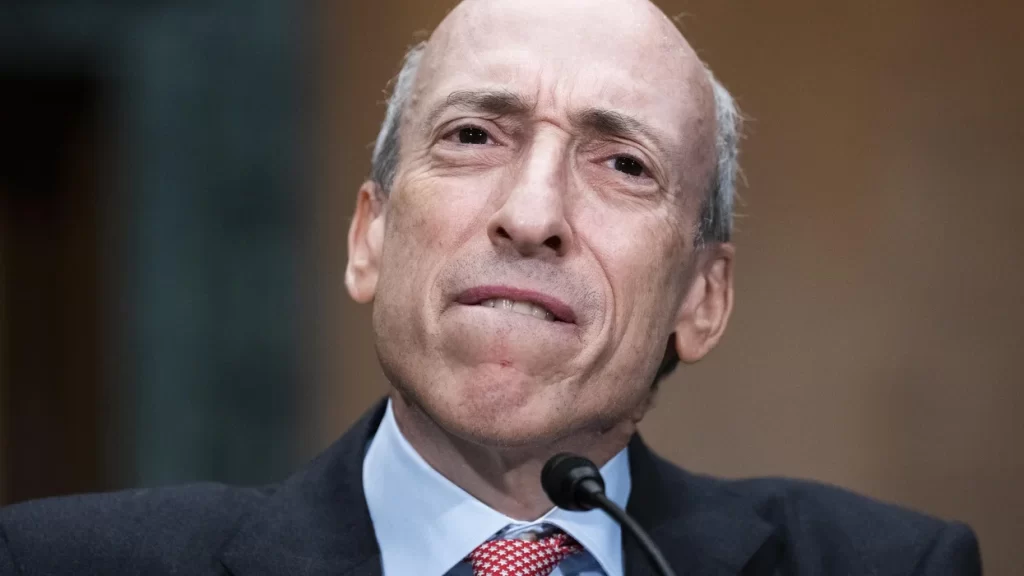
Rumors about the resignation of Gary Gensler, the chair of the United States Securities and Exchange Commission (SEC), have once again been circulating.
Interestingly, artificial intelligence seems to have played a role in spreading these false claims.
On July 1, an article appeared on a website called “thecryptoalert.com,” stating that Gary Gensler had resigned following an internal investigation, citing an anonymous official as the source.
However, further investigation by Cointelegraph revealed that the text of the article was generated by an AI model, as indicated by the high score of 96.8% on the AI-detector ZeroGPT.
Upon examining the website, it became apparent that it was relatively new, with only 17 posts in total, the earliest of which was published on June 22nd.
Most of these articles also exhibited signs of being generated by artificial intelligence, with ZeroGPT scoring them around 70%.
Furthermore, a search on the internet archive Wayback Machine revealed that the ownership of the website’s domain, “thecryptoalert.com,” was updated on June 24 at 4:30 PM.
Despite these indicators, several Twitter accounts reposted the content, with one particular post by the account @whalechart gaining significant traction, garnering 1.4 million views.
However, on July 3, Fox Business Network reporter Charles Gasparino confirmed through a tweet that Gary Gensler is not resigning, after allegedly reaching out to the SEC for clarification.
This is not the first time rumors about Gensler’s resignation have circulated. On April 20, questionable sources spread claims that he was about to be “fired.”
Then, on June 12, U.S. lawmakers introduced a bill known as the “SEC Stabilization Act” to the House of Representatives, which included a provision seeking to remove Gensler from his position, accusing him of being a “tyrannical Chairman.”
In conclusion, false rumors of Gary Gensler’s resignation as SEC chair have been circulating once again.
These rumors were propagated through an article generated by an AI model on a relatively new website.
However, it has been confirmed that Gensler is not resigning, and these rumors are reminiscent of previous attempts to undermine his position.
Unusual activity has recently caught the attention of observers, involving a wallet associated with the bankrupt North American cryptocurrency broker, Voyager.
Surprisingly, a staggering 25 billion Shiba Inu (SHIB) tokens, currently valued at approximately $183,275, were transferred from the wallet.
What makes this transfer intriguing is the destination of these tokens—they were not sent to any exchange address or the broker’s fund wallet.
Instead, they were transferred to an address linked to the SHIB token itself.
Despite its bankruptcy status, the Voyager wallet still holds a significant amount of 2.84 trillion Shiba Inu tokens, equivalent to an astonishing $20.8 million.
It is worth noting that just a few months ago, the wallet held as many as 6.6 trillion SHIB tokens, indicating substantial fluctuations in the assets controlled by the broker.
This movement of tokens from the bankrupt broker’s wallet is not limited to SHIB alone.
Reports suggest that other cryptocurrencies have also been subject to transfers, all stemming from the ongoing resumption of withdrawals.
In an effort to meet their obligations, the broker has allowed lenders to withdraw approximately 35% of their cryptocurrencies, with a withdrawal window open between June 20 and July 5.
One of the platforms facilitating these withdrawals is the Gemini crypto exchange.
The future of Voyager’s holdings and the implications for the wider crypto landscape remain uncertain, making this an unfolding story that demands our attention.
The movements of these tokens and the transfers from the broker’s wallet raise questions about the broker’s intentions and the potential impact on the market.
It is crucial to monitor the developments surrounding Voyager closely.
The destination of the transferred tokens, particularly to an address linked to the SHIB token itself, adds an intriguing element to the situation.
The broker’s significant fluctuations in token holdings also suggest a dynamic and ever-changing landscape within the crypto industry.
As the broker allows lenders to withdraw their cryptocurrencies, platforms like Gemini are playing a crucial role in facilitating these transactions.
These actions may provide some relief to lenders, but the overall implications and long-term consequences for Voyager and the broader crypto community remain uncertain.
The unfolding story of Voyager’s activities serves as a reminder of the inherent risks and volatility associated with the cryptocurrency market.
It highlights the importance of due diligence and cautious decision-making when engaging with cryptocurrency brokers and platforms.
Other Stories:
Cboe Resubmits Bitcoin ETF Application With Fidelity, Collaborates with Coinbase
U.S. Federal Reserve Certifies 57 Companies to Utilize ‘FedNow’ Instant Payments System