


Frankfurt, Germany, July 3rd, 2023, Chainwire
The team behind Alex The Doge (ALEX), the memecoin powering the GameFi ecosystem of the same name, are hoping the token can emulate BCH upon launch. Currently in its presale phase, hopes are high that ALEX will hit the market with a bang, making the sort of headline-grabbing moves that Bitcoin Cash (BCH) has recorded lately.
The recent surge in price of Bitcoin Cash (BCH) has caught the attention of the cryptocurrency community. The Proof of Work cryptocurrency is up 160% over the past month. At the same time, interest in another digital asset that has yet to debut, Alex The Doge (ALEX), has been ramping up.
Alex The Doge (ALEX) is a unique project that combines the appeal of memecoins with the utility of decentralized finance (DeFi) and play-to-earn gaming. Its presale phase, during which early supporters can acquire ALEX tokens ahead of the token’s DEX launch, has generated strong interest that augurs well for the project’s prospects.
Alex The Doge aims to revolutionize the gaming industry by creating a digital gaming world called the Miracle Verse. This ecosystem will enable users to engage in play-to-earn gaming, social trading, and DeFi activities.
Built on the Polygon blockchain for scalability and security, Alex The Doge (ALEX) has positioned itself as a promising GameFi player in the crypto space. Its comprehensive roadmap, whitepaper, and strong community support have contributed to its growing popularity.
Once the token launches, the Alex The Doge roadmap will advance to its next phase, introducing key milestones including the Miracle Verse, complete with the opportunities this holds for gaming, social interaction, and DeFi, all powered by ALEX.
About ALEX
ALEX is the newest Doge on the block, Welcome to the future of Play-To-Earn Gaming and Social-Fi! Alex The Doge is a community project with a focal point on the end user experience, ALEX will revolutionize P2E gaming and expand our ecosystem to alternative gaming communities using cross chain compatibility and creating a fluid transition between gaming credits and digital assets.
For more information about Alex The Doge (ALEX) presale: Website | Telegram | Twitter
Contact
Community lead
Zack Anderson
Alex The Doge
[email protected]

In its 11th round of token burn, Binance, the world’s largest cryptocurrency exchange, has burned a staggering 2.65 billion Terra Classic (LUNC) tokens.
This latest burn brings the total number of LUNC tokens burned by Binance to over 35.5 billion, while the community’s burn has surpassed an impressive 68 billion.
As a result of this development, traders have responded positively, leading to a 3% increase in the price of LUNC.
The burn took place on July 1, when Binance executed a transaction by transferring 2.65 billion LUNC tokens to the burn address, effectively reducing the circulating supply.
Additionally, the transaction incurred a transaction fee of 13.25 million LUNC tokens.
The Terra Classic burn mechanism operates automatically, burning tokens whenever a transaction occurs on the network.
The number of tokens burned is proportionate to the number in circulation, ensuring a constant decrease in the total supply of tokens. This mechanism theoretically increases the value of the tokens over time.
Last month, Binance burned 1.04 billion LUNC tokens, even though the exchange reduced its contribution from LUNC spot and margin trading fees from 100% to 50%.
Despite the reduction, the community expressed gratitude for the ongoing support from Binance and its CEO, Changpeng Zhao.
Over the past couple of months, the burn rate of LUNC tokens has improved significantly, thanks to initiatives from projects like DFLunc, Terra Casino, and Cremation Coin.
These projects have been burning millions of LUNC tokens on a weekly basis, contributing to the community’s successful burn of 68 billion LUNC tokens.
After completing a major upgrade in May, which aimed to align the chain with Terra 2.0 and other Cosmos chains, the community’s current focus is on reducing the supply of LUNC and TerraClassicUSD (USTC) tokens.
Additionally, the Joint L1 Task Force and the “quant” team will collaborate on the USTC repeg initiative.
In terms of price performance, LUNC has faced some challenges.
In June, the token struggled to surpass the $0.0001 mark and even dipped below the support level of $0.000090.
Despite Binance’s burn efforts, the price of LUNC remains under pressure, exhibiting a continued downward trend.
As of now, CoinMarketCap reports a 3% increase in the price of LUNC over the past 24 hours, with the token trading at $0.000087.
Other Stories:
Shiba Inu Twitter Scam Exposed By ‘Shibarmy Scam Alerts’
U.S. Federal Reserve Certifies 57 Companies to Utilize ‘FedNow’ Instant Payments System
Venture capitalist Tim Draper has revised his projected timeline for his bitcoin price prediction, acknowledging that his previous forecasts were off.
In a tweet on Friday, Draper revealed that when bitcoin was valued at $4,000, he had predicted it would climb 60 times and reach $250,000 by now.
However, the cryptocurrency ended June below $31,000, prompting Draper to admit that his prediction would take longer to materialize.
He stated that it may now take an additional two years for his $250,000 projection to come true.
Initially, Draper had predicted that bitcoin would reach $250,000 by the end of 2022. However, on December 31, 2022, he acknowledged that his forecast had missed the mark.
Nevertheless, he remained adamant that BTC would reach the predicted level before the halving event in 2024.
With his forecast failing to materialize in December 2022, Draper extended the timeframe for his BTC price prediction by six months, setting a new deadline of mid-2023.
In an interview with the Observer, he confidently declared that if this timeframe also proves unsuccessful, he is certain bitcoin will hit the $250,000 milestone before the end of 2024.
Draper expressed his confidence, stating, “I am almost 100 percent sure I will be right in 18 months.”
Additionally, he believes that increased adoption by women will contribute to the surge in bitcoin’s price beyond his estimate.
However, in his recent tweet, Draper revised his projection yet again. He now believes it may take until the end of June 2025 for bitcoin to reach the coveted $250,000 price point.
Draper has not only focused on price predictions but has also raised concerns about cryptocurrency regulation.
He criticized the U.S. Securities and Exchange Commission (SEC) and its chair, Gary Gensler, for their enforcement-focused approach to regulating the crypto industry.
Draper argued that “regulation by enforcement” is detrimental to the economy and highlighted that such practices are also negatively impacting China.
Despite the delays and challenges, Draper remains optimistic about bitcoin’s future trajectory.
While his previous predictions may not have come to pass, he maintains that BTC will eventually reach the $250,000 mark, albeit with an extended timeline.
Other Stories:
U.S. Federal Reserve Certifies 57 Companies to Utilize ‘FedNow’ Instant Payments System
Shiba Inu, the popular cryptocurrency, has fallen victim to yet another scam on Twitter. @LucieSHIB, the official content marketing specialist for Shiba Inu, recently reported a fraudulent account operating under the handle @ShibaInuHQ.
This scam account, claiming to be the “Official Twitter Account for the Shiba Inu Ecosystem,” is deceiving Shiba Inu enthusiasts by offering a fake giveaway of SHIB tokens.
The scam account’s strategy involves enticing users with the promise of a substantial giveaway, specifically a “SHIB/BONE/LEASH” prize worth a staggering $30,000,000.
However, this amount far exceeds the typical giveaways conducted by legitimate crypto exchanges or platforms. This fact should raise red flags for SHIB fans who come across such offers.
@LucieSHIB discovered the scam after the “Shibarmy Scam Alerts” profile (@susbarium) raised awareness about it.
The account is attempting to mislead SHIB enthusiasts by adopting the profile picture of the SHIB Metaverse, further complicating the identification of its fraudulent nature.
To appear more credible, the scam account even retweets posts from official Shiba Inu token and SHIB Metaverse accounts, including one about a giveaway of virtual land within the Metaverse.
This is not the first time the Shiba Inu community has faced such scams. Just days prior, @susbarium had warned about another scammer on Twitter who falsely claimed to have received a Shibarium testnet reward.
The SHIB anti-scam account alerted the community that the SHIB team had not been offering such rewards recently, urging users to exercise caution.
It is essential for SHIB enthusiasts to be vigilant and exercise due diligence when encountering giveaways or promotions online.
Authentic cryptocurrency exchanges and platforms typically conduct giveaways within reasonable limits, avoiding extravagant claims.
Users are encouraged to report any suspicious accounts or activities to help protect the Shiba Inu community from falling victim to scams.
As the Shiba Inu token continues to gain popularity, scammers are drawn to exploiting its dedicated fan base.
By staying informed and cautious, the community can collectively combat such fraudulent activities and preserve the integrity of the Shiba Inu ecosystem.
Other Stories:
Crypto Scams and Hacks Resulted In Almost $700 Million Loss In First Half of 2023
Exchange operator Cboe has resubmitted an application with the U.S. Securities and Exchange Commission (SEC) to launch a bitcoin exchange-traded fund (ETF) in collaboration with asset manager Fidelity.
Cboe aims to address concerns raised by the SEC regarding the clarity and completeness of its initial filing. The SEC had previously raised similar concerns with Nasdaq over a spot bitcoin ETF filing by BlackRock.
One of the key issues was the failure to disclose the crypto-trading platforms that would enter into surveillance-sharing agreements to detect fraud in the bitcoin markets.
In addition to the Fidelity ETF, Cboe has also resubmitted listing applications for bitcoin ETFs by WisdomTree, VanEck, and a joint effort by Invesco and Galaxy.
Cboe intends to enter into a surveillance-sharing agreement with Coinbase for all these filings.
The SEC, Cboe, Nasdaq, Fidelity, and BlackRock declined to comment on the matter, while Coinbase was unavailable for comment.
It is worth noting that the SEC recently filed a lawsuit against Coinbase for failing to register as an exchange. According to Cboe’s Fidelity bitcoin ETF filing,
Coinbase represented roughly half of the U.S. dollar-bitcoin trading volume in May.
Coinbase has responded by filing a letter in federal court, seeking the dismissal of the SEC lawsuit, arguing that the regulator lacks authority to pursue civil claims since the crypto assets traded on its platform are not considered securities.
In addition to the Coinbase lawsuit, the SEC is also suing Binance, alleging that the world’s largest crypto-trading platform is involved in deceptive practices.
Concerns have been raised about the lack of transparency and auditability in the cryptocurrency market, with claims of rampant manipulation.
The recent filings for bitcoin ETFs by BlackRock and Fidelity have led to a surge in the price of bitcoin, reaching one-year highs and rising over 20% since June 15.
Despite the SEC’s request for more information on the ETF applications, the fact that the price of bitcoin has remained stable suggests that sentiment in the market is not turning bearish.
Analysts believe it was unrealistic to expect quick approval from the SEC, as the agency has previously rejected numerous spot bitcoin ETF applications due to concerns about fraudulent practices and investor protection.
Overall, Cboe’s renewed applications for bitcoin ETFs, along with similar filings by other firms, reflect the growing interest in providing regulated investment vehicles for cryptocurrencies.
However, the approval process still faces regulatory hurdles and the need to address concerns related to market manipulation and investor protection.
Other Stories:
Crypto ATM Company To Go Public After Announcing Merger
Crypto Investor Reports Huge Bitcoin (BTC) Gains With Questionable Strategy
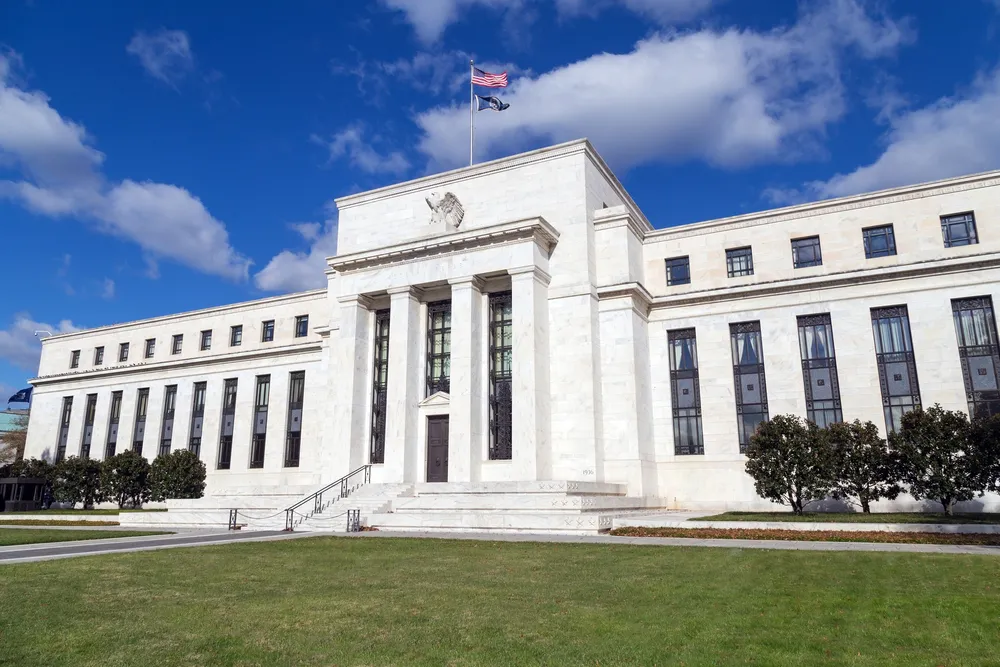
In a recent announcement, the U.S. Federal Reserve revealed that 57 companies have received certification to utilize its upcoming instant payments system, “FedNow,” set to launch in late July.
While an exact launch date was not provided, it is noteworthy that 41 banks and 15 service providers, including industry giants like JPMorgan Chase, Bank of New York Mellon, US Bancorp, and Wells Fargo, have successfully completed formal testing and will be poised to offer instant payments once the service is operational.
The introduction of FedNow marks a significant step forward in the evolution of the U.S. payment infrastructure.
With this system, individuals and businesses will have the ability to make instant payments, enabling faster and more efficient transactions.
This is particularly crucial in today’s fast-paced digital era, where speed and convenience are paramount.
The certification process undertaken by the 57 companies ensures that they are equipped to leverage the capabilities of FedNow seamlessly. It involves comprehensive testing and validation to ensure compatibility and reliability.
By successfully completing this process, these financial institutions and service providers have demonstrated their readiness to embrace the new system and deliver enhanced payment experiences to their customers.
Among the certified entities are major players in the banking industry, such as JPMorgan Chase, Bank of New York Mellon, US Bancorp, and Wells Fargo.
Their inclusion underscores their commitment to staying at the forefront of technological advancements and meeting the evolving needs of their customers.
By integrating FedNow into their operations, these banks will be able to offer real-time payments, providing greater convenience and efficiency for individuals and businesses alike.
The introduction of instant payments through FedNow will have far-reaching implications for various sectors of the economy.
It will facilitate faster business-to-business transactions, streamline payment processes for consumers, and enhance overall economic efficiency.
Furthermore, it will likely foster innovation in the fintech space, as companies explore new ways to leverage the instant payment capabilities offered by FedNow.
While the exact launch date of FedNow remains undisclosed, the completion of formal testing by 41 banks and 15 service providers highlights the progress being made towards its implementation.
As the financial landscape continues to evolve, the introduction of FedNow represents a significant milestone in the modernization of the U.S. payment system, bringing us closer to a future where instant, secure, and efficient transactions are the norm.
Other Stories:
Crypto Investor Reports Huge Bitcoin (BTC) Gains With Questionable Strategy

Cryptocurrency forecasting often relies on statistical tools like ARIMA (AutoRegressive Integrated Moving Average) to analyze and predict future price trends.
ARIMA models are known for their ability to analyze time-series data and predict future points in a series by ensuring that mean, variance, and covariance remain constant over time.
In this article, we explore the Shiba Inu (SHIB) price predictions for the years 2023, 2024, and 2025 using an ARIMA model.
By fitting the model to SHIB’s historical data, we were able to make accurate predictions. For the years 2023 and 2024, we assumed a daily return of 0.005%, while for 2025, we slightly increased it to 0.006%.
Using the daily return in conjunction with the current price, we calculated the forecasted prices for each year.
According to our calculations, SHIB may reach $0.000007864 by the end of 2023, $0.000008110 by the end of 2024, and $0.000008774 by the end of 2025.
ARIMA models offer several advantages in predicting cryptocurrency prices as they can capture various temporal structures in time-series data.
These models consider different lags and lagged forecast errors, allowing for reliable price predictions with a certain level of confidence.
However, it’s important to note that ARIMA models have limitations and should be complemented with other forecasting techniques for more accurate predictions.
It’s crucial to bear in mind that cryptocurrency markets are highly volatile and subject to rapid changes.
While these predictions provide potential trajectories for Shiba Inu, it is essential to approach them with caution. SHIB, like all cryptocurrencies, is susceptible to market volatility, regulatory changes, and broader economic factors.
Moreover, meme coins such as SHIB carry unique risks, often influenced by hype cycles and sudden shifts in investor sentiment.
Therefore, any investment decision should be backed by comprehensive research and a thorough understanding of the associated risks.
In the fast-paced world of crypto, a cautious approach is paramount.
In conclusion, by utilizing an ARIMA model, we derived price predictions for Shiba Inu in the years 2023, 2024, and 2025.
However, it is vital to remember that these predictions are not foolproof due to the unpredictable nature of cryptocurrency markets.
Investors should exercise caution, conduct thorough research, and remain aware of the risks involved when considering any cryptocurrency investment.
Other Stories:
Crypto ATM Company To Go Public After Announcing Merger
Crypto Scams and Hacks Resulted In Almost $700 Million Loss In First Half of 2023

South Korean crypto lending firm Delio is facing an investigation by the country’s Financial Services Commission (FSC) for alleged fraud, embezzlement, and breach of trust, according to a report by local news outlet Digital Asset.
The investigation stems from Delio’s unilateral decision to suspend users’ deposits and withdrawals on June 14.
Delio’s CEO, Jung Sang-ho, addressed concerned investors during an extraordinary meeting on June 17, stating that the company would resume withdrawals, albeit without a fixed schedule at that time.
Partial withdrawals for certain staking services were opened by the company on June 27. Sang-ho assured stakeholders that Delio would secure sufficient capital to compensate affected users.
As one of South Korea’s largest crypto lenders, Delio currently holds an estimated $1 billion worth of Bitcoin (BTC) and $8.1 billion in various altcoins.
The company’s CEO and management staff have been reportedly prohibited from leaving the country while the investigation is ongoing.
The suspension of withdrawals and deposits by Delio’s sister firm, Haru Invest, on June 13, citing issues with a “consignment operator,” likely triggered Delio’s decision to take similar action the following day due to counterparty exposure.
Following the announcement, Haru Invest has reportedly downsized its workforce significantly and is pursuing legal action against its service partner.
While Delio is a registered virtual asset provider (VASP) regulated by the country’s Financial Intelligence Unit, Haru Invest is allegedly not a VASP and thus falls outside the regulators’ jurisdiction.
It has been alleged that Delio management denied any exposure to Haru Invest shortly before the decision to suspend withdrawals.
The investigation by the FSC signifies a serious turn of events for Delio, a prominent player in the South Korean crypto lending industry.
The outcome of the investigation will determine the extent of the firm’s culpability and any potential consequences for its management.
The affected users and investors will be eagerly awaiting the resolution of this case to ascertain the fate of their assets and seek appropriate compensation.
Other Stories:
Crypto Investor Reports Huge Bitcoin (BTC) Gains With Questionable Strategy

Pepe Coin, a popular meme cryptocurrency, has experienced a remarkable surge of 15% within the last 24 hours, outperforming other well-known meme coins like Dogecoin and Shiba Inu in terms of market capitalization.
This surge in Pepe Coin’s value coincides with a broader market shift influenced by major financial institutions such as BlackRock, WisdomTree, and Fidelity, who have recently filed for spot Bitcoin exchange-traded funds (ETFs).
This development has generated excitement among investors and has had a positive impact on the overall crypto market.
Consequently, meme coins like Dogecoin and Shiba Inu have also seen notable price spikes, with gains of 4% and 4.36% respectively.
According to data from CoinGlass, a significant $1.78 million worth of Pepe Coin shorts have been liquidated within the past 24 hours, out of a total of $2.54 million in liquidations.
At the time of writing, Pepe Coin is trading at $0.0000017 per coin. This means that with just $1.60, one can acquire 1 million Pepe Coins.
The Pepe token was launched on the Ethereum blockchain in April and quickly gained traction among cryptocurrency enthusiasts.
Its market capitalization surpassed $1 billion on May 5, which sparked a new wave of meme coins inspired by the frog-themed phenomenon.
The rise of Pepe Coin and other meme coins underscores the growing interest and involvement of retail investors in the cryptocurrency market.
While these meme coins often carry a speculative nature and can be highly volatile, they have attracted a dedicated following of supporters who find amusement and potential profit in their unique characteristics.
It is important to note that investing in meme coins and cryptocurrencies, in general, carries significant risks, and individuals should exercise caution and do thorough research before making any investment decisions.
As the crypto market continues to evolve and new trends emerge, it will be interesting to see how Pepe Coin and other meme coins navigate the ever-changing landscape of digital currencies.
Other Stories:
Crypto ATM Company To Go Public After Announcing Merger
Crypto Scams and Hacks Resulted In Almost $700 Million Loss In First Half of 2023
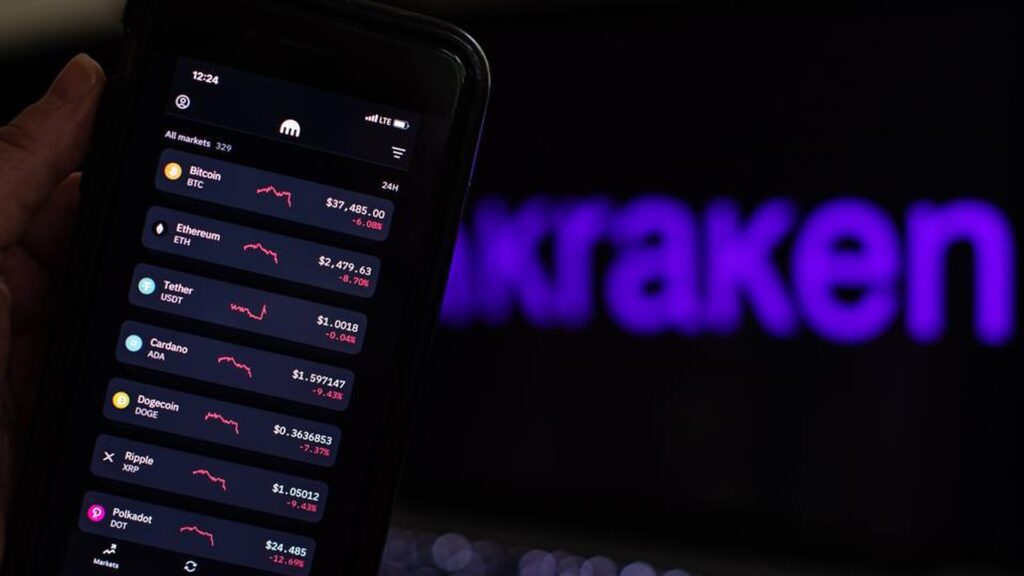
The United States District Court for the Northern District of California has issued an order requiring cryptocurrency exchange Kraken to provide the Internal Revenue Service (IRS) with user account and transaction information.
The IRS stated that it needed this information to investigate potential tax underreporting by the exchange’s users.
According to the order issued on June 30, Kraken is obligated to disclose details of users who conducted transactions exceeding $20,000 within a calendar year.
This includes their names (real or pseudonyms), birthdates, taxpayer identification numbers, addresses, phone numbers, email addresses, and other relevant documents.
The IRS had previously filed a court petition in February in the Northern District of California following Kraken’s settlement with the U.S. Securities and Exchange Commission (SEC) regarding alleged securities law violations related to its staking service.
The IRS claimed that it had previously issued a summons to Kraken in 2021, which the exchange failed to comply with.
Now, the IRS seeks to investigate the tax obligations of users who engaged in cryptocurrency transactions between 2016 and 2020.
Furthermore, Kraken will also be required to provide blockchain addresses and transaction hashes, which are already part of the transaction data available for sharing.
The exchange may also be asked to furnish raw data to the IRS.
Judge Joseph Spero, who oversaw the case, dismissed the IRS’s attempts to obtain employment information and source of wealth from Kraken, denying several of the agency’s requests.
The judge emphasized the need to determine if the government’s summons is appropriately focused and does not exceed what is necessary to accomplish its intended purpose.
The court found that the information sought in the initial three requests, which aimed to identify Kraken account holders falling within the “Doe” definition, was overly broad and exceeded what most users needed to establish their identities.
This ruling in favor of the government comes at a time when the United States is intensifying its crackdown on cryptocurrencies.
In June, the SEC filed separate lawsuits against Coinbase, accusing the exchange of operating an illegal platform, and against Binance.US, alleging mishandling of customer funds, misleading investors and regulators, and violations of securities regulations.
Other Stories:
Crypto ATM Company To Go Public After Announcing Merger
Crypto Investor Reports Huge Bitcoin (BTC) Gains With Questionable Strategy