



The launch of a spot Bitcoin exchange-traded fund (ETF) in the United States may face a longer delay as recent applications from investment managers have been deemed inadequate by the Securities and Exchange Commission (SEC).
The SEC has notified the Nasdaq and the Chicago Board Options Exchange (Cboe), representing asset managers, that their filings lack clarity and comprehensiveness.
The main concern raised by the SEC is the absence of a “surveillance-sharing agreement” with a spot Bitcoin exchange or insufficient details about surveillance arrangements.
However, the asset managers have the option to resubmit their applications after providing the necessary clarifications.
Following BlackRock’s inclusion among the companies aiming to launch the first spot Bitcoin ETF on Wall Street, a series of applications have been filed in recent weeks.
BlackRock’s application introduced a surveillance sharing agreement, which involves sharing information about market trading and clearing activities between entities to prevent potential market manipulation.
This move prompted ARK Invest and 21Shares to amend their own applications, including a similar surveillance agreement.
Other asset managers such as Invesco, WisdomTree, Valkyrie, and Fidelity have also resubmitted or amended their applications, with ARK Invest reportedly leading the race.
Exchange-traded funds (ETFs) are investment vehicles that track specific indices and are typically traded on exchanges.
In the cryptocurrency market, a cryptocurrency ETF refers to a fund that tracks the price of one or multiple digital tokens and comprises various cryptocurrencies.
The SEC has consistently denied spot Bitcoin ETFs since 2017. However, Canada has already made this financial product available.
Three notable funds—Purpose Bitcoin, 3iQ CoinShares, and CI Galaxy Bitcoin—have directly invested in spot Bitcoin in Canada.
In summary, the launch of a spot Bitcoin ETF in the United States is likely to experience a delay as the SEC has deemed recent applications inadequate due to a lack of clarity and comprehensive information.
Asset managers have the opportunity to rectify the filings and resubmit them after addressing the SEC’s concerns.
While spot Bitcoin ETFs have been denied by the SEC since 2017, Canada has already approved and offers several funds that directly invest in spot Bitcoin.
Other Stories:
ASX Considers Listing Tokenized Real-World Assets
CME Group to Introduce Ether/Bitcoin Ratio Futures
UK To Pass Law To Bring Cryptocurrencies Under Traditional Asset Regulations

The CEO of LayerZero, Bryan Pellegrino, expressed optimism about the future of the crypto industry, stating that the present situation is not as dire as it was in 2015.
Speaking at the Collision conference in Toronto, Pellegrino emphasized the significant growth of LayerZero’s cross-chain interoperability protocol.
He revealed that the protocol’s usage has surged from 10,000 messages per day six months ago to an impressive 650,000 messages per day currently.
While decentralized finance (DeFi) has historically accounted for around 70% of LayerZero’s overall volume, Pellegrino highlighted the increasing interest from the gaming and non-fungible token (NFT) sectors, which now constitute 80% of their inbound activity.
Pellegrino predicted that the next 36 months will witness substantial changes in LayerZero and the industry as a whole.
He noted the multitude of groundbreaking projects being developed and the involvement of important external entities.
Pellegrino emphasized the growing market share of LayerZero alongside its rising usage. He referred to LayerZero as the critical infrastructure that will underpin virtually everything reliant on blockchain technology.
In the emerging multichain environment, Pellegrino argued that even staunch advocates of specific blockchain ecosystems, such as Anatoly Yakovenko of Solana and Vitalik Buterin of Ethereum, recognize the need for interoperability and the coexistence of multiple chains.
In April, LayerZero completed a Series B funding round, securing $120 million in investments. Notable participants included Sequoia Capital, Andreessen Horowitz, BOND, Circle Ventures, Christie’s, OpenSea Ventures, and Samsung Next.
This funding round boosted LayerZero’s valuation to $3 billion. The company has ambitious plans for expansion, including venturing into the Asia-Pacific region.
Furthermore, Pellegrino highlighted a recent integration of LayerZero’s messaging protocol by zkLinkorg to facilitate omnichain trade settlement.
This integration demonstrates the composability of LayerZero, enabling omnichain applications (Oapps) to enhance their own application security by utilizing the protocol.
Overall, Pellegrino’s positive outlook, supported by the impressive growth of LayerZero’s protocol and the increasing involvement of key industry players, signals a promising future for the crypto industry.
As LayerZero continues to evolve and expand its market share, it solidifies its position as a crucial component of the blockchain ecosystem in an era of growing multichain adoption.
Other Stories:
Bankrupt Crypto Exchange FTX Takes Steps Towards Relaunching as a New Entity
SEC Commissioner Pushing For ‘Reserved’ Approach to Cryptocurrency Regulation
US Federal Reserve Stress Tests: Largest Banks Pass Severe Recession Scenario

Blockchain technology is making a significant impact in Africa by addressing real-world challenges such as hyperinflation and corruption, according to industry executives interviewed by Cointelegraph.
Chris Maurice, the CEO of Yellow Card, Africa’s largest cryptocurrency exchange, highlighted how crypto is enabling Africans to escape the failures of traditional financial systems and conduct transactions more freely.
He emphasized that cryptocurrencies are solving genuine problems related to banking, currencies, and inflation on the continent, unlike the perception of crypto as a speculative casino in the West.
The adoption of crypto in Africa has been remarkable, with the region boasting more crypto users than North America or Europe.
Six of the top 20 countries worldwide for cryptocurrency usage are in Africa. This demonstrates that Africa is emerging as a crypto continent, as stated by Maurice.
Kevin Imani, the CEO of Sankore 2.0, affiliated with the Near Protocol, sees blockchain-based payments as a human rights technology, providing financial inclusion and control over money to individuals in underdeveloped nations who face hyperinflation and corruption.
The inflation rates in Sub-Saharan Africa reached an estimated 14.5% in 2022, the highest annual change since the 2008 recession, according to Statistica.
Imani highlighted the ability of cryptocurrencies to counter weak national currencies and corruption, making peer-to-peer crypto transactions an attractive choice for many Africans.
From Lagos to Nairobi, Accra to Cape Town, Africa is becoming a hub for tech innovation, as various tech startups and initiatives contribute to the continent’s digital transformation.
Okoye Kevin Chibuoyim, the CEO of GIDA, a crypto education platform based in Nigeria, sees crypto as Africa’s next opportunity for empowerment and participation in something great.
He believes that blockchain’s transparent nature builds trust among Africans who are accustomed to unaccountable and opaque governments.
The potential of cryptocurrencies in Africa has also attracted international partnerships, such as the collaboration between Block, a U.S. digital payments firm led by Jack Dorsey, and Yellow Card to facilitate cross-border payments in Africa.
The rapid growth of cryptocurrency users in Africa in 2021, with a 2,500% increase, led to an 11-fold explosion in venture capital funding in 2022.
Maurice specifically pointed out the enthusiastic adoption of cryptocurrency by Nigerians, stating that 47% of Nigerians own or transact with crypto on a daily basis.
However, there are still countries in Africa where cryptocurrency is reportedly illegal, such as Cameroon, Central African Republic, Gabon, Guyana, Lesotho, Libya, and Zimbabwe, according to Investopedia.
Overall, blockchain technology and cryptocurrencies are addressing real-world challenges in Africa and providing financial inclusion and control over money to individuals who face hyperinflation and corruption.
The adoption of crypto in Africa is growing rapidly, with the continent becoming a major player in the crypto space and a hub for tech innovation.
Other Stories:
EDX Cryptocurrency Exchange Prepares to Switch Custody Providers
Bankrupt Crypto Exchange FTX Takes Steps Towards Relaunching as a New Entity
SEC Commissioner Pushing For ‘Reserved’ Approach to Cryptocurrency Regulation

Investors who put their money into Logan Paul’s CryptoZoo nonfungible token (NFT) gaming project are still waiting for the promised refund of 1000 Ether (ETH), worth $1.93 million at current prices, according to reports.
In a YouTube video posted on June 30, a YouTuber known as Coffezilla, who first exposed the issues with the project in December 2022, claimed that Paul’s communication with the CryptoZoo community has been nonexistent in recent months.
Coffezilla stated, “It’s been six months, so here’s a follow-up.
“Logan Paul has not paid back his victims, he hasn’t talked about it since he first announced he was gonna pay them back.
“And what’s worst of all, he doesn’t seem to have a plan in place to refund anyone.” Coffezilla also revealed that he had been pressing Paul for a refund plan behind the scenes but received no concrete response.
CryptoZoo was launched in September 2021 as an NFT breeding game that offered opportunities to earn ZOO tokens and NFTs.
Paul himself described it as a “really fun game that makes you money.”
However, the project faced numerous issues such as lackluster NFT artwork, plummeting NFT and ZOO token prices, and a failure to deliver on the project’s roadmap.
These problems led to increasing dissatisfaction among investors by late 2022.
After Coffezilla’s exposé videos on CryptoZoo gained traction and sparked community backlash, Paul announced a plan to refund investors on January 14.
He also pledged to fulfill the project’s roadmap.
However, despite these promises, a class-action lawsuit was filed against CryptoZoo and Paul the following month.
In Coffezilla’s latest video, he shared screenshots of email exchanges with Paul’s lawyer, Jeffrey Neiman of the MNR Law Firm.
The emails suggested that no concrete plan had been established for the refund process. Neiman’s email stated, “We are working with Mr. Paul to evaluate the best way to achieve this goal.”
Coffezilla raised concerns about the lack of progress, emphasizing that blockchain developers could easily write the code for the refund process and that Paul has more than enough wealth to reimburse the investors.
He criticized the statement from Paul’s lawyer, calling it a stalling tactic or an admission of having no plan. Coffezilla questioned why, six months later, the team had not figured out a solution.
As of now, Paul has not responded to these allegations on YouTube or Twitter, leaving investors in CryptoZoo uncertain about the fate of their investments and the promised refund.
Other Stories:
CME Group to Introduce Ether/Bitcoin Ratio Futures
UK To Pass Law To Bring Cryptocurrencies Under Traditional Asset Regulations
Maple Finance Launches Direct Lending Program, Filling Void Left by Bankrupt Lenders

Bitcoin (BTC) experienced a sharp decline below the $30,000 mark after the opening of Wall Street on June 30, causing concern among investors regarding the future of the first spot exchange-traded funds (ETFs) for the cryptocurrency.
The drop in BTC’s price was accompanied by reports that the U.S. Securities and Exchange Commission (SEC) had rejected applications for the first Bitcoin spot-price ETF.
These applications had initially fueled a recent price surge that propelled Bitcoin to new yearly highs.
According to sources cited by The Wall Street Journal, the applications had been returned, leading BTC/USD to hit a nine-day low before recovering to hover around $30,000.
The report highlighted that the applications were rejected due to a technicality – the failure to name the spot bitcoin exchange and provide sufficient information about surveillance-sharing agreements.
Despite the setback, some market observers viewed this as a minor issue that could be addressed by updating the language and resubmitting the applications.
In fact, financial commentator Tedtalksmacro saw the SEC’s actions as a positive sign, suggesting that it provided guidance to asset managers like BlackRock on how to get the applications approved.
Meanwhile, Bitcoin’s price continued to trade lower, losing over $1,000 from its daily highs at the time of writing.
This decline occurred just before the monthly and quarterly candle close, adding to the significance of the situation.
Adding to the confusion in the markets, the U.S. macroeconomic data released showed the Personal Consumption Expenditures (PCE) Index falling lower than expected, marking its biggest drop in a year.
Despite signs of slowing inflation, the markets began pricing in a higher possibility of interest rate hikes in July.
The increasing expectations of a rate hike were reflected in the latest data from CME Group’s FedWatch Tool, which indicated a nearly 90% chance of a 25-basis-point increase.
The Kobeissi Letter, a financial commentary resource, argued that despite the data, inflation remained too high, highlighting that the core PCE inflation rate had remained unchanged since December 2022 at 4.6%, posing a significant challenge for the Fed.
In summary, Bitcoin experienced a price drop below $30,000 due to reports of the SEC rejecting applications for Bitcoin spot-price ETFs.
However, market observers remained optimistic, considering the rejection to be a technicality that could be addressed.
Additionally, the markets faced confusion with lower-than-expected PCE data and rising expectations of interest rate hikes, despite concerns about high inflation levels.
Other Stories:
UK To Pass Law To Bring Cryptocurrencies Under Traditional Asset Regulations
Maple Finance Launches Direct Lending Program, Filling Void Left by Bankrupt Lenders

In a recent tweet, Shibburn explorer revealed that the Shiba Inu community had transferred a staggering 1,653,845,435 SHIB meme coins to dead-end wallets.
While this number seems substantial, daily burns have been fluctuating, often plummeting below zero and resulting in losses.
However, on June 30, there was a remarkable surge in the burn rate of Shiba Inu, witnessing a 1,800% increase as 50,258,924 SHIB were locked in unspendable wallet addresses.
Nonetheless, this week has only seen a few instances of daily SHIB burns on the rise.
During the month of June, Shytoshi Kusama, the lead developer, posted enigmatic tweets that may have inspired the SHIB community to burn more of these meme coins.
One tweet mentioned “Something physical coming,” hinting at a new partnership between SHIB and Shibcals. Shibcals specializes in transferring SHIB “into the physical world,” creating tangible SHIB-themed clothing, merchandise, and other touchable items beyond the realm of computer and smartphone screens.
Additionally, Kusama’s second tweet and a Telegram message in the “Shibarium Tech” channel mentioned that SHIB was “going somewhere.” Kusama clarified that this “somewhere” referred to a location “outside the USA.”
Speculations arose suggesting that the SHIB team might be heading to Canada soon to participate in the ETHToronto conference.
This move would pay homage to Vitalik Buterin, as Shiba Inu was initially launched on the Ethereum chain. It is also possible that the launch of the Layer-2 solution, Shibarium, will take place in Canada.
In a recent Telegram post, Kusama mentioned that the date and plan were unchangeable and already set, referring to it as a “launch strategy.”
Shibarium’s testnet was launched on March 11 and has since achieved significant utility milestones, with 17,019,690 linked wallets and a total of 25,955,919 transactions, according to Puppyscan.
In conclusion, the Shiba Inu community has witnessed substantial transfers of SHIB meme coins to dead-end wallets.
Despite daily burn rates fluctuating, a notable surge was observed on June 30. The lead developer’s cryptic tweets have fueled speculation among the community, with some anticipating a new partnership involving SHIB’s physical representation and a potential move outside the USA.
The possibility of the SHIB team’s involvement in the ETHToronto conference and the launch of Shibarium in Canada has also been discussed.
Shibarium’s testnet has already achieved significant milestones, demonstrating its growing utility.
Other Stories:
UK To Pass Law To Bring Cryptocurrencies Under Traditional Asset Regulations
ASX Considers Listing Tokenized Real-World Assets
Maple Finance Launches Direct Lending Program, Filling Void Left by Bankrupt Lenders
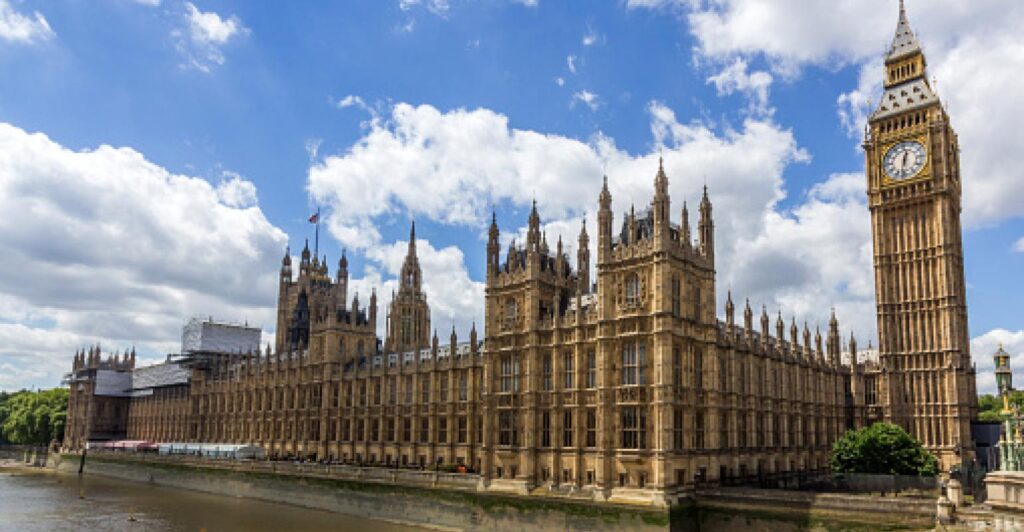
The United Kingdom is on the verge of passing a bill that will subject cryptocurrencies to the same regulations as traditional assets, signaling a significant milestone for the local crypto community.
This legislation, known as the Financial Services and Markets Bill, has received approval from the upper chamber of the U.K. parliament on June 19 and is now awaiting King Charles’ royal assent, the final step required for a parliamentary bill to become law.
Discussions surrounding the bill began in the British Parliament back in July 2022, and its enactment is expected to bring about legal clarity and support the wider adoption of cryptocurrencies in the country.
Under the new law, the Treasury, Financial Conduct Authority (FCA), Bank of England, and Payments Systems Regulator will be granted the authority to establish and enforce regulations for crypto businesses.
The introduction of this legislation reflects the U.K.’s ambition to leverage the advantages of blockchain technology for the private sector and the overall economy.
Andrew Griffith, the economic secretary to the U.K. Treasury, expressed the country’s desire to enable firms to fully utilize the opportunities presented by crypto assets through appropriate regulatory measures.
The long-term vision is to create an environment that allows businesses to maximize the potential benefits derived from cryptocurrencies.
Furthermore, this regulatory framework could serve as a catalyst for attracting more crypto firms to the U.K., particularly in light of the increasingly stringent regulatory environments observed worldwide.
A recent example is venture capital firm Andreessen Horowitz (A16z), which announced the establishment of its first office outside of the United States in London.
This decision followed productive discussions with the U.K. prime minister, policymakers, and the FCA, with the firm’s crypto founder and managing partner, Chris Dixon, highlighting the appeal of a predictable business environment as a key factor behind the expansion.
The impending passage of the Financial Services and Markets Bill in the U.K. signifies a pivotal moment for the crypto community within the country.
By bringing cryptocurrencies under the same regulatory framework as traditional assets, the new law aims to provide legal clarity and foster the growth of the crypto industry.
This move positions the U.K. as an attractive destination for crypto firms seeking a supportive regulatory environment, potentially paving the way for further advancements in the adoption and utilization of cryptocurrencies in the nation.
Other Stories:
SEC Commissioner Pushing For ‘Reserved’ Approach to Cryptocurrency Regulation
Bankrupt Crypto Exchange FTX Takes Steps Towards Relaunching as a New Entity
EDX Cryptocurrency Exchange Prepares to Switch Custody Providers
The Chicago Mercantile Exchange (CME) Group revealed its intention to launch Ether/Bitcoin Ratio futures on June 29.
The introduction of these futures contracts is scheduled for July 31, pending regulatory approval.
The settlement of Ether/Bitcoin Ratio futures will be in cash, determined by the final settlement price of CME Group’s Ether (ETH) futures divided by the final settlement price of CME Group’s Bitcoin (BTC) futures.
Additionally, this new contract will follow the same listing cycle as CME Group’s Bitcoin and Ether futures contracts.
Giovanni Vicioso, CME Group’s global head of cryptocurrency products, highlighted the potential for relative value trading opportunities between Ether and Bitcoin.
While these assets have traditionally exhibited a strong correlation, their market dynamics may now differ, enabling investors to capitalize on their performance variances. Vicioso stated:
“By introducing Ether/Bitcoin Ratio futures, investors can gain exposure to both ether and bitcoin in a single trade without taking a directional view.
This new contract will facilitate opportunities for a wide range of clients seeking to hedge positions or execute various trading strategies, all in an efficient and cost-effective manner.”
CME Group initially entered the cryptocurrency market in December 2017 by launching the first Bitcoin futures contract.
In February 2021, they expanded their offerings by introducing an Ether futures contract. Recognizing the growing demand for cryptocurrency investment opportunities, CME Group further broadened its product range in 2022 with the introduction of micro BTC and ETH futures contracts, providing traders with additional options to engage in these digital assets.
On April 17, CME Group unveiled plans to enhance its cryptocurrency options by introducing new options for standard and micro-sized Bitcoin and Ether contracts.
These contracts were expected to be available from May 22, pending regulatory review.
This expansion included daily expiries from Monday to Friday, allowing traders to better manage short-term price risks associated with Bitcoin and Ether.
The aim was to provide market participants with increased precision and flexibility in managing the short-term price volatility of these digital assets.
Explore The Latest Crypto News Today

Maple Finance, a Web3 lending platform, has unveiled the launch of its direct lending program, aimed at replacing the services previously offered by now-defunct lenders such as Celsius and BlockFi.
The platform’s development team shared a fact sheet on June 28, highlighting their intention to roll out the first lending pool in July.
Maple Finance serves as a blockchain institutional capital marketplace, facilitating loans for Web3 businesses seeking funds for product launches and expansions.
Previously, the platform relied on credit professionals known as “pool delegates” to provide capital for these loans.
Notably, Celsius utilized Maple to establish a Wrapped Ether (WETH) lending pool in February 2022.
However, during the bear market of 2022, several prominent Web3 lenders faced bankruptcy. Celsius ceased operations in July, followed by BlockFi in November, and Genesis in January.
In response, Maple Finance’s team announced on June 28 that they would step into the role of a lender on the platform in certain cases.
Leveraging their credit underwriting expertise, they will source capital from institutional allocators to support creditworthy borrowers.
This means that individuals who are unable to secure loans from other providers may have the opportunity to obtain them through Maple’s new program, Maple Direct.
According to the team, this program is necessary due to the exit of major Web3 lenders from the space, with traditional lenders lacking the required focus and expertise to underwrite for innovative Web3 technology firms.
The first direct lending pool will focus on infrastructure, asset management, and liquidity providers. Capital allocators, including Crypto Funds, DAOs, VCs, HNWI, Yield Aggregators, and Family Offices, have been invited to participate in the program and earn yield on their investments.
The announcement emphasized that Maple will continue expanding its existing services, indicating that Maple Direct will not replace the current platform, which features competing lenders.
In the past, Maple Finance faced challenges due to the bankruptcies of FTX and Alameda Research in November.
One borrower, Aurus Global, experienced payment issues as a result, and Maple severed ties with Orthogonal Trading over perceived misrepresentations.
However, the platform quickly rebounded, releasing version 2.0 of its software in December.
With its direct lending program, Maple Finance aims to fill the void left by the collapse of major Web3 lenders and provide creditworthy borrowers with the necessary capital for their projects.
Other Stories:
Drop Wireless, NextEPC To Reshape The Future Of Cellular Connectivity And Bridge The Digital Divide
Sale of FTX’s $500 Million Stake In AI Startup Paused, Hindering Efforts To Fill $2 Billion Gap
Bitcoin (BTC) Miners Experience Record Surge in Revenue Sent to Exchanges
The Australian Securities Exchange (ASX) is unlikely to directly list a cryptocurrency on its exchange but is open to the idea of listing tokenized real-world assets, such as gold.
The ASX’s Chief Information Officer and Group Executive of Technology and Data, Dan Chesterman, explained that listing a cryptocurrency poses challenges due to the existing listing rules.
However, he expressed the possibility of listing a tokenized product in the future.
As the 16th largest stock exchange globally by market capitalization, the ASX holds a significant position in the Australian equity market.
In the first quarter of 2023, the ASX accounted for approximately 82% of the total dollar turnover in local equity market products, according to data from the Australian Securities and Investment Commission.
Chesterman’s stance on blockchain aligns with sentiments expressed by banking executives, who see blockchain as a driver of efficiency.
Howard Silby, the Chief Innovation Officer at National Australia Bank (NAB), noted that large banks and institutions continue to experiment with blockchain, particularly in areas with high friction and high-value customer processes.
Similarly, Sophie Gilder, Managing Director of Blockchain and Digital Assets at Commonwealth Bank, emphasized the potential for tokenization and smart payments to enhance efficiency and reduce risks and costs.
Despite criticism over the suspension of its blockchain-based upgrade to the clearing and settlements system, which incurred significant costs, the ASX clarifies that the decision was not a rejection of blockchain technology.
Chesterman explained that the pause was a deliberate choice to prevent prolonged delays and maintain certainty for customers.
The ASX continues its collaboration with Digital Assets, an infrastructure company, for the development of its blockchain platform, Synfini.
In conclusion, the ASX is cautious about directly listing cryptocurrencies but remains open to the possibility of tokenizing real-world assets.
The exchange recognizes the potential of blockchain technology to drive efficiency in the financial sector.
The decision to pause the blockchain upgrade was made to avoid prolonged uncertainty for customers, and the ASX continues its partnership with Digital Assets for blockchain development.
Other Stories:
Reshape The Future Of Cellular Connectivity And Bridge The Digital Divide
Sale of FTX’s $500 Million Stake In AI Startup Paused, Hindering Efforts To Fill $2 Billion Gap
Bitcoin (BTC) Miners Experience Record Surge in Revenue Sent to Exchanges